NFT marketing, brands can no longer hold back?

 Luxury goods NFT marketing model: Collaborating with artists to create NFTs, virtualizing physical products, and creating NFT virtual peripherals.
This article is from the WeChat public account "Shiqu Research Institute" (ID: SocialTouch2020), and the author is Philip.
As an emerging phenomenon, NFTs have rapidly gained popularity recently, naturally attracting a large number of companies to explore ways to combine NFTs with brand marketing, leading to the emergence of the concept of NFT marketing.
From the perspective of the long-term development of the virtual economy, although NFT marketing is still in its early stages today, with most marketing cases being attempts by leading companies, if the current trend continues, NFT marketing may become increasingly important for brands in the future.
Let's take a look at a few cases:
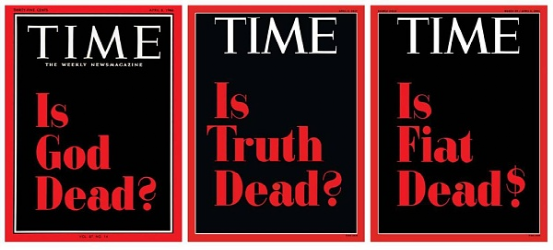
On March 23 of this year, Time magazine released four NFTs using its magazine cover. They are "Is God Dead?", "Is Truth Dead?", "Is Fiat Dead?", and a three-cover collection NFT. These four NFTs were created and auctioned through an art encryption platform.
In fact, as an asset commonly used for auctioning digital artworks, NFTs have had the greatest impact on the digital publishing industry. Time magazine's embrace of NFTs can be seen as a recognition of this new species by the cultural publishing industry.
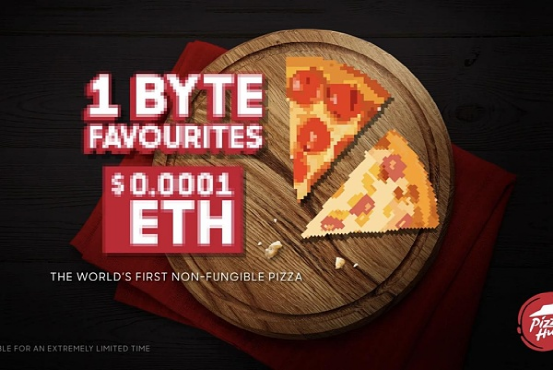
In the food and beverage industry, Pizza Hut was the first brand to test the waters of NFTs. Pizza Hut's Canadian branch launched an artwork called "Pixel Pizza" and auctioned it for 0.0001 ETH (approximately $0.18). According to Pizza Hut's marketing intention, through NFTs, everyone can afford pizza, as $0.18 is not much.
Pizza Hut's NFT marketing attracted a lot of user attention, to the extent that it gradually became a regular action. Reports indicate that later, Pizza Hut would release a new flavor pizza NFT every week, with the price of the new NFTs reaching 5 ETH (about $9,000).
Car manufacturers are also entering the NFT space. In addition to the previously mentioned Audi collaborating with artist Chengran to create the NFT artwork "Fantasy Highway," on August 3, Porsche Germany also announced an NFT auction.
Unlike Audi's digital art NFT auction, Porsche directly auctioned exclusive design sketches by exterior design director Peter Varga. This NFT marketing initiative aims to promote Porsche's pilot project for "non-reproducible digital objects."

Image from Porsche Germany
Of course, giants like Procter & Gamble, Nike, Marvel, Tencent, and Alibaba have also begun to enter NFT marketing, with most operations involving binding and auctioning corresponding digital artworks, with little variation in form, so we will not list them all here.
However, the value of NFT marketing has indeed been gradually recognized by major companies. According to media reports, the American Dolphin Entertainment Company has established an NFT creation and marketing department, with stock prices rising over 100%; the global digital media platform Shopify has announced that it will allow some merchants to sell NFT products directly; eBay has announced that NFTs can be sold in certain categories on its platform. According to data from major market platforms, the total sales of NFT digital artworks reached $2.5 billion in 2021.
Interestingly, the objects associated with NFTs are virtual art items, so NFT marketing often serves as a pure brand assertion and aesthetic communication, which is especially important for emotional and aesthetic brands. In NFT marketing, many luxury brands have surprisingly taken the lead in the industry, becoming pioneering brands in NFT marketing.
It can be said that the NFT marketing model of luxury goods will set a template for future NFT marketing. Let's take a look at how major luxury brands are doing it; we will briefly summarize:
Method 1: Collaborating with Artists to Create NFTs
These examples are not significantly different from the NFT marketing attempts of other major brands, but in luxury brands, NFT artworks often have a deeper connection with their brand genes and philosophies, allowing for more storytelling rather than merely crossing into the art world.
For example, on August 13, the Italian brand Dolce & Gabbana launched the "Collezione Genesi" NFT project, with the NFT works created by the two co-founders of Dolce & Gabbana. The brand aims to "bridge the gap between the physical and virtual worlds" through NFTs.
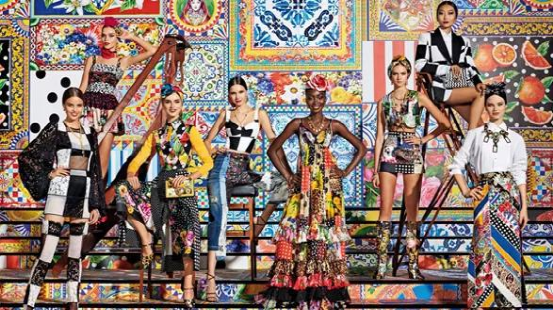
Dolce & Gabbana NFT
In July, Givenchy Beauty also launched NFT artworks, becoming the first beauty brand to introduce an NFT project. Reports indicate that its NFT works were inspired by Givenchy's codes and the rainbow colors of Pride Month, symbolizing diversity, identity, and the struggle for equal rights.

Givenchy Beauty NFT
Method 2: Virtualizing Physical Products
The German brand LOOK LABS previously launched the world's first digital perfume, Cyber Eau De Parfum, alongside the release of a physical perfume, and it was sold in limited quantities. This can be seen as an exploration of a pathway connecting physical products with virtual products.
This virtual perfume is not a digital artwork but rather extracts the scent of the perfume using near-infrared spectroscopy and represents the scent in the NFT work in the form of spectral data. According to the official statement, it aims to provide future luxury goods for the next generation of beauty consumers.

However, for users purchasing NFTs, buying this digital perfume clearly has no particularly practical use; the digital content information can barely be considered a perfume formula, but it becomes a direct means for users to express support for the brand.
Method 3: Creating NFT Virtual Merchandise
In the marketing of NFT brand virtual merchandise, Burberry and LV have gone the farthest. Although their methods are different, it is interesting that both chose games as the marketing vehicle.
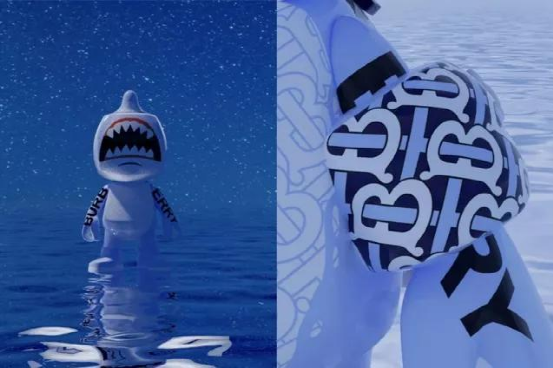
Burberry's approach is to collaborate with a startup game company, Mythical Games, integrating NFTs as clothing items in the game for in-game purchases. From the perspective of marketing ROI, the effectiveness of Burberry's NFT marketing largely depends on the success of this game.
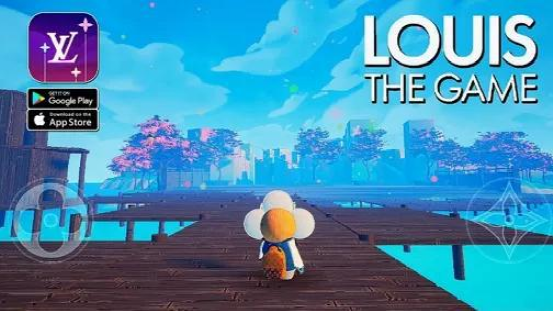
LV's NFT marketing approach is more substantial. To celebrate LV's 200th anniversary, LV developed a mobile game called "Louis: The Game," in which users can collect 30 NFTs for free while following the brand's mascot, Vivienne, to Paris. By creating its own game, LV has connected virtual idols, NFT marketing, and digital experiences, and the game itself serves as LV's virtual merchandise platform.
Expanding further, concepts such as games, VR, NFTs, virtual reality, virtual idols, and blockchain are all related to the currently popular "Metaverse," which is often likened to the virtual world constructed in the movie "Ready Player One." Many in the industry believe that the so-called "Metaverse" represents the future direction of public life development, and the layout of the virtual world will open up significant growth for brand development.
Perhaps from another perspective, observing these leading brands' NFT marketing, they are actually exploring and laying the groundwork for the future Metaverse, with NFTs serving as the key to connecting brands with the future virtual world.
However, at present, NFT marketing is still in the early exploratory stage, and the points of integration often only involve games, films, digital artworks, and other methods. One viewpoint is that NFTs are more suitable for igniting the passion of loyal brand fans, and the popularity of NFT products launched by brands has become a key indicator of their brand power, user influence, and cultural impact. Additionally, due to the blockchain attributes of NFTs, they can also serve as a technical means for brands to protect intellectual property and eliminate piracy, thereby enhancing product scarcity.
Regardless, it seems a bit early to discuss the future of NFT marketing now. What we need to know is that many leading global brands have already begun to test NFT marketing, and NFT marketing may play an unexpectedly important role in building brand culture and brand IP, making it worthy of continued attention from brands.
 Risk warning
 Risk warning