Excerpt from Messari Annual Report: The Most Notable People in the Crypto Market

 We begin to emphasize learning, earning, and contributing as pathways to wealth, rather than mere passive speculation.
Author: Messari
Compiled by: W3.Hitchhike
# I. WAGMI
In the past, I have always avoided the impulse to give "everyone" a spot on this list, as it felt like an evasion and a sign of a market top. This time is different; we are starting to emphasize learning, earning, and contributing as pathways to wealth, rather than mere passive speculation.
"We're all going to make it" is one of my favorite crypto memos over the years. It says "we're still early," but it doesn't come off like an obnoxious early MLM hustler. It's a memorable twist on Balaji's famous quip "win and help win," which I personally love. Moreover, it embodies more mission alignment and altruism than another crypto Twitter favorite, "Up Only." WAGMI reflects a cultural transformation in cryptocurrency, shifting from the crowd that says "let's oppose the government and move to a new era" to one that says "let's solve the future with better technology, aligned incentives, and other builders."
WAGMI includes you, assuming you are reading this report with an open mind. Welcome!
If you still hold skepticism towards cryptocurrency, that's okay. Just don't harbor open hostility and a closed mindset towards its potential. Malicious critics like Jamie Dimon are NGMI.
"[But seriously, Dimon's thoughts on cryptocurrency over the years have been… consistent, and consistently wrong. He called it a 'terrible store of value' (2014), said it 'won't survive,' 'will be stopped' (2015), 'has no future' (2016), is 'a fraud' (2017), and told interviewers 'I really don't care' about cryptocurrency (2018). Then he launched the JPMCoin pilot (2019), admitted it 'isn't my cup of tea' (2020), and then repeatedly expressed his disdain this fall, saying 'I'm not interested in it,' it's 'fool's gold,' and 'worthless.' Don't be like Jamie. He is NGMI.]

# II. Big Players: Samani, CMS, Su Zhu
This is a big year for these big players.
Yes, many amazing technologies have been built, and yes, there are some remarkable founders who deserve high praise (they are introduced in this section and other parts of the broader report). But let's be frank, first and foremost, this is a year for whales, especially those large investors who weathered the 2018 bear market unscathed. They smoothly navigated the 2018 bear market and lived to see 2021, achieving some of the biggest wins.
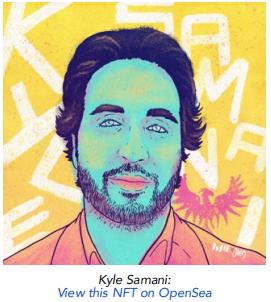
Kyle Samani's Multicoin Capital has had a historic year --- --- by crypto standards and venture capital standards, this year has been historic --- --- with multiple billion-dollar winners across different cryptocurrency sectors. The Graph, Helium, Arweave, and Solana all reached billion-dollar network status this year. There are rumors that Multicoin has surpassed $10 billion in assets under management in the process. Retail investors are hot on cryptocurrency, and no one has an edge in seed investments like Multicoin. They "talk big" through public investment memos, but I've learned a lot from them, even when I went astray (damn Zcash).
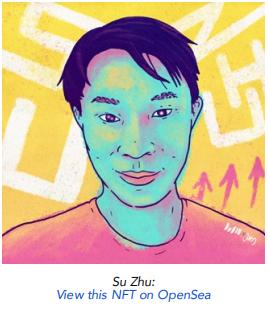
On the other side of the world, another giant is rising. Su Zhu's "Three Arrows Capital" has become one of the largest funds in Asia, boasting one of their best-performing portfolios. They were also one of the biggest bettors on Grayscale Trust trades in 2020, achieving double-digit premiums for much of the year with massive net asset values. Their stakes in Solana, Avalanche, and Polkadot have skyrocketed. Su Zhu has changed his loyalties without hesitation.
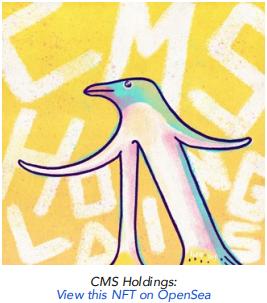
Then there's CMS Holdings. No one has more fun in the cryptocurrency space than the penguins, and they often go all out on everything. At the beginning of this year, CMS popularized the memo "hot ball of money." They sent one of our analysts $5,000 worth of Girl Scout Cookies. They ruthlessly mocked the bear market and paper-trading traders. They bought a 7-inch cube. They paid others to bring that damn Twitter commentary to live debates. Rumor has it they even bid on a dinosaur (if true, that might be the only trade they missed this year). CMS and the team might also be the fastest traders and/or quickest-reacting investors in cryptocurrency, which is a great byproduct of not having to manage other people's money. May you all be as happy in the new year as CMS is every day.
# III. Emilie Choi, Coinbase
I think one of the most remarkable things about Coinbase is that they have maintained vibrant vitality despite nearly a complete turnover in leadership over the past few years. Aside from Brian Armstrong, there are almost no early employees left. Fred Ehrsam is still a board member, but his focus is on expanding the venture fund Paradigm. Many other employees in the "Coinbase mafia" have gone on to start new companies or venture funds.
Aside from Brian, the two individuals most responsible for the company's continued success are former CTO Balaji Srinivasan (though his tenure was short, he helped guide the company towards the right multi-asset strategy, as now 50% of Coinbase's revenue comes from trading pairs outside of BTC and ETH) and Emilie Choi, whose corporate development and M&A capabilities have quickly made her the president and COO of the company.
The background behind Coinbase Ventures is quite remarkable: no full-time employees, Emilie brought the idea to Armstrong the day after its inception, and it is now one of the most active investors in the cryptocurrency space. However, the company's large-scale corporate acquisitions are even more impressive. The acquisition of Earn.com is largely seen as acquiring Balaji, who served as CTO, for a price of $100 million. But now Earn has generated $43 million in revenue over the first nine months of this year (high margin). Bison Trails, which the company views as a potential AWS-level bet on managed blockchain infrastructure, is now dedicated to the Coinbase Cloud product. The company acquired Xapo for $55 million in 2019, snagging Grayscale as a client and doubling Coinbase's custodial assets. Custodial annual revenue is now $120 million.
In the foreseeable future, trading revenue from the core exchange will continue to be the engine of their business. But Coinbase's distribution and regulatory positioning mean they can make other significant incremental acquisitions in the new year. Neutrino (compliance technology) and Agara (machine learning for customer service) may upgrade the backend, but I hope larger deals can open new revenue streams, such as "Plaid for crypto" (Zabo) or institutional data licenses (Skew).
Inorganic growth strategies are hardly unique to Coinbase. But the early victories under Emilie's leadership are impressive. Startups should remember that this is both an opportunity and a threat.
# IV. Devin Finzer, OpenSea
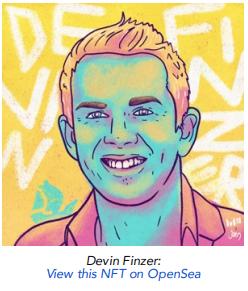
As a lucky early investor in the company (#humblebrag), I can tell you that I have never seen financials like OpenSea's. The world's dominant NFT marketplace is scrambling to make cash, despite competition looming. Coinbase has 30,000 users on the waitlist for its upcoming NFT platform (four times the total historical users of OpenSea). FTX has launched a Solana-based NFTs platform. Gemini already has Nifty Gateway. Other exchanges are almost certain to follow suit with their own products. Then there are some open-source tokenized competitors like Infinity and Fantastic, as well as Andre Cronje's Fantom-based project, Artion.
Since I know a small amount of private information, I won't speculate on what next year will look like. But I will at least provide some thoughts on the company's current trajectory and the future of the NFT market in Chapter Six.
For now, I just want to say how impressive OpenSea's expansion has been amidst the chaos. Maintaining the website's normal operation amid exponential month-over-month growth in terminal markets, occasional bugs, and soaring Ethereum gas prices. The NFT events curated for its homepage sparked an unfortunate employee controversy. Announcements of new competitors are distracting. Devin and the team continue to move forward, seemingly unaffected.
I believe OpenSea will ultimately become a $100 billion company (or network), as their critics underestimate their lead (I watched the same thing happen with Coinbase). It's hard for me to be an impartial critic, but historically, betting against category leaders with great teams is a losing proposition, and that is the profile of OpenSea.
(Check out Devin on the Bankless podcast in March and October to see how OpenSea is progressing. Of course, you can also bid on the NFTs in this report!)
# V. Dan Robinson & Dave White, Paradigm
More investors? Come on!
Well, yes and no. Last year, I included Paradigm's white hat hacker samczsun in our top ten, and this year he saved DeFi users from nine hackers even when those vulnerabilities occurred at direct competitors (samczsun is now ranked high on the Ethereum Foundation's bounty leaderboard). He is not your typical GP.
Given Paradigm's prolific work in conducting symbolic economic research on some important financial elements in DeFi and NFTs, I will apply the same filter to Paradigm's nominations this year.
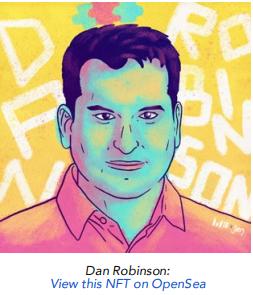
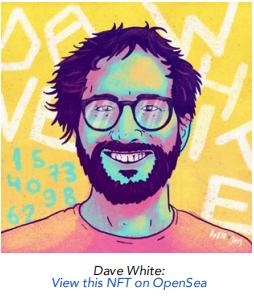
Uniswap v3 automated market maker (which we will delve into in Chapter 7) was primarily birthed by Paradigm's Dan Robinson. Innovations like Floor Perps (synthetics allowing NFT holders to borrow against their assets) and RICKs & Mortys (NFT fractionalization primitives) aim to address the liquidity issues in the NFT market. Power Perps (liquidity risks similar to options, without the need for exercising or expiration), TWAMM (large AMM orders dispersed over time), and Everlasting Options (co-authored with FTX's Sam Bankman Fried) could bring larger and more sophisticated investors to the DeFi market. The latter six were written or co-written by Dave White, who joined in January. The useful research outputs from the Paradigm team are actually quite insane. And this is just what we know so far. I look forward to seeing what they have prepared for 2022.
VI. Jeff Zirlin "The Jiho", Axie Infinity
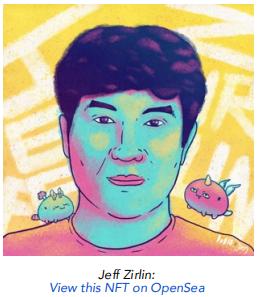
Over the past year, Jiho has rewritten the playbook for building a cryptocurrency community. What’s the mission? Conquer the gaming world. The secret weapon? A seemingly innocuous Pokémon-like NFT card game Trojan horse that will catapult Axie Infinity to the top of the cryptocurrency space.
As the growth and community lead at Sky Mavis, the game studio behind Axie, Jeff has discovered and nurtured a new untapped audience for Axie's play-to-earn game --- in the Philippines. Every day, thousands of people there are playing Axie for fun and using it as a source of income. The Philippines now accounts for 40% of the entire Axie user base, and Sky Mavis recently surpassed 1 million daily active users. Axie's evangelists are hardly in short supply, as the native token AXS (whose design was led by Jeff) has returned 1250x over the past year, but some fans insist that Axie may ultimately just be a footnote in the long game Jiho and the team are playing.
Axie Infinity itself is the launch mechanism for Sky Mavis's Ronin exchange, a sidechain pegged to Ethereum designed to facilitate cheap and gamer-friendly transactions. Since May, Ronin has generated $1 billion in revenue, holds over $9 billion in assets, and is the second-largest blockchain by NFT secondary sales. Sky Mavis is one of the fastest-growing game studios in history, recently raising $152 million in Series B funding led by a16z. The company launched its token ($RON) and decentralized exchange (Katana) this fall. They are now ready to launch a brand new web3-focused game and application studio to their hungry (and wealthy) fans.
Axie's success has made an entire new category (crypto gaming) and subcategory (play-to-earn) meaningful, with around $1.4 billion flowing into related NFT projects just in the third quarter. Meanwhile, Ronin has become one of the case studies for modular scaling in cryptocurrency. Not bad for a product that masquerades as a fluffy cartoon card game.
# VII. Jay Graber, Bluesky & Tess Rinearson, Twitter
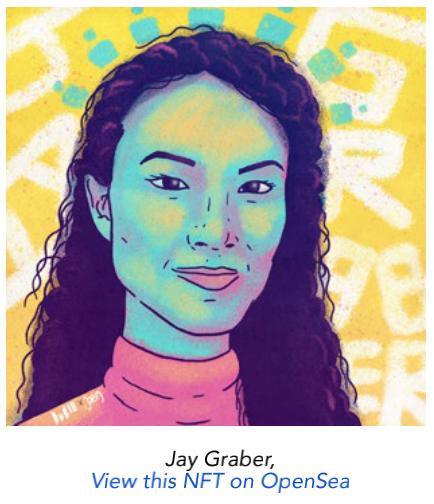
If any major tech company is going to meaningfully disrupt itself through Web3 technology, it is likely to be a monetization-light, founder-led social media company with the most thoughtful cryptocurrency supporters. Founder-led social media companies with the most thoughtful cryptocurrency supporters. Of course, I’m referring to Meta. (Curveball!)
When I started writing this section, I expected to provide a 30-minute recap and quick notes on Jay Graber's Bluesky initiative that he took over at Twitter this summer. "Jay decentralizes Twitter" and a mocking bird avatar were my placeholders and starting biases. As I began to actually investigate Bluesky, I found some different circumstances. So far, there has been relatively little activity within the Bluesky "community" (compare their Github/Gitlab to Diem's!), which makes me wonder if Twitter is really trying to disrupt itself and unlock its user data honey pot. Jay is great, but is Bluesky real, or just a shallow sandbox?
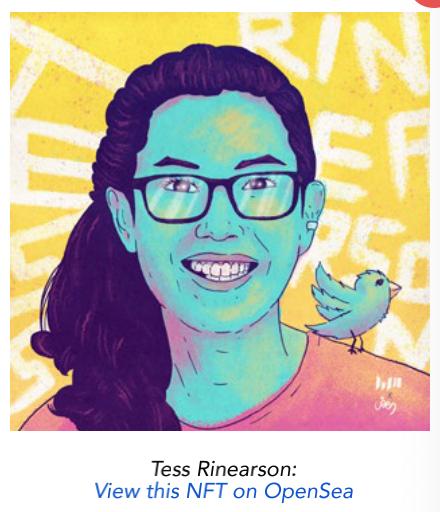
Perhaps the play of "full-stack decentralized media" is not a suitable one given the current throughput limitations of cryptocurrency, and Twitter's near-term ultimate goals may not be appropriate. It may be too early to hold such expectations for an early project like Bluesky. Instead, the project seems to be focusing first on connecting data between other decentralized platforms, such as Mastodon, IPFS, Audius, etc.
# VIII. Kristin Smith, Blockchain Association & Katie Haun, a16z
I scheduled a content-rich policy section on my agenda this year for a reason. The Biden administration has three years left, and having successfully passed a $1.2 trillion infrastructure bill (and its disastrous cryptocurrency provisions), our industry's policy leaders are under significant pressure. This is no small task, as their ranks are currently so small.
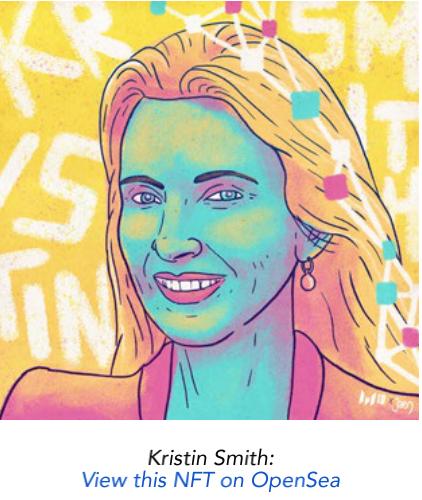
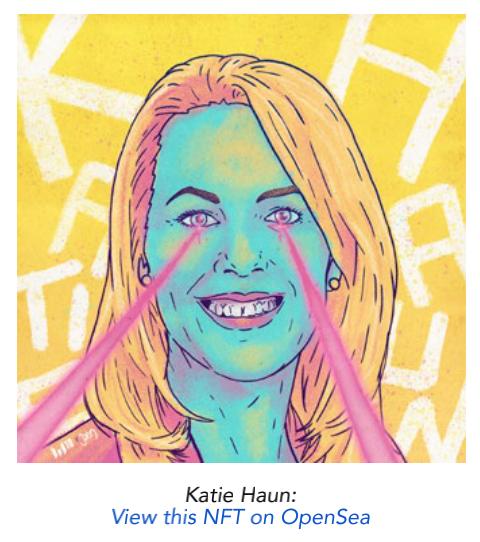
This makes Kristin Smith and Katie Haun key figures for the new year.
Kristin runs the industry's largest professional trade association --- --- the Blockchain Association. It is considered one of the most reliable efforts by corporate members in Washington, D.C., and Kristin's team was one of the driving forces behind the furious 11th-hour negotiations to amend cryptocurrency broker language during the congressional debates this summer. Although this effort barely failed, it helped the BA gain significant financial resources and talent depth. Membership fees have tripled, and she added full-time staff this fall, including former Compound General Counsel Jake Chervinsky and new head of government affairs Dave Grimaldi.
However, the association's challenge is managing different personalities that require time and energy. For example, the BA counts Ripple as a member, which is a headache. It added Binance US as a member in 2020, which greatly displeased Coinbase. The latter has since opted to push its own policy agenda and support another organization, the Crypto Innovation Council, working with Ribbit, Square, Paradigm, and others. However, I heard that the CCI has not yet hired an executive director. Therefore, the association has many months of infrastructure building to do before it can come close to parity with the BA.
This brings us to Katie Haun and her policy team at a16z. The former federal prosecutor, Coinbase board member, and now general partner of a16z's massive cryptocurrency fund has recruited a former advisor to Hillary Clinton and Biden, a former Treasury cryptocurrency expert, and former commissioners of the SEC and CFTC.
a16z has a powerful megaphone, and so far, their policy work has been swift. Their recently launched web3 policy center provides excellent starting materials for policymakers, most notably a deck outlining why cryptocurrency should be a policy priority for legislators. Specific legislative proposals (and working language!) could form the backbone of new cryptocurrency laws, addressing core policy issues without undermining the industry, and how staff can get educated and catch up on cryptocurrency.
We now need unity and speed, and the approaches of BA and a16z give us a solid 1--2 punch into the new year.
# IX. Commissioner Hester Peirce, SEC

"The mother of crypto" might be a fitting nickname for Peirce during Jay Clayton's chairmanship. These days, she is more like the commander of the crypto night watch.
During the Clayton era, the SEC was hardly a model of pro-growth cryptocurrency policy, but at least the commission avoided actively pursuing harmful, systemic overregulation of a market they did not yet understand. Today, winter has come, and Peirce is the last line of defense against the soulless, anti-melanin white walkers --- --- Chairman Gensler. His life mission is to become Treasury Secretary, by any means necessary, even if it means stifling an emerging industry and setting back the U.S. tech sector a decade. (I’m just warming up. More in Chapter Four).
Peirce has criticized the SEC's enforcement action against Poloniex for its lack of clarity. Since 2018, she has been a dissenting voice advocating for a spot cryptocurrency ETF. She has been outspoken about improving investment opportunities for non-millionaires, recognizing that private markets have been where all growth in the U.S. markets has occurred for years. While doing this, she has also upheld the SEC's investor protection mission, advocating for the modernization of reporting rules, and regulating "beaches" (with safeguards) versus regulatory sandboxes (treating adults like children).
Peirce's voice has been a welcome source of self-awareness, capability, and restraint from Washington, D.C. It is the voice of someone who has done their homework, striving to find solutions rather than simply restricting anything new and useful. Peirce:
"When faced with new technologies, new products, and new ways of doing things, regulators tend to say 'no' rather than 'yes,' to say 'stop' rather than 'go,' to see danger rather than opportunity… The SEC's focus is on protecting investors, particularly retail investors, and on the integrity of the markets… [but] investor opportunity is also important. What I mean by investor opportunity is that investors have the opportunity to try new products and services, to include new types of assets in their portfolios, to use the latest technologies, to access the underlying of new opportunities, to experiment and learn from the successes and failures of their investments… Investors want to be protected from fraud and to have access to strong disclosures, but they also want to be able to interact with their financial firms using the latest technologies. They want to have a full range of investment options and to control their financial futures by using their hard-earned money in ways they see fit. Investors may sometimes be willing to take on risks that regulators consider more cautious. A healthy regulatory approach will resist the impulse to overturn investor decisions, but instead engage with the same technologies that investors are investing in and educate them."
Yes, please, more of this!
Cryptocurrency investors notice and appreciate thoughtful policy. Cryptocurrency entrepreneurs do too. When policy leaders propose workable legal solutions, cryptocurrency lawyers love it.
We want more of this!
On token sales, "selling securities without disclosing that you are being compensated and how much you are compensated violates [the law]… however, we are disappointed that the commission's solution… does not explain which sold digital assets are securities, and this omission suggests a reluctance to provide additional guidance on how to determine whether a token is sold as part of a securities offering, or which tokens are securities providing additional guidance."
Like this!
On "only registered" enforcement actions: "Registration violations, even if isolated, are serious, and our enforcement actions can serve to deter such violations and protect harmed investors. However, we should strive to avoid enforcement actions and sanctions, as they can stifle innovation and choke off the economic growth that innovation brings… Entrepreneurs may be forced to choose among some unpleasant options: spending their limited resources on expensive legal advice and compliance, or abandoning their pursuit of innovation out of fear of becoming the subject of enforcement actions. Regulatory safe harbors could resolve this unpleasant dilemma."
More like this!
On paternalism: "We are not a merit regulator, so we should not decide whether something is good or bad for business. Investors consider their entire portfolios, while sometimes we consider a one-off issue with a particular product. We forget that people are building portfolios."
Most cryptocurrency professionals welcome thoughtful regulation, as long as we believe it will be applied fairly and consistently, is technically feasible, and does not violate the Constitution. Peirce is beginning to win over open-minded policymakers because her stance is clear, consistent, and solution-oriented rather than jurisdictional. We hope and need her to defend this wall.
# X. Do Kwon, Terraform Labs

As I write this section (November 8), I know I want to highlight this year's "dark horse" in the competitive "Layer 1" race. Ethereum has rebounded nearly tenfold this year, which is no surprise, but the real story of 2021 is Ethereum's congested block space, high fees, and the subsequent explosion of Layer 1 competitors. Its first-layer competitors have surged. Avalanche is up 25 times, Solana and Polygon 110 times, and Fantom 160 times. However, Terra is the winner, with an astonishing 170 times return.
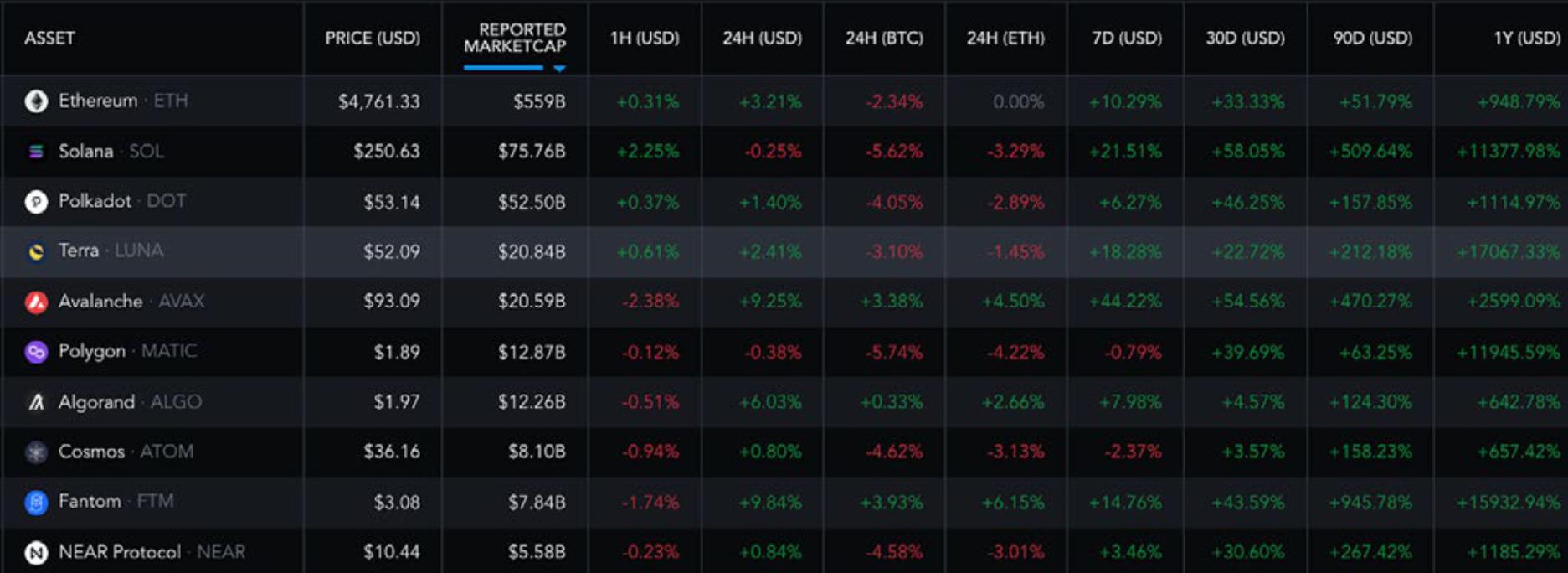
I have several other reasons for placing Do here:
1) Terra is one of the largest cryptocurrency investment games in Asia, ranking among the top 10 Layer 1 projects, with the deepest presence in the massive Korean cryptocurrency market. 2) Terra is being used on a large scale as collateral for the second-largest cryptocurrency-backed stablecoin, UST, which now has a market cap of $7.2 billion, up from (check notes) $0 last fall. 3) The breadth of Terra's infrastructure (Anchor for lending, Vega for derivatives, Mirror for synthetic securities, Mars for AMM) can rival any other blockchain not called Ethereum, and in the long term, it may be positioned on a more stable and interoperable technological foundation (the Cosmos inter-blockchain communication protocol).
Most importantly, Do has gained nods in the race against competitors because he is willing to fight back. Just minutes before taking the stage with me for a panel discussion, Mainnet 2021 received a subpoena, which he brushed off. He decided to sue the SEC and fight. It’s a battle he might win, and regardless of the outcome, it is an inspiring fight.
# Acknowledgments:
In the cryptocurrency space, many people could easily make it onto the annual top ten list, but no one has made it onto my list twice. Repeat contenders this year include Balaji Srinivasan, whose encyclopedic knowledge and raw processing power are astounding. Sam Bankman-Fried, as the world's richest person under 30, has received a lot of coverage; Michael Saylor, who increasingly looks like he stands on the winning side of one of the most important corporate trades in history.
 Risk warning
 Risk warning