Thoughts on a Healthy and Motivating GameFi Economic Model

 In order to create a healthy and motivating economic model, we should seek that innovative non-monetary yield generation Alpha based on a thorough understanding of gameplay, so that we can welcome the summer of Gamefi; otherwise, we will only witness the Ponzi games of retail investors cutting each other.
Author: Alex, Foresight Research
Abstract
The healthy development of Gamefi's economic model must meet the requirement of continuously attracting external asset investment and diversifying non-monetary income outputs. The key point in its design is to resolve the cyclical contradiction between the new demand from players and the new supply of tokens, while also paying attention to the efficiency of monetary and game resource utilization. By considering factors such as changes in player numbers, the monetary supply cycle mechanism, taxation, reward mechanisms, core asset updates, user profiles, gaming guilds, and leasing, we can derive the most incentivizing and healthily developing economic model.
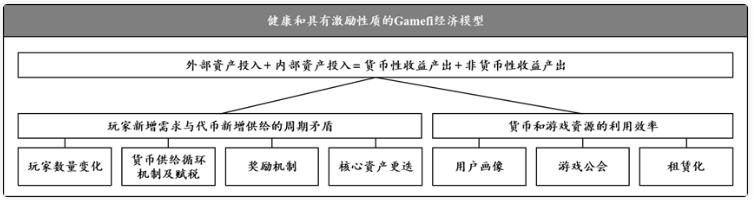
In the summer of 2021, the Gamefi craze initiated by Axie Infinity swept through the Philippines, making the concept of P2E (Play to Earn) widely known. However, as the token price fell, Axie ultimately became a tear of the times, and its economic model cannot escape blame. In 2022, the hottest Stepn brought global users into the era of M2E (Move to Earn), announcing the beginning of the X to Earn model. So what is the core of a healthy Gamefi economic model? Before that, we first need to clarify the relationship between Gamefi, P2E, and M2E:
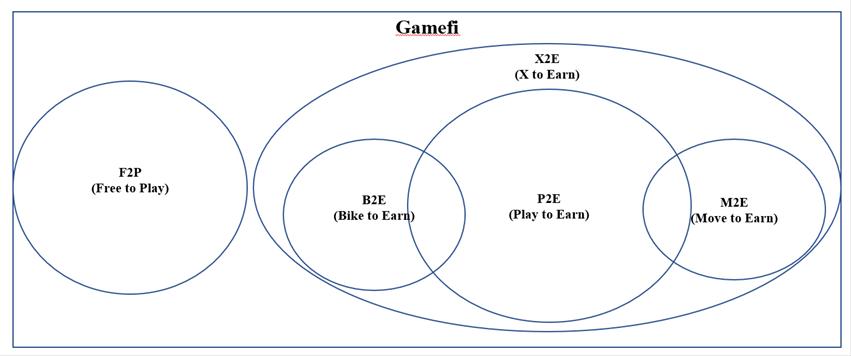
As shown in the figure above, Gamefi has the largest scope, just as the English word "Game" encompasses both games and sports competitions. The first refers to pure games, such as hide and seek or various video games, while the second can also refer to sports like football, basketball, or even athletics. Therefore, P2E is a subset of Gamefi. Additionally, there are M2E, B2E (Bike to Earn), and a series of other models, which we collectively place under the framework of X2E (X to Earn). To some extent, M2E also belongs to the P2E model; the difference between the two lies in the form of direct action—one is running while the other is playing. If we introduce Stepn into a racing competition model, we find that M2E has the shadow of P2E, and the same logic can be applied to many other X to Earn models. The F2P (Free to Play) model focuses more on gameplay, allowing players to pay for a better gaming experience and potential earnings, thus also being a subset of Gamefi.
Moreover, there are many blank areas in the above figure because Gamefi is not just about earning, or that this earning is no longer solely about money in a narrow sense, but rather an asset. It can be a monetary tangible asset, but it can also be non-monetary intangible assets such as health, happiness, friendship, and a sense of belonging. This process is collectively referred to as game-related crypto-financialization, which is Gamefi.

Premise: Diversified Non-Monetary Income Outputs & External Asset Investment
After understanding this crucial point, let's explore why Axie Infinity, as an early chain game, is unsustainable. The most important reason is that it lacks external asset investment and diversified income outputs, making it merely a zero-sum game that will ultimately decline, becoming a Gamefi that is just about who runs faster.
Most players of Axie are not attracted by its gameplay but by the wealth effect it brings. This indicates that almost everyone willing to spend initial capital to enter Axie is only aiming to sell and cash out at the end, making money as long as they sell before others. The wealth earned by initial players comes from the principal spent by later players entering the game; if you become the last person in the game of passing the parcel and no new players' external funds come in, you will lose everything. Therefore, a healthy and sustainable Gamefi economic model must first consider how to attract external asset investment. The investment of external assets is purposeful; for the Axie project, it is solely for making money, and making money means that this portion of money left in the ecosystem will be taken away when leaving, or even more than that. In a zero-sum game, some players will inevitably lose money, which contradicts their original intention of entering Axie, so the rapid decline of the game was destined from the start; it was just a matter of time.
In contrast, Stepn still has countless new users pouring in today, partly because it is still in a profitable upward channel, with a continuous influx of new funds available for transfusion. However, more importantly, at the beginning of the model's establishment, Stepn introduced a non-monetary income output, which is health. This makes the return on investment no longer the only consideration for users; whether their physical condition can improve after consistently using Stepn also becomes an important incentive factor. This non-monetary income will make this Gamefi ecosystem not a zero-sum game; it generates a positive income called "health" within the Game, making people more willing to enter this Gamefi. Additionally, Stepn is gradually seeking more non-monetary income, trying to diversify its earnings. For example, a recent podcast in May revealed that Stepn might involve more social gameplay, helping users establish a social platform, allowing people to make more friends and connect with fellow running enthusiasts, thus not only focusing on monetary investment returns.
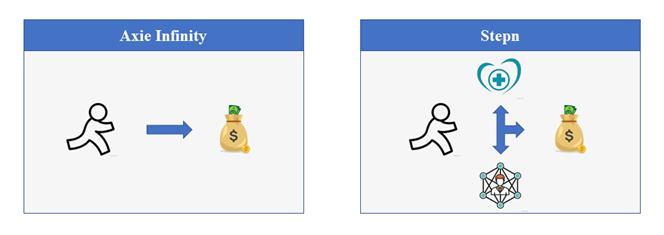
A sustainably well-developed Gamefi must meet a major premise in its economic model design: the game must provide users with non-monetary income, such as health, social interaction, or entertainment; otherwise, it is merely a Ponzi scheme built on a game of passing the parcel, rather than Gamefi.
Therefore, starting from 2022, more and more Gamefi projects have begun to focus on the gameplay and playability of the project itself, leading to a surge in investment in blockchain AAA games. At the same time, the X2E model has also gained popularity, as this model can at least attract enthusiasts focused on X, making them willing to pay for this hobby or the rewards it brings, rather than entering the game with the mindset of "I am just here to make money."
Another approach is that the game itself can attract external asset investment, leading to the growth of monetary assets within the game ecosystem. This form generally includes but is not limited to IP operations, advertising placements inside and outside the game, professional event operations, and game collaborations. For example, traditional Web2 MOBA games like Dota 2, League of Legends, and Honor of Kings all have their global events and have built an Esport industry chain, generating huge profits through selling skins and other peripherals. This path is more suitable for F2P games, but it also requires setting up a corresponding "satisfaction mechanism"—to ensure that players willing to pay for F2P can obtain a better gaming experience or a sense of game recognition. For instance, although the monthly card players in Genshin Impact spend relatively little each month, the excessive rewards they receive are enough to support a high probability of getting a guaranteed high-tier character when a new character pool opens, greatly enhancing player comfort and attracting players to pay for a free game. Games that take this path must aim to become an oligopoly game in a certain region or even globally to have the potential to attract external asset investment; in other words, the requirements for gameplay are extremely high.
Currently, as Gamefi is still in its early development stage, there has not yet been a game that can break out based on gameplay, making it difficult to attract external asset investment. However, I believe that over time, games that meet players' gameplay needs will emerge, and some players will be willing to pay rather than earn profits, while also being able to supplement the ecosystem's funding through external sponsors and traffic.
After avoiding purely zero-sum games, many issues still need to be resolved in the current Gamefi, the most difficult and critical being how to avoid the death spiral when token prices fall. This is essentially not a gaming issue but an economic issue regarding the supply and demand relationship of tokens.
Key: Resolving the Cyclical Contradiction Between New Player Demand and New Token Supply
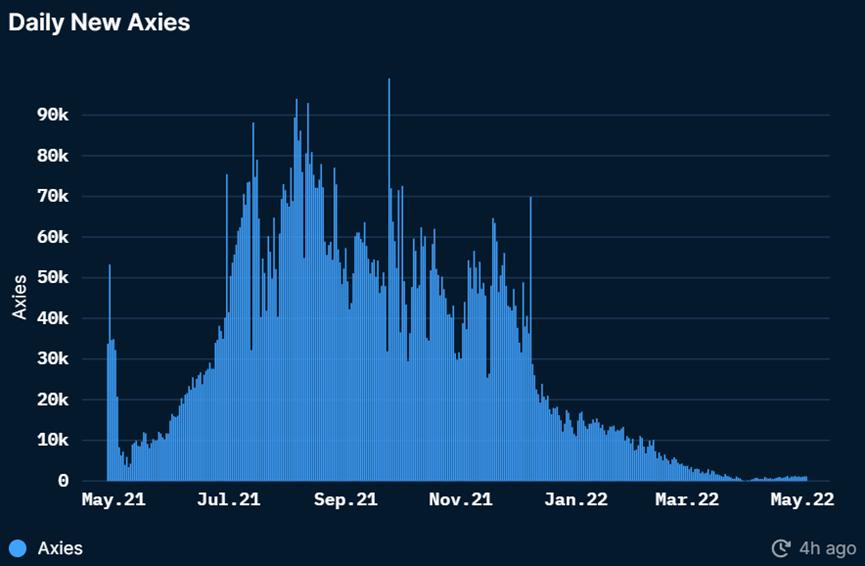
Resource: https://pro.nansen.ai/multichain/ronin
Here we still take Axie as an example. As shown in the figure above, the rapid increase in new users at the beginning caused the demand for currency to rise sharply, driving the game's development and quickly breaking out of its initial circle, thus attracting more users. The massive influx of new players took over the monetization needs of old players, and due to the rapid growth in player demand, the amount of currency consumed far exceeded the amount produced, leading to a soaring token price in the early stages. However, in the mid to late stages, the unlimited issuance of currency and the rapid pace of daily gold farming caused the APR to no longer maintain high levels, and the influx of new users was insufficient to take over, resulting in currency consumption being far less than production, causing the token price to start falling. Axie attempted to increase the difficulty of obtaining currency and the speed of consumption in the game to regulate currency demand; however, due to the severe over-issuance of currency, even reducing supply could not prevent the panic selling caused by long-term concerns about further price declines, which even squeezed the survival space of the originally income-generating Axie NFTs, leading to a squeeze on the demand side for currency consumption, breaking the supply-demand balance again, and causing the token price to plummet. Players also began to leave, and ultimately the economic model failed, leaving only a death spiral. (As shown in the figure below)
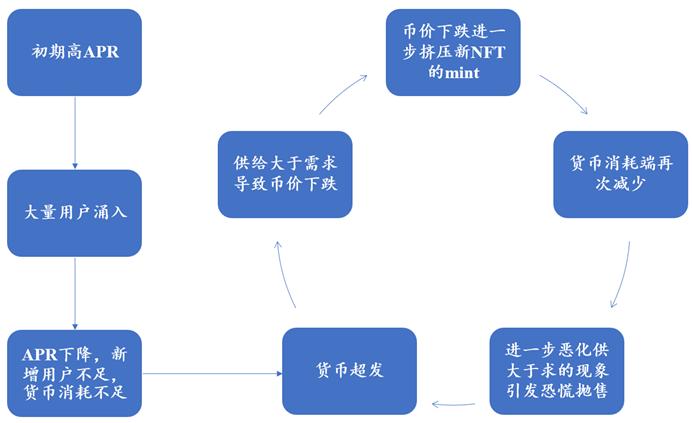
To solve this problem, the following core points can be summarized:
Core Point 1: Focus on Changes in Player Numbers, Emphasizing Dynamic Adjustments During Periods of Player Surge, Controlling Player Growth Rate and Currency Supply Rate; Excessive Currency Over-Issuance is Not Acceptable, Control Inflation Rate Through Total Quantity Control
The collapse of the Gamefi economic model usually occurs after a short-term influx of a large number of users. At this time, the sudden increase in currency supply multiplies, but the subsequent user growth cannot keep up, leading to the game currency that surged due to the massive increase in users entering a phase of selling (as shown in the figure below), ultimately causing players to lose confidence and exit due to the collapse of the token price. Therefore, when the number of players surges, we need to impose certain restrictions to avoid excessive growth in player numbers, especially when the game has not yet truly cultivated a consensus among core players; this is dangerous. At the same time, we need to adjust the methods and limits for obtaining currency at any time to ensure that supply and demand can balance. After Axie became popular, it did not restrict player entry, resulting in a large number of gold farming guilds entering in batches. Although this brought a prosperous scene in the short term, the currency supply mechanism did not adjust in time, and the mining and selling model caused Axie to plummet, losing new user takeovers and falling from grace. In contrast, Stepn has consistently maintained a steady expansion using invitation codes and actively adjusted rules to ensure that currency supply matches player growth, avoiding mining and selling during high growth periods as much as possible. Although rule adjustments may seem overly centralized, this was a necessary means to maintain the healthy development of the game in its early stages.
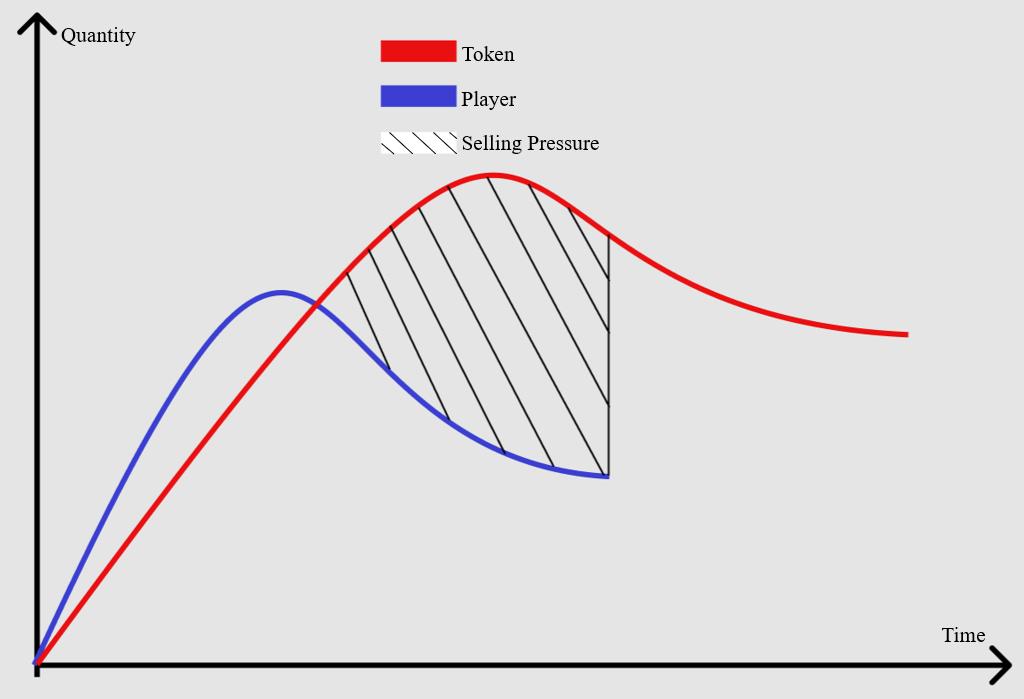
Therefore, currency supply should slow down in response to the increase in player numbers, and it is recommended to implement a fixed distribution system for game currency, where the official determines the total amount of tokens to be distributed daily or monthly and then conducts macro-control based on proportions to control the monthly token inflation rate, ensuring that the speed of token supply growth is less than the speed of player number growth, thereby extending the game's lifespan. Because once the new player count cannot support the currency supply, it will quickly lead to currency having nowhere to be consumed and depreciating, triggering a vicious death spiral of accelerated exits.
Core Point 2: Diversify and Complicate Reward Mechanisms, Introduce Probability, Making Reward APR Difficult to Establish at 100%
Games like Axie will eventually turn into a mining and selling model because players have already calculated the formulas and payback periods before entering; they enter solely to sell and recoup their costs later. Therefore, to better incentivize players to participate in the game, we should establish diversified incentive mechanisms, making it difficult to directly calculate players' APR under different incentive mechanisms. For example, many MOBA games have introduced a ranking system, and reaching certain ranks can earn corresponding skin rewards; in some MMO games, there are speed ranking competitions for dungeons, where the top-ranking teams each month can receive additional title rewards and bonuses for future rewards. These rewards are no longer purely monetary but are Buffs; these non-monetary rewards will help players better integrate into the game and make APR difficult to calculate simply.
More importantly, introduce probability. Why is the economy of many traditional MMO games relatively less prone to collapse compared to current chain games? Because one major characteristic of MMO games is that equipment drops are random. No one can accurately calculate how many times they need to run a dungeon with a good piece of equipment to get a good drop back. As the saying goes, only when opening a box do you know if you are lucky or unlucky, making it naturally difficult to calculate APR. The specific pricing of all items will be determined in the game's native trading market, making it hard for players to assess real costs, while project parties can clearly calculate the actual costs of equipment through backend data. This information gap allows project parties to better conduct macro-control to stabilize the game's economic ecology.
Core Point 3: Use a Dual-Currency System to Suppress Inflation, Establish Widely Recognized Savings Assets, and Create a Closed Loop for Currency Internal Circulation, Introducing Parameters Such as Time, Quantity, and User Seniority for Tax Consideration
It is necessary to distinguish between governance currency and the game currency that is heavily consumed, as the difficulty of obtaining governance currency should be significantly higher than that of game currency. Moreover, governance currency must have necessary application scenarios at key points in the game to ensure it can also be used for internal circulation, fully developing its empowering capabilities, thereby keeping it within the game, slowing down the game's pace, and extending its lifespan. Game currency must be relatively independent of governance currency; if the inflation rate is too fast, it can be flexibly handled by adjusting the ratio of the two currencies required for consumption to achieve economic ecological balance within the game. A savings asset similar to gold should also be established to counteract inflation within the game. When people encounter inflation in game currency, they can exchange currency for savings assets, which can more effectively keep funds within the game ecosystem rather than flowing out quickly, helping stabilize currency prices and the ecosystem.
Establish more diverse consumption and acquisition mechanisms for game currency, rather than just a single PVP/PVE, as this will only cause the speed of currency acquisition to far exceed the speed of consumption. A closed loop needs to be formed so that the distributed currency can have consumable scenarios within the game, such as introducing upgrade systems and multiple system mechanisms (e.g., weapon systems, rune systems, emblem systems, talent systems, etc.) to increase consumption scenarios, and providing higher rewards for characters after consumption to positively incentivize reasonable consumption. Whether it is Axie, Stepn, or other Gamefi, they are currently too simplistic, with too few avenues for token consumption, and it is also difficult to have high-tier items that make players willing to pay high costs for excess returns. This can be seen from the limited effectiveness of Stepn's gem slots and Axie's equipment Runes & Charms, leading players to only time their sales for cashing out. In fact, MMORPG game designs can be referenced to introduce various consumption mechanisms. (As shown in the figure below)
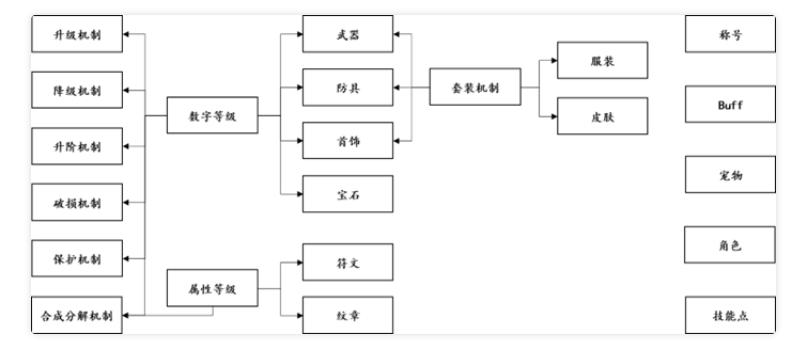
The game should establish various endogenous exchanges, including equipment and currency exchanges, to levy taxes on players who wish to cash out for arbitrage to supplement the treasury. Encourage equipment trading to use game currency for settlement as much as possible, keeping game currency within the game's ecosystem; and establish a staking mechanism, which can provide both monetary and non-monetary diversified rewards to encourage players to stake, thereby keeping currency within the system as much as possible and forming a closed loop. For the sale of equipment, the following factors can be introduced to differentiate treatment, making players more willing to stay within the ecosystem:
- Time: The longer the time after obtaining the equipment before selling, the lower the tax.
- Quantity: The more sold within a certain time, the higher the tax imposed.
- Seniority: The longer the player's game time and the more honors obtained, the more tax reductions they receive.
Core Point 4: Core Assets Must Introduce Upgrade Mechanisms or Durability Consumption Mechanisms, Not a One-Time Solution
Core assets must undergo upgrades and iterations; otherwise, they will become perpetual money printing machines, severely damaging the economic model. Therefore, it is necessary to establish a mechanism for core assets to consume currency, achieving dynamic balance and suppressing inflation.
The demand for income-generating assets in Axie decreased significantly in the later stages because the demand for Axie updates and iterations was low, leading to excess Axies being continuously sold on the market, affecting the game's currency consumption mechanism. Therefore, during different version updates, mechanisms must be introduced to guide players to willingly purchase new core assets, thereby achieving the goal of consuming existing assets and effectively extending the game's lifespan and improving player retention.
If frequent "one version, one god" occurs, it may dampen player enthusiasm, so an upgrade consumption mechanism can also be introduced, allowing core assets to meet the current version's requirements through the consumption of game currency in the short term, but with durability limits to ensure that core assets in subsequent versions will still have significant market demand, promoting internal economic circulation.
Referable models include:
- Introducing level mechanisms for both equipment and characters, requiring players to upgrade equipment to obtain a better gaming experience.
- Setting an upper limit on equipment upgrades, ensuring that after a certain version, players must replace old equipment rather than endlessly patching it.
- With the iteration of game versions, implementing a certain degree of numerical inflation to encourage players to replace equipment.
- Necessary rare high-tier equipment should not be obtainable through participating in a single game but should be synthesized through multiple materials.
The above four core points are all considered from the perspective of balancing currency supply and demand, but we still need to clearly recognize that Gamefi is an ecosystem based on players' actual needs, which may lead to more practical issues during its development. Therefore, to better align with reality, to improve the efficiency of currency and game resource utilization for more balanced and sustainable ecological development, the following supplementary core points are proposed:
Core Point 5: Based on User Profiles, Meet Different Needs, Establish a Clearly Defined Small Society for Operation, Forming a Healthy Pyramid Structure and a Self-Identifying Culture
For different user profiles such as hardcore players, skilled operators, office workers, students, spenders, and monthly card players (as shown in the figure below), develop different game modes and types, and diversify rewards beyond just game currency or governance currency, also incentivizing players' inner vanity. (Here, only individual players are considered, and gaming guilds are not discussed for now.)
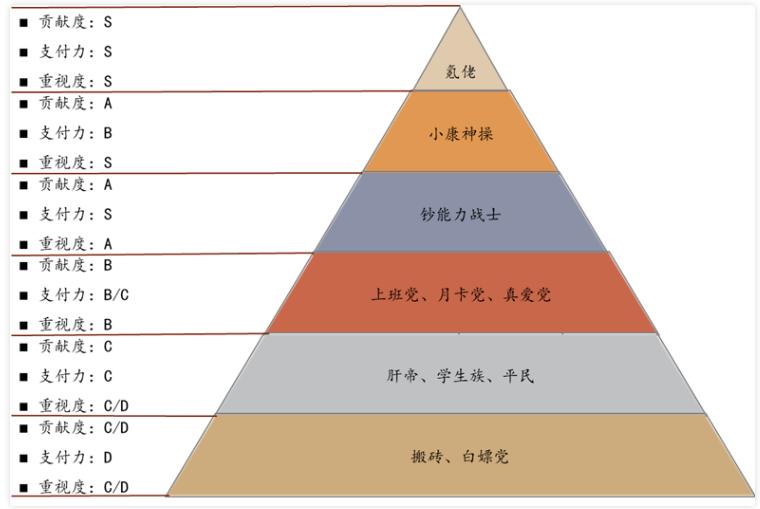
It is evident that in MMORPGs, spenders are a unique existence; they can bring significant external capital flow without regard for returns, supporting the positive cycle of the entire game. The economic model should be designed to target different user profiles, maximizing their payment potential. For example, different repair costs for participating in different dungeons, with varying output benefits. The probability of failure in high-level dungeons will greatly increase, but players can experience the latest gameplay and have the chance to obtain higher-tier equipment, allowing them to enjoy the admiration of others while standing in the street. This will make high-spending players willing to pay for psychological gratification, forming self-identity; while low-level dungeons should consider increasing complexity rather than difficulty, ensuring players can complete them without causing significant selling pressure on the game ecosystem, instead generating materials that can serve as initial materials for the entire economic system, promoting the progress of high-tier equipment. Additionally, different modes should be set in the game based on contribution levels to enhance the gaming experience for different players, not just focusing on paying players; the total value of game items created by lower-tier players may not be less than that of higher-tier players, and their layered processing may even allow items to generate premiums and be sold, driving the entire ecosystem.
Furthermore, different players may have different identities and senses of belonging. How to design different mechanisms to foster a sense of belonging and identity for different types of players will be key for Gamefi's entry into the social domain. When something in Gamefi can provide you with more symbolic meaning or spiritual connotation, such as the first completion list in World of Warcraft or the eternal skin in League of Legends, the game possesses an internal culture, making players willing to introduce external funds, thus paying a premium to own it, allowing the game to develop sustainably.
Core Point 6: Gaming Guilds are a Double-Edged Sword; Encourage Spontaneous Guilds Among Players, While Limiting Professional Gold Farming Guilds
Gaming guilds are a vital existence in MMORPGs because they can quickly create bonding among ordinary players, allowing them to experience the joy of exploring a new continent, which is the essence of RPGs. Therefore, we should encourage spontaneously organized guilds among players, as this will bring positive external assets to the game, further promoting its development, and even allow it to venture into the social domain like Stepn, firmly grasping players.
For professional gold farming guilds, limitations can be imposed in the game to make them reliable producers. The sole purpose of professional gold farming guilds is to mine, cash out, and earn excess profits. Therefore, we should find ways to impose some restrictions on them, allowing them to develop peacefully within the game for a certain period. The quantity of materials required by upper-tier players is enormous, and professional gold farming guilds can serve as producers to prevent material shortages. However, at the same time, limitations should be imposed on professional gold farming guilds through time, durability, stamina, etc., to prevent them from over-extracting game resources and causing the collapse of the game's economic ecology.
Core Point 7: The Rentalization of the Economic System As Gamefi develops to a certain extent, rental forms will inevitably emerge, or even exist from the very beginning. The existence of NFTs allows game assets to detach from the game platform itself and belong to the players, facilitating players to freely buy and sell their equipment to exit. Renting equipment allows players to lend their gear to others for gold farming while collecting rent, as shown in the figure below:
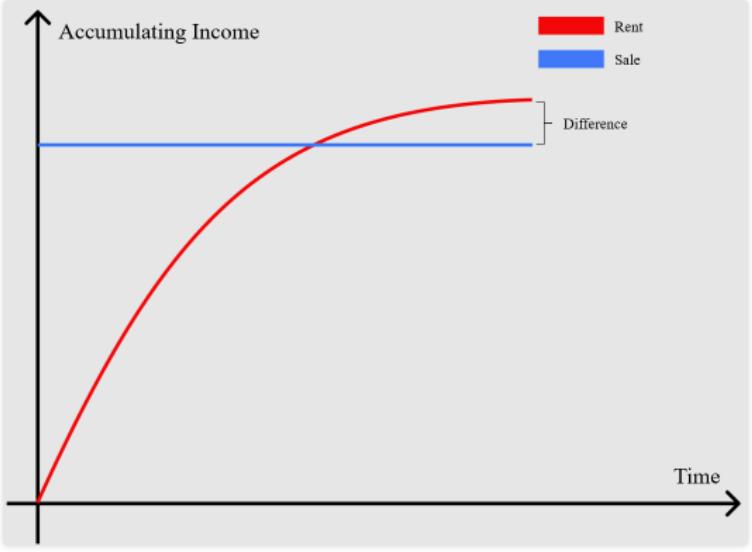
In a rental model, if accumulated earnings over time exceed the direct sale value, people will choose to collect rent rather than sell directly. However, the rental model often turns players into mere gold farming machines, as they rely on gold farming to cover the costs of renting NFTs, leading to inevitable mining and selling. Therefore, restrictions on the rental model are necessary, such as limiting the number of rentals and increasing taxes. At the same time, we should also recognize that rental players actually undertake the construction of the game's infrastructure; they are a key force in driving monthly and daily active users, capable of generating basic materials to invigorate the entire market.
Additionally, there may also be a high-end rental market in the future. This part will promote the game ecosystem more, as players' demand for gaming experiences may far exceed their demand for monetary returns. For example, in MMORPGs, some high-level dungeons require high-level weapons and equipment to complete, and many high-level dungeons have weekly reset limits, allowing only one run per week, making the cost of buying and selling high-level equipment very steep; moreover, the liquidity of such equipment is very poor. Therefore, to utilize them reasonably, high-level equipment can be rented to users in need, charging per run. For instance, in traditional MMOs like Dragon Nest, players who cannot defeat high-level dungeons often choose to pay to hire players with superior equipment to carry them through; paying players only need to spend money to breeze through high-level dungeons, then have the chance to obtain high-level equipment, but this also sacrifices the gaming experience. If a rental equipment system exists, it allows paying players to experience the thrill of high-level dungeons, effectively increasing the non-monetary income output of gameplay, similar to renting high-tier accounts. High-end rentals solve the liquidity issues of equipment for mid-to-high-end players and provide feasibility for low-end players to quickly update and iterate. In the long run, compared to buying and selling finished accounts, the rental model is more sustainable and can introduce non-monetary income outputs—gameplay, creating a win-win situation.
人は何かの犠牲無しに何も得ることはできない.何かを得るためには等しい代価が必要になる (One cannot gain anything without making a sacrifice; to obtain something, an equivalent price must be paid) ------ "鋼の錬金術師" (Fullmetal Alchemist)
In summary, many Gamefi economic models attempt to cover up the essence of their zero-sum game with flashy mathematical formulas and dazzling Ponzi distractions. However, just as the law of equivalent exchange in "Fullmetal Alchemist" states: "To obtain something, an equivalent price must be paid," to create a healthy and incentivizing economic model, we must seek that innovative non-monetary income output Alpha based on a thorough understanding of gameplay, to usher in the summer of Gamefi; otherwise, we will forever only witness the Ponzi games of players cutting each other down.
 Risk warning
 Risk warning

Popular articles