Bear Market Survival Guide: Exploring the Value Low of NFTs

Host (X2Y2): Alex
++https://twitter.com/alex_pengfei++
Guests:
Lyon - Founder of HarmoniXX
++https://twitter.com/hmxnft++
Suki - Head of Growth at Hyype
++https://twitter.com/tradergirlsuki++
++https://twitter.com/hyypeHQ++
Ieansmith - Founder of NFT Pioneers
++https://twitter.com/leansmith001++
++https://twitter.com/NFT_Pioneers++
Fiona - Investment Manager at LD Capital
++https://twitter.com/nft_hu++
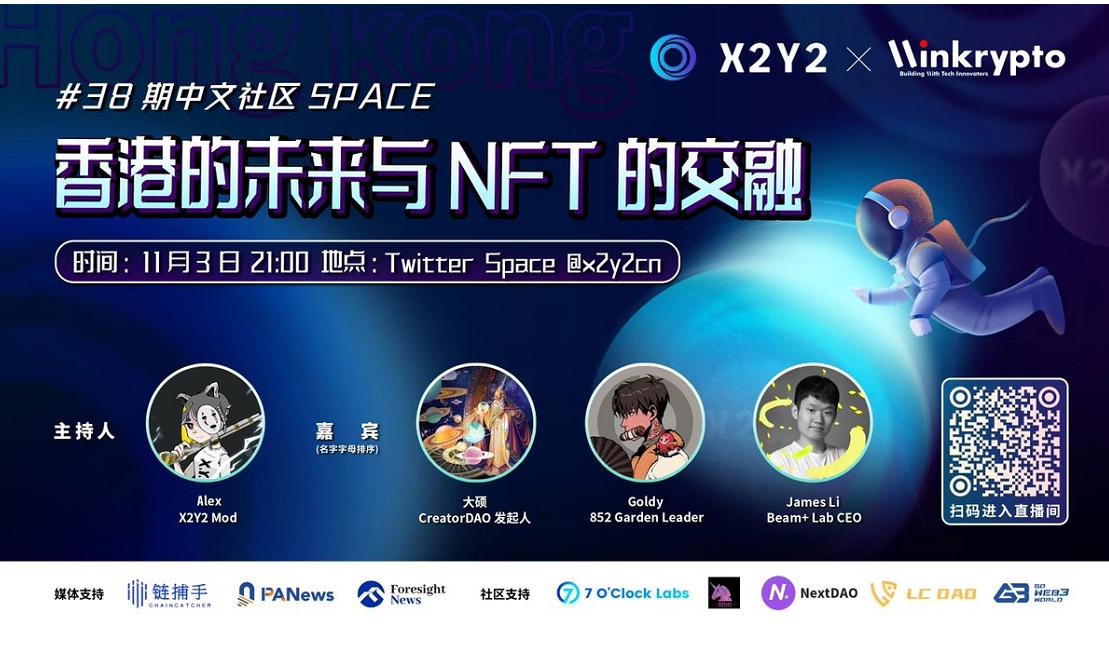
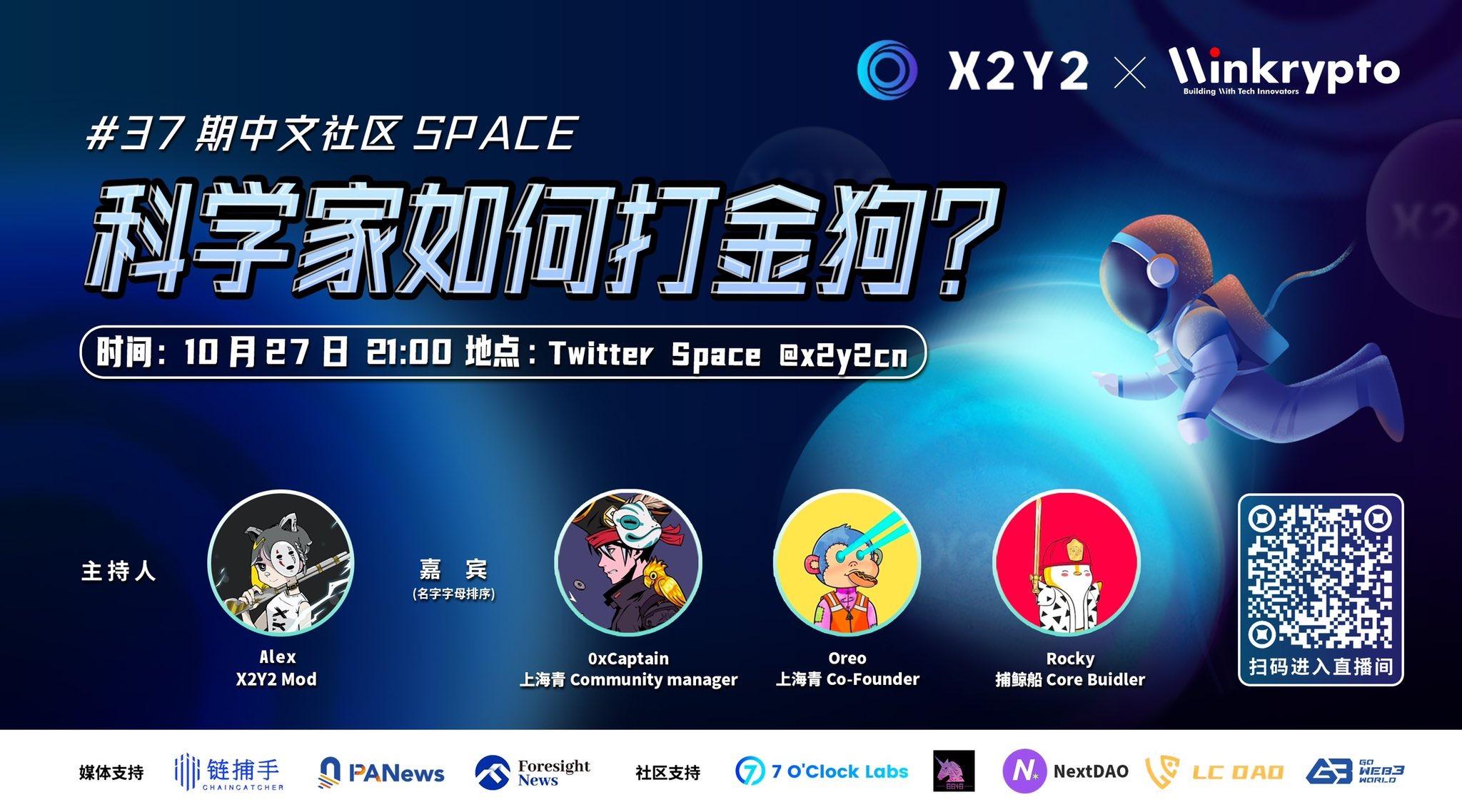
Alex: Welcome everyone to our Space tonight. I’m your host Alex. The theme today is about how we should survive in a bear market, especially since this week has marked several significant events in the bear market. Can we explore some value opportunities?
I’m honored to invite a few guests today:
Ieansmith: Founder of NFT Pioneers.
Suki: Head of Growth at Hyype.
Lyon: Founder of HarmoniXX.
Fiona: Investment Manager at LD Capital.
Let’s start with Ieansmith for a self-introduction.
Ieansmith: Hello everyone! I founded NFT Pioneers in October last year. We focus on exploring all aspects related to NFTs and are vertically focused on this field. So far, we have developed quite well. We have over 60,000 followers on Twitter and nearly 5,000 users on Discord. We are also further developing alongside the market. Personally, I have a long-term optimistic view on the development of NFTs, so I will continue to delve into this field. I come from the gaming industry, where I worked for 17 years, mostly as a producer. Last year, I transitioned into the NFT space and spent a lot of time learning and communicating with others. Now, I have built a community where everyone can interact. That’s my basic situation, thank you.
Alex: Suki, could you introduce yourself and your company?
Suki: Sure! Hello everyone, I’m Suki, and I’m the BD at Hyype. Hyype is a leading NFT VC in the U.S., a part of Electorate Capital, focusing on NFT Social and Content. For example, if you have an NFT, you can go to our website, Content Wallet, and write some content about your NFT, which is stored on IPFS. It’s like a Web 2.5 platform, where we can partner and integrate with platforms like X2Y2, allowing users to do follow-up actions after purchasing NFTs.
Before entering the NFT space, I was a quantitative researcher at Pantera Capital, one of the largest crypto VCs in the U.S. I developed a strong interest in NFTs last year and decided to join the space. I see NFTs as being in an early stage, similar to the mobile market five years ago. Even if you just create a single app or feature, you can make money. I believe NFTs are still in a very early state, with many opportunities, and I want to meet like-minded people. My goal for the next one to two years is to explore this market and find opportunities.
Alex: Thank you, Suki. Our next guest is Lyon, the founder of HarmoniXX.
Lyon: Hello everyone! I’m the CEO of HarmoniXX. HarmoniXX is a Web3 platform focused on music NFTs. We use AI technology to generate many unique music NFTs for each song, combined with artistic works to create themed covers. We call these music-infused NFTs, similar to music albums in Web2, which include both music and cover art. Through these NFTs, we can also build fan communities and ecosystems.
Alex: Thank you, Lyon. Our last guest is Fiona, who seems to be dealing with something temporarily; let’s start first.
Since this week is a bear market, I’m curious about what each guest thinks about this bear market. There are two significant events marking this bear market: one is the collapse of the Terra ecosystem, Luna, and its stablecoin UST. The other is the revelation by the founder of Azuki about his previous involvement in three unsuccessful projects, leading both the NFT and cryptocurrency markets to experience a downturn.
I’d like to ask each guest how they are handling their assets during this bear market. I’ll start with Ieansmith.
Ieansmith: In April, I cleared out most of the useless images I had on hand, projects that I didn’t see a long-term future for. Some I sold at a slight loss. At that time, I basically exited Ethereum, and recently I also converted some Ethereum into USDT. After converting to USDT, it dropped significantly. I currently hold community-related NFTs and utility NFTs, along with some Monkey NFTs; these are the main assets I still have. Most of my holdings are in Ethereum and USDT, which reflects my portfolio changes.
Alex: So you really anticipated the arrival of the bear market? Let’s follow up: why did you make adjustments in April? Did you sense something early on, or did you feel the need to clear out useless NFTs regularly?
Ieansmith: By April, there was already a hint of a bear market. If it weren’t for three major projects, including Monkey NFTs, Owls, and Murakami’s MURAKAMI.FLOWERS, the NFT market would have already entered a bear phase. Those three projects absorbed a lot of liquidity. At that time, I felt that the situation wasn’t good, so I decided to clear out some useless assets and reinvest in more valuable ones.
Alex: Understood, there’s indeed a trend here. I’d like to ask Suki if you’ve taken any measures to protect your assets or made any adjustments?
Suki: I tend to trade more frequently. When I was at the VC, many operations were restricted due to regulations. Even if I predicted market movements, my ability to purchase coins or trade frequency was limited. I sold many coins in December and January. When Ethereum was at $4000, I sold off some. I haven’t bought many new NFT projects, so the bear market hasn’t affected me much. However, during extreme panic, I bought quite a bit, but I haven’t touched altcoins much. Now, I mainly hold BTC, ETH, and Ape NFTs, keeping altcoins under 20%.
Alex: Got it. Just curious, did you buy Luna?
Suki: I didn’t buy Luna. I know DK, and when I left Pantera Capital, he suggested I work with Luna. After talking to their team, I realized that no one was really building companies on Terra. Most of their projects were self-invested, with no valuable teams actually creating real companies in the Terra ecosystem, so I thought it wasn’t a good idea.
Alex: I feel it’s not entirely Terra’s fault. Most public chains are still in the phase of self-funding their ecosystems. However, the issues with Terra are more complex, and we won’t delve into that today.
Let’s continue with Lyon. As someone running a project, do you hold any of your own music NFTs? I know you might not be trading coins much, but are you keeping an eye on other NFT projects, or do you think there won’t be many opportunities to act during this period?
Lyon: I’ve always been paying attention because I’m in this industry and running a platform. However, I’ve been busy since our platform just launched. I didn’t have much exposure to Luna, so it didn’t affect me much, to be honest. This situation presents an opportunity for me.
Alex: Right, since you missed the rollercoaster drop.
Lyon: Exactly, so I’m considering whether to enter the market.
Alex: Understood. Today, we see that Azuki has dropped to 8 ETH from a high of 30, and now it’s rising again. Luna has surged 99% in two days and then skyrocketed 100 times today. Lyon, are you considering making some small moves? Or will you focus more on your music NFTs? We also want to ask you about your thoughts on whether, after the NFT bear market, people will pay more attention to new types of NFTs, like the music NFTs you’re working on, or will they continue to focus on the original PFP projects?
Lyon: I feel that after such a long time, people are starting to get a bit fatigued with PFP projects. So, they might be looking for something new and innovative. Music NFTs, in particular, haven’t peaked yet, so I think they’re still worth watching. Especially now that more players are entering the music industry, I believe it will become more vibrant. Of course, since we’re in a bear market, when it starts to turn around, I think there will be some exciting developments in the music NFT space.
Alex: Understood. You think music NFTs could be a new trend for the future. I’ve noticed that several capital firms have recently invested in new types of NFTs. What do you think distinguishes music NFTs from PFPs?
Lyon: I think music NFTs are more practical; they require a stronger connection with fans. The so-called fan economy means that every musician, regardless of their size, has a certain number of fans, from dozens to millions. Unlike PFPs, which are just new images without a fan economy, music NFTs have a connection with the artist. For example, we’re working with Huang Guanzhong (a member of the band Beyond), who has fans across different age groups. This creates a different starting point compared to PFPs.
Alex: Understood. The innovation points and motivations for purchasing music NFTs are completely different from PFPs.
Lyon: Yes.
Alex: Thank you, Lyon. Our fourth guest has arrived. Fiona, can you hear us?
Fiona: Sorry for being late.
Alex: No problem. Fiona is from LD Capital. Why don’t you introduce yourself and your firm?
Fiona: First of all, I’m very happy to be here today. LD Capital started in China and has now become a relatively global capital firm. We have colleagues in Singapore, the U.S., and Canada, working in a distributed manner. Over the past two years, we’ve achieved quite good investment results, especially in the metaverse and gamefi sectors, with many well-known projects like Big Time, Star Atlas, and Decentraland on our list.
We are also keen on investing in many NFT-related projects. When I heard the host and speakers mention music NFTs, I realized I’ve invested in some music NFTs. Their models and commercialization strategies have significantly innovated beyond simple images. I believe we’re still in the early stages, and I’m eager to explore what models can emerge. That’s about it.
Alex: I’ll follow up directly and ask you, Fiona, what do you think about the future NFT market? Given that this week is a bear market, with pressure on both the crypto and NFT markets, do you think the future NFT market could evolve into a metaverse that doesn’t rely on BAYC or other blue chips? Or will it turn towards new types of NFTs, as you mentioned LD Capital is investing in? Or will it ultimately return to the embrace of PFPs?
Fiona: I’d like to share my personal view.
Twitter Space interruption.
Host: Let’s continue our discussion. Fiona, I sent you the link. We were just discussing your thoughts on music NFTs. I apologize for the interruption. I’ll ask Ieansmith: do you think NFTs in this bear market will likely keep the focus or funding hotspots on PFPs, or will they shift towards other types of NFTs, like music NFTs?
Ieansmith: Are you asking about the current bear market situation?
Host: Yes, in the current bear market, will the focus shift? Or will it remain on blue chips, especially since blue chips have dropped?
Ieansmith: From my understanding, in a bear market, people’s actions tend to become more conservative. They might prefer blue-chip or proven models, as they are more willing to accept those. If it’s a new model, they might be skeptical or hesitant to try it. In a bull market, innovations tend to be more sought after and can easily attract attention. But in a bear market, that might be weaker, and I think strategies will lean towards being conservative. That’s my view.
Host: Understood. You think the focus is on being cautious with funds, unlike in a bull market where people are more willing to take risks?
Ieansmith: In a bull market, many low-quality projects perform well unexpectedly, but in a bear market, people are more cautious with their funds. Recently, even some previously popular projects haven’t performed well, like Mecha Girls, which has dropped significantly compared to its previous hype. So, even high-profile projects face limitations, showing that people are quite concerned about their capital usage.
Host: Understood. It’s indeed about the funds and market conditions. Thank you for sharing.
Fiona has joined us. I apologize for the interruption earlier. Fiona, could you continue discussing your experience with the music NFT projects you’ve invested in and your understanding of new NFTs?
Fiona: Sorry, I think the current PFP model is just the starting point for NFTs. It’s like the early days of the internet when we only used simple text for transmission. Later, we saw the emergence of images, videos, games, and various forms. I believe NFTs are still in their infancy. We’re merely buying and selling simple images for profit, and most NFTs lack strong functional attributes. Some may have gamefi items or NFT passes, but I see that as a very early function.
What I expect from NFTs in the future is a complete ecosystem. For instance, if I buy an NFT, how do I show it off to my friends? How do I display it in real life? The recreation of NFTs could hold greater opportunities and potential. I previously discussed a project that enhances the interaction of NFTs with daily life. For example, if we buy a Bored Ape, we usually just keep it in our wallet with no real use. But what if it could project into our living room and dance with us? We could record that video together. I see that as an attempt, and I believe there are vast possibilities. PFPs are just the earliest product form. I’m also interested in hearing more about the innovations and characteristics of the music NFTs you mentioned, as I believe this sector will become very hot.
Host: Understood. You believe that currently, people are primarily using PFPs for profit without real innovation or engagement, and the focus is more on the potential for quick gains rather than the underlying vision or culture of the projects?
Fiona: Yes, I think that’s the case. Many projects in the NFT space are primarily focused on making money, and they claim to have visions, which I believe is incorrect.
Host: Thank you, Suki, for your insightful perspective. It’s very interesting.
Given this, Suki also mentioned that NFTs are currently driven by the wealth effect. After the Azuki incident, its floor price, despite a sharp drop, has rebounded significantly. I noticed it’s now above 12 ETH. I’ll ask Lyon, as an innovative NFT project, if I gave you a choice right now with 100 ETH, would you buy the fallen blue chips like BAYC or the problematic Azuki, or would you prefer to invest in innovative projects like your own music NFTs or even 3D NFTs?
Lyon: I think I would consider both sides. First, I would allocate some funds because blue chips and BAYC, if I were to enter now, would actually be cheaper due to their ETH valuation. If I enter the market now, I could buy things at a lower cost. So when they rise again, I would profit doubly from both the NFTs and ETH.
Host: So both the coin and the NFTs would rise.
Lyon: Yes, so I see blue chips as a viable option. They are just at a specific time point, and unfortunately, we encountered a bear market so quickly, which I didn’t anticipate. But after this phase, I believe everyone will gain more experience and be more cautious.
Host: That’s the super monkey.
Lyon: No, because our company is also part of an accelerator program.
Host: I see.
Lyon: Our company is supported by them, starting from scratch.
Host: Everyone can follow Lyon’s public account; their music project is in collaboration with Huang Guanzhong’s team.
Lyon: Yes.
Host: I’ll pass the mic to Ieansmith. As the founder of NFT Pioneers, which has a strong community feel, Ieansmith, with your rich practical experience, would you consider opening your wallet to buy some blue chips at this low point? Would you be buying bullets, or would you prefer to stay cautious and keep your position empty?
Ieansmith: I’m considering it. Recently, I’ve been watching the market. A few days ago, it seemed like a decent entry point. I check the floor prices of blue chips daily and generally keep track of their trends. For example, BAYC and MAYC saw a mint release, and after the positive news, they retraced. BAYC’s retracement was manageable, dropping from around 100 to about 90, stabilizing around 100. MAYC, however, saw a significant drop, from a high of around 40 to about 20, stabilizing just above 20.
The Clone X and Doodles also just released their airdrop benefits, so it’s hard to say if they’ll rise again in the short term. Red Bean is a special case; during its recent fluctuations, it dropped to around 10 ETH when the news broke.
Host: I remember it was around 8 recently.
Ieansmith: That was the second drop. The first time it was around 10 ETH, and then someone picked it up. After the second drop, it fell even lower, down to around 6 ETH.
Host: I guess my imagination wasn’t enough.
Ieansmith: It’s quite surprising. In the past few days, it has rebounded to around 15 ETH, which is a significant recovery, although it’s still halved from its peak of over 30 ETH. Currently, it’s challenging to find suitable entry points for these projects. I wouldn’t consider others like BAKC, which are significantly lower in status compared to others. They were previously hyped but have dropped off the radar.
Cool Cats, which had a high starting point, is also not looking good anymore. Many others are just about the same as before, with no significant changes or attention.
If I were to look for promising projects, one would be Monkey NFTs, as its current floor is around 3 ETH. Given that Ethereum has dropped, its floor price compared to its high of around 8.8 ETH means it should be at least 5 ETH to break even.
Host: So you think it’s oversold?
Ieansmith: Yes, from a mid to long-term investment perspective, Monkey NFTs are worth considering, especially since they will have another land sale in August, which will empower current holders. However, this will take time, and you’ll need to wait for positive news, which means your capital will be tied up for a while.
Another project I’m interested in is Moonbirds. I’ve been following it for a long time because I have a special connection to it.
Host: Why? I love hearing stories.
Ieansmith: I held its first generation, which peaked at around 140 ETH. At that time, holding proof allowed me to mint two Owls. If I had sold at that point, I would have made around 200 ETH. I sold it quite early.
Host: Do you regret it now?
Ieansmith: There’s nothing I can do about it. At that time, I didn’t feel it was worth holding on to for the long term. They didn’t even have a Discord at that time. If they had, I would have kept an eye on it. I viewed it as an ordinary project, so it’s a bit of a pity, but I think it’s normal in the NFT space. Selling too early is quite common; I think my case is an extreme example.
I believe Moonbirds brings in new capital and may attract institutional interest. Its future plans haven’t been fully released yet; they’re just building their nest now. I think it has a high potential for integration. During this recent downturn, its drop was relatively small, with a previous low of around 18 or 19 ETH, and it has recently returned to around 30 ETH.
Host: I feel Moonbirds has a strong consensus because it has a very robust order book.
Ieansmith: Yes, many are building their nests and staking. Additionally, the current holders of Moonbirds don’t seem to need liquidity urgently, so they’re quite stable.
Host: Understood.
Ieansmith: Another project I’m watching is Murakami’s art. I’ve seen its floor price drop after the mint, but it has rebounded to a stable level. I think that’s impressive, given the large volume of sales. The floor price stabilizing around 4 ETH shows strong recognition of the artist Murakami and his works, which may empower other artistic NFT projects in the future.
Host: Understood.
Ieansmith: Also, Stepn has some technical innovations that could have significant potential in the future. It’s not too high or too low, but it’s in a low phase, so I think it’s worth keeping an eye on. I mainly focus on these projects on Ethereum.
Host: Based on what you said, I’d like to ask about Solana. I remember there was a surge last week driven by OK Bears, and Magic Eden’s trading volume has been substantial, almost rivaling OpenSea. Do you think Solana is the next battleground, or is it just a fleeting moment?
Ieansmith: Personally, I’m still optimistic about Solana. I started playing with NFTs on Solana back in August last year. When new users first enter the market, Solana is very friendly due to its low gas fees, so you don’t have to worry about high costs.
Host: About $100, right?
Ieansmith: Most projects are priced at one or two Solana, which, based on the current Solana price, is between $50 and $100. This is relatively cheap compared to most Ethereum projects, making it particularly appealing for new users. The recent rise of (XX) has brought in a lot of capital and users, and many have made profits on projects. They will likely seek out other opportunities on Solana.
I believe the chain games on Solana are relatively high quality compared to others because developing on Solana is more challenging. It’s written in a new language, making it harder to create low-quality projects. I’ve previously invested in some good chain game projects with decent returns. So, I think Solana will continue to grow, and I’ll be spending more time researching potential opportunities in this area.
Host: Understood. Thank you, Ieansmith, for sharing so many insights. Of course, everyone needs to think for themselves. Sunken, do you have anything to add?
Sunken: I really appreciate Ieansmith’s insights. While we’d love to find the wealth codes on the Solana chain, it’s quite confusing, especially with so many low-quality projects. I hope to share more in the future.
Earlier, the ladies and the host discussed the value of NFTs. I have a few thoughts. First, there is indeed a profit effect. The previous hype, especially with projects like Moonbirds or Murakami, is supported by celebrity effects. Their floor prices have indeed risen significantly. However, another aspect of value is community consensus. I’ve observed that the value of projects like Bored Apes and Azuki is largely built on community consensus and cultural aspects. When Azuki dropped significantly, it wasn’t the first wave; it surged from 10 to 15 ETH.
Host: It seems like you’re experiencing some lag. Is it my issue? It sounds a bit choppy.
Sunken: I’ll wrap up by saying that Azuki’s drop to 6 ETH was due to a collapse in community trust. The support for consensus or value is partly driven by profit, and when the whales sold off, it plummeted to 6 or 7 ETH. The subsequent recovery was due to explanations and clarifications from the team, especially within the Chinese community, which helped rebuild consensus and bring it back to its current position. So, I believe there are indeed two aspects of value: the profit effect and the belief or cultural elements that everyone shares.
Host: Thank you, Sunken, for your insights. Time is getting late, so I’ll ask one last question to each of you. I’d like to ask Fiona: we’ve discussed many topics, including Ieansmith’s introduction to various NFT projects and Lyon’s insights on music NFTs. Given what we’ve talked about, do you think the NFT market will see new consensus and potentially new blue chips? Or will it inevitably lead to a situation similar to the ICO boom of 2017 to revive the market? How long do you think this bear market will last?
Fiona: I’ve been observing the bear market for a while now. Since December last year, I’ve noticed a significant decline in liquidity in the secondary market, compounded by macro factors like the food crisis, the Russia-Ukraine conflict, and the Fed’s tightening. Many institutions have been losing money for a long time, so they’ve withdrawn their liquidity from the market. I feel that no one is immune. I’ve advised some NFT friends to maintain a reasonable amount of liquidity. They told me NFTs are very different from traditional crypto markets. Since I don’t understand NFTs well, I didn’t push further. However, today we can see that I don’t believe this is just an NFT bear market; it’s a general one.
Host: A general bear market.
Fiona: Yes, including Hong Kong stocks, U.S. stocks, and all stock markets are suffering. The liquidity in the NFT space is also disappearing because we’re in a market with lower liquidity. So, I’m not very optimistic. Personally, I’ll maintain a bearish outlook for the next six months across all financial markets because I believe the impacts of interest rate hikes and balance sheet reductions are just beginning. We’ll see more significant liquidity tightening.
However, as Suki mentioned, we should be grateful to have recognized NFTs at such an early stage. I believe there are endless possibilities for the future. Just like how Uniswap was born during the bear market of 2018, I’m very excited to see the next generation of applications emerge during this bear market.
A few days ago, there was data showing that stock prices in the U.S. have fallen to the level of their liquid assets, which is a very poor sign. The number of such companies is now equivalent to the number after the 2000 internet bubble burst. We know that many great companies, like Google, Twitter, and Apple, emerged after that wave. So, I genuinely believe that if we can endure this bear market, we’ll find projects with long-term value.
Host: Understood. Thank you, Fiona. Suki, what are your thoughts on this? How long do you think the bear market will last? Will you be making moves, or will you quietly work on projects to discover new opportunities?
Suki: I think my trading frequency has decreased significantly compared to before. However, I want to share two non-investment advice points. I don’t want to give investment advice, but based on my years of trading experience, I’ve noticed that generally, during U.S. daytime, coins tend to rise, and when Asia wakes up, they start to decline. Typically, the trend from Monday to Friday is upward, while weekends see selling. I’m just saying this is a general observation; it’s not investment advice, and everyone can verify historical prices.
Another long-term non-investment advice point is that when Robinhood’s value dropped to $7.3 billion with $6 billion in cash, it seemed undervalued. So, I bought a lot of Robinhood and Coinbase stocks, thinking it might be a low point. I believe that when analyzing investments, it’s essential to look at basic factors. Many times, investment logic is quite basic. For me, the answer is yes, so I went ahead and bought their stocks.
This isn’t investment advice, but I think it’s crucial to find a logic that suits you and can convince yourself, rather than just following others’ actions. That’s my personal perspective.
I feel I won’t be making many trades because I’ve trained a lot in the past and have made decent profits. So, my current approach is to avoid making too many moves.
Host: A cautious approach to avoid losing others’ investments. Everyone, be careful.
Suki: I believe that money doesn’t change your life as much as you might think. I’d rather spend more time with my family. Although I haven’t been home for a long time, I want to enjoy being a more balanced person. However, if anyone is interested in investing, those two points are for reference only, not as advice.
Host: Thank you, Suki. I’ve also noticed the trend you mentioned about trading during U.S. daytime and Asian hours. Based on my limited trading experience, I’ve observed this as well; it seems to be a market pattern.
Suki: It really is.
Host: It’s quite fascinating.
Suki: Yes, it’s truly fascinating.
Host: Thank you, Suki, for sharing this useful tip. Finally, I’d like to ask Lyon: how long do you think this bear market will last? This is quite important for your project, as you need to decide when to launch. Do you think you’ll launch during the bear market, or will you wait for the next bull market to re-enter the market?
Lyon: I think we’re working with Huang Guanzhong, who has many fans. Currently, we’re only collecting 2000 whitelist spots, and the price isn’t high. So, we’ll delay a bit until the market improves before we launch. We’ve prepared everything; our NFTs are of high quality. Huang Guanzhong has created three songs, and we selected one, using AI to generate four styles: rock, EDM, trap, and punk, all sung by him. We’ll generate 2000 unique NFTs, each with a different music version, along with interesting cover designs, which he personally painted. He recently appeared on a domestic show as an artist, and he’s been a designer for many years. We’ve selected four of his paintings for the four music versions.
So, I believe this will provide value to his fans. I emphasize that this is worth collecting, not just for profit or speculation. We won’t delay too long; we’ll wait for everyone to regain their spirits before we launch.
Host: Understood. Thank you, Lyon. Lastly, Ieansmith, would you like to share your analysis of the blue chips? Do you have anything to add?
Ieansmith: I’d like to add a few points. Many people say this year is a bear market for the crypto world, but we don’t know what next year will be like. However, this year, people generally don’t have a positive outlook. For me, investing in cryptocurrencies is one aspect, but NFT-related investments may not necessarily follow the same bear market trend. I believe NFTs, especially on Ethereum, are quite sensitive to price. When Ethereum is too high, people are less willing to engage. Conversely, when prices are low, they are more likely to participate since the cost is lower.
So, I think during a sideways market, there may be localized hotspots for NFTs, which could recover. I’m prepared for that.
Host: It sounds like you’re planning to enter the market?
Ieansmith: In the short term, I won’t make significant investments. However, I believe that in the medium to long term, I might consider positioning based on localized hotspots. That’s my view.
Host: Understood. Thank you, Ieansmith, for your insights. Lastly, let’s see if the audience has any questions.
It’s getting late, and I want to thank our four guests for their detailed and practical advice. It’s an honor to be the host and to hear everyone’s opinions today. We also welcome listeners to leave us messages or share their thoughts. Thank you all for participating in today’s Space. We hope to see you next time!
 Risk warning Risk warning