In-depth exploration of USDT and USDC terms of service: You may not have the right to redeem your stablecoins

 Reserves are an important indicator of the value anchoring of stablecoins. However, if the legal terms of the stablecoin do not grant holders the legal right to exchange their on-chain assets for fiat currency, does this indicator still hold significance?
Source: Cointelegraph
Compiled by: PANews
Editor’s Note: The author of this article is Oleksii Konashevych, CEO of the Australian Institute for Digital Transformation, who has proposed a new generation of property registration concepts based on blockchain and has made significant contributions in the fields of law, science, and technology.
The recent collapse of UST has undoubtedly dropped a bombshell on the crypto industry, and the skepticism surrounding the so-called "stability" of stablecoins has grown louder, with the biggest question being—do stablecoins have enough fiat currency and other assets backing them?
In fact, reserves are an important indicator of the value anchoring of stablecoins. However, if the legal terms of stablecoins do not grant holders the legal right to redeem their on-chain assets for fiat currency, does this indicator still hold any significance?
USDT and USDC are currently the two largest stablecoins by market capitalization, with the former issued by Tether and the latter issued by the Center Consortium, a joint venture between Coinbase and Circle. This article will focus on analyzing the service terms of these two stablecoins, and the final results may surprise many.
Tether Stablecoin USDT
In the third article of the USDT stablecoin service terms, Tether clearly states:
"If Tether experiences liquidity shortages, unavailability, or loss issues with any reserves held to support Tether Tokens, this may result in delays in the redemption or withdrawal of Tether Tokens. Tether reserves the right to delay the redemption or withdrawal of Tether Tokens and also retains the right to redeem Tether Tokens in kind, including securities and other assets held in the reserves. Tether makes no representations or warranties regarding whether previously traded Tether Tokens on the website can be traded at any time in the future (if at all)."
Clearly, the content of this clause is obscure, so let’s interpret the true intention behind it.
First, in the absence of liquidity, unavailability, or reserve losses, Tether may delay any claims. But the question is, if they truly claim that "Tether stablecoins are 100% backed by Tether's reserves," then why would they delay any claims? The answer to this question is actually found in other parts of the clause—
Tether claims that the "valuation" of USDT is pegged to the US dollar at a 1:1 ratio (note: it is valuation), but it is not entirely backed by fiat currency, and they also state in the service terms: "The composition of reserves used to support the Tether stablecoin will be controlled and determined at Tether's discretion."
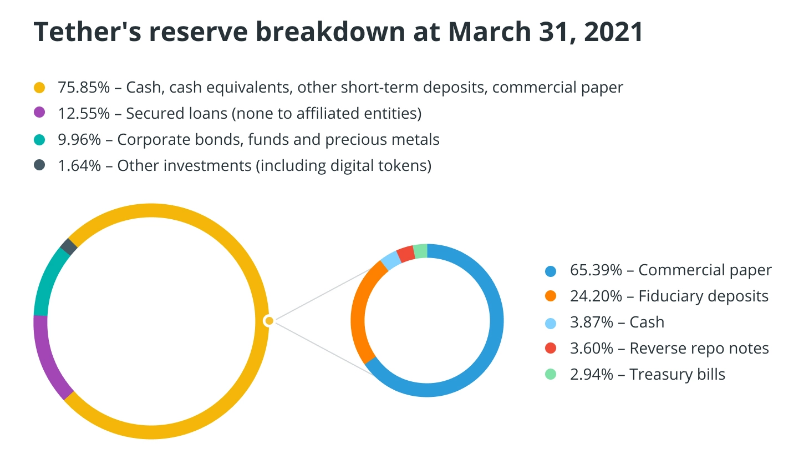
In fact, a recent assessment report released by the U.S. Federal Reserve has made a considerable evaluation of Tether's reserves, stating:
"The supporting assets of the Tether stablecoin may depreciate or become illiquid under stress, leading to a risk of a run, and a lack of transparency may exacerbate these risks."
More "interesting" is that Tether's service terms actually reserve the right of "redemption in kind," which means that even if you purchase USDT with dollars, they can still return bonds, stocks, or "other assets held in the reserves" to you, without having to return dollars—who knows if these assets are truly worth their value when returned by Tether?
It is also important to note that only "verified Tether customers" are eligible to directly initiate stablecoin redemptions with Tether. Generally, Tether's direct customers are cryptocurrency exchanges and other financial institutions, while end users typically redeem stablecoins through these "direct customers" rather than directly with Tether. However, Tether states that individual users can also open accounts directly with Tether, provided they complete the KYC (Know Your Customer) compliance process, which means that as long as one becomes a "direct customer" of Tether, they have the right to redeem stablecoins.
Circle Stablecoin USDC
In terms of stablecoin redemption clauses, Circle's stablecoin seems to have many similarities with Tether. But surprisingly, Circle's stablecoin redemption terms are even stricter. The first article of the USDC service terms clearly states that Circle does not commit to holding fiat currency reserves equivalent to USDC, but instead uses dollar-denominated assets "to support their stablecoin."
In the second article of the USDC service terms, although Circle "commits to redeeming 1 USDC for 1 dollar," the bad news is that this rule only applies to Circle's partners, namely cryptocurrency exchanges, financial companies, and other institutions, which Circle refers to as "Class A users." For individual users, they cannot become "direct users" of Circle and exercise redemption rights, but can only become customers of Circle's partners (for example, you need to open an account at a cryptocurrency exchange).
Even more "terrifying" is that in the thirteenth article of the USDC service terms, it is explicitly stated that "Circle does not guarantee that the value of 1 USDC will always equal 1 dollar, as Circle cannot control how third parties price or quote USDC," which means Circle will not enforce its partners (such as cryptocurrency exchanges and financial institutions) to offer other specific terms to their end users. Moreover, Circle also states that "they are not responsible for any potential losses or other issues arising from fluctuations in the value of USDC."
Conclusion: The Rights of Stablecoin Issuers and Users Are Unequal
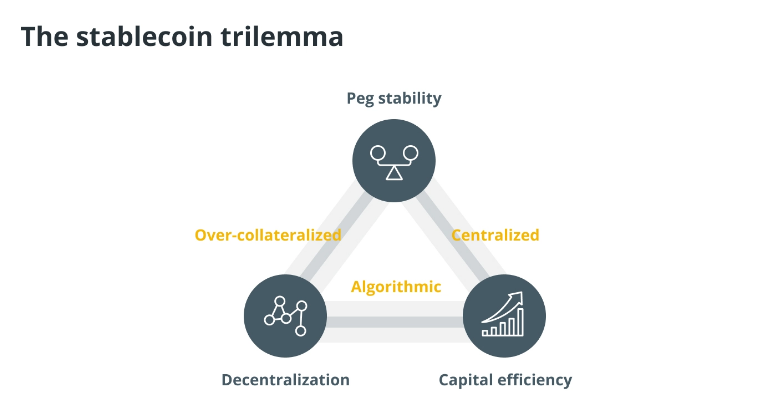
From a legal perspective, Tether's stablecoin USDT and Circle's stablecoin USDC are not equivalent to fiat currency. Moreover, the reserves that Tether and Circle claim can ensure a 1:1 value are not entirely linked to fiat currency; they use various assets (such as securities) to support their stablecoins, and these assets may ultimately depreciate and cause liquidity issues for the stablecoins.
In simple terms, you currently do not have the legal right to freely exchange stablecoins, such as you may not have the right to claim redemption of stablecoins in court, at least in U.S. courts. For Tether, although individuals are direct customers of USDT, Tether reserves the right not to redeem fiat currency, and they can choose to return any assets from their reserves. For Circle, although they have legally committed to allowing users to redeem fiat currency, they do not recognize individuals' rights to exercise that commitment.
You will find that the rights of stablecoin issuers and users are fundamentally unequal, so can individuals holding stablecoins redeem them for fiat currency anytime and anywhere? At least Tether and Circle have not provided a clear answer.
 Risk warning
 Risk warning



Popular articles