How serious is the risk of stETH during the institutional withdrawal from Lido?

 Do small retail investors have ways to profit?
Original Author: CryptoJoe (Founder of Rebirth DAO, Senior Trader)
Original Compilation: czgsws, BlockBeats
stETH has decoupled, with its value dropping to 0.95 ETH.
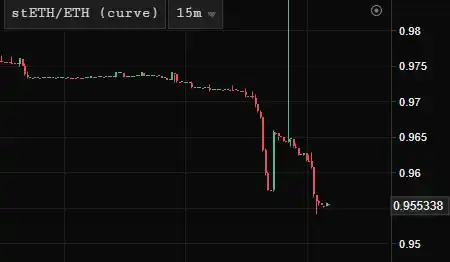
Liquidity is drying up, Smart Money is withdrawing funds, and rumors of the lending platform Celsius nearing bankruptcy could trigger a massive sell-off of stETH. I've been researching this with Messari analyst @Riley_gmi, and here are some of our findings.
First, what is Lido & stETH?
Lido provides users with ETH liquid staking services, allowing users to lock any amount of ETH and receive the staking token stETH to earn yields in DeFi.
After the merge, each stETH can be exchanged for 1 ETH.
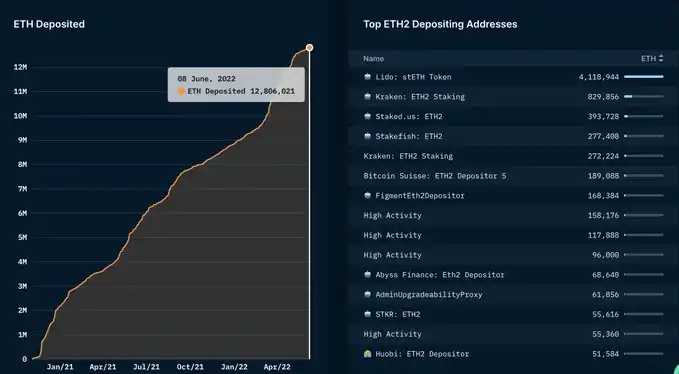
Each stETH can only be redeemed through the launch of the beacon chain. Until then, the 12.8 million ETH in the ETH 2.0 staking contract is illiquid.
Lido holds 32% of these 12.8 million ETH (approximately 4.1 million).
Before we dive into Celsius's balance sheet and track Smart Money addresses, let’s first look at how stETH should be priced:
As Lido states, stETH is pegged to ETH (on the beacon chain), and the market is now starting to reprice the fair value of stETH.
But considering the liquidity dynamics of this investment, what discount is fair for the price of stETH?
The pricing of stETH should be determined by the following 4 factors
· The current market's desire for liquidity (demand/supply)
· The current market's trading volume and liquidity (how the market responds to selling pressure)
· The likelihood of a successful/delayed merge
· Smart contract risk
In detail
1. The market's desire for liquidity
The demand for liquidity fluctuates at different stages of the market cycle. When prices rise and liquidity is high, it is easy to close positions and costs are low, and vice versa.
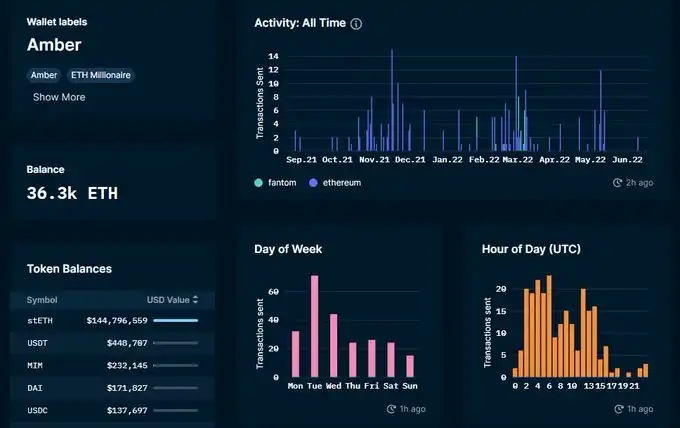
On-chain data shows that there have been significant withdrawals of stETH, for example, from crypto financial service provider Amber, whose wallet address has withdrawn over $140 million worth of stETH from the Curve pool.
This growth trend over the past few days may indicate that a larger-scale potential sell-off is brewing.
In this case, the key supply and demand factor to watch is the crypto lending platform Celsius. If anyone believes that Celsius will be forced to sell a large amount of stETH, this would significantly change the supply-demand relationship we previously emphasized.
The critical question is how much the market can absorb and what the costs will be?
So how is the liquidity of stETH?
2. Current market trading volume and liquidity
This morning, total liquidity in the pools dropped by over 20%, with wallets related to Alameda Research selling off significantly, and Celsius also mentioned this before I published.
Amber's withdrawal of over $150 million in stETH liquidity is significant and likely serves as a warning of potential sell-offs.
This is $150 million that could hit the market in the coming days.
The second point is that the liquidity pools on Curve have become extremely unbalanced, and this imbalance in the funds is dangerous and greatly increases the risk of decoupling.
Withdrawing liquidity from Curve's 3pool was the first shot that led to the UST collapse. Less liquidity = more risk.
The key is that, given the closed liquidity structure of stETH, many institutions and regular participants are exposed to risk.
Those entering the market with stETH could have a significant impact on the market.
3. The likelihood of a successful/delayed merge
The second-to-last risk is the possibility of delays or even failures of the beacon chain, which would impact stETH. As some KOLs have pointed out, stETH is similar to ETH futures.
In this sense, if the merge is delayed and it takes 6-12 months to retrieve ETH after the merge, the locked tokens will increase liquidity costs, which far exceed the yields gained during this period.
4. Smart contract risk
Setting aside demand/liquidity/merge risks, there is also smart contract risk involved.
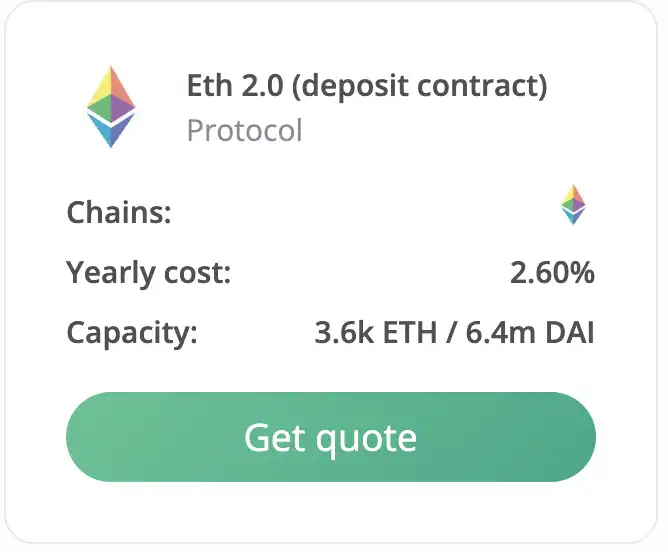
According to the insurance cost of Lido's deposit contracts on Nexusmutual (at 2.6%), pricing is quite straightforward.
Thus, the smart contract risk in stETH ALONE (minimum risk) is at least 2.6%, which roughly corresponds to the current discount of stETH/ETH.
This indicates that the risks of stETH are severely underestimated.
A similar case to the pricing of stETH is GBTC, as both are closed-end.
If you want to sell your GBTC position, you must sell it on the secondary market, as it is a closed-end fund. The secondary market is the only option for liquidity until it converts to an ETF.
If you want to sell your stETH, you must sell it on the secondary market until the merge.
In both cases, this liquidity, open-ended risk, and supply-demand dynamics are underlying factors affecting the market fair value of the asset.
But in this case, why is one trading at a 3% discount while the other is trading at a 30% discount, especially since stETH also has the smart contract risk from Lido.
Lido's seven investors have created a situation similar to UST, including a16z, Alameda Research, Coinbase, Paradigm, DCG, Jump Capital, and Three Arrows Capital.
Similarly, one of the largest holders of GBTC, BlockFi, is currently facing a loss of nearly $500 million.
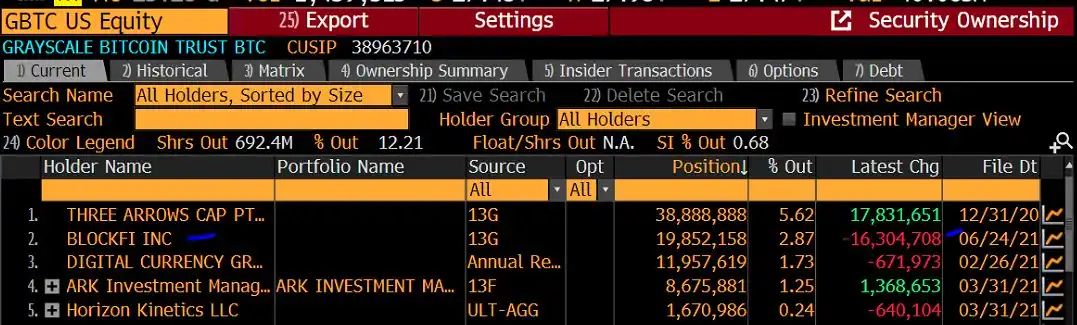
This has already reflected in BlockFi's valuation, as BlockFi is currently raising a new round of financing at a $1 billion valuation, down from $3 billion in March 2021.
What’s the point? Many big players in the game are often wrong, and in this case, they have completely misjudged the liquidity costs of GBTC and stETH, both of which are liquidity black holes in this situation.
So ultimately, we believe that the staking yield of this liquidity trap is too low for a year.
Perhaps this number should be similar to GBTC, at 30%, not 3%.
Now, let’s look at what is happening in the market right now:
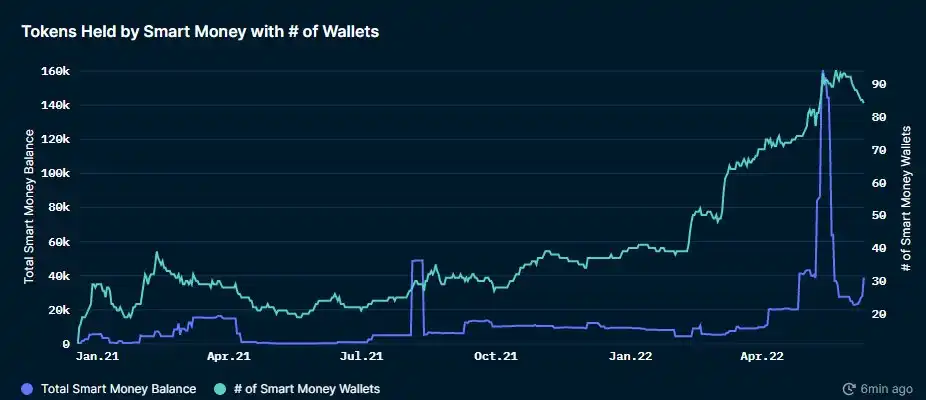
Liquidity has been exhausted, and whales and smart money are selling.
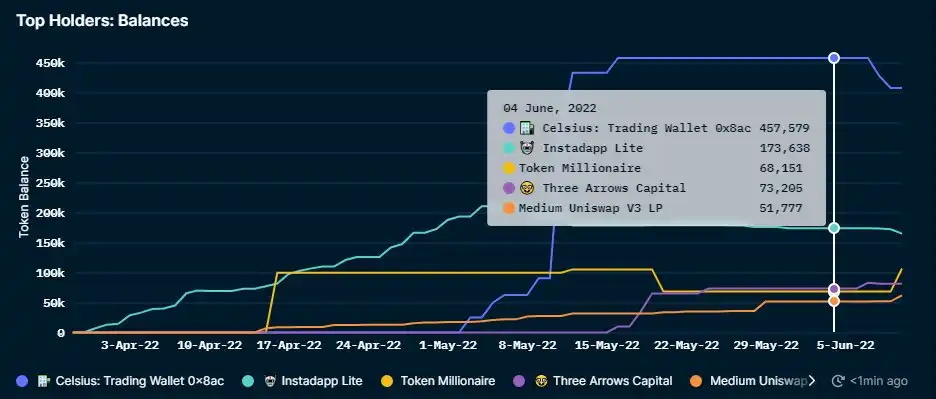
The amount of stETH held by smart money addresses has dropped from 160,000 stETH to 27,800 stETH in one month.
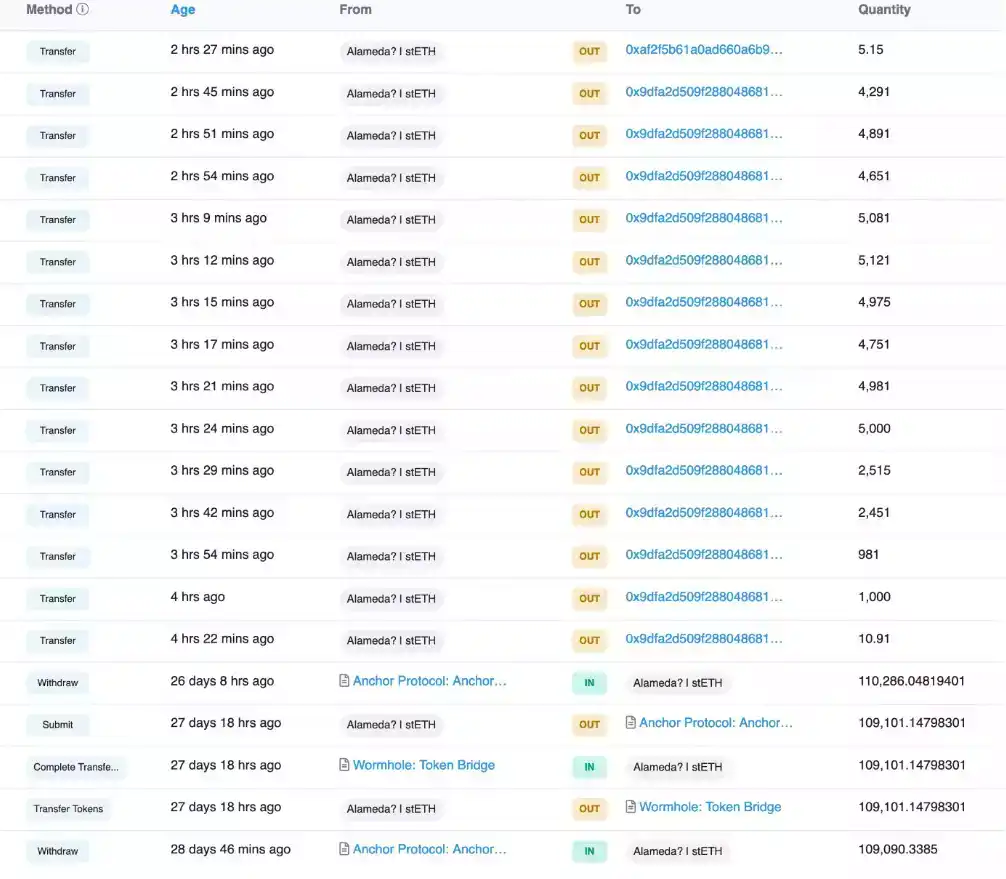
In fact, Alameda sold 50,615 stETH to the market in just 2 hours this Wednesday.
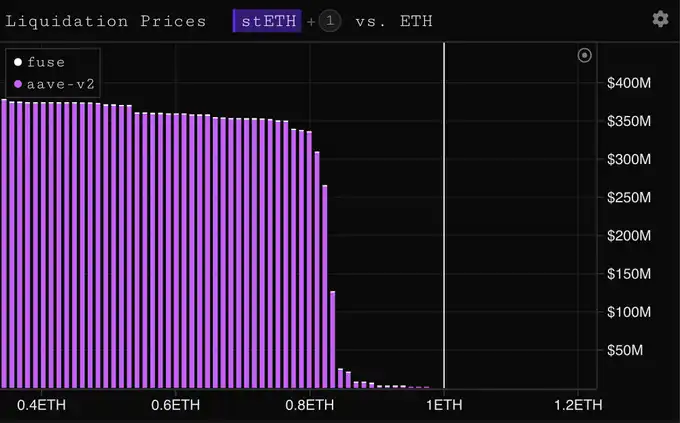
It is very likely that someone is deliberately pulling the peg towards the liquidation price of stETH.
Leveraged stETH holders face the risk of liquidation if they do not have enough collateral.
For example, at stETH=0.8 ETH, $299 million would be liquidated.
Here, the emphasis is on the short term. I ultimately believe that people will be willing to buy stETH at a discount. However, when some institutions must sell, the situation will change slightly.
The institution that may have to sell is Celsius.
By performing on-chain analysis, I was able to calculate Celsius's assets and liabilities.
Total assets are $3.48 billion, loans are $1.11 billion, and net assets are $2.374 billion (assuming Celsius holds 45% of its CEL Token supply, worth about $100 million).
The complete breakdown of their assets is as follows:
Note, this is only their assets in DeFi; no one knows what other crypto assets they hold (e.g., in CEX).
They claim to have about $10 billion in TVL, but I could only find these.
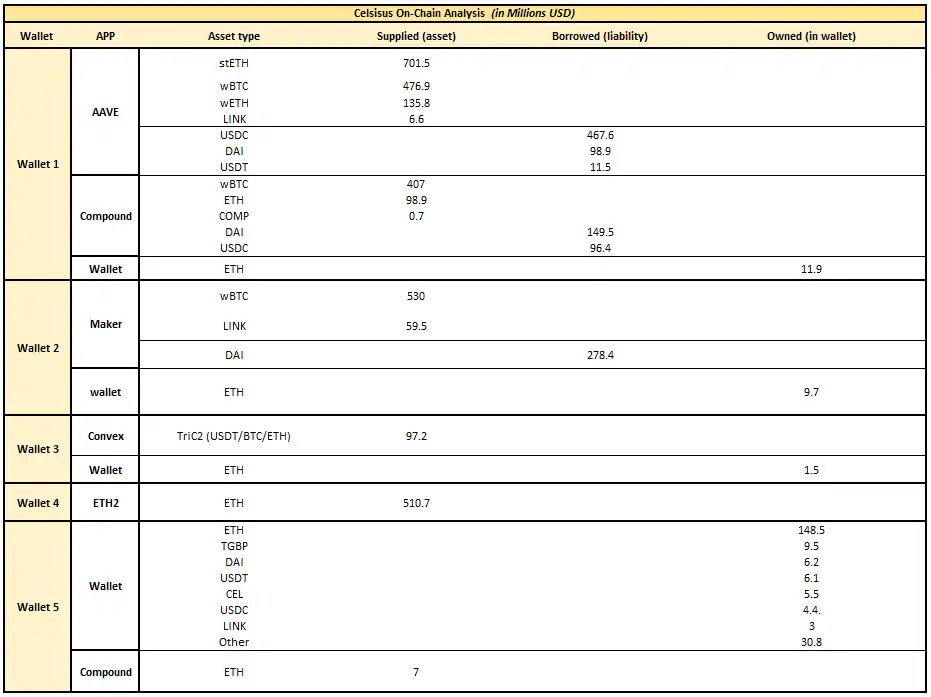
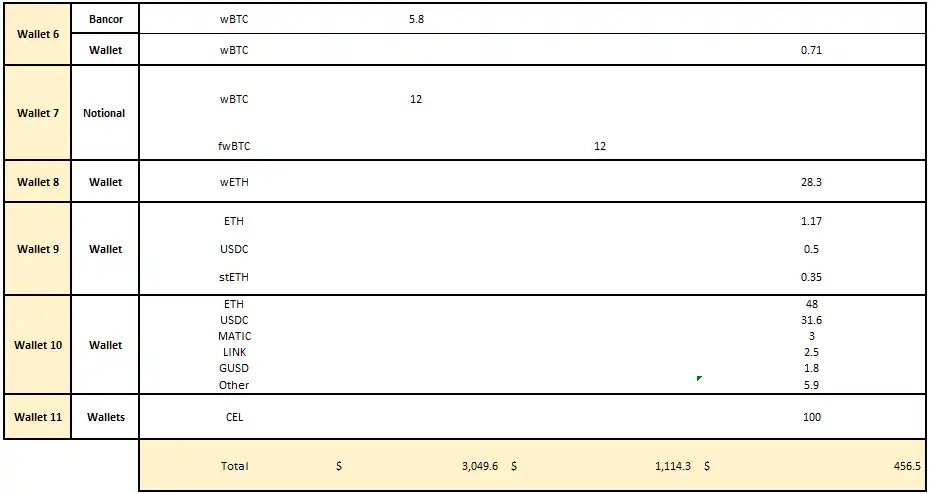
The important part here is that Celsius is a major whale holder of stETH. In fact, they are the largest interest-bearing stETH holder (on AAVE).
If we analyze Celsius's ETH holdings specifically, we find that 71% of it is non-liquid or low-liquid types.
$510 million of ETH is locked in the ETH2.0 staking contract and cannot be withdrawn until after the merge.
$702 million is in stETH, which cannot be easily exited through liquidity pools.

What happens if Celsius users want to redeem their funds?
Are they redeeming?
Why have they activated "HODL mode" on their accounts?
On October 8, 2021, Celsius reported its AUM exceeded $25 billion. Celsius is a private company that only released its financial data for 2019 and 2020, despite repeated calls from investors on various social platforms to release new financial data in 2022, they did not.
The company also did not release audit reports. They issued them in 2019 and 2020, but not in 2021.
On December 20, 2021, they collaborated with Chainanalysis to release a report confirming that since its launch in 2018, users have deposited over $7.609 billion on the platform, with withdrawals exceeding $4.29 billion.
According to the report, Celsius had $3.31 billion in on-chain assets as of December 20.
The management fees reported by the company were $35 million, which is 40% higher than the cost of sales.
The lack of transparency has raised concerns among investors about the possibility of a bank run at Celsius.
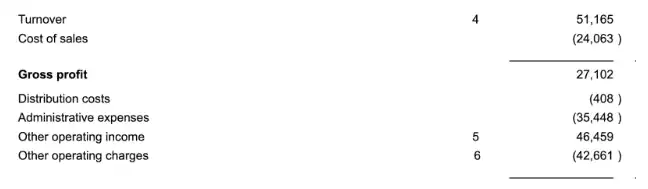
The company currently holds debt in stablecoins rather than positions in ETH, BTC, and LINK, exposing them to market risks from declining cryptocurrency prices.
If the market crashes, they will face a debt crisis.
After the Terra collapse (from May 6 to 12), there was a $750 million outflow (150,000 ETH and $150 million BTC).
In the last two weeks of May, the company experienced a net outflow of $450 million.
Even if we ignore the unreported outflows during that week, Celsius has experienced a total outflow of $1.2 billion.
Such capital outflows increase the risk of a bank run at Celsius.
The following chart shows the capital outflows over the past 5 weeks. The total withdrawals over the past 5 weeks amount to 190k ETH.
Compared to the previous 5 weeks, when Celsius had 50k inflows.
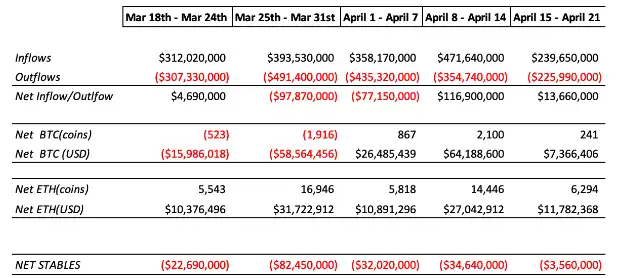
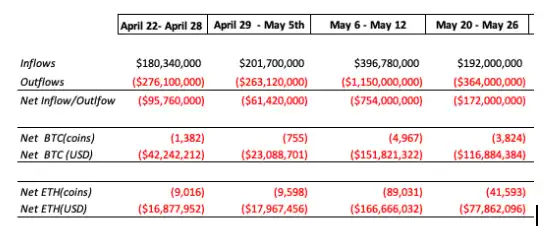
Celsius's ETH and general assets have been experiencing massive withdrawals.
Currently, they have activated "HODL mode," which prevents users from withdrawing funds from Celsius.
Another issue for Celsius is that only 29% of their ETH is liquid:

1. Liquid ETH
Most of the ETH is deposited in AAVE (150k ETH) and COMP (45k), both positions collateralized with assets at an LTV of about 45%.
They must first repay the loans before they can withdraw their ETH.
2. 458k ETH in StETH
The liquidity pool on Curve, st-ETH vs. ETH, is highly unbalanced, with only 250k ETH against 642k stETH. If Celsius were to swap all of the stETH, they would only receive 250k ETH.
3. 324k ETH locked in the ETH 2.0 contract, Celsius will not be able to access this ETH for at least 1-2 years
Of which 158k was obtained through Figment.
The remaining 166,400 was obtained through the Ethereum Foundation's ETH 2.0 contract.
Additionally, they lost $70 million in the Stakehound incident.
(BlockBeats Note: On June 7, according to Dirty Bubble Media, the crypto lending platform Celsius Network lost at least 35,000 ETH in the Stakehound private key loss incident.)
They then lost $50 million in the BadgerDAO hack incident.
Moreover, the $500 million in customer deposits vanished in the recent LUNA collapse event.
So how can one trade to profit in this situation?
We have seriously considered and contacted market makers, and searched DeFi. You need to find a place to borrow stETH before you can sell it, and there are no related contracts, making it a bit difficult to profit from this.
There are two main ways to do this.
1. Over-the-counter market.
If you are a large institutional participant, you will have access to market makers and brokers who can lend you stETH against your ETH collateral.
This is impossible for 99% of market participants.
2. Euler finance
You can deposit ETH at a holding cost of 4% and borrow wstETH to sell on Curve, Uniswap, or 1inch.
The risk-reward ratio of the trade is good, as the largest cost is the ETH returning to the peg, and you must repay the loan; this would likely incur a loss of about 5-6%.
Similar to UST, given that stETH has limited upside risk compared to ETH's value exceeding 1:1, this is a cheap way to bet on the market.
Another way to profit from this trade is to buy stETH at a discount. If stETH is trading at a larger discount than GBTC (30%) and there are forced sellers in the market (like Celsius and others), it feels like a good opportunity for us to convert any ETH holdings into stETH.
 Risk warning
 Risk warning



Popular articles