







A Brief Analysis of Web3 Game Randomness: How to Use Random Factors to Regain Player Trust?
 Core Viewpoint

 In the era of video games, randomness occurs in the backend of algorithms, leading players to inevitably question the authenticity of randomness.
Written by: Emily Cockley, “Redefining Trust: Truly Random Gaming”
Compiled by: Xinyang, DAOrayaki
The Magic of Randomness
Since ancient civilizations, the fascination with randomness has been a part of our social and entertainment mechanisms. In early Greek and Roman civilizations, local prophets provided seemingly random solutions and theories to describe the meanings perceived from natural phenomena. A good example is attributing meteors to specific events. It was said that the passage of such celestial bodies indicated specific outcomes of recent events, such as Julius Caesar being deified after his assassination [1]. We have always been drawn to the inexplicable and unpredictable, whether we embrace it as luck or grasp at random correlations to try to avoid what we perceive as the destructive force of fate. The phenomena are random, yet we have always assigned human explanations to them to answer many of the mysteries we face.
 Royal Game of Ur
Later societies introduced formal games of chance, reading physical information from specific objects designed to behave within a statistical response range. Some of these mechanisms are still in use today. Even in our most modern societies, we still entertain ourselves with classic card games; role-playing and board games still play out actions based on dice rolls. During our disastrous game nights, it may feel like the statistical mechanisms are against us, but ultimately, the physics of randomness overwhelms our inner doubts. We cannot see all the natural effects on the dice we throw, but we know the roll is fair because it happens right in front of us. At the very least, it is transparent.
From Classic to Modern
Starting from a 50% random coin toss, we have come a long way. While such odds still have valid applications, we are now building algorithms that launch hundreds or even millions of random numbers from a single seed to expand the ways we enjoy randomness. Basic algorithms, or pseudo-random number generators (PRNG), have been sufficient to handle relatively simple games like cards. These games have been translated into online versions where randomness does not significantly affect the player's enjoyment level. We always know there will be the same 52 cards in each game. Randomization enhances the player experience without causing significant losses or defects due to randomness.
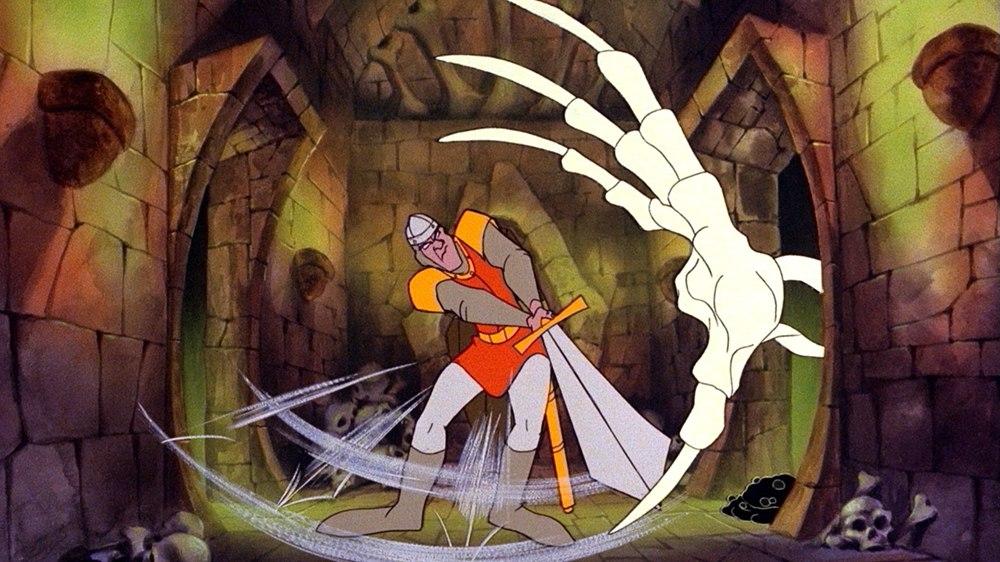
Over time, new and more complex digital games have been created, with their randomization becoming increasingly blurred, sparking debates about whether the games are truly random. Consider “Dragon's Lair,” an arcade game released in 1983. In this game, there are multiple sets of three rooms, each set representing the choices that activate each level. As players complete the random choices for each level, they enter the next loop until all three rooms in each set have been used. The level generator “remembers” the levels that have been played and ensures that players encounter variations of each level throughout the game loop [2]. In such examples, even from Minesweeper to puzzle games like Sentinel, randomness does not hinder the entertainment value of the game. It does not change the mechanics of the game or the skills needed to win; it simply introduces new experiences.
As the video game industry diversifies, the possibilities based on randomness have also increased. It has become so complex that, in some cases, it has affected the enjoyment of the game. An article by Zack Zwiezen in Kotaku presents a common view that players often dislike output randomness—the randomness caused by player decisions. By design, these types of randomization seem to contradict previous experiences of randomness in the game, making players feel deceived. Zack points out that in reality, this is because our instincts do not capture the nuances of statistics. Loot boxes are appealing because they exploit human loss aversion and the addictive nature of gambling. The quality of loot boxes obtained does not match the advertised statistical outcomes, often leading to more pronounced negative emotions than when the same player acquires legendary items. Even when players see the statistics in advertisements, they are likely misled by this loss aversion bias—making them feel cheated. While the chance to obtain valuable items is highly attractive, there is currently no real-world value to be gained. To achieve a successful balance, there needs to be a shift where people's perception of ongoing losses is less than their perception of the overall value gained.
In the pre-video game era, randomness was transparent; you could see the process of rolling dice, drawing cards, or flipping coins. Now, randomness occurs in the backend of algorithms, leading players to inevitably question the authenticity of randomness. Especially as the entertainment industry begins to monetize “randomness,” such as in gambling and purchasing mystery items in games, there is increasing scrutiny on the actual randomness of the mechanisms and the predictability within randomness.
The gaming industry is innovating methods to acquire more stable value through in-game purchases. Loot boxes are one of these mechanisms, where players spend time and money to obtain random assets in the game, which add value through gameplay. According to Game Industry News, game developers often do not disclose the odds of obtaining valuable items in loot boxes or randomized character/asset features, leaving players at the mercy of unknown algorithms. There are constant complaints about receiving unusable items due to level barriers or duplicates of items already in their inventory. Since many games do not allow you to buy, sell, or trade items with other players, having duplicate items is often useless, and any value of assets in the game is limited to the original owner. This has led to a general distrust of loot boxes. The transparency of statistics is something classic games excelled at, and players are demanding clear predictability in this regard.
Blockchain at least offers some ways to facilitate trust and true ownership of in-game assets, ensuring a high-quality gaming experience in such a complex environment. Game developers can provide transparency and true randomness to players through established tools, fostering good long-term relationships with players. Blockchain-based games and gambling are already in development, introducing transparency and giving gamers more control and power over their items. Introducing true random number generation will only improve the foundational work that the industry has already accomplished.
Transparency is one aspect of trust. The ability to prove this randomness is another. Increasing transparency in virtual games includes proving whether you are using procedural randomness or true randomness, much like the physical randomness of dice rolls used for centuries. In traditional gambling games brought into Web3, we already know many statistics. What is missing is the ability to ensure that randomness is executed. Online gambling introduces additional transparency barriers that can only be resolved by introducing a method to ensure randomness—confirming that casinos operate honestly. Given that the stakes in gambling can be astonishingly high, the more entropy in any randomness mechanism, the more attractive its value proposition becomes.
The gaming and gambling industries must address user experience issues in improving their randomness mechanisms; however, the gambling industry arguably has more considerations on the road to improvement. It is projected that by 2025, loot boxes will generate over $20 billion in revenue, and the industry has recognized this value by incorporating loot boxes into various types of games [5]. The gap that needs to be bridged is how user experience affects their level of engagement with random box items. When players spend countless hours earning in-game currency to purchase loot boxes, hoping to expand their inventory collection, encountering the same items (or even obtaining items of the same category) does not feel random or fair. Even if the randomness is honest, players often feel victimized simply because they cannot confirm that the game operates according to the advertised statistics.
True Random Gaming
As the gaming community evolves and the number of items earned by each player increases, a use case emerges for identifying a greater number of unique items through true random identifiers. Quantum random number generation (QRNG) is a digital generation method that utilizes an isolated natural phenomenon to produce an unpredictable or truly random result. With this quantum-level randomness now available through the QRNG at the Australian National University, combined with the introduction of loot boxes, it can create so much excitement and revenue for a growing industry, with opportunities for growth only increasing with transparency and reliability. With the use of smart contracts, the value proposition of Web3 games can be solidified. Upon purchase, an ID can be generated containing all necessary details to allow developers to segment players into reward pools, even incorporating them into the original game in the event of core version changes.
It is necessary to ensure that the randomness they claim in the loot box structure is executed, regardless of which randomness mechanism they use. With the introduction of smart contracts, game designers can even introduce innovations that expand opportunities for revenue growth and improve user experience. One possibility is that smart contracts can read players' inventories and provide them with the same random value of items they have not yet been offered. Making items NFTs would allow for such functionality, increasing the value of items by reducing redundancy and sparing users from disappointment due to redundant losses. Another opportunity is to develop universal unique identifiers for items so that on-chain game assets can be used in other on-chain games. To achieve this, a universal identifier needs to be introduced to ensure that items are uniquely identified in games that participate in item sharing. An effective method is to introduce a true random number to identify each item, allowing it to be tracked regardless of which game ecosystem it joins. These two changes would provide more revenue potential while also considering user experience.
To execute this innovation, smart contracts need to obtain true randomness. The QRNG at the Australian National University provides a source of true randomness and is the first to introduce true randomness to Web3. PRNG is often sufficient for randomness in our current environment, but QRNG offers a more unpredictable randomization that is safer while providing the inherent benefits of randomization, such as the ability to mint unique items as NFTs in games, further increasing the value, variety, and uniqueness of items.
Footnotes
[1] Ancient Origins. Myth and Meteor https://www.ancient-origins.net/news-science-space/ancient-meteor-001056
[2] Dragon's Lair Project. Dragon's Lair Scene Sequencing http://www.dragons-lair-project.com/games/related/sequence.asp
[3] Kotaku. Randomness in Video Games is Not All the Same https://kotaku.com/randomness-in-video-games-is-not-all-the-same-1841049263
[4] Game Industry News. Why Everyone Hates Loot Boxes in Video Games https://www.gameindustry.com/news-industry-happenings/why-everybody-hates-loot-crates-in-videogames/
[5] WHICH-50. Revenue from Online Gaming Loot Boxes Will Exceed $20 Billion by 2025 https://which-50.com/revenue-from-online-gaming-loot-boxes-will-exceed-us20-billion-by-2025-study/
 Risk warning
 Risk warning