The Future of Ownership Economy and Media

 Investing appropriately in the ownership economy today will help established companies better prepare for the future of media.
Original Title: 《The Ownership Economy and the Future of Media》
Author: Mitch Worsey
Translated by: Evelyn
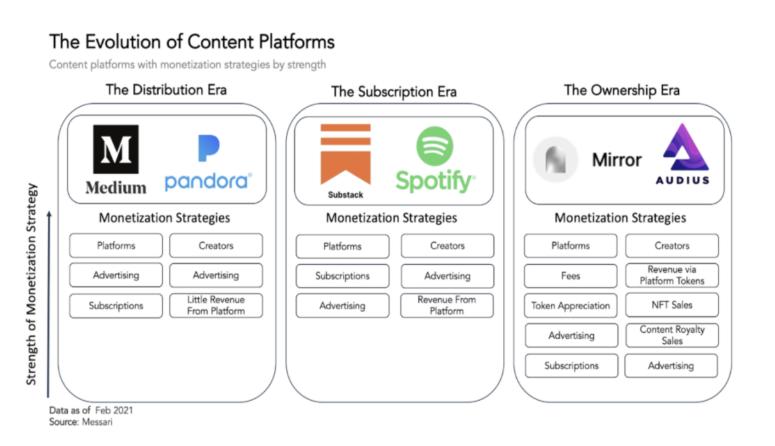
The media and entertainment industry is preparing for its next evolution. Over the past decade, nearly all major players have shed their long-standing distribution business models and launched subscription-based streaming platforms. However, as competition in this market intensifies, media companies have begun to look beyond streaming subscriptions for new growth opportunities.
Where should media focus? Startups like Mirror and Audius are innovating traditional subscription models by allowing creators to interact directly with consumers and monetize through tokens. The key distinction of these platforms is that they not only enable users to access content but also to own it. It is this concept of ownership that will define the next era of media.
The transition of media to an ownership era will be driven by the adoption of creators and web3 concepts, such as NFTs (non-fungible tokens) and DAOs (decentralized autonomous organizations). While there is speculation about the sustainability of these applications, media companies investing in building during the ownership era will create new revenue streams and establish competitive advantages. This has significant implications for media and the ownership economy we will discuss in the future.
Ownership Economy
Ownership is a powerful tool that can motivate people. It encourages individuals to increase the value of the items they own, and if they share ownership of that item, it adjusts the incentive mechanisms when multiple people share ownership. A common example of this model is employee stock option plans.
In the media and entertainment industry, end users lack ownership opportunities. Streaming platforms primarily act as intermediaries between content and consumers, so if consumers decide to cancel their subscriptions, the switching costs can be low. If users could gain ownership of in-game skins, then games might not lose customers as easily. The next evolutionary step for media is ownership, where users can own digital content and drive value back to the platform. This is the ownership economy.
Today, this new model is most prevalent in the crypto world, with blockchain networks like Ethereum and Solana driving the adoption and growth of NFTs. As traditional media and entertainment companies grapple with slowing user growth, this presents an opportunity for these companies to capitalize on the shift.
The impact of the ownership economy on the future of media can be summarized by analyzing several key market characteristics. Note: Topics related to the metaverse will not be included in this analysis.
1. Digital Scarcity
Today, media and entertainment companies attempt to create scarcity for digital content through strategies like theatrical releases and streaming subscriptions. The reason digital scarcity is important for media companies is that scarcity directly affects the fundamental value of a product or service. When demand is sufficient, the scarcer an item is, the higher the value of owning that item.
The introduction of NFTs provides media companies with a new way to leverage digital scarcity. NFTs offer a mechanism to create scarcity and verify ownership through blockchain. If a media company launches an NFT project based on existing IP with a limited number of tokens, consumers can purchase and own these tokens until the supply runs out. This gives IP owners the power of suppliers and provides consumers with a new way to earn directly.
On the surface, NFTs may seem like just a digital commodity sales game. However, if utility is provided to owners, they represent a larger opportunity. For example, Disney could release NFTs for the Marvel Cinematic Universe (MCU) featuring different characters from various stages of Marvel comics. Then, owners of MCU NFTs could gain exclusive early access to upcoming Disney+ MCU shows, thereby increasing the value of the platform and its content.
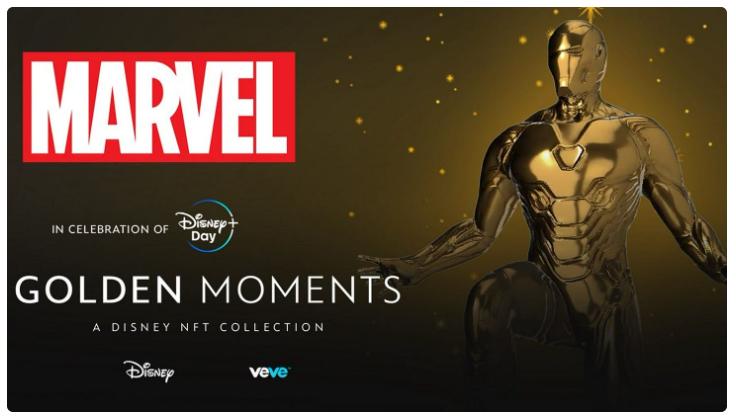
Established companies like Paramount (formerly ViacomCBS) and Bleacher Report have begun investing in NFTs. It is easy to understand why media and entertainment companies see significant upside in these digital assets. With NFTs, these companies can generate new revenue streams by tokenizing their currently vast IP libraries (as well as any future content added).
2. Fans
Li Jin, co-founder of web3-native venture capital firm Variant, first introduced the concept of "100 True Fans" two years ago. The basis of this argument is that a creator's 100 "True Fans" are more valuable than pursuing a broad audience.
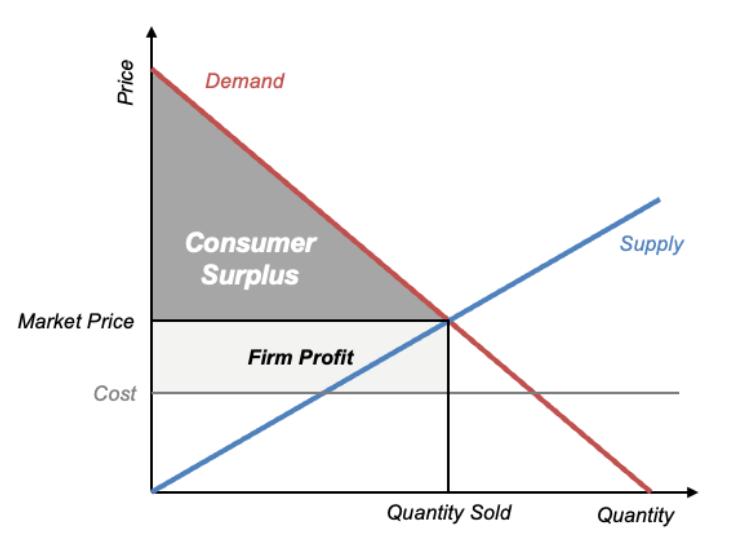
The idea of 100 True Fans has two important implications for media and entertainment companies. First, this model provides an opportunity to segment consumers based on their fans and willingness to pay. Today, Spotify treats all streaming equally, regardless of user engagement levels. This flattens the demand curve and leaves consumer surplus (the portion of what consumers are willing to pay above the price) uncaptured by the platform.
Second, this model incentivizes creators to provide more benefits to their fans. According to incentive economics, the more sensitive a person's compensation is to their performance, the harder that person will work. Since the current subscription model limits creators' upside with standard pricing and small royalties, creators' motivation and creativity are adversely affected.
Through the ownership economy, media companies can regain lost consumer surplus through fan-based price discrimination. NFTs provide developers a way to earn more from their most passionate fans at higher prices while also incentivizing creators to provide more utility to those fans. This creates a flywheel that increases the value of NFTs while benefiting both creators and consumers. Music startup Sound.xyz is already leveraging this opportunity, allowing musicians to release NFTs tied to their music.
3. Community Economy
A key component of the ownership economy is that community participation should be economically rewarded. To better understand what impact this will have on media and entertainment, let’s look at the issues modern streaming platforms face.
As Chris Dixon from a16z first pointed out, most platforms follow a predictable lifecycle. Initially, these companies attract users and contributors (developers, creators, businesses) to their platforms by providing valuable services, thus achieving growth. As these groups move along the S-curve, their relationship with the platform shifts from positive-sum to zero-sum. This can be seen in Netflix's recent price hikes or Disney's restrictions on profit-sharing for actors and producers.
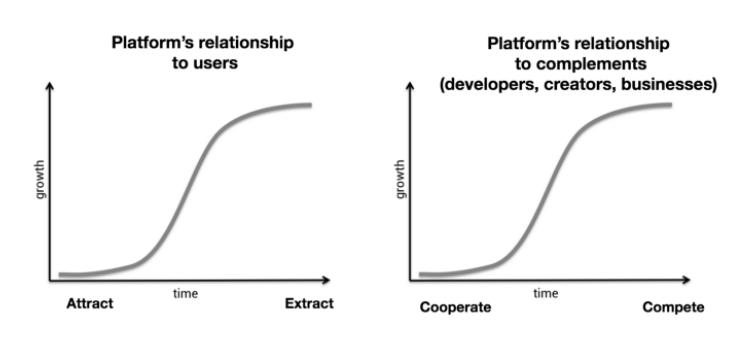
Media companies can break this cycle by shifting to a token-based community economy model. The platform's focus will no longer be on extracting revenue; instead, it will be linked to how much value is created for the entire network of participants. For the first time, it will allow users to receive economic rewards for their participation. Essentially, the community economy adjusts incentive mechanisms by promoting platform growth and token appreciation.
One increasingly popular application of this idea is play-to-earn (P2E), where players receive economic rewards while playing games. For example, Axie Infinity is a blockchain-based game where players battle with unique NFT characters. Players use these characters to earn tokens that can be exchanged on the market. As the game gains popularity, the value of the tokens rises, creating economic incentives for those earning tokens to continue playing. If streaming services introduce similar token-based models, they can better align incentives with consumers, creating more value for the community and preventing user churn.
4. Blockchain Distribution
Today, more content is being produced than ever before. While this increase in supply is good for consumers, it may hurt streaming platforms given the sheer number of choices. Due to this surge in content, users will become more selective about what they consume. This means media companies may lose revenue from customers willing to pay for individual shows rather than entire subscriptions.
If content is offered on the blockchain, then the ownership economy can address this issue. This model creates a more open market for platforms to acquire content and allows IP owners to directly monetize content through smart contracts. But this does not mean streaming services will no longer curate content for consumers. Instead, it provides media companies with a new way to buy, sell, and distribute IP.
Additionally, the distribution of royalties in media has become increasingly complex. However, blockchain distribution offers an opportunity to simplify participation and royalties across the entire network of participants more efficiently. For every piece of IP stored on the blockchain, royalty payments can be encoded in smart contracts and automatically paid upon use.
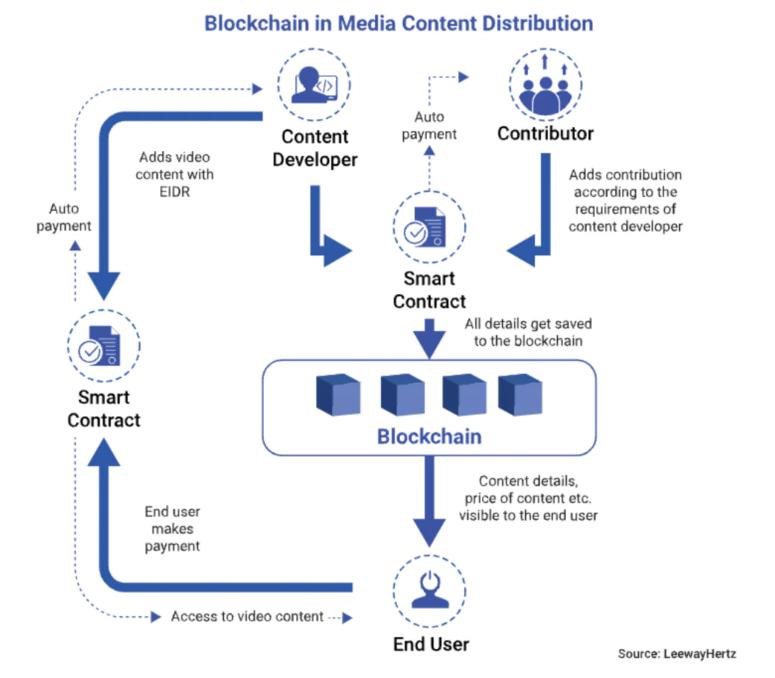
Media still has a long way to go before transitioning to a blockchain distribution model, but increasing capital is being invested in this area. For example, a16z recently led a $6.8 million seed round investment in Filmhub, a blockchain-based platform that enables filmmakers to upload and distribute content directly to streaming channels. Fox also invested $100 million in Eluvio, which provides backend blockchain infrastructure for content distribution and monetization.
What Does This Mean for the Future of Media?
Several barriers hinder the widespread adoption of the ownership economy. Due to Ethereum's consensus mechanism, verifying transactions on the blockchain is slow and costly. However, the crypto community has been working to address this issue by investing resources into alternative blockchains (like Solana), sidechains (like Polygon), or upgrades (like Ethereum 2.0). Additionally, media companies will need to find ways to persuade consumers to adopt crypto applications.
Despite these challenges, the ownership economy has the potential to transform the media and entertainment industry. Media companies should first assess how digital scarcity, fans, community economy, and blockchain distribution will impact their business. The ownership economy is also not an all-or-nothing proposition; a combination of subscription and ownership models may be the best approach. That said, making appropriate investments in the ownership economy today will help legacy companies better prepare for the future of media.
 Risk warning
 Risk warning

Popular articles