P2E is dead, rethink blockchain games with first principles

 Blockchain games need to break free from path dependence and reimagine themselves. What we face is not optimizing within an already established model, but rather a time that still requires a paradigm-level breakthrough.
Author: Kongdao, Investment Manager at Parallel Ventures
Cover: Photo by Mo on Unsplash
Preface: This article is not investment advice, and none of the products mentioned in the text have issued tokens. Thanks to Guilty, the founder of Topology, for his insights and tireless explanations.
As the bear market deepens, the market has become increasingly dull. Previous mainstream narratives have shown signs of fatigue, the development of DeFi has hit a bottleneck, and NFT trading volumes have been declining steadily, with no exciting projects emerging for a long time. The three-year bull market developed too quickly, and many models that could only exist with ample liquidity and extreme risk appetite from market participants now face the harsh reality. The bear market is a moment to re-examine all the "common sense" accumulated during the bull market.
This time, I want to talk about blockchain games and P2E. My view is that P2E is a misguided attempt in the tech tree of blockchain gaming, and all Crypto projects focused on creating P2E games will not achieve long-term success.
I even feel that GameFi is not a separate category but should be classified under "Big DeFi." P2E is like liquidity mining with a few extra steps; liquidity mining serves as a token distribution mechanism in DeFi, but it is not the source of DeFi's value. The true value of DeFi comes from innovations like AMM, pool-based lending, yield aggregators, and other mechanisms, as well as its composable and permissionless characteristics. Where does the corresponding value in GameFi come from?
A rather obvious answer is playability; enhancing playability allows players to derive real enjoyment.
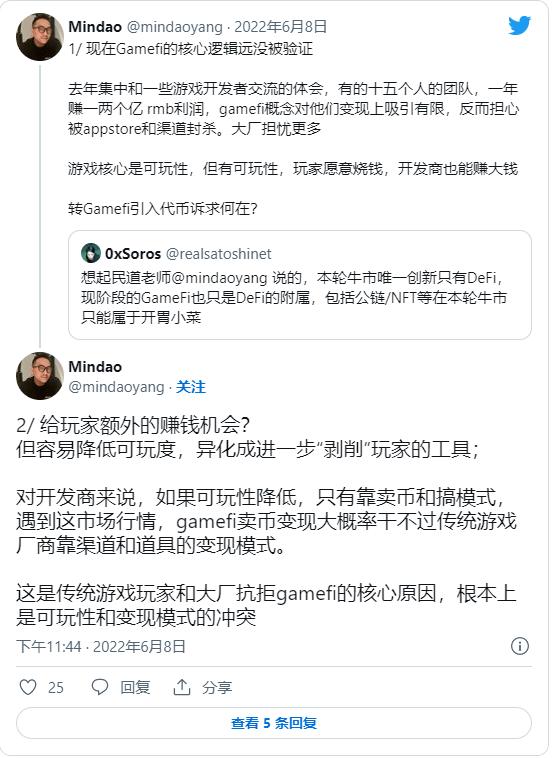
Thus, many traditional game developers have emerged, possessing a wealth of development experience in traditional game development. They aim to "chain-modify" already validated games from the traditional gaming world, with the goal of creating blockchain versions of assets like EVE or games like World of Warcraft with P2E models. However, I remain skeptical about whether this can be achieved. Does allowing player assets to flow freely and be monetized truly make the game more enjoyable, or the opposite? I believe that "monetizing" players will have a substantial impact on their intrinsic motivation, leading to an inherent conflict with playability. Here, I would like to directly quote the views of Mindaoyang.
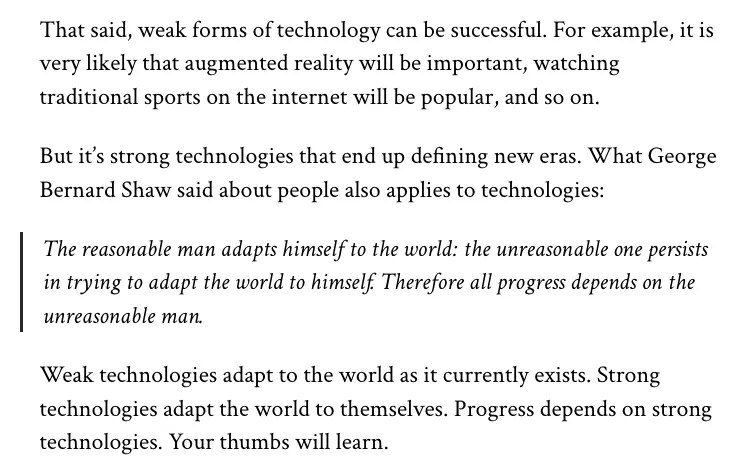
At the same time, the model of chain-modified games is also a "weak technology" model as described by cdixon. It may seem closer to mainstream audiences, but it will not be the next era. The concept of weak technology comes from cdixon's article "Strong Tech vs. Weak Tech," where a technology always appears in paired forms. One is the weak tech version, which looks closer to mainstream and is easier to implement; the other initially resembles a toy but has the potential to create a new era. For example, many non-token blockchain projects from 2018 and 2019, as well as consortium chains + real economy and supply chain finance projects, are weak technologies; Ethereum and DeFi represent strong technology.
Blockchain games need to break free from path dependency and reimagine themselves. We are not facing the task of optimizing already established models but are still in need of paradigm-level breakthroughs. In my view, instead of creating games through chain modification and competing with traditional games using traditional methods, we should think about how crypto and blockchain can create more unique experiences, focusing on the advantages of crypto.
When we observe DeFi, it is a full expression of the advantages of blockchain: permissionless, extremely open, combinable, and community-governed. If we build games on-chain, we still need to emphasize these advantages, as they are what truly make our games extraordinary. We should build fun using DeFi principles and create on-chain games.
I believe that games constructed based on the above principles represent the strong tech version of blockchain gaming. Isaac is a recently discovered blockchain game that aligns very well with the "strong tech" paradigm, built in a more "native" way.
Isaac is developed by Topology Studio and differs from the typical blockchain games we often see, which usually only have tokens and key assets on-chain while the actual game activities run on company servers. Isaac is a fully on-chain game built on StarkNet, meaning that all game logic is processed using smart contracts, giving the game the advantages that DeFi possesses.
New expressive media require new modes of expression; new technologies must also have accompanying design philosophies to create excellent content. When 3D graphical technology was just beginning to be applied in the gaming field, people did not actually know how to design 3D games. For example, before the advent of 3D games, 2D platformers like the Mario series were already very mature. In the process of transitioning platformers to 3D, two games are particularly representative: Crash Bandicoot and Super Mario 64.
Although Crash Bandicoot utilized the advanced 3D graphics technology of its time, it did not achieve breakthroughs in game design patterns. While it featured 3D environments, it could not be freely explored and remained a simulation of the 2D platforming model, transitioning from left-to-right movement to front-to-back movement. The core gameplay still focused on overcoming obstacles and testing hand-eye coordination.
Super Mario 64, on the other hand, broke free from the mindset of simulating 2D platforming games and rethought gameplay based on a 3D game environment, transforming from a linear, one-way path to an open sandbox exploration. The core gameplay shifted to evoking curiosity and guiding players to explore.

The design of on-chain gaming must also be based on the on-chain environment and first-principles game design thinking.
Topology's design philosophy can be summarized in the following points:
- Create true "depth": I understand this as focusing on creating rules and the gameplay that evolves from those rules. The surface of this "game" is supported by complex physical rules, rather than simple, brute-force hard coding. Minecraft is a game that emphasizes rule creation; its world is made up of blocks that have their own operational logic. Players can freely explore within a self-contained system of rules, and each player can have a different gaming experience, supporting thousands of hours of playtime. Some roguelike games can also be categorized here.
In contrast, cinematic games like Uncharted and Tomb Raider lack true "depth"; they are merely fixed experiences where the game loses its value once the player follows the flow to completion.
Inclusivity is important: On-chain gaming must have sufficient inclusivity, allowing as many people as possible to participate in the game. For example, CS:GO rewards those with quick reflexes and good hand-eye coordination, while DeFi rewards those who understand game theory and are information-sensitive. Topology's goal is to enable as many people as possible to find their place in the game.
Open construction: This is also a significant advantage of on-chain gaming. Traditional games are also attempting to open up some APIs and provide SDKs and developer tools to allow players and third-party developers to participate in game creation. This attempt has indeed proven effective, as traditional games have demonstrated the potential for third-party/community development. For example, CS:GO originated as a mod of the Half-Life series; Dota was initially just a map in Warcraft III. However, traditional game mods and developer tools are fundamentally limited by game developers, while the on-chain architecture will elevate the openness of games to a whole new level, allowing third-party developers to stand on equal footing with the official developers. Or rather, the concept of "official" will ultimately disappear.
Topology believes that what official developers do is merely plant a seed and set the initial "physical parameters," allowing participants to influence the "evolution" of the world. We have already seen glimpses of this in DeFi, where numerous developers build new products around existing DeFi protocols, which is also the charm of Web3.
- Native non-simulative design philosophy: It does not pursue complete realism and high resolution that closely aligns with reality but instead establishes a parallel on-chain reality that fully utilizes on-chain rules. Just like Super Mario 64 does not pursue realism in 2D platforming games but instead thinks organically based on the given game environment.
Based on the above design philosophy, Topology has launched its first experimental work—Isaac.
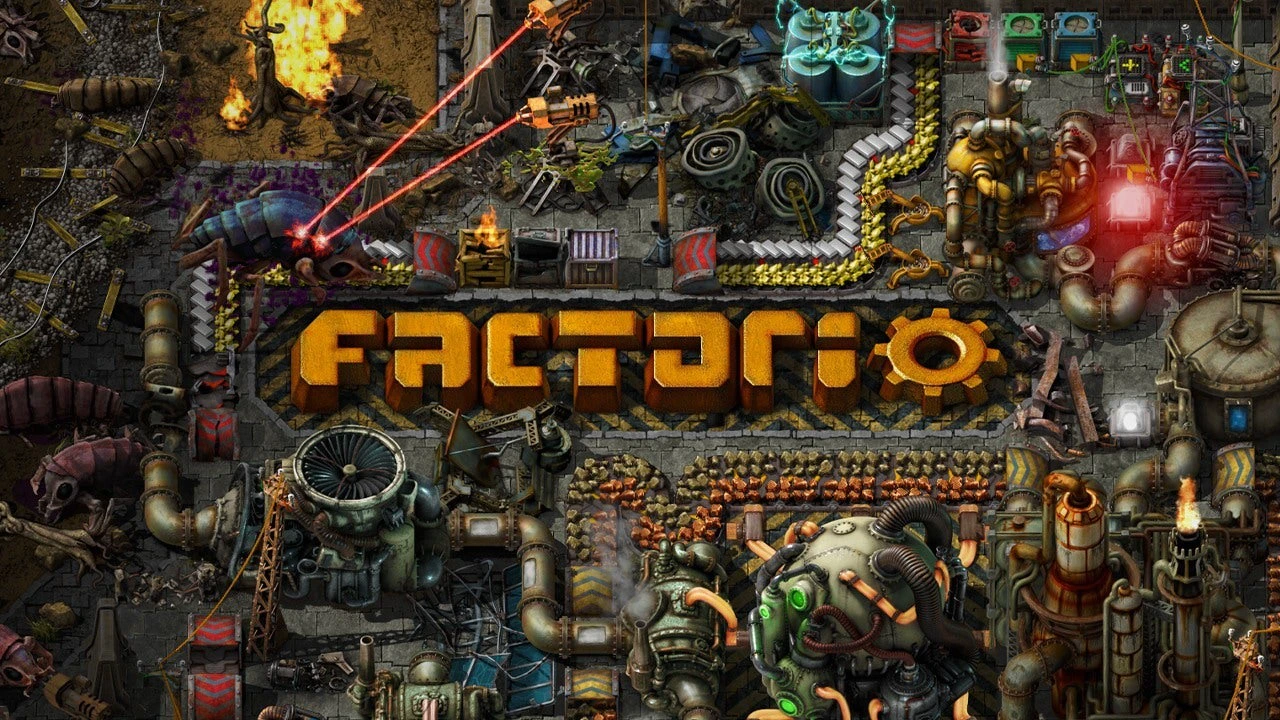
Isaac is like a combination of the three-body problem and Factorio. The game features three different stars and a planet orbiting around them. Leveraging StarkNet's gasless characteristics and high processing performance, Isaac imprints physical rules on-chain using smart contracts, simulating gravity on-chain.
Friends who have read "The Three-Body Problem" know that the three-body system is a chaotic system, sensitive to initial conditions and unpredictable in the long term. It is an unstable system where the planet faces the danger of falling into a star. This is also the root of the Trisolaran civilization's repeated upheavals; it is a planet constantly facing the sword of Damocles of destruction, which is why the Trisolarans need to explore habitable planets outside their star system. Our small planet in Isaac is the same; however, instead of escaping our home with a spaceship, we use the method from "The Wandering Earth"—equipping the planet with planetary engines, providing thrust at the right moment to change the planet's trajectory and avoid falling into the star, allowing the planet to survive.
Players need to collaborate to establish planetary engines on the planet's surface, with gameplay reminiscent of Factorio. Players must collect energy and raw materials, allocate resources, manufacture components, and assemble planetary engines. They must constantly make trade-offs, such as whether to produce more generators to increase factory efficiency or use limited resources to produce more components to build planetary engines sooner. Players also need to seize the right moment to give the planet a boost in the right direction; otherwise, they may waste resources and enter an incorrect trajectory, leading to the civilization's demise.
Players must truly collaborate for this small civilization to survive; it is a social cooperation experiment. Some players may be energetic and continuously grind to produce machinery; others may excel in physics and calculate the best time and place to activate the planetary engines; and there may be some individuals, like the "Earth Trisolaran Organization," who welcome the planet's destruction and engage in sabotage.
Another point to emphasize is that although the physical rules governing the entire system are encoded through smart contracts, players cannot directly simulate and predict the future through software. This is because, in addition to gravitational rules, player behavior introduces randomness, making this chaotic system unpredictable in the long term, ensuring that the game retains its element of surprise for players, as the unknown creates interest.
One reason Isaac was built in an on-chain manner is that the developers hope it can exist autonomously, free from their control. Isaac maintains an open attitude towards the player client of the game; all game logic is on-chain, and anyone can build any form of front-end, whether on consoles, PCs, or in any format (as long as it is comprehensible). This is somewhat similar to Dwarf Fortress, which has various community-developed front-end display interfaces, or the various graphic texture packs in Minecraft.
Isaac has not yet been officially released. I believe that games like Isaac represent the correct way to open up blockchain gaming. In fact, on-chain "games" are no longer just simple games; they can exist autonomously, be openly constructed, and allow free participation. Thanks to blockchain technology, they can endure even without developer maintenance. Understanding on-chain gaming through the framework of games is no longer sufficient to encompass its connotations; on-chain gaming has effectively become a form of alternative reality, which is why Guilty refers to their "game" as on-chain reality.
The future is becoming increasingly interesting.
 Risk warning
 Risk warning


Popular articles