Analyzing the Internal Mechanism and Breakthrough Path of the "Web3 Paradox" (Part 1: Paradox)

 What is the gap between the ideal decentralized design and the reality of application ecosystem construction?
Author: Spike, ThePrimedia
Editor: Jerry Crypto
Editor's Note
Mencius said: Fish is what I desire; bear's paw is also what I desire. Both cannot be had at the same time. In the world of Web3: decentralized technology is what the public desires; application value is also what the public desires. Both cannot be had at the same time. This article will attempt to analyze the gap between the Web3 vision we yearn for and the reality of ecological construction, and explore the path to breaking through this gap. The full text will be published in two parts: Part One - Paradox and Part Two - Breaking Through.
Part One - Paradox
In the wave of concepts sweeping through Web3, a series of imaginative DAPPs have taken root and sprouted, emerging like bamboo shoots after rain under the nourishment of decentralized thought.
- NFT
- DEX Uniswap
- Compound, Maker, Aave
- USDC, DAI
- Filecoin
- Lab DAO
- Toucan
- Golden
- Radicle
- Helium
- ……
However, after several years of development, what we see is a collapse of CloudFlare, oracles stopping their chants, exchanges unable to match trades… Most projects have turned to dust.
Why can't the decentralized underlying architecture support application scenarios that meet public usage habits?
Why can't the concept of blockchain upgrades give birth to top applications like Twitter or Facebook?
Why can't the privacy-focused crypto world provide a smooth user experience?
Why can't Web3 applications form a flywheel effect and roll forward?
Despite these soul-searching questions, the reality is that almost no one stops to think: What is the gap between ideal decentralized design and the reality of application ecological construction?
Web3 presents us with a grand vision of industrial iteration, era change, and even social evolution, representing a great and risky top-down design for social transformation. As the ideological totem and action outline of the crypto world, the concept of decentralized society in Web3 is revolutionary—past social transformations were often designed from the top down, leading to constant repetition and conflict; under the concept of decentralized society, however, the social practice of Web3 presents an "emergent" phenomenon from the bottom up, akin to self-organizing systems like ant colonies or bee hives.
Yet, from a practical standpoint, Web3 lacks executors and promoters for grounded practice. While any major technology associated with social change cannot escape the cultivation and empowerment of markets, wealth, and interests, the history of development in the crypto world has been completely penetrated by the desire for wealth, from project developers, studios, and investment institutions to speculators and hodlers, all major participants in the crypto ecosystem.
The industrial iteration, era change, and social evolution supported by a bottom-up Web3 application ecosystem, along with the various interest games in the crypto world, have led to a "paradox."
VC: The Invisible Force Behind Web3
With the hand of Token, under the guise of construction
The existing internet industry structure ultimately still relies on a linear relationship of "scale for growth, traffic for valuation"; however, Web3 lacks a central carrier and cannot be evaluated using past valuation logic for input-output ratios. All business models and product designs in Web3 need to be reconstructed to break the critical point through a non-linear relationship and achieve a considerable scale of users—this model can be likened to how the human brain links through various neural synapses to ultimately produce complex thinking.
This decentralized reconstruction represents a gradual narrowing of the divide between individuals and enterprises, where the commercial value of every person, every small business, and even any social group can be mined (Token), transmitted (Web3 social), and their relationships can be migrated (social graphs) and stored (IPFS).
However, the current problems with Web3.0 are evident:
- Lack of Real Usage Demand Mining:
Web3.0 mainly relies on copying the ideas of Web2.0, frequently launching decentralized versions of various centralized services, lacking the excavation of real user needs. For example, we do not want a decentralized version of Twitter; we just want a social protocol that can preserve social relationships, allow content to be NFT-ified, resist censorship, and protect our privacy.
- Users Driven by Profit Motive:
Users do not use products out of usage value and real scenarios, but rather for profit, which is also the reason why X2E and its imitation projects keep emerging. However, this model can only attract gold diggers in the entrepreneurial stage and will not retain a real user base.
If we want to firmly invest in Web3, without long-term investment, we cannot see returns; at least a commercial model needs to take shape to reap the fruits. Only when a universal application is born will Web3 truly break through. But we must accept the reality: there are about 4 million DeFi users, approximately 500,000 active users in NFTs on OpenSea, and Web3 social protocols have around 10,000 users.
Why is the actual user scale of Web3 so small—because of the Token mechanism driven by VC.
The logic of VC in Web2 is: continuous investment, seeking a monopoly position in a single track, occupying all market space, and continuously obtaining excess profits.
The logic of VC in Web3 is: using investment as leverage, seeking early cheap Tokens, using the secondary market as a dumping ground, and using token listings on exchanges as nodes to quickly extract token value.
The Token mechanism of Web3 has become a reservoir for institutions and VCs, without any responsibility. There exists a bug mechanism that allows traditional institutions to exploit Tokens for arbitrage.
Why can't the Token mechanism bring about actual user scale? Rational individuals believe: some behaviors are not spontaneous under market mechanisms but are artificially interfered with and created.
Users using search engines may indeed care about privacy and data security, but most importantly, they need to satisfy their search needs. This is the fundamental reason why the construction path of Web3 cannot be equated with DeFi and NFTs; the usage value of a product should take precedence over the price mechanism.
For example, when users use EthSign to sign commercial contracts, what they value most is the immutability of the contract, which is the core advantage of Web3 products over other tools. Users do not need to understand what on-chain and smart contracts mean, but they can know that this allows for permanent archiving of contracts.
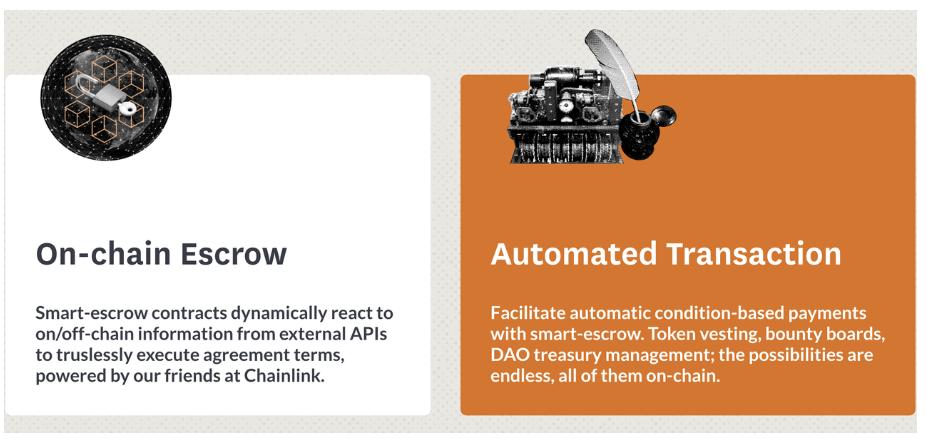
Image source: EthSign
As we all know, the market acts on the basis of maximizing individual interests, but the current market dances to the tune of maximizing others' interests—this cat toy is called Token. Let’s take a look at the evolutionary process under the support of this Token.
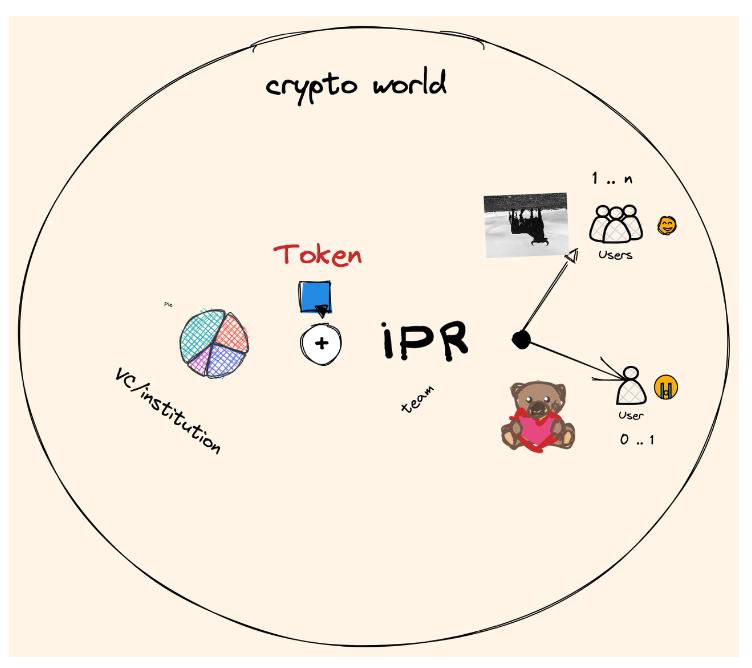
Institutions negotiate profit sharing, and project parties, under the temptation of internal rate of return (IPR), collude to maintain the coin price. During a bull market, they will gain more user support for the Token's value, but once a bear market hits, the project will face a dual loss of coin price and users due to a lack of core users.
After the Token has been fully utilized, some project parties will choose to sell off together or helplessly maintain operations. For instance, after Uniswap acquired the NFT aggregation trading platform Genie, it surprisingly used USDC as the retroactive airdrop token instead of using Uni tokens, which can be seen as a factual death of governance tokens.
In Satoshi Nakamoto's vision, Tokens are a manifestation of proof of work. However, under the command of VCs, the meaning of projects is to boost Token prices, and the strategies of institutions and projects regarding Tokens are quick exit channels, rather than the key to maintaining project operation and development.
Shell: From Infrastructure to Application Scenarios
The hollow structure from infrastructure to application scenarios has eroded the backbone of Web3's development.
When we talk about Web3, we involve all concepts related to this theme—from social graphs, creator economy to SaaS and collaboration tools, it seems that everything is complete, just waiting for a command, and Web3 will quickly occupy the internet world as infrastructure. But in reality, there is nothing—CloudFlare collapses, oracles stop chanting, exchanges cannot match trades…
We suddenly realize that beneath the concept of Web3, supported by underlying public chains, there are still more fundamental internet protocols at work. Beneath the grand vision of Web3, we can see the current gap between ideals and practice: Web3 is just a shell.
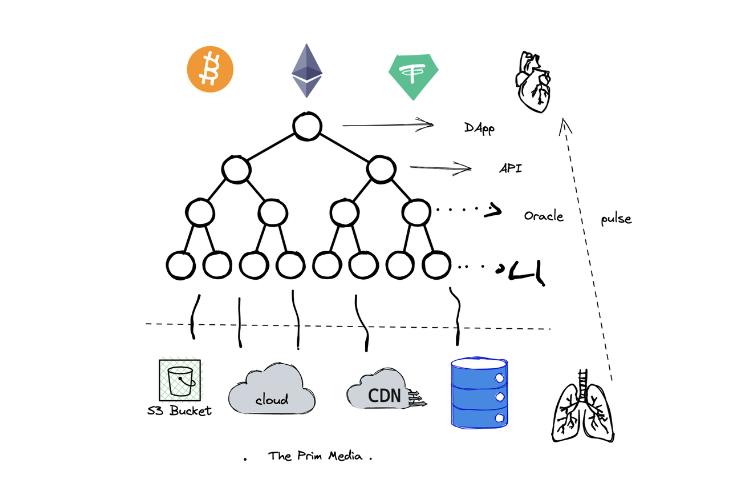
The underlying layer of Web3 is still traditional infrastructure
Without a phenomenal application, the flywheel effect of the Web3 ecosystem cannot start rolling. For example, the current social protocols focusing on SocialFi or social graph concepts, such as BBS Network, will distribute 50% of their tokens to active users. So how can activity be increased? Of course, by generating "high-quality" information; under this logic, more traffic will be introduced, and active users who have followers and subscribers will reap more benefits. This mechanism is derived from the imitation of trading mining in DeFi, artificially creating enough bubbles, ultimately leaving a mess behind.
Currently, we only have a poor imitation of Web3 to Web2, but to achieve characteristics such as privacy protection, data portability, and social migration, we need the participation of blockchain, DeFi, and NFTs, which are truly applications with real usage demands.
|----|----------|-------------|---------------| | | Web 1 | Web 2 | Web 3 | | Office | Office | Google Docs | Skiff | | Storage | Local Storage | AWS | IPFS | | Notes | Terminal | Notion | Crypnote | | Media | Blog | YouTube | Lenstube | | Social | BBS | Facebook | Lens Protocol | | Terminal | Computer | iPhone | XR |
Why do Web3 applications lack real usage demand? ------ The reason is simple: because the products are not user-friendly. Behind this is the extreme scarcity of quality developers. On the surface, the Web3 ecosystem lacks users, but with the current number of Web3 users in the tens of thousands, exploratory applications are still few, and more technical and foundational development tools are needed.
Mainstream developers flock to cash-rich tracks like exchanges, using languages like Java, Go, and Javascript, while only using Rust, Solidity, etc., when it comes to on-chain interactions. If they do not recognize the great significance of Web3, then the blueprint will remain unbuilt and will never come true.
As the bear market arrives, Coinbase, Bybit, and others may even lay off employees, causing these developers to flow away again, further deteriorating Web3's development strength. In the blockchain world, quality developers have a tremendous driving force for new tools and technologies, but the current situation is pushing them out of the Web3 infrastructure development field. The Web3 ecosystem can be said to be ready in every aspect, but lacks the talent to drive it forward.
Future: Who are the Participants?
We briefly summarize the relationship between Web2 and Web3—hoping we can glimpse the future landscape of Web3.
- The basic hardware remains consistent: still desktop and mobile. Meta's VR devices have not directly connected with blockchain technology or chain games; GameFi mainly relies on web and client sides and has not widely integrated VR devices, which is a key point that has been intentionally or unintentionally overlooked. VR devices are still laying out broader usage paths.
- The underlying protocols are diversifying: the network's underlying layer has not completely abandoned HTTP, browsers, TCP/IP, etc., but UX/UI is changing. Regardless of aesthetics, it is primarily oriented towards "cyberpunk." In other words, the model of public chains as communication protocols and IPFS as databases has not completely replaced existing communication protocols and centralized databases.
- The current Web3.0 is concept-driven: Internet + re-evolution --> Web 3.0+, if this is an inevitable story, then we can consider the Web 3.0 concept itself as a marketing extension into the real world.
- Products are still in the iterative development process: The lifecycle of Web3 products is no longer fixed and will enter a fluid era: services that are used once can also be tokenized and NFT-ified—essentially, tickets used once are no longer used, and marketing services can also be terminated once used, as long as both parties reach a consensus, it can be called Token as a service.
This still requires a process to realize. Currently, there are three main types of people discussing Web3.0:
First Type: Employees of Traditional Internet Giants
They are eager to try, mainly because the traditional traffic model has reached its end. In the collectively competitive big companies, some are ready to sail into new waters, but if they do not change their thinking, they will end up like Facebook's Libra or the so-called alliance chain technology.
Second Type: Crypto Natives
These individuals may start from public chains, such as Flow, which began to brand itself as a Web3 public chain, or from DeFi/NFT/Metaverse project organizations, or they may jump from large companies and institutions to participate in the construction of Web3. They are currently the main force, like the Aave team developing Lens Protocol, and everyone needs to learn to embrace change.
Third Type: Variants of Pyramid Schemes
The essence of pyramid schemes is that the product model cannot profit fundamentally, and in practice, they primarily rely on recruiting others for financing operations. This group of people will not have a genuine interest in product construction, but they often have the loudest voices, hoping to rally as many people as possible to participate. Ordinary people, after being deceived, will develop a stereotype that "Web3 = scam."
Only when the second group becomes the main force, and more diverse individuals enter this magical space in the future, can we leverage human intelligence to create truly valuable products, services, and usage scenarios.
The adaptation speed of Web3 is incredibly fast; we must believe in the iteration speed of new product models. For example, Nansen has already partnered with Google Cloud to provide real-time market data. This is akin to joining forces when unable to compete; Web2 and Web3 are not isolated but more like twins, with Web3 leaving time for Web2 to adapt and evolve.
The point of cooperation between the two lies in, "Nansen states that the data will help market makers, hedge fund managers, and asset managers train their algorithms to predict market trends, generate reports, indicators, etc." When new trends take shape, more mainstream groups will participate, which is a good start.
In the next section, we will discuss what future Web3 products will look like—products are the most fundamental carriers for Web3 to reconstruct the next generation of the internet. Cognition is our soul, and products are our entity. Ultimately, the breakthrough path of the "Web3 Paradox" must start from developers providing usable products for the crypto ecosystem. Stay tuned for Part Two.
 Risk warning
 Risk warning