Aptos Cross-Chain First Experience: Which is Better to Use, LayerZero, Wormhole, or Mover?
 Attached is a step-by-step tutorial.
Author: Nianqing, ChainCatcher
With the launch of the Aptos mainnet, airdrops have temporarily come to a halt, and its ecosystem is beginning to enter a period of rise. As a public chain designed with "assets at the center" in mind, DeFi on Aptos is about to face a significant test. As the vanguard and gatekeeper of DeFi, cross-chain protocols have recently begun to officially support the Aptos network, such as LayerZero and Wormhole. How is the user experience for both? Additionally, this article provides a detailed introduction to Mover, the Aptos native cross-chain bridge that has not yet launched on the mainnet but is generating considerable interest.
1. LayerZero & Aptos Bridge
- Official website: https://theaptosbridge.com/bridge
- Supported wallets: MetaMask, Coinbase Wallet; Aptos: Pontem, FewCha, Martian, Petra
- Currently supported assets: USDC, USDT, and ETH
- Currently supported cross-chain networks: Ethereum, Arbitrum, Optimism, Avalanche, Polygon, and BNB
The Aptos Bridge launched in collaboration with Liquidswap DEX is currently more like a custom cross-chain bridge for Aptos rather than being integrated into LayerZero's native cross-chain bridge Stargate protocol. LayerZero's unique feature compared to other cross-chain bridges is the ability to facilitate direct trading of native assets across different chains. However, the Aptos Bridge currently does not support Aptos ecosystem native assets, including APT. To bring assets into the ecosystem, the new chain relies on wrapped assets to mirror existing assets from other chains. However, wrapped assets carry the risks associated with the underlying cross-chain bridge, so the Aptos Bridge has made some compromises on security for the convenience of the new chain in its early stages.
LayerZero has stated that as Aptos native assets are introduced into the ecosystem, it will transfer control or facilitate the migration of assets to their native versions, and may later integrate with LayerZero's native asset bridge Stargate.
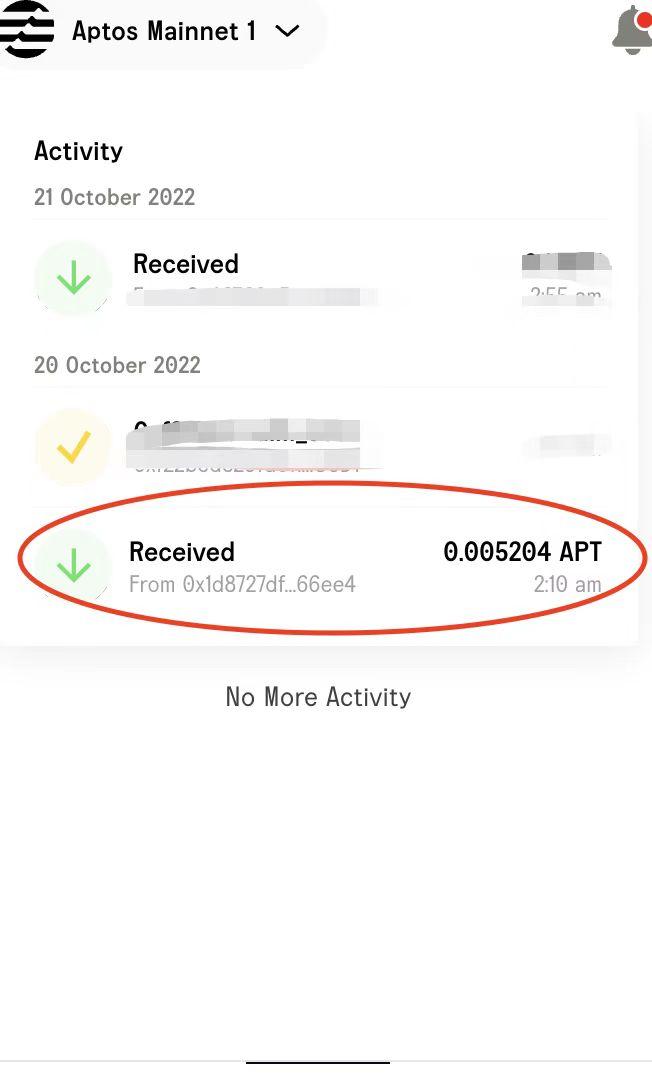
The biggest highlight of the Aptos Bridge is that users can receive an APT gas airdrop upon making their first transaction, supporting new users' first cross-chain transaction.
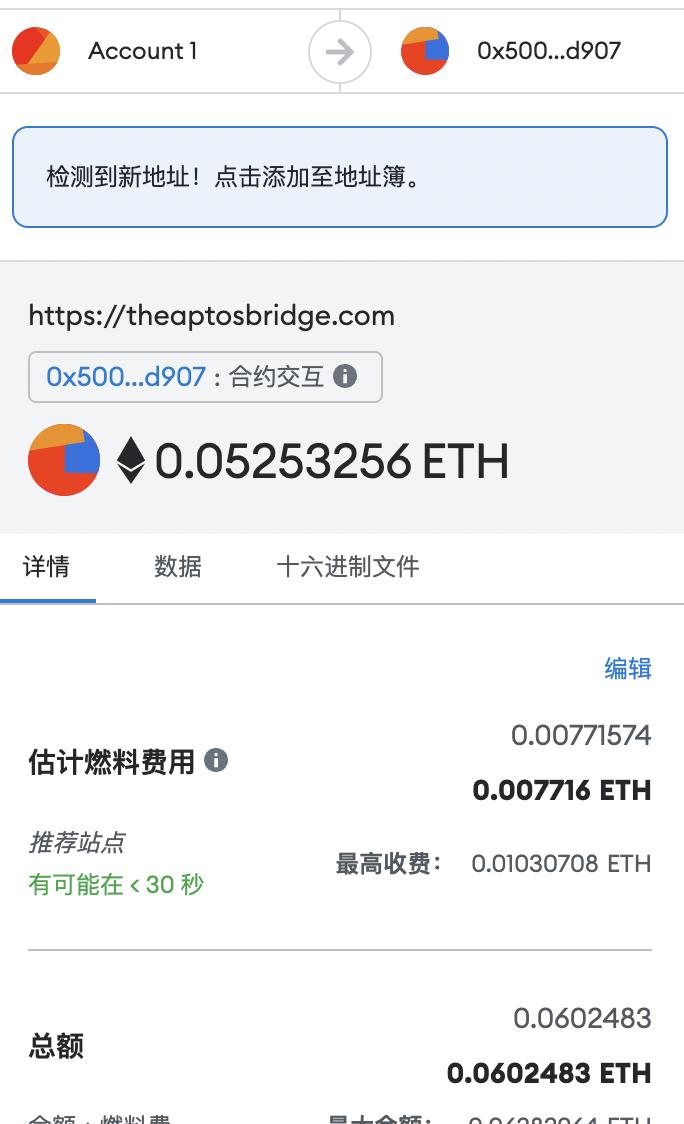
Users need to connect both MetaMask/Coinbase Wallet and an Aptos wallet, then input the asset to be transferred across chains. After confirming the transaction from the sending address, in addition to the gas fee, a fee for interacting with the LayerZero cross-chain contract will also be deducted, making the costs relatively high.
After confirming the transaction, the amount of the first transfer must also be claimed at the top of the interface for the assets to be transferred from the protocol contract to the user's Aptos account. Subsequent transfers of the same asset can be received directly without needing to claim.
Additionally, LayerZero has enabled pre-crime prevention measures for all bridge transactions. To ensure cross-chain security, it will also implement outbound rate limits (up to $1 million per path every 24 hours) and a 3-day transfer period for outbound transactions, meaning that transfers from Aptos to other networks will take approximately 2-3 days to arrive, while inbound transfers to Aptos have no rate limits or transfer delays.
Related reading: “How does LayerZero break data 'islands' and create a multi-chain universe?”
Here’s a summary of the user experience compared to other cross-chain protocols:
- Advantages: Simple interface, easy to operate; new user gas fee airdrop, user-friendly experience; relative security at the cost of efficiency.
- Disadvantages: Contract cross-chain requires "contract interaction" fees, which are relatively high; currently, transferring to other networks requires waiting, resulting in lower efficiency; currently only supports USDC, USDT, and ETH assets, while the more in-demand APT cross-chain is temporarily unsupported; some liquidity pools may lack depth.
- Of course, since the Aptos ecosystem is in its early development stage, LayerZero is working on adding more networks and assets.
2. Wormhole's Portal Bridge
- Official website: https://www.portalbridge.com/#/transfer
- Supported wallets: MetaMask, Wallet Connect, Solana ecosystem wallets, Near ecosystem wallets, Petra (Aptos), etc.
- Currently supported assets: Current assets on the Aptos chain (APT, ETH, USDC, USDT)
- Currently supported cross-chain networks: Ethereum, Solana, Terra, BNB, Polygon, Avalanche, Oasis, Fantom, Karura, Celo, Acala, Aurora, and Klaytn, etc.
Unlike LayerZero, because Aptos is integrated within the protocol, transferring to the Aptos network from other networks requires the destination network account to have gas fees. Therefore, to use the Portal cross-chain bridge to transfer from networks like Ethereum to the Aptos network, sufficient APT must be prepared in the Petra wallet in advance as gas fees; otherwise, the transfer will not be successful.
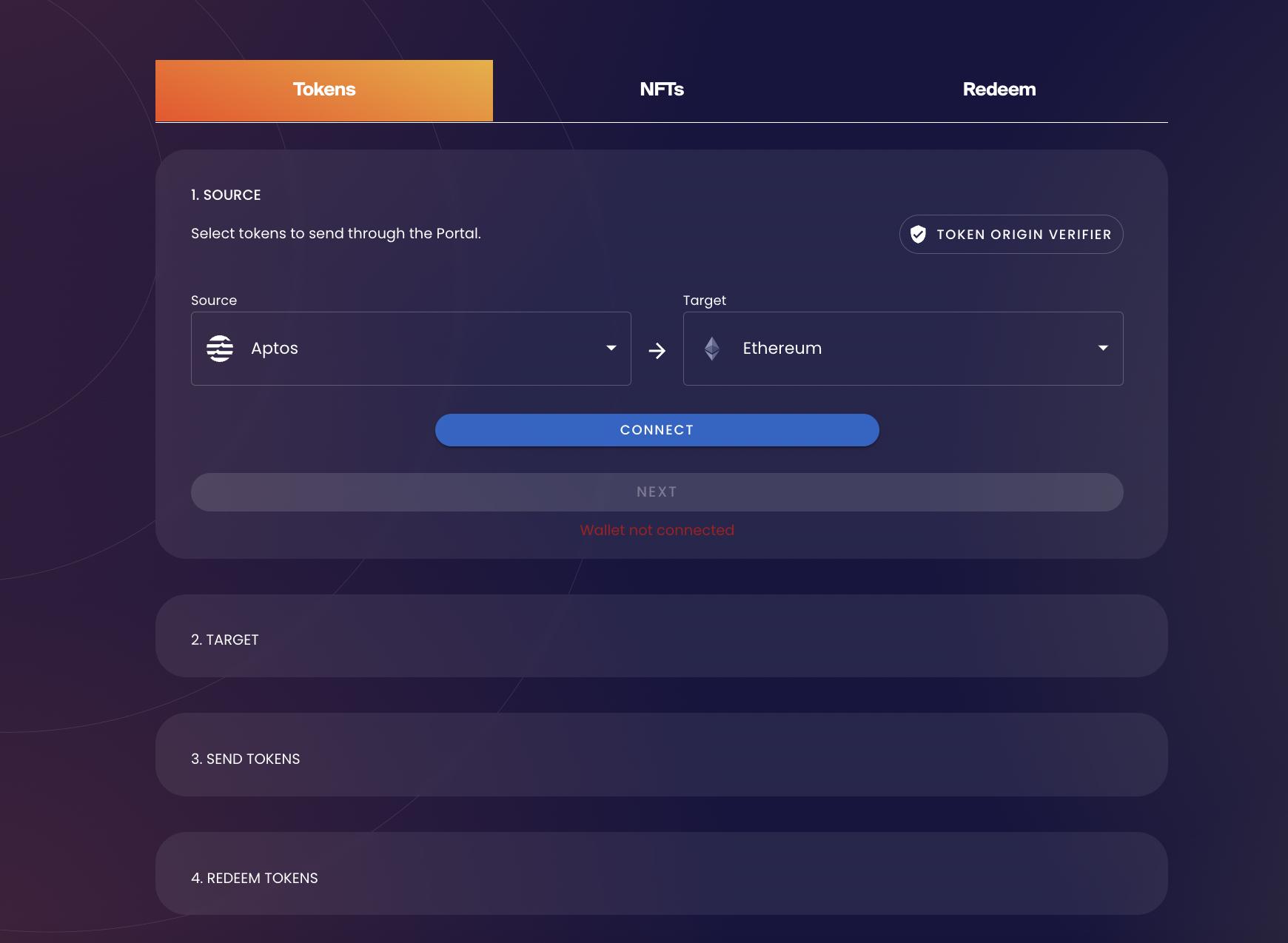
The Portal interface has clear interaction lines, and the user experience is quite good; following the prompts allows for successful cross-chain transactions. Additionally, assets transferred from Aptos to other networks do not require waiting and can arrive instantly. However, there will be relevant prompts for non-native assets.
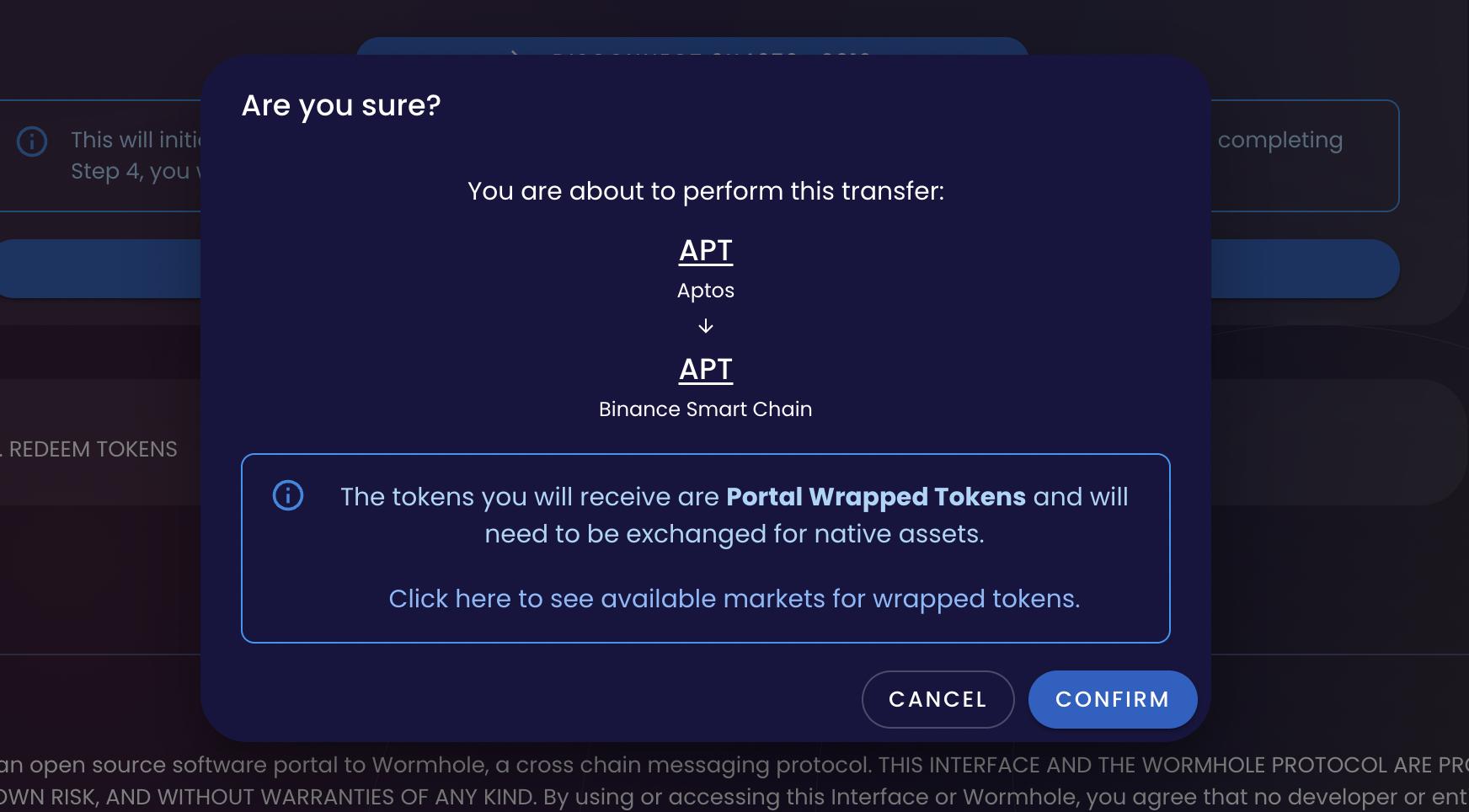
Here’s a summary of the user experience compared to other cross-chain protocols:
- Advantages: Good user experience, instant arrival, relatively low cross-chain gas fees, and support for many networks.
- Disadvantages: $300 million was stolen in February, and cross-chain bridges with mirrored asset types may carry certain security risks; some liquidity pools may lack depth.
3. Mover
- Official website: https://mov3r.xyz/
- Supported wallets: MetaMask, Pontem Wallet (Aptos)
- Currently supported assets: ETH, USDC
- Currently supported cross-chain networks: Ethereum (testnet phase).
In addition to the two cross-chain bridges that have already deployed on the Aptos mainnet, another highly anticipated one is Mover, the Aptos native cross-chain protocol, which touts itself as "the first bridge between EVM networks and Aptos" (since the mainnet launch was slightly delayed, the "first" claim needs to be reconsidered :))
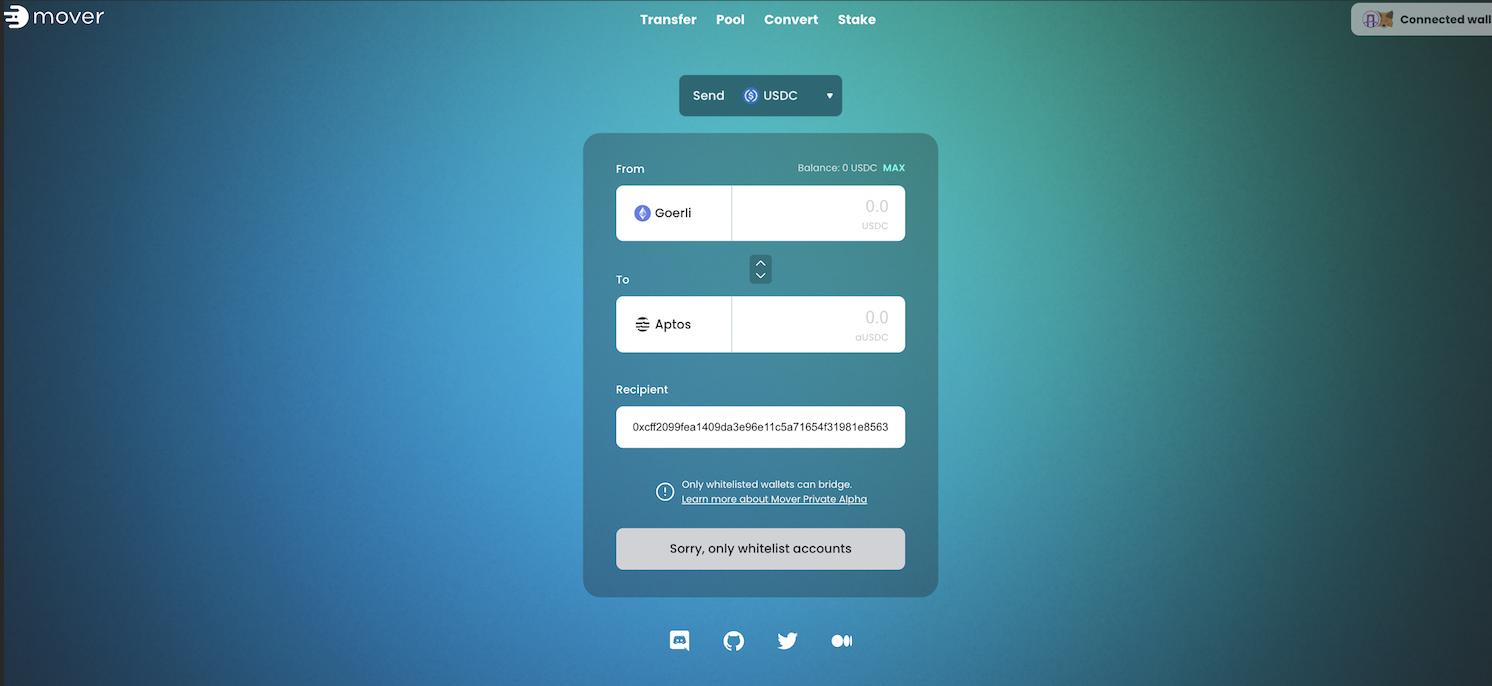
Refer to the official interactive tutorial:
https://moverxyz.medium.com/movers-private-alpha-guide-e4c39dced57b
The Mover cross-chain bridge is currently still in the Devnet phase and has not yet launched on the mainnet. Only users previously added to the whitelist can participate in testing and interaction. Since the community incentive program was launched on September 2 and the testnet opened on October 6, the waiting list has exceeded 100,000 people, but the registration period for the Private Alpha testnet has already passed, and latecomers have no chance.
According to the team, after completing the Private Alpha test (which ends after October 24), Mover will launch on the Aptos mainnet.
In terms of technology, the innovation behind Mover lies in its hybrid architecture: a network of nodes that can interchangeably use light client verification and secure multi-party threshold signatures to achieve maximum security and allow for faster addition of new chains to the cross-chain bridge. The Mover bridge will use light clients to execute cross-chain messaging with supported EVM blockchains. For non-EVM chains, transactions will be executed through a network of nodes performing secure multi-party computation (MPC) to achieve threshold consensus.
MPC nodes will validate and jointly sign transactions. Shortly after the initial launch, the MPC nodes will be operated by different entities, including core developers within the Aptos ecosystem, the community, and other stakeholders.
 Risk warning
 Risk warning


Popular articles