For the cold Web3 games, veteran players with over ten thousand hours of gameplay have something to say

 What is hindering the popularity of GameFi / Web3 games?
Original Title: 《The Problem with GameFi, and My Thoughts》
Original Author: mimiLFG
Original Translation: Bai Ze Research Institute
Since 2009, I have been an avid gamer, spending over 10,000 hours of my life playing games (CS 1.6, Point Blank, CrossFire, Growtopia, Team Fortress 2, CS:GO, GTA, Valorant, Overwatch 2).
In 2020, I became a "merchant" of CS:GO game skins (before the NFT craze, high-quality CS:GO skins were priced well over $1,000).
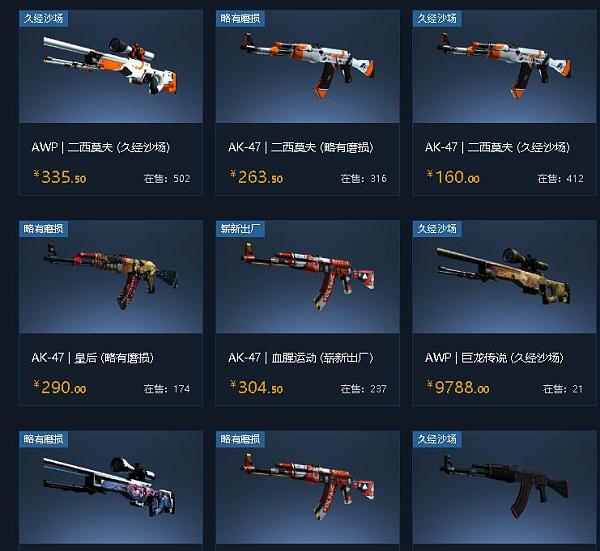
Image source: Internet
Yes, classic Web2 games also have thriving in-game economies. Their participants can be divided into two categories:
Actual players ------ they simply enjoy the game and don’t mind spending resources (time, money, and energy) on it.
Those who hope to profit from the game economy:
a) Creators (YouTubers, streamers, etc.)
b) Professional players
c) Third parties hoping to profit from the game economy, whether through legal/illegal/gray means: trading platforms, merchants selling in-game items or game accounts.
In Web2 games, the number of participants in the second category must be significantly less than that of the first category. This is the main reason why Web2 games succeed ------ there are far more people who enjoy the game and don’t mind spending resources ("investing resources") than those who wish to profit from the game ("extracting resources").
But I’m not saying that "extracting resources" is bad; they are essential for a sustainable game economy. Some players, when deciding to stop playing, will want to withdraw the resources they invested in the game (even at a 50% loss). Those who "extract resources" are simply providing liquidity to the market.
I believe most game developers would agree with this. Although they explicitly mention prohibiting real-world trading in their game terms, a large portion of them take no action. Because deep down, they also benefit from this secondary market economy, and the terms are just to protect them from legal liability.
Taking CS:GO as an example, here is a simplified view of the CS:GO skin economy:
Skins (in-game items) are just decorations that can be used in the game.
Skins can be obtained in the following ways:
1) Original production ------ there is a chance to drop some skins after each game.2) Secondary market ------ directly purchase from the official secondary market (Steam Community Market) or third-party markets.
3) "Original production" ------ players "open cases" to draw random skins.
Skins have their rarity; the rarer a skin is, the higher its price. (Value derived from supply and demand)
Players buy skins for
1) Flexible use while playing the game
2) Investment
As more and more people discover they can profit by reselling skins, the price differences will narrow, and some will leave because the thin profits are not worth the effort. But ultimately, large-scale competition will drive down skin prices. If secondary market prices fall, it becomes meaningless for players to buy directly from the official store (for example, people won’t open cases because the risk/reward for players worsens), thus reducing revenue for game companies.
So, game companies and users maintain balance through merchants.
This is my view on the Web2 game economy.
After I started engaging with Web3 games, I discovered some issues.
What is hindering the popularity of GameFi / Web3 games?
The games are not very fun
Popular Web2 games are simply fun to play and can easily become addictive. This is their main way of attracting real players.
The entire GameFi sector focuses on "making money" rather than "playing games," which is reflected in the name, with "Fi" for Finance. Honestly, I prefer the term "Web3 games" over "GameFi."
Web2 games build interesting games that attract the first category of participants, and then the second category sees the opportunity and seizes it. Current Web3 games directly target the second category of participants.
Imagine a shopping mall. Developers can charge for store placements, and this fee will be distributed to existing stores. Developers claim this will be the next shopping hotspot. When actual shoppers arrive and more stores open, early stores benefit. Latecomer stores only benefit from the arrival of actual shoppers. However, developers profit by selling store locations, regardless of whether actual shoppers come in.
This is the current state of Web3 games. In contrast, Web2 games build a market on an existing base of shoppers (community). In other words, Web3 games have not built interesting games or player communities.
Web3 games emphasize "Fi," which only attracts money seekers, not true gamers.
High-quality game development takes time
The average development cycle for AAA games is 2-7 years. Existing Web3 games are hastily built to appease market demand. A large number of Web3 games released in the last cycle were those that could be launched quickly to satisfy a hungry and wealthy market. For high-quality games, we must be patient and wait for their production and development.
Of course, some currently released Web3 games may be attractive, but their metrics (MAU, churn rate, etc.) indicate that the games do not have high public appeal.
Cumbersome operations
To attract true players rather than money seekers, we should create products suitable for the target audience.
We should limit push factors, "I like the new Web3 game, but I’m too lazy to learn how wallets and self-sovereignty work."
We should increase pull factors, where gamers have fun here, and our strategy is to provide genuinely interesting games, with the worst-case scenario being a user experience similar to Web2.
Increase pull factors (interesting games) and remove push factors (e.g., wallet setup).
The current Web3 wallet landscape is dominated by general wallets (e.g., Metamask, Trust Wallet, etc.). Some dedicated wallets (e.g., Rainbow Wallet, etc.) have made significant progress, but these advancements are not enough.
Some wallet developers are beginning to realize that self-sovereignty should be an option, not a necessity (e.g., MPC and social recovery wallets). In reality, do people care enough about existing issues in the Web2 infrastructure (especially regarding data and privacy) to make some changes? Are they indifferent or have no choice? I believe those who care enough should be cryptocurrency enthusiasts trying to make another choice. But most people do not care.
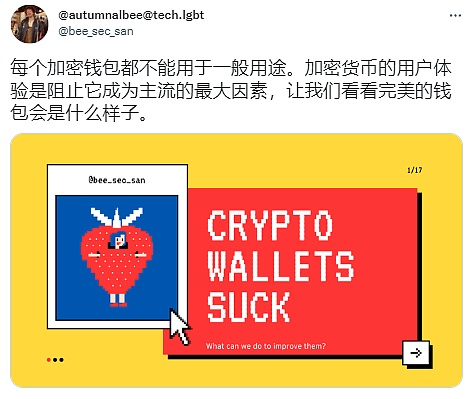
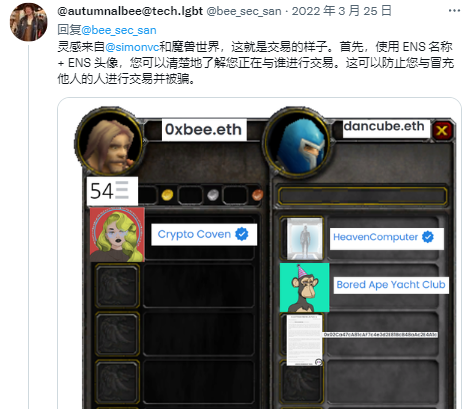
We must slowly provide solutions that benefit outsiders (i.e., pull > push).
"Radical changes do not work for the masses; they adapt slowly."
Web3 games still have advantages
Note: Web3 games are by no means an attack on gaming giants like Steam and Valve. If Web3 games are done well enough in the future and maintain unique advantages, they can easily stand out in the gaming industry.
Open economy
The Steam Community Market (SCM) is a cross-game market that uses virtual currency (which we call $SC, pegged to fiat currency). $SC can be used to purchase any items from all supported games in SCM, as well as to buy games/items in the Steam game store.
SCM even has a "browser" feature where you can view the detailed history of each item (historical owners, orders, listings, selling prices).
It sounds perfect, but it is not without drawbacks. The currency flow in SCM is one-way; you can top up your account through various payment methods, but you cannot withdraw from the account. Purchases and sales in SCM incur fees (5% goes to Steam, 10% to the game). However, due to the lack of proper withdrawal methods in SCM, various third-party secondary markets have gradually emerged. People can use $SC to buy in-game items and then sell that skin for fiat currency.
This situation does not exist in Web3 games because Web3 games operate in an open economy where you can withdraw your invested cash at any time, even with transaction fees.
Proper financialization
For those pursuing money, an "open" economy will not be a strong enough moat. We can further expand the ways games are financialized.
Broadly speaking, NFT financialization can apply to:
Real-world assets (tokenized assets)
Collectibles (competing with traditional art and collectibles markets)
In-game item NFTs (in-game items for Web3 games; e.g., Axies)
Let’s focus on the third point, particularly the leasing of in-game item NFTs.
A quick recap of why people initially bought CS:GO skins.
- Players buy skins for
1) Flexible use while playing the game
2) Investment
In the Web2 game model, players and investors cannot simultaneously use and invest; the two are bundled together.
In Web3, NFTFi, or NFT financialization, is rapidly developing, allowing investors to earn cash (rent) from their held NFTs, while gamers can temporarily own in-game items through leasing (for use or unlocking activities).
Endless composability
Due to its open-source nature, Web3 has the characteristic of composability. Here are a few examples that can be realized in Web3 games: meta-games, game assets that can be cross-used in different games.
Similar to DeFi and Web2 games, due to the open-source nature of Web3, games can be built on top of other games (meta-games). We can build smaller, isolated but interconnected games on top of a game to better meet the needs of gamers. For example, a mini-game specific to heists can be built on the base game of GTA.
Excitingly, meta-games don’t even need to be built by game developers themselves; users can build them, which can elevate user-generated content (UGC) to a new level. This model of building mini-games on top of base games has been very effective for Web2 games (e.g., servers in Minecraft). Web3 games can stand out in this meta-game aspect because they can provide fairer rewards for meta-game creators (e.g., royalties, ownership, etc.).
Different meta-games can cross assets because they originate from the same base game. After establishing unified market standards, it’s not hard to imagine that Web3 games will have standardized game assets and the possibility of cross-compatibility of game assets. Imagine bringing a $2000 CS:GO character skin into GTA, where it can become your avatar in GTA; this is far more meaningful than just spending so much money for a nice skin in one game.
How to unleash the potential of Web3 games?
After emphasizing the possibilities of Web3 games, here are my views on how we should build Web3 games to realize them.
Eliminate friction
Remove push factors, starting with the terrible user experience of Web3 wallets. Additionally, stop using marketing terms like GameFi and play-to-earn (P2E), as these do not attract true players. Moreover, the "collapse" of the P2E model further scares them away.
Take the essence of Web2 games
The mindset of developers when building Web2 or Web3 games should not differ much; the advantages of Web3 games should only be a byproduct, with the core product still being the playability of the game.
What we need to do is replicate the success factors of Web2 games and enhance them. For example, UGC is a key driver of game stickiness and lifecycle; without innovation, players' play cycles won’t be long. Therefore, Web3 games should reward UGC creators.
Endless iteration
One issue I mentioned about existing Web3 games is that they are hastily built, while AAA games take time to develop. However, is it fair to blindly build more complex Web3 AAA games without validating the market?
If you notice, the benefits of Web3 games can only be realized when building and interconnecting a series of interesting games. In other words, we can think of Web3 games as a network; each time a new node is connected, the value of the network grows exponentially. So, in a time-constrained situation, building smaller but interesting games is clearly better. Interesting games do not have to be AAA.
As market demand and feasibility are validated, the involvement of AAA games will further drive the development of the Web3 gaming sector.
Network effects > economies of scale
Web2 and Web3 games are just games
GameFi attracts money-makers rather than gamers because they are marketed as a way to make money rather than as games. However, fundamentally, Web3 games should not be much different from Web2 games ------ they should both be fun. Making money is ultimately just a process; entertainment is the goal that attracts millions of players.
 Risk warning
 Risk warning