RootData: In-depth Analysis of Hashkey Capital's Investment Preferences and Strategies

 According to statistics from Rootdata, Hashkey Capital has publicly disclosed a portfolio of 224 investments, ranking fourth among all venture capital funds.
As one of the most comprehensive investment and financing databases in the cryptocurrency industry, Rootdata has recorded over 3,300 investors in the Web3 sector and more than 4,500 investment and financing records, providing a comprehensive view of the investment trends in the cryptocurrency industry.
Based on this data, Rootdata will analyze a series of well-known venture capital funds, including their development history, investment preferences, and other information. This issue's research subject is Hashkey Capital.
I. Overview
The history of Hashkey Capital dates back to 2015 when Deng Chao and Dr. Xiao Feng from Wanxiang Group decided to bet on a then-unknown project—Ethereum.
This was the group's first investment in the cryptocurrency field, directly leading to the establishment of Wanxiang Blockchain Lab. Today, Ethereum has grown into the most important platform-level infrastructure in the field. After investing in Ethereum, Wanxiang also began to pay attention to other blockchain platforms and infrastructure developments, providing relevant technology and consulting services to some Chinese companies.
Given the increasingly strict and clear regulatory stance on cryptocurrencies in mainland China, Wanxiang chose to shift part of its business to Hong Kong and Singapore and established a new brand, Hashkey. This is the origin of the Hashkey Group.
Subsequently, Hashkey Group successively established Hashkey Capital, Hashkey Custody, HashKey DID, and other businesses. Recently, it received approval from the Hong Kong Securities and Futures Commission to conduct virtual asset over-the-counter (OTC) trading, making it one of the most influential cryptocurrency companies in the Asia-Pacific region.
Among these businesses, Hashkey Capital is the most influential arm of Hashkey Group and has obtained asset management-related licenses in Hong Kong, Singapore, and other locations. Hashkey Capital CEO Deng Chao stated in a recent interview that the team is currently distributed across Hong Kong, Singapore, and the San Francisco Bay Area, managing over $1 billion in assets and investing in approximately 300 projects.
According to statistics from Rootdata, Hashkey Capital has publicly disclosed a portfolio of 224 investments, ranking fourth among all venture capital funds, only behind Coinbase Ventures, Animoca Brands, and LD Capital. In the past year, Hashkey Capital has made 53 investments, ranking fifth among all venture capital funds.
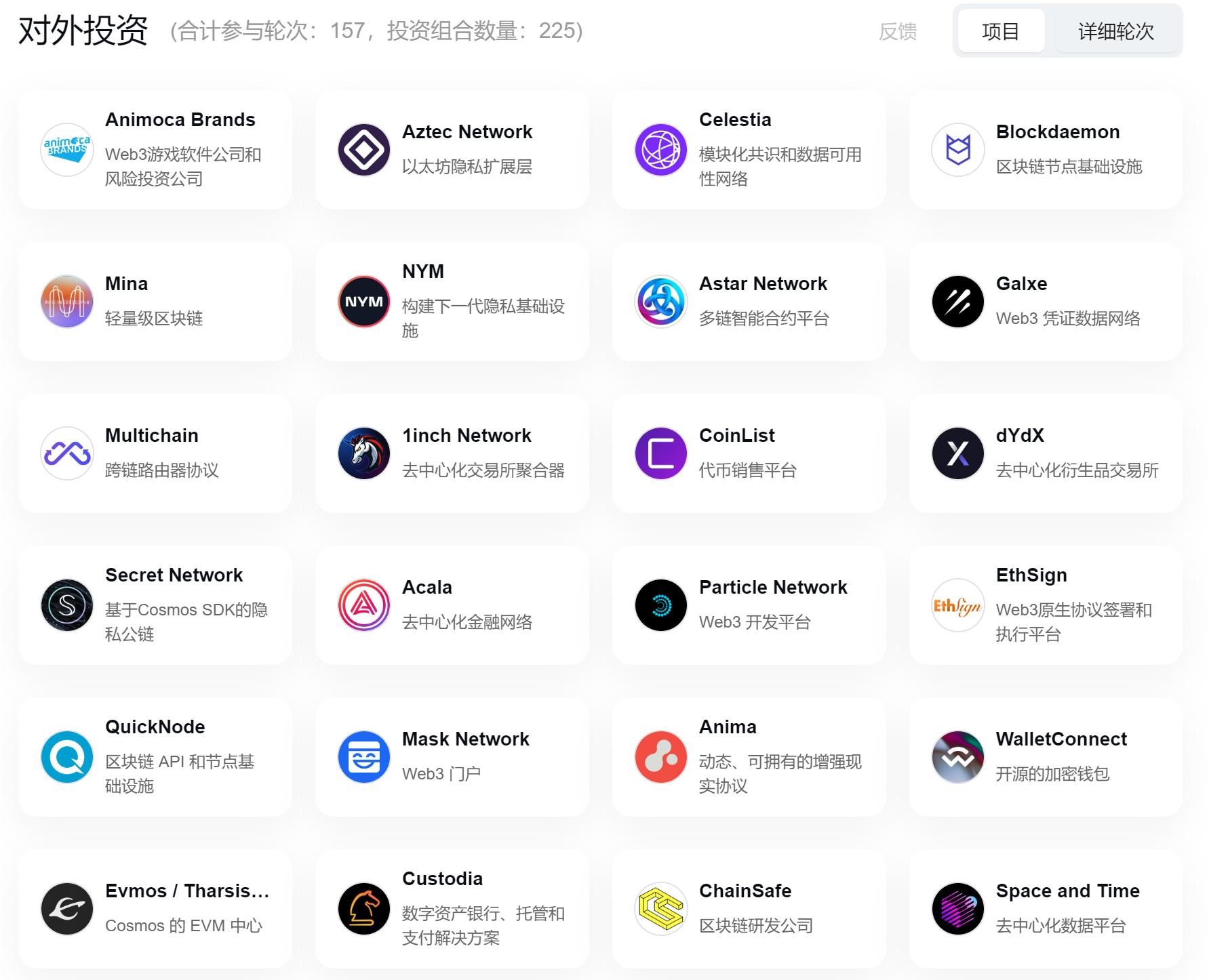
Typical investment cases include Animoca Brands, Celestia, Coinlist, Blockdaemon, Mina, Acala, Mask Network, FalconX, dYdX, and others.
II. Portfolio Analysis
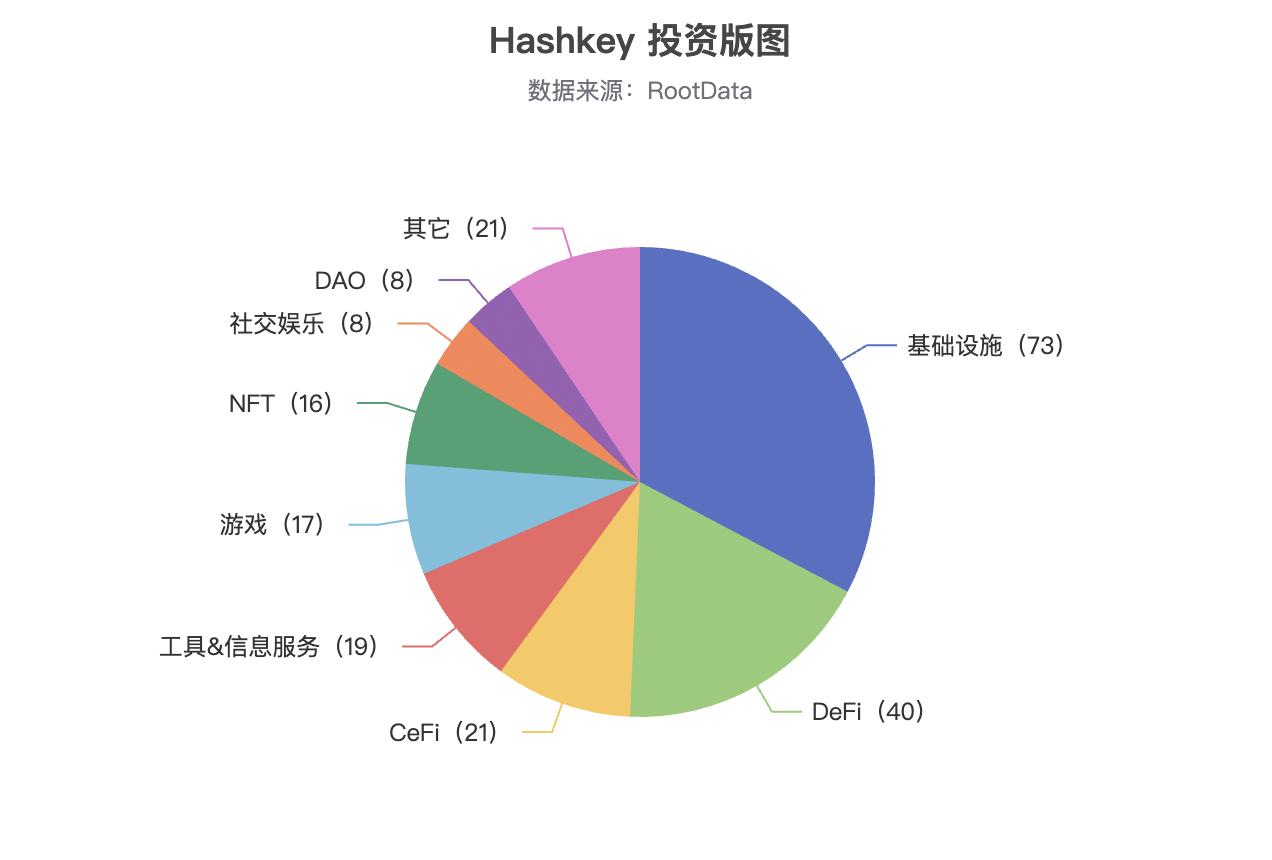
From the 225 investment projects recorded by Rootdata, Hashkey Capital has primarily invested in infrastructure, DeFi, CeFi, and gaming sectors in the past. Among these, infrastructure projects account for 33%, while DeFi and CeFi projects account for 19% and 10%, respectively.
Since 2018 and 2019, Hashkey Capital has focused on the infrastructure sector, investing in next-generation internet infrastructure protocols such as PlatON, Layer1 public chain Nervos, Stacks, and Harmony. After 2020, it further invested in various sub-sectors, such as node infrastructure (Blockdaemon, QuickNode, etc.), cryptocurrency wallets (WalletConnect, imToken, Burrito Wallet, AlphaWallet, etc.), privacy infrastructure (Aztec, NYM), Cosmos ecosystem (Secret Network, Nibiru, Evmos), and modular blockchains (SKALE Network, Celestia).
In the DeFi sector, Hashkey Capital has invested in DEXs (1inch Network, Krypton, DeltaFi, etc.), lending (Clearpool, Hubble, Credora, NAOS Finance), derivatives (dYdX, ZKX, Divergence, SynFutures), and insurance (InsurAce, etc.).
These components comprehensively reflect the shift in Hashkey Capital's investment focus: from 2018 to 2020, most of its investments were in infrastructure and DeFi-related projects, while later it placed more bets on gaming, social, tools, NFTs, and more. This also confirms the change in its investment logic—from focusing on building and innovating infrastructure in the early stages of the industry to shifting towards real use cases and tools in middle layers and vertical fields at a certain stage.
However, it is worth noting that Hashkey Capital has made few investments in the Layer2 sector, with no participation in mainstream Layer2 scaling solutions. Perhaps to fill this gap, Hashkey Capital recently invested in the emerging zkRollup scaling solution Intmax.
Additionally, Hashkey Capital is quite optimistic about cryptocurrency media as traffic entry points, having invested in several mainstream media outlets such as The Block, Decrypt, and Foresight News.
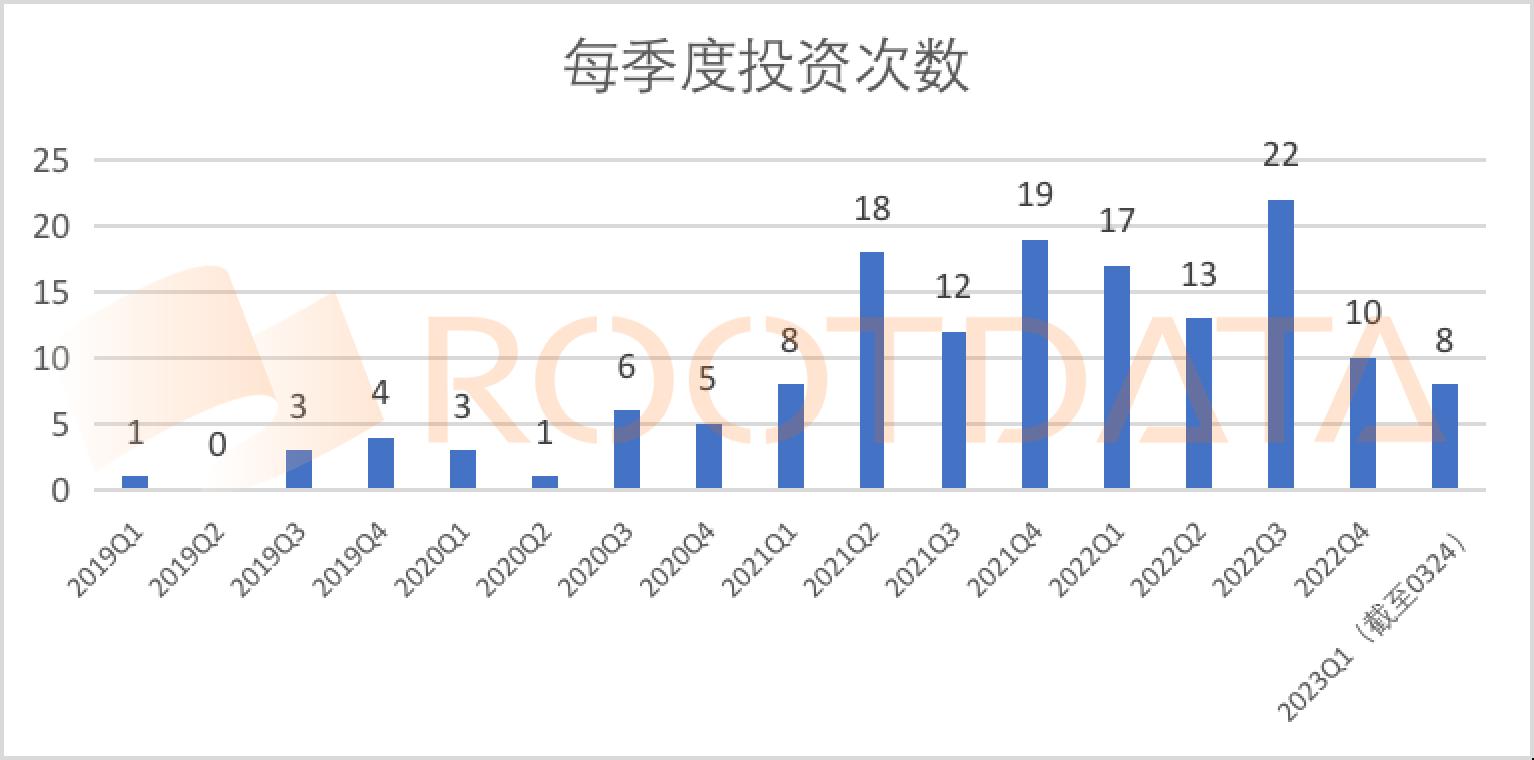
Looking at the investment rhythm, Hashkey Capital made few investments between 2018 and 2020, only starting to increase its investment frequency in the second quarter of 2021, with a total of 18 investments that quarter. Subsequent quarters mostly fell within the range of 10 to 20 investments. In recent months, due to the weakening market conditions, Hashkey Capital's investment frequency has also slightly decreased.
In terms of the scale of financing that Hashkey Capital participated in, most amounts fall within the $1 million to $5 million and $10 million to $30 million ranges. From the rounds it participated in, seed rounds and Series A rounds accounted for 48% and 25%, respectively, of the disclosed rounds. This indicates that Hashkey Capital prefers to bet on earlier-stage projects.
In terms of leading investments, Hashkey Capital has publicly disclosed 19 leading rounds, while the total number of rounds is 156, placing its leading ratio at a medium level among top venture capital funds. Notable projects it led include Mask Network, Stacks, PlatON, and .bit.
In terms of co-investment, Hashkey Capital has collaborated with institutions such as SNZ Holding, Fenbushi Capital, SevenX Ventures, Hash Global, and IOSG Ventures, appearing together in at least 15 investment rounds.
Furthermore, over 12 projects in Hashkey Capital's portfolio have ceased operations, including FitRT, Paladin Pandas, Cykura, EdgeSwap, Smoothy, Numio, BitWell, KEY GROUP, 1475, Lucidefi, BlockFi, and CryptoMate.
III. Outlook
In January of this year, Hashkey Capital announced the completion of $500 million in fundraising for its third fund, making it one of the largest funds raised in the recent cryptocurrency market. However, not all of this capital was raised recently; Hashkey Capital CEO Deng Chao stated in a Bloomberg interview last January that the institution planned to raise $600 million for its third fund and had already raised $360 million at that time.
The report also revealed that Hashkey Capital's first two funds raised a total of $100 million, which has so far brought about 11 times the return on clients' capital. Additionally, equity investments account for about 20% of Hashkey Capital's capital allocation, with the remainder invested in cryptocurrencies, a proportion that will continue to increase.
Regarding market opportunities in 2023, Deng Chao stated that they would closely monitor modular blockchains, account abstraction, MEV, DeFi, institutional infrastructure, Web3 infrastructure, DID, decentralized data storage, ZK technology, and the tokenization of RWA.
In a research report titled “Five Major Technology Hotspots to Watch in 2023” released by HashKey Capital in March of this year, the hotspots mentioned include major technological upgrades of Ethereum (Shanghai, Cancun), staking-related technologies and product services, optimization of modular blockchains and proprietary rollups for "L3" applications, ZK applications in non-scaling areas such as ZK cross-chain bridges, AA+MPC, and iterations in terminal applications such as the Lightning Network.
From other interviews with the HashKey Capital team, it can be seen that they believe the market is currently at the bottom of the cycle and that there may not be much change in 2023. However, three factors need to be closely monitored:
First, the maturity of product construction over the past two years and whether some products will be put into actual use, triggering a new wave of enthusiasm;
Second, macroeconomic development, which will affect the funding costs, availability, and financing progress of existing companies;
Finally, the progress of regulatory implementation in the entire cryptocurrency market.
HashKey Capital believes that the industry has now seen many innovative infrastructures emerge, and the main issue to be addressed next is how to adopt these infrastructures. Therefore, the next opportunity may lie in middle layers and tools in vertical fields.
For example, in data analysis, various relatively generic data analysis tools have emerged, and the next step is to clarify the real needs of niche industries. For instance, what data needs to be analyzed in NFT trading, or what data is needed in the gaming sector. HashKey Capital is optimistic about teams that understand real use cases and real business logic.
On the other hand, the ability to productize existing services and infrastructure is also crucial. They believe that attracting users from the traditional world and creating a better user experience (at least not significantly inferior to similar internet products) will become a catalyst for the next wave of cryptocurrency product trends.
 Risk warning
 Risk warning