The amount of liquidation is catching up to March 12 and May 19, with 4 reasons for the market's plunge

 Over $1 billion in liquidations across the entire network within 12 hours, surpassing the Silicon Valley Bank crisis and the FTX collapse, second only to "3·12" and "5·19".
Written by: Frank, Foresight News
"The horizontal length and vertical height," this statement has been validated once again. Around 5:30 AM this morning, while most Asian market users were still asleep, the cryptocurrency market experienced a long-awaited sharp fluctuation:
Following Bitcoin's drop below 28,000 USDT last night, Bitcoin plummeted significantly this morning, hitting a low of 24,220 USDT, marking a nearly 5-month low; Ethereum dropped to a low of 1,470 USDT, also a nearly 5-month low.
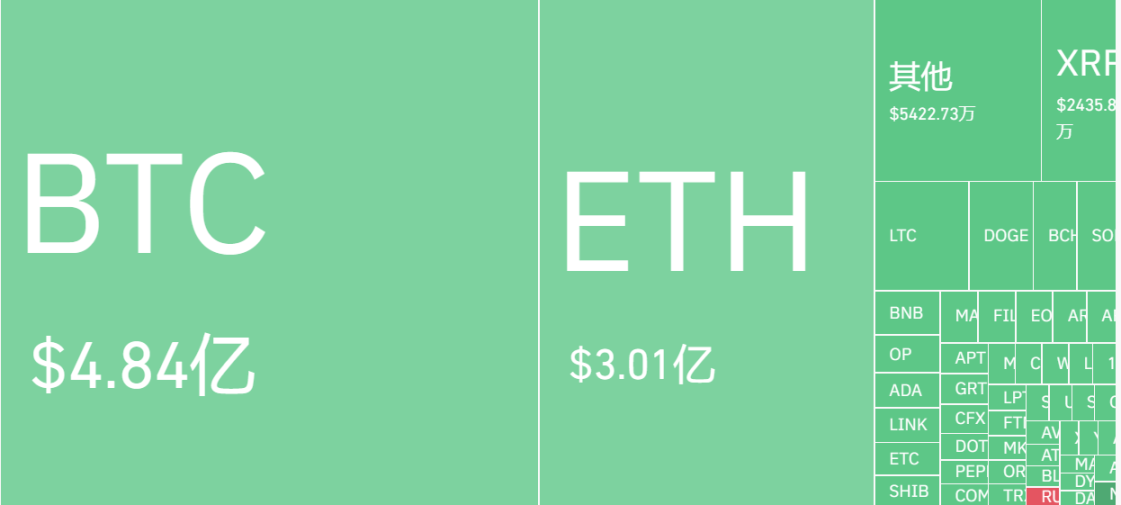
The short-term market crash also led to a bloodbath in the futures market, with Coinglass data showing that over the past 12 hours, the total liquidation across the network reached 1 billion USD (with Bitcoin and Ethereum accounting for nearly 80%), far exceeding the 300 million USD liquidation amount during the Silicon Valley Bank crisis, and even surpassing the 800 million USD record during the FTX collapse, second only to the 1.3 billion USD record of the "5.19" incident and the approximately 3 billion USD record of the "3.12" incident.
What are the reasons for the crash?
On a macro level, recently, whether in the global financial markets or the cryptocurrency market itself, liquidity has clearly begun to tighten, and risk aversion sentiment is rising.
Major Global Markets Adjusting Collectively
First, the stock markets of major global markets such as the United States, China, and Japan are collectively adjusting.
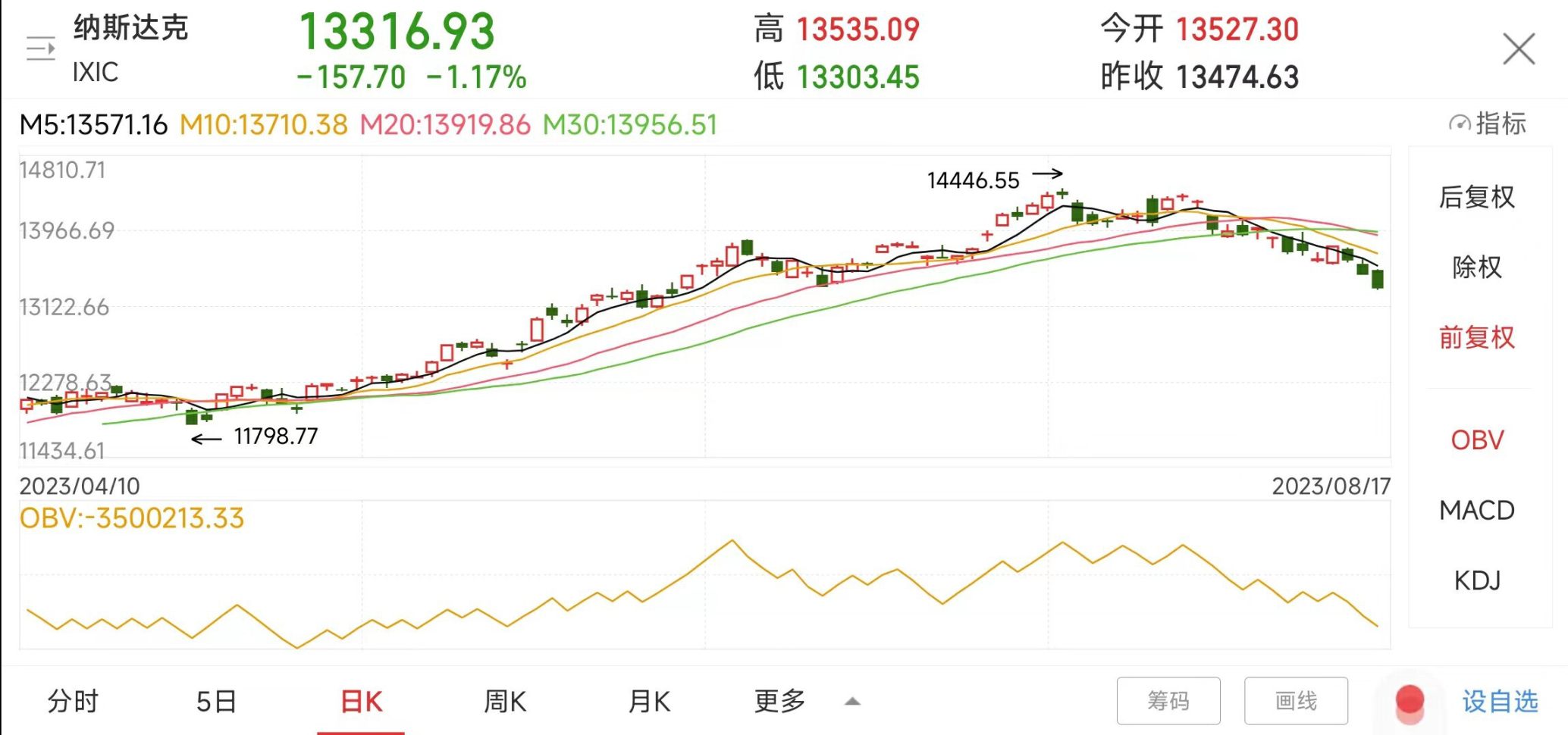
The three major U.S. stock indices, the Dow Jones, Nasdaq, and S&P 500, have collectively declined for three consecutive days, with each day refreshing the day's low in the closing hours.
Among them, the Nasdaq fell 1.17% yesterday, closing at 13,316.93 points, hitting a low since June 9; the Dow dropped 290.91 points, down 0.84%, closing at 34,474.83 points, marking a low since July 13; the S&P fell 0.77%, closing at 4,370.36 points, reaching a low since June 26.
The Shanghai Composite Index in A-shares closed at 3,163.74 points yesterday, down over 150 points in more than half a month, hitting a new low since January 13 this year.
The Nikkei index also closed down 0.44% yesterday, at 31,626 points, falling over 2,000 points in two months.
Diminishing Liquidity in the Cryptocurrency Market
Secondly, the continuous decline in liquidity within the cryptocurrency market is an internal factor that cannot be ignored.
The changes in stablecoin data are the most direct. As a relatively small and semi-closed market, the cryptocurrency industry's rise and fall cycles largely depend on the changes in the volume of USD stablecoins------from mid to late June until now, the total amount of stablecoins across the network has dropped from 129.5 billion USD to 124.3 billion USD, a decrease of about 5 billion USD over approximately two months.
At the same time, the volatility of the cryptocurrency market has also recently hit a low point. On August 12, Bitcoin's daily price fluctuation range was less than 100 USD, fluctuating between 29,381.56 USD and 29,481.35 USD (data from Binance USDT trading pair, the same below), while Ethereum's daily fluctuation range was less than 8 USD, fluctuating between 1,846.08 USD and 1,854.01 USD.
Additionally, on August 12, Derbit's BTC volatility index (DVOL) also dropped to 31.32, marking a new low since March 2021.
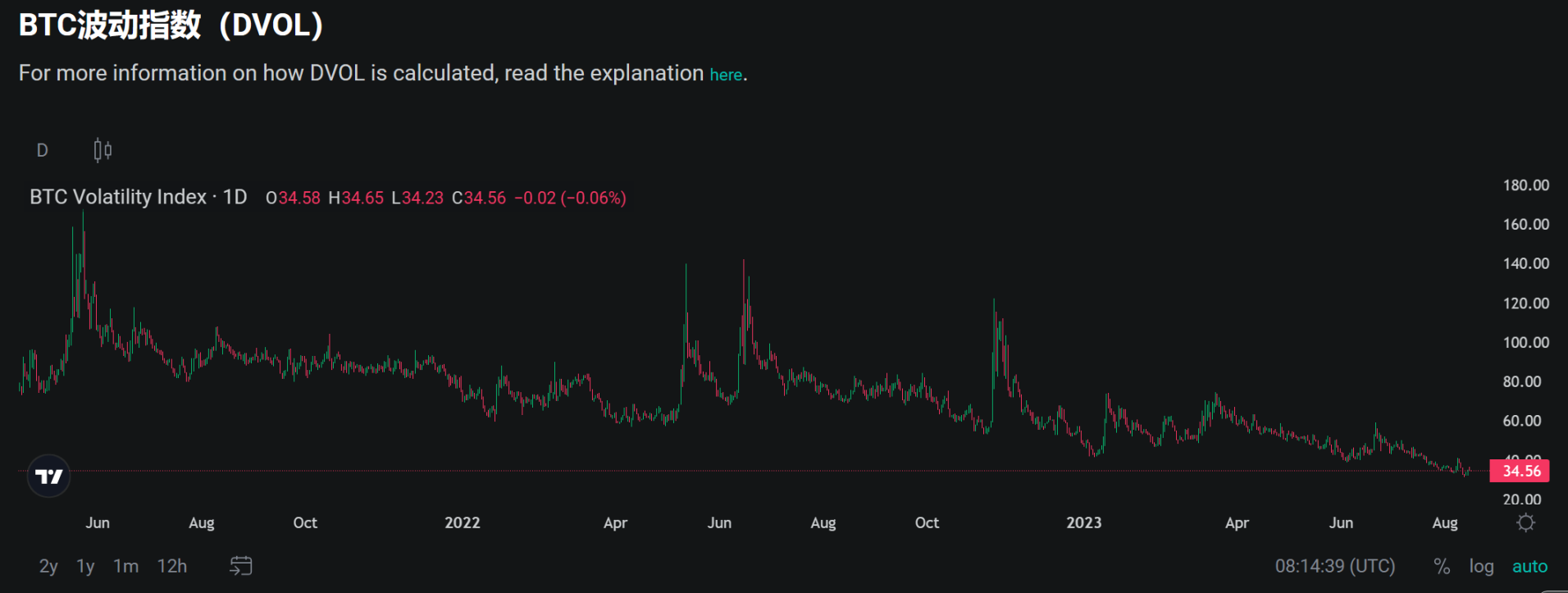
On the same day, Derbit's ETH volatility index (DVOL) also fell to 30.12, a new low since March 2021.
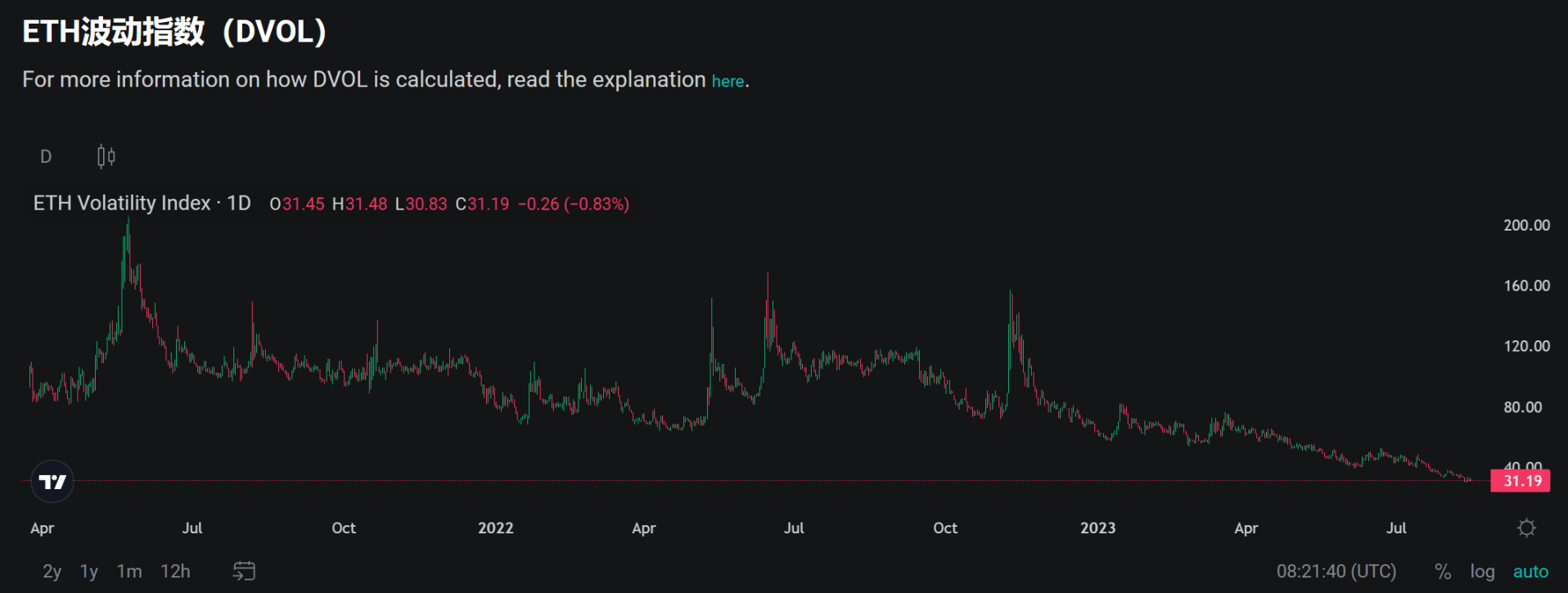
The extremely contracted low volatility is a reflection of liquidity exhaustion. Coupled with the backdrop of a global stock market adjustment, high-risk assets like Bitcoin and Ethereum are like "the canary in the liquidity market," undoubtedly the first to sense and experience a liquidity crisis, similar to the selling frenzy during the "3.12" incident years ago.
This time, the decline of various altcoins compared to Bitcoin and Ethereum is relatively limited, with no large-scale halving, which seems to confirm the signs of a liquidity crisis------the highest quality and most liquid assets are experiencing the greatest selling pressure.
In addition, on a micro level, after the market crash this morning, some "negative news" emerged, but upon closer examination, they all require further scrutiny.
SpaceX Sells 373 Million USD in Bitcoin
First, there is Elon Musk, the man who repeatedly stirs the cryptocurrency market:
According to The Wall Street Journal, Musk's SpaceX has sold Bitcoin worth 373 million USD purchased during 2021 and 2022, resulting in a profit of 55 million USD and 1.5 billion USD in revenue in the first quarter of 2023.
From this, it can be inferred that although the specific timing of SpaceX's Bitcoin sale is unclear, it must have been completed before the first quarter of 2023, so this drop is not directly caused by SpaceX's dumping, but rather the news has amplified the market's pessimistic sentiment.
It is noteworthy that Musk's Tesla has not sold any Bitcoin for the fourth consecutive quarter, having only sold 75% of its Bitcoin holdings in the second quarter of 2022 (cashing out 936 million USD), and currently still holds about 184 million USD (current accounting standards do not allow for the recognition of such gains, and the Bitcoin valuation remains unchanged).
Evergrande Files for Bankruptcy
In the early hours of today, China Evergrande Group also filed for bankruptcy protection under Chapter 15 in New York, which allows U.S. bankruptcy courts to recognize foreign bankruptcies or debt restructurings and grants foreign creditors the right to participate in U.S. bankruptcy cases.
With the significant drop in the cryptocurrency market this morning, news about Tether holding Evergrande's commercial paper has resurfaced------previously, in October 2021, Bloomberg had investigated and found that Tether's reserves actually included billions of dollars in short-term loans, with borrowers including Chinese companies.
However, Tether denied holding any debt from China Evergrande Group, and stated in July 2022 that it no longer held any Chinese commercial paper.
Tether's latest reserve audit report also shows that as of the end of the second quarter this year, its total assets were 86,499,251,218 USD, total liabilities were 83,178,020,411 USD (related to issued digital tokens), with excess reserves reaching about 3.3 billion USD, and its overall exposure to U.S. short-term Treasury bills (US T-Bills) was about 72.5 billion USD, a record high, with commercial paper risk reduced to zero.
There is Still Light Ahead
Despite the uncertainty surrounding spot ETF news from BlackRock and tightening global regulatory environments, amidst the stormy market, we can still see some promising "glimmers of hope":
According to Bloomberg, citing informed sources, the U.S. Securities and Exchange Commission (SEC) is preparing to approve Ethereum futures ETFs, and it is unlikely to block them. Nearly a dozen companies, including Volatility Shares, Bitwise, Roundhill, and ProShares, have applied to launch Ethereum futures ETFs.
It is not yet possible to determine which funds will be approved immediately, but an anonymous source indicated that officials mentioned several could be completed before October.
Additionally, the stablecoin PYUSD launched by PayPal this month is another significant move by traditional financial giants entering the cryptocurrency market. Many people have high hopes for PayPal, believing that the entry of large institutions could lay the groundwork for regulatory relaxation.

Furthermore, the latest on-chain data indicates that PYUSD may have tested transfers to two exchanges (Kraken, Bybit) this morning, suggesting that its official launch may not be far off. As the largest third-party payment institution in the U.S., PYUSD is bound to bring long-term benefits to the cryptocurrency market.
Though the storm is fierce, the future remains promising.
 Risk warning
 Risk warning



Popular articles