




Grayscale Research: Unveiling the Ownership Landscape of Bitcoin

 The vast majority of Bitcoin holders are small investors.
Original Title: 《Demystifying Bitcoin 's Ownership Landscape》
Original Author: Will Ogden Moore, Grayscale Research
Compiled by: Luccy, BlockBeats
Editor’s Note: A common misconception is that a small number of individuals own a large amount of Bitcoin. However, this is not the case. Data from multiple sources, including Glassnode, Arkham Intelligence, Bitinfocharts, and Bitcoin Treasuries, shows that Bitcoin's supply is widely distributed among various individuals, groups, and organizations globally.
Grayscale Analysis compared different Bitcoin ownership groups, particularly those that exhibit strong price inelasticity, explaining their impact on the Bitcoin market. The article notes that the supply levels of illiquid and long-term holders have reached historic highs, while short-term supply has dropped to its lowest levels. This trend may make the dynamics of Bitcoin ownership more sensitive, potentially amplifying the effects of global macro events and the crypto market.
Bitcoin ownership is widely distributed among various groups. About 74% of Bitcoin holders own less than 0.01 BTC (approximately $350 as of November 6, 2023).
Approximately 40% of Bitcoin ownership belongs to identifiable categories, including trading platforms, miners, governments, publicly traded companies' balance sheets, and dormant supply.
Notably, some of these groups represent "sticky supply," which may increase the impact of demand-related favorable factors, including the 2024 Bitcoin halving or potential approval of a spot Bitcoin ETF.
As we approach the end of 2023, two significant events are drawing widespread attention: the 2024 Bitcoin ("BTC") halving and the potential launch of a spot Bitcoin ETF in the U.S. Both events could broaden the scope and reach of investors seeking exposure to Bitcoin. A common misconception is that a small number of individuals own a large amount of Bitcoin. However, this is not the case. Due to the transparency of the Bitcoin blockchain, any individual can monitor Bitcoin information in real-time, including its ownership structure. Data from multiple sources, including Glassnode, Arkham Intelligence, Bitinfocharts, and Bitcoin Treasuries, shows that Bitcoin's supply is widely distributed among various individuals, groups, and organizations globally.
In this article, Grayscale Research aims to clarify some common questions about Bitcoin ownership and delve into the impacts of various ownership groups. We also discuss the "stickiness" of Bitcoin supply and why it is particularly important at this moment, as well as what this might mean for future assets.
Sticky supply refers to supply that is relatively price inelastic or unlikely to be sold in the short term.
Bitcoin Owners Are Widely Distributed
The vast majority of Bitcoin holders are small investors. As of November 6, 2023, approximately 74% of Bitcoin addresses hold less than 0.01 BTC, valued at about $350, as shown in Figure 1. In contrast to other historically high-risk, high-reward assets (such as private equity and venture capital), which are only open to accredited investors, Bitcoin is accessible to a global retail audience (with internet access). Therefore, the ownership structure of Bitcoin reflects the decentralized, open-source nature of Bitcoin technology. In fact, only 2.3% of Bitcoin holders own 1 BTC or more (approximately $35,000 per Bitcoin as of November 6, 2023).
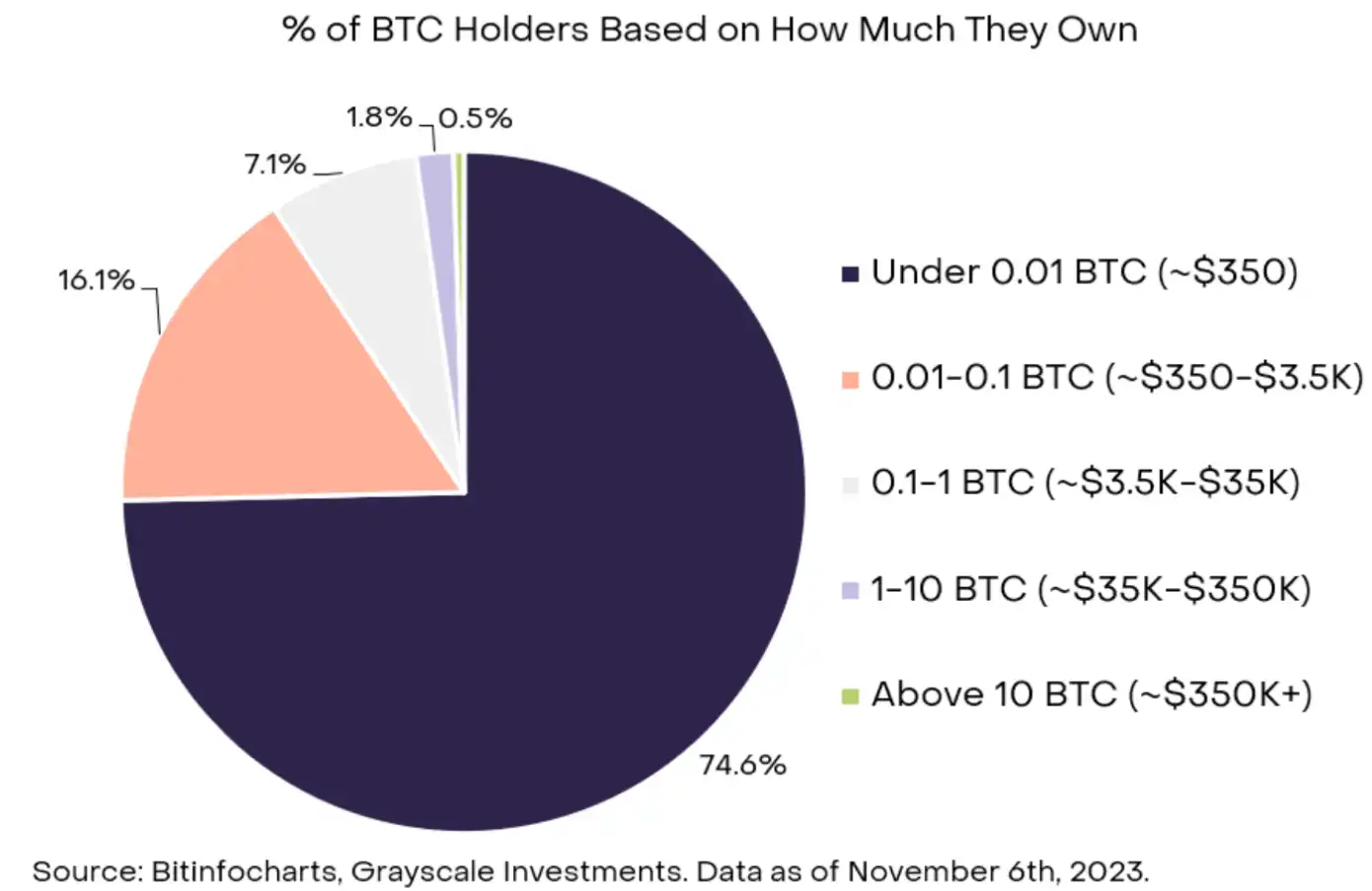
Figure 1: Distribution of Bitcoin Addresses
Note: For ease of reading, dollar amounts have been rounded; 1 Bitcoin is valued at $35,000.
In addition to Bitcoin being primarily dispersed among numerous small holders, most of the largest Bitcoin holders represent "many" rather than just a few individuals. As of November 6, 2023, the top five wallet addresses ranked by Bitcoin holdings are either cryptocurrency exchanges or government entities, as shown in the figure below.
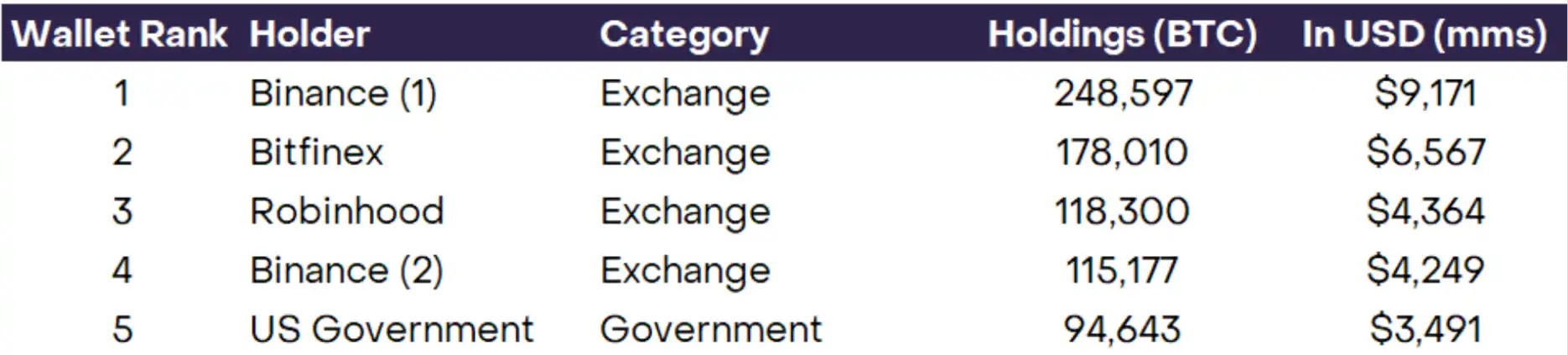
Figure 2: Top 5 Overall Bitcoin Wallet Addresses by Balance
Note: Typically, exchanges hold multiple wallets/addresses, which is why Binance appears multiple times here. Source: Bitinfocharts, Grayscale Investments. Data and holdings as of November 14, 2023, in USD. The Bitcoin price in this chart is $36,891.
Notably, exchange addresses, such as Binance and Robinhood, represent millions of individuals. For example, Robinhood has 11 million users holding and trading Bitcoin on its platform each month, while Binance, as one of the largest cryptocurrency exchanges globally, has nearly 90 million monthly active users. Additionally, the aforementioned U.S. government addresses represent institutional rather than individual ownership.
Bitcoin holders encompass a variety of institutions, from trading platforms to publicly traded companies to major governments. Although some members of these groups may overlap with others (e.g., inactive supply and miners or publicly traded companies and miners), approximately 40% of the total Bitcoin supply can be attributed to identifiable ownership groups, such as trading platforms, government entities, publicly and privately traded companies (e.g., Tesla and Block Inc.), mining companies maintaining the Bitcoin network, ETFs and other listed funds, Wrapped BTC, consumer trading platforms (e.g., Robinhood), and inactive addresses. The figure below illustrates each group.
Wrapped BTC refers to Bitcoin locked in a smart contract and held as a derivative on another blockchain (e.g., Ethereum).
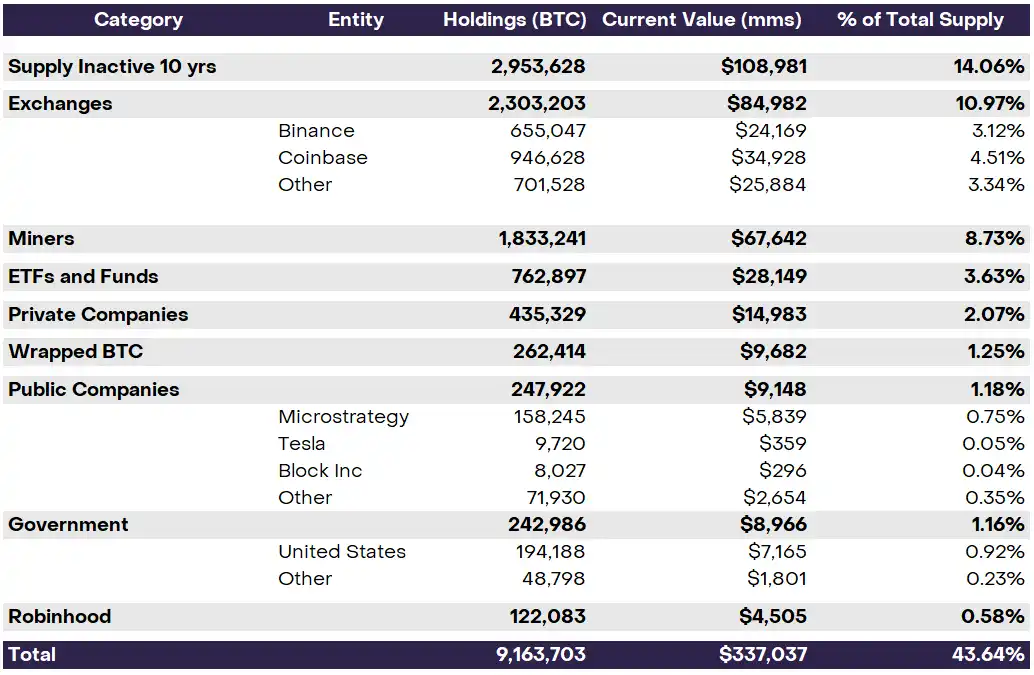
Figure 3: Identifiable Bitcoin Supply
Note: Grayscale's holdings are reflected in the "ETFs and Funds" category. This category includes futures-based products and other funds holding Bitcoin. Source: Bitcoin Treasuries, Arkham Intelligence, Glassnode, Bitinfocharts. Note: There may be some overlap between certain groups (e.g., supply last active in the past 10 years and miners). All data as of November 13, 2023, for illustrative purposes and may change.
For investors, understanding and analyzing the largest Bitcoin holders and their potential impact on Bitcoin supply dynamics is crucial.
Some specific ownership categories reflect potential "sticky" supply dynamics, meaning these holders maintain long positions on specific assets. For example, 14% of Bitcoin supply has not moved in 10 years. We believe this portion of the supply can be attributed to the original Bitcoin owned by Satoshi Nakamoto, lost Bitcoins or addresses, and holders who have maintained their positions for a decade. As shown in the figure below, the ten-year inactive supply has been increasing since 2019 and is currently at an all-time high.
For illustrative purposes only.
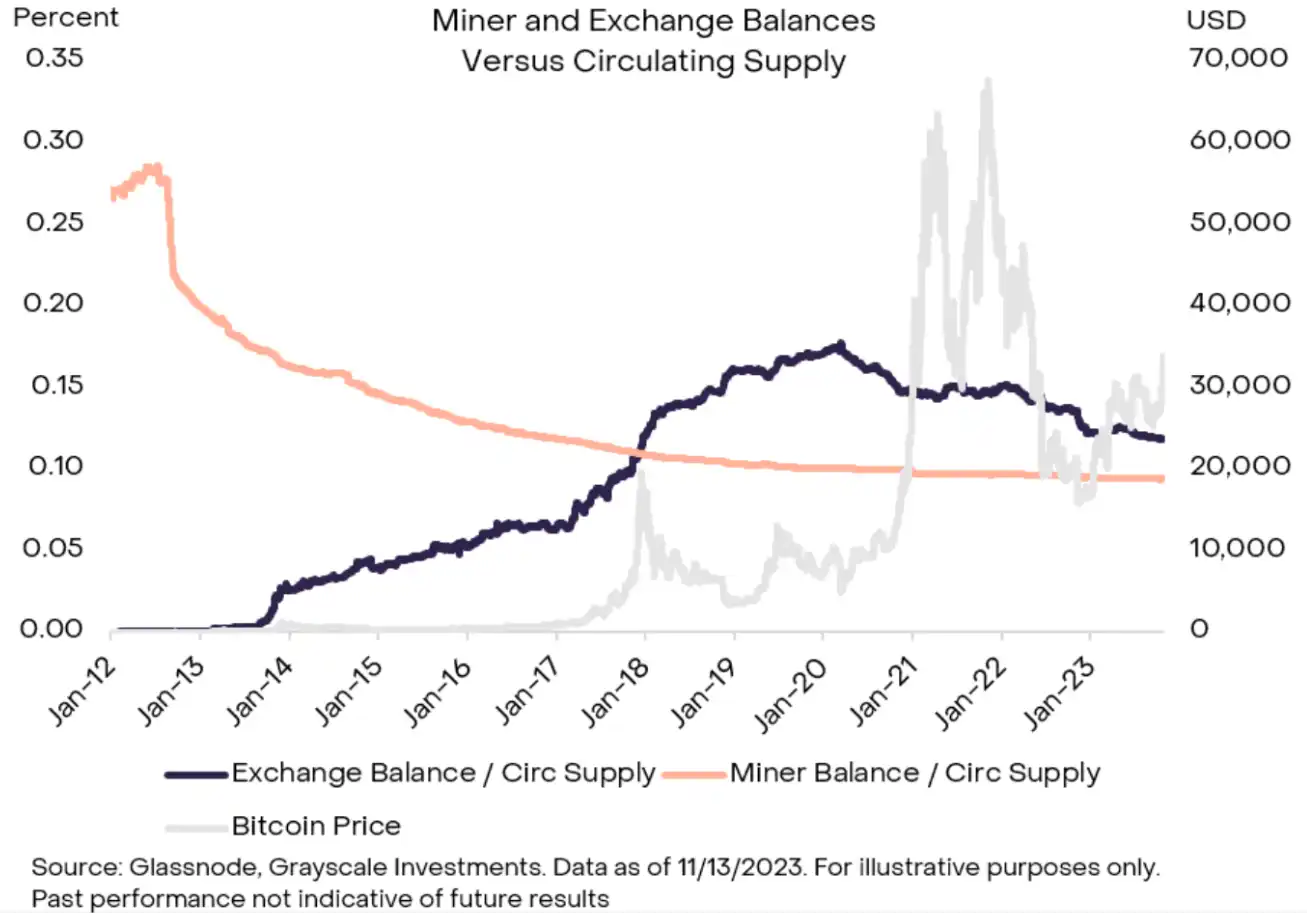
Other ownership groups that seem to indicate relatively "sticky" supply levels include miners and trading platforms, which together account for about 20% of the total supply (approximately 9% and about 11%, respectively). As shown below, despite significant fluctuations in Bitcoin prices over time, these two ownership groups have historically been relatively unaffected by price elasticity. This may be because miners accumulate Bitcoin over time as rewards and typically only sell Bitcoin to cover operational costs. In the past, periods of net outflows from miners, such as in November 2022, had relatively little impact on the overall miner balance of Bitcoin. This suggests that the overall Bitcoin balance of miners likely includes a significant amount of long-term holders. Some degree of short-term price inelasticity may also extend to other ownership groups, such as Wrapped BTC (1.25% of total supply).
So, what is the significance of these ownership groups indicating price inelasticity?
In the short term, the relatively inelastic price levels among Bitcoin owners may amplify the impact of demand-related tailwinds. This can be compared to "low float" stocks in traditional financial markets, which are stocks with a lower proportion of shares available for trading in the open market. For example, sudden changes in demand for low float stocks, combined with a reduced supply actively traded in the market, can lead to excessive impacts on price. Given the various inactive or price-inelastic Bitcoin ownership groups, this dynamic may be particularly relevant for Bitcoin.
Conclusion
Bitcoin ownership is decentralized and diverse. Furthermore, the Bitcoin held by well-known institutions indicates the maturation of the Bitcoin market and the increasing acceptance and mainstream adoption of it.
Looking ahead, global political and regulatory developments may significantly impact the continued adoption and demand for this asset. For example, the potential emergence of a spot Bitcoin ETF in the U.S. could further eliminate friction for individuals and institutions seeking to allocate Bitcoin, while Argentina's recent presidential election may mark a shift in how developing economies view Bitcoin and other crypto assets. As of November 2023, there are less than six months until the 2024 Bitcoin halving.
Meanwhile, amid these demand-related tailwinds, Bitcoin's supply remains significantly constrained; illiquid and long-term holder supply has surged to unprecedented levels, while short-term supply has dropped to its lowest levels. If these trends continue, the Grayscale Research team expects that the dynamics of Bitcoin ownership may increasingly amplify the impacts of macro events, such as the evolution of global policies and regulations (e.g., the approval of a U.S. spot Bitcoin ETF) and developments in the crypto market, such as the 2024 Bitcoin halving.
 Risk warning
 Risk warning