Neglected Humanity VS Amplified Fi

 What is the key to breaking the deadlock in GameFi? What is the ideal ratio of Game to Fi for a healthier ecosystem? Among the newly emerging GameFi projects, which ones are worth focusing on and preparing for in advance?
Recently, various sectors of the market have been blooming in turn, with inscriptions making a splash, Solana charging ahead, and Depin closely following. The signs from different sectors are conveying the same message to us:
"The big bull market is finally getting closer."
At this moment, seasoned players who have received the signal will instinctively start to think:
"Which sector will rotate to the next track? Where should we focus our layout?"
Is it the already popular L2? Or the trending inscriptions? Or perhaps the GameFi that has the potential to break out?
There have already been many analytical articles and conclusions about the first two options in the market, so today, I want to focus on the third option, which still has opportunities for early layout at this time point—GameFi.
What is the key to breaking through in GameFi?
What is the healthy ratio of Game to Fi?
Which of the newly emerging GameFi projects is worth studying and laying out in advance?
I. Human Nature to the Left, GameFi to the Right
When it comes to GameFi, most people's memories are still stuck in the last round of so-called "explosive hits." On one side are the AAA blockchain games with astonishing funding but still struggling to be born, and on the other side are P2E mining games that promise high returns but are constantly caught in a death spiral. Regardless of how the economic system is designed, players have remained trapped in the "buy NFT - complete tasks - earn tokens" cycle of "mining, withdrawing, and selling."
The designers of this cycle often say, "Don't expect loyalty from people, but you can expect their greed." They believe that as long as they grasp "greed" and continuously enhance the financial attributes, players will blindly flock to them.
Indeed, greed is human nature, but don't forget that human nature is not just about greed.
In Maslow's hierarchy of needs, the need for property ownership, which is a safety demand, is still the most basic and lowest-level need. Higher-level needs include belonging, respect, and self-actualization.
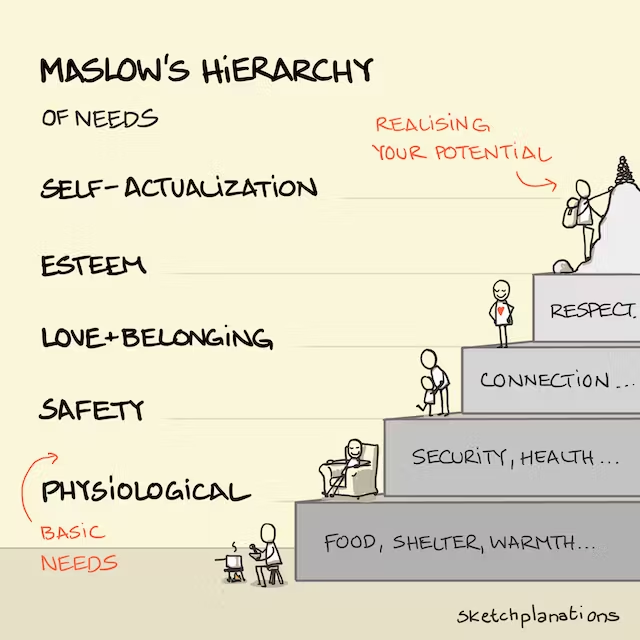
It might be hard to understand this theory, but in real-life scenarios, it translates to:
If you are given 500 yuan every day to work at a job you don't like, where you often have to work overtime and have no personal time…
How long can you endure this job?
Will you give up socializing and pursuing other passions for a lifetime just to make money?
Will you suddenly question "What is the meaning of life?" on a quiet night, thinking, "After earning enough money, what comes next?"
This isn't about standing on the sidelines and saying making money is wrong. What I want to convey is that when only one single need in human nature is satisfied, people will inevitably have thoughts of migrating to other levels of needs, and they cannot stay at this level for too long. Only when different levels of needs are satisfied can people continuously and stably invest in it.
Returning to the GameFi sector, Fi should be the "driving force" rather than the "main force" for Game.
This is also the fundamental reason why the overall mortality rate of GameFi projects was quite high in the last round. When a group of people is competing in the same low-level need, it is naturally difficult to break out, and they will drift further away from the higher-level needs of human nature, ultimately presenting an awkward situation where human nature goes left and GameFi goes right.
So if Fi is not the sword for breaking out, what is?
To answer this question, we must first clarify what "breaking out" actually means. Is it merely a breakthrough from Web3 to Web2?
Not at all! Breaking out is not about the layers of people but the layers of needs.
In the past, we habitually drew a clear boundary between Web3 and Web2, thinking that Web3 is one group of people and Web2 is another, and the essence of breaking out is to get the Web2 crowd to play GameFi, naively believing that Fi is the main driving force attracting them across the boundary.
But in reality? People in Web3 might be small employees in Web2 companies during the day, using various Web2 software, and only occasionally dabble in Web3 when they have some savings, hoping to hit it big; or after going all-in on Web3, whether they create a studio or join a project, they still rely on the employment mechanisms and collaboration methods of Web2.
You see, there is no clear boundary between Web2 and Web3; the difference is not in the people but in the needs. When a Web2 person is not short on money, their need is for an ultimate experience, which cannot be fulfilled in the current Web3, so they remain in Web2. But when they place more importance on the need for making money and privacy, they will be attracted by the rich financial gameplay and decentralized attributes in Web3, moving towards it.
Therefore, breaking out is not about the layers of people but about continuously breaking through the five layers of needs in Maslow's hierarchy, satisfying different levels of needs for the same group of people. In other words, how to make a GameFi project satisfy financial needs while also meeting social, belonging, respect, and meaning needs at multiple levels is the ultimate key to breaking out.
Since we have arrived at the "needs" aspect, let's continue to dig deeper along this line:
What quantitative indicators should be used to measure whether a product meets needs? Is it sufficiently aligned with human nature?
The answer is obvious—time.
Whether in Web2 or Web3, when it comes down to the individual, one thing remains unchanged, limited, and fair: everyone has only 24 hours in a day. If we exclude 8 hours for sleep, each person has 16 hours to allocate.
In these 16 hours, we need to eat and drink, work to earn money, which is time spent on the most basic physiological and safety needs, while the remaining time is the unified battlefield for various Web2 and Web3 projects. Whoever meets the user's needs at more levels can capture more of their time and immerse them in the experience.

Thus, in the face of human nature and needs, there is no distinction between Web2 and Web3; the competitors for various GameFi projects should not be another GameFi project.
Time is the common battlefield for all future businesses. Meeting multi-level needs is the key for GameFi and even the entire Web3 project to break out.
II. 70% Game + 20% Fi + 10% Meme
At the beginning, I mentioned that compared to L2 and the currently trending various projects, although the GameFi sector has not yet shown signs of improvement, it still has the greatest potential for breaking out. Why?
Because games have long been deeply ingrained in human DNA through evolution, becoming a part of human experience.
Whether it's images of ancient Egyptians playing Senet found in archaeological artifacts, the ancient Olympic Games where physical combat was a form of play, or the first computer game "Noughts & Crosses" developed by Cambridge scientist A.S. Douglas in 1952, we can see that while humans and games have changed, what remains constant is that games have always satisfied different needs of humans at various stages.
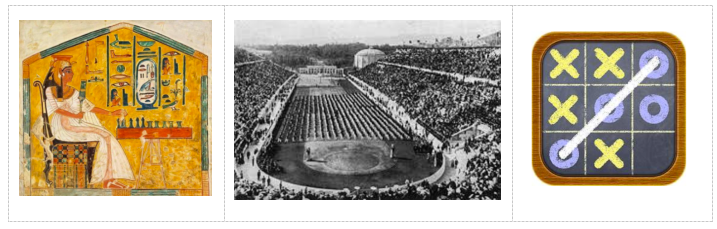
In the pre-electric ancient times, playing games was undoubtedly a way to strengthen the bonds between tribe members, fostering a stronger sense of belonging and honor towards the tribe. Later, physical combat games were named the Olympic Games, allowing humans to promote friendship and unity among city-states through this form of play. In modern times, with the development of more and more video games, games have become immersive and even addictive due to factors like instant feedback, honor systems, and a sense of achievement.
While Fi is a product of the last decade, Game itself has become something that is etched in human DNA. It can be said that it is not Game that needs humans, but humans who cannot live without Game. Moreover, from the perspective of needs mentioned earlier, other native Web3 sectors only satisfy one layer of needs, while the GameFi sector itself integrates the needs of Game and Fi, fulfilling more diverse human needs. Therefore, even if the GameFi sector has not yet shown improvement, it cannot be denied that it has a higher probability of breaking out.
Since it is highly likely that GameFi will break out in this round, the next obvious question is:
How should Game and Fi be proportioned for a healthier balance? After breaking out, how can we "retain" the migrating traffic?
After studying numerous failed GameFi cases, I propose a best ratio formula for breaking through—70% Game + 20% Fi + 10% Meme.
The 20% Fi is easy to understand; as mentioned earlier, it is the little bit of motivation that drives users to try creating wallets, understanding what digital currency is, and how to trade. However, it is merely a driving force, not the main force, because making money does not occupy the entire hierarchy of needs; it only accounts for 1/5—20%. The remaining higher-level needs for belonging, respect, and self-actualization must return to Game itself.
In the past, when discussing the need for GameFi to return to Game itself, people often mentioned playability, knowing that "fun" and "excitement" are the hard truths. But what is fun? What are the standards for excitement? How can they be quantified?
Everyone has different opinions; terms like "fun" and "exciting" are too vague and not precise enough.
A more accurate quantitative indicator should be—immersion time.
We all know that where time is, attention follows. So how can we keep attention at a stable level for a long time?
American psychologist Lucy Jo Palladino's "Attention Curve" might give us some insights:
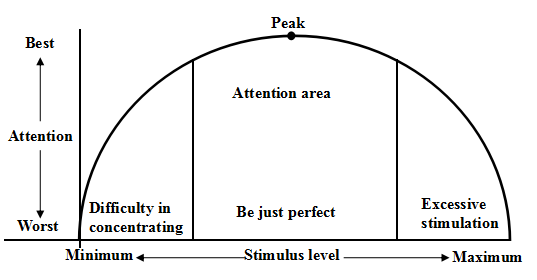
Lucy Jo Palladino - "Attention Curve"
It can be seen that human attention is closely related to external stimuli. In this inverted U-shaped attention curve, when the level of stimulation is too low, human attention is at its worst, and motivation to act is lacking. Correspondingly, in the GameFi scenario, when the game itself is too simple, players naturally cannot concentrate their attention and cannot immerse themselves.
Conversely, when stimulation is excessive, meaning that too much Fi, with high returns, high risks, and high thresholds, is added, players' adrenaline levels become too high, leading to excessive excitement, tension, and fear, ultimately causing them to leave.
Therefore, based on the 20% Fi motivation, we need to focus 70% on the stimulation points and rhythm design of the Game itself, shifting from monitoring players' gold farming efficiency to monitoring players' immersion time.
For example, instead of obsessing over whether players are spending money, we should observe whether the game itself can keep players immersed for at least 3 hours a day.
For instance, can we add some visual and auditory information to test whether players feel more immersed? Compared to "Limbo" and "Uncharted," the latter clearly has a higher information increment and is easier to immerse in.
Additionally, can we incorporate 10% of Meme elements, allowing players not only to play but also to create, transforming from participants to creators, thus finding like-minded individuals?
In the past, we cared too much about whether players were spending money or willing to reinvest, but we forgot that attention itself is money.
Returning 70% of our efforts to the Game itself to let players immerse first, then using 20% Fi to attract new players, and finally using 10% Meme to help players find like-minded individuals and feel the meaning of self-actualization through creation, perhaps this healthier ratio is the fundamental solution for breaking through and retaining users.
III. From 0 to 1 is Innovation, 1 + 1 + 1 > ∞ is also Innovation
After completing the theory, the ultimate focus must return to the most practical question:
Which project should be laid out in advance this round? Which project is the most innovative and has the potential to break out?
To answer this question, we must first clarify what innovation is.
In the last round, whether it was GameFi project teams or players, everyone was eager to find those innovative projects that went from 0 to 1. Whether it was AAA masterpieces or P2E, they always wanted to bet on those "new" models and "new" things that had never been seen or played before.
Yes, this way of thinking is not wrong, but there is a problem: "new" = unverified by history = high risk = everyone accompanies the project team to feel their way across the river = the money invested becomes the project team's trial and error cost.
It is fine to innovate, but it is not necessary to go completely from 0 to 1, nor to start with a big production or AAA. Perhaps, 1 + 1 + 1 type of "combinatorial innovation" is the new trend of innovation in this round of GameFi.
This point was inspired by a blockchain game I recently played—Cards Ahoy (hereinafter referred to as CA). This game just finished its second test in November with impressive data and will start its third test in mid-January. It is not a money-burning AAA masterpiece, nor is it an absolutely new type that innovates from 0 to 1. What inspired me is that it combines and stitches multiple verified needs to ultimately establish an internal cycle.
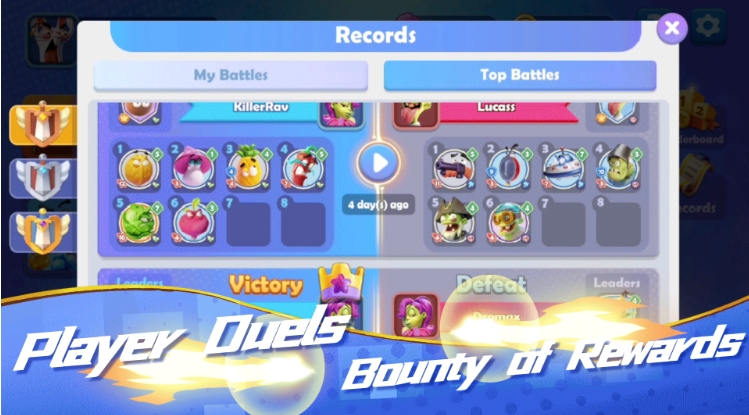
CA is a card game that carries a Meme vibe, easy to pick up in 60 seconds. However, it is not just a card game; it incorporates various auto-battler gameplay, including daily battles and asynchronous battles. As mentioned earlier, the key to whether this round of GameFi projects can break out is the satisfaction of diverse needs. Returning to the game, every game form and gameplay has a wave of fixed needs behind it. When two forms are combined in a 1 + 1 manner, it can hit the two underlying needs while also addressing the problems and shortcomings brought by a single form.
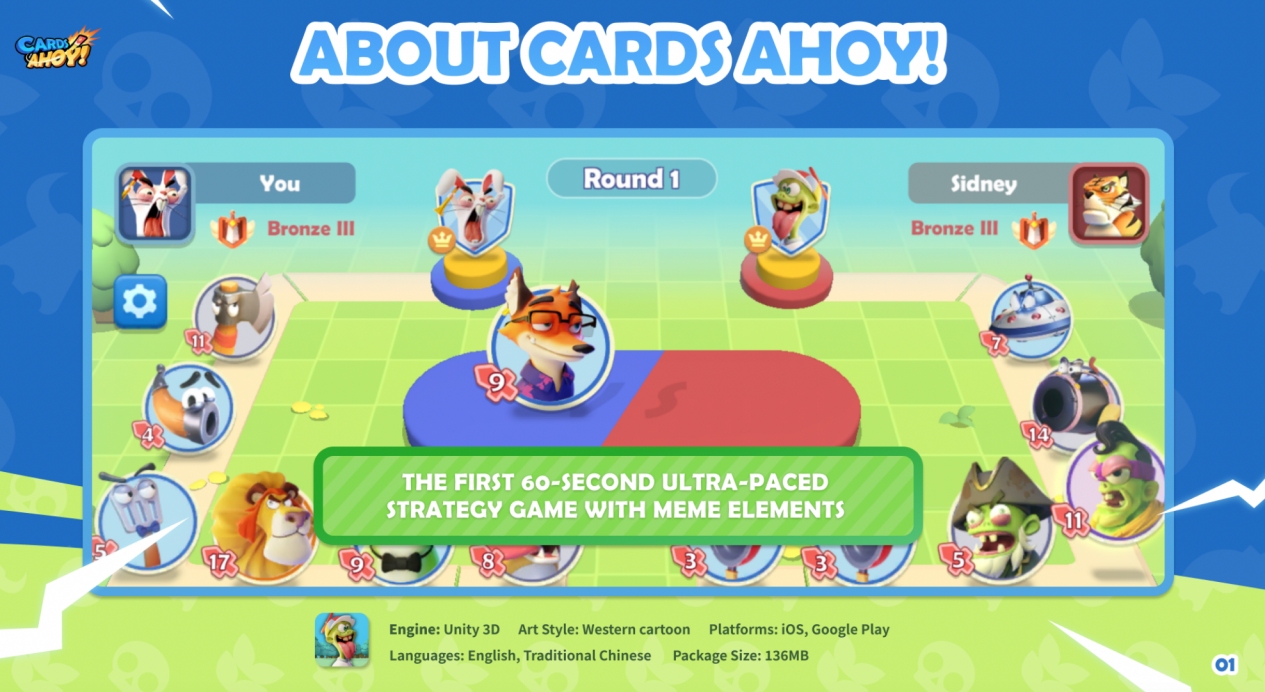
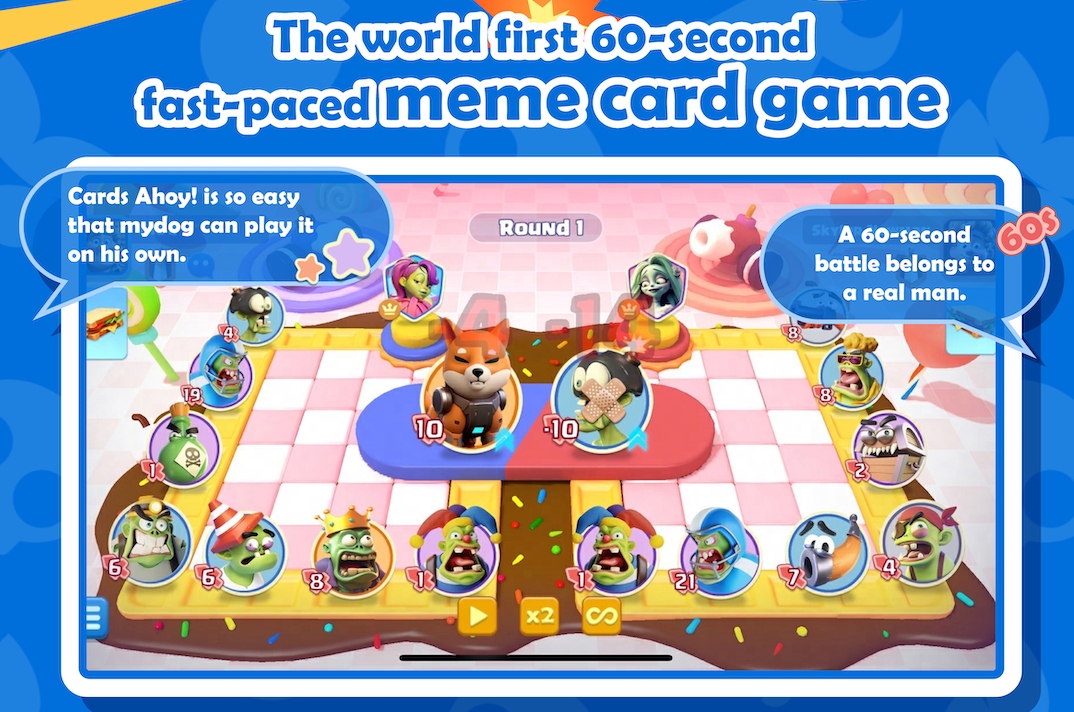
For example, CA has strongly integrated auto-battler and card gameplay, which not only reduces the difficulty for users to get started but also retains the strategy and fun of card games, ultimately presenting an effect of 1 + 1 > 2. The innovation of combining two verified gameplay forms has many successful cases in the history of game development, such as: "Don't Starve" (Survival + Building + Roguelike), "Clash Royale" (Simplified RTS + Cards), "Overwatch" (FPS + MOBA), and "Assassin's Creed IV: Black Flag" (RPG Adventure + Naval Combat).
Having experienced the adventures and aggressiveness of the last round of the GameFi sector, players have also learned a lot during this cycle. Compared to projects that keep painting big pies, we prefer small yet beautiful games where we can immediately participate after buying an NFT; compared to the unknown from 0 to 1, we prefer familiar gameplay from Web2 combined with Web3's economic model; compared to grand maps and complex gameplay, we prefer simple, fast, and fun experiences.
This is also why I am optimistic about CA; it is practicing a 1 + 1 + 1 type of combinatorial innovation, drawing on successful cases of combinatorial innovation in the history of Web2 games while incorporating Fi gameplay from Web3, NFT-ifying every virtual item in the game, with pricing and market control generated by player demand based on game mechanics rather than product pricing, truly providing a quantification of the value of game investment (including time, money, and social relationships) and a trading channel.
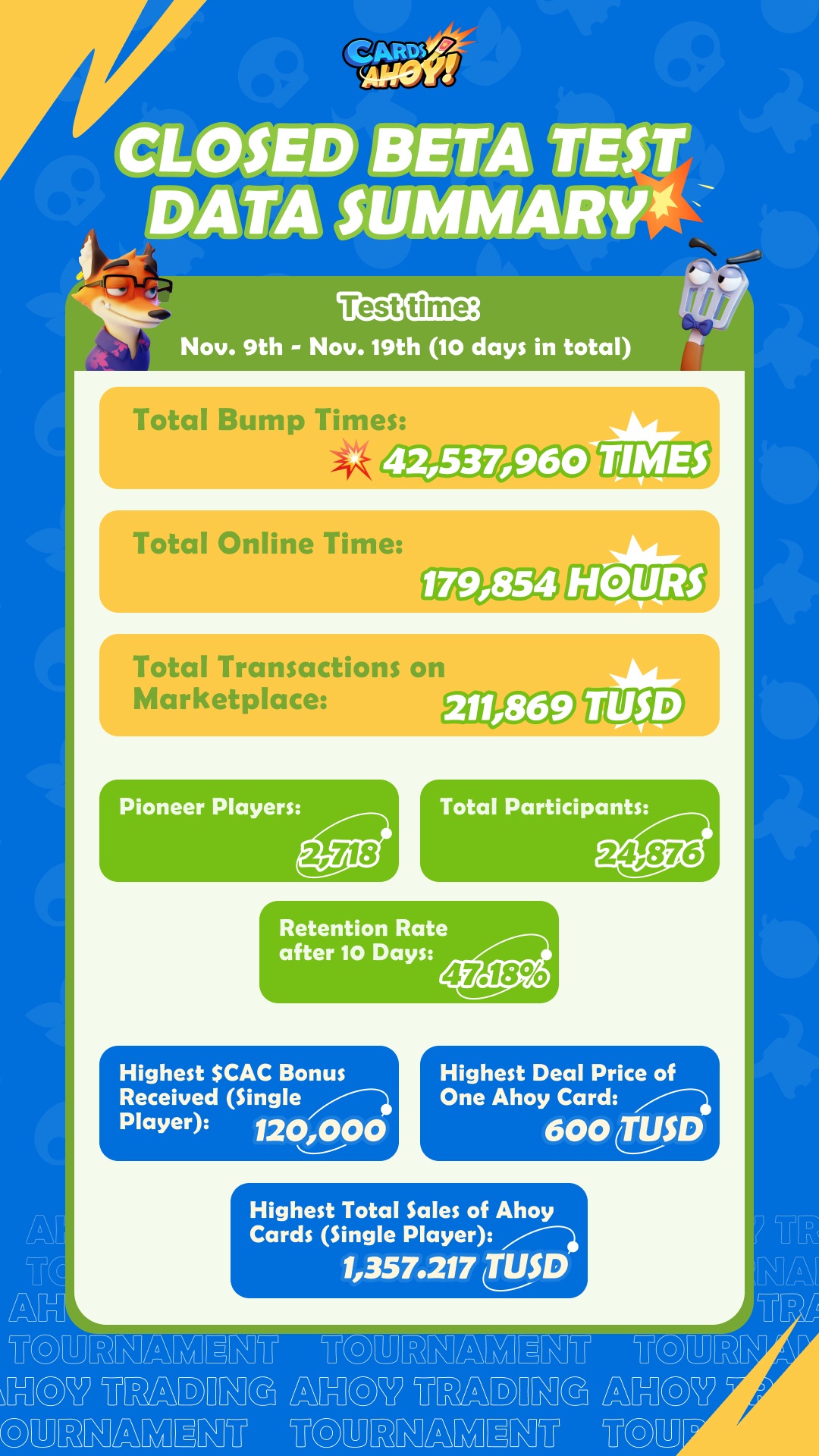
After experiencing the internal test, compared to other blockchain games, it indeed feels simpler and easier to get started, even to the point of being addictive. The American cartoon art style provides a breeding ground for the growth and co-creation of Memes, and the gameplay achieves a complete closed loop. According to official DC, in the cold start event in September, the total number of public test reservations exceeded 1.2 million. In the 10-day closed beta test in November 2023, nearly 25,000 users participated, with a total online duration of nearly 180,000 hours, collision data exceeding 40 million, and a total trading volume of over 210,000 TUSD (test currency, equivalent to USDT), with a ten-day retention rate exceeding 47% after the test ended. Additionally, during this test, the highest transaction price for a single card NFT reached 600 USDT. Overall, the internal test data performed remarkably among the current blockchain games.
In addition to being sufficiently game-like, this 1 + 1 + 1 type of combinatorial innovation game has another significant advantage—fairness and low risk. We all know that in the last round, blockchain game projects with good backgrounds either had long development cycles and struggled to launch or went soft on the exit. Those with poor backgrounds either had issues with exit mechanisms or directly trapped people from the start with NFTs. Even if there were projects with decent backgrounds and experiences, they still had to compete for first-come-first-served, with profitability entirely dependent on the timing of participation.
However, this 1 + 1 + 1 type of combinatorial micro-innovation project is different because such projects often start from one verified need and continuously add new gameplay. This way, the initial investment cycle is relatively short, content delivery is front-loaded, and players can fully experience it upon launch. Those who enter early can battle right after buying NFTs, and if the strategy design is good, there will be returns. Even if they come in late, they need not fear taking over, as card games rely on continuous operational gameplay design. As long as new cards are continuously introduced and combined with old cards to create new gameplay, an internal cycle can be established. Thus, regardless of when they enter, it remains relatively fair, and the participation risk is lower.
Therefore, from the perspective of meeting needs, CA is currently the closest to human nature and the easiest to break out among all new blockchain games I have seen. It can be said that the basic score can reach 70 points, and the next step is to see how it designs the 20% Fi to motivate Web2 players to cross that boundary.
First, regarding game assets:
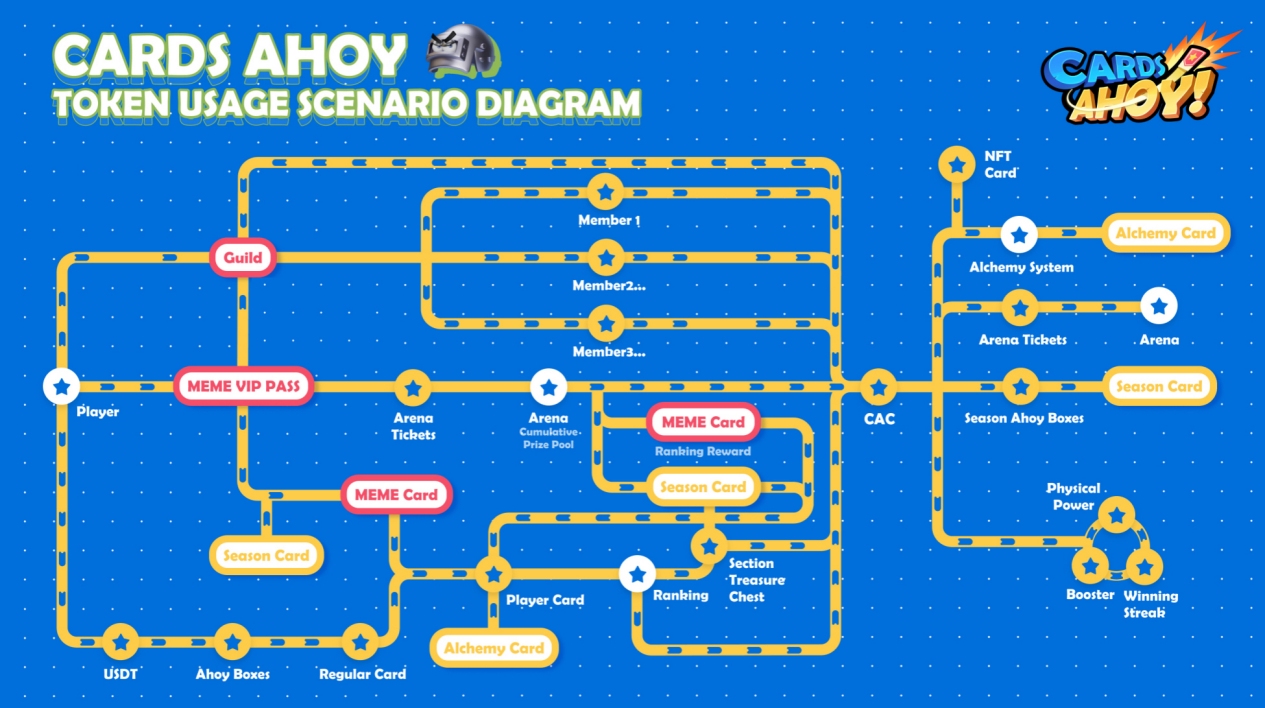
Cards Ahoy previously released the MEME VIP PASS, which is divided into four levels—white, purple, gold, and black—based on holder rights and rarity, and was initially given to OG players and community contributors through Freemint.
In the game's economic system, it is not difficult to see that the PASS occupies a core position. In the previous two game tests, players obtained game tokens, ice crystal keys, and other rights airdrops through PASS staking. As a freemint NFT, the current floor price of the ordinary white card has reached 0.3E, but compared to other games launched at the same time, it is still undervalued, and there are expectations for future token and game NFT airdrops.
Additionally, from CA's white paper, it is clear that they have indeed put effort into the economic model. In previous blockchain games, economic systems centered solely on token output often faced continuous accumulation of token sell pressure. This accumulated sell pressure forces project teams to expend a lot of energy monitoring and maintaining token prices rather than focusing on gameplay design. Meanwhile, players also need to constantly observe token prices and adjust their holdings instead of enjoying the fun brought by blockchain games. CA has optimized this by increasing diversified outputs, not just tokens but also NFTs.
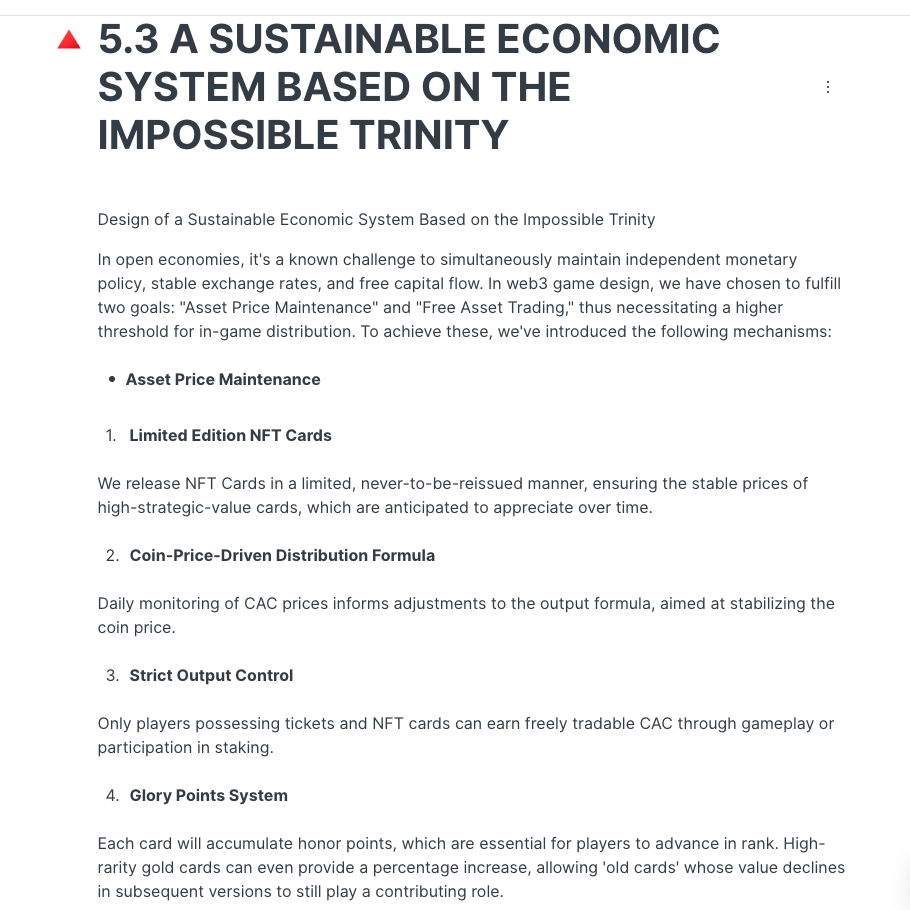
When the output channels are more diverse, the gameplay is more varied, and the consumption scenarios are richer, healthier and fairer Fi can attract enough new traffic to flow in and experience. Once the traffic comes in, how to retain it is the fundamental measure of a game's lifecycle.
It is worth noting that after the end of the second test, CA's economic system underwent a significant update, decoupling the value of the CAC token and granting it the function of purchasing seasonal blind boxes. Coupled with the game's card alchemy system, one can already feel the flywheel starting to turn. Furthermore, the MEME VIP PASS card has gained significant empowerment, making it a core shovel for playing the game. During the third test, the game's orange and purple cards will be produced in limited quantities, so entering early will give players a certain advantage.
In terms of breaking out, CA's issuing platform is Metalist Game, with team members from top gaming companies like Tencent, NetEase, Ubisoft, and Blizzard. The official website's partner information also includes major Web2 & Web3 companies like Binance, OKX, NetEase, the Associated Press, and Ninjala, indicating strong channel resources and breakout capabilities on both sides.
In terms of game mechanics, CA has also prepared to attract large Web2 traffic. On one hand, the game is easy to get started with and can be played anytime and anywhere, similar to "Clash Royale," which has a potential player base in the hundreds of millions. On the other hand, after the third test, a guild system and a comeback arena have been planned, making the gameplay of earning 10W U with 1U highly attractive in Web2.
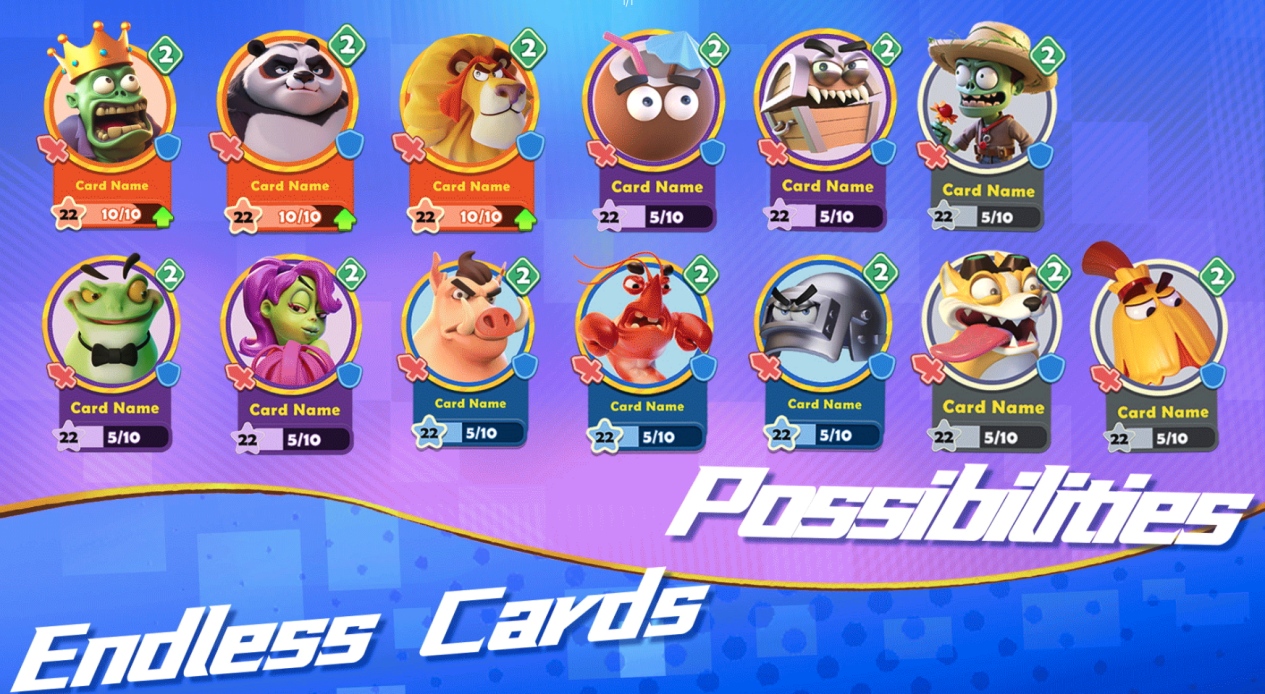
Overall, CA has shown potential for breaking out, a healthy design for Fi, and corresponding strategies and solutions for retaining migrating traffic. It is reported that there will be more surprises and innovations to come.
If we say that innovation from 0 to 1 is more likely to produce "explosive hits," then combinatorial innovations like Cards Ahoy, which follow the 1 + 1 + 1 model, will likely be more "long-lasting." After all, each 1 behind it represents a verified need, and by continuously stacking and merging, it is very likely to present a scenario of 1 + 1 + 1 > ∞. This is the kind of innovation I want to see in this round of the GameFi sector.
So, if this round of the GameFi sector wants to find some targets for early layout, it can look for lightweight, operation-heavy, micro-innovative, and more vital multi-element Web3 games like Cards Ahoy.
After all, surviving opens up more possibilities. Time is not only the common battlefield for all future businesses but also the standard for testing the vitality of all future products.
In Conclusion
When a tornado comes, no matter how unpredictable the surroundings are and how turbulent the winds are, there is always a core point that remains unchanged and allows you to clearly see the surrounding chaos. In the last cycle, if we were all swept away by chasing the wind too eagerly, this round, perhaps we should try to return to the most essential center and wait for the wind to come.
Unfortunately, we do not know how long it will take for this wind to rise, but fortunately, we now know the name of the center of the tornado—"human nature."
Regardless of the type of Game or the model of Fi, among various combinations, there will always be one that perfectly hits the majority of needs in human nature. Finding it, laying it out, and utilizing it is key.
 Risk warning Risk warning