From Renzo to Ether.Fi: An Overview of Representative Projects in the EigenLayer Ecosystem

 TVL ranking soared to 12th place on Ethereum, with a total financing of 65 million USD: EigenLayer reaps the benefits of the Cancun upgrade.
Author: DeMan
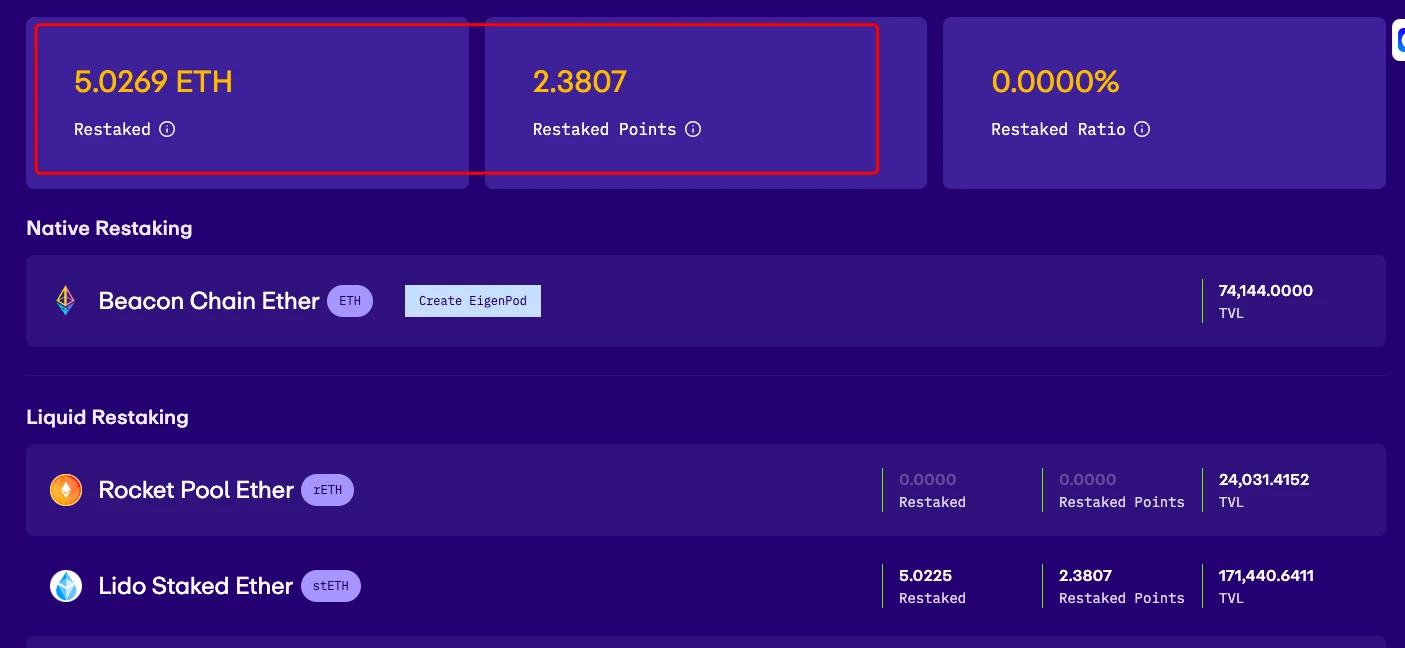
On January 21, the Total Value Locked (TVL) of Ethereum's restaking protocol EigenLayer surpassed $1.8 billion, climbing to the 12th position in Ethereum's TVL rankings. This significant data growth is attributed to a new policy. A month ago, EigenLayer reopened the deposit window for liquid restaking and raised the total cap for restaking various ETH liquid staking derivatives (LST) from 100,000 to 500,000 tokens. At that time, the project's TVL was only $1 billion, nearly doubling within a month.
The impact of EigenLayer is not limited to itself. Its first supported project, AVS - EigenDA, is about to launch, which is also closely watched by the market. Meanwhile, with the price of Celestia token $TIA rising, DA services have become a market focus. EigenLayer has also promoted the development of Liquid Restaking DeFi (LRD) and Liquid Restaking Token (LRT) liquid restaking services. The goal of these services is to release the liquidity of LSTs (such as stETH, swETH, ETHx) stored in EigenLayer and achieve this through the issuance of collateral certificate tokens (LRT).
The following will further explore the role of EigenLayer in the Ethereum ecosystem and interpret the significance of its innovative gameplay in the world of crypto assets.
Nearly $65 million in cumulative financing, EigenLayer injects vitality into the Layer 2 ecosystem through innovative gameplay
EigenLayer, as a key component of the Ethereum ecosystem, represents an innovative practice in defining Layer 2. In the Ethereum ecosystem, Layer 2 is often equated with Rollup technology. However, according to Vitalik's new perspective, if other EVM chains use non-Ethereum data availability (DA) layers, they can be considered as Validium of Ethereum. The key to this architecture lies in transferring the data availability layer off-chain while ensuring the integrity of transactions through valid proofs.
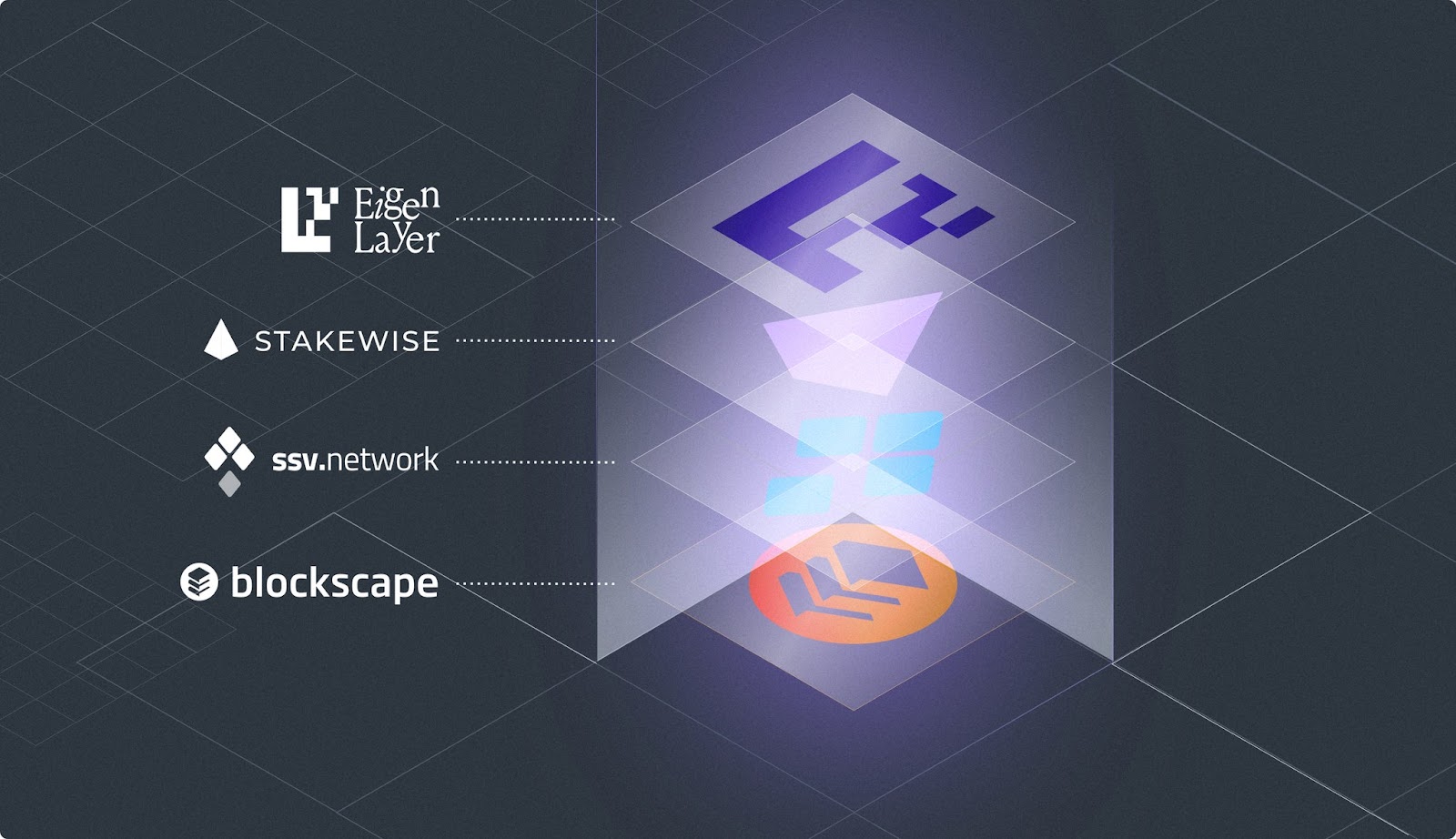
At the core of EigenLayer is a restaking protocol based on Ethereum, designed to provide a high level of security for the Ethereum crypto-economic system. Users can restake ETH, LSDETH, and LP Tokens through EigenLayer smart contracts to earn rewards. This mechanism not only enhances the security of third-party projects but also increases reward yields, achieving a win-win situation.
EigenLayer directly connects active validation services (AVS) with the security and liquidity of Ethereum. This "Re-staking" process essentially delegates the security validation of the token model to Ethereum nodes. Taking EigenDA, developed by the EigenLayer team, as an example, it is a decentralized data availability (DA) service based on EigenLayer Restaking and the first AVS project on EigenLayer. Through this service, Restakers can delegate their staking to node operators to earn service fees while improving transaction throughput and the overall security of the ecosystem.
From a financing perspective, EigenLayer has also demonstrated its market influence. In August 2022, EigenLayer completed a $14.5 million seed round, and in March 2023, it completed a $5 million Series A financing at a valuation of $500 million. These investments reflect the market's confidence and support for EigenLayer's future development.
Key achievements in financing, technology, and solutions; related projects of EigenLayer to watch
The EigenLayer ecosystem also includes a series of high-quality projects that have made remarkable progress in financing and technology. Below are some related projects.
Renzo: Providing a simplified restaking process
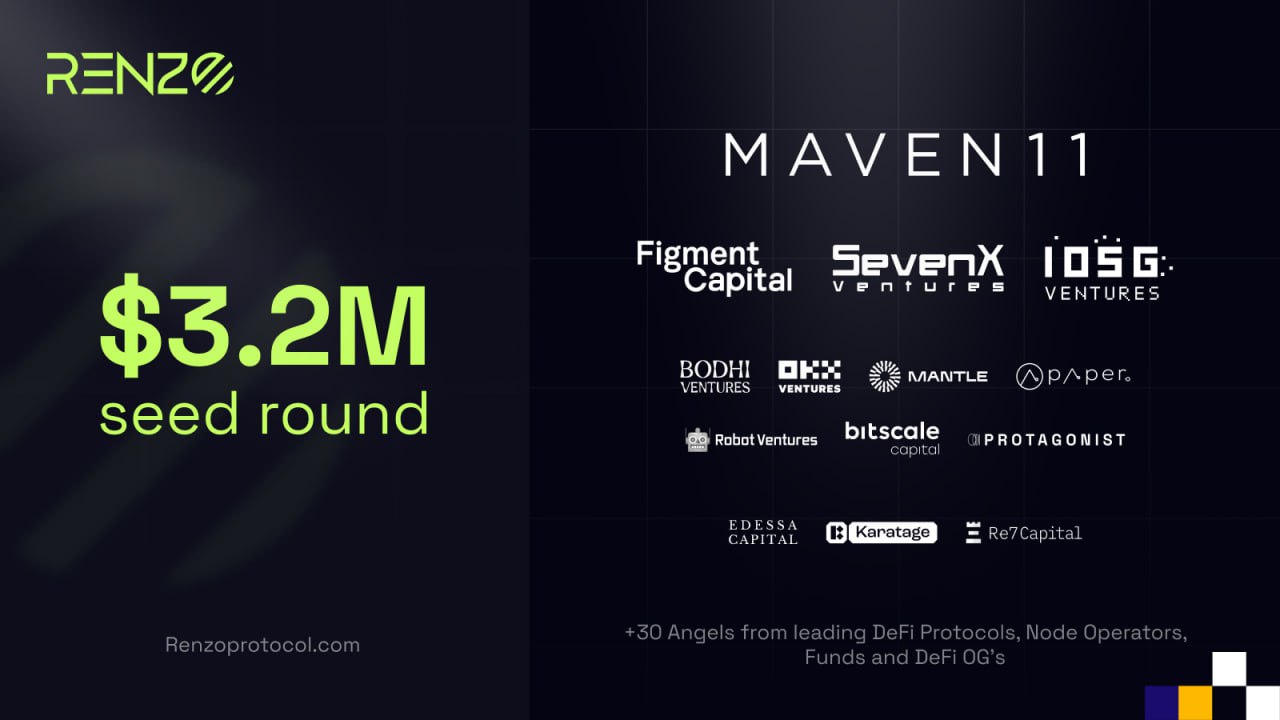
Renzo is a restaking protocol based on EigenLayer that offers users a simplified restaking process, eliminating the complexity of selecting and managing operators or reward strategies. In January 2024, Renzo completed a $3.2 million seed round at a valuation of $25 million. On January 4, Renzo launched the ezPoints reward program to reward users who contribute to the protocol. Renzo's TVL exceeded $100 million in just three months, with significant growth occurring in January 2024.
AltLayer: Highly scalable dedicated execution layer
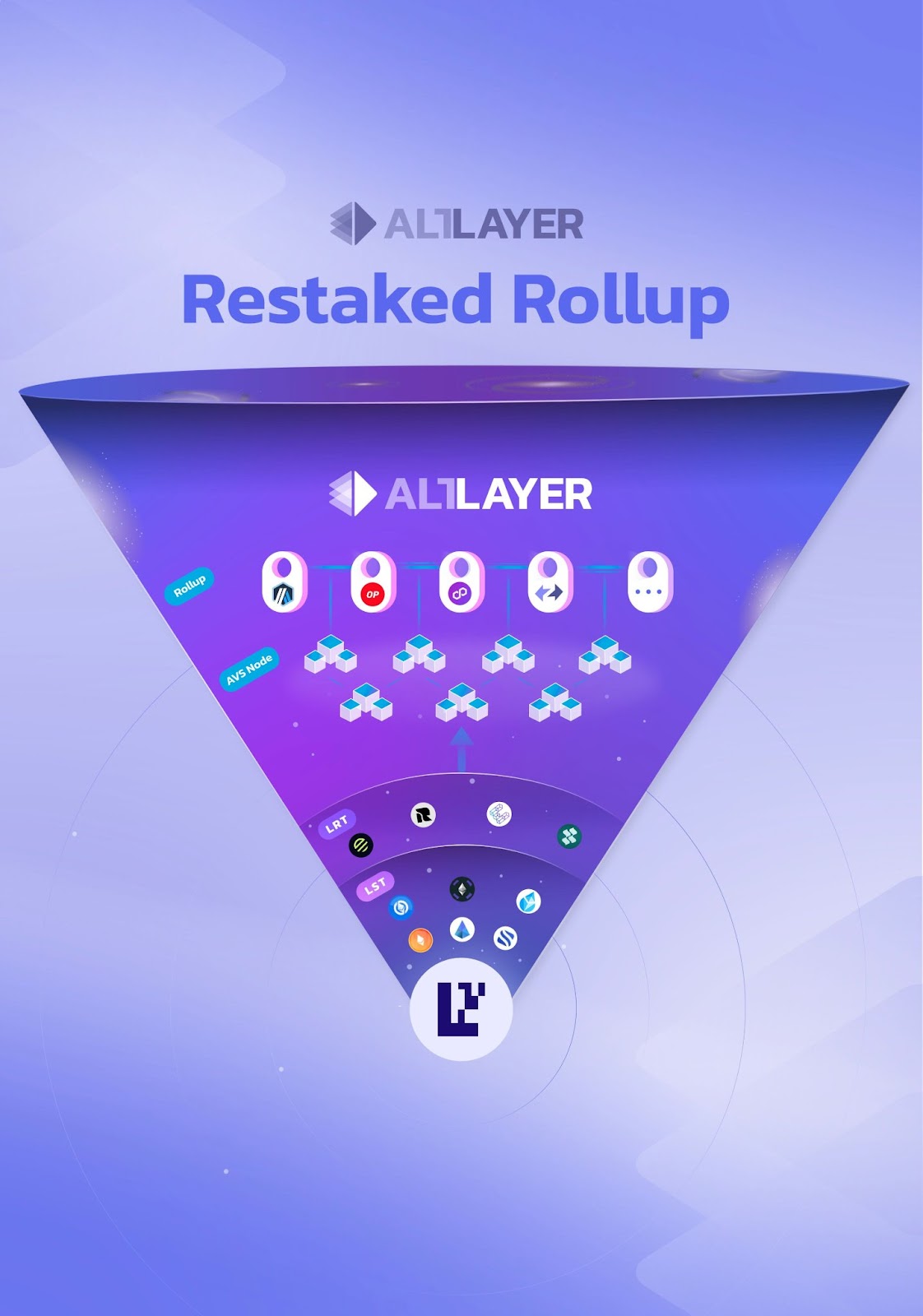
AltLayer is a highly scalable application-specific execution layer system that derives security from underlying L1/L2. It employs a modular and pluggable framework suitable for multi-chain and multi-VM environments. In July 2022, AltLayer completed a $7.2 million seed round. In August 2023, it received strategic investment from Binance Labs and was selected as one of the MVB best projects. In January 2024, Binance's new coin mining launched AltLayer (ALT).
PolyHedra: Web3 interoperability infrastructure
PolyHedra is dedicated to Web3 interoperability, providing trustless and efficient infrastructure for cross-chain bridges and data interoperability between Web2 and Web3 systems. So far, PolyHedra has raised a total of $25 million, supported by several investment institutions including Binance Labs and OKX Ventures.
KelpDAO: Liquid-LSD Restaking project
KelpDAO is a Restaking ecosystem project under Stader Lab, belonging to the Liquid-LSD Restaking type. It currently supports deposits of Lido's stETH and Stader's ETHx LST tokens. Although the quota for EigenLayer LST is full, KelpDAO's TVL still exceeds $160 million, making it the project with the highest TVL in the LRT field.
Swell Network: Entering the Liquid Restaking field
Swell Network is an established LSD protocol that recently announced its entry into the Liquid Restaking field. Its LST token swETH has gained attention due to airdrop expectations and is currently the second-ranked staking asset in EigenLayer.
Ether.Fi: Liquid staking and restaking services
Ether.Fi is a liquid staking protocol that allows stakers to control their keys while delegating to node operators and earning rewards. In February 2023, Ether.Fi completed a $5.3 million seed round.
These projects showcase the diversity and innovative strength of the EigenLayer ecosystem, while also reflecting the market's high attention and investment willingness towards these projects. As these projects develop, they will further drive the overall growth and prosperity of the Ethereum ecosystem.
Few competitors in the restaking track; EigenLayer's future performance is worth noting but still uncertain
EigenLayer occupies a unique position in the history of blockchain technology as the first project to propose the concept of restaking. This innovative crypto-economic model opens up new possibilities for stakers in Ethereum's consensus layer, allowing them to validate other modules for additional income and enhanced influence. This mechanism is a first in the blockchain field, representing a new exploratory direction.
Currently, EigenLayer's restaking track does not face significant competition. This field is still emerging, with a limited number of participants, indicating that the market is still in its early stages. EigenLayer's innovative attempt has a certain leading advantage in the field of blockchain innovation, but it also faces challenges regarding market acceptance and participation.
The restaking mechanism introduced by EigenLayer not only provides stakers with a new source of income but also adds more vitality and security to the entire Ethereum ecosystem. The emergence of this new model may signal future development trends in blockchain technology and crypto economics. As the market matures further and more participants join, restaking may become an important component of future blockchain development. As a pioneer in this field, EigenLayer's future development will be worth the industry's attention.
 Risk warning
 Risk warning