




Bitcoin returns to a market value of 2 trillion, while Ethereum is quietly taking action

 Breaking through the $70,000 barrier not only signifies an increase in value but also represents a shift in market confidence.
Author: 636Marx
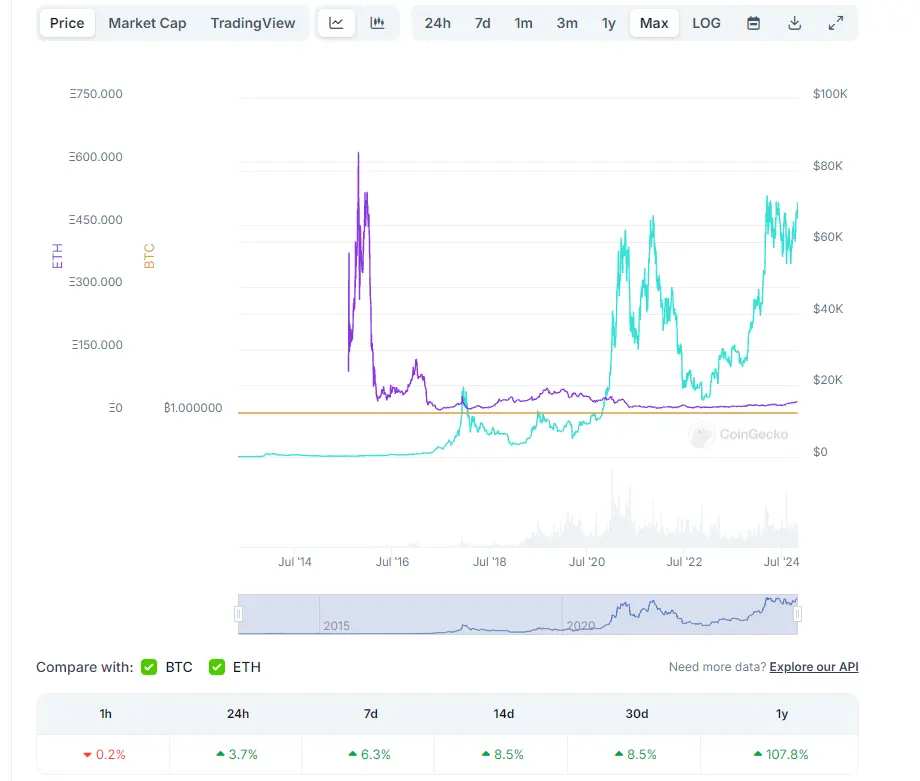
Today, the price of Bitcoin has risen to $71,600, just 3.5% away from its all-time high, with a current increase of 7% in October. Historically, the average increase during October has been 22%, while the historical average increase in November has reached 46%. (Data from 528btc). With the U.S. elections in November approaching, the crypto president, understood by many as the king, is far ahead of the competition, leading to widespread predictions that Bitcoin will easily surpass the historical average of 46%, sparking heated discussions about Bitcoin's mainstream adoption.
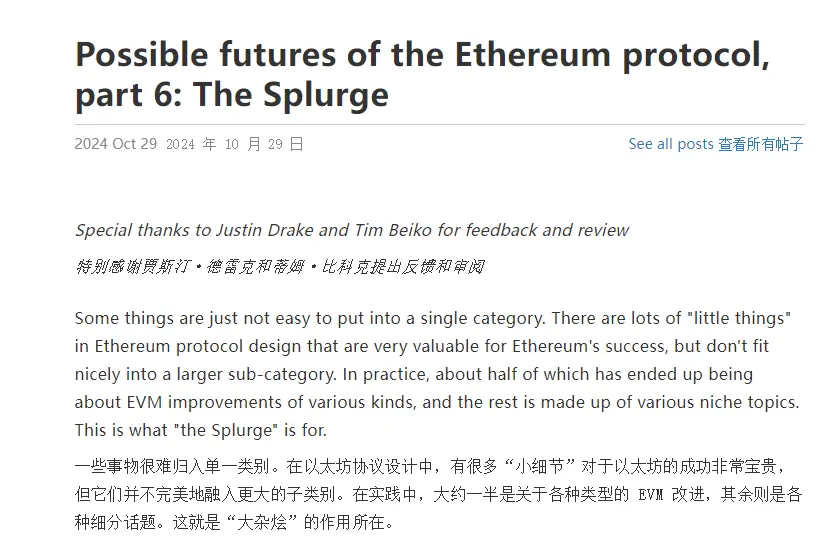
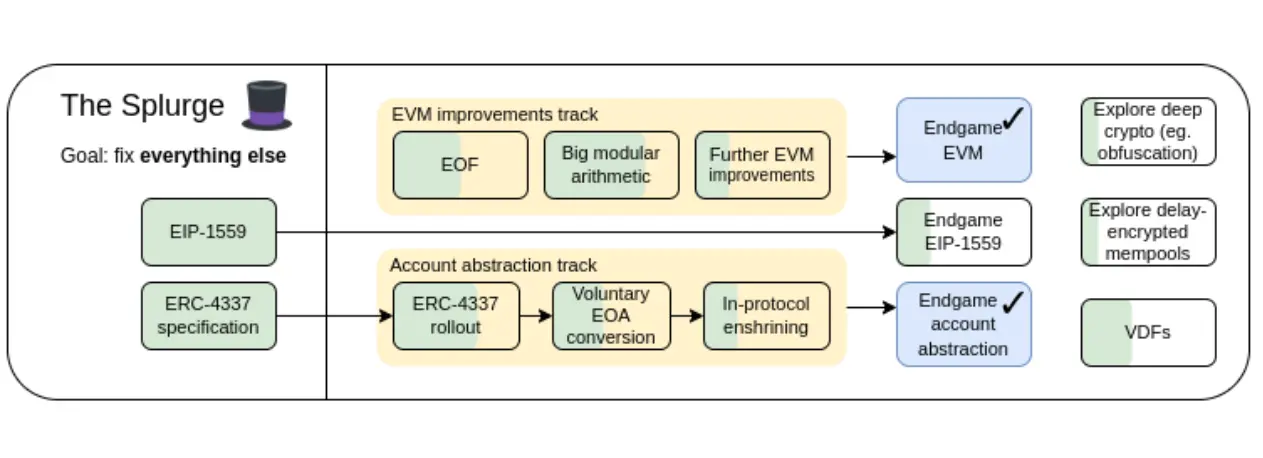
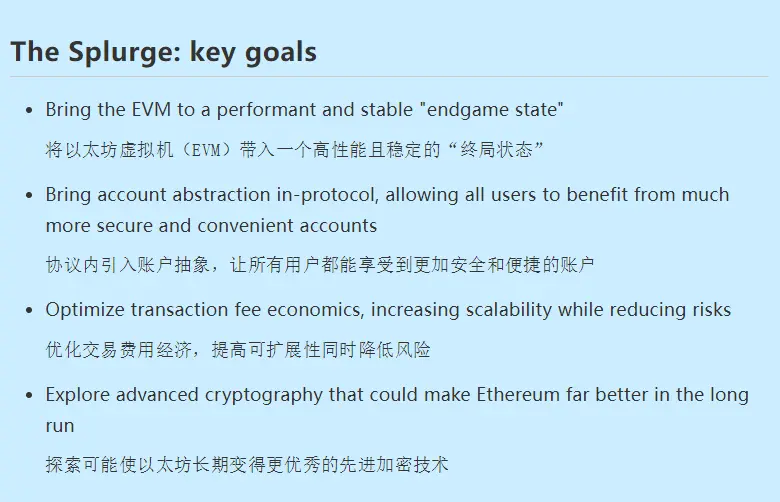
Meanwhile, Ethereum founder Vitalik is advancing a development plan called "The splurge," which I translate as "Brilliance," akin to an expensive weapon in Dota that can change the future. "The splurge" may completely transform the future of Ethereum.
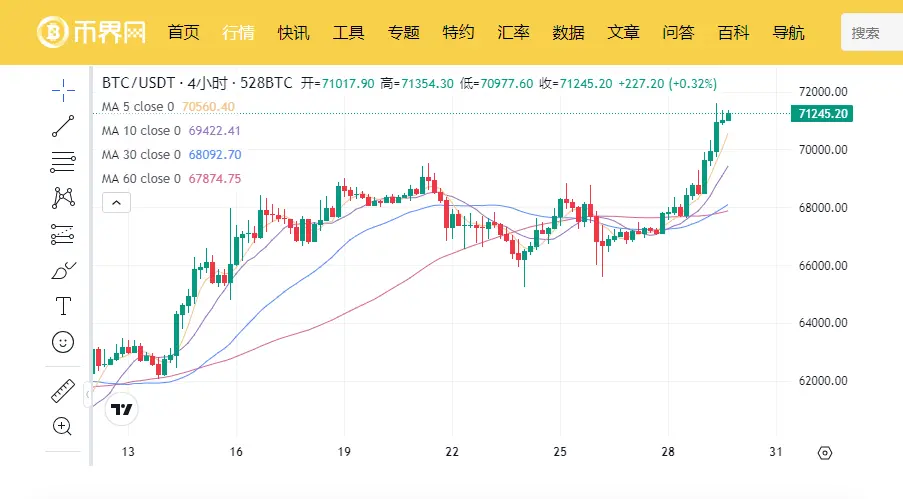
I will delve into how these changes in Bitcoin and Ethereum will affect the entire cryptocurrency market, with a focus on analyzing the short-term price impacts on investors, developers, and regulators.
Bitcoin Breaks $70,000: Analyzing the Key Driving Factors
Bitcoin's price fluctuations are often seen as a barometer for the entire crypto market. Its breakthrough of the $70,000 mark signifies not just an increase in value but also a shift in market confidence. Here are several key factors driving this latest surge:
1. Increased Institutional Investment:
Traditional financial institutions are playing an increasingly important role in Bitcoin's development trajectory. From BlackRock's application for a Bitcoin ETF to asset management giants like Fidelity conducting in-depth research on digital currencies, institutional investment injects credibility, liquidity, and stability into the market. This participation not only alleviates concerns among individual investors but also further solidifies Bitcoin's status as a viable investment asset.
2. Global Economic Factors:
This surge is closely related to the rising uncertainty in global economic growth. Central banks in the U.S., Europe, and other major economies are grappling with challenges such as inflation, slowing economic growth, and stock market volatility. In this context, Bitcoin's appeal as a store of value—often likened to "digital gold"—has significantly increased, attracting the attention of long-term holders and new investors.
3. Technological Advancements and the Lightning Network:
Bitcoin's technological foundation is being strengthened through innovations like the Lightning Network, which addresses one of Bitcoin's major challenges: scalability. With the Lightning Network, Bitcoin not only becomes a store of value but also a viable option for everyday small transactions—crucial for its broader adoption.
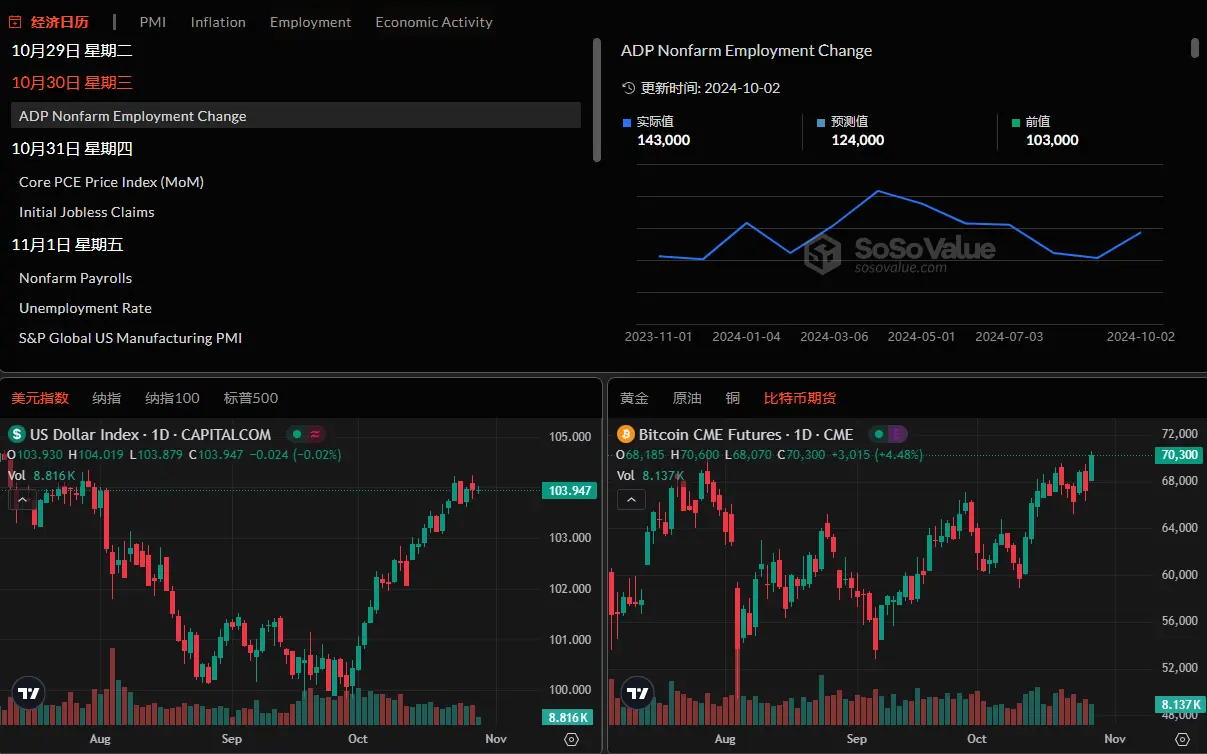
Bull Market or Bear Market: Can Bitcoin Maintain a $2 Trillion Market Cap?
As Bitcoin's market cap surpasses $2 trillion, a key question arises: Can it maintain this level in the long term?
1. Historical Performance and Market Trends:
Bitcoin's strong performance in November aligns with its historical trends, as seasonal factors typically lead to strong fourth-quarter performance, sometimes even triggering a "Santa Claus" rally in December. Additionally, the increasing likelihood of regulatory approval for spot ETFs further reinforces market optimism.
2. Global Central Bank Policy Adjustments:
Global regulators are increasingly focusing on the digital currency space. The potential approval of a Bitcoin ETF by the U.S. Securities and Exchange Commission (SEC) is seen as a milestone development, allowing investors to gain exposure to Bitcoin without directly holding it. However, regulation is a double-edged sword. While moderate regulation can attract new investors and stabilize the market, excessive regulation may stifle the decentralized nature of digital currencies, affecting their appeal to core investor groups.
3. Retail Investor Sentiment:
Another key factor is the sentiment of retail investors. If retail investors continue to view Bitcoin as an effective tool against inflation and traditional financial instability, their ongoing participation may sustain Bitcoin's upward momentum. However, a decline in investment enthusiasm or sudden changes in economic conditions could quickly reverse this trend.
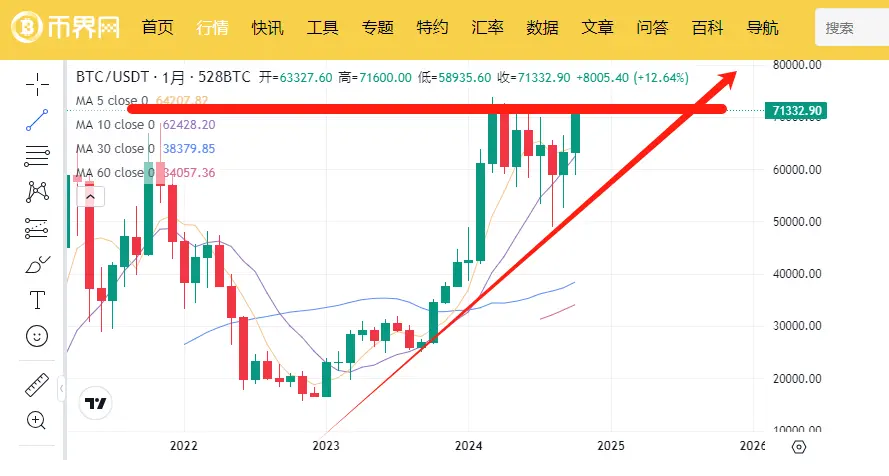
Ethereum's Grand Blueprint: Vitalik's "Brilliance" and Ultimate Vision
Ethereum, as the second-largest digital currency by market cap, is evolving along a parallel yet unique path. The roadmap recently proposed by founder Vitalik, titled "The splurge," aims to explore solutions to Ethereum's long-standing scalability and energy consumption issues, potentially pushing the network toward its ideal "end state."
The Path to Ethereum's Scalability: Why It Matters
Ethereum is facing significant challenges, particularly regarding network congestion and high gas fees. As decentralized applications (dApps) and DeFi platforms increasingly rely on Ethereum's infrastructure, the importance of maintaining efficient operation under growing demand becomes more pronounced, which is the focus of "The splurge" 2023 roadmap.
1. Rollups and Layer 2 Solutions:
The "Brilliance" plan emphasizes the integration of rollups and layer 2 solutions, aiming to alleviate network congestion by processing transactions outside the main Ethereum chain. Projects like Optimism and Arbitrum play a central role in this strategy, and their success could mark a significant turning point for Ethereum, creating a more attractive ecosystem for developers and users by significantly reducing transaction costs and increasing processing speeds.
2. Proof of Stake (PoS) and Environmental Impact:
Ethereum's transition from Proof of Work (PoW) to Proof of Stake (PoS) through "The Merge" is a significant milestone, reducing Ethereum's energy consumption by over 99%. The "Brilliance" plan further ensures that Ethereum maintains environmental sustainability during its expansion. Given the growing global concern over environmental impact, Ethereum's eco-friendly PoS mechanism may attract a broader, sustainability-focused group of investors and users.
3. Data Sharding:
Data sharding is a key component of Ethereum's future development. Sharding technology improves efficiency by dividing the blockchain into multiple parallel processing segments. For Ethereum, data sharding will enable the network to handle larger transaction volumes, significantly enhancing its scalability without sacrificing the core principle of decentralization.
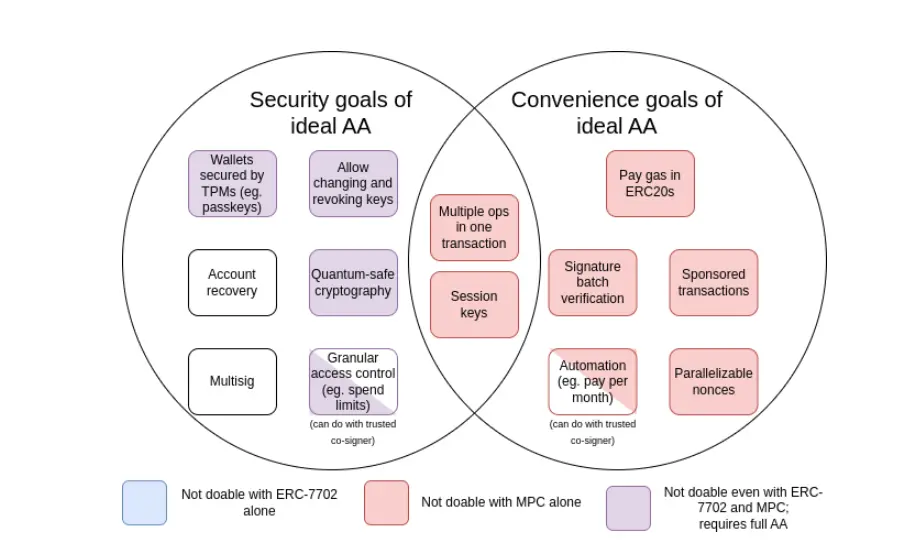
Since the introduction of account abstraction in 2015, Ethereum's goals have expanded to a comprehensive set of "convenience objectives," as illustrated in the following chart.
In the developer ecosystem, Ethereum enhances scalability and reduces costs, attracting more developers to build innovative applications and fostering a thriving and diverse dApp ecosystem. The improvements in scalability benefit the DeFi and NFT markets. By continuously lowering fees and speeding up transaction times, Ethereum will solidify its foundational position.
The Intersection of Bitcoin and Ethereum: Complementary Coexistence or Intense Competition?
Bitcoin and Ethereum are often viewed as competitors, but their fundamental differences suggest they may play complementary roles in the future financial ecosystem. Bitcoin is hailed as "digital gold," primarily serving as a store of value and a tool against inflation. In contrast, Ethereum is evolving into a "global computer," providing a foundational platform for building and executing decentralized applications.
1. Store of Value vs. Functional Platform:
Bitcoin's strengths lie in its simplicity, security, and scarcity, while Ethereum's strengths are its versatility and ability to support a broad ecosystem. Bitcoin maintains its value through limited supply and a robust decentralized network, whereas Ethereum focuses on enabling complex smart contracts and decentralized applications. These fundamental differences allow both to coexist without direct competition, even complementing each other, leading investors to see strategic value in holding both.
2. Interoperability and Future Bridges:
As blockchain technology matures, interoperability between Bitcoin, Ethereum, and other blockchain networks is becoming increasingly feasible. Solutions that enable cross-chain asset transfers have the potential to combine Bitcoin's security and store of value functions with Ethereum's flexibility and smart contract capabilities, creating a more integrated and feature-rich decentralized financial ecosystem.
The Future of the Digital Currency Market: Price and Technology
The digital currency market remains volatile and uncertain, yet it also holds immense opportunities. Both Bitcoin and Ethereum face unique challenges and opportunities on their respective development paths.
Bitcoin's breakthrough of $70,000 and Ethereum's "Brilliance" plan are undoubtedly significant steps toward practical technological finance in blockchain. The strong rise in Bitcoin's price reflects an increase in market confidence and may open new doors for a broader investor base. Meanwhile, Ethereum aims to fundamentally improve its network performance, paving the way for more efficient and cost-effective transaction processing. These transformative developments are expected to drive digital currencies in addressing real-world problems in everyday economic activities.
 Risk warning Risk warning

Popular articles