Trump names selected for the U.S. crypto strategic reserve, how does Cardano create a bull market illusion through narrative?

 In this cycle, Cardano veterans have been revitalized, anchoring the Bitcoin L2 narrative. Recently, it has frequently made headlines with multiple identities, such as a U.S. crypto reserve asset, an ETF application target, and a popular choice for institutional allocation, significantly increasing its presence.
Author: Nancy, PANews
Through the ups and downs of the cryptocurrency market, the veteran public chain Cardano always seems to have a built-in BUFF, performing exceptionally well. In this cycle, Cardano's veterans have been revitalized, anchoring the Bitcoin L2 narrative, and recently have frequently made headlines as a U.S. crypto reserve asset, ETF application target, and a popular choice for institutional allocation, significantly increasing its presence.
Ecological indicators crushed, policy BUFF fully loaded accused of being a relationship asset
On March 2, Trump announced that his digital asset executive order directs the presidential task force to advance a cryptocurrency strategic reserve that includes BTC, ETH, XRP, SOL, and ADA. However, this news was not entirely unexpected. At the end of January this year, Ripple CEO Garlinghouse confirmed that he had discussed the possibility of making XRP a U.S. strategic reserve asset with Trump, emphasizing the need to ensure diversification of reserves. It appears that this game had already begun to be laid out.
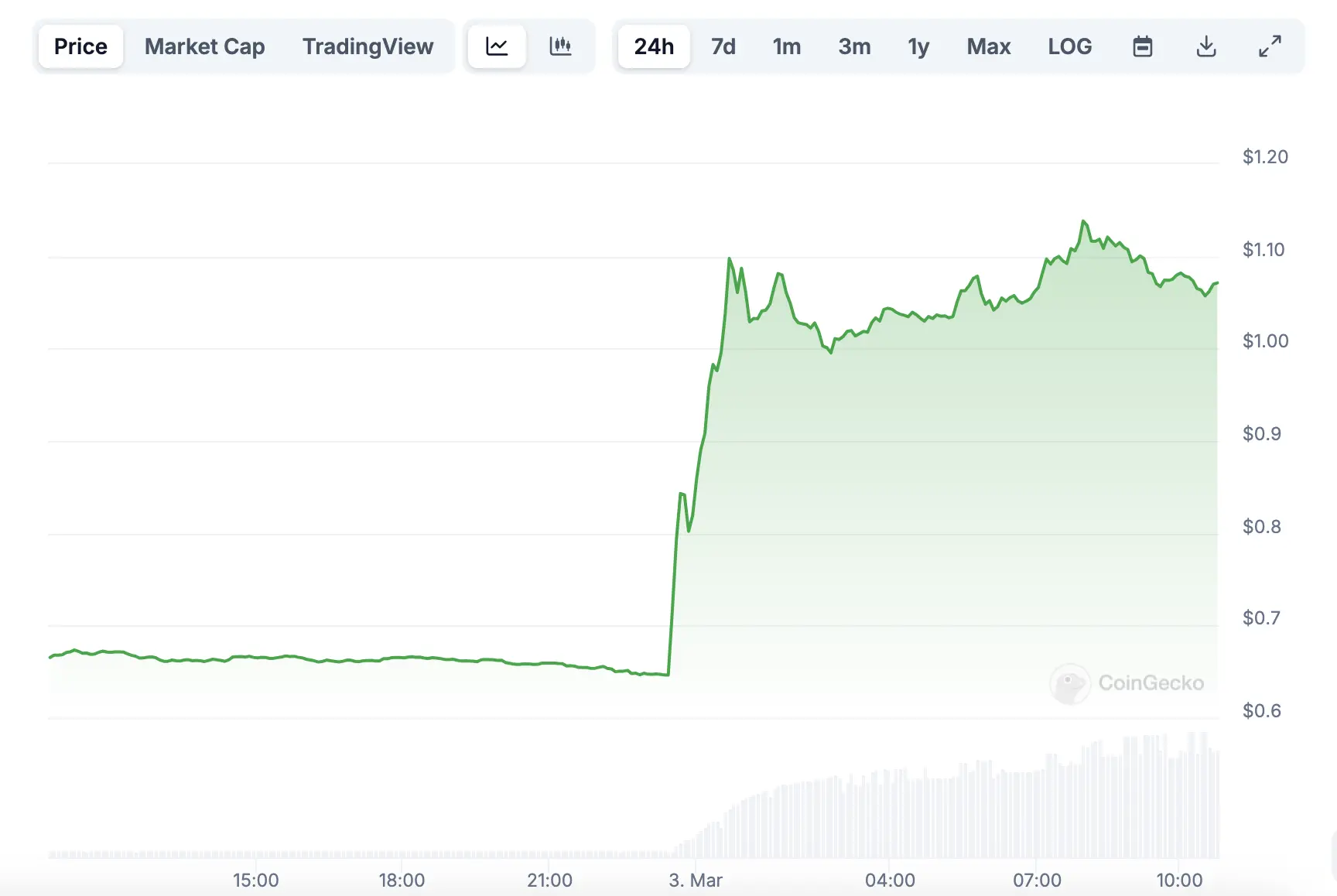
Stimulated by this news, the crypto market "revived" overnight. Among them, Cardano's ADA performed particularly well, with CoinGecko data showing a maximum increase of over 78.1% within 24 hours, directly topping the hot search list. However, amidst the soaring market sentiment, there were also doubts: compared to other selected assets, Cardano's technical strength and ecological development seem slightly inferior; why was it chosen as a U.S. reserve asset?
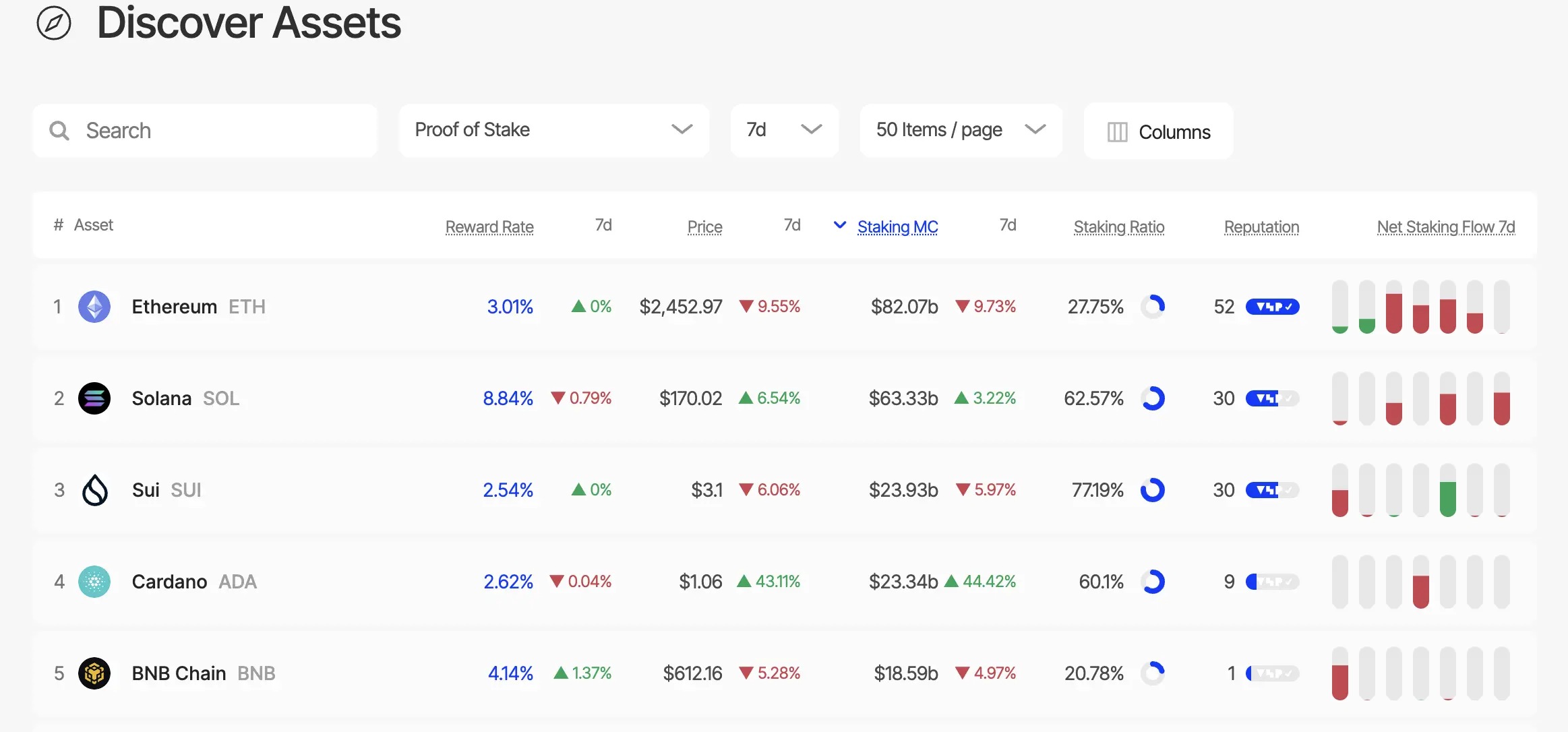
Cardano holders have a high willingness to hold long-term, with over 60% choosing to lock up their assets to support the network, which also increases its network health. According to staking data from Staking Rewards, Cardano is the fourth largest POS blockchain network, with a staking amount of $23.34 billion and a staking rate of 60.1%.
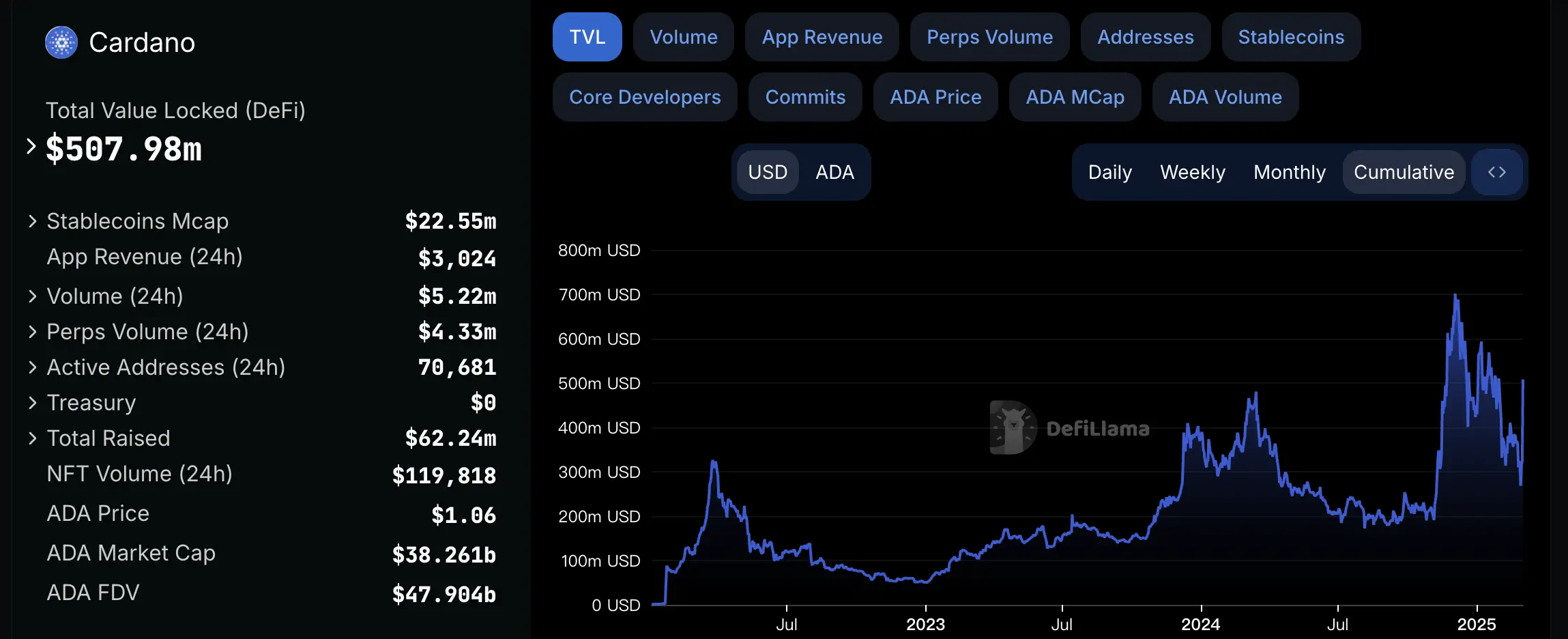
However, according to DeFillama data, as of March 3, Cardano's TVL was nearly $508 million, with an on-chain stablecoin market value of $2.255 million, and application revenue in the past 24 hours was only $3,024. In contrast, Solana's TVL reached $8.38 billion, with daily revenue of about $836,000. From the perspective of ecological indicators, Cardano lags behind many selected assets; despite its impressive staking scale, the staking of ADA has not translated into actual dApp applications, indicating that its ecosystem still has large gaps to fill.
"So does this mean we have to change our name to 'U.S. Digital Assets'?" Cardano founder Charles Hoskinson joked in a recent tweet.
In fact, the outside world has long labeled Cardano as a "Japanese public chain," while Cardano is an American-made project founded by American Charles Hoskinson, one of the original eight co-founders of Ethereum, who has invested significant funds and energy in blockchain, longevity science, and extraterrestrial exploration. In 2014, Hoskinson left due to differences in development direction with Vitalik Buterin and established Input Output Global, headquartered in the U.S., launching Cardano. The reason Cardano is popular in the Japanese market, even being called the "Japanese Ethereum," is largely related to its early financing model. It is reported that nearly 95% of buyers in Cardano's public offering were Japanese investors, often referred to as "retirement investments," mainly because this public offering was led by the Japanese company Emurgo, and at that time, Japan's regulatory environment was relatively relaxed compared to Europe and the U.S., which led to Cardano being misunderstood as a Japanese project. However, as U.S. crypto policies gradually open up, Cardano is gradually downplaying its Japanese image.
As for the market's speculation on Cardano's selection as a strategic asset reserve, many believe it relies not on technology but on establishing close ties with the U.S. government, especially as founder Charles Hoskinson has hinted multiple times. For example, in November 2024, when there were rumors that Trump was considering appointing him as a crypto policy advisor, he revealed in a conversation that he had a close relationship with a member of Trump's team. He stated that he would work with lawmakers and the government to push for a bipartisan bill. Cardano's development company, Input Output Global, plans to establish a cryptocurrency regulatory policy office in early 2025 and aims to engage with "leaders in certain key positions" in the U.S. government to promote the legislative agenda related to cryptocurrencies. However, as of now, the specific progress of this plan has not been disclosed, and there is no evidence that he has been formally employed by the U.S. government.

Charles Hoskinson also clarified on March 2, stating, "No one has been appointed by the executive branch to a cryptocurrency-related role tonight; the meeting does not imply endorsement or grant magical new powers. The legislative process is what it is; it takes time and effort. I will not comment further on this topic until there is precise and substantive news regarding the legislative process, and this news must relate to the formulation of new laws to allow this industry to survive and thrive in the U.S."
From academic faction to Bitcoin sidekick, Cardano has further narratives to align with hot topics
The narratives are fluid, but Cardano remains steadfast.
Recently, several market dynamics have made Cardano one of the hot assets attracting market attention. For instance, ADA is among the top three assets in Grayscale's latest smart contract fund holdings, accounting for 18.23%; Grayscale's application for a Cardano spot ETF has been accepted by the U.S. SEC; and Cardano plans to integrate Ripple's RLUSD stablecoin to enhance its DeFi ecosystem and provide broader usage opportunities for RLUSD.
Not long ago, Charles Hoskinson also revealed that Input Output Global (IOG) will focus on developing the Bitcoin DeFi ecosystem in 2025. The team plans to collaborate with multi-party computing protocol developer Fair Gate Labs, aiming to launch a demo version before the Bitcoin conference in May 2025. The technology developed by Fair Gate Labs will serve as the foundation for BitcoinOS, requiring no additional token issuance, and cross-chain transactions will only need to use Bitcoin. The project will also collaborate with community projects and wallet service providers to achieve the goal of "awakening the sleeping giant."
This strategic reserve policy undoubtedly brings additional policy support to Cardano and provides new funding flows and attention in the market.
Looking back at Cardano's development history, in the past few market cycles, Cardano has always excelled at constructing eye-catching narratives to shape a unique market image and enhance market attention through external events.
From starting as a "research-driven third-generation blockchain," to the "green Ethereum killer" environmental pitch, to the ecological moment of launching smart contracts, it has now transformed into a new role as "Bitcoin Layer 2." These narratives are sometimes not entirely based on the technology itself but are more driven by external events and public opinion. Especially in bull market cycles, its potential is often amplified, quickly making it the focus of market attention with its strong rallying ability.
However, from the initial academic faction to the current Bitcoin "sidekick," despite Cardano's success in narrative evolution, the actual application issues behind it remain its biggest weakness. With the boost from the "U.S. policy tailwind," whether Cardano can break the inherent impression under the illusion of past bull markets remains to be seen.
Accused of being a mere paper document, execution path remains a mystery
However, regarding the inclusion of ADA and other altcoins in the strategic reserve assets named by Trump, aside from the accusations of interest transfer, the implementation methods, timelines, specific scales, and funding sources remain unclear, leading the market to believe it is more at the intention stage, with execution power shrouded in mystery.
Udi Wertheimer, founder of Taproot Wizards, believes, "So far, the best perspective I've seen on strategic reserves is that this is just Trump's typical negotiation strategy. To truly establish a reserve, Trump must persuade Congress; he cannot decide alone. Whenever Trump needs to persuade other stakeholders, he always starts with an absurd claim that he can later retract. So, in Trump's chess language, this just means he is telling Congress that if they don't agree to a Bitcoin reserve, he will propose even more outrageous conditions."
Arthur Hayes, co-founder of BitMEX, pointed out, "There's nothing new here, just empty talk. Let me know when they get congressional approval to borrow money or raise gold prices. Without these, they have no money to buy Bitcoin and altcoins."
"Investing only in Bitcoin might be the best choice—it's the simplest, and as the successor to gold, its underlying logic is also very clear; if people want more diverse options, they can build a market-cap-weighted crypto asset index to keep it unbiased," said Brian Armstrong, co-founder and CEO of Coinbase.
 Risk warning
 Risk warning