






Stablecoin Trio: The Game of Crypto Chips, Reconstruction of Clearing Networks, and the Struggle for Financial Hegemony

 Stablecoins originally addressed the issue of value stability in the digital asset world, but essentially, they meet the global demand for a "de-banked dollar." This digital dollar can flow freely 24/7, unrestricted by banks and central bank systems, quickly occupying the "gray areas" that banks cannot reach.
Author: VWin Ventures
Written by: Paolo@Victory Securities Partner, Andy@VDX Senior Researcher
TLDR:
- Stablecoins are value representations of their underlying fiat currencies on the blockchain, serving as a trading medium that links fiat currencies and crypto assets.
- The core scenarios for stablecoins are divided into trading and payments, used for permissionless trading settlements of financial assets and commodity trade on a globally flattened blockchain clearing and settlement network.
- Trading scenario: The market is concentrated at the top, with future growth coming from new financial assets being tokenized on-chain. The competitive landscape for stablecoins is gradually evolving from on-chain/exchange trading scenarios to the market competition for traditional financial transactions on-chain.
- Payment scenario: Payments represent the largest incremental market for stablecoins currently, especially in cross-border remittances and local acceptance, where there is real and substantial demand. Stablecoins are encroaching on the core interests of traditional clearing systems represented by SWIFT and card organizations. Licensed financial institutions provide customers with compliant and stable trading venues.
- Leading stablecoin players USDT and USDC initially gained traction through early channel and traffic binding, with later competition focusing on liquidity and ecosystem networks. Tether expanded naturally through a distributed network reliant on black and gray markets, while Circle expanded mainstream financial channels through compliance.
- Dollar stablecoins essentially carry the "de-geographical" output of a new round of financial sovereignty for the dollar, establishing a dollar network that circulates globally without traditional banks and central banks, promoting free circulation of funds and concentration of assets. The U.S. can remotely control global on-chain dollar flows through regulatory policies and KYC reviews, forming a new digital colonial model.
The Underlying Logic of Stablecoins -- The Shadow Dollar on a Global New Clearing and Settlement Network
Stablecoins initially addressed the issue of value stability in the digital asset world, but essentially, they meet the global demand for a "de-banked dollar." This digital dollar can flow freely 24/7, unrestricted by banking and central bank systems, quickly occupying the "gray areas" that banks cannot reach.
The U.S. extends the dollar into areas that traditional regulation finds difficult to cover by tacitly allowing private institutions to issue stablecoins, forming a decentralized yet essentially controllable "dollar digital colonial system."
Stablecoins represent a business of monetizing liquidity through credit, and creating a stablecoin means becoming a private "global central bank," with extremely low costs of deposit and marginal expansion, while mastering bidirectional exchange fees, capital accumulation interest, and various underwater profit models. In the entire Crypto industry, stablecoins are akin to "casino chips" and "mining shovels," serving speculative arbitrage, leveraged trading, and other "gray" demands; stablecoins are one of the few core businesses in the Crypto industry with real long-term value.
The Core Scenarios of Stablecoins -- Permissionless Trading Settlements for Financial Assets and Commodity Trade
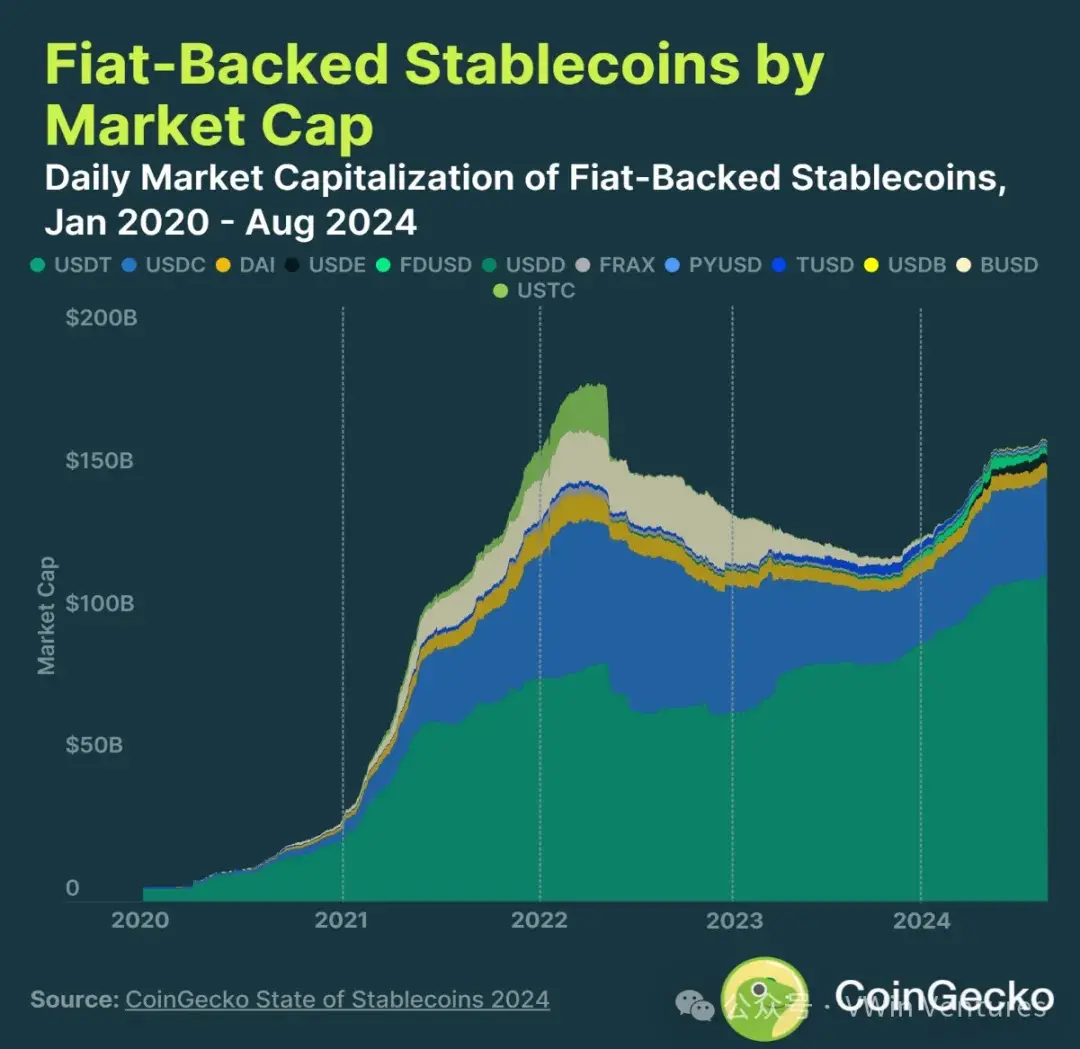
Currently, the total issuance scale of stablecoins exceeds $200 billion, mainly divided into two core scenarios: trading vs. payments.
Scenario 1: Trading Market (Dominated by Existing Supply, Strong Flywheel Effect)
In the trading scenario, stablecoins serve as safe-haven assets and trading mediums, currently trending towards concentration at the top, with USDT/USDC possessing a deep moat and significant network effects:
- Existing Market: Currently, there is a lack of high-quality assets on-chain to attract further liquidity, hindering the growth of stablecoins in trading scenarios, leading to fierce competition;
- Incremental Direction: Future growth points lie in tokenizing RWA (Real World Assets), gradually evolving from standardized products (like bonds) to non-standard equity assets, creating new opportunities akin to a "Nasdaq on-chain";
- New Player Opportunities: Capture new assets and new scenarios -- for example, FDUSD binding to Binance Exchange, relying on specific vertical scenarios to build network barriers; or Ethena and Usual developing on-chain fixed-income financial products similar to Yu'ebao, seizing user financial needs through scenario-based entry points.
The future development of the trading scenario will gradually shift from purely trading tools to asset financialization and securities tokenization. Players will compete in resource integration and scenario barrier construction.
Scenario 2: Payment Market (The Current Largest Incremental Source for Stablecoins)
Compared to trading scenarios, the payment field holds greater potential for stablecoins, stemming from the conversion of existing traditional payment markets:
- Cross-border payment demand: Especially in developing countries, where traditional financial systems are weak, stablecoins have a clear cost advantage and massive demand, severely impacting the monopoly of traditional banking systems.
- Core Competitive Factors in Payment Scenarios: In stablecoin payment scenarios, credit endorsement and liquidity support are fundamental, with the core competition lying in channel network construction. Although business models are relatively homogeneous, in the early blue ocean market, extending upstream and downstream can still capture asset-side or traffic-side dividends, forming bilateral network effects.
- Path Strategies:
- Top-down: Circle obtains global compliance licenses, leveraging official credit and first-mover advantages to promote traditional financial institutions' acceptance of USDC;
- Bottom-up: Represented by USDT, it grows rapidly through local non-compliant financial institutions and OTC channels, quickly capturing market share, but with long-term compliance risks.
Compared to stablecoin issuers, channel distributors (such as payment companies, brokers, etc.) can also gain market expansion and customer acquisition benefits, focusing on downstream channel construction, creating regional distribution networks, capturing incremental market dividends, with early high gross margins, but market barriers are weaker than the network effects of issuers.
The Development Path of Leading Stablecoins -- Growth Driven by Traffic, Success or Failure Dependent on Supply Chain
The core elements of competition among stablecoins are: 1. Credit endorsement; 2. Liquidity support; 3. Channel and customer acquisition capabilities. The competitive landscape for leading stablecoins has evolved from on-chain/exchange trading scenarios to market and channel competition in non-crypto scenarios like cross-border payment settlements.
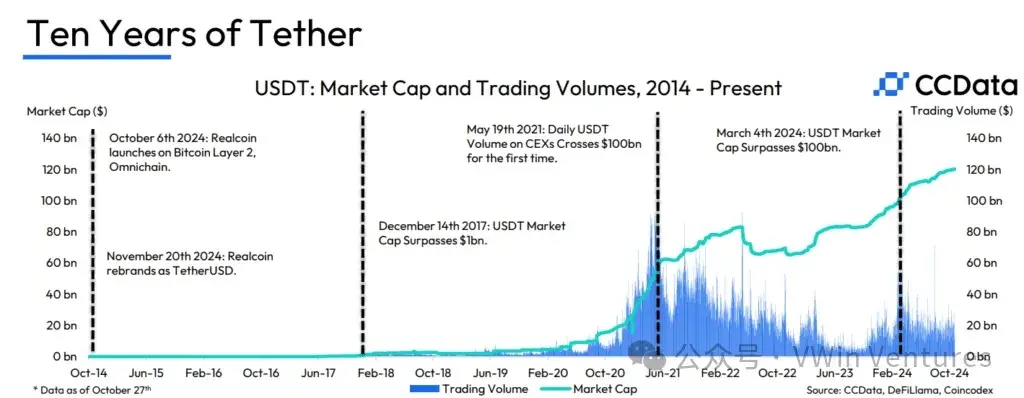
++Tether++ ++(USDT issuer, with issuance exceeding $140 billion and a market share of over 60%):++ Its development path mirrors the three stages of dollar development, naturally expanding through a distributed network reliant on black and gray markets, forming a strong network effect.

Circle (USDC issuer, with issuance exceeding $60 billion and a market share of over 25%):
- Early binding with exchanges and public chains for cold start (Coinbase & Base, Solana, Binance Launchpool)
- Obtaining global compliance licenses to form barriers, waiting for competitors to exit (BUSD sanctioned by the U.S., MiCA expelling USDT in Europe), becoming the most trusted compliant stablecoin in the capital markets
- Continuously expanding compliant financial channels (exchanges, payment companies, banks) using compliance endorsement, capturing global incremental scenarios (payments, RWA, etc. for new asset trading)
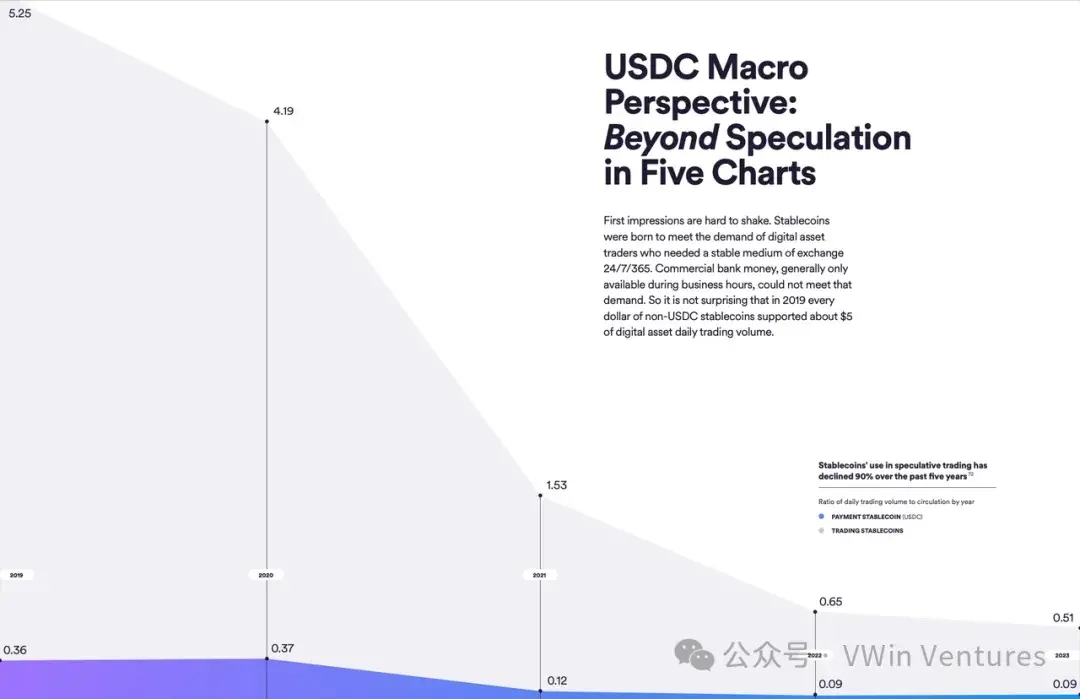
Circle officially submitted its IPO application to the U.S. SEC in April 2025, expected to become the first stablecoin in the U.S. stock market; future major growth scenarios for stablecoins will come from cross-border trade and the on-chain transformation of global cross-border payments, with the compliant market being a larger incremental source. As a compliant leader, USDC is favored by mainstream U.S. institutions and is expected to capture significant market share, with Circle likely to achieve substantial fundamental growth in the long term.
Future Challenges
- Can Tether be compliant and "reformed"? To some extent, Tether has helped the dollar expand, becoming one of the top 20 U.S. Treasury investment institutions globally, while also having deep ties with the former asset management company of Secretary of Commerce Lutnick.
- With the onset of interest rate cuts, how to enhance diversified profitability as issuer interest income declines?
- In the context of deregulation, more traditional financial giants (banks, payment companies, etc.) are entering the compliant track for competition; how much longer will Circle's compliance lead have a dividend period?
Payment Scenarios Become the Future Competitive Battleground for Stablecoins, with Cross-Border Payment On-Chain Transformation Having Huge Growth Potential
In 2024, the global transaction volume of stablecoins reached $15.6 trillion, surpassing the scale of traditional payment giants Visa and Mastercard during the same period, becoming one of the most important value transfer networks globally, with a conservative estimate that over half of this volume comes from cross-border payment scenarios.
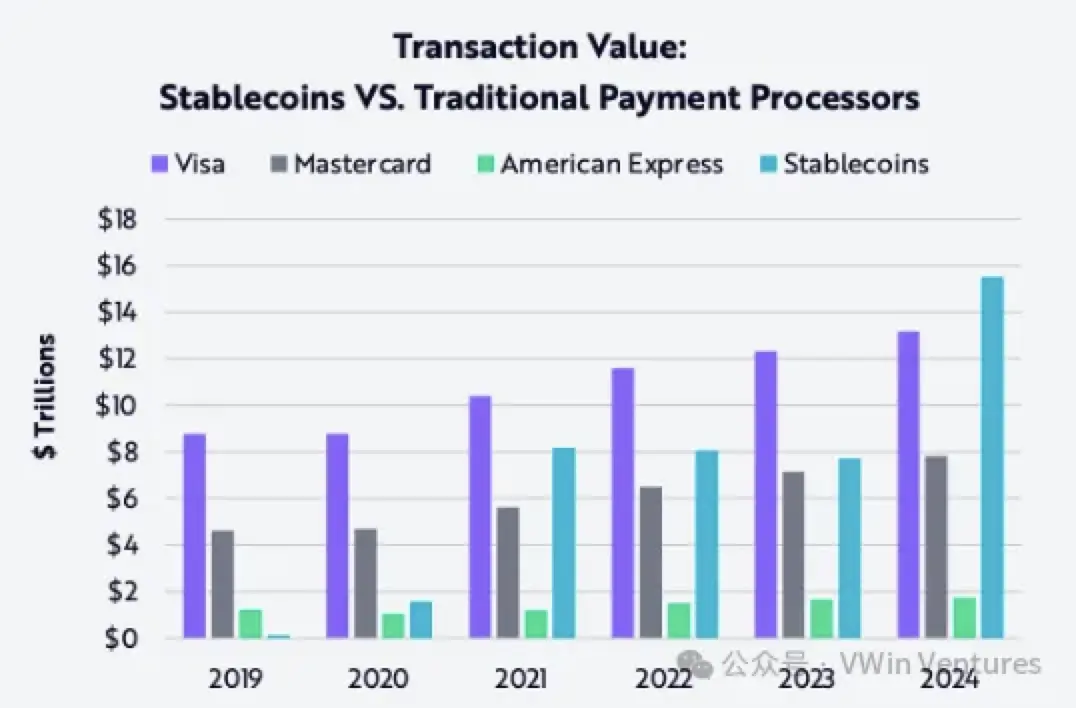
Traditional payment scenarios involve lengthy processes and many intermediaries, where stablecoins have clear advantages in cross-border payments. Stablecoin payments primarily have two core business scenarios:
Scenario One: To B Business
To B is more like a web2.5 business, adding a "fiat currency --- stablecoin" process to the existing payment chain (which is also the main source of profit), achieving cost reduction and efficiency improvement compared to compliant systems, and regulatory arbitrage in areas facing sanctions or restrictions, addressing real needs.
To B business has a large scale, stable cash flow, and real business scenarios, including virtual service clients (e.g., voice chat, online gambling, etc.) and traditional goods trade clients:
- Virtual service clients mostly have one-way off-ramp needs for stablecoins, where income is in crypto and expenditures (advertising, salaries, etc.) are in fiat. This scenario is highly homogeneous, gradually saturating, and heavily reliant on operational and sales capabilities.
- Traditional goods trade clients generally require full-process cross-border payment: local acquiring -- local acceptance -- cross-border transfer -- currency exchange -- payment on behalf; some also include needs for currency conversion and tax refunds. In small tail countries, there are higher gross margins, competing for stable capital flow channels, channel network construction, and localized operational capabilities, with a longer chain that replaces and integrates more inefficient segments in the traditional payment chain, offering higher value chain optimization and profit enhancement potential.
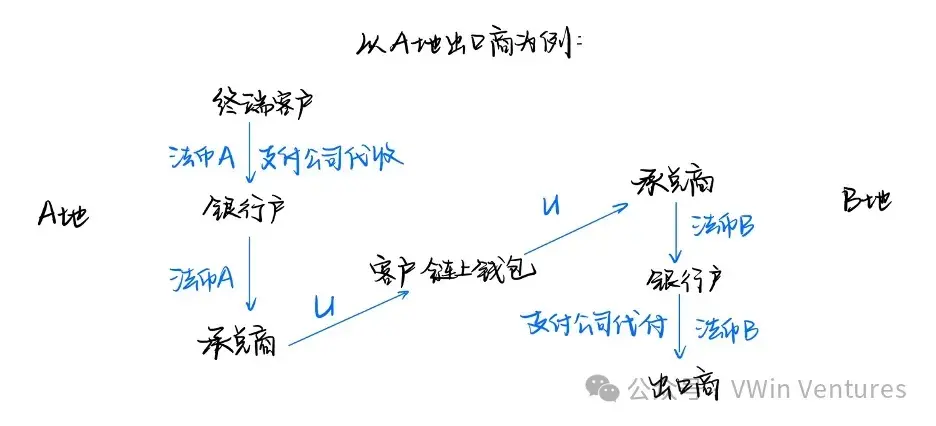
When To B business reaches a certain scale, compliance pressure arises, and licenses such as Hong Kong MSO/Singapore MPI become necessary compliance costs after scaling.
Scenario Two: To C Business
The typical model for To C business is U-card issuers, primarily serving underbanked end customers, with overall business currently having low gross margins. The business chain is:
C-end customers -- Secondary issuers [accepting third-party acceptance] -- Primary issuers (such as commercial banks, payment companies, etc.) -- Card organizations (Visa, Mastercard)
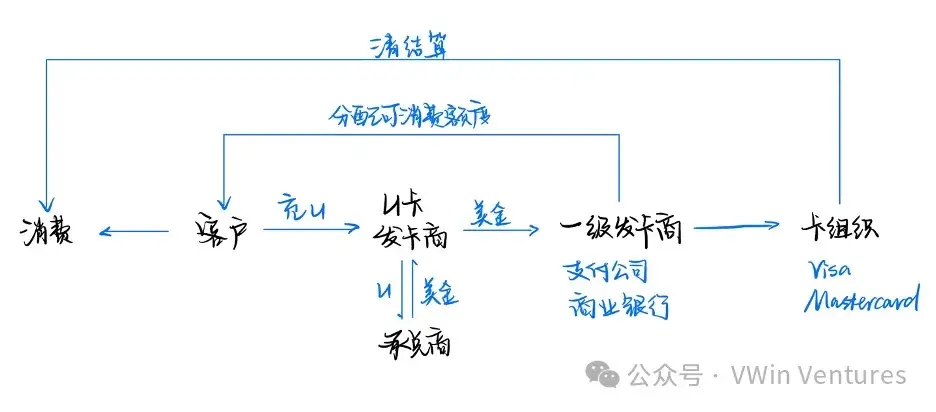
Due to the high barriers to expanding upstream to primary issuers, purely crypto cards represent a business with risks exceeding returns, but they can serve as customer acquisition tools, helping to expand asset management and other businesses, becoming a natural choice for business expansion for major exchanges.
Whether for B-end or C-end users, compliance and security have always been the biggest pain points in the market. As the market moves towards institutionalization and mainstreaming, licensed financial institutions have become the most compliant and secure trading channels, ++such as compliant exchanges in Hong Kong and publicly listed Victory Securities, providing customers with safe and reliable trading options.++
Future Development Trends of Stablecoins: The Compliance Battle
Stablecoin payments are currently in a relatively gray area, with compliant stablecoin settlement scenarios having huge potential for growth. As the upstream of payment scenarios, stablecoins can significantly enhance business barriers by binding to core large channels.
The current path to compliance in the stablecoin market is challenging due to significant conflicts of interest in the traditional financial system and high compliance thresholds. However, in the long term, the compliant route holds more strategic value:
- In the context of geopolitical conflicts and financial sanctions, trading enterprises need compliant, secure, auditable, and mutually beneficial solutions;
- Mainstream institutions are entering the market (Fidelity, Wyoming State, World Liberty Finance, etc.), seizing the conversion of traditional payment markets and high-quality asset tokenization;
- Local protectionism and the emergence of regional leading players, such as compliant stablecoins in Europe and Hong Kong. New players include local banks, payment companies, and internet companies, with licenses serving as the entry ticket, and the core competition lies in capturing and building core channel resources and exchange networks;
- Under the trend of de-dollarization in international trade, opportunities for offshore RMB in scenarios like the Belt and Road Initiative.
Strategic Competition: Do Stablecoins Help the Dollar Achieve Financial Hegemony Output?
From a higher global strategic competition perspective, dollar stablecoins carry the "de-geographical" output of a new round of financial sovereignty for the dollar. Stablecoins map the dollar onto the globally permissionless clearing network of the blockchain, facilitating smoother capital and liquidity flows globally on the funding side, while exacerbating the "global Matthew effect" and concentration of assets on the asset side.
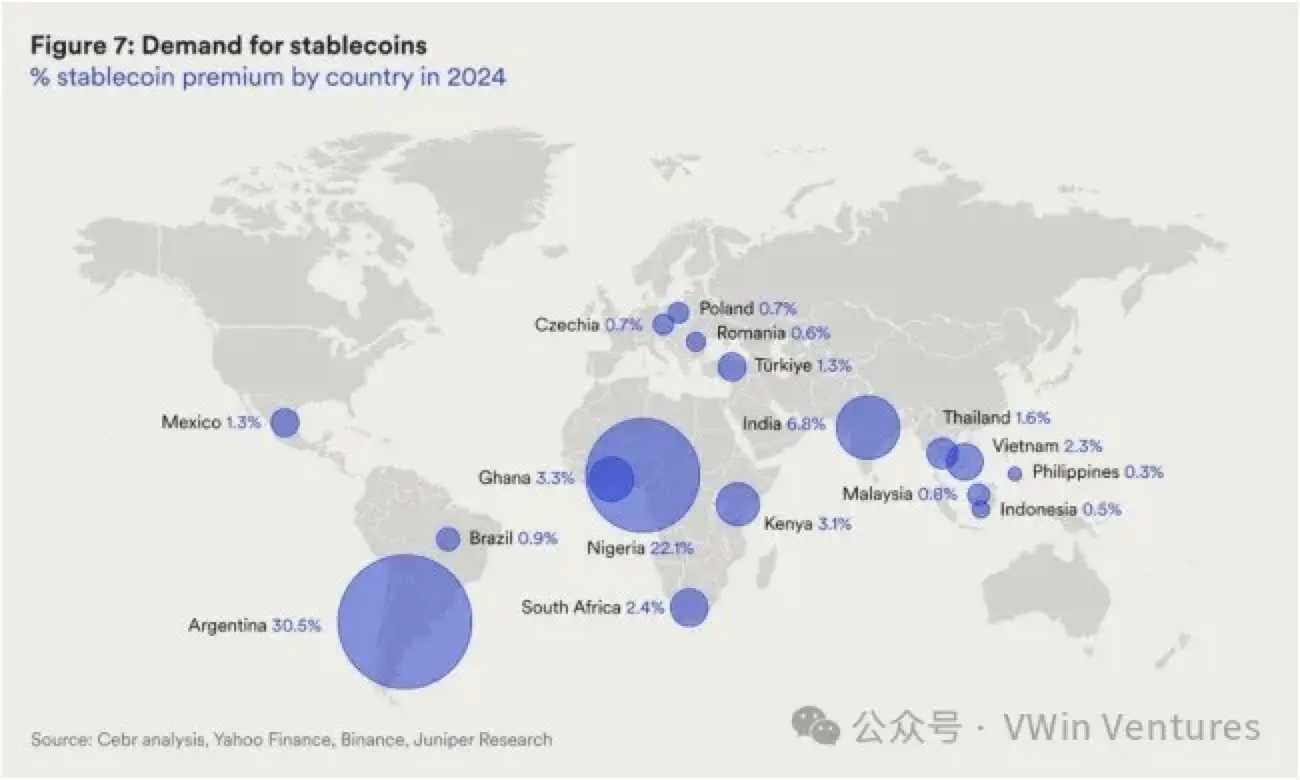
Stablecoins significantly lower the barriers to global dollar circulation, bypassing banks and central bank systems to directly reach global users. In the past, dollar hegemony relied on central banks for trade settlements; currently, in many markets, especially in developing countries, the public spontaneously uses stablecoins as valuation, payment, and storage means. Stablecoins have achieved the free circulation of dollars across borders, facilitating the attraction of global funds to dollar assets such as U.S. Treasuries and stocks, while benefiting the U.S. in asset harvesting through dollar tides.
Central banks in developing countries are thus placed in a passive position. Dollar hegemony continues to extend through stablecoins on both compliant and gray legs:
- Gray Expansion: Represented by USDT, backed by regulatory arbitrage needs, widely used for speculation, gambling, and evading financial regulations in gray scenarios, rapidly expanding user bases and market penetration in regions with foreign exchange controls such as Southeast Asia, Latin America, and Africa.
- Compliant Expansion: Represented by USDC, supported by U.S. regulation, gradually incorporated by mainstream financial institutions, constructing an on-chain compliant dollar clearing and settlement network, with immense long-term value. However, due to certain conflicts of interest with traditional payment systems, current growth is relatively slow, and the development path relies more on official regulation and institutional endorsement.
U.S. regulatory strategies reflect a tacit allowance for the wild growth of gray areas (USDT) while actively supporting the development of compliant scenarios (USDC), together building a strategic moat for the dollar on-chain, achieving a siphoning effect on global financial liquidity.
As a strategic tool for projecting dollar hegemony, stablecoins are essentially a form of "programmable financial sanction" weapon, with the U.S. controlling this seemingly decentralized network clearing system. The U.S. can precisely target objectives through regulatory compliance and smart contract asset freezes (e.g., freezing Tornado Cash-related addresses with USDC).
For policymakers in developing countries or other regions, how to avoid becoming a "digital dollar colony":
- If a credible local on-chain financial system is not established, they will long remain passive users of the dollar stablecoin system.
- The new era of "clearing equals hegemony": controlling on-chain clearing flows is like controlling global water sources -- seemingly free, but actually with valves. Consider launching local or regional on-chain financial infrastructure (such as local stablecoins, CBDCs) to reduce excessive reliance on the dollar on-chain system.
Conclusion: Stablecoins, Strategic Weapons of the New Era of Dollar Hegemony and Historical Opportunities for Reshaping Global Financial Order
The promotion and popularization of stablecoins rely on real trading demands and clearing efficiency, constructing a structural and sustainable capital flow network globally.
Currently, stablecoins have relatively solidified their position in crypto trading scenarios, with leading players monopolizing market share, and incremental growth coming from new financial assets being tokenized; while payment scenarios, especially cross-border payments, represent the main incremental blue ocean and structural breakthrough.
The on-chain payment and clearing network built around stablecoins is encroaching on the traditional banking and SWIFT-dominated cross-border payment systems, giving rise to a massive payment and exchange market worth trillions of dollars, providing global financial institutions, payment companies, and even national-level financial infrastructures with a historic opportunity to redefine their roles.
The rise and widespread adoption of stablecoins essentially continue the penetration of dollar hegemony in the financial system, but upgrade it to a more covert, broader, more strategic, and precise version on-chain. The competition in the stablecoin era is no longer a game at the level of financial instruments, but a strategic contest for global currency sovereignty and discourse power in the global financial order.
 Risk warning
 Risk warning