



Dialogue with Circle Investor Lei Ming: Continuously Achieving High-Multiple Return Projects, Striving to Continuously Capture the Era's Beta

 Circle is listed on the New York Stock Exchange under "CRCL," becoming the "first stock of stablecoins," with a market value of 24 billion dollars. Early investor Lei Ming successfully backed Circle based on licensing logic and has now founded Chuangchuang Venture Capital, focusing on AI, robotics, and globalization, implementing the "China to Global" strategy.
Author: Stone Jin, IPO Early Insights
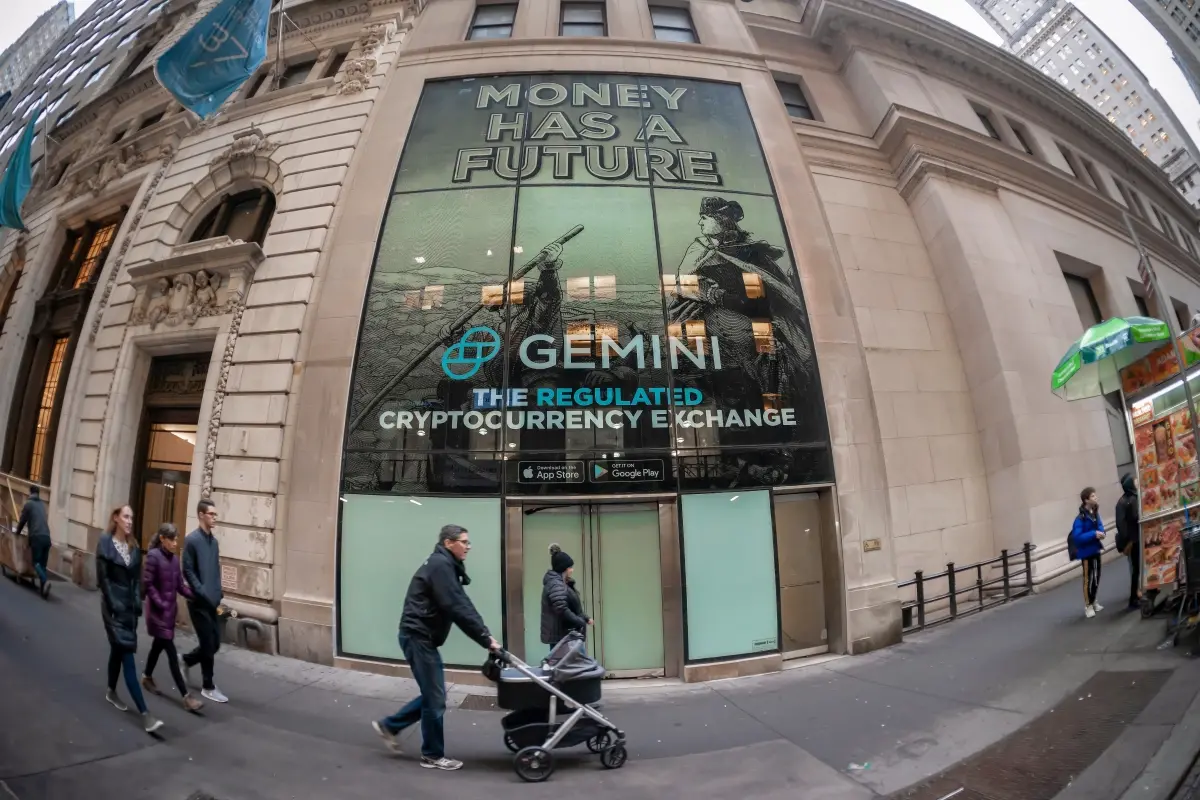
On the evening of June 5, 2025, Beijing time, Circle Internet Group (hereinafter referred to as "Circle") officially listed on the New York Stock Exchange under the stock code "CRCL," becoming the "first global stablecoin stock."
Two trading days later, Circle's stock price had risen 247.42% from the issue price, with a market capitalization of approximately $24 billion. In fact, during this IPO issuance, Circle had repeatedly raised the number of shares and the issuance price, ultimately raising $1.1 billion and achieving over 25 times oversubscription.

Behind this most talked-about large IPO of 2025 so far, there are several investors with Chinese backgrounds. Among them, Lei Ming, who was then an investor at Huaxing New Economy Fund, invested in Circle in 2018. With Circle's listing, these early investors also reaped high returns on their investments.
Lei Ming stated that his two core investment judgments regarding Circle at the time were: first, blockchain technology can create significant commercial and social value in the future; second, investment is about investing in essence, and the essence of finance is licensing capability, while Circle happened to be the one with the most comprehensive licenses at that time.
In addition, Lei Ming pointed out that blockchain was a significant era beta during 2017-2018. To achieve good fund performance, one must seize the largest era beta during the investment period. Besides Circle, Lei Ming also seized opportunities in the new energy vehicle sector with NIO, as well as in popular brands among post-95s like Dewu and Pop Mart, thus maintaining a very high investment success rate.
Of course, the largest beta of the current era is undoubtedly AI, robotics, and globalization, which has almost become a consensus.
In mid-2023, Lei Ming, as a founding partner, established Zhui Chuang Venture Capital, beginning the formation of the Zhui Mi ecological fund.
Currently, Zhui Chuang Venture Capital has invested in several companies, including the embodied intelligence company "Magic Atom," the pool robot company "Surge Future," the embodied large model company "Qian Jue Technology," the consumer-grade 3D printer company "Atomic Reshape," and the smart short-distance travel company "Tan Tu Technology."

Magic Atom's general humanoid robot and quadruped robot products
Lei Ming emphasized that the core competitiveness of the Zhui Mi ecological fund comes from the empowerment of the Zhui Mi incubation ecosystem: on one hand, Zhui Chuang can invest in projects incubated by Zhui Mi at optimal valuations, ensuring project stability and high growth potential; on the other hand, relying on the industry insights of the Zhui Mi ecosystem, the fund can also expand investments in high-quality external projects to achieve ecological synergy.
According to Lei Ming, he and his team are currently also raising a dollar fund and continuously emphasizing the concept of "China to Global" to dollar LPs, which means leveraging China's comprehensive capabilities in various fields and believing that Chinese people have the strength to "achieve results" globally.
It is worth adding that in August 2024, Zhui Chuang Venture Capital announced the establishment of an industrial venture capital fund and completed the first closing of a RMB fund. It is reported that within six months, the fund achieved oversubscription, with a MOIC of 2.5 times, and all projects in the fund achieved at least a doubling of valuation.
Lei Ming stated, "One of our important directions moving forward is to invest in globalization—standing from the perspective of a Chinese team, we will recruit some overseas teams in countries like the United States and the United Kingdom to gradually improve this capability and truly achieve 'China to Global.'"
As Circle officially landed on the New York Stock Exchange, Lei Ming shared with "IPO Early Insights" (WeChat public account) his core logic for investing in Circle seven years ago, as well as some thoughts and outlooks after founding Zhui Chuang Venture Capital.

The following is a selection of dialogues between Lei Ming and "IPO Early Insights" (WeChat public account):
Investment is about investing in essence
Q: You invested in Circle seven years ago; what was your judgment logic at that time?
Lei Ming: I had just joined Huaxing not long before in 2018, and blockchain was one of the sectors I covered. I personally recognized the underlying logic of blockchain and believed that blockchain technology could create significant commercial and social value in the future. But frankly speaking, blockchain was still in its early development stage at that time, and many laws and regulations were unclear. Therefore, we tried to choose projects that we believed were compliant and allowed by risk control, as we still had to consider the exit through listing later.

Q: Circle reaching a market value of over $20 billion today must be somewhat unexpected.
Lei Ming: To be honest, there is a certain element of luck involved—at that time, Circle's main business was not stablecoins; they had just started this business. Additionally, Circle's IPO coincided with the U.S. and Hong Kong gradually introducing legislation regarding stablecoins, which directly led to the success of Circle's issuance. Of course, its future potential is also significant; none of this existed seven years ago.
But we had a basic judgment, which was our consensus—that finance is essentially a licensing business. When a new thing comes out, the regulation may not have caught up yet; during the era of wild growth, anyone could achieve some results. However, in the long run, the financial industry will definitely become more compliant and must operate under regulatory conditions for the long term, so licensing capability becomes particularly critical. This was something we were very certain about; Circle was the one with the most comprehensive licenses.
Q: The Circle project is relatively niche, at least for traditional investment institutions. From this project, have you summarized any reusable experiences for future investment processes?
Lei Ming: I roughly summarize it into four points:
First, when we invest, we should embrace the opportunities brought by new technologies as much as possible. I should be considered one of the first to "eat crabs" by investing in blockchain within traditional financial institutions. Therefore, when these transformative technologies emerge, we need to maintain long-term attention, continuously follow, and keep learning new things and researching new directions.
Second, even when seeing new things in a certain industry, we must return to the underlying logic; the core of investment ultimately is to invest in essence. As I just mentioned, the success of the Circle case benefited from our insight into and grasp of the essence of the financial industry, which is "licensing."
Third, a global perspective. Seven years ago, there were not so many peers mentioning "globalization," but at that time, when I talked with Circle's founder, I felt he had a global mindset. For a company to truly succeed, it must embrace globalization, which includes various aspects such as the globalization of capital, markets, supply chains, and talent. I believe the firm belief in globalization was also a significant factor in the success of this case.
Finally, invest in founders who have faith and conviction. When a new thing appears, there will definitely be many changes, and the market will become quite restless. At this time, we should invest in founders who are very certain and have strong faith in what they are doing within this track. If a founder lacks faith and frequently changes, it is highly likely that they will not be able to build an excellent company.
Seize the major era opportunities as much as possible
Q: You previously mentioned that "the essence of fund performance still depends on whether you can seize the largest era beta during the investment period." You invested in NIO at that time, which can be considered one of the biggest era opportunities, but can Circle also be considered so? How do you find projects outside these major era opportunities?
Lei Ming: I don't think so; I believe blockchain can also be considered a significant beta during 2017-2018.
Blockchain is a very large track, and even today, many applications have not emerged. In fact, blockchain technology has the potential to be applied in many fields.
Q: When you invested in Dewu in 2020, did you also think it was an era beta?
Lei Ming: The biggest beta of Dewu lies in: at that time, we conducted a survey on the post-95 generation and judged that the opportunity of that era was the investment opportunity targeting the post-95 demographic.
My logic at that time was, if you want to seize the opportunity of a major era change, simply put, it revolves around "people, goods, and venues," among which "people" is definitely the largest variable. So we conducted an in-depth study on the "Z generation," and I led the team to eight cities, covering first to fifth-tier cities. After studying this generation, we filtered out a series of investment themes based on the post-95 generation. Therefore, we invested in Dewu when its valuation was relatively low, and today, Dewu's scale and influence are already very significant.
When we invested in Dewu, the wave of mobile internet had already begun to fade, and after 2018, there were very few companies like Dewu emerging.
Overall, I believe we should try to find those relatively large era beta opportunities as much as possible. They may not necessarily be the largest, but there can still be some significant investment themes, such as blockchain and the post-95 generation.
Q: The current era opportunities are AI, robotics, and globalization.
Lei Ming: In fact, this is also the core of what we are doing today at Zhui Chuang. The next biggest era opportunity revolves around AI, robotics, and globalization.
In other words, truly valuable good projects, those that can make investors money, are those that can significantly improve social productivity and production efficiency through technological innovation. For example, AI and robotics are driving the improvement of human productivity, so this is the biggest era opportunity.
Positioning the Zhui Mi ecological fund to pursue "China to Global"
Q: Almost all institutions today emphasize investing in AI, robotics, and globalization. As a new institution that has just been established for over two years, how do you ensure that you can stand firm in the market and even continue to lead?
Lei Ming: Our positioning is the Zhui Mi ecological fund, so a significant advantage lies in Zhui Mi's deep industrial accumulation and a complete innovation incubation system. Over the past few years, Zhui Mi has successfully built mature categories and accumulated systematic capabilities and entrepreneurial methodologies. We can leverage this system and methodology to seek opportunities globally across industries and regions, especially those related to robotics, and then carry out corresponding incubation.
I want to emphasize one point: I have fully felt that the organizational management model and methodology established by Zhui Mi are ahead of this era. The external perception may not be so strong, and it may take some time to gradually appreciate it. We will open these systematic capabilities to our incubated enterprises.
In fact, we have recently incubated many projects—on one hand, we can invest in projects incubated by Zhui Mi at the lowest valuations in real-time; on the other hand, these projects currently have a much higher success rate compared to external projects. Several projects have growth curves modeled at 300-500 million revenue in the first year and 1 billion in the second year, and all projects strive to achieve global first-class product performance from the start, achieving profitability in the first year without burning cash, which is what we emphasize internally as "global high-end."
Thus, the stability of these projects is very high, and they can achieve very rapid growth relying on the global channels already established by Zhui Mi, making their growth potential quite considerable.
With the perspective of the entire Zhui Mi ecosystem, we can also extend investments to projects outside of those incubated by Zhui Mi. For example, we can invest in some upstream projects, and at this time, we can consult Zhui Mi's business team, such as whether "they will use these upstream technology platforms," which is a relatively accurate and intuitive judgment dimension.
Additionally, we can leverage Zhui Mi's global perspective to invest in global projects; we have already reserved some projects in Silicon Valley, the UK, and so on. On one hand, our fund has teams overseas that can actively seek projects; on the other hand, we can also have Zhui Mi's sales team recommend projects they come across.
We are currently also raising a dollar fund, but today's dollar fundraising is somewhat different from the past—previously, the fundraising logic was that dollar investors were very optimistic about the Chinese economy, basically all in China, directly handing money to top Chinese GPs to invest.
Now, the external environment may have some changes, so we have been emphasizing the concept of "China to Global" to dollar LPs, which means leveraging various capabilities in China, including supply chain capabilities, engineering research and development capabilities, operational capabilities, etc., to achieve a global layout.
Fund returns and ecological synergy can be achieved together
Q: As an ecological fund, how do you view the priority between financial returns and ecological synergy?
Lei Ming: From the perspective of the fund, we definitely prioritize financial returns.
Ecological synergy is actually a natural outcome. For example, during the fundraising process for the Zhui Chuang RMB fund, we have a cooperative relationship with our business team. Because the most suitable places for each project to land may vary, the business team will comprehensively consider factors such as supply chain support, labor costs, and transportation convenience to select a few of the most suitable places for landing, and then we will discuss the establishment of funds in those suitable locations.
If we first raise the fund and then force the business team to cooperate with landing and reinvestment, this model cannot be sustained. Essentially, both parties are in a cooperative and win-win relationship, and we will also help enterprises secure some favorable investment policies.
Overall, we decide which incubated projects to invest in, at what stage, and at what valuation; the core starting point here is to maximize fund returns while minimizing risks, allowing LPs to make money. At the same time, the business team can also achieve some good results, so this is all a natural outcome.
Fund returns and ecological synergy are not contradictory; they can be achieved together.
Q: In the past two years, you have achieved good investment return multiples. In your opinion, what aspects has Zhui Chuang done well? What areas can still be iterated and improved?
Lei Ming: The relatively good results we have achieved in the past two years are largely attributed to Zhui Mi's incubation model, entrepreneurial methodology, and reusable organizational management incentive system. The success rate of these incubation projects is inherently high, which is evident.
On this basis, we have also invested in some good enterprises along the upstream of the industry, whether in components or underlying algorithms.
Moving forward, an important direction for our self-iteration is to invest in globalization—standing from the perspective of a Chinese team, we will recruit some overseas teams in countries like the United States and the United Kingdom to gradually improve this capability and truly achieve "China to Global."
 Risk warning
 Risk warning

Popular articles