Circle and Tether may not be competitors of the same species, as the stablecoin value realization hierarchical model suggests

 Circle wins in "tool attributes," Tether wins in "survival necessities."
Original Author: Nathan
Compiled by: Odaily Planet Daily
Editor's Note: Since Circle announced its public listing, an invisible boundary in the stablecoin market has been officially drawn: USDC and USDT are beginning to follow two different development paths. USDC is centered around compliance and transparency, gradually embedding itself into the U.S. financial system, becoming a "permissioned dollar" for institutional users and fintech scenarios; while USDT relies on its extensive on-chain liquidity and deep market foundation, continuing to play a key role in global trading, payments, and asset hedging scenarios.
This difference essentially reflects the varying priorities of "value realization" for stablecoins in different markets. For some users, compliance and programmability are crucial; for others, liquidity, accessibility, and permissionless usage experience take precedence. Therefore, we need a new cognitive model to understand how different types of users realize value through stablecoins. This is precisely what the "Hierarchy of Value Realisation of Stablecoins" aims to explore.
Although everyone gains benefits from stablecoins in different ways, ultimately, these benefits stem from four core value propositions: low cost, high speed, permissionless, and programmability.
In another article, the original author Nathan explained in "The What and Why of Programmable Money": Programmable money is money that can set behavioral logic like code. It is a stablecoin and also the fuel for smart contracts. It can determine: when, for what reason, and in what manner to transfer funds. And all of this no longer relies on banks, nor on trust, but solely on the code itself.
These four value propositions correspond to four core use cases: store of value, payments, transfers, and yield.
"The Hierarchy of Value Realisation of Stablecoins" is a new cognitive model designed to explain the value points that different types of users prioritize when using stablecoins.
This article will focus on two user groups: "those who need stablecoins" and "those who do not need stablecoins as much," namely: users in emerging markets and users in Western markets.
Two Major User Groups of Stablecoins
In simple terms, in emerging markets, stablecoins are building a new financial infrastructure; while in Western markets, stablecoins are more of a supplement, integrated into existing fintech and traditional financial systems.
This pattern applies broadly to both emerging stablecoin projects and established players.
Based on this, we can outline different "value realization hierarchies" for the two types of users.
1. Value Realisation Hierarchy of Western Market Users
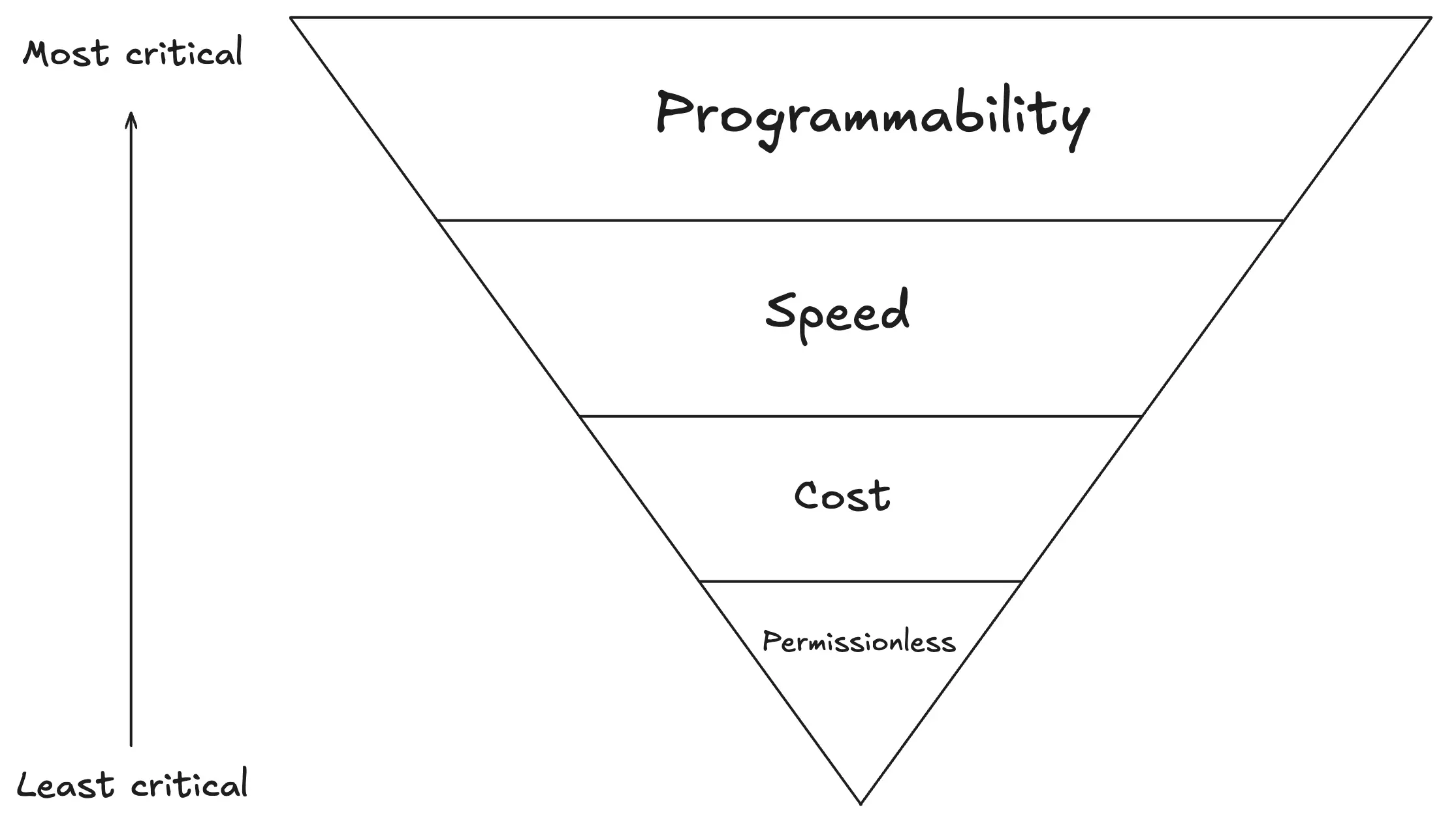
In the Western market, primarily corresponding to "Global North" countries: politically stable, developed financial systems, most people have bank accounts, and savings can earn interest.
In these markets, "programmability" is the core driving force behind stablecoin innovation. This is similar to the explosive development of the internet, iPhone, or smart contracts: programmability brings new financial innovations, which are the passions and advantages of the Western world.
Next is "speed." The settlement speed of cross-border or local payments has long been a significant challenge in the fintech field; settlement delays consume liquidity and incur opportunity costs, thus ranking second in the Western market.
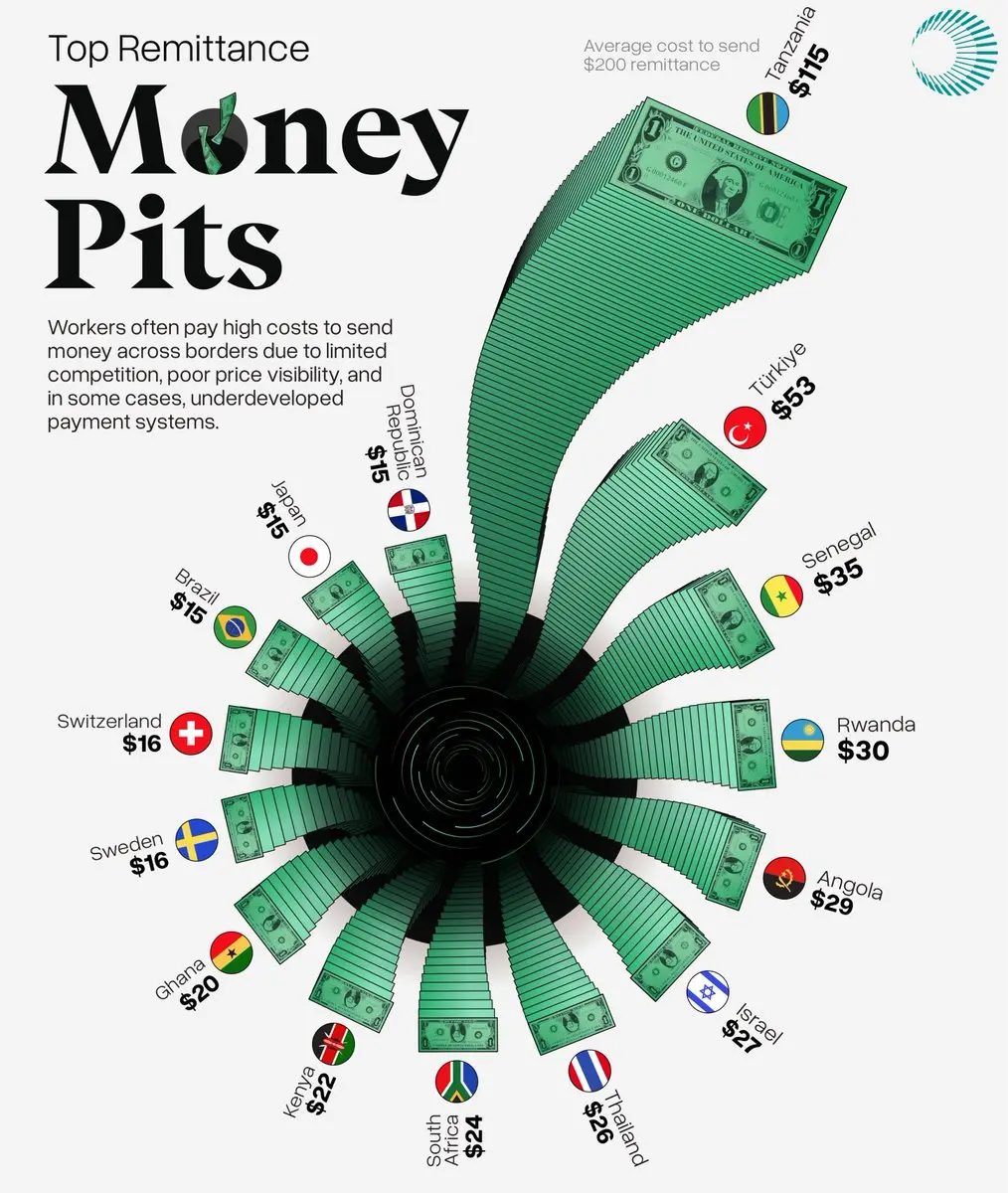
"Cost" ranks third. Although reducing transfer costs is a major highlight of stablecoins, transaction fees in the Western market are already low, far from the outrageous $115 fee for a $200 remittance in emerging markets.
The importance of "permissionless" in the Western market is the lowest. Since the vast majority of people already have bank accounts and can easily use cash or transfer payments, they naturally do not need to rely on stablecoins for financial services.
Therefore, Circle and USDC have a competitive advantage in the Western market. As a company that is essentially fintech-oriented, Circle emphasizes programmability, low cost, and efficiency, all of which align with the preferences of Western users. Increasingly, more Western companies are choosing to develop stablecoin solutions based on USDC.
Additionally, "yield" is gradually becoming an extra focus for Western users. Since they are accustomed to earning interest from bank deposits, they question why holding stablecoins does not yield similar returns.
This is completely different in emerging markets, where users are more concerned about the value stability that stablecoins bring, especially the ability to access dollars, rather than yield.
According to the author's view: In fact, yield has never been the decisive factor for stablecoins' success in these markets. As industry analysis points out, the reason USDT has become the most liquid stablecoin globally is that it does not need to allocate treasury yields to users, yet can dominate due to its strong accessibility and deep liquidity foundation. For many users in high-inflation or capital-restricted areas, avoiding the risk of local currency depreciation is far more practically significant than an annual interest rate of 3%. What they care about is: Can I safely convert my assets into dollars, can I withdraw at any time, and can I use it locally?
Therefore, in these regions where there is a true "product-market fit," the liquidity of stablecoins is far more important than their yield capabilities. And liquidity tends to concentrate, ultimately forming the network effect of leading stablecoins. This is why stablecoins like USDT, even without a yield mechanism, can still achieve widespread adoption globally.
2. Value Realisation Hierarchy of Emerging Market Users
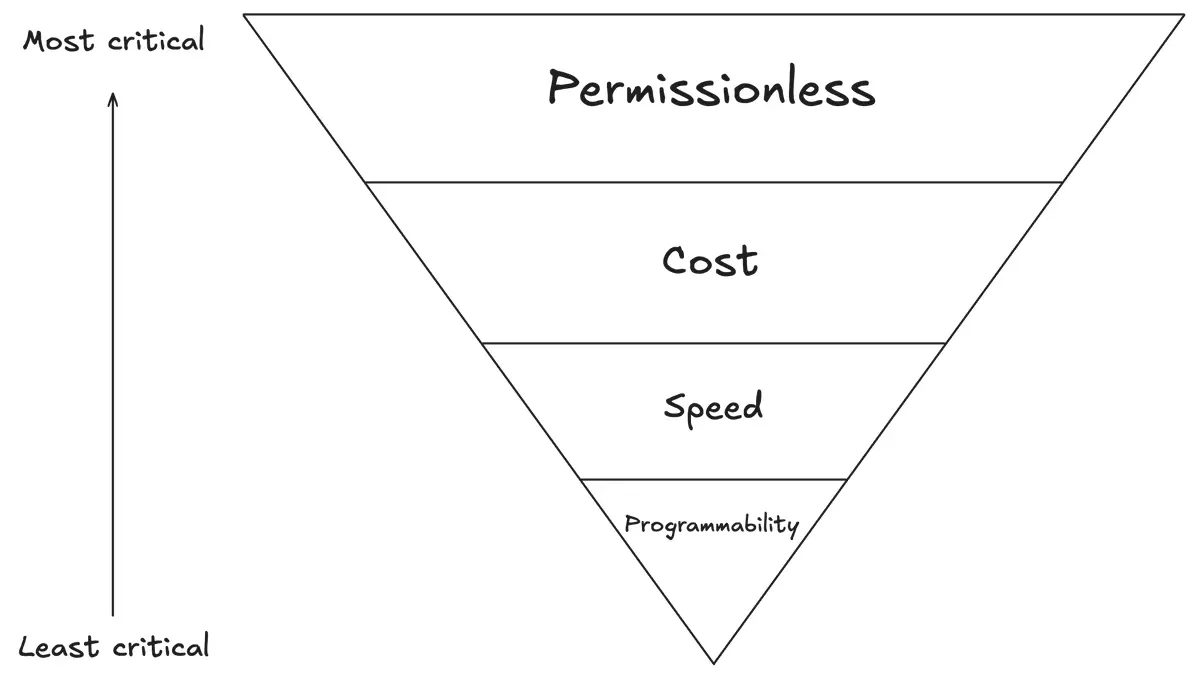
Compared to the West, emerging markets (i.e., "Global South") have relatively weak financial infrastructure, with local currencies generally experiencing severe inflation and low penetration of banking services.
The emergence of stablecoins has allowed users in these regions to freely access, transfer, and use stable currencies like the dollar for the first time, which was previously unimaginable.
Therefore, for users in emerging markets, "permissionless" is the most core and transformative value proposition. Regardless of whether they have a bank account, users can directly access the dollar system, unlocking financial freedom.
Next is "low cost." In emerging markets, cross-border remittance fees remain high. For example, when a father sends money home to support his family, the fees can consume a significant portion of the remittance amount. Stablecoins greatly reduce this remittance cost.
Third is "speed." Current cross-border transfer systems are inefficient, often taking days or even weeks for funds to arrive. Stablecoins can achieve near-instant transfers, addressing the life and economic difficulties caused by delays in funds.
Finally, there is "programmability." Although this value proposition also has profound impacts in emerging markets (such as unlocking insurance, lending, contract payments, etc.), its perceived value is slightly lower in the short term compared to the first three.
Overall, Tether's USDT shines in emerging markets. Tether provides critical financial services to millions of unbanked individuals through the freely usable, widely accepted, and highly liquid USDT. Its success is precisely based on the realization of these fundamental value points.
Summary Thoughts
Circle caters to the Western market, as it better meets the needs of fintech companies;
Tether serves a broader user base, especially those who truly rely on stablecoins.
In other words, Circle wins on "tool attributes," while Tether wins on "survival necessity."
 Risk warning
 Risk warning