ZKJ and KOGE have both been "drenched." How much longer can the bonus period of Binance Alpha last?
 The joint flash crash between ZKJ and KOGE hit the soft spot of the Alpha model like a heavy punch.
Author: Fairy, ChainCatcher
Editor: TB, ChainCatcher
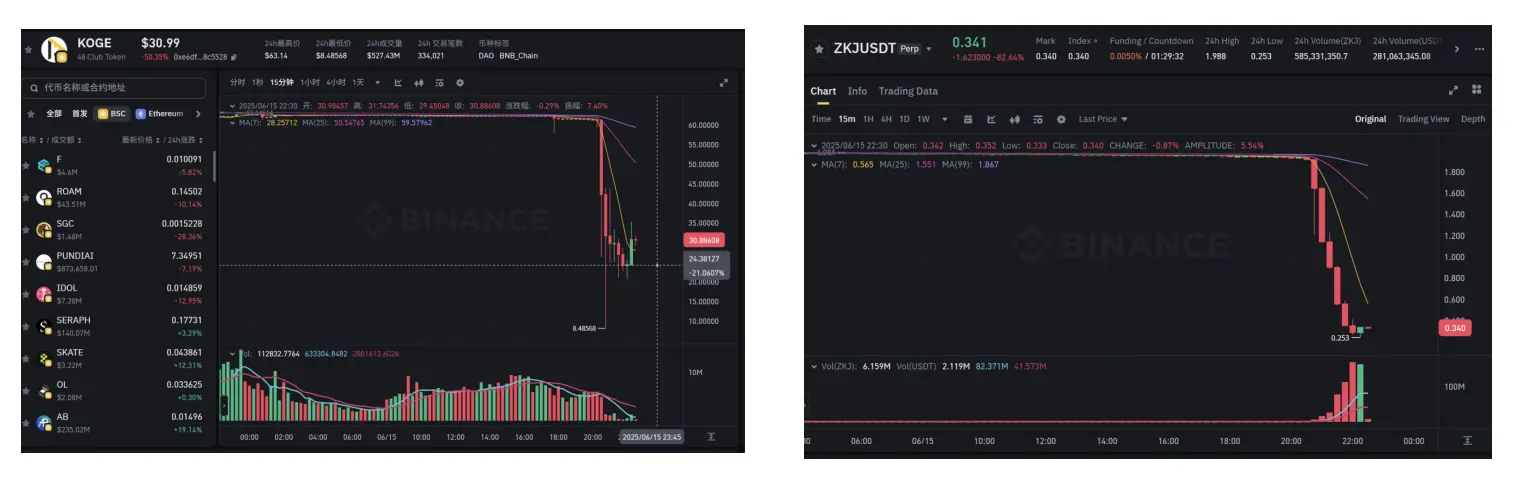
Last night was not a peaceful night. The most popular "massive liquidity mining" targets in Binance Alpha, ZKJ and KOGE, experienced a synchronized flash crash.
In just two hours, ZKJ plummeted from $2 to $0.29, a drop of 85%. KOGE fell sharply from $57 to $24, even touching $8 at one point. Market capitalization vanished, and liquidity evaporated instantly.
The joint collapse of ZKJ and KOGE struck a heavy blow to the vulnerabilities of the Alpha model. Was it an unexpected loss of control for individual projects, or is the entire incentive mechanism approaching a critical point?
The Collapse of the "Liquidity Mining" Paradigm
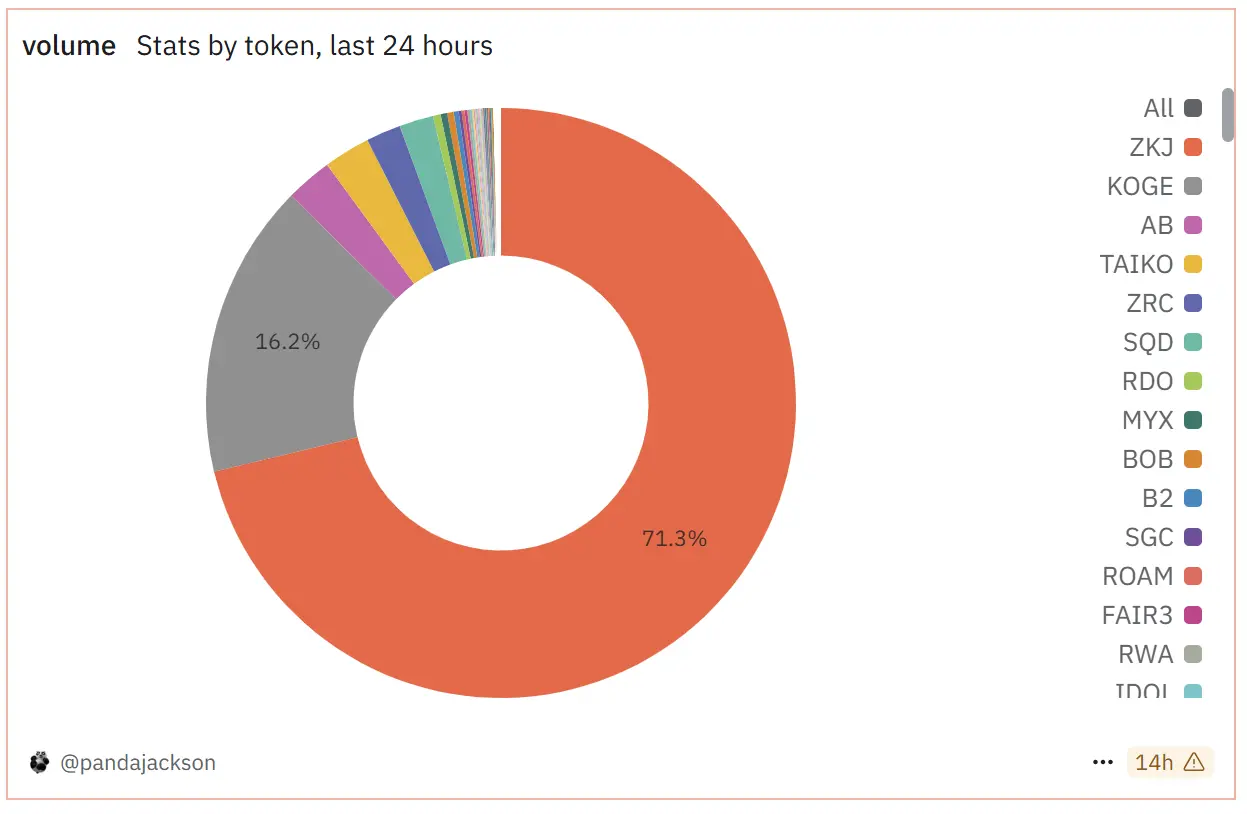
In the Binance Alpha game, users generally prefer to use tokens with "low wear" for liquidity mining, and ZKJ and KOGE are representative of such tools, accounting for over 87% of Alpha token trading volume. Especially ZKJ, which has been used by users for liquidity mining for over a month.
However, the chips for ZKJ and KOGE are highly concentrated, with the top ten addresses holding 93% of KOGE and nearly 80% of ZKJ. Behind the facade of liquidity mining lies a liquidity risk that could be triggered at any moment by "market controllers."
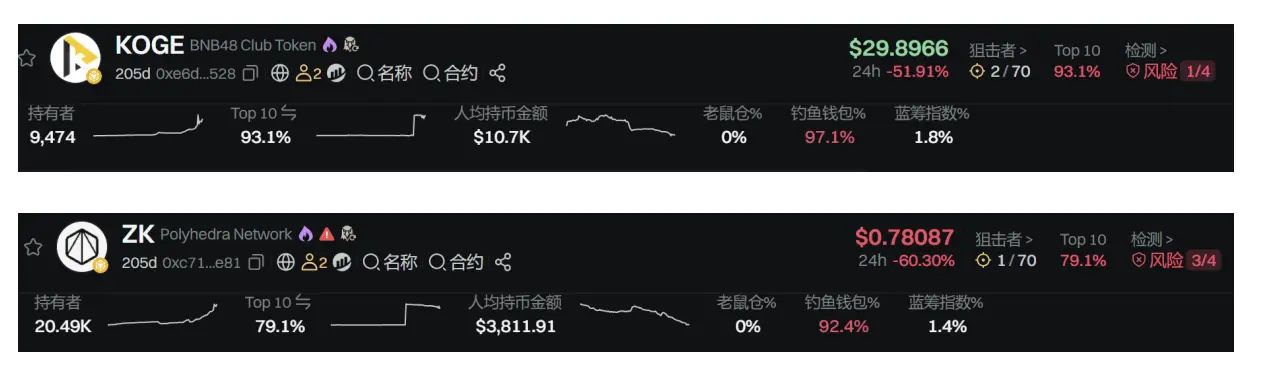
Image source: gmgn
Sixteen days ago, ZKJ and KOGE jointly established a liquidity pool for ZKJ/KOGE on PancakeSwap, which accumulated over $30 million in equivalent tokens. The community once spread rumors that ZKJ-KOGE had extremely low wear, attracting a large number of liquidity miners, which laid the groundwork for the flash crash.
According to on-chain analyst Ai Yi, three major addresses caused ZKJ and KOGE to crash sequentially last night through a dual pressure of "large withdrawals of liquidity + continuous selling."
These three major addresses had clear roles, withdrawing millions of dollars in bilateral liquidity one after another, then "relay suppressing" by exchanging KOGE for ZKJ and concentrating on selling ZKJ, gradually triggering a cliff-like drop in token prices. KOGE fell sharply first, and after KOGE's price crash, it further catalyzed ZKJ's decline, completing the harvesting of both token LPs and holders.
Ai Yi pointed out that in addition to these three main forces, there were also several "cooperating addresses" with hundreds of thousands of dollars participating simultaneously.
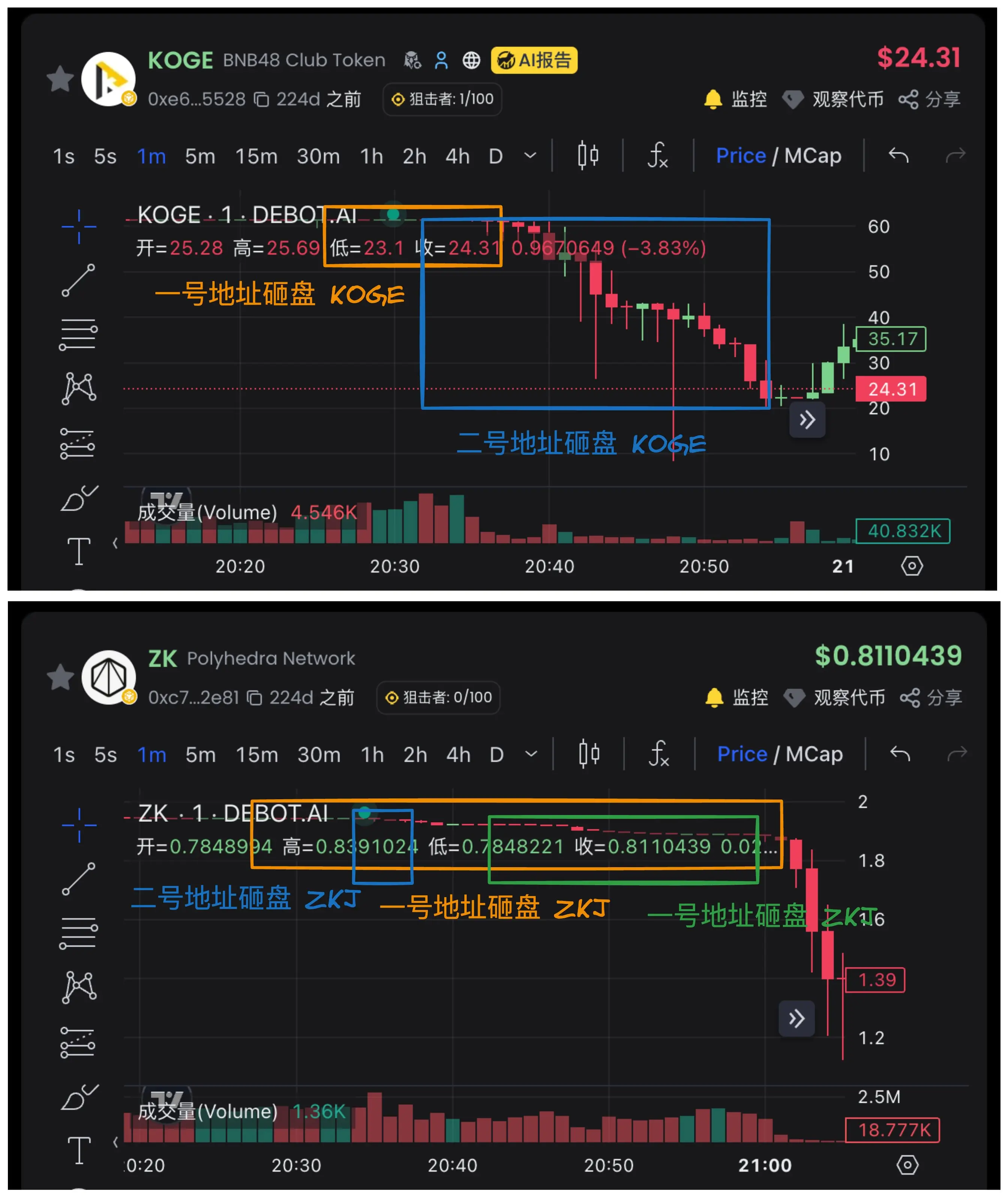
Image source: Ai Yi
Why Did Whales Suddenly Withdraw Liquidity?
In fact, just the day before yesterday, the KOGE token project party, 48 Club, released a "meaningful" announcement: "$KOGE has been fully released since day one, with no lock-up. 48 Club has never committed in any form not to sell treasury holdings. Just like Binance never said it wouldn't sell $BNB. Please do your own research, and take risks at your own expense."
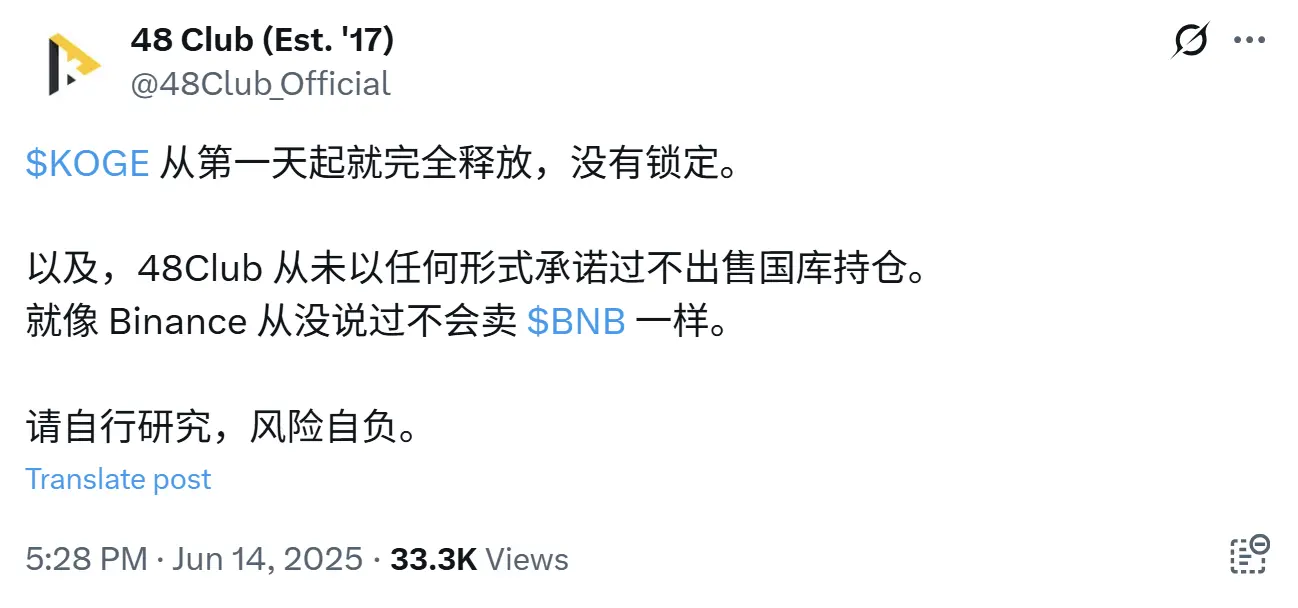
Once this announcement was made, it raised market alertness, causing KOGE and ZKJ to drop slightly that day, with many community users viewing it as a "warning of a dump." Although crypto KOL BroLeon later revealed that the project party denied any connection to the dump, this "risk warning" tweet likely became one of the key catalysts for the whales to withdraw liquidity. Once liquidity participants sensed signs that the project party might reduce holdings or withdraw liquidity, they would quickly take precautionary measures to avoid losses from sudden declines.
Meanwhile, ZKJ also faced a critical time point: on June 19, approximately 15.53 million tokens will be unlocked, accounting for 5.04% of the current circulating supply, with a market value of about $30.3 million. Coupled with a significant decline in overall trading volume from recent Alpha activities, the profit-making effect weakened, and liquidity providers would naturally reassess the cost-effectiveness of continued participation.
In addition, there are other speculations in the market. Crypto KOL danny stated that due to the initially high APY of the KOGE-ZKJ pool, it attracted a large number of users to join, quickly accumulating tens of millions of dollars in liquidity. After that, whales quietly established short positions on ZKJ in centralized exchanges. When the predetermined "detonation window" arrived, they began to exchange KOGE for ZKJ and quickly sell ZKJ back to USDT, achieving price suppression while earning contract profits, completing a dual harvest of "spot + contract."
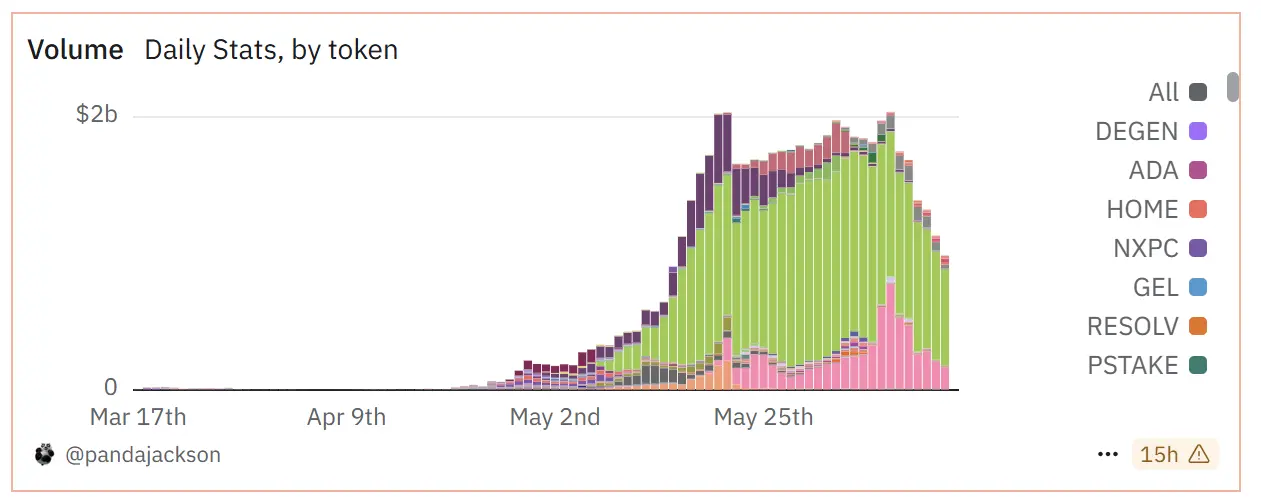
Image: Binance Alpha token trading volume, Dune
How Long Can Alpha's Dividend Period Last?
Since the launch of the Binance Alpha points strategy, the trading volume of Binance Wallet has surged, with market share exceeding 90%, driving overall wallet trading volume to soar by hundreds of times, and on-chain trading volume on BNB Chain has also risen significantly.
On the surface, this is a successful case of "overall boosting" user activity and on-chain ecology. However, when we peel away the facade of this data prosperity, it is not difficult to find that this is a "pseudo-activity" bubble driven by incentive rewards and user liquidity mining.
The sudden collapse of ZKJ and KOGE was like a needle that punctured this bubble ecology. These two projects exposed a series of structural issues, such as the uneven quality of tokens on Alpha, the high degree of control over some projects, and fragile liquidity. The high trading frequency and high return expectations created by Alpha may not be based on a healthy and sustainable logic of user participation.
At the same time, the threshold for Alpha points has been continuously rising, breaking the initial illusion of "everyone can participate." Now, the Alpha score line has risen to 247 points, which is already close to the breakeven point for many retail investors. Crypto KOL Ice Frog pointed out that whether it is the points consumption mechanism, fee adjustments, or the integration of points into financial products, Alpha's "dividend period" has actually come to an end. He stated: "In fact, this has never been a fair competition. Any incentive mechanism built on the basis of internal competition is essentially not 'encouraging participation,' but 'accelerating elimination.'"
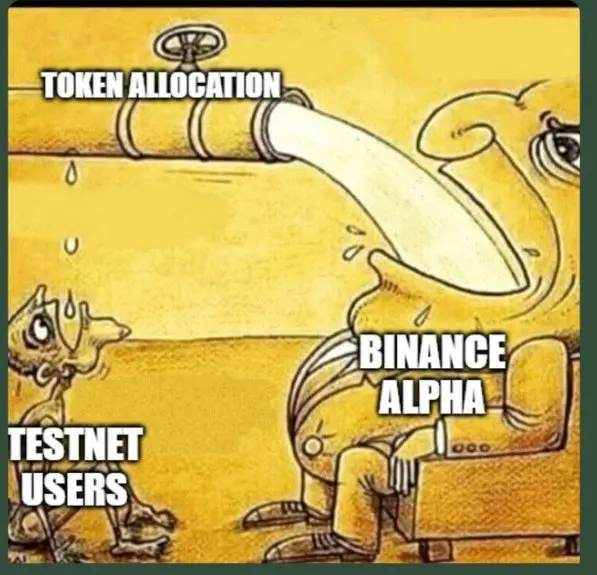
After the incident, Binance Alpha introduced new regulations, announcing that trading pairs between Alpha tokens will no longer count towards points calculation. However, from its evolution of rules along the way, it seems that Alpha has always been "patching up," starting to fix things whenever problems are exposed or controversies arise.
However, rather than constantly correcting, we might as well ask from the beginning: What kind of incentive mechanism can truly serve the long-term interests of ordinary users? And what truly benefits the industry?
 Risk warning
 Risk warning



Popular articles