The defeat of the encrypted U card

 As a "vassal" of traditional finance, the cryptocurrency industry has always been unable to take the initiative in the payment sector.
Author: Shenchao TechFlow
The once booming crypto payment card (U card) business is now facing a decline.
On June 17, Infini co-founder Christine posted on X, announcing the cessation of consumer-facing crypto U card services, while also detailing the reasons behind this decision:
High compliance costs, thin profits, and heavy operational burdens.

She admitted that the to-C card business consumed 99% of the company's time and costs but contributed almost no revenue. This announcement also marks Infini's strategic withdrawal from the to-C card business, shifting focus to wealth management and B-end services.
However, 1-2 years ago, U cards were seen as a groundbreaking innovation combining cryptocurrency with traditional finance.
By supporting stablecoins like USDT and USDC for direct consumption, U cards quickly attracted users from the crypto community; at that time, ChatGPT was also just emerging, and many wanted to experience subscription services but were hindered by the lack of overseas bank cards for payment, making U cards a new payment channel in this AI craze.
Withdrawal and ChatGPT represent the crypto community's desire for channel security and the activation of new payment scenarios, respectively.
Currently, it seems that with the industry's development, there is no pressing need for U cards. As more U card projects continue to collapse, the difficulties of this business become increasingly evident.
Not an Isolated Case
Infini's exit is not an isolated incident.
We can find numerous examples of U card businesses partially or completely shutting down from publicly available information, with some typical cases being:
In September 2024, OneKey announced the cessation of new registrations and top-up functions, officially discontinuing its U card service on January 31, 2025. Although the official explanation did not detail the reasons, industry speculation suggests it is related to disruptions from upstream payment service providers or compliance pressures;
In December 2023, Binance terminated its card services in the European Economic Area and ended partnerships in parts of Latin America and the Middle East in August 2023. This adjustment is seen as a response to tightening regional regulations;
Going back to 2018, one of the world's largest payment networks, Visa, terminated its partnership with WaveCrest due to compliance issues. The latter was an intermediary that provided card issuance and payment processing for crypto payment cards, responsible for integrating U cards into the Visa network. Visa's sudden exit directly led to WaveCrest's inability to continue serving its clients, including U card providers like Bitwala and Cryptopay.
These cases point to a fact: the U card business faces systemic challenges globally.
Uncontrolled Upstream and High Costs
From the perspective of ordinary users, U cards are a very simple product—what you see is what you get, ready to use; the only considerations are rates and wear.
However, from the perspective of those creating U cards, the root of the problem lies in its complex upstream and downstream logic and high cost pressures.
First, the operation of U cards relies on collaboration among multiple parties: users recharge stablecoins like USDT, card providers (like Infini) convert them into fiat currency through off-ramp withdrawals, and payment networks (like Visa, Mastercard) settle with issuing institutions and banks.
However, the upstream segments—especially payment networks and banks—are not controlled by the crypto community. This makes U cards "vassals" of the traditional financial system, with weak bargaining power.
But why do you see so many different brands of U cards?
Exchanges issue cards, wallets issue cards, and payment startups also issue cards… Can anyone issue a crypto payment card?
When users see a card branded with a certain cryptocurrency exchange and bearing the VISA logo, what is not known is the collaboration model between the issuer and the technology provider.
For example, the VISA card from Coinbase was previously supported by the technology provider Marqeta, enabling it to issue crypto debit cards and provide users with real-time transaction authorization and fund conversion services;
Furthermore, due to the existence of the "technology provider" role, the issuance process for crypto payment cards has become relatively simple.

Technology providers offer a capability similar to "card issuance as a service": by providing necessary security technology, payment processing systems, and user interfaces to organizations needing card issuance, they support the issuance of crypto cards, currency conversion, and payments.
The demand side for card issuance only needs to call the technology provider's API or SaaS solution to issue and manage crypto credit/debit cards.
At the same time, the technology provider's "card issuance as a service" also includes various functions such as transaction authorization, fund conversion, transaction monitoring, and risk management, helping issuers simplify operations and improve efficiency.
(A clearer explanation can be found in previous articles: 《Rushing to Issue Cards: The Business Behind Crypto Payment Cards **》)
In other words, the U card in your hand is actually the result of collaboration among issuers, technology providers, banks, and payment networks.
This also means that every party in the card issuance chain has a profit motive. Everyone wants a share of the pie, but the issuers and brand owners at the relatively downstream end of the entire chain can obviously gain very little.
The revenue from U cards mainly comes from transaction fees, but the 1-3% fees charged by payment networks, additional costs for stablecoin conversion, and bank account maintenance fees quickly eat into the profits of this business.
Revenue struggles to cover costs, but the more troublesome issue is that fixed costs cannot be cut.
Supporting the operation of U cards is no easy task. Technical maintenance requires real-time transaction processing and security assurance, while customer support must handle refund and inquiry demands—such as Infini's promised 10 working days for refunds, which also incurs a cost for the human support and response behind it.
On the user side, individuals may encounter problems due to various payment scenarios, but the project side of the U card business must address these personalized issues; and due to the long upstream chain, when technology providers or card organizations encounter issues leading to service interruptions or anomalies, they often find themselves in a position of being unfairly blamed.
Compliance Risks
In addition, the survival of U cards faces stringent compliance requirements. KYC and AML (anti-money laundering) are basic thresholds, and if doing business in North America and Europe, registration with the U.S. FinCEN and compliance with EU MiCA regulations add further pressure.
USDT itself is also one of the assets favored by gray industries (such as money laundering), which naturally dictates that U cards need to invest more effort in handling risk control issues.
Moreover, more aggressively, when companies in the U card business operate under the model of "overseas registration, employees working domestically," the unique nature of the crypto industry in the domestic context makes this business more prone to certain legal risks.

Recently, there have been social media reports of certain U card businesses being shut down. We cannot ascertain the authenticity and specific details of these events, but one thing is certain:
The efforts required for U card businesses to comply with local regulations, as well as the risks arising from other factors, far exceed those of many on-chain businesses. Sometimes, it is not necessarily the card itself that is the problem; the funds involved, the users, and the relatively tightening public opinion environment can all cast a shadow over the brand and perception of U card businesses.
Laborious and thankless, worrying without profit—this may be a common predicament faced by most U card projects focusing on the payment field.
Currently, U card businesses may be more suitable for CEX. CEX does not rely on U cards to generate profits and revenue; when trading operations can generate sufficient profits, using U cards for customer loyalty management and treating them as a brand differentiation service is a better choice.
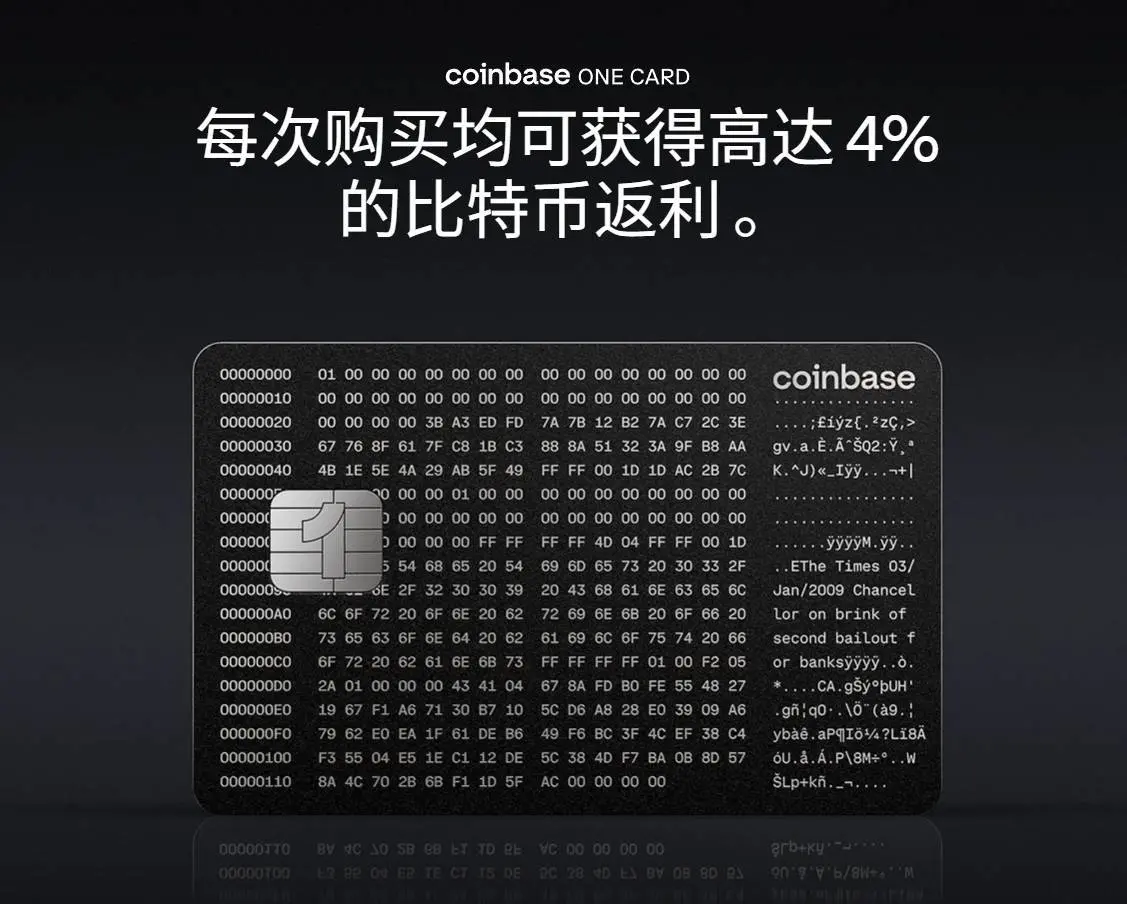
For example, Bybit and Bitget still have corresponding U cards, while Coinbase recently stated at the State of Crypto summit that it will launch the Coinbase One Card in the fall of 2025, allowing users to earn up to 4% Bitcoin back on each purchase, with the card supported by the American Express network.
Everyone indeed wants to issue cards, but who can ultimately succeed will depend more on compliance resources and risk control capabilities. From the current situation, the U card business is gradually moving towards oligopoly.
From Vassal to Independence
On one side, the crypto industry faces obstacles in traditional business, while on the other, traditional finance is increasingly engaging in crypto-related businesses.
Whether it is stablecoins, RWA, or the recent hot topic of crypto asset reserves by publicly listed companies in the U.S., traditional finance is leveraging existing resources and accumulated compliance to "learn from" the crypto space for profit;
Meanwhile, crypto businesses, apart from those native to crypto and centered around trading and asset creation, are increasingly feeling constrained when trying to expand outward.
The predicament of the U card business actually reflects the awkward position of the entire crypto industry in its interactions with the traditional financial system. As a "vassal" of traditional finance, the crypto industry has always been unable to take the initiative in the payment field.
Perhaps reducing dependence on fiat currency conversion, initiating transactions directly from wallets, and conducting transactions through on-chain settlements to bypass traditional payment networks is the original form of crypto technology, but under the premise of compliance and embracing reality, this path seems overly idealistic.
If attempting to take control of the industry chain by acquiring banks, payment channels, and technology providers due to constraints in traditional business, this may further increase the costs of the business, especially when it is uncertain how many users will actually use the cards.
Furthermore, looking at the contradictions reflected in the U card business, they are not only present in the payment field but also permeate the entire extended development of the crypto industry.
When innovation and enthusiasm can only continue in the native soil of crypto, the grassroots, independent opportunities for crypto to break out remain elusive.
 Risk warning
 Risk warning