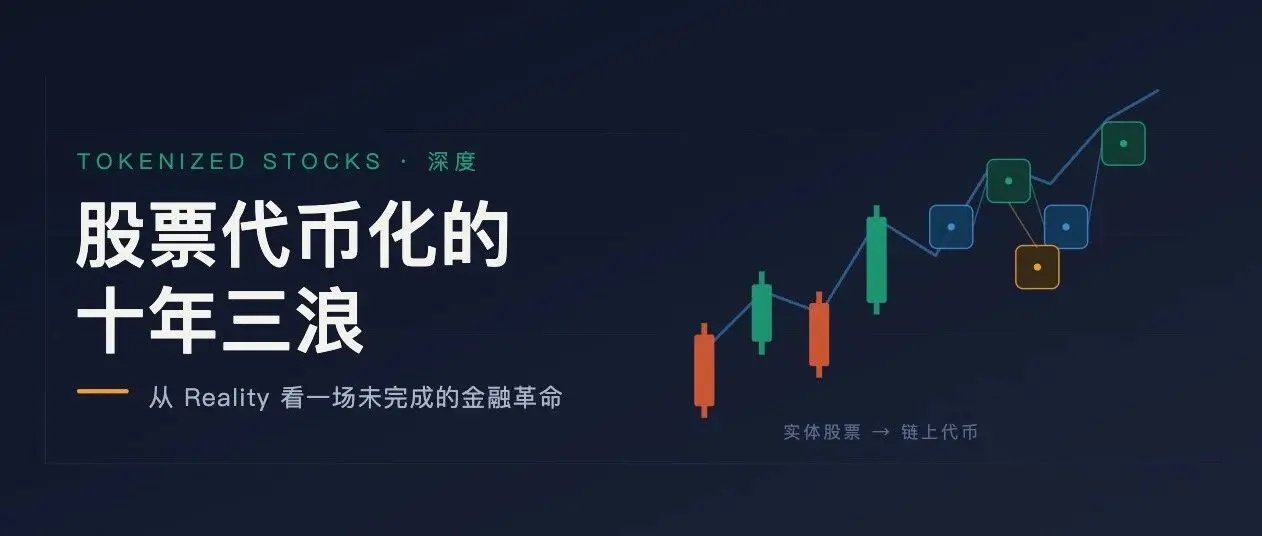
The pilot is greater than the demand, the future path of tokenization in the US stock market

 In-depth deconstruction of two mainstream paradigms represented by xStocks (Backed Finance) and Robinhood, analyzing their structural barriers and exploring their potential two development paths.
Author: Kokii
Why Stock Tokenization Is Struggling
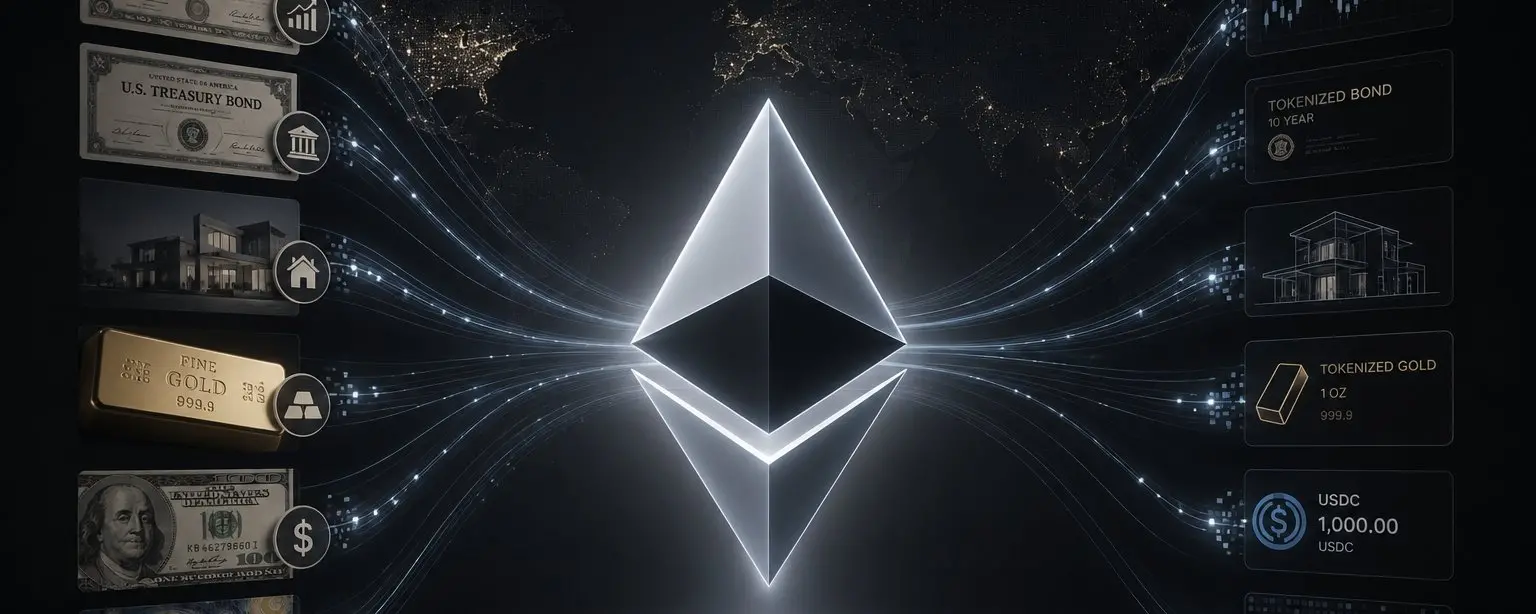
To understand the dilemma of stock tokenization, one must first recognize the key to the success of RWA / on-chain real-world assets. Whether it is government bonds, funds, stocks, private credit, or even intellectual property on-chain, the essence only requires that the physical assets are held offline, and then a set of tokens is issued on-chain, which has no technical barriers, similar to issuing memecoins.
However, all project parties must return to the core four questions: Why issue? How to issue? How to sell? How to use? Without addressing these issues well, RWA can only end up like most memecoins, lacking actual demand and liquidity.

Taking the currently most successful category of RWA products, tokenized U.S. Treasury bonds / money market funds as an example, government bonds, as a standardized debt instrument with simple rights and predictable cash flows, have undergone three steps in their tokenization core: identifying real demand, establishing a compliant issuance framework, and building token utility.
· Why issue: Institutional investors [Crypto VC/Fund] have a lot of idle stablecoins on-chain and need risk-free income scenarios.
· How to issue: Fund - The fund manager structure, where tokens legally represent fund shares, the fund is responsible for issuing tokens and holding assets, and the fund manager is responsible for making investment decisions. Both the fund and the fund manager must comply with licensing requirements, and institutional-level services such as custodians, audits, and transparency reports are also needed.
· How to sell: Only qualified investors after KYC/AML can buy, 24/7.
· How to use: Token derivative utility, supported by mainstream DeFi, can be used to collateralize and borrow stablecoins, and some centralized exchanges are starting to support it as collateral.
In contrast, stocks, as ownership certificates with complex rights (including governance rights) and uncertain cash flows, must overcome a series of significant operational and compliance obstacles for their tokenization.
Why issue
Early RWA attempts often lack clarity on why to issue, focusing on alternative assets like private loans, private equity funds, and real estate, hoping that the efficient settlement of blockchain would improve liquidity. However, the limited liquidity of these assets is not a technical issue but is constrained by deeper problems, such as information asymmetry, lack of substitutability, pricing challenges, and issuers' resistance to secondary market liquidity. These issues exist off-chain and cannot be resolved simply by going on-chain.
The benefits of putting physical assets on-chain have become clichés, summarized simply:
· Permissionless accessibility: Including [capital] lowering investment thresholds, [products] eliminating geographical and financial barriers, such as bank accounts, compliance, foreign exchange controls, and [time] 24/7/365 trading, instant clearing and settlement; as well as regulatory arbitrage brought by permissionlessness, crypto-native platforms including wallets and exchanges can expand into traditional businesses without licensing.
· DeFi composability: Utilizing DeFi protocols for trading, lending, and derivatives, applying DeFi's transparency and composability to traditional assets to gain additional yield opportunities.
· Unified accounts: If the circulation of stablecoins increases, and the vast majority of economic activities are settled on-chain, putting physical assets on-chain can allow a single account to manage various assets held by different brokers, enabling cross-collateralization.
The key is how to find the target user group. The story of financial democratization sounds grand, but one cannot expect unbanked brothers in Africa to buy U.S. Treasury bonds or stocks. A well-functioning market requires a sufficient number of participants, and this demand can come from political tasks assigned from above, experienced high-net-worth retail investors, or institutional investors who have begun exploring blockchain.
Most likely, the target users of RWA projects are genuinely high-net-worth retail investors and institutional investors looking to invest, and the ensuing questions are how to issue and how to sell, and how to avoid the regulatory hammer coming down.
Investors need to clearly understand the legal nature of the tokens they are buying, the issuing entity, risk control mechanisms, anchoring mechanisms, whether there is backing, redeemability, and whether it has legal validity. Previous attempts at U.S. stock tokenization by DeFi's Mirror Protocol, Synthetix, and CeFi's Binance, FTX all failed due to regulatory pressure or awkward product design that could not find a market.
Recently, Robinhood and xStocks have designed a fully compliant and legal off-chain 1:1 mapping, centralized securities registration under relatively friendly existing legislation.
Current Solutions

a. Robinhood
· How to issue: The legal core is under the EU MiFID II framework, issued by its licensed entity Robinhood Europe UAB in Lithuania as a financial derivative contract. The tokens held by users are merely digital certificates of this contract, with Robinhood itself as the counterparty. The actual stocks are held by Robinhood's U.S. affiliated brokerage as a hedging position.
· How to sell: A B2C model is adopted, with Robinhood Europe as the sole issuer and seller, directly targeting European retail users within its app. Liquidity is entirely provided internally on the platform, creating a closed loop.
· How to use: The token's smart contract embeds a strict whitelist mechanism, preventing free circulation and lacking any external DeFi composability.
b. xStocks
· How to issue: The legal core is under the Swiss DLT law framework, holding actual stocks through a bankruptcy-remote SPV established in Liechtenstein. The tokens held by users are legally a 1:1 asset-backed priority secured debt (tracking certificate), with the trust mechanism built on independent third-party custody and real-time verifiable Chainlink proof of reserves (PoR).
· How to sell: A B2B2C model is adopted, with the issuer Backed Finance serving institutional-level primary market subscriptions and redemptions, while licensed trading platforms like Kraken and Bybit serve as distributors for secondary market users. Liquidity is provided by professional market makers from centralized trading platforms and liquidity pools in decentralized protocols (such as Jupiter and Kamino on Solana).
· How to use: Freely transferable and fully DeFi composable, can be used as collateral for lending.
The tokens legally only track prices and do not directly represent equity on-chain, while the handling of other rights (voting rights, dividend rights) and corporate actions (such as splits, mergers, delistings, liquidations) remains unresolved. Meanwhile, the additional utility brought by tokenization has yet to materialize: Robinhood's tokens can only circulate within the ecosystem, while xStocks, although composable with DeFi protocols, currently has very poor liquidity, essentially rendering it non-existent.
These two solutions resemble regulatory arbitrage by crypto-native platforms under the current more lenient regulatory conditions, aimed at attracting market attention for better pricing in the capital markets. Regardless of the paradigm, the current stage of stock tokenization faces several structural obstacles that are difficult to resolve in the short term:
· Ambiguous demand: For its target non-U.S. users, there are already many mature, low-cost, and highly liquid channels for trading U.S. stocks in the market (such as online brokers like IBKR, CFDs, etc.), and stock tokenization does not offer significant advantages in user experience or fees.
· Liquidity dilemma: Off-chain is the price discovery center. On-chain liquidity is too small and severely fragmented compared to traditional markets, leading to excessive slippage for large trades.
· Market-making risk: During market closures for the underlying stock (such as weekends), market makers cannot hedge risks, leading to wider spreads or withdrawal of liquidity, resulting in low reliability and cost-effectiveness for 24/7 trading.
· Incomplete rights: Both current models make significant compromises on core shareholder rights. Holders only receive the economic benefits of the stocks, while voting and other corporate governance rights are retained and managed by the issuer (SPV or Robinhood), limiting functionality compared to mature tools like ADRs.
The Future Path
Despite the harsh reality, the true significance of this "pilot" lies in exploring future possibilities. The future of tokenized stocks depends on their ultimate positioning within the entire financial ecosystem.
· Path A: Mainstreaming and infrastructuralization. If global mainstream regulatory frameworks mature and clarify, stablecoins flow into households, and major financial institutions place a certain amount of assets on-chain, the issuers and custodians will gradually evolve into traditional financial giants like JPMorgan and BNY Mellon. At that time, stock tokens will become a more powerful "composable super ADR." Blockchain will become a unified settlement layer for global equity markets, integrated into various DeFi protocols, with companies going public directly through STO issuance on-chain.
· Path B: Offshoring and emerging asset platforms. If mainstream regulation continues to tighten, the crypto world may evolve into an efficient offshore innovation center. At that time, tokenization will no longer seek to compete with NYSE for trading Apple stocks but will turn to become a "launch platform" for new or illiquid assets, such as private equity of pre-IPO companies, fractional transfers of VC fund shares, or even the securitization of future income streams like intellectual property.
The current immaturity of tokenized stocks is not a sign of failure but rather an early stage that must be gone through in the construction of infrastructure. The measure of its success should not be whether it can provide a better trading experience for Apple stocks today, but rather what new markets and financial behaviors it creates for tomorrow. For all market participants, understanding this is key to seizing opportunities in the impending financial revolution.
Recommended Reading:
OpenAI "Debunking" Robinhood: Unveiling the Four Major Controversies Behind Stock Tokenization
Entering the Crypto Stock Battlefield, Robinhood Aims to Become the Nasdaq of the Crypto World
 Risk warning
 Risk warning