Why use Ethereum and Bitcoin for asset allocation?

 Bitcoin is a store of value, while Ethereum is a tool for transactions.
Original Title: Hong Hao: Asset Allocation with Ethereum and Bitcoin
Original Author: Hong Hao
In recent years, cryptocurrencies have quietly begun to rewrite the chapters of global finance. Recently, as the Trump administration accelerated the relaxation of regulations on cryptocurrencies, the revolution of the global financial currency system has begun to speed up. The two pillars of cryptocurrency, Ethereum (ETH) and Bitcoin (BTC), have become the core and foundation of this revolution, shining brightly in the new global financial system. Recently, the United States passed the GENIUS Act, bringing stablecoins into the realm of securities regulation. This act has finally legalized stablecoins and established Ethereum's important position in the promotion and use of stablecoins.
In June, I shared my views on how cryptocurrencies will create investment opportunities for investors in the second half of this year in an article titled “Hong Hao: Outlook for the Second Half of 2025 - Cycles and Games” with exclusive readers, supporting this view with detailed charts, data, and quantitative models. In short, I believe that the improvement of global liquidity conditions will benefit risk assets, especially Bitcoin and Ethereum, which are very sensitive to liquidity conditions. In my reader meetups in June and July, I further demonstrated this prediction and its probability to the audience (Figure 1).
So far, Bitcoin has risen from about $100,000 when I wrote in June to $120,000. In just over a month, the return has been nearly 20%. While processing quantitative model data for this article, I noticed that the pricing unit for Bitcoin on the Bloomberg terminal has changed to millions of dollars per unit.
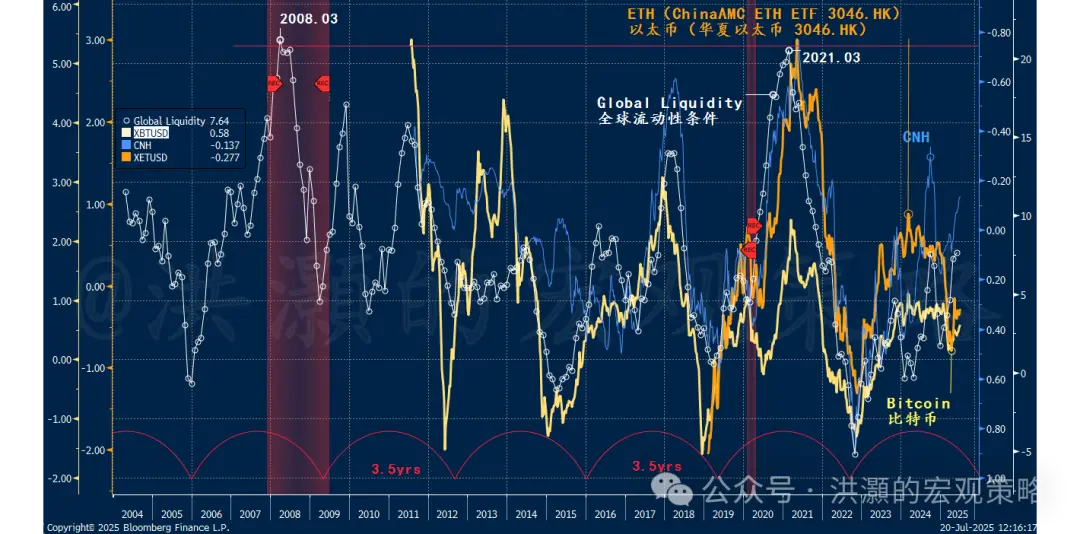
Figure 1: Improvement in liquidity conditions benefits Bitcoin and Ethereum (updated chart data from June)
Bitcoin was born in 2009, ignited by the mysterious Satoshi Nakamoto in the world of cryptocurrency. Bitcoin ensures transaction security through complex mathematical calculations, but at a high cost of energy consumption. Bitcoin's design can only handle a few transactions per second. From this perspective, Bitcoin's financial attributes are simple and pure, created solely for investment and value storage. The total supply of Bitcoin is capped at 21 million coins, and its limited supply and secure attributes make Bitcoin more like "digital gold," attracting countless followers. In July 2025 alone, Bitcoin ETFs attracted $4.2 billion, highlighting its prominent market position.
Ethereum, on the other hand, emerged like a newborn calf a few years after Bitcoin's inception. Ethereum is not just a currency; it is also a network that nurtures decentralized applications. The "Merge" in 2022 transitioned Ethereum to "proof of stake," maintaining the network through staking Ethereum, which is both energy-efficient and fast, capable of processing thousands of transactions every few seconds with second-layer technologies (like Arbitrum). Ethereum's maximum design supply has no fixed upper limit, but the EIP-1559 mechanism introduced in 2021 destroys part of the fees, potentially leading to deflation during busy network periods. Ethereum holds about 70% of the DeFi market share, processing over $1 trillion in stablecoin transactions annually, pulsating with infinite possibilities in the digital economy.
The distinction between Bitcoin and Ethereum is akin to the difference between gold and fertile soil. Bitcoin is steady and reserved, guarding wealth; Ethereum is dynamic and versatile, nurturing innovation. Bitcoin transactions are slow and its functions are singular; Ethereum is quick and flexible, with smart contracts opening up vast realms for DeFi, stablecoins, and NFTs. Bitcoin's scarcity acts as an anchor, while Ethereum's dynamic supply makes it more suitable for network transactions and settlements. The two cryptocurrencies excel in their respective fields, together outlining the future application blueprint of cryptocurrencies.
Recently, the emergence of the GENIUS Act has established Ethereum's position in the issuance and use of stablecoins and essentially recognized the legal status of cryptocurrencies. This U.S. law, signed on July 18, 2025, sets rules for stablecoins—a type of digital currency often pegged to the U.S. dollar. In the past, U.S. regulation of cryptocurrencies was murky, and the SEC's stringent enforcement discouraged companies. The GENIUS Act requires stablecoin issuers to hold equivalent U.S. dollars or government bonds, undergo regular audits, comply with anti-money laundering regulations, and prioritize the protection of holders in bankruptcy, prohibiting yield-bearing stablecoins to prevent speculative risks. This act has brought legitimacy and confidence to the crypto industry, attracting banks, tech companies, and retail giants into the stablecoin space. It is expected that by 2026, the stablecoin market will reach between $500 billion and $1 trillion, propelling cryptocurrencies into mainstream finance.
Ethereum has thrived in this transformation. Ethereum accounts for about 70% of the stablecoin market ($250 billion), including Tether (USDT) and USD Coin (USDC). Every stablecoin transaction requires Ethereum to pay fees, and the surge in transaction volume will directly increase the demand for Ethereum. After the passage of the act, Ethereum's price soared 8% to $3,288, and discussions on platform X even suggested that its value might surge to $10,000. However, compliance costs may make it difficult for small companies, and the ban on yield-bearing stablecoins will increase volatility in DeFi. Yet, Ethereum's decade-long flawless operational record and its dominant position in DeFi make it the preferred choice in the stablecoin boom.
For a long time, Ethereum was overshadowed by Bitcoin's halo. Bitcoin, with its simple positioning as "digital gold" and a market value of over a trillion dollars, has always been the darling of the early bull market, especially during the high inflation period from 2021 to 2023. The SEC's crackdown on the Ethereum ecosystem, high gas fees, and market preference for Bitcoin's stability have hindered Ethereum's progress. However, in July of this year, Ethereum made a strong comeback, with its ratio to Bitcoin rising 5.96% to 0.02670, although it still remains near historical lows (Figure 2).
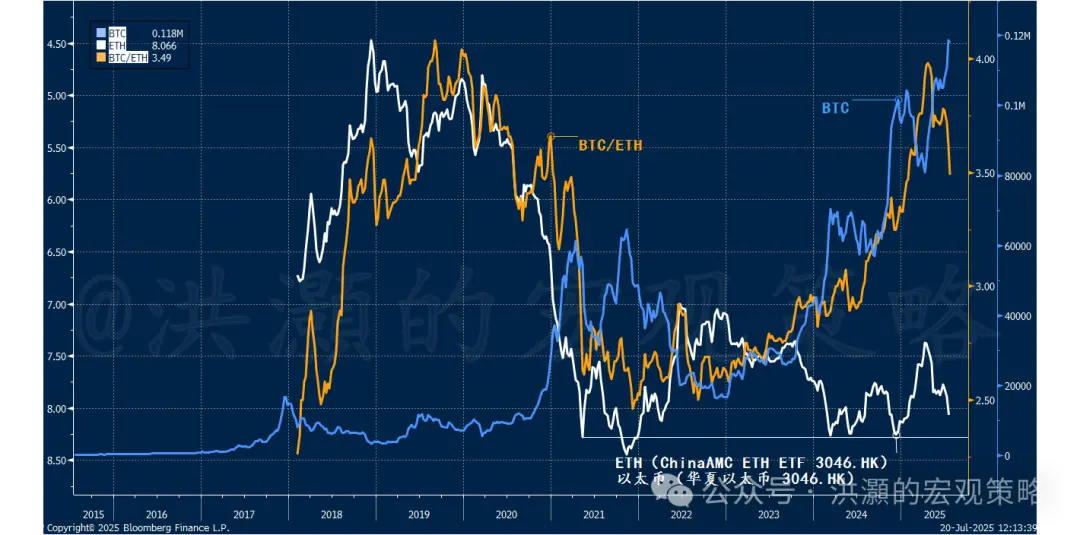
Figure 2: The Bitcoin/Ethereum ratio suggests that Ethereum will rise
The GENIUS Act has catalyzed the stablecoin boom, increasing the demand and transaction volume for Ethereum; Ethereum ETFs have already attracted $2 billion this month, with institutions like Sharplink hoarding $866.8 million in Ethereum; "second-layer technology" has resolved fee bottlenecks; and the Trump administration's friendly stance on cryptocurrency policies, such as the cancellation of stringent SEC regulations, has injected vitality into Ethereum's ecosystem. Ethereum's DeFi and stablecoin transactions (over $1 trillion annually) far exceed Bitcoin's singular function, allowing it to shine brightly in the cryptocurrency world.
Ethereum's upward momentum this month highlights its potential. If the stablecoin market exceeds $500 billion by 2026, the demand for gas fees and the destruction mechanism will push Ethereum's price to new historical highs. In the long run, if the cryptocurrency market reaches $10 trillion by 2030, Ethereum's core position in DeFi and asset tokenization will continue to drive its value upward.
Of course, the risks of investing in cryptocurrencies should not be underestimated: Ethereum's $300 billion market cap may struggle to support a trillion-dollar stablecoin market; competitors like Solana will also be eyeing the space; and economic or regulatory fluctuations could stir up new waves. Investors need to be cautious in their allocations. The Huaxia Ethereum ETF listed in Hong Kong, including the HKD-denominated 3046.HK, the USD-denominated 9046.HK, and the RMB-denominated 83046.HK, can provide investors with convenient access to investing in Ethereum, a future pillar of the cryptocurrency world. These are ETF products approved by Hong Kong regulators and listed on the Hong Kong Stock Exchange, ensuring safety. Huaxia's two products also have the best performance in terms of scale and average daily trading volume among similar products, ensuring liquidity is not an issue.
The U.S. dollar, as the global reserve currency, occupies 88% of international transaction share and 58% of foreign exchange reserves, with a solid foundation. Stablecoins, Ethereum, and Bitcoin still find it difficult to shake the dollar's dominant position for now. Stablecoins are often pegged to the dollar, and the GENIUS Act also requires a one-to-one reserve. Therefore, the expansion of the stablecoin market will actually increase the global financial system's demand for the dollar. Ethereum facilitates stablecoin transactions, with fees paid in Ethereum, and even stablecoins collateralized by Ethereum (like DAI) are often pegged to the dollar. This issuance and payment structure indirectly reinforces the dollar's position. Thus, Bitcoin, as a vehicle for value storage, has a limited impact on the dollar's dominance for now. Non-dollar-pegged stablecoins may form an independent ecosystem, but they will still be constrained by Ethereum's market cap and the dollar-oriented benefits of the GENIUS Act, making it difficult to gain traction in the short term.
The global monetary system is quietly transforming under the impetus of cryptocurrencies. Ethereum's DeFi is reshaping lending and trading, Bitcoin is combating inflation, and stablecoins are enabling low-cost cross-border payments. The Trump administration has banned central bank digital currencies and is promoting private stablecoins on Ethereum, accelerating their adoption in unstable currency regions and challenging traditional banking systems. However, the volatility, security risks, and regulatory uncertainties of cryptocurrencies will remain potential issues. Compared to the global finance market (worth $100 trillion), the crypto market is still small, and a diverse system coexisting with the dollar, stablecoins, and cryptocurrencies may form in the future. Other countries, such as China or the EU, may divert the dollar's influence with their digital currencies, but the dollar's stability and credibility make it difficult to shake in the short term.
In summary: Ethereum and Bitcoin are like the two pillars of the digital world: Bitcoin is a vehicle for value storage, while Ethereum is a tool for transactions. The GENIUS Act grants legitimacy to stablecoins, and the issuance of stablecoins based on Ethereum as a transaction settlement network will significantly increase the demand for Ethereum, allowing it to outperform Bitcoin in July 2025 and likely reach new historical highs. In the short term, the development of stablecoins and cryptocurrencies will instead reinforce the dollar's dominance, while in the long term, it will promote a more open monetary system. Ethereum, Bitcoin, and other cryptocurrencies should all be an indispensable asset class for investors in this wave of digital assets (Figure 3). On July 17, 2025, Huaxia Fund (Hong Kong) also launched the second batch of tokenized funds, including the Huaxia U.S. Dollar Digital Currency Fund and the Huaxia Renminbi Digital Currency Fund, which, together with the Hong Kong Dollar Digital Currency Fund approved in February this year, form a complete series of tokenized currency funds.
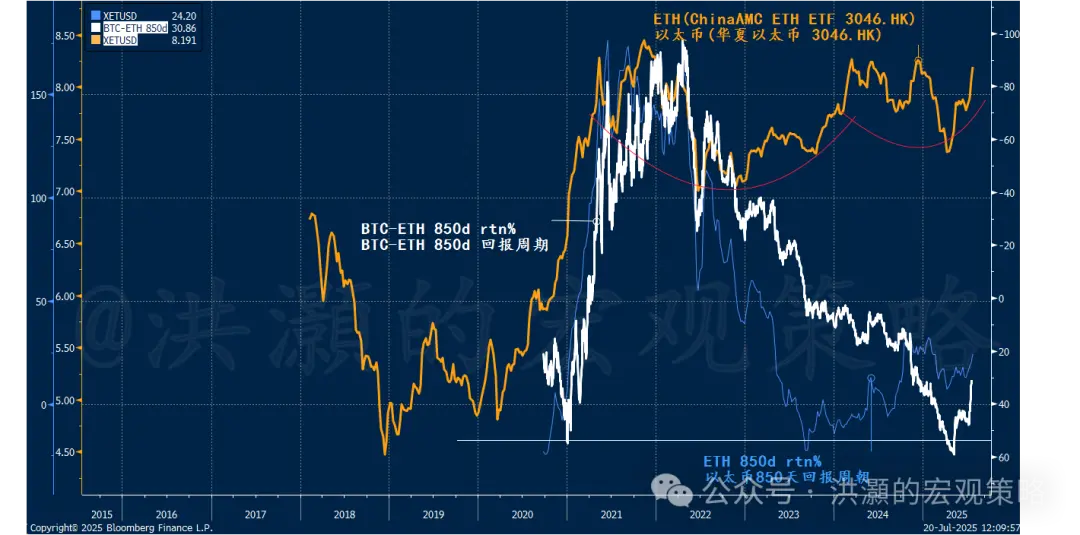 Figure 3: The return cycles of Bitcoin and Ethereum suggest that Ethereum will rise.
 Risk warning
 Risk warning