Unveiling the Underlying Logic of the Stablecoin Wave in South Korea

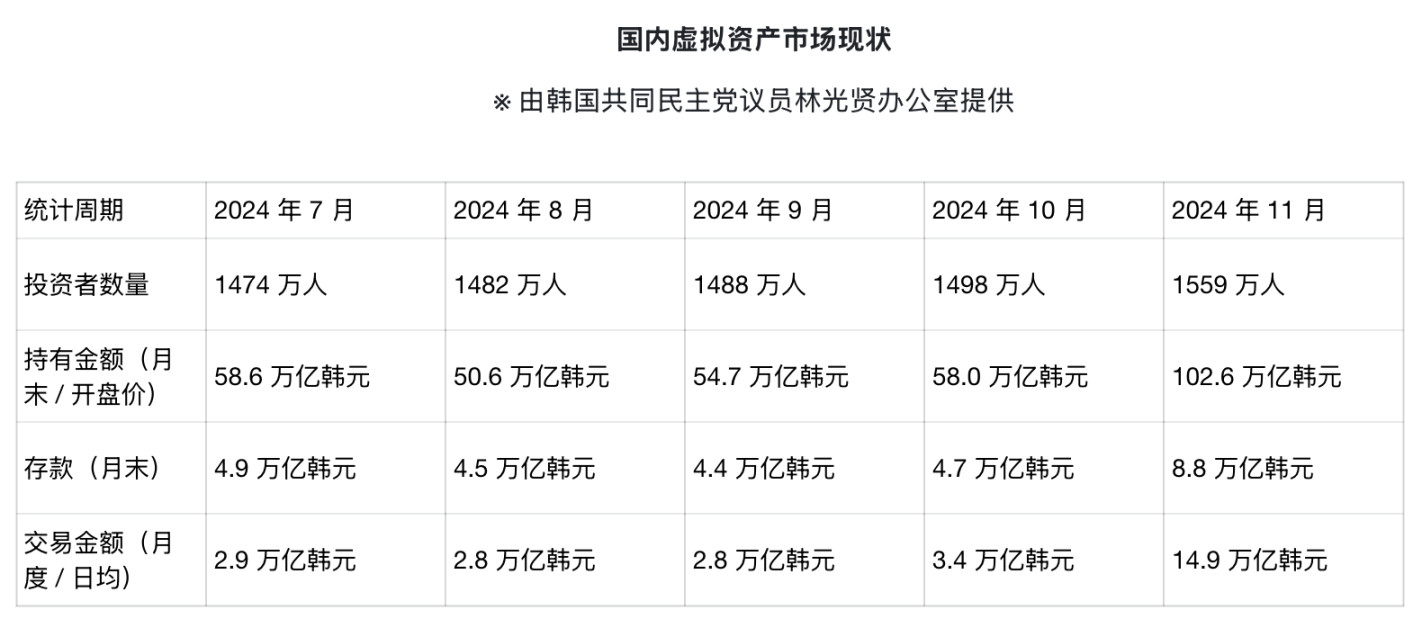
 Nearly one-third of South Korea's population is engaged in cryptocurrency trading, with 16 million holders, surpassing the number of stock investors in the country.
Written by: Thejaswini M A
Compiled by: Saoirse, Foresight News
On that bizarre night in December 2024, former President Yoon Suk-yeol announced the implementation of martial law, deployed troops to the National Assembly, and even attempted to take military action against North Korea. He probably never imagined that this political suicide of a farce would give rise to one of the most radical cryptocurrency policy agendas in the world.
And that is exactly what happened.
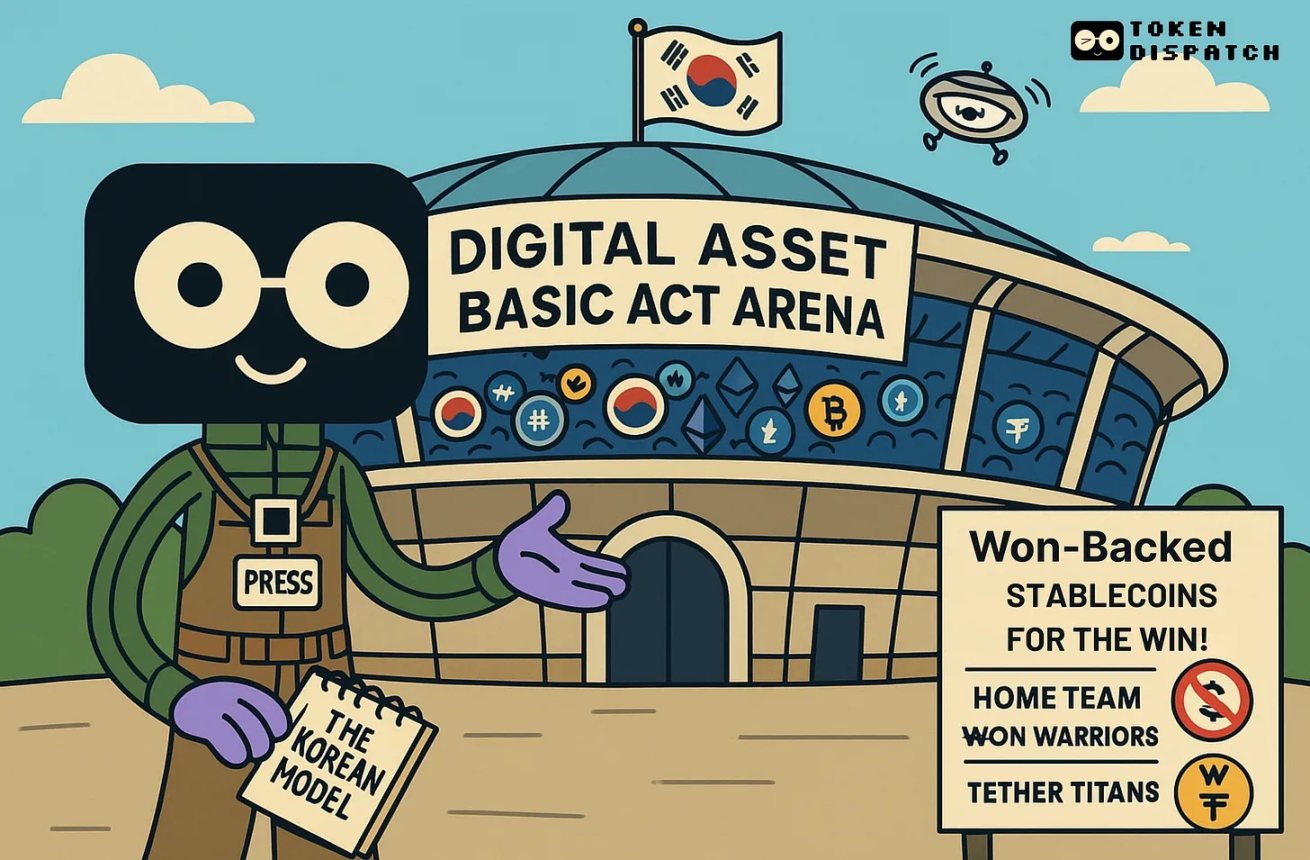
The two-hour failed coup ended in impeachment, creating a power vacuum. Filling this void was Lee Jae-myung, the former governor known as the "disruptor." With a unified government team and clear governing mandate, the Lee Jae-myung administration introduced the Digital Asset Basic Act just days after taking office and began to abolish an eight-year-long restriction on corporate cryptocurrency policies.
Before delving deeper, it is important to note one thing about South Korea: it is a technologically advanced economy where the public has a broad understanding of cryptocurrencies, while also facing structural economic challenges that traditional monetary policies struggle to address. Cryptocurrencies not only provide a response to current economic pressures but also lay the foundation for building long-term competitive advantages.
Currently, the number of people in South Korea holding cryptocurrency accounts has reached 16 million, surpassing the 14.1 million stock investors in the country. This marks the first time in South Korea's history that retail participation in digital assets has exceeded that in traditional stocks.
Nearly one-third of South Korea's population participates in cryptocurrency trading, with this figure exceeding half among adults under 60. Approximately 20% of government officials disclosed that their total cryptocurrency holdings amount to about $9.8 million. According to a report from the Hana Financial Research Institute, 27% of individuals aged 20 to 50 in South Korea hold cryptocurrencies, with digital assets accounting for 14% of their financial asset portfolios.
This is the result of years of increasing cryptocurrency adoption, driven by factors such as economic pressure, public familiarity with technology, and a political system that ultimately chose to embrace rather than resist this change.
Economic Foundation
South Korea's acceptance of cryptocurrencies stems from real economic pressures that traditional policy tools have failed to address. The country's GDP growth forecast for 2025 is only 0.8%, a figure typically seen only during major financial crises. In March 2025, the youth unemployment rate rose to 7.5%, the highest for the same period since 2021.
The ratio of national debt to GDP in South Korea is approaching 47%-48%, having risen since the pandemic but now stabilizing. By the end of 2024, the ratio of household debt to GDP in South Korea reached 90%-94%, ranking among the highest in the world, and leading among major developed economies and Asian countries. This contrasts sharply with other major economies, where government debt often exceeds household debt. In the U.S., household debt accounts for 69.2%, while government debt accounts for 128%; Japan's government debt ratio is as high as 248%, while household debt is only 65.1%. This inverted debt structure in South Korea creates unique economic pressures: policy decisions are driven more by individual financial stress than by sovereign fiscal concerns.
When interest rates rise and economic growth stagnates, this debt burden can weigh down consumer spending, and monetary policy alone cannot resolve this issue.
For millions of young South Koreans, cryptocurrencies represent what researcher Eli Ilha Yune describes as "financial despair." This is not due to ideological support for blockchain technology but rather a realistic response to an economy with almost no other avenues for wealth creation. Traditional investments like stocks yield meager returns, real estate is unaffordable, and the long-term sustainability of the national pension system is in question.
This context explains why cryptocurrency adoption in South Korea differs from other markets. Western investors typically view cryptocurrencies as a means of portfolio diversification or speculation on technology, while South Korean investors see them as essential financial infrastructure. The government's cryptocurrency policy is a response to the widespread adoption of cryptocurrencies.
The Lee Jae-myung administration has set a cryptocurrency agenda aimed at preventing South Korean wealth from flowing overseas through dollar-denominated digital assets. Currently, when South Korean investors purchase stablecoins, they primarily choose USDT or USDC, effectively channeling capital into U.S.-controlled financial infrastructure.
In the first quarter of 2025, the digital assets transferred overseas by South Korean cryptocurrency exchanges amounted to approximately 56.8 trillion won (about $40.6 billion), with stablecoins accounting for 26.87 trillion won (about $19.1 billion), nearly 47.3% of all outflowing digital assets.
Interestingly, this capital outflow occurred while the Korean won was actually strengthening against the dollar. In 2025, the won appreciated by about 6.5% against the dollar, maintaining an exchange rate in the range of 1393-1396 won per dollar as of July. This indicates that South Korean investors' preference for dollar stablecoins is not due to a weakening of their currency but rather a lack of alternative options denominated in won and the dominance of dollar-denominated cryptocurrency infrastructure globally.
The Digital Asset Basic Act establishes a regulatory framework for South Korean companies to issue stablecoins pegged to the won. The capital requirement is set at 500 million won (approximately $370,000) to enter the stablecoin market. This lower threshold aims to encourage domestic competition while maintaining basic standards.
Can this won-pegged stablecoin strategy really stop capital outflow? If South Koreans want to hold dollar assets, they can still exchange won for USDC. Therefore, the true purpose of this strategy is to reduce demand for foreign stablecoins by providing similar advantages (programmability, access to decentralized finance, 24/7 trading) without the need for currency exchange. More importantly, it keeps financial infrastructure domestic, directing fees, custody services, and more to South Korean institutions rather than to Circle or Tether. This is a behavioral guidance approach rather than capital control, making won-denominated options more convenient while placing financial operations under South Korean regulation.
Eight major banks in South Korea have begun collaborating to develop won-pegged stablecoins, aiming to launch them by the end of 2025 or early 2026. This alliance includes KB Kookmin Bank, Shinhan Bank, Woori Bank, Nonghyup Bank, Korea Industrial Bank, Suhyup Bank, K Bank, and IM Bank. Their goal is not only to compete with USDT and USDC but also to create financial infrastructure that keeps South Korean economic activities within the domestic system.
This stablecoin strategy reflects widespread concerns about the dollar's dominance in the digital finance sector. Currently, 99% of stablecoins globally are pegged to the dollar, giving U.S. financial institutions and regulators excessive influence in the digital asset infrastructure space.
The Bank of Korea has expressed concerns about privately issued stablecoins, warning that such currencies could "severely undermine the effectiveness of monetary policy and pose systemic risks." This disagreement led to the suspension of the central bank digital currency (CBDC) project in June 2025, as officials questioned whether there was still a need to launch a state-operated CBDC when private alternatives might perform similar functions more efficiently.
Institutional Transformation
In 2017, South Korea implemented restrictions prohibiting companies, institutions, and financial firms from opening cryptocurrency exchange accounts due to concerns over speculation and money laundering. Only individuals could trade cryptocurrencies using verified real-name accounts. Institutional and corporate accounts were banned, and banks faced strict compliance obligations. The current government has initiated a phased process to lift these restrictions.
In the initial phase (mid-2025), non-profit organizations and some public institutions are now allowed to liquidate cryptocurrencies obtained through donations or seizures, provided they meet strict compliance requirements, such as using verified real-name won trading accounts and establishing internal audit committees.
By the end of 2025, the government plans to expand the eligibility for cryptocurrency exchange accounts to about 3,500 listed companies and professional institutional investors through pilot projects. These accounts must be verified by real-name authentication and comply with strict anti-money laundering (AML) and KYC protocols. Financial authorities have announced that listed companies will ultimately be allowed to participate directly in cryptocurrency trading, which will drive large-scale adoption at the corporate level.
Major domestic exchanges have launched or upgraded "institutional-grade" products, custody solutions, and support services to meet the potential growing demand from large enterprises and professional investors.
Currently, traditional financial institutions such as banks, asset management firms, and brokers are still excluded from direct cryptocurrency trading. This setup ensures that the first wave of institutional cryptocurrency activity in South Korea will be led by non-financial enterprises, potentially giving them a competitive advantage when regulatory doors open further.
Political Recognition
Lee Jae-myung's cryptocurrency agenda has garnered broad political support, not limited to his own Democratic Party. In recent electoral campaigns, both major parties have pledged to legalize cryptocurrency ETFs, marking a rare moment of bipartisan consensus in South Korean politics. The Financial Services Commission, which previously opposed discussions on cryptocurrency ETFs, has now submitted a roadmap to approve spot Bitcoin and Ethereum ETFs by the end of 2025.
This political shift reflects that cryptocurrencies have become an important voter issue. With over 16 million cryptocurrency holders, approximately one-third of South Korea's total population, digital asset policy has transitioned from a niche technical policy to a mainstream political issue.
The government has also taken broader measures to support cryptocurrency businesses. The Ministry of SMEs and Startups announced plans to lift restrictions, no longer preventing cryptocurrency companies from obtaining venture business qualifications, allowing them to enjoy significant tax benefits, including a 50% reduction in corporate income tax for five years and a 75% reduction in real estate acquisition tax.
South Korean investors have reacted enthusiastically to these policy developments. After the trademark application for stablecoins was submitted, bank stocks surged. Kakao Bank's stock price rose by 19.3% the day after submitting its cryptocurrency-related trademark application, while KB Financial Group's stock price increased by 13.38% following a similar application.
More notably, in June 2025, South Korean retail investors poured nearly $450 million into Circle Group's stock, making it the most sought-after overseas stock that month. Since its listing in June, Circle's stock price has surged over 500%, as South Korean investors view it as a bellwether for global stablecoin adoption.
This investment pattern reflects investors' deep understanding of how South Korea's stablecoin policy could drive global demand for stablecoin infrastructure. South Korean investors are positioning themselves for the potential influence of South Korea on the global digital asset market.
Lee Jae-myung's cryptocurrency strategy faces immense external pressure. U.S. President Donald Trump has threatened to impose reciprocal tariffs of up to 50%, which could severely impact South Korea's export-dependent economy. With exports accounting for 40% of GDP, trade disruptions could trigger an economic recession, limiting available funds for cryptocurrency investment regardless of regulatory improvements.
The urgency of the situation creates a race between policy implementation and economic deterioration. South Korean authorities are eager to establish cryptocurrency infrastructure to prevent potential trade conflicts from making the economic environment too difficult and hindering new investment initiatives.
Domestically, the central bank's opposition to private stablecoins could lead to ongoing regulatory tensions. Bank of Korea officials are more inclined to place stablecoin issuance under banking regulation rather than allowing tech companies into the monetary infrastructure space.
Tax policies are also yet to be determined. The planned 20% capital gains tax on cryptocurrency profits exceeding 2.5 million won has been postponed multiple times but is still set to be implemented. How this tax interacts with the new corporate cryptocurrency entry rules will influence institutional adoption patterns.
The global impact of South Korea's cryptocurrency policy is closely watched by the international community, as it may serve as a model for other countries facing similar economic pressures and technological adoption patterns. The combination of regulatory clarity, institutional access, and domestic stablecoin infrastructure constitutes a comprehensive solution for digital asset integration.
If successful, the South Korean model could influence policy-making in other Asian economies and provide a template for countries seeking to embrace digital asset innovation while maintaining monetary sovereignty.
 Risk warning
 Risk warning