Take profit or build positions: A plain explanation of how to observe recent market changes from a macro perspective

 Overall, the author believes that as Powell adjusts the FED's decision-making logic, the performance of the U.S. job market in the short term determines the market's confidence in a rate cut in September, which in turn affects the prices of risk assets.
Author: ++@Web3Mario++
Abstract: Recently, the market seems to have entered a perplexing phase, with blue-chip cryptocurrencies maintaining high volatility and an undecided overall direction. The altcoin market has not ushered in the anticipated comprehensive bull market, while DAT assets or coin stocks are thriving in the traditional financial market. Prior to this, there have been many voices on social media characterizing this round of the bull market as driven by traditional funds. I largely agree with this assessment, and this portion of funds has several distinct characteristics compared to past market cycles, such as significant influence from macro factors on decision-making, lower risk appetite, concentrated capital, weak wealth effect spillover, and less pronounced sector rotation. Therefore, as the macro environment undergoes significant changes, re-examining these changes will help us make correct judgments. Overall, I believe that with Powell adjusting the FED's decision-making logic, the performance of the U.S. job market will determine market confidence in a rate cut in September in the short term, thereby affecting the prices of risk assets.
What Powell's Speech Changed
We know that in the previous months, the core point of contention in the market regarding the macro economy was whether the FED under Powell could significantly cut interest rates within the year as desired by the Trump administration. First, why was the Trump administration eager to pressure the Federal Reserve to cut rates, even at the risk of affecting the independence of the Federal Reserve and, consequently, the credibility of the dollar, by influencing the Federal Reserve's decision through administrative power? In previous articles, we have analyzed the Trump administration's adjustment goal in U.S. economic policy as "manufacturing return," but this goal faced two obstacles during its implementation:
- Internal costs are too high to compete with international market competitors;
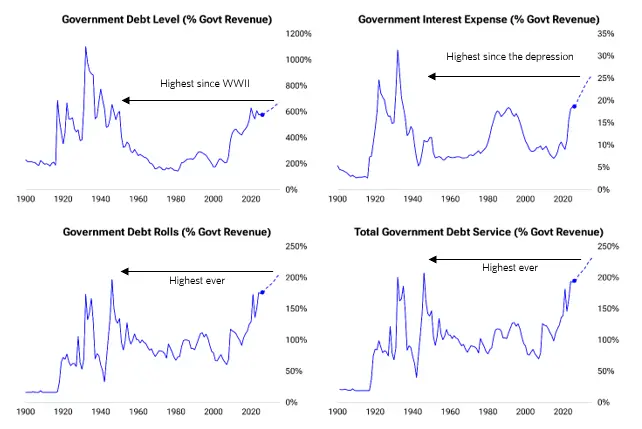
- Government debt is too high, lacking sufficient budget incentives for industry return;
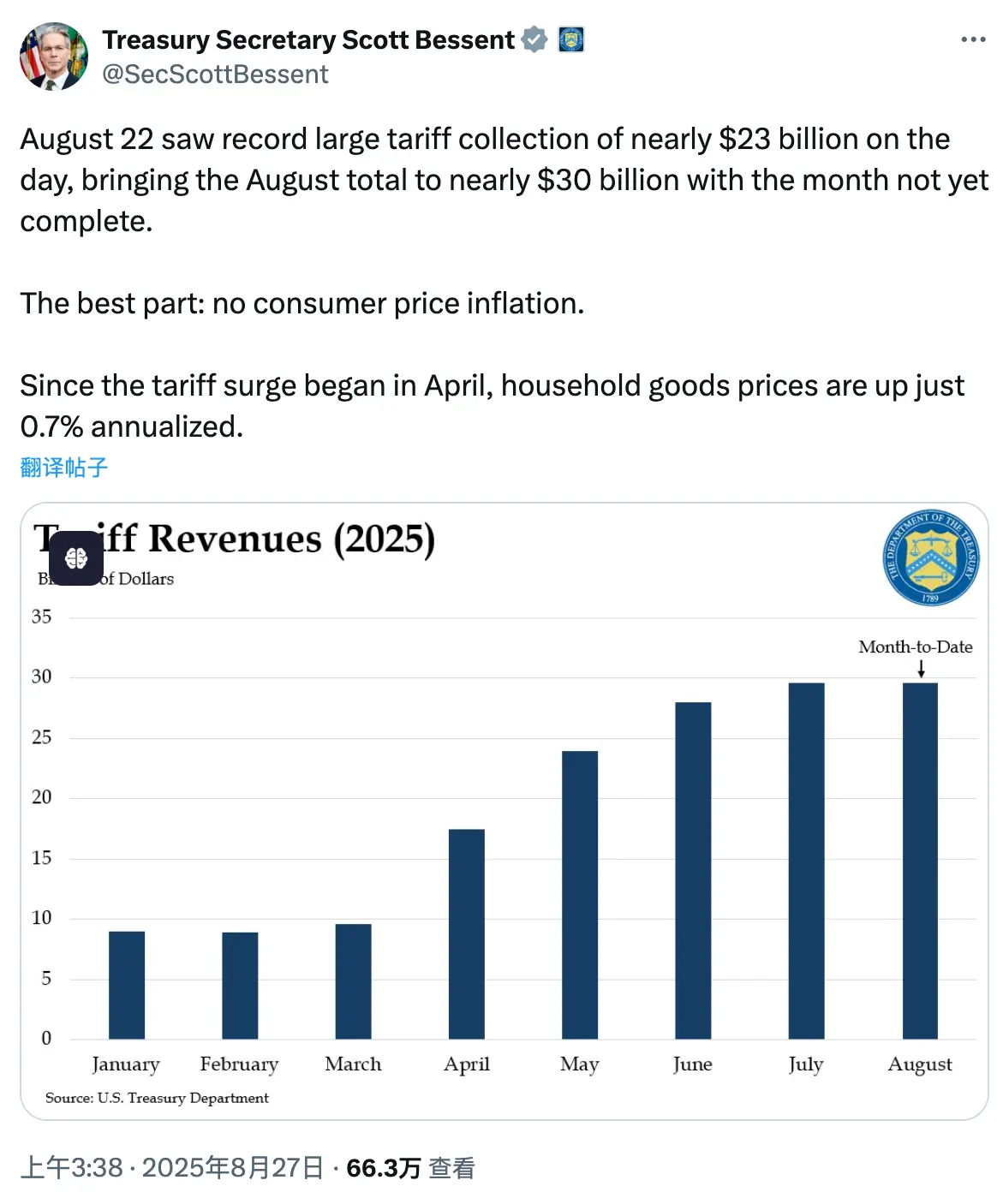
Observing the first half of the Trump administration, its policy implementation can be roughly divided into two steps. First, at the beginning of his election, he tried to fulfill his campaign promises as much as possible to enhance his governing authority, such as granting DOGE significant rights and changing cryptocurrency policies. After consolidating the basic support, the Trump administration began to implement tariff measures. The reason for advancing tariff policies after consolidating the basic support is that raising tariffs would cause market concerns about imported inflation, thereby increasing internal resistance. After gaining significant authority, through months of negotiations, Trump's tariff policy framework has been initially established and has shown results. According to U.S. Treasury Secretary Basant, as of August 22, tariffs have brought nearly $100 billion in fiscal surplus to the U.S. in the past six months, with an expected total of $300 billion for the year. Additionally, many countries have made investment commitments, such as $550 billion from Japan and $600 billion and $750 billion in energy orders from the EU.
It can be said that although internal costs cannot be immediately reduced in the short term, such as labor costs and logistics costs, because these costs need to be reset through a market clearing during a major depression, the Trump administration has, to some extent, changed the domestic market competition structure and capital structure through tariffs. Therefore, it is timely to lay the groundwork for the next policy, which is the FED's interest rate cut.
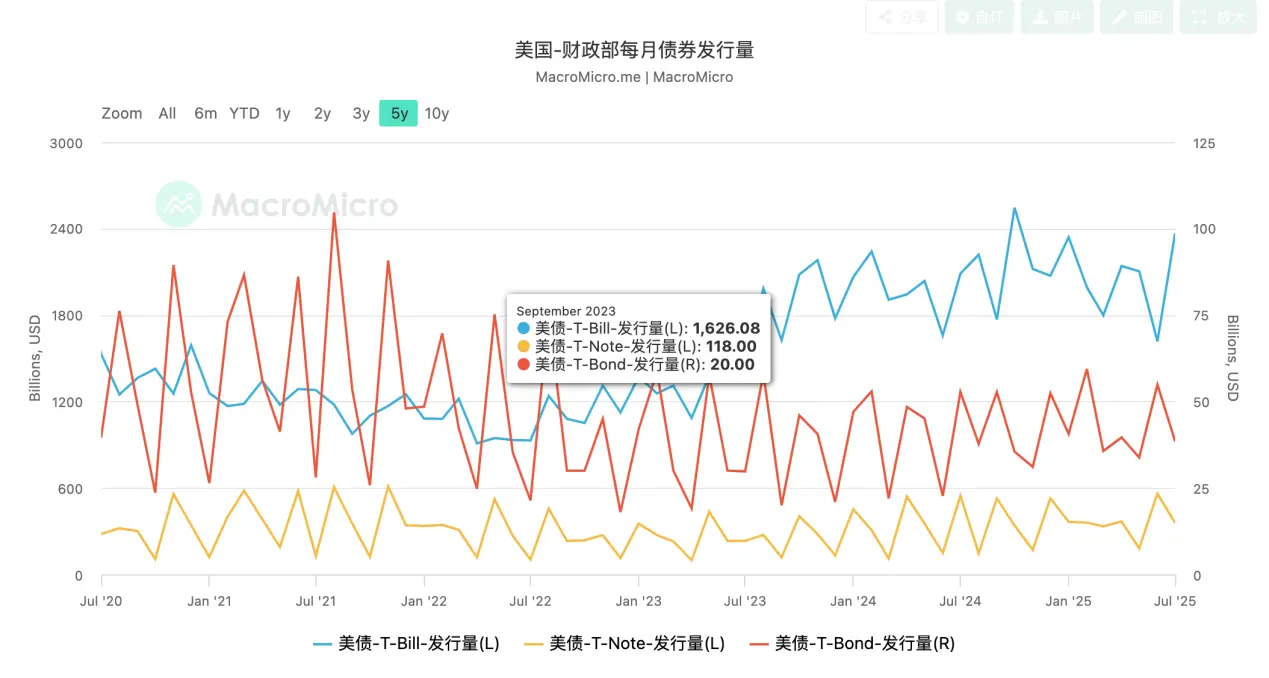
So, what can an interest rate cut change? There are mainly two points. First, it alleviates debt pressure. We know that during the previous Treasury Secretary Yellen's term, the U.S. Treasury's debt issuance structure increased the issuance of short-term debt, and Basant retained this decision. The benefit of this approach is that short-term debt rates are controlled by the Federal Reserve, reducing the burden of long-term debt on the Treasury. From the current situation, the market demand for short-term U.S. Treasury bonds is strong, which helps lower financing costs. However, the problem is also evident: it shortens the debt duration, increasing repayment pressure in the short term, which is why recent negotiations about the debt ceiling have become more vocal. An interest rate cut would mean lower interest payment pressure from short-term debt. Second, an interest rate cut will lower financing costs for small and medium-sized enterprises, aiding in the establishment of supply chains. We know that compared to large enterprises, small and medium-sized enterprises typically rely more on bank debt financing for operational funds. Therefore, in a high-interest environment, the willingness of small and medium-sized enterprises to expand financing will be impacted. After changing the domestic market competition structure through tariffs, it is also urgent to incentivize small and medium-sized enterprises to expand production and help them quickly fill the supply gaps in the market to avoid inflation. Therefore, the Trump administration's pressure on the Federal Reserve to cut rates at this time is also something they will strive to achieve, rather than a smokescreen.
Whether in actively intervening in the renovation issues of the Federal Reserve headquarters or attacking the extreme left, progressive, and hawkish Governor Cook, these are all proofs of the Trump administration's proactive push. These measures seem to have borne fruit in Powell's speech last week at the global central bank annual meeting in Jackson Hole. Throughout the speech, the most surprising aspect for the market was that Powell, who has always expressed his commitment to defending the independence of the Federal Reserve, seemed to yield to Trump's strong pressure. Several core points in his speech can be used to express his attitude:
It was clarified that the risks in the U.S. economy have shifted from inflation to the job market;
The impact of tariffs on inflation will take time to manifest and is not a factor that triggers an inflationary spiral;
An update to the monetary policy framework, interestingly reducing the emphasis on the effective lower bound as a "characteristic of normal economic conditions."
In simple terms, this means that the Federal Reserve is no longer overly concerned about inflation caused by tariffs but is instead worried about a collapse in the job market due to economic recession, while the level of interest rate cuts can be seen as having no lower limit. Here, the description of the effective rate can be elaborated slightly. The so-called effective rate refers to the point at which, when the central bank uses conventional monetary policy (mainly adjusting short-term policy rates), further reductions in rates will have no impact on the economy once they reach a certain level. This shift also aligns with the core of Trump's policy, as this "mutual pursuit" has sparked market expectations for further liquidity easing.
Impact on the Cryptocurrency Market
We know that the cryptocurrency market is often seen as a canary for speculative sentiment in the global risk asset market. Therefore, after the speech was released, cryptocurrencies experienced a rally, and the subsequent pullback indicates that the market had already somewhat priced in the expectation of a rate cut within the year. After establishing a new trading logic, the market shifted from initial emotional expectations to rational expectations, thus requiring sufficient proof to assess the extent of the rate cut.
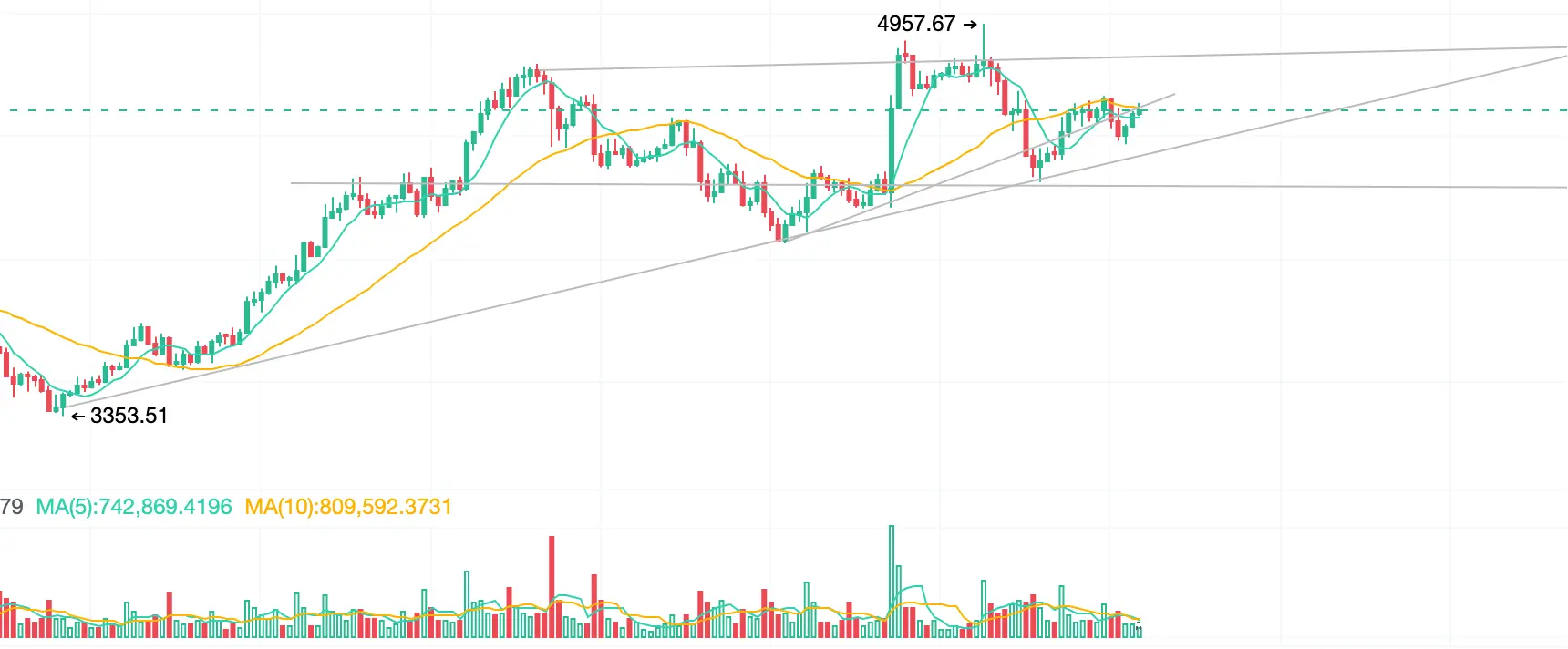
As for how deep the pullback will be, I believe the recent performance of ETH, which has been the hottest asset, is worth paying attention to. I think as long as the price does not fall below this upward channel in the short term, it indicates that investor sentiment has not shown a significant reversal, thus the risk is controllable. In the coming week, indicators related to the job market will significantly impact cryptocurrency trends, especially next Friday's non-farm payroll data, which will bring great volatility to the market. If the employment data falls short of expectations, the probability of a rate cut by the Federal Reserve in September will greatly increase. If it exceeds expectations, it will indicate the resilience of the U.S. job market, and the pressure for a rate cut will be alleviated, possibly leading to further market pullbacks. In any case, the recent policy market reminds me of 2023, dominated by CPI.
Disclaimer
The content of this article does not represent the views of ChainCatcher. The opinions, data, and conclusions in the text represent the personal stance of the original author or interviewee. The translation party maintains a neutral stance and does not endorse its accuracy. It does not constitute any professional advice or guidance, and readers should exercise caution based on independent judgment. This translation is for knowledge-sharing purposes only. Readers should strictly comply with the laws and regulations of their respective regions and refrain from participating in any illegal financial activities.
 Risk warning Risk warning



Popular articles