



Korean Exchange Listing Guide: Decoding the Black Box of Listing on Korean Exchanges

 Through statistical analysis and yield calculation, we can reveal the patterns of the three major exchanges in terms of listing rhythm, track preference, and token price performance, providing quantifiable reference for project teams to choose listing time, exchange, and marketing strategy.
This article is jointly published by K1 Research and Klein Labs
Research Method Overview
This report analyzes the listing paths and market logic of the Korean exchanges, combining listing data from January 2024 to July 2025. Using a panel fixed effects regression model, it quantifies the impact of factors such as BTC price, trading volume in Korean won, and policy windows on the number of listings. Through statistical analysis and return calculations, we reveal patterns in the listing rhythm, track preferences, and token price performance of the three major exchanges, providing quantifiable references for project parties to choose listing timing, exchanges, and marketing strategies.
Key Highlights
The Korean market is globally leading in size and activity
Since 2025, the trading volume of cryptocurrencies priced in Korean won has consistently ranked second globally, only behind the US dollar market, and has long led in the altcoin trading sector, demonstrating a high acceptance of new coins and ample liquidity. For project parties, this is a high-potential market willing to try new things.Policy and market sentiment drive the listing rhythm
Panel regression results indicate a significant positive correlation between the average monthly BTC price and the number of listings on exchanges, suggesting that market heat directly influences listing decisions. At the same time, policy windows amplify this effect, showing the combined impact of regulatory signals and market sentiment. For project parties, when entering the Korean market, it is essential to consider market heat, investor attention, and policy timing comprehensively, to reasonably arrange the listing rhythm, enhance project exposure, and optimize trading liquidity, achieving a strategic listing layout.The "bridge effect" of token listings and market diffusion mechanisms
Overall, Bithumb and Coinone play a "bridge effect" in the listing rhythm, with some tokens listed on these two exchanges before entering the larger trading volume of UPbit. Coinone's listing performance is particularly outstanding, achieving a secondary amplification of price and trading volume. Project parties can prioritize Coinone as an entry point and gradually expand to larger exchanges, achieving a release of resources and heat. All three exchanges belong to the DAXA alliance, and the internal transmission effect further enhances market diffusion for listings.Listing platform selection should be differentiated
There are significant differences in user profiles, listing rhythms, and market influence among exchanges, and simply pursuing the largest platform is not the optimal strategy. For project parties, it is essential to match the type of exchange and listing order based on token characteristics, community structure, and promotional budget to improve the return on investment.Korean market promotion requires localization and multi-channel integration
An effective entry strategy into the Korean market relies not only on the listing application to exchanges but also on Naver keyword optimization, local crypto forum topic guidance, offline event marketing, KOL collaboration, and more. Project parties should synchronize the listing rhythm with localized marketing to form a closed-loop conversion from awareness to trading volume.
1. Introduction
In the global cryptocurrency landscape, South Korea is rising at an astonishing pace. Since 2025, the total trading volume of cryptocurrencies priced in Korean won has reached $663 billion, making it the second-largest cryptocurrency market globally, only behind the US dollar. More notably, South Korea has long maintained a leading position in the trading of non-mainstream coins, boasting the highest trading volume of altcoins worldwide. Up to 25.4% of the Korean population actively participates in cryptocurrency trading, a level of engagement that is extremely rare globally. This enthusiasm has also given rise to the unique "kimchi premium" phenomenon.
At the same time, the South Korean government is actively reshaping its cryptocurrency regulatory framework, moving away from previous restrictive policies towards a new phase that encourages innovation and market development. The recent introduction of a cryptocurrency ETF roadmap and stablecoin development plan not only injects new institutional benefits into the market but also further solidifies South Korea's strategic position as an important cryptocurrency market in Asia and globally.
Against this backdrop, studying the potential of the South Korean cryptocurrency market can provide project parties with practical strategies on "how to enter Korean exchanges" and reveal opportunities and risks in this unique market for investors. This research report will focus on the listing paths and performances of the five major exchanges in South Korea—UPbit, Bithumb, Coinone, Korbit, and GOPAX—combining the latest data from 2024 to 2025 for a more micro and in-depth analysis, helping readers fully understand the listing ecology and market logic of Korean exchanges.
2. Preparation Before Listing: Marketing is Not Everything, but It Is Essential
Successful listings depend not only on the project's hard power and technical level but also on marketing and publicity, which are equally indispensable. Especially in Korean exchanges, where listing requirements are strict and numbers are limited, projects must possess strength in technology, community, and market recognition simultaneously. Below, we organize several key local marketing methods from the perspective of exchanges, focusing on their roles in enhancing project exposure, gaining user recognition, and attracting capital attention, providing reference experiences for successful listings:
2.1 KOL and Community Influence
In the promotion and listing process in the South Korean market, high-quality local KOLs and community resources are indispensable. Currently, several highly active and professionally content-producing Korean crypto communities have long been deeply rooted in the market.
On Telegram, KOL communities with a coverage of 20,000 to 40,000 members, known for their professional and high-quality content, include:
- MBM Creator Academy (@MBMweb3)
- We Crypto Together (@WeCryptoTogether)
- Cobacknam Announcements (@cobacknamannounce)
- Yobeul's World (@yobeullyANN)
- Telegram Coin Rooms & Channels - CEN (@emperorcoin)
- Jammin123 (@muijammin123)
- Fire Ant CRYPTO (@fireantcrypto)
- Youth Passion Flavor House Co., Ltd. (@minchoisfuture)
These groups are all early-established core OG communities, possessing historical depth and influence, and gathering experienced and atmosphere-creating active players, enjoying high popularity in South Korea.
Additionally, there are several communities with stable membership around 10,000, which, although smaller in scale, have more precise user profiles and higher stickiness, including:
- CRYPTO Sea (@crypt0_sea)
- KOOB Crypto 3.0 (KOOB Crypto) (@kookookoob)
- Coin Boy's Crypto Story (@coinboys)
- Naback's coin life (@ysytop2)
- Lee Dojin Metaverse Announcement (@leedojin2)
Considering that South Korea has a population of only 50 million, a few tens of thousands of followers is already a significant scale compared to English-speaking communities. Unlike the English-speaking area, the usage habits of Koreans show that the use of X is still relatively rare (although there is a trend of some KOLs and users migrating to X), with more people still using Kakao and Telegram. Due to the relatively strict speech control on Kakao, there are relatively more users on Telegram.
These KOL communities not only have wide coverage but also play an important role in the transmission of industry information and market sentiment guidance, providing a solid foundation for project landing and volume enhancement in South Korea. Additionally, many unlisted KOLs also possess certain influence.
2.2 Media Coverage and Article Promotion
In the promotion and listing process in the South Korean market, authoritative media coverage that is highly influential and aligns with local investor preferences is also crucial, as it can quickly establish project credibility and effectively expand market awareness and participation.
- CoinNess
CoinNess is South Korea's leading cryptocurrency media platform, focusing on real-time translation and publication of overseas news. Its Live Feed service provides investors with the fastest market updates. As the largest institutional-level cryptocurrency investment information provider in Korea, CoinNess also collaborates with the Korean national news agency Yonhap Infomax to provide exclusive real-time news sources for cryptocurrencies. (@coinnessgl)
- Blockmedia
As Korea's first blockchain-specific media, Blockmedia has long focused on trends in traditional finance and the crypto market, project progress, and regulatory dynamics. Although its real-time reporting is slightly inferior to CoinNess, it has earned a reputation in the industry for high-quality content and in-depth analysis, covering a wide range of topics including regulations, technology, and lifestyle. (@with_blockmedia)
- TokenPost
TokenPost is South Korea's largest blockchain and cryptocurrency media, frequently participating as an official media partner in government blockchain forums, Asian cryptocurrency summits, and technical seminars. It has a data platform and industry research department that provides customized intelligence and in-depth analysis services for institutions and enterprises, combining authority and professionalism. (@tokenpost)
- Bloomingbit
Bloomingbit is the most influential and credible comprehensive financial media group in Korea—an authoritative cryptocurrency information platform under the Korean Economic Media Group, providing 24/7 news and market reports on blockchain and cryptocurrencies selected by industry experts. Bloomingbit combines broad influence with professional interpretation capabilities, becoming an important information source for institutional investors. (@bloomingbit_io)
2.3 Professional Consulting Institutions and Research Platforms
Due to some investors' difficulty in fully understanding the structure and key points of projects, the marketing of cryptocurrency listings relies on professional consulting institutions and research teams to help interpret the core value and market potential of projects, providing in-depth analysis and decision-making support for investors.
- Despread
As a leading cryptocurrency data analysis platform, its in-depth market research and industry trend reports help project parties understand market dynamics and accurately assess competitiveness, allowing for more targeted marketing strategies. (@DeSpreadTeam)
- Xangle
With its strong blockchain data analysis capabilities and transparent project review mechanisms, it provides investors with authoritative risk assessments and decision-making support. It serves as an important information platform in the cryptocurrency industry. (@Xangle_official)
- Tiger Research
Through in-depth research, GTM consulting, and strategic investment, Tiger Research not only gains insights into industry trends but also assists projects in optimizing growth paths and market strategies, promoting the long-term development of the Web3 ecosystem. (@TigerResearch)
- K1 Research
With its advanced market analysis capabilities and strategic data-driven decision-making, K1 Research provides in-depth market insights and trend forecasts for cryptocurrency projects and investors. It helps optimize investment decisions and risk assessments through data analysis, supporting the sustainable development of the cryptocurrency ecosystem. (@K1_Research)
2.4 Other Methods
SEO Optimization: Based on the above methods, more refined SEO layouts can be developed for the Korean market, especially on the Naver platform, where the effect is best. If the strategy is appropriate, it can significantly enhance project exposure and increase the success rate of listings.
In-depth Forum Viral Marketing: Combining community and viral forum marketing can effectively amplify discussion heat and user attention, achieving cross-layer penetration. For example, posting meme images that resonate with Korean culture on local popular platforms like Coinpan can often stimulate spontaneous user creation and dissemination, forming a sustained heat diffusion.
Offline Activities: Offline activities are an important part of marketing projects in Korea. These include community study groups, seminars, and hosting presentations while distributing tokens on-site. Such activities can enhance user trust and brand stickiness while promoting interaction and word-of-mouth among community members.
Event Sponsorship: This includes sponsorship of cryptocurrency events and non-cryptocurrency events. The most common example in cryptocurrency event sponsorship is hackathons. In non-cryptocurrency event sponsorship, sports events are the most widespread, such as soccer, racing, and esports events, which not only increase awareness of the project among potential users but also significantly enhance brand influence.
Kaito Marketing: Kaito marketing is based on algorithms and data, providing ranking and metric tools that allow project parties to monitor user participation and interaction effects in real time, achieving transparent and efficient targeted promotion. The cost structure is more friendly to small and medium-sized projects, helping to enhance community activity and precise user reach, but attention should be paid to the potential risk of excessive noise causing user aversion.
Professional Marketing Solutions: Introducing professional third-party marketing agencies for comprehensive managed marketing, including brand positioning, community operation, content creation, and advertising placement, to enhance exposure and user participation.
3. Basic Situation of Listings on Korean Exchanges
3.1 Market Share
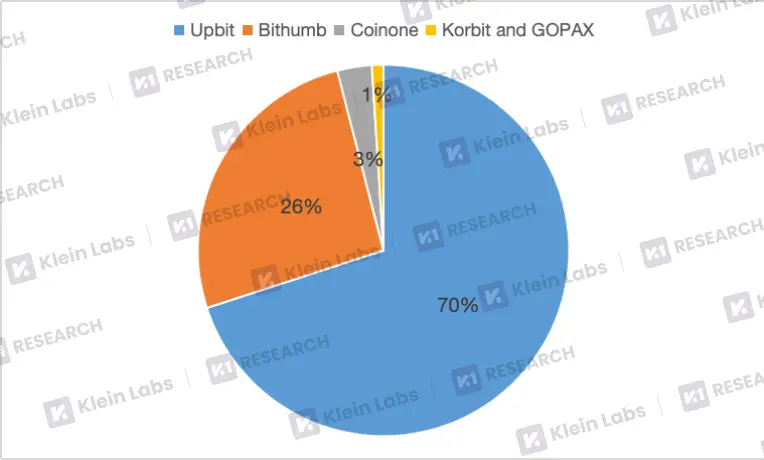
UPbit: Due to competitive influences from other exchanges launching trading fee reduction activities, UPbit's market share has gradually declined from a high of 86% in 2021, stabilizing at around 70% in February 2025.
Bithumb: With proactive marketing strategies, especially significantly increasing marketing investment and launching zero-fee promotions since 2024, it has achieved a significant rebound in market share, maintaining a trading volume of about 26%.
Coinone: Since launching the "zero-fee early bird ticket" to attract new users in October 2024, along with community operation strategies like trading rankings and activity survey participation codes, it has accelerated market share growth and solidified its existing user base, currently holding about 3% market share.
Among all local exchanges in Korea, the combined market share of the top three exchanges—UPbit, Bithumb, and Coinone—reaches as high as 99%, while Korbit and GOPAX together account for about 1%.
These major exchanges all participate in the DAXA alliance, enhancing the overall stability of the industry and the efficiency of listing transmission through information sharing and market collaboration, while also creating a certain coordinated effect in the rhythm of new coin listings and market responses. In 2023, the five major cryptocurrency exchanges in Korea established DAXA (Digital Asset Exchange Alliance) as an industry self-regulatory alliance aimed at improving the transparency, compliance, and investor protection levels of the cryptocurrency market. The alliance ensures that project parties meet safety and compliance requirements through unified listing standards while collaborating with regulatory agencies to promote policy improvement, thereby enhancing the overall compliance and transparency of the industry.
Since the virtual asset committee meeting in June 2025 confirmed that the "zero-fee policy" applies to the three major fiat-to-crypto exchanges in Korea—UPbit, Bithumb, and Coinone—it has further consolidated and promoted the dominant position of these three in the market.
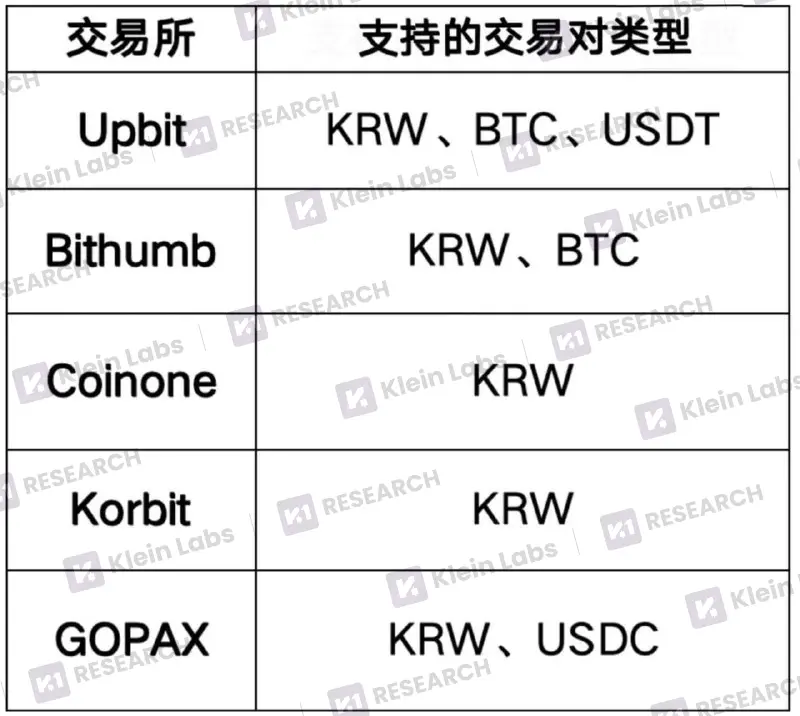
3.2 Supported Trading Pairs
3.3 Number of Listings
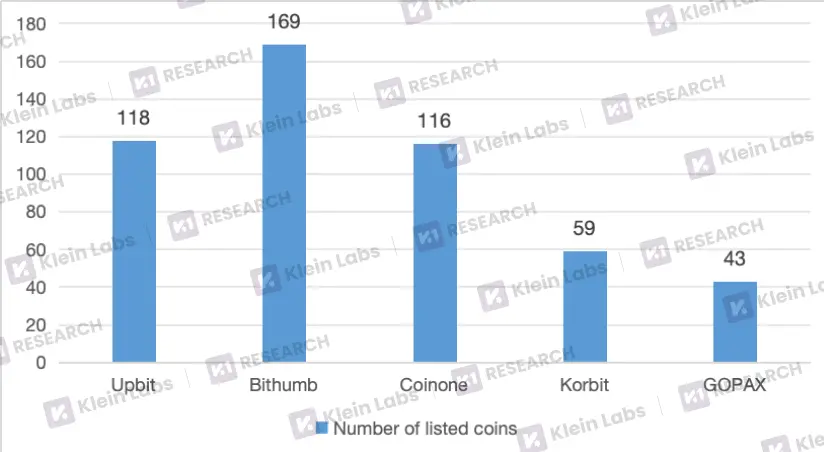
To analyze the listing situation, we selected the period from January 2024 to July 2025 as the statistical interval. This period not only covers a complete cycle of bull and bear markets but also includes important political nodes in the South Korean cryptocurrency market. This statistical interval can comprehensively reflect the changes in the number of listings on Korean exchanges and the market environment, providing reliable references for studying listing patterns and marketing strategies.
Overall, during the statistical period, the number of listings in the Korean market showed a significant upward trend, particularly active in the second quarter of 2024 and the first half of 2025. During this period, almost all mainstream exchanges accelerated the rhythm of new coin listings, and market activity rose to relatively high levels. This phenomenon is closely related to the policy environment.
In the second quarter of 2024: The "Virtual Asset User Protection Act" is set to take effect on July 19. In the two months leading up to the official implementation of the new regulations, leading exchanges like UPbit and Bithumb noticeably accelerated the listing and token review processes, attempting to complete more projects during the brief "window period" before stricter token listing and existing token review mechanisms are implemented. This concentrated listing behavior during this phase directly boosted the overall number of listings in the market.
In the first half of 2025: Political factors also played an important role. During the South Korean elections, Lee Jae-myung clearly stated that he would fully support the local cryptocurrency industry and promote the legalization and deregulation of cryptocurrencies. This policy expectation, along with the subsequent introduction of the "Digital Asset Basic Law," further strengthened market confidence. For the altcoin trading market, known for its activity and speculation, the implementation of this law is widely seen as a significant benefit, prompting exchanges and project parties to accelerate their layouts in the short term.
Specifically, against the backdrop of the overall market listing boom, the strategic differences among different exchanges also reflect their considerations in resource allocation, risk tolerance, and competitive positioning.
Bithumb ranks first in the number of listings, leading other exchanges. Bithumb not only has advantages in user base and liquidity but also maintains a relatively aggressive listing rhythm to seize market opportunities.
Among the top three exchanges, UPbit and Coinone have a similar number of listings. They exhibit a more stable and cautious listing strategy, focusing on maintaining existing ecosystem stability and compliance requirements.
In contrast, Gopax and Korbit have relatively fewer listings, indicating that these two exchanges are smaller in scale regarding new coin introductions. This is closely related to their limited market size, financial strength, and risk control capabilities.
4. Analysis of Listing Paths
After gaining a preliminary understanding of the listing characteristics and overall situation of major exchanges in Korea, the next step will be to conduct an in-depth analysis based on specific listing price data. By comparing the specific data on the types of listings and their performance across different exchanges, we can more clearly outline their commonalities and differences in project selection, pricing strategies, and market feedback, providing a more intuitive and data-supported perspective for understanding the operational logic and competitive strategies of each exchange.
To more accurately grasp the overall patterns and trend characteristics of listings in Korea, this study will focus on analyzing the three exchanges with the highest market share.
4.1 Analysis of Listing Numbers and Influencing Factors
4.1.1 Monthly Overview of Listings by the Three Major Exchanges
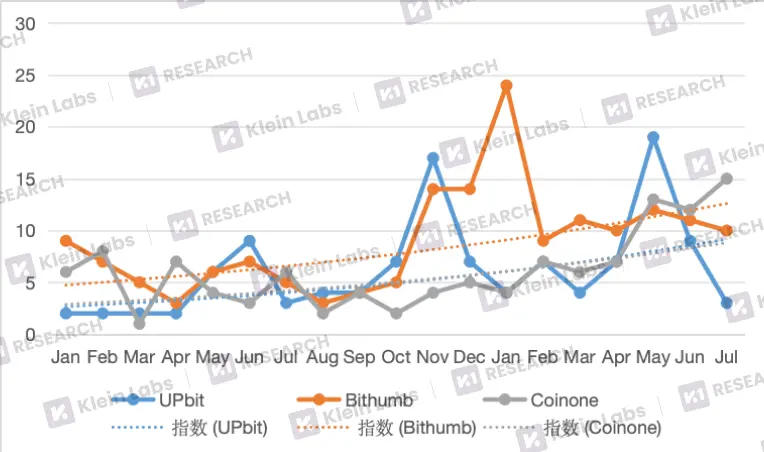
Overall Trend: Since November 2024, the number of listings at the three major exchanges has shown an upward trend. The increase in the number of listings reflects the heightened market sentiment. In November 2024, the results of the US presidential election were announced, with Trump winning, bringing new confidence to the market. At the same time, the price of Bitcoin continued to reach new highs, with popular sectors such as Layer 1, memecoins, AI, and DeSci performing strongly, resulting in favorable market sentiment. During this period, the actions of exchanges regarding listings became noticeably more frequent, reflecting the pattern that the number of listings typically rises during bull markets.
Specific Analysis:
- UPbit: The overall peak characteristics are quite evident, with significant differences between periods of intensive listings and smoother periods, showing three peaks in total, occurring in June 2024, November 2024, and May 2025. The latter two concentrated listings coincide with market bull runs:
In November 2024, Bitcoin rose nearly 40%, driving overall market prosperity;
In May 2025, Bitcoin broke through the $100,000 mark, and Ethereum also rebounded strongly, with listings concentrated in the Layer 1 sector, coinciding with the regulatory window period before the formal introduction of the "Digital Asset Basic Law."
Although BTC and ETH showed weak trends in June 2024, the overall market capitalization of the Korean crypto market remained high, and exchanges launched a public officials' crypto asset information disclosure system, enhancing transparency and bringing benefits, thus UPbit also experienced a peak in listings that month.
- Bithumb: The number of listings peaked in January 2025. Since November 2024, its number of listings rapidly climbed to 24 new coins in a single month, then stabilized at around 10 new coins per month, nearly double the average level in the first half of 2024. Since the strategic adjustment in 2023, Bithumb's market share has steadily increased. With the new president taking office and favorable conditions for the Korean cryptocurrency market, it adopted a more aggressive listing strategy to accelerate market share acquisition.
At the beginning of 2025, Bithumb accelerated its listing rhythm to capture the user growth trend and attract more participants. This move is closely related to the fact that the proportion of new users among Korean crypto investors reached 33% in December 2024, driven mainly by market sentiment from Bitcoin halving and Trump's election victory, indicating that the user base is continuously expanding.
- Coinone: The listing rhythm is relatively balanced, maintaining a stable high volume of listings in the first quarters of both 2024 and 2025. In May of this year, Coinone's number of listings reached a significant peak, surpassing previous months' peaks. This change is attributed to the previously launched fee reduction policy and marketing investments, successfully solidifying a loyal user base; at the same time, multiple favorable news about cryptocurrencies and the introduction of the "Digital Asset Basic Law" provided stronger policy support for Coinone. Based on these factors, Coinone chose to increase the variety of listings, attracting more users by expanding the number of supported trading pairs, thereby further expanding its market share.
Similar to UPbit, Coinone also reached a phase peak in May of this year; however, unlike UPbit, which saw a sharp decline in listings in July, Coinone again set a new high in the same month. This indicates that the two exchanges have different strategies in responding to market conditions. Overall, the listing rhythm is closely related to BTC price trends and market sentiment, with Coinone more inclined to maintain active new listings during bullish phases to attract users and sustain growth momentum.
From the index curve of the number of listings, UPbit and Coinone show a generally similar trend, but their performance styles differ. UPbit's curve peaks and troughs are more pronounced, forming periodic adjustments to help maintain overall balance; while Coinone's curve maintains a high degree of synchronization with BTC price trends, remaining relatively stable and continuously upward, indicating that its listing strategy more directly follows market conditions, pursuing stable expansion.
4.1.2 Quantitative Analysis of Influencing Factors on Listing Numbers
This section employs a panel data fixed effects regression model to systematically assess the impact of BTC price, trading volume in Korean won, and policy factors on the number of listings at major exchanges in Korea.
Panel data has the advantage of simultaneously containing both time series and cross-sectional dimensions, allowing for the capture of dynamic effects of variables over time while controlling for individual differences. Compared to single cross-sectional or time series analysis, the panel method can effectively improve estimation accuracy and reduce omitted variable bias.
The introduction of the fixed effects model is primarily to control for time-invariant characteristics at the exchange level, avoiding interference from these long-term structural differences on coefficient estimates. By introducing exchange fixed effects αᵢ, the model can focus on changes over time, thereby more accurately identifying the marginal effects of BTC price fluctuations, changes in trading volume, and policy windows on listing decisions.
In interpreting the results, this study uses the p-value as the core measure of statistical significance. When the p-value of a variable is greater than 0.05, it means that at the 5% significance level, we cannot reject the null hypothesis that "the coefficient equals zero," indicating that the model does not provide sufficient evidence to prove that the variable has a stable statistical association with the number of listings during the sample period. However, statistical insignificance does not equate to economic ineffectiveness. In the highly volatile environment of the crypto market, short-term sample noise, variable measurement errors, and individual heterogeneity may obscure the true effects. Therefore, for variables with p-values > 0.05, we will adopt a cautious interpretation in the conclusions, discussing from the perspective of economic implications and potential mechanisms rather than relying solely on statistical significance for conclusion judgments.
We set the following model:

Where:
listings: the number of listings by exchange i in month t
btc_price: the average BTC price for the month (in USD)
krw_trade: the total trading volume in Korean won for the month (in billions)
policy: policy dummy variable (1 = policy window period, 0 = no)
αᵢ: exchange fixed effects to control for long-term strategic differences among different exchanges.
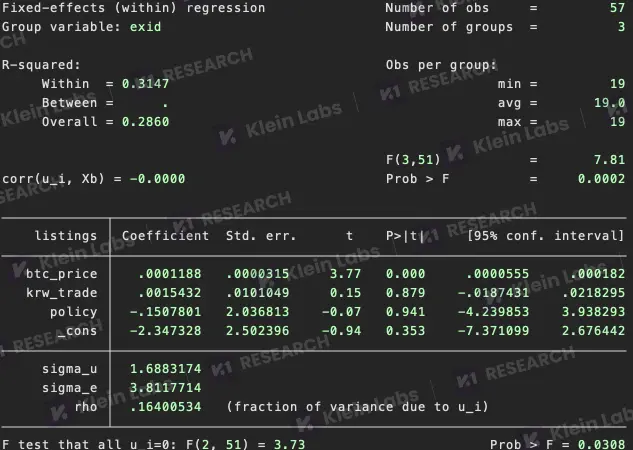
Panel regression results indicate:
BTC price is significantly positively correlated. For every $1 increase in BTC, the average number of listings increases by about 0.00012; if the average monthly BTC price rises by $10,000, the average number of listings will increase by about 1.19, with a very small p-value, indicating that this relationship is statistically robust.
Changes in trading volume in Korean won are not significantly correlated with the number of listings, possibly due to significant short-term trading fluctuations and project heterogeneity, which do not directly drive the listing strategies of exchanges.
The impact of the policy window period on the number of listings is not significant, suggesting that different exchanges respond differently to policies.
The fixed effect αᵢ helps control for long-term strategic differences among exchanges, allowing the model to focus on the impact of time dimension factors.
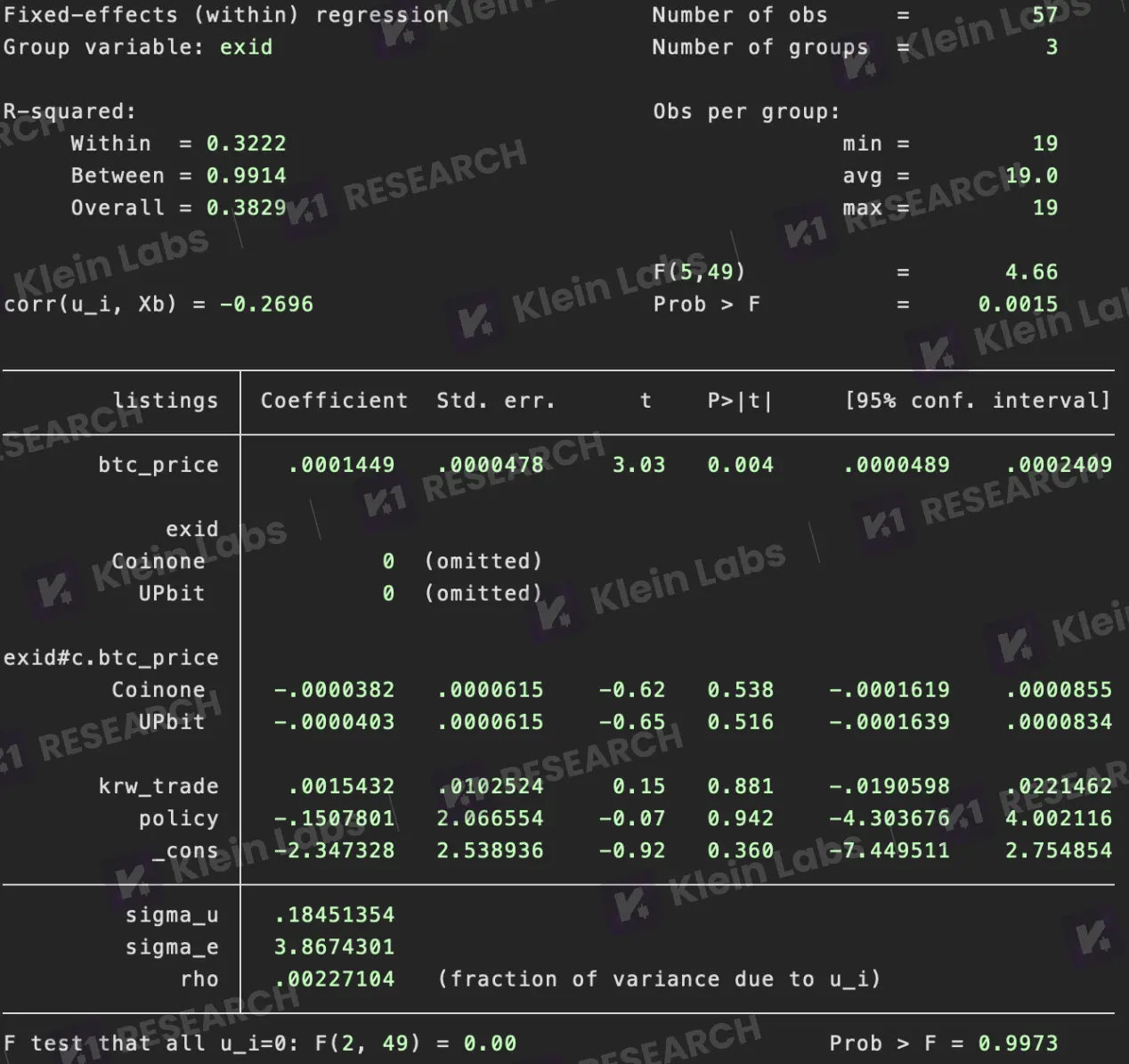
When further analyzing the differences among exchanges, the regression results show:
In comparison, UPbit and Bithumb have slightly lower marginal responses to BTC price, but the difference with Coinone is not statistically significant, indicating that the three major exchanges exhibit a similar positive response pattern when facing BTC price fluctuations.
Specifically, Coinone is particularly sensitive to changes in BTC price. For example, when the average BTC price increases by $10,000, the number of listings on Coinone is expected to increase by about 1.45, indicating that price increases stimulate its listing of new tokens to capture market heat and investor attention.
Overall, BTC price signals have a significant impact on the listing decisions of Korean exchanges in the short term and serve as an important reference for project parties in choosing listing windows.
Combining the two analyses, the conclusions indicate:
During favorable market conditions, the three major exchanges generally adopt synchronous expansion strategies, but Coinone is more sensitive to market conditions.
BTC price is the main factor driving the number of listings, rather than differentiation in strategies among exchanges.
The overall South Korean crypto market is guided by macro market conditions, with the differences among exchanges having limited impact on long-term strategies.
4.2 Analysis of Listing Tracks
To delve into the track preferences of the three major Korean exchanges for new token listings, we systematically organized and analyzed their recent listing situations. This analysis provides project parties with referenceable listing strategies and helps investors identify potential investment targets and grasp the hotspots and trends in the local Korean market.
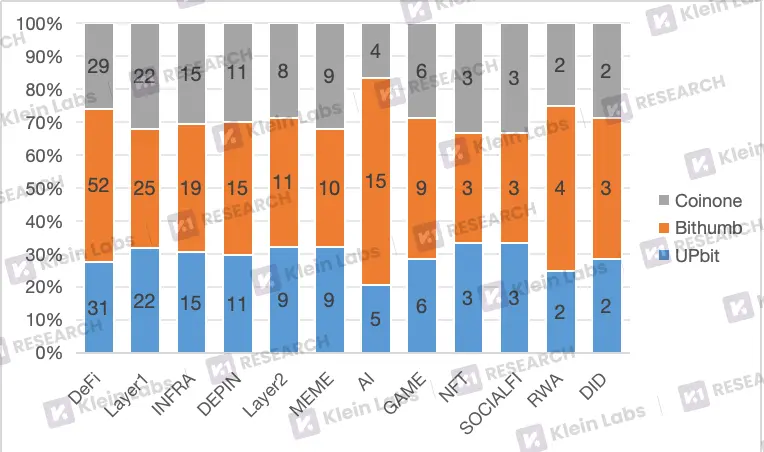
Common Points
In the listing structure of the three major exchanges, the number of DeFi, Layer 1, and Infra projects ranks at the forefront. This indicates that each platform's listing strategy remains highly focused on tracks with practical application value, particularly emphasizing the DeFi ecosystem and Web3 infrastructure. DeFi projects account for about one-third of the total number of listings.
In the DeFi sector, the three exchanges jointly listed a total of 12 large overseas quality projects, including BABY, COW, DEEP, DRIFT, ENA, HAEDAL, JTO, JUP, KERNEL, PUFFER, W, and ZRO, all of which are representative projects with high recognition and user bases globally, demonstrating the exchanges' convergence in selecting high-quality DeFi assets.
In contrast, the number of listings in emerging sectors such as NFTs and SocialFi is significantly lower across the three platforms. From the explosive growth in 2020 to the rollercoaster fluctuations in the market and the prolonged winter for NFTs, market sentiment and liquidity have remained under pressure. Recently, the NFT market has seen a strong rebound, and the three exchanges have selectively listed three leading blue-chip NFT projects—PENGU, ME, and ANIME—while their overall attitude towards the NFT sector remains relatively cautious and observant.
Differentiation Points
- Bithumb ranks first in the number of listings during the statistical period, and compared to UPbit and Coinone, it has a higher proportion of new tokens in the DeFi and AI sectors, fully reflecting Bithumb's keen capture of market opportunities and hotspots during the AI boom in 2024, as well as its rapid response in listing strategies.
Coinone and UPbit have a high overlap in overall listing numbers and timing rhythms, but there is a clear differentiation in the style of specific token selections. Taking the DeFi sector as an example:
UPbit has independently listed established projects such as COMP and BNT, which have long-term ecological support and have been market-validated, demonstrating an emphasis on stability and historical performance.
Coinone, on the other hand, has independently listed relatively new but promising innovative DeFi projects such as NAVX and YALA, showcasing an open attitude towards emerging quality projects and forward-looking layouts, with a more inclusive selection standard that tends to support early innovative projects with long-term growth potential.
4.3 Analysis of Token Price Performance
This study primarily focuses on the price performance of newly listed tokens on the three major exchanges. It examines the price changes on the 1st, 7th, and 30th days compared to the initial pricing set by the exchanges for new tokens, to analyze their trends, volatility patterns, and market responses.
The price on the first day reflects the market's immediate acceptance of the new asset, influenced by speculation and FOMO sentiment, making it a critical phase for initial market pricing;
The price changes from the 1st to the 7th day can capture short-term market sentiment and initial recognition of the project's fundamentals, measuring the sustainability of market heat and helping to assess reasonable initial pricing;
The price trends from the 1st to the 30th day reflect the long-term support of the token. As short-term speculation cools and speculators exit, changes in price and trading volume become important references for market recognition.
To calculate price return rates and avoid extreme values affecting the overall trend, we excluded the top and bottom 25% of outliers and used a trimmed mean method for analysis, thereby more accurately reflecting the typical price volatility of the tokens.
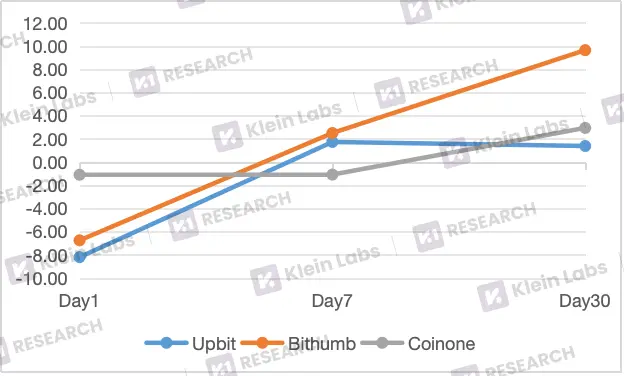
UPbit: The average closing price on the first day is the lowest, possibly due to a large user base and concentrated selling by speculators, leading to price pressure on the first day. On average, UPbit sees a rapid recovery in price on the seventh day, followed by a gradual decrease in the rate of increase, showing a steady upward trend after short-term adjustments.
Bithumb: The average price performance shows the largest fluctuation range, with both increases and decreases being quite strong, which may be related to its diverse listing types and high market activity. Although the curve indicates an upward trend for Bithumb, the steepness and amplitude may also increase investor risk.
Coinone: The price change range is the smallest, indicating higher stability and predictability. Throughout the observation period, its price trend remains stable, with the increase on the 30th day even surpassing UPbit, indicating that even with limited short-term fluctuations, the token still has sustained upward potential. This stable return rate means that investors face relatively low price volatility risks, making it more suitable for investment strategies that pursue stable returns and long-term investment value.
4.4 Return Analysis: The Bridge Effect of Listings on Exchanges
4.4.1 Research Method
In this study, we analyze the secondary indicator—token return rates—to examine the impact of launching on Korean exchanges on the price performance of newly listed tokens. Compared to absolute prices, return rates have significant advantages:
Ignoring unit effects: Compared to absolute prices, return rates are relative indicators, unaffected by differences in token face value or trading units, making cross-token and cross-exchange comparisons easier.
Reducing scale bias: The price differences among different tokens can be enormous, and directly comparing prices may lead to misleading conclusions, while return rates can unify the scale, highlighting the magnitude of changes rather than absolute values.
Capturing market response sensitivity: Return rates reflect investors' immediate emotions and behavioral responses to new listings, helping to measure the impact of the initial exchange on price fluctuations.
4.4.2 Token Selection and Sample Determination
Data shows that both Bithumb and Coinone exhibit a certain "bridge effect." Among them, Bithumb has 57 tokens that were first listed on its platform before landing on UPbit; Coinone's performance is similarly significant, with as many as 41 tokens first listed on Coinone before subsequently being listed on UPbit and Bithumb, with an average listing interval of 93.6 days. The following section will take Coinone as an example to analyze its characteristics in listing rhythm and market linkage.
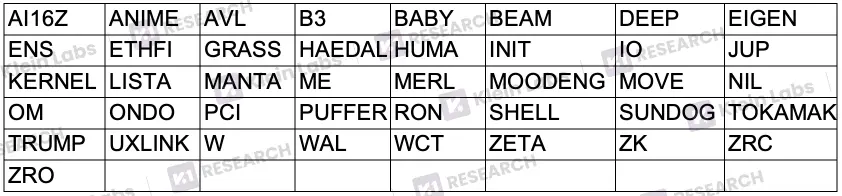
For some representative projects, such as EIGEN, ENS, and ETHFI, Coinone's layout time even exceeded one year in advance. Overall, the average return performance of these tokens is better than the overall market level, further validating Coinone's role as a "bridge" in the ecosystem—introducing potential assets early and transferring them to platforms with larger trading volumes and broader coverage.
This bridge effect is reflected not only in the time difference but also in return performance: tokens listed early on Coinone provide significant excess return opportunities for early participants, while entering other mainstream exchanges later forms a cross-platform price and liquidity transmission mechanism. Therefore, Coinone plays a dual role as a project incubator and asset circulation hub in the Korean exchange ecosystem.
4.4.3 Return Rate Time Window Analysis
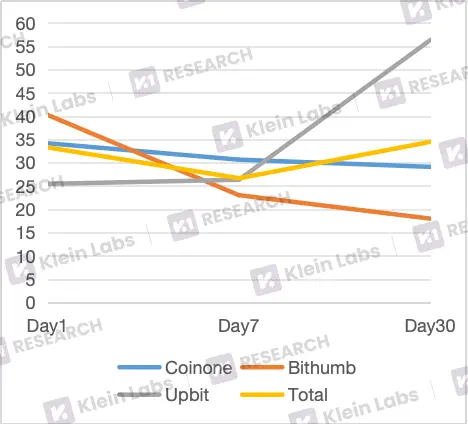
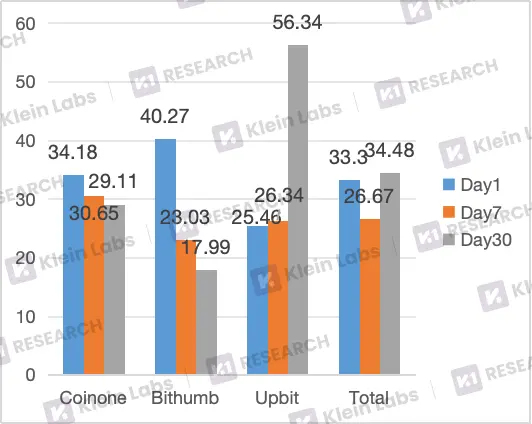
From the analysis of the time distribution of price performance, the overall return rate performance of tokens listed on Coinone is the best. In the three observation windows of the 1st, 7th, and 30th days, Coinone's return rates are higher than the overall average level of tokens at two time points, while slightly lower than the average at the remaining time point. In contrast, UPbit and Bithumb only outperform the average at one time point, with the remaining periods lagging behind the overall market level. Overall, in the short-term phase of tokens, projects listed first on Coinone and Bithumb often perform the best; while in long-term development, UPbit shows a more robust and superior average level.
UPbit: Adopting a relatively conservative strategy in the early stages of new tokens, it often lists projects only after verifying market heat. The price performance on the first day is the weakest, but with subsequent liquidity and a large user base advantage, the return performance on the 30th day surpasses others, indicating that its tokens are more likely to attract capital attention and experience secondary surges later.
Bithumb: Its strategy relies more on market heat, showing the best price performance on the first day of listing, with significant short-term effects, but the overall return rate subsequently declines significantly, indicating that without follow-up maintenance and market operation support, short-term bursts are difficult to convert into long-term advantages.
Coinone: Leveraging the premium effect brought by its first-mover advantage, it strategically lays out popular assets, allowing early participants to gain arbitrage opportunities when tokens are listed across platforms, while also enhancing attraction for early investors. Coinone tends to take on the risks of early listings in exchange for the potential high-return token selection rights, consistently outperforming the overall average level of tokens across most time dimensions.
Based on the identified differences in token performance among exchanges, investors can formulate more targeted strategies according to their risk preferences and operational cycles:
Short-term speculative funds: Focus on the performance of new tokens on Bithumb on their first day of listing to capitalize on short-term market heat for price difference opportunities.
Medium to long-term trend investors: More suitable for tracking the performance of new tokens on UPbit in the 30 days following their listing, capturing potential capital attention and secondary surge potential.
Early layout dividend seekers: Should closely monitor Coinone's early listing dynamics, utilizing its first-mover advantage and bridge effect to gain premium returns during cross-platform listings.
4.4.4 Overall Performance of Return Rates
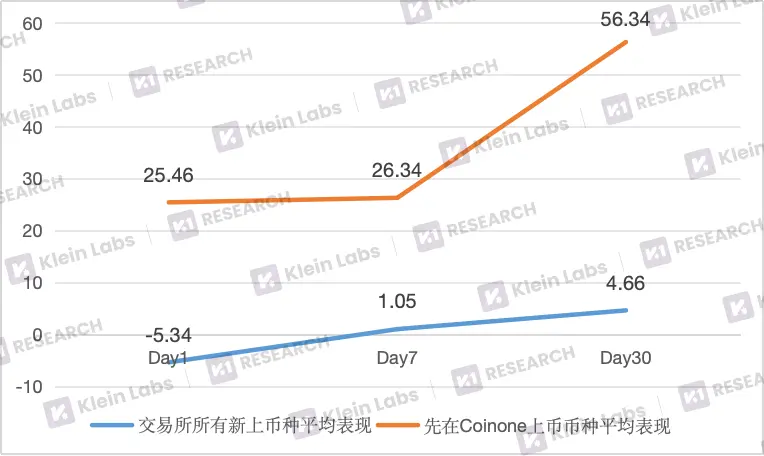
Statistical results show that tokens listed on Coinone have average price performances far superior to the overall average level of all newly listed tokens, exhibiting a general upward trend. This phenomenon indicates that these tokens, which were first listed on Coinone, not only possess strong project quality and market competitiveness but also reflect Coinone's foresight and precision in token selection. The ability to identify and introduce quality assets in the early stages is a significant manifestation of its bridging role in the Korean exchange ecosystem.
The analysis results also provide a reference for a potential listing strategy: by choosing platforms with relatively selective advantages for early launches, there is an opportunity to gain initial market attention and price performance, while also facilitating the expansion of liquidity and user coverage in subsequent larger exchanges, thereby forming a complete market development path from initial exposure to long-term value accumulation.
5. Excellent Marketing Cases for Listings
The overall listing threshold for Korean exchanges is relatively high: not only are there strict requirements for project technical strength, compliance, and team background, but there are also high expectations for market potential, community foundation, and early user activity, resulting in a limited number of projects that can actually list. This means that project parties must adopt a dual approach in both project hard power and market promotion strategies when striving for listings on Korean exchanges.
The following five projects have been selected, which performed well in early marketing and also showed notable price trends after their tokens were listed. We have organized and analyzed their marketing characteristics to provide references for other project parties. By referencing such successful cases, project parties can strategically layout in areas such as publicity, community building, media collaboration, and early user incentives, thereby enhancing the likelihood of passing audits and successfully listing.
5.1 UXLink
Media Collaboration and Special Reports
UXLink has established collaborations with multiple blockchain media and industry research institutions to publish special reports and technical analyses, enhancing the project's recognition in the market. CoinDesk Korea conducted an in-depth interpretation of UXLink's cross-chain technology, enhancing technical credibility; CryptoSlate published an interview article introducing UXLink's ecological layout and token economic model; TokenPost and BlockBeats shared reports in Korean and Asian communities, expanding market exposure and community attention.Ecological Expansion and Collaborative Layout
UXLink built its community on Telegram, with partners including the TON ecosystem, UOB, Arbitrum, and Animoca Brands. Through cross-chain interoperability, AMAs, and technical seminars, active users grew by 150% within three months, and daily trading volume increased by 200%, significantly enhancing liquidity and market influence while promoting the development of the decentralized finance ecosystem. Additionally, UXLink sponsored the Consensus Hong Kong conference and collaborated with BNB Chain and Meet48 to host the "AI Agent Rising" themed event in Hong Kong, further enhancing industry influence and community recognition.
- Incentive Mechanisms and User Participation
Participating in AIRDROP2049, users are incentivized to interact and engage with the community through social relationships on-chain, while also enhancing on-chain reputation and activity.
5.2 Mantle Network
Media Collaboration and Special Reports
Mantle Network systematically lays out media dissemination, collaborating with several well-known media and research institutions to publish special reports and technical analyses, significantly enhancing the project's influence in the industry. Klein Labs provides comprehensive ecological interpretations for investor reference; Binance Square published an interview about Mantle Network, introducing its modular architecture and Eigen-DA data availability support, enhancing technical credibility; Messari conducted an in-depth analysis of the project, releasing a research report to boost capital attention; TokenPost and CoinNess shared reports on the project's progress in the Korean market, expanding recognition in Asian communities.Community Operations and Social Media Promotion
Mantle Network actively operates social media and community platforms, building a highly engaged user base. It has over 800,000 followers on X, regularly updating project dynamics and interacting with the community; its official Telegram and Discord communities have over 200,000 members, regularly hosting AMAs and community discussion events to enhance user participation and sense of belonging. This refined community operation not only promotes information dissemination but also provides strong support for user activity and loyalty.Incentive Mechanisms and User Participation
Mantle Network enhances user activity and engagement through incentive mechanisms. The Mantle Journey user participation plan launched in August 2025 allocates a reward pool of 20 million MNT to participating users and applications through Soulbound Token minting, incentivizing community building and ecological activity. These incentive measures not only enhance user loyalty but also validate the economic attractiveness of the project, effectively forming a self-reinforcing community loop.
5.3 Flock.io
Media Collaboration and Special Reports
Flock.io systematically lays out media dissemination, collaborating with well-known media such as Messari and Cointelegraph Korea to publish special reports and market analyses, enhancing industry influence; Klein Labs provides a comprehensive interpretation of the project's ecosystem for investor reference; TokenPost reports on its progress in the Korean market, enhancing local market recognition.Ecological Expansion and Collaborative Layout
Flock.io has partnered with Alibaba Cloud Qwen and Base to introduce centralized AI models into decentralized platforms, achieving decentralized operations for on-chain transactions and wallet management. Through the Web3 Agent model, local AI assistants ensure user privacy while jointly hosting community AMAs and technical seminars, significantly enhancing user activity and market influence, and strengthening decentralized ecological construction.
- Incentive Mechanisms and User Participation
Flock.io initiated the Qwen × Flock × Base AI hackathon. The event attracted participation from developers at Korean SKY universities and KAIST, utilizing federated learning technology to promote innovation and practical applications of decentralized AI models, reinforcing Flock.io's technological leadership and industry influence in the decentralized AI ecosystem.
5.4 BigTime
Media Collaboration and Special Reports
BigTime systematically lays out media dissemination, collaborating with CoinDesk Korea, CryptoSlate, TokenPost, and other well-known media to publish special reports and project ecological analyses, enhancing industry influence; Messari conducted an in-depth interpretation of its game economic model and token incentive mechanisms for investor reference; BlockBeats reported on BigTime's community activities in the Asian market, enhancing local market recognition.Community Forum Viral Marketing
BigTime implements viral marketing strategies through community forums, Twitter, and Discord, activating player interaction and information dissemination. By utilizing game team mechanisms and invitation codes, players are encouraged to actively invite new users, rapidly expanding the community size while enhancing user stickiness and brand influence.
- Incentive Mechanisms and User Participation
BigTime requires player participation through invitation codes, creating a short-term "hard-to-get code" craze, significantly boosting community activity. This reflects market demand. The project also offers multiple incentive measures such as free game OTC, voice channel support, daily NFT drop rate sharing, and advanced dungeon sharing, effectively enhancing user participation and community activity.
5.5 Sign
- Media Collaboration and Special Reports
Sign systematically lays out media dissemination, collaborating with Tiger Research, CoinDesk Korea, CryptoSlate, and other well-known media and research institutions to publish special reports and technical analyses, enhancing industry recognition and capital attention; TokenPost and BlockBeats shared reports, expanding the project's exposure and influence in Korean and Asian communities.
- Community Forum and Viral Marketing
Sign utilizes cultural symbols to build a strong sense of identity and belonging, successfully cultivating a self-sustaining community of over 50,000 members. The community exhibits high loyalty, with some core members even tattooing the Sign logo on their bodies, reflecting the project's profound cultural influence and social dissemination effects.
- Incentive Mechanisms and User Participation
Sign encourages user interaction and content sharing through on-chain tasks, airdrop rewards, and a fair incentive system based on Soulbound Tokens (SBT); a high proportion of community incentives combined with a diversified product matrix effectively penetrates the on-chain trust and distribution infrastructure market, promoting the vigorous development and self-reinforcement of the "Orange Dynasty" community.
These cases fully demonstrate that through systematic and multi-dimensional marketing strategies, projects not only gain capital attention and user recognition but also successfully land in the strictly regulated and limited listing market of Korean exchanges. This indicates that the project strength and market recognition have reached high standards, providing other project parties with referenceable successful experiences and models.
6. Conclusion
In the global cryptocurrency landscape, the uniqueness and activity of the South Korean market provide highly valuable reference samples for project parties. Data indicates that the resonance between policy and market sentiment significantly influences the listing rhythm; fluctuations in BTC prices not only affect investor confidence but also subtly change the listing strategies of exchanges. This dual-driven mechanism of market and policy reminds project parties that when formulating global issuance plans, they must incorporate macro trends and regulatory dynamics into their decision-making framework.
More importantly, the "listing bridge effect" prominently reflected by Coinone—where its early listings often signal attention and follow-up from other mainstream exchanges—not only brings secondary liquidity but also amplifies the project's market volume. This suggests that, in the face of limited resources, precisely selecting entry platforms may leverage market leverage better than blindly pursuing larger platforms.
However, the experiences of the Korean market cannot be simply replicated for success. The user profiles, community cultures, listing review mechanisms, and localized promotional resources of different exchanges all determine the success or failure of projects in this market. For project parties seeking international layouts, true competitiveness lies in whether they can deeply integrate data analysis, market judgment, and localized execution, appearing on the most suitable platform at the right time with the most fitting strategy.
The cryptocurrency market is ever-changing, but patterns have never disappeared. The Korean case tells us that a project's success depends not only on technology and ideas but also on the precise grasp of the microstructure and emotional fluctuations of the market. In the future, facing such a stage, can project parties seize short-term dividends while laying the groundwork for long-term value? The answer depends on every strategic choice they make before taking the first step.
7. References
Kaiko: Korean Crypto Market Report
Simplicity: Token Launch Dynamics: The Science Behind Price Performance
Namu Wiki:Controversies in Cryptocurrency Regulation in South Korea
[Video] The Democratic Party is considering the establishment of a Digital Asset Agency… Will cryptocurrencies be managed like stocks?
DeSpread Research: 2024 Trends Report for Individual Investors in South Korea's Virtual Assets
UPbit and Bithumb's Diverging Listing Strategies for 2025… Conservative vs. Aggressive
 Risk warning Risk warning
Popular articles