Dialogue with Plume Founder Chris Yin: How to Build a Crypto-Native RWA Ecosystem?
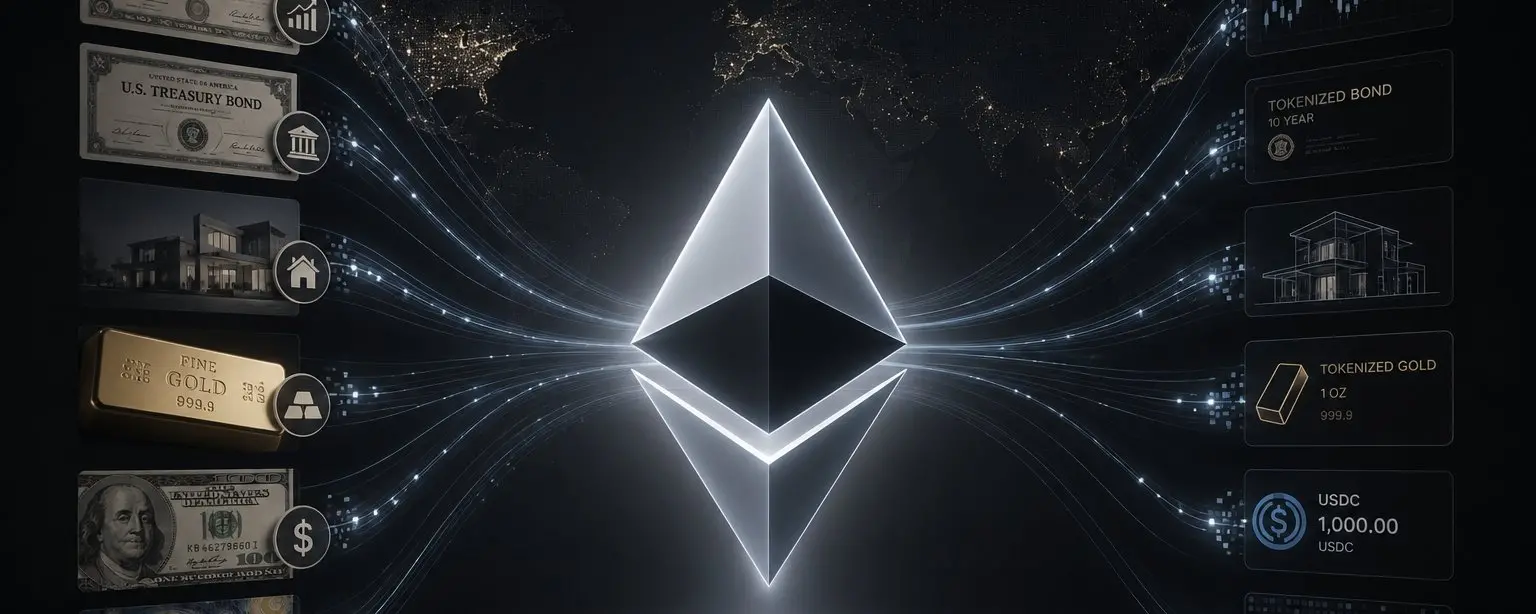
 RWA is not simply transferring real-world assets into the crypto space; we are building a whole new world and market where cryptocurrencies and physical economic assets will merge into one, with no clear boundaries.
Original Title: Building a Crypto-Native RWA Ecosystem with Chris Yin of Plume
Original Source: Rebank
Original Compilation: Luiza, ChainCatcher
Together with stablecoins, RWA is becoming a core pillar of the financial market's transformation towards blockchain-based settlement channels. Plume is one of the most watched players in the RWA space, connecting speculative retail users with the yield experience of traditional financial assets. The core logic is that the vitality of the crypto space is the source of demand for bringing financial business on-chain.
In this conversation, host Will Beeson discusses the main highlights and future vision of Plume with co-founder and CEO Chris Yin, as well as various feasible paths for bringing financial business on-chain. Below is the transcript of the conversation (edited for brevity):
Will :
First, please share your overall thoughts on the track Plume is in, as well as your long-term vision for this project.
Chris :
Let me briefly introduce the background: Plume focuses on the RWA space. We are building a blockchain, an ecosystem, and a network—all centered around bringing RWA on-chain and allowing users to interact with it in a native on-chain manner.
What sets us apart is our "crypto-first" approach. In the process of tokenizing off-chain assets, we are not merely replicating traditional systems; rather, we are endowing these assets with new characteristics that enhance their utility in a crypto-native environment. The key lies in leveraging on-chain advantages—composability, liquidity, transparency, and programmability—and imparting these features to RWA. Currently, we have the largest user ecosystem in the RWA field and are actively building infrastructure to welcome the next phase of crypto development.
The motivation behind Plume's founding is simple: we want to drive the development of the crypto economy. We firmly believe that living on-chain—operating entirely in a crypto-native environment—has fundamental advantages: a 24/7 global market, real asset ownership, instant composability, and an innovation space that requires no permission. It is these characteristics that have spawned the development of DeFi, stablecoins, and a series of related fields.
Our core philosophy is that anyone can use these foundational modules to create new things anytime and anywhere. By anchoring these capabilities to RWA—and ensuring that token A corresponds to real asset B—we open up a new dimension of innovation.
From a macro perspective, the total scale of crypto assets is currently about $3-4 trillion, while the real-world economy—including stocks, bonds, derivatives, private credit, collectibles, etc.—is valued at tens of trillions of dollars. Our opportunity lies in bringing this capital on-chain to build a unified global economic layer.
Imagine integrating fragmented systems—like Nasdaq, the Hong Kong Stock Exchange, eBay—into a seamlessly connected, programmable unified market. The allure of crypto is that you can log in from anywhere and complete a transaction with just a few clicks. This user experience should apply to all assets, not just crypto-native assets.
Today, we are already seeing catalysts for this transformation: Bitcoin ETFs attracting widespread institutional attention; stablecoins gradually moving towards the mainstream—governments and major financial institutions around the world are considering issuing their own stablecoins; and regulation is also catching up, with adjustments to regulatory frameworks happening from the U.S. to Asia, from Latin America to the Middle East, to accommodate this emerging trend.
Will :
Your perspective is quite different from that of other participants in the field. Take Figure, for example; they focus on the deep needs of Wall Street and institutional users, starting with traditional financial products like home equity lines of credit (HELOC), attempting to optimize their issuance and management processes using blockchain. Essentially, they want to create higher-quality traditional financial products using blockchain.
Your viewpoint seems almost contrary: there are already many users in the crypto space who come with specific purposes. Instead of transforming blockchain to solve traditional financial problems, why not leverage the unique advantages of crypto to gradually build a natural bridge to the real economy? Please elaborate on this idea.
Chris :
That's indeed the case. Our view of the industry is different for several reasons. For instance, Figure represents a significant advantage in the RWA space due to its "positive-sum game" nature. When the market experiences explosive growth, there won't be just one winner; many successful companies and various development paths will emerge in the future. We respect all participants, as this is beneficial for the industry as a whole.
As you mentioned, companies like Figure are using blockchain to address pain points in TradFi: improving the efficiency of home equity loans, approaching it from a process and cost perspective to make HELOC more efficient. Our approach, however, is quite the opposite. We are betting on the growth of the crypto economy rather than the transformation of traditional financial products. We view the transformation of traditional finance as a result rather than a goal. The current crypto world already holds trillions of dollars in assets and has a large and continuously growing user base—and this ecosystem is still expanding. As the scale grows, user demand will naturally evolve. Therefore, we are not "internally transforming" existing products; we are committed to exploring and building a brand new world.
This philosophical orientation has led to fundamentally different processes and products. We deeply practice crypto principles: liquidity, composability, usability, and focus more on total revenue rather than cost control. People enter the crypto space not to save money—but to make money. This is the fundamental logic behind the existence of BTC and meme coins: users are pursuing yield growth and upside potential.
From this perspective, we do not start from traditional financial experiences—those that require KYC, are cumbersome to operate, and have restricted transfer options, which ultimately offer very limited improvements in user returns. Instead, our methodology is: how can we transform products into a truly crypto-native experience? For example, now with on-chain treasury products, using USDS or Maker's newly launched Sky product: I can directly go to Uniswap or Maker's website, deposit or exchange using stablecoins, which is equivalent to holding treasury bonds. This is a completely different experience.
This transformation is significant. USDS currently has a locked value of about $4-5 billion, and it has full ecosystem composability, becoming a standard value storage method alongside other yield-bearing stablecoins. This difference drives usage, trading volume, and demand growth, leading to more upper-layer applications. In contrast, products like HELOC or U.S. short-term treasury bonds that are simply brought on-chain using traditional finance require users to meet qualified investor criteria (with a $5 million funding threshold), have limited trading time windows, trade in increments of $100,000, and must complete KYC verification. For example, BlackRock's BUIDL fund (managed by Securitize) has performed well, with a total locked value of $2-3 billion, but its scale is still smaller than USDS, and more importantly, the number of holders is very few, only a few dozen.
When you build a crypto-native product rather than a "blockchain-based traditional financial product," you will ultimately achieve a fundamentally different user experience—essentially a completely different product. We focus more on revenue growth rather than cost savings. While saving costs is useful, at this stage, we are more focused on helping asset managers and crypto users earn more yield, explore new markets, and expand coverage. Stablecoins and on-chain U.S. treasuries mean exporting U.S. financial infrastructure globally—this is the vision we want to achieve, rather than merely speeding up transactions for existing treasury bond buyers. The core question is: how can we create new native crypto products and experiences that empower the traditional financial system in reverse?
Will :
What specific new experiences are involved? What successful cases are there on the Plume platform?
Chris :
There are various types involved, making it difficult to categorize simply, but I can provide a few examples. On Plume, we cover everything from alternative assets (private equity, real estate) to collectibles (Pokémon cards, whiskey, watches, wine), and financial products from institutions like BlackRock, Blackstone, Carlyle, etc.
Currently, the two most notable categories are:
Treasury products: With exchange rate fluctuations and continuously rising interest rates, on-chain treasury bonds have become the focus of the crypto space and even the global market, with strong demand for these products;
Mineral Vault: This is a protocol we developed specifically for tokenizing mineral rights. Mineral Vault owns about 3,000 oil wells in the U.S. (mainly in Texas), which can generate extremely stable cash flow, with annual yields of 13%-20%. The company already has 600,000 shareholders in the real world, and after collaborating with us to tokenize, it attracted 85,000 on-chain holders in less than two months.
In the real world, ordinary investors can hardly participate in oil well investments. However, on-chain, through our Nest protocol, you can simply click a button to exchange stablecoins for tokens and immediately start receiving regular yield distributions. The on-chain conversion rate is also astonishing: in just two months, over 10% of the total shareholders of Mineral Vault have migrated on-chain. Such a scale of capital inflow forces companies to reposition themselves—they are adjusting product strategies and business models to meet the needs of global crypto-native users.
This case perfectly illustrates how on-chaining fundamentally reshapes the essence of products: the interaction experience, capital flow speed, and accessibility have all undergone qualitative leaps. Assets are no longer simply transplanted but gain true crypto-native vitality.
Will :
Does this involve leverage cycles (borrowing funds for reinvestment)? Do you think this is the main driving force for capital on-chain?
Chris :
This is indeed an important factor. Among platforms similar to Plume, we are the only one that has truly implemented cyclical leverage operations. Other projects may have mentioned this concept, but data shows that the actual usage rate has always been zero. This operation has a very high technical threshold and is fundamentally different from classic crypto circular strategies.
On the Mineral Vault asset, we currently facilitate about $40 million in leveraged trading. Users borrow funds through lending protocols to purchase more assets, forming a cycle. This means more capital inflow for asset issuers, higher returns for users, and improved capital utilization for lending protocols. This creates a completely different product form that traditional amounts cannot achieve.
Will :
Will Plume focus on asset issuance and management in the future, or will it expand into other areas like payments and embedded wallets?
Chris :
For us, any business will gradually expand based on user and market demand. But we will not forget Plume's original intention: to drive the development of the crypto economy. Building a dedicated blockchain and ecosystem is to achieve asset on-chaining, but the ultimate goal is user experience—to enable global users to complete various operations with one click.
Payments may be an area we will venture into in the future, but currently, asset issuance is the core driving force. However, simply bringing assets on-chain is far from enough; to ensure assets truly succeed, a complete ecosystem must be built: including buyer groups, liquidity providers, composability, and innovative asset application scenarios. This is precisely the blueprint we are currently working to build.
Whether it's payment scenarios, embedded experiences, or multi-platform integration, we maintain an open attitude: whether it's payments, embedded experiences, or integration with other platforms, such as connecting these assets to Robinhood wallets, real estate applications, etc.
Traditional public chains often have a zero-sum mindset. We do not see it this way; we always focus on building the entire crypto ecosystem. Plume and its ecological architecture are currently the best paradigm for guiding market entry, but this is just the starting point. We are actively laying out the expansion of diverse scenarios. For example, Solana has a great community, and we are very willing to bring projects to Solana for more people to use. This positive-sum effect helps everyone grow—including ourselves.
Therefore, we can connect with traditional banks and also be compatible with other public chains. Plume is not just a blockchain. Having our own blockchain is a necessary condition to kickstart this market, but in the long run, we believe the key to success lies in being present wherever users need us.
Will :
How do you expect Plume's users or transaction volume to achieve tenfold growth? New crypto users? Collaborations with platforms like Revolut and Nubank? Or attracting users through exclusive assets?
Chris :
The key to growth lies in providing a unique experience. If users can get it elsewhere, they won't migrate. Just like the success of the iPhone is not about being able to read the news, but about supporting applications like Uber and Airbnb, bringing a completely new mobile experience compared to desktop computers.
Currently, the scale of RWA in the crypto space is still very small (stablecoins at $200 billion, RWA less than $10 billion), and there is significant growth potential in this area alone.
Thus, the first phase is to drive growth within the crypto ecosystem—expanding to new public chains and incorporating new assets like Bitcoin. Vertically developing exclusive innovative products—from early Bitcoin and meme coins to structured products, leveraged tools, and multiple access points to attract differentiated user groups.
The second phase is to embed Plume into users' existing usage scenarios (such as platforms like Revolut and Nubank). Stablecoins have become the main channel for users to enter the crypto space, and leveraging the global expansion trend of stablecoins, we will build on this foundation to layer new products for natural user conversion.
Users can be segmented into three categories:
Crypto-native users—represented by Bitcoin holders, mostly long-term investors. This type of user aligns highly with the types of products we are building.
DeFi deep users—including leveraged traders, yield farmers, and users pursuing APY through circular staking, who also naturally match our products.
Stablecoin users—this is the key group with the greatest potential. They are not concerned with leverage or DeFi strategies; they are simply seeking better savings solutions.
When we reach the third category of users, user adoption will experience explosive growth. However, currently, since RWA is still in its early niche stage, relying solely on growth within the crypto ecosystem is sufficient to achieve tenfold expansion. After that, the next tenfold growth will come from Web2 channels and stablecoin-driven ecosystems.
Will : Please talk about the Nest protocol and the overall concept of building a dedicated chain for RWA. You adopted a unique strategy early on—simultaneously building Layer 1 and Layer 2, and directly developing multiple applications on-chain, even personally driving the business development of specific application scenarios.
Chris :
We are one of the few teams that take a full-stack approach. This is because we are more focused on solving problems rather than promoting technology.
Initially, we only wanted to build a tokenization engine, but as we delved deeper, we realized the need to build a complete ecosystem, including legal systems, compliance frameworks, infrastructure, etc. To be honest, if I were to give advice, I would say: think carefully about whether to build a chain. It has consumed years of my effort.
People think building a chain is just about releasing code and recruiting developers. In reality, you need a complete system of liquidity, token economics, developer communities, and more. Coupled with the complexity of RWA—legal agreements, custody, cash flow, regulation—the challenges are even greater.
In the past, tokenization took 6-36 months and cost $100,000 to $200,000, much like early internet startups needed to raise funds to buy servers. We wanted to change this situation, making tokenization fast, cheap, and easy, like AWS.
However, after assets are on-chain, the real challenge is usability. Even common operations like leveraged cycles are exceptionally complex on RWA: pricing is not real-time, liquidity is thin, oracles are missing, and there are issues with KYC, AML, taxes, and licensing.
Therefore, we had to build more components ourselves. Nest is the yield distribution product we developed, simplifying the complexity of RWA into a Uniswap-like experience: select a contract, deposit, exchange, and complete.
But to make Nest operate, we need to complete the entire set of work: registering entities, integrating KYC, handling taxes, licensing, compliance, etc. If no one can build on the foundation, the infrastructure is worthless. So we built a complete tech stack.
Will : What is the ratio of your investment in technical development versus legal/regulatory architecture?
Chris :
To be honest, legal and regulatory work takes up a significant portion. The technology is not simple either—just adapting the lending market and circular systems to RWA requires a lot of custom development.
We spend a lot of time communicating with regulators (in Washington, Hong Kong, the UAE, etc.), keeping up with policy trends in real-time and integrating them into our business. Setting up custody structures is costly (ranging from $25,000 to $200,000), and we take on this work to alleviate the burden on issuers.
There is also ongoing operational work: tax reporting, document submissions, compliance maintenance, etc. The volume of this invisible work is enormous.
Will : Stripe attracts startups through its Atlas service and profits through payment processing. What is Plume's business model?
Chris :
Essentially, it follows the same model, depending on which stage you join:
- Tokenization services: helping assets go on-chain.
- Ecosystem access: assisting assets in gaining liquidity and users.
Our revenue sources include:
Gas fees: through on-chain transaction fees.
Products like Nest: extracting a small yield from interest-bearing assets.
Off-chain to on-chain arbitrage: for example, providing early settlement services for assets that need immediate liquidity.
These not only create revenue but also enhance user experience. Just like MEV has become an important source of income in the crypto space, the potential for arbitrage opportunities between the real world and on-chain markets is enormous.
Will : This ultimately creates a smoother user experience. Although there are certain costs, it achieves real-time, internet-speed economic operations.
Chris :
Indeed. When you can one-click allocate funds to the world's best investment opportunities and then one-click withdraw, this transformation is disruptive. Traditional systems either cannot complete this process or have extremely high costs. We have reduced costs by 90%, while retaining 5-10% of the yield, and still being able to build an excellent business.
Will :
Thank you very much for your time. This conversation has been very enlightening.
Chris :
Thank you for the invitation. RWA is not simply about moving real-world assets into the crypto space; we are building a whole new world and market where cryptocurrencies and real economic assets will merge into one, with no clear boundaries. The most exciting ideas have yet to be born, and we are always open to collaboration.
 Risk warning
 Risk warning