Roam TGE 180-Day Observation: The Evolution of Product Logic from Function Aggregation to Ecosystem Building
 This article summarizes the development and strategic transformation of the Roam project six months after completing the TGE. Roam completed 30 version updates within six months, added 2 million WiFi nodes and 350,000 eSIM users, achieving a strategic transition from infrastructure construction to ecological value capture.
September 6 marks the six-month anniversary of Roam's TGE, and the official team has released a special edition commemorative sticker.
Project co-founder YZ shared a set of key data on social media platform X, reflecting on the development progress over the past six months: a total of 30 version updates, the addition of 2 million WiFi nodes, and the implementation of applications for 350,000 eSIM users.
Meanwhile, Roam has recently launched several important feature updates, including a complete overhaul of App 2.0, the official launch of the native token ROAM payment function, the introduction of a super staking pool for miners, and a systematic adjustment of the points reward mechanism. This series of actions signifies a strategic transition for the project from a pure infrastructure construction phase to an ecological value capture phase.
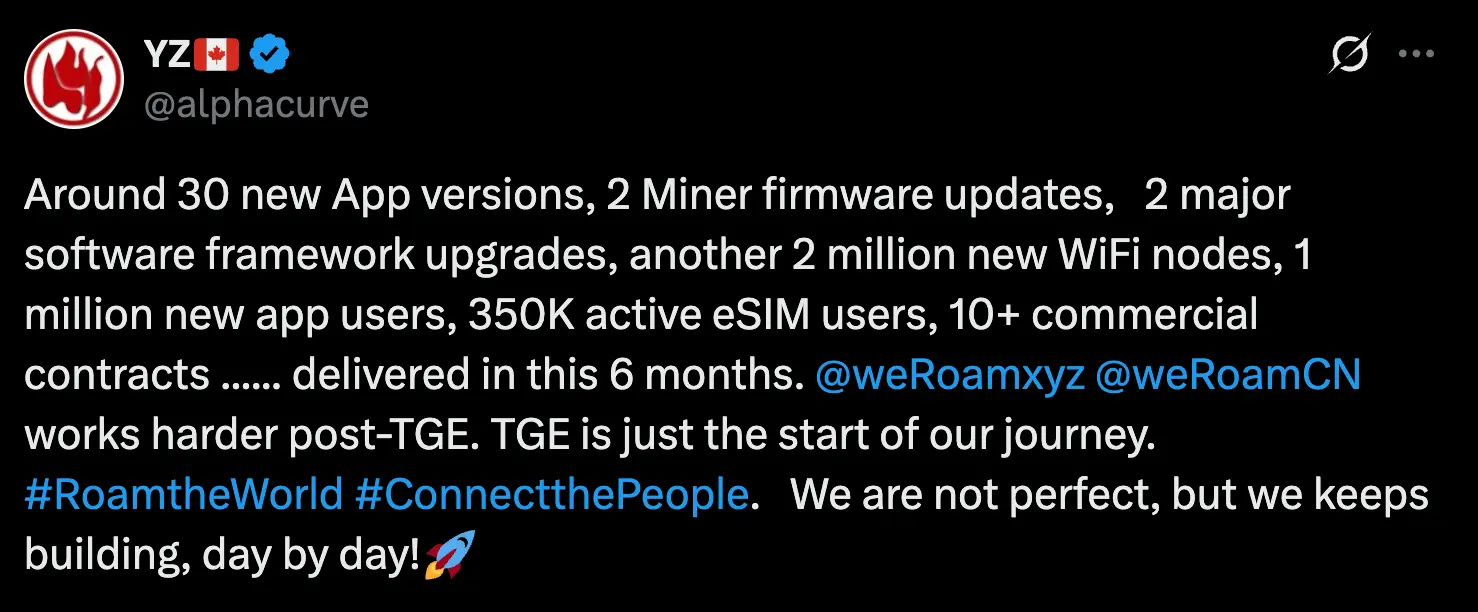
(Roam co-founder YZ tweeted a review of the team's journey since TGE: 30 version updates, 2 hardware upgrades, 2 major software architecture upgrades, 2 million new WiFi nodes, 1 million new registered users, 350,000 active eSIM users, 10 business contracts signed… TGE is just the beginning. Source: X)
From "Useful Tool" to "My World": A User-Centric Strategic Upgrade
For Roam's global community of 3 million users, the recent major update of App 2.0 is far more than just an interface beautification; it is an identity upgrade—users leap from being mere "users" of the network to becoming participants in the entire Roam ecosystem. The core of this upgrade lies in the ecological center entrance located in the middle of the bottom navigation bar.
1. From "Multiple Tools" to "Aggregated Ecosystem"
Previously, users often used Roam to:
Open the app to connect to OpenRoaming WiFi when needing internet access.
Purchase a global eSIM plan before traveling abroad.
Check in daily to accumulate points and occasionally participate in community Quest tasks to earn some extra points.
Exchange accumulated points for $ROAM in the burn pool and participate in reverse burn arbitrage.
While these functions were good, they were disjointed. Users felt more like they were using a "toolbox" rather than being part of a "community."
The 2.0 version update completely changed this. The entrance located in the center of the bottom navigation bar acts like a "gateway" for users to enter the Roam world. Here, all user actions—connecting to the network, consuming content, participating in governance, earning rewards—are interconnected and recorded under a unified digital identity.
For users, this means:
Enhanced sense of belonging: Every connection and participation adds value to their identity. This shift transforms users from passive consumers to active co-builders.
Unprecedented convenience: It eliminates the cumbersome steps of searching for functions in complex menus. Want to know what $ROAM tokens can do? Curious about recent community activities? Want to try out the new AI assistant? All answers can be unlocked with one click. This greatly lowers the threshold for exploring the ecosystem and encourages users to try exciting features they may have missed before.
2. From "Earning Points" to "Planning Digital Assets"
Recently, Roam's points rewards have also been comprehensively increased, which complements the launch of the ROAM payment function, making the user reward system more intuitive, useful, and imaginative.
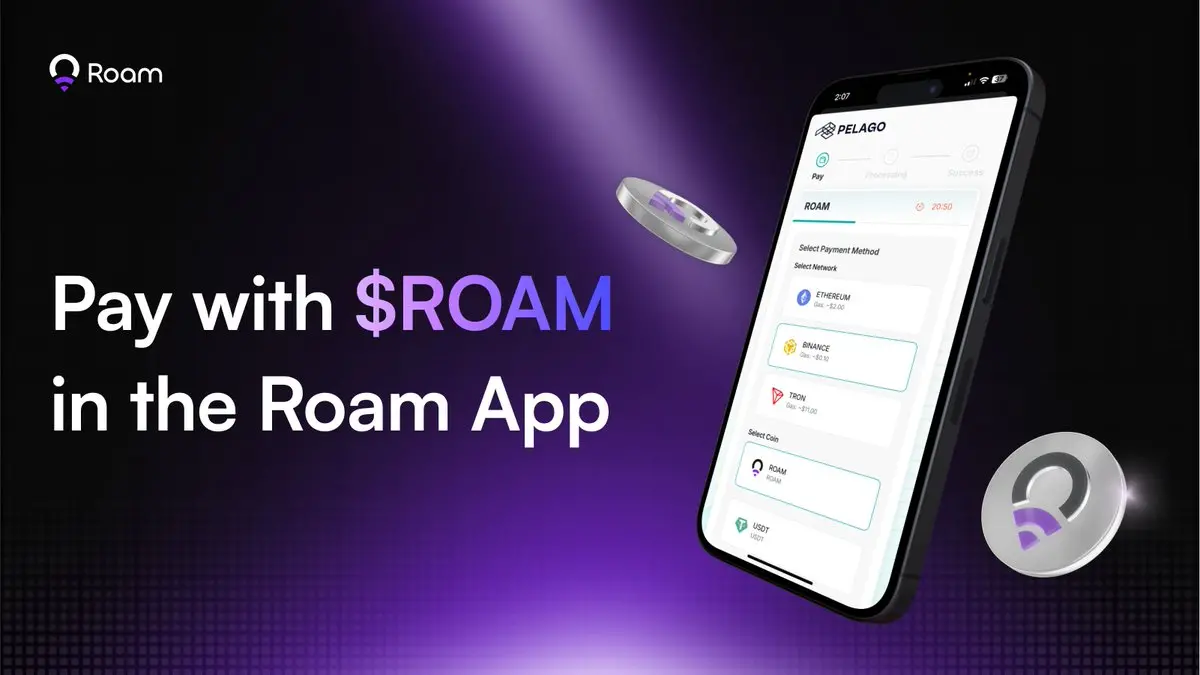
ROAM has thus become the "hard currency within the ecosystem." Tokens earned by users through contributing network resources can now be directly used to pay for eSIM plans and recharge phone bills. This instantly gives the incentives real purchasing power, forming a closed loop of "contribution-reward-consumption." This immediate feedback loop can greatly enhance users' motivation to participate in network construction.
The reward mechanisms are more diverse, catering to different user preferences. Whether users prefer stable returns (through super staking, locking, etc.), high-frequency interactions (daily check-ins, watching incentive ads), or high-value returns (participating in reverse burns to earn USDT), different types of users can find suitable ways to participate. This way, both "casual players" and "deep players" in the community can find their place and collectively strengthen the network.
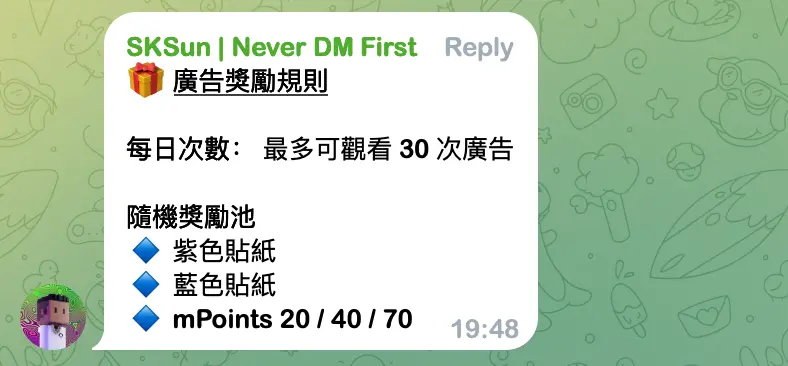
(New reward mechanism Watch to Earn: Watch 30-60 seconds of incentive ads, and upon completion, randomly receive points or epic stickers | Screenshot source: Roam Official TG Community)
More importantly, the new points system lays the foundation for future on-chain points through a deflationary mechanism and value anchoring, giving points stronger asset attributes. They can not only circulate in cross-project activities like Bitbang and Paparun but can also be expanded to more application scenarios like CDN and address-based IP services after going on-chain, truly achieving the transformation from simple points to digital assets.
3. A Leap in Community Cohesion: From "Lonely Individuals" to "Powerful Collectives"
For a distributed network with millions of nodes and billions of verification actions, community cohesion is its most valuable asset. The 2.0 update cleverly enhances this cohesion through product design.
A shared "digital community": Features like Roam Club (events, leaderboards, tasks) have been brought to the forefront, making users' contributions and rankings visible. This stimulates healthy competition and a sense of community pride, as users feel proud of their community or their position on the leaderboard.
Transparent shared mission: The new points and staking system is more transparent, allowing every node operator to clearly understand how their contributions are measured and how rewards are generated. This sense of fairness and trust is the foundation for the community's willingness to sustainably contribute their hardware over the long term.
In summary, the Roam 2.0 upgrade is far more than just functional aggregation; it is a redefinition of identity from "tool" to "ecosystem," transforming every connection and participation into value accumulation within the ecosystem, collectively building an open, inclusive, and community-built network future.
More Than an Upgrade: A Revolution in Connection and Value
The pace of progress Roam has made in the 180 days since completing its TGE is impressive; Roam has transformed the concepts in its white paper into the world's largest open wireless network. With the comprehensive upgrade of App 2.0, Roam is entering a new phase of development.
The release of App 2.0, along with the accompanying economic model upgrade, marks the project's transition from the "infrastructure construction" phase to the "ecological value capture" phase. The two core product lines—OpenRoaming WiFi and global eSIM services—have formed a good synergy: 6 million nodes provide physical layer coverage, 3 million users create network effects, and Roam eSIM, with 350,000 active users in over 160 countries, proves the viability of its business model and showcases Roam's forward-looking layout for future communications.
From the perspective of industry development timing, Roam is perfectly positioned at two key points: first, the hardware benefits brought by the iPhone 17 fully embracing eSIM, and second, the market window opened by the explosive demand from global digital nomads and cross-border business needs. But what is more noteworthy is that Roam is doing something that transcends traditional connection services—transforming user connection behaviors into AI data assets through privacy protection technology; this narrative space is much larger than mere network services.
Completing 30 iterative updates in 180 days, this pace even surpasses many Web2 teams. From hardware upgrades to architectural reconstruction, and now to economic model optimization, Roam is building a complete flywheel: more nodes → better network → more users → higher token demand → more node investment. If this closed loop can continue to operate, its network value will exhibit exponential growth.
Roam's value lies not only in technological implementation but also in validating a hypothesis: the Web3 economic model can indeed coordinate global participants to jointly build and operate physical infrastructure. While other projects are still discussing decentralization theories, Roam has already enabled 3 million users to access a truly community-built network service.
The future challenge lies in how to balance network expansion, token economics, and regulatory compliance. However, if the current momentum can be maintained, Roam is likely to become the first Web3 infrastructure project to achieve large-scale commercial use.
 Risk warning Risk warning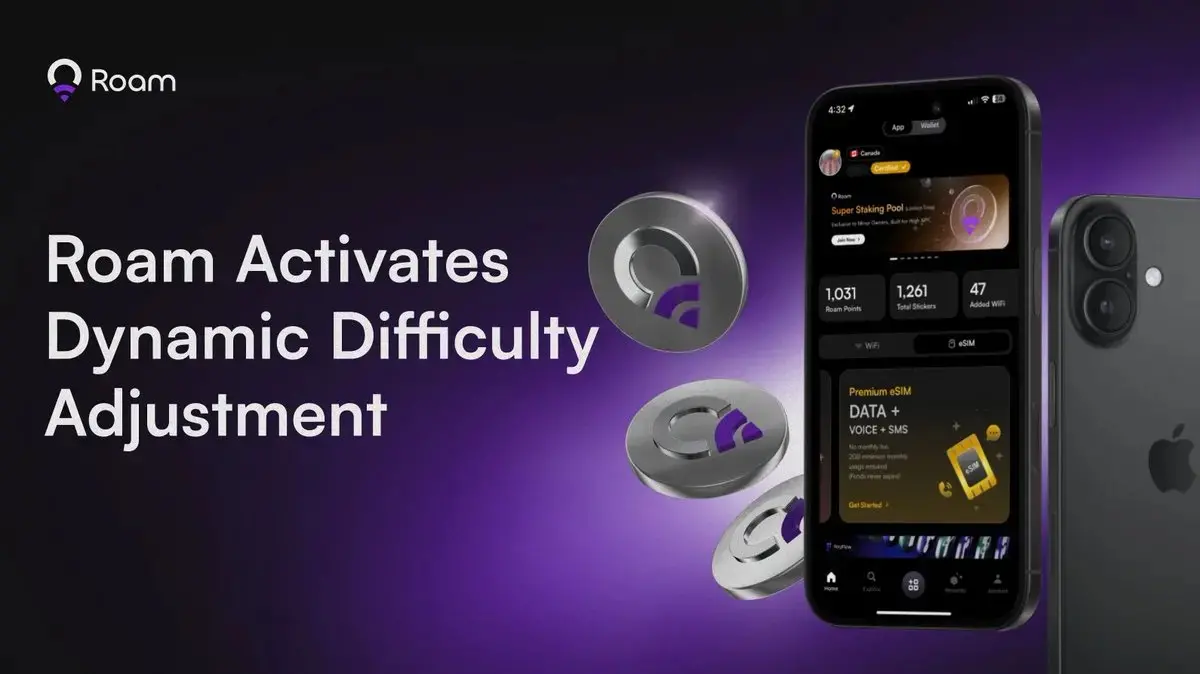

Popular articles