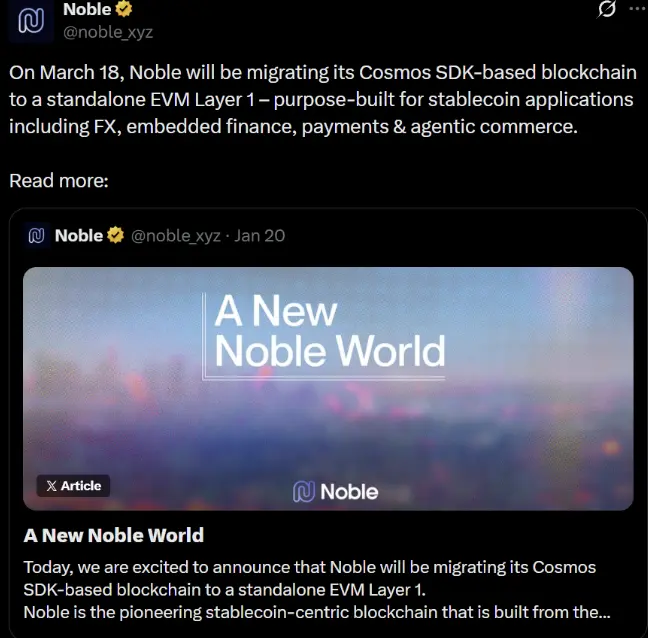
When stablecoins start to pay for the network: the new relationship between interest and fees

 Use the interest earned from stablecoin reserves as the network's "utilities." Users deposit dollars to mint stablecoins, and the funds are used to purchase safe and liquid assets, generating regularly auditable interest; this interest is not kept by the issuer but is directly paid to the orderers and node costs.
The Roller Coaster Experience of Transaction Fees
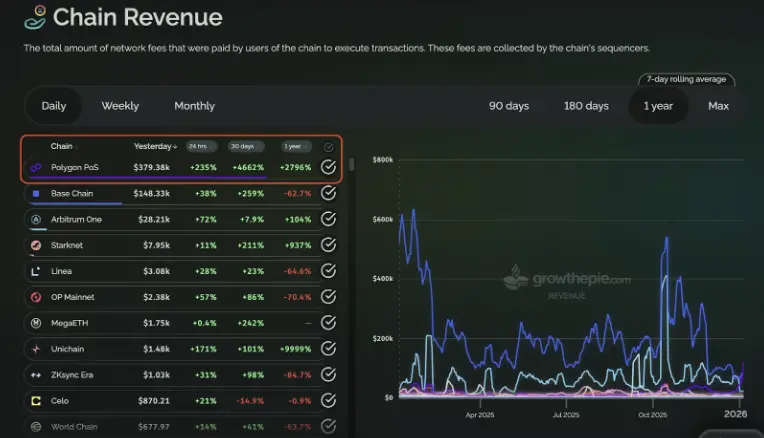
In the on-chain world, many users have experienced moments like this: yesterday, a transfer cost just a few cents, but today the same operation requires several dollars. Transaction fees are like an emotional roller coaster, often leaving people bewildered. Over the past few years, stablecoins have emerged as one of the most关注的 asset classes in such an environment—they serve fundamental functions like settlement, payment, and value storage, are the lifeblood of DeFi, and are an important entry point for external funds into the crypto world. Their market capitalization and user penetration have given them an irreplaceable status. However, behind the excitement lies fragility: many projects rely on subsidies and narratives to attract popularity in their early stages, and once the market cools down and subsidies become unsustainable, the weaknesses of their models inevitably become exposed. The most obvious issue is the volatility of transaction fees, which not only frustrates users but also makes it difficult for developers to establish robust business models and accurately estimate end users' willingness to pay.
So where is the problem, and what is the way forward?
The current misalignment is evident: stablecoins earn interest by placing reserves in off-chain U.S. Treasury bonds and money market funds; however, the costs incurred by blockchain operations—such as sorting, nodes, and data settlement—must be paid in real money on-chain. Profits are made off-chain while expenses are incurred on-chain, with no channel in between. As a result, many networks have no choice but to raise transaction fees to "support themselves," yet users and developers require a low-fee environment, creating a disparity. The data costs on the Ethereum mainnet are decreasing, and the "price increase space" is being squeezed: raising prices harms user experience, while not raising them makes it difficult to maintain operations, leading to an unsustainable situation.
A more direct approach is to treat the interest earned from stablecoin reserves as the network's "utility costs." Users deposit dollars to mint stablecoins, and the funds are used to purchase safe, highly liquid assets that periodically generate auditable interest; this interest does not remain with the issuer but is directly used to cover the operational costs of MegaETH's sorting nodes. This way, the network does not need to rely on "charging higher fees" to survive and can price services at cost, resulting in predictable, fractional Gas fees for end users. This completely overturns the traditional model: previously, it was "the more users pay, the more the network earns," but now it has shifted to "the faster the network grows, the more reserve income it generates, and the fees become more stable."
Choosing to collaborate with Ethena is also strategic. Ethena is currently the third-largest issuer of U.S. dollar stablecoins, managing over $13 billion in funds, with a solid user base in the DeFi community. This alignment of interests truly creates a positive cycle: as the network's transaction volume expands, USDm reserves increase, and interest returns become more abundant, leading to a beneficial interaction between network revenue and ecosystem growth—not relying on users to bear more costs but allowing growth itself to sustain the network. Combined with MegaETH's real-time performance and cost-based transaction fees, this provides an ideal environment for developers to create real-time interactive applications. If this model succeeds, a stable fee environment at the fractional level could turn many previously "unimaginable" high-frequency applications into reality, such as on-chain high-frequency trading, real-time game interactions, and micro-payments.
So how do we face future challenges?
First, let's look at the broader environment. The interest from stablecoins mainly comes from U.S. Treasury bonds and money market funds. When interest rates are high, the income is sufficient and can subsidize network costs; when rates are low, the income decreases, and whether low fees can still be maintained becomes a pressing issue. This reliance on external interest rates inherently carries cyclical risks, necessitating the design of a "buffer." Next, consider technology and scale: theoretically, the more transactions there are, the larger the interest pool, and the more room there is for fee reductions; however, when faced with cross-chain, high-frequency applications, and ecosystem expansion, mechanisms can more easily encounter issues, and stability must be tested. Additionally, there is the challenge of competition: USDT, USDC, and DAI all have established user bases, and even if a new model appears smarter, it requires time to educate users and build the ecosystem to gain the trust of developers and users.
Ultimately, the dramatic fluctuations in transaction fees reveal the longstanding issue of misalignment between "revenue" and "expenses." The excitement built on subsidies often does not last long. Using interest directly to "sustain the network" is an exploration of a more sustainable path: allowing stablecoins to not only handle payment settlements but also to support the network. The real test ahead is whether this design can pass the tests of transparent governance, long-term sustainability, and scalability. If it can, those high-frequency, low-cost, and user-friendly applications that have been suppressed by high fees will have a genuine opportunity to become part of everyday life.
 Risk warning Risk warning