




The End of the Crypto Gold Rush: Where is the Next Oasis When the "Dumb Money" Disappears?

 Let's review the historic moments of wealth creation together.
Original Author: IcoBeast
Original Compilation: Shenchao TechFlow
Over the past nearly ten years, a significant feature of cryptocurrency (not specifically Bitcoin) is that any ordinary person with internet access, some spare time, and about six functioning brain cells can quickly turn a small amount of money into a large fortune.
Since 2016-2017, the crypto industry has experienced three to four widespread "gold rush" cycles. The common characteristic of these cycles is that the price of some mainstream on-chain assets is extremely low, but they possess enormous compounding potential, and the value of these assets subsequently skyrockets.
Each time, the "dumbest person" you know in this industry manages to make jaw-dropping money, and then they tell their friends, who bring in more people. After all, "If that fool can turn $100 into $100,000, why can't I?"
Let's take a look back at these historic wealth creation moments…
A Historical Review
2017 - The ICO Boom (After Ethereum ICO)
In my view, this was essentially the "golden age" of the crypto industry. A new project would emerge almost every day, complete with a white paper and a cool gradient logo, even though these projects had almost no real functionality. Yet, everyone rushed to invest their ETH to get allocations. Subsequently, these tokens would go live on exchanges, and people would flock to buy the new tokens, causing prices to soar. You could make a fortune and then convert your earnings back to ETH.
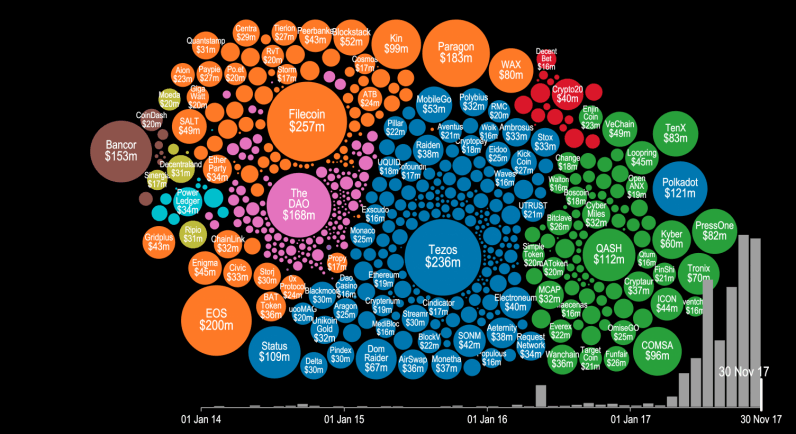
ICO Boom: The chart says it all
It was amazing. At that time, there were only about 100-200 tokens in existence, but none of them were truly usable or meaningful. The operation was simply to throw ETH into various ICO projects and then earn back a lot of money—this was essentially "free money." Everyone was trading those few fixed tokens, aiming to accumulate more ETH… the process was very straightforward. People would also share this "wealth code" with friends, who would join in. However, in the end, we all got schooled by the market, and the crypto market began to crash, leading to a two-year bear market.
2020-2021: The "Yield Farming + Food Ponzi Scheme" Craze of DeFi
I personally participated little in this wave (due to real-life matters), but its essence was the first launch of some "real" DeFi products (kicked off by the distribution of Compound's COMP token). This gave rise to various liquidity mining games and Ponzi schemes… once again, everyone rushed into a select few tokens, still aiming to maximize their ETH holdings.
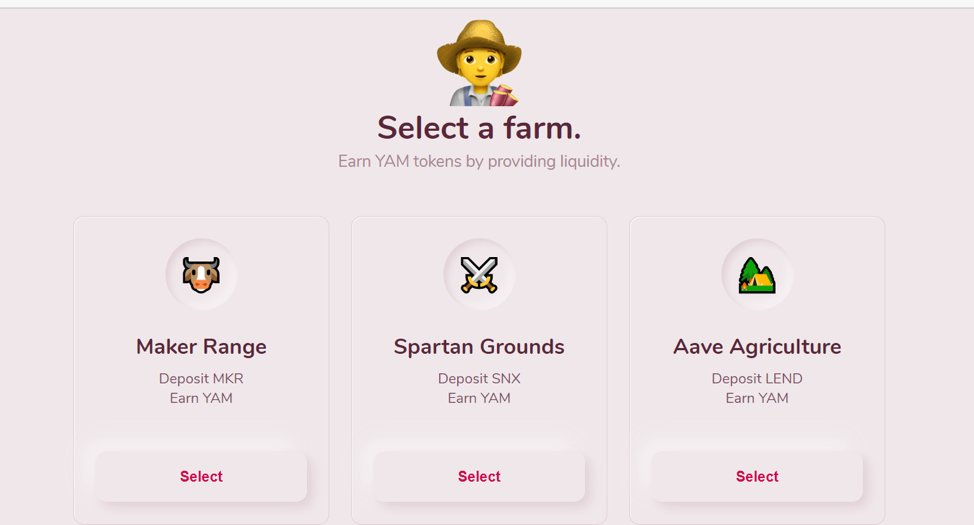
Many early crypto Twitter celebrities seized the opportunity to shine during this phase. At that time, the market attracted a lot of new capital because no one really knew how to play this game, and the tools for maximizing yields had not yet become widely available. Additionally, the price of ETH began to rise rapidly, further boosting everyone's profit and loss statements (PnL), while attracting more "speculator" funds.
2021-2022: The Crazy Era of the NFT Bubble
In the past, the pandemic brought the world to a standstill, and people received government stimulus checks while losing jobs (or businesses were forced to shut down), so they spent all day on Clubhouse and Twitter Spaces.
During this time, a group of people began minting NFTs. Among them, Bored Apes became the "kingmakers" of the industry (even though its minting time was long enough for anyone to participate). With the success of Bored Apes, the floodgates of the market were completely opened. You could mint the worst-looking image for 1 ETH and then wake up the next day to sell it for 20 ETH… and then its price would soar to 50 ETH. Everything was illogical; no one really wanted these JPEG files, and no one truly believed they were worth those outrageous prices. But everyone wanted to make money and continue playing this game.
This crazy wealth effect allowed people to flip a few images with a small amount of ETH, ultimately accumulating a large amount of ETH… almost without any skill, simply because "they were there." This clearly attracted massive attention, and NFTs quickly went mainstream. However, the bubble eventually burst, and most participants were ultimately wiped out by the market.
This wealth effect was briefly replicated during the Ordinals craze in early 2023. At that time, Bitcoin's price plummeted, and early Ordinals became a crazy "cooking" opportunity: you could quickly double a small amount of BTC into a large amount of BTC. Subsequently, Bitcoin's price experienced a parabolic surge. (And those who clung to JPEGs were ultimately "liquidated" by the market.)
January 25, 2023: The Wealth Frenzy of Meme Season
This could be said to be the longest-lasting wealth creation period in the "dumb money" cycle of cryptocurrency— the meme coin craze of ETH and Solana. Strictly speaking, it all traces back to the explosive rise of BONK after the FTX collapse at the end of 2022, but I prefer to view the true starting point as the rise of PEPE (based on ETH) in April 2023 and WIF (based on SOL) in November 2023, which opened the door to over a year of crazy token markets.
These air coins, which had no real use, no plans, and only a "vibe," saw their market caps soar to billions of dollars. Especially in the early days, you could randomly buy a thousand dollars' worth of some random token and almost guarantee that you would wake up the next day with a 10x return… and this could last for weeks.
As time went on, the game became increasingly difficult: bots became smarter, arbitrage tools more efficient, and developers' ability to cash out when "running away" grew stronger, raising the overall participation threshold. People began to withdraw money from the "casino" rather than continue pouring money in after seeing friends make $20,000 in 17 minutes with tokens like "pepefartsockinu69420." Meanwhile, new trading pairs appeared every day, allowing you to continuously accumulate more ETH or SOL through these trades.
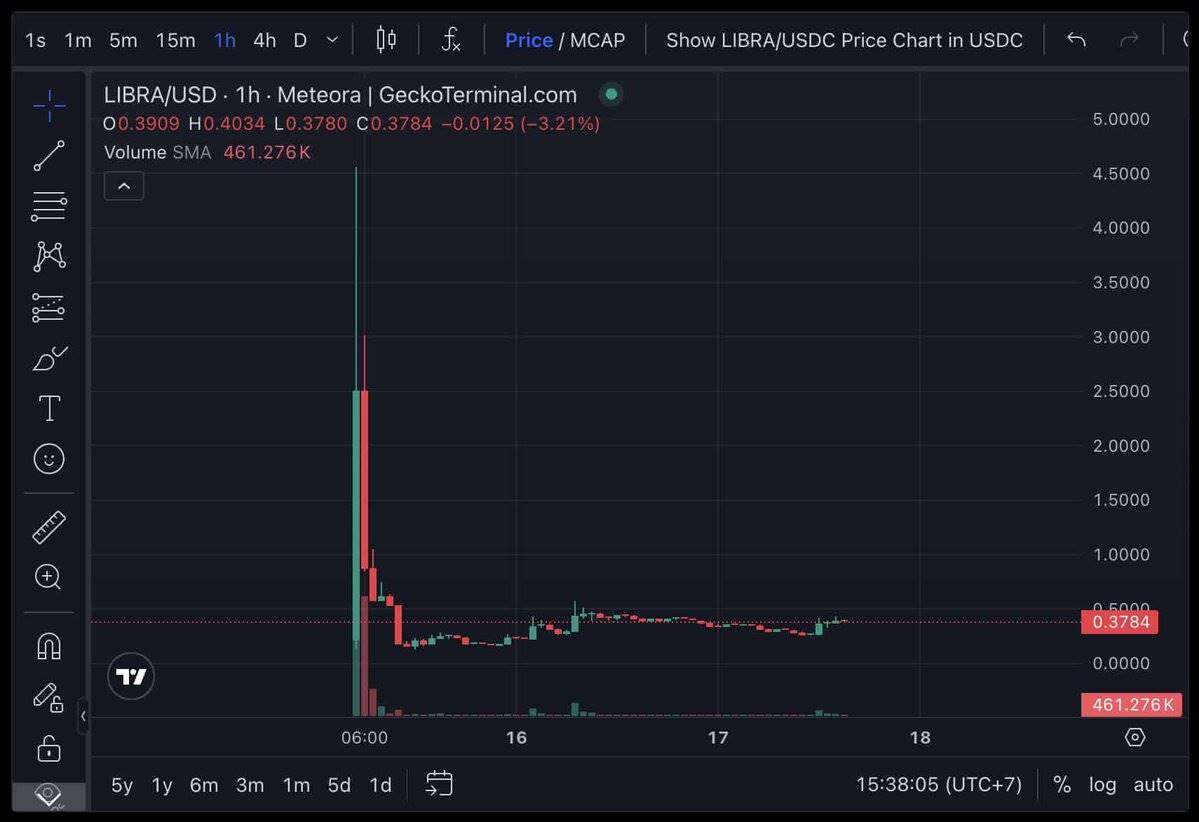
Then, the "9/11" event of meme coins occurred. TRUMP, MELANIA, and the final nail in the coffin—Hayden Davis's LIBRA. This changed the rules of the game. Everyone had a vague understanding that this game had become "cooked." When one party could steal over $100 million from the "collective pool" in a second, the game was no longer worth playing… after all, what could be crazier than the secret issuance of a token by the President of the United States, causing its market cap to soar to $70 billion FDV (Fully Diluted Valuation) overnight?
This is the situation we find ourselves in today. About nine months have passed since that "fatal blow." Although there have been some standout opportunities during this time (especially with mainstream assets performing well since April), there has been no event that could quickly multiply native tokens or mainstream assets while significantly appreciating.
To be honest, I don't know if this situation will ever repeat. NFTs? They have already been "cracked"—now there are probably only 17 people left in the world who still want to trade or flip NFTs. Meme coins? They have also been "cracked"—becoming a 24/7 token deployer is clearly safer and simpler, allowing you to profit without any risk. On-chain Ponzi schemes? Everyone basically understands them now… only those "sharks" are still playing, and you must choose your exit timing very precisely, or you will be devoured. Maybe ICOs will make a comeback? Monad is performing well. We shall see.
In the past year, we have hardly seen any "dumb money" driven simple wealth creation opportunities. That's why everyone is so angry. They have become accustomed to always catching a wave of such trends, while in the past nine months, we have only seen desolation (unless you held a lot of mainstream assets, especially Bitcoin).
Recently, I mentioned on my timeline that the current on-chain offerings haven't particularly inspired me; much of the content feels somewhat outdated. However, some teams building interesting "new" things have reached out to me, and I plan to explore their prototypes in depth and document my testing and findings (of course, there will also be plenty of updates related to Kalshi crypto).
One of the teams is @zigchain, who hopes to sponsor this article—this is actually something I intended to write weeks ago.
They are building a platform described as an on-chain version of "Wall Street," offering tokenized RWA (Real World Assets) yield products. These products aim to allow ordinary users to access higher-yield investment opportunities with a lower capital threshold, no longer limited to the traditionally high barriers for retail investors.
While I am optimistic about RWA in the long term (such as perpetual contracts and tokenized stocks), I generally remain skeptical about the RWA-related projects currently emerging in the market. However, the @zigchain team claims that their first application (Zignaly) already has over 400,000 real users, so I plan to try it out personally and see how their product performs.
As for whether RWA products can bring us the extreme wealth creation opportunities we have been missing, who knows? But I am ready to return to the "theoretical trenches" and try new things again, sharing my experiences. It has been too long since we had such exploratory content; we need more content that sparks interest and curiosity to appear on the timeline.
If you've read this far, thank you for your patience. I truly appreciate it— I still believe that one of the coolest things in the world is that there are a group of people online willing to take the time to read what I write. I hope this article brings you some value (whether for entertainment or otherwise), and I will soon share more content with everyone.
 Risk warning
 Risk warning