What is the key to competition in crypto banking?
 Core Viewpoint

 Digital banks, crypto cards, wallets, super apps, and DeFi protocols are all converging towards the same goal: to become the primary gateway for your savings, spending, earning, and transferring in the new era.
Author: Pink Brains
Compiled by: Jiahua, ChainCatcher
Market Landscape
Ask ten cryptocurrency users what a digital bank is, and you might get the same answer: a card that allows you to spend stablecoins. Ask ten developers, and the answers will quickly diverge. Some are developing non-custodial wallets with Visa payment functionality; others are forking Aave and calling it a savings account; and a few are seeking to obtain full banking licenses.
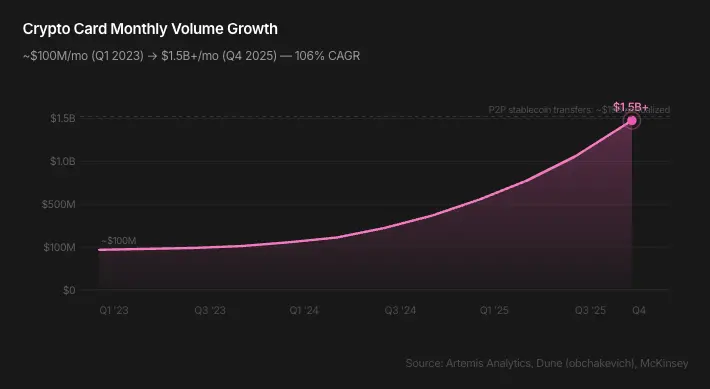
The monthly transaction volume of cryptocurrency cards has grown from about $100 million at the beginning of 2023 to over $1.5 billion by the end of 2025 (a compound annual growth rate of 106%). The annualized scale of the market now exceeds $18 billion. By 2025, the spending on bank cards linked to stablecoins is expected to reach $4.5 billion, a year-on-year increase of 673%.
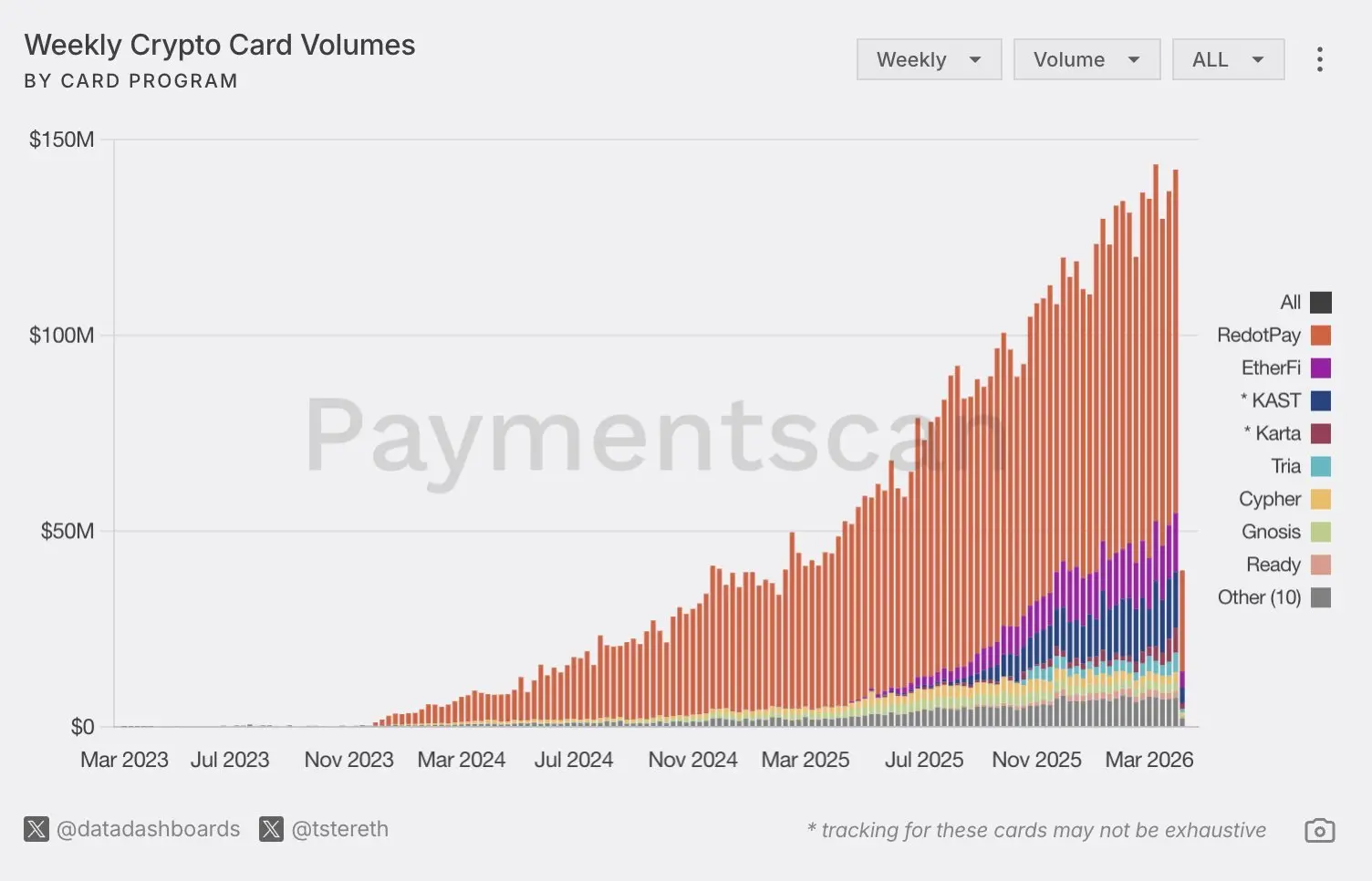
But let's see who is actually handling this transaction volume. On-chain bank card data shows that a custodian platform based in Asia, RedotPay, dominates 60% of the market share, with a transaction volume approximately four times that of the next 13 competitors combined. In contrast, those DeFi-native, self-custodied digital banks appear dim in the transaction volume charts.
However, the deeper story is that crypto-friendly giants are converging on the same path. Between December 2025 and March 2026:
- Coinbase applied for a national trust license
- NuBank received conditional OCC (Office of the Comptroller of the Currency) approval for a national bank
- PayPal applied to create PayPal Bank
- Revolut obtained a full UK banking license and is seeking a US license
- Kraken became the first crypto company to have a Federal Reserve master account
- 11 companies applied for OCC trust bank licenses within 83 days, including: Circle, Ripple, BitGo, Paxos, Fidelity, Bridge, Crypto.com, Morgan Stanley, Payoneer, Zerohash, Protego
More than 50 crypto digital banks have gone live. It is expected that by 2026, the global digital banking market will reach $552 billion (according to The Business Research Company data).
We attempt to outline the landscape of digital banking—not just who is developing what, but who has a viable economic model to survive.
Core Conflicts
Two central conflicts shape the competitive landscape of digital banking.
The first conflict is economic. 76% of traditional digital banks are unprofitable. Those that succeed (Nubank, Revolut, SoFi) do not achieve profitability through card spending but through loan books and net interest income. Fees are merely a stepping stone; credit is the real core business.
Now, crypto digital banks are entering the competition with fees and cash back, which is precisely the revenue model that led to the failure of the first generation of fintech companies. Stablecoins exacerbate the situation: they compress forex profit margins to near zero.
The second conflict concerns user choice. The crypto community praises self-cust
 Risk warning