MYBX: Building Web 4.0 financial infrastructure beyond cryptocurrency exchanges (SocialFi × PayFi × AI-driven trading)

 Say goodbye to traditional exchanges. MYBX brings together four major engines: "Social + Payment + Trading + AI" to comprehensively create the next-generation Web 4.0 intelligent financial operating system. Click to explore a new gateway to wealth.
As the industry shifts from the ownership model of Web3 to the AI-driven economy of Web4.0, a new generation of platforms is emerging—focused not only on decentralization but also on intelligent, autonomous, and interconnected financial systems.
In an increasingly homogenized centralized exchange (CEX) market—where spot trading, derivatives, and token listings have become standard—long-term differentiated competition is no longer defined solely by trading functionalities.
Instead, the next wave of winners will be determined by one key question:
Can a platform integrate user traffic, payments, trading, and on-chain infrastructure into a single intelligent financial system?
MYBX seems to be built for this future.
From Exchange to Web4.0 Financial Infrastructure
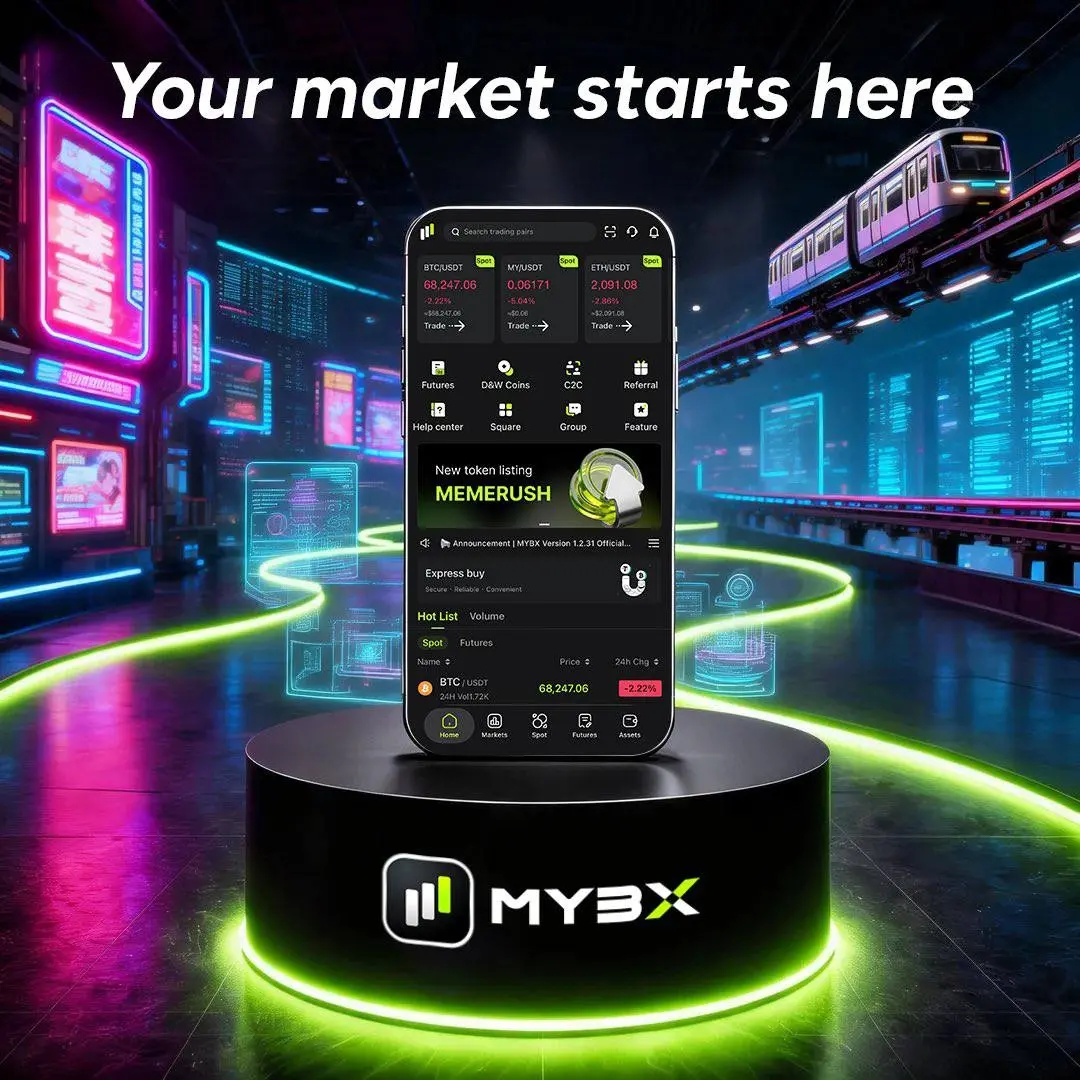
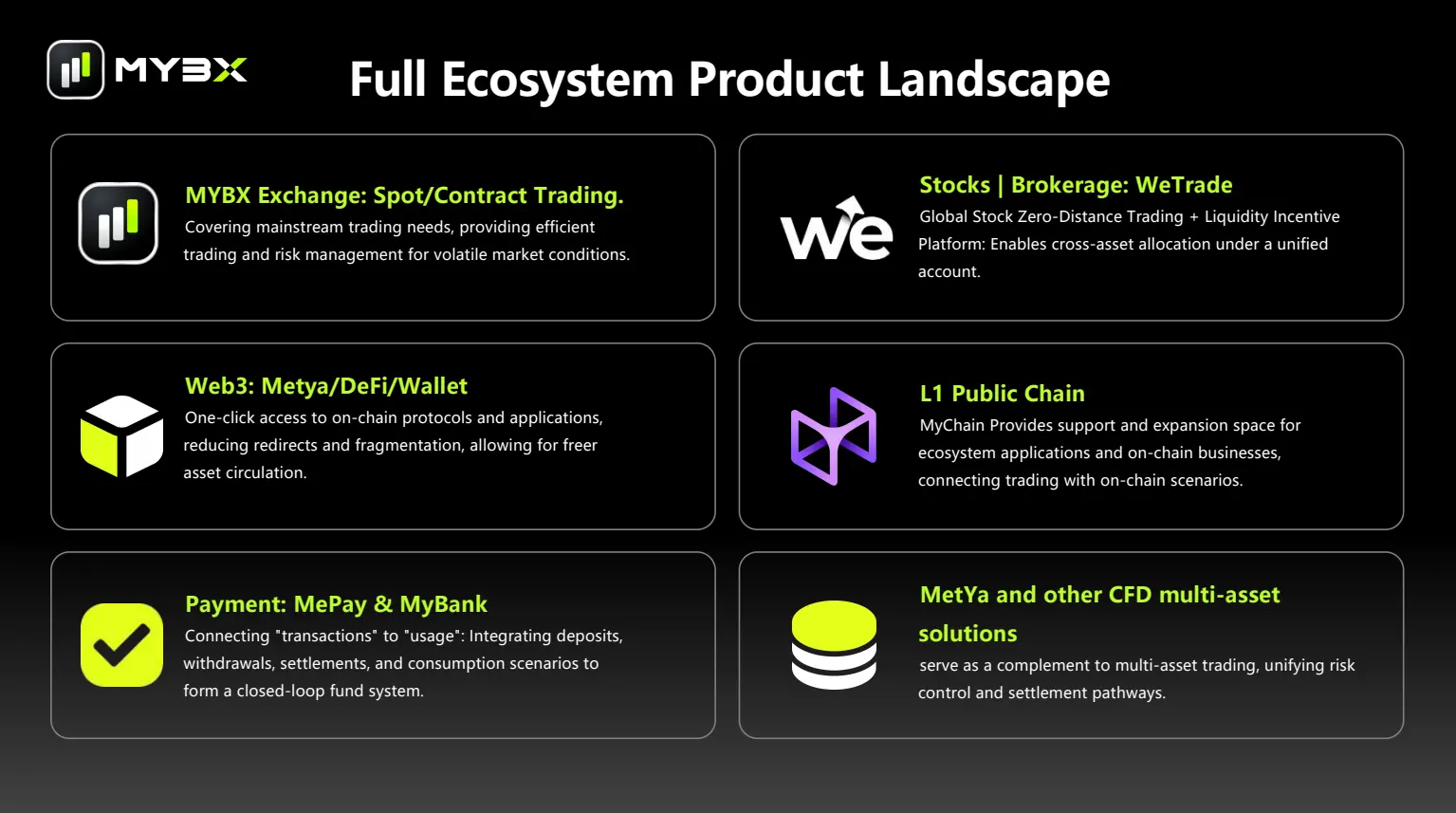
MYBX positions itself as a next-generation global digital asset trading platform, deeply embedded within the broader MetYa ecosystem.
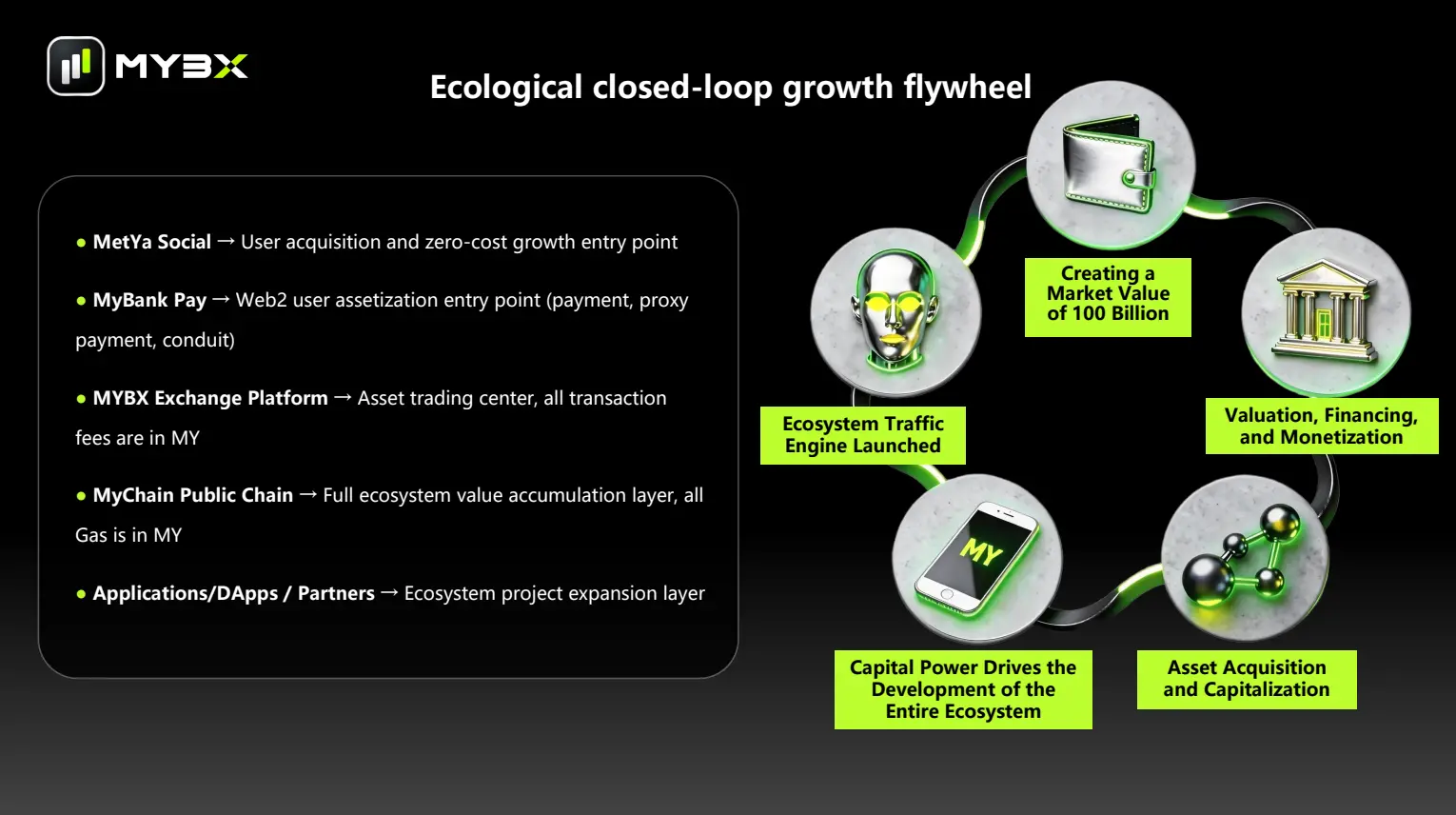
This ecosystem is divided into five core layers:
Social (SocialFi): User acquisition and interaction
Payments (PayFi): Funding entry and financial interaction
Exchange: Liquidity and price discovery
Chain: Value settlement and ownership layer
DApps & Partners: Ecosystem expansion
At the token level:
MY serves as the fuel for the ecosystem
MYS (MetYa Shares) represents long-term value capture
This architecture reflects a profound shift aligned with the Web4.0 concept:
Web4.0 is increasingly defined as an era where AI agents serve as economic participants, where interactions are no longer just between people but also involve financial activities between machines.
At the same time, the financial system is evolving towards an AI-driven, autonomously executing layer, where AI agents can independently engage in trading, payments, and capital allocation.
MYBX is positioning itself within this transformation—moving from a single platform to a financial operating system.
Closed-loop Financial System: SocialFi × PayFi × Exchange × Chain
Unlike traditional exchanges that compete merely on liquidity and token listings, MYBX is building a closed-loop financial architecture:
Social traffic is converted into user and intent signals
PayFi infrastructure transforms users into financial participants
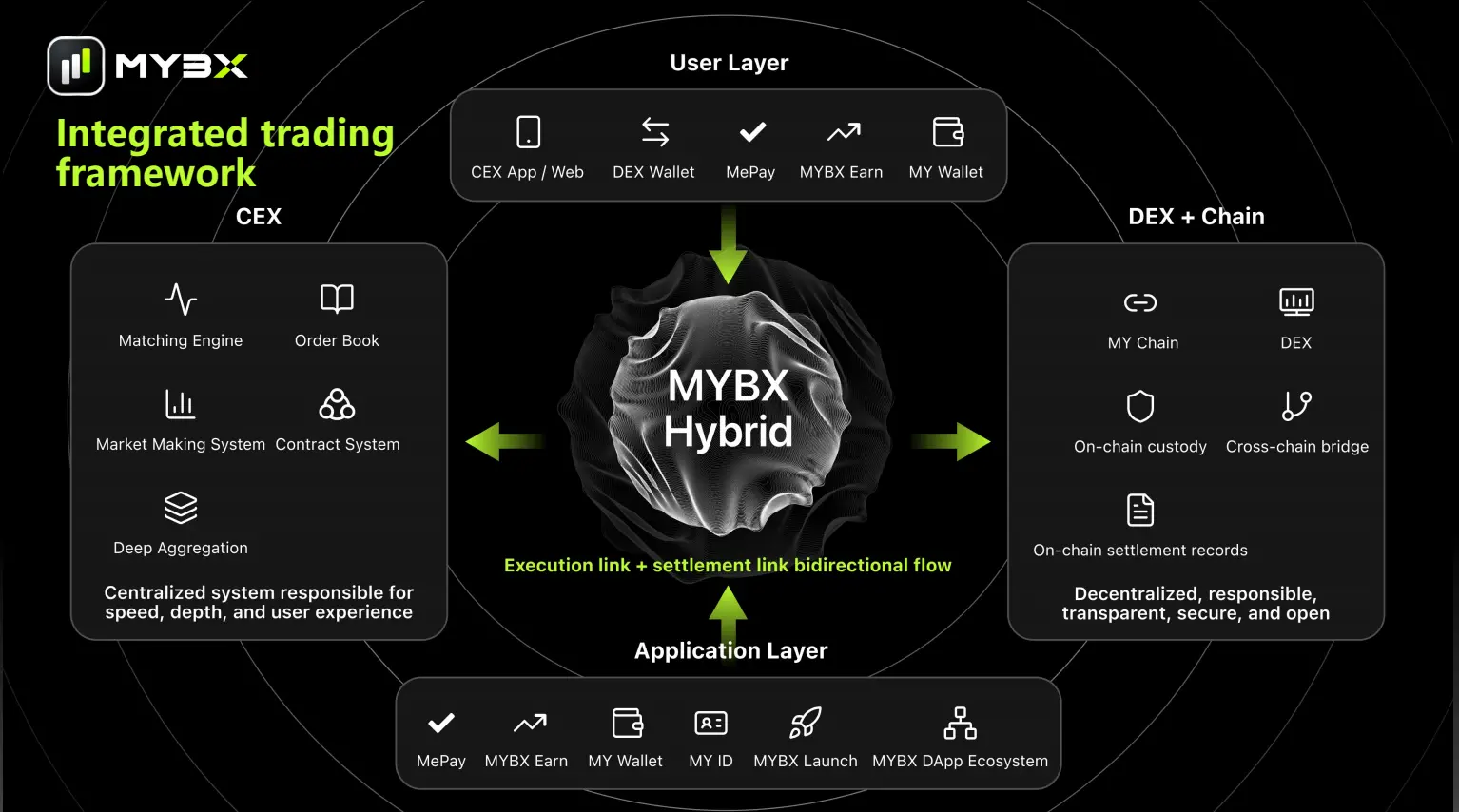
The trading layer provides liquidity and execution power
The on-chain system ensures value settlement and retention
This reflects a broader trend in the industry towards a unified financial experience, where fragmented applications are replaced by highly integrated platforms.
In this model:
Users do not need to switch back and forth between various applications.
The financial system will operate around the user.

Product Layer: Expanding Beyond Trading
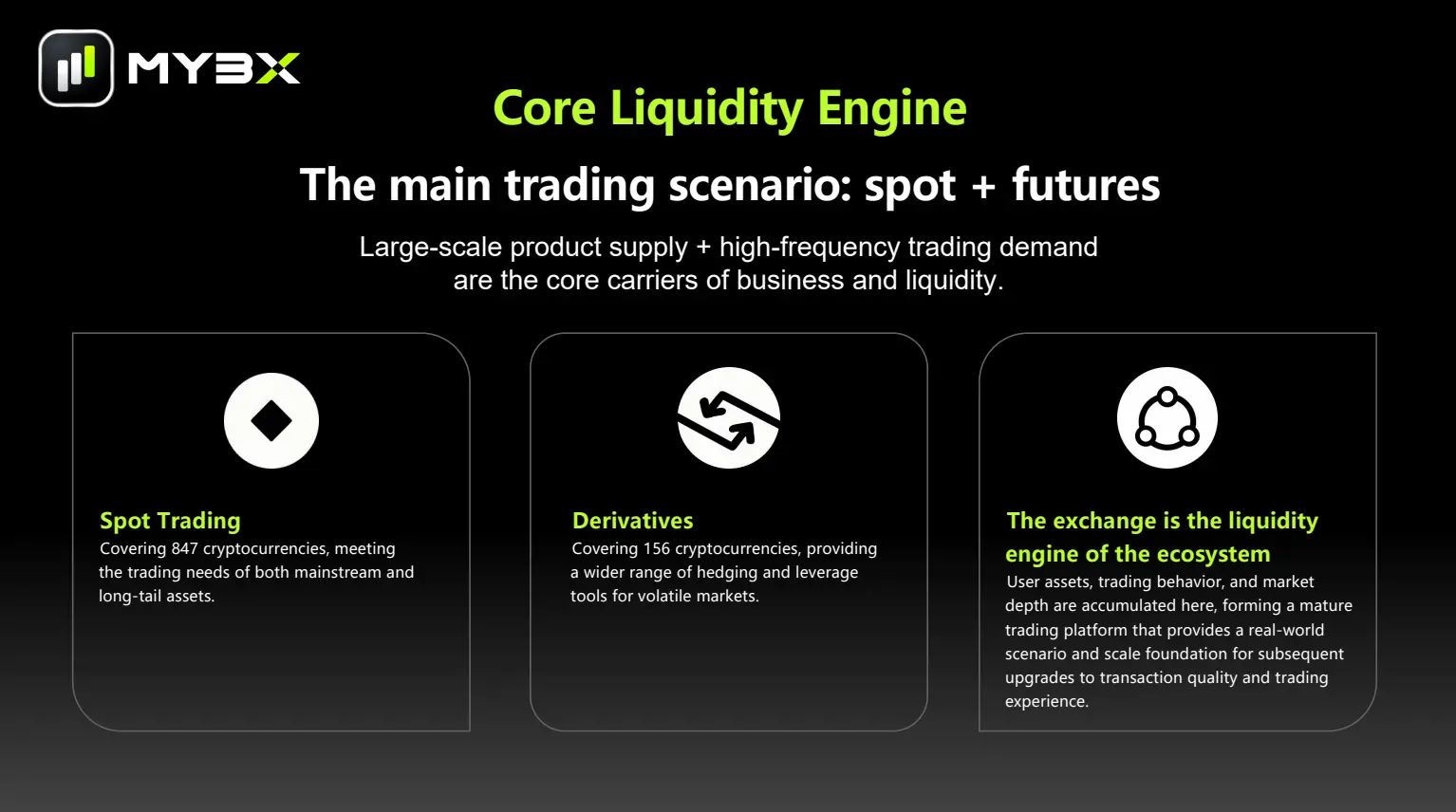
MYBX currently supports:
Spot trading
Contracts / Derivatives
Asset management tools
Advanced trading infrastructure
Beyond this, it is expanding into the following areas:
Alpha mining mechanisms
RWA (Real World Assets) zones
Event-driven trading markets (such as prediction markets)
Genesis and Launch plans
These features mark a shift:
From "trading platform" → to "participatory ecosystem"
Its goal is not only to increase trading volume but also to enhance:
User engagement
Asset utility
Ecosystem stickiness
Growth Metrics and Market Positioning
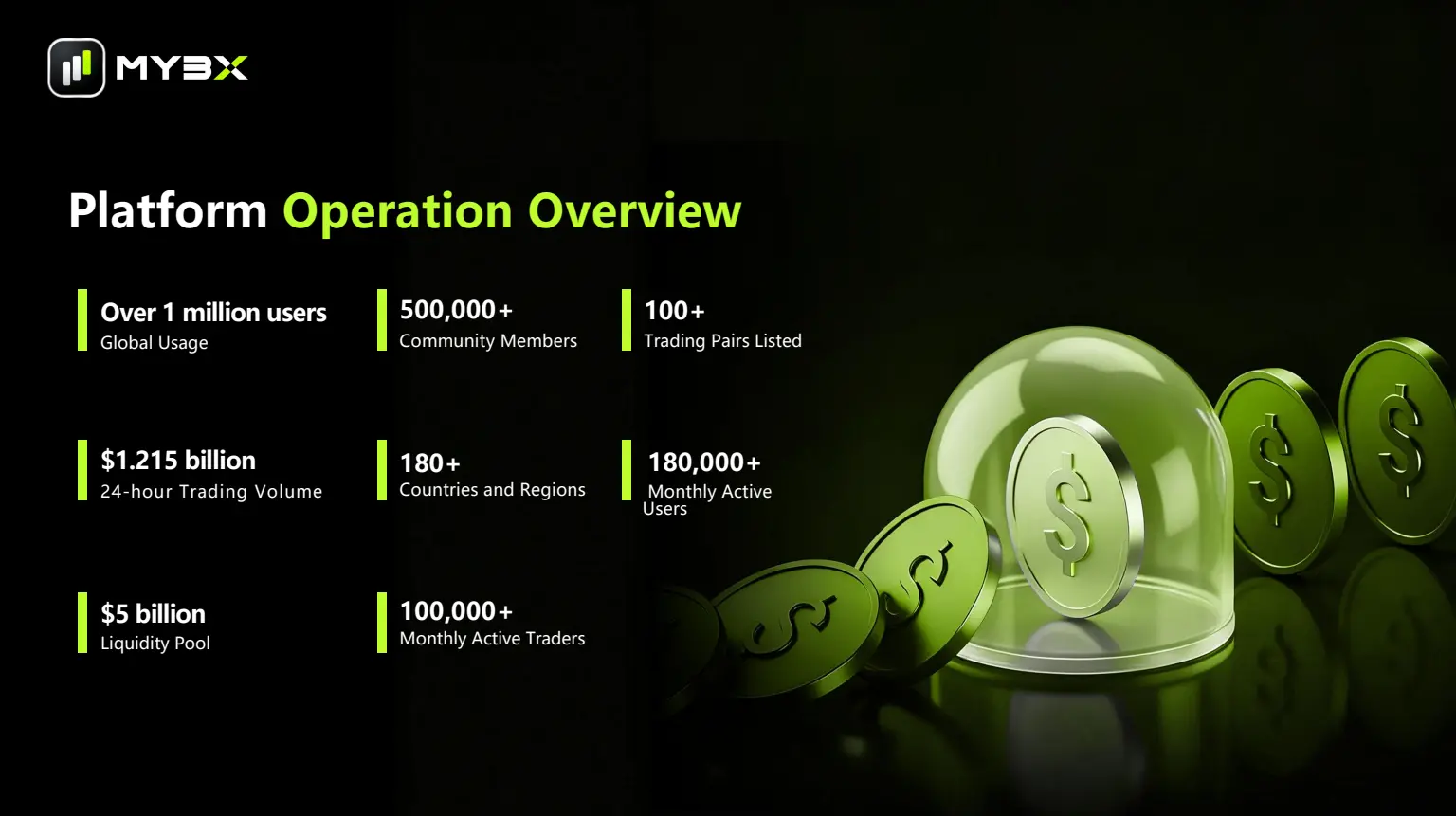
According to data disclosed by the platform, MYBX currently performs as follows:
1 million+ global users
100,000+ monthly active traders
100+ trading pairs
Business coverage in 180+ countries/regions
$5 billion liquidity pool
$1.2 billion+ average daily trading volume
Although these are self-reported figures, the core signal lies in the platform's expansion approach:
MYBX is not building in the model of a niche exchange.
It is constructing a global financial infrastructure layer.
Beyond Token Listings: Distribution and Growth Engine
MYBX positions itself not just as a token listing venue; it also provides:
Compliance review
Market-making coordination
Joint marketing campaigns
Traffic and customer acquisition support
Launch and asset distribution systems
Through initiatives like the "MYBX Gold Alliance" and ecosystem-wide promotional activities, project teams can gain:
Liquidity + Asset distribution + Narrative amplification
This hybrid model combines:
Exchange + Launchpad + Growth infrastructure
Global Expansion and Ecosystem Connectivity
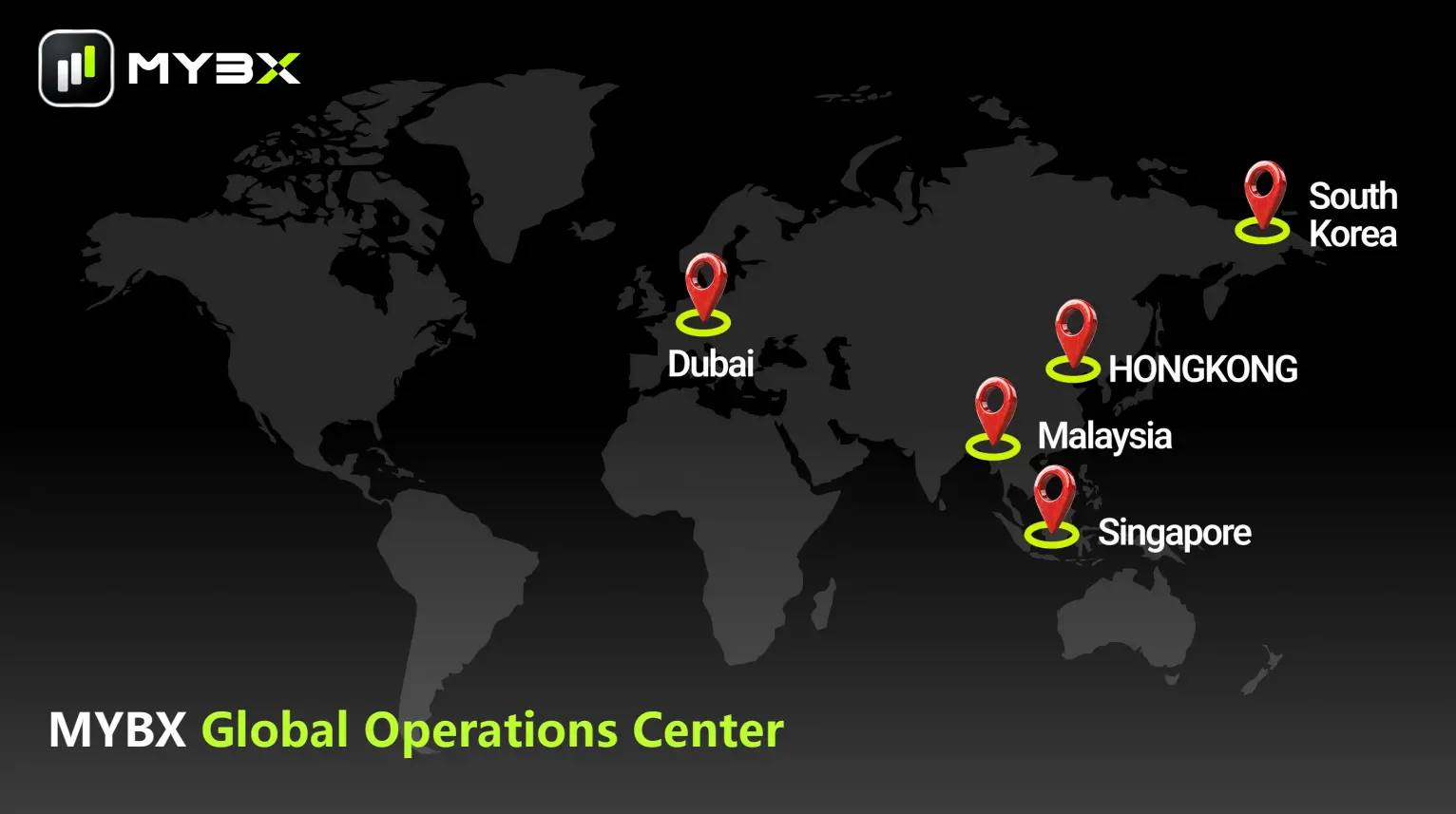
MYBX has established localized operations in the following regions:
Singapore
Malaysia
Hong Kong
South Korea
It is also expanding into the following regions:
Taiwan, Turkey, Dubai, Japan, the United States, France, Nigeria, and Australia.
The platform has also announced:
20+ ecosystem partners
800+ media partnerships
A global KOL distribution network
Meanwhile, MYBX is actively connecting with mainstream Web3 infrastructure ecosystems, including:
LayerZero, zkSync, Starknet, Celestia, EigenLayer, Blast, Friend.Tech, BitTap, etc.
This integrates MYBX into a broader, interoperable financial network rather than being an isolated exchange island.
Web4.0 Argument: From Single Platform to Intelligent Financial System
The core argument behind MYBX is not about "how to build a better exchange."
Rather, it aims to answer a grander question:
Can the financial system evolve from fragmented tools into an intelligent, AI-driven closed-loop infrastructure?
In the Web4.0 era:
AI agents act as users
Payments become programmable
Finance becomes seamlessly embedded
Infrastructure becomes invisible
The entire industry has been moving in this direction:
Towards embedded finance
Towards AI-assisted decision-making
Towards frictionless user experiences
MYBX is closely aligning itself with this trend.
Conclusion: A New Entry Point for Web4.0 Finance
For the entire industry, the true significance of MYBX lies not in its current trading volume.
But in whether its model can prove that combining the following points:
Social-driven customer acquisition (SocialFi)
Payment infrastructure (PayFi)
Exchange liquidity
On-chain settlement
Can surpass traditional exchange architectures.
Because if this model works:
The future of crypto platforms will no longer be merely exchanges.
They will become the financial operating systems of the Web4.0 economy.
**
 Risk warning


Popular articles