Huang Renxun's dramatic "rescue" of the South Korean stock market
 Core Viewpoint
 The entire industry supply chain—from wafers to packaging to silicon photonics... everything is in short supply due to such high demand. This situation will last for several years.
Author: Su Yang
Editor: Xu Qingyang
On June 5, the South Korean stock market experienced a "Black Friday," with the KOSPI index closing down 5.54%. After the market opened on June 8, the intraday decline once expanded to over 8%, prompting the exchange to trigger a circuit breaker, with both Samsung and SK Hynix dropping nearly 10%.
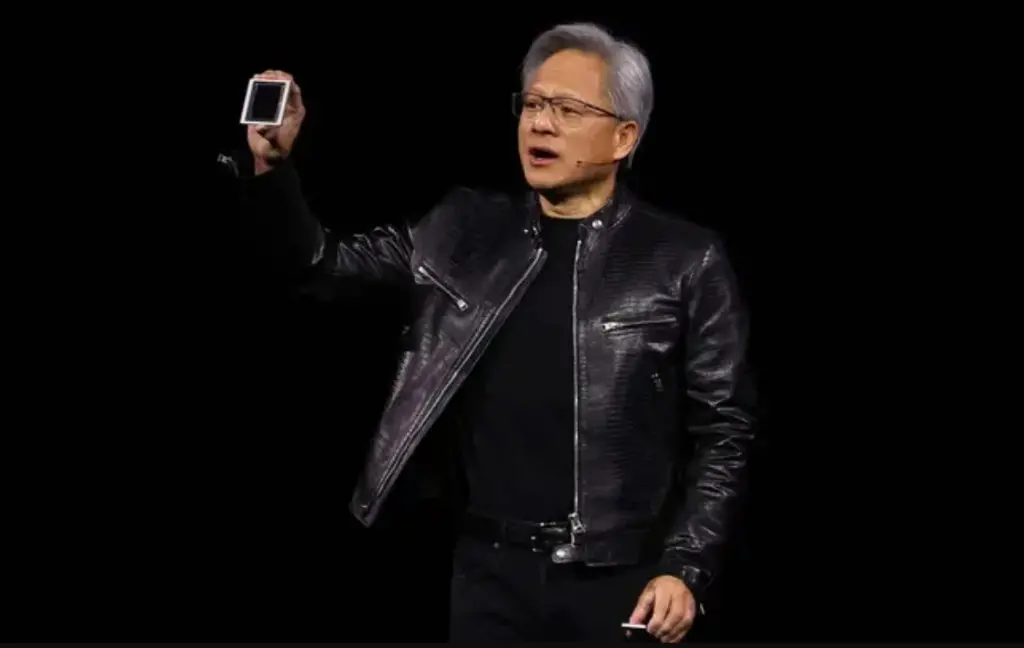
Amidst the market turmoil, Jensen Huang's visit dramatically took on the role of "market savior."
Previously, on the evening of June 7, local time in South Korea, Jensen Huang held a "dinner meeting" with SK Group Chairman Chey Tae-won, SK Hynix CEO Lee Seok-hee, and others.
After the dinner, Huang confirmed to the media present that NVIDIA's newly launched Vera CPU would use SK Hynix DRAM; both parties are preparing for "large-scale cooperation" in the second half of this year and next year; regarding the current shortage of memory chips, he believes it will last for several years.
Subsequently, NVIDIA and SK Hynix officially announced a multi-year technical cooperation agreement, involving AI supercomputers extending to robotics, digital twins, and semiconductor manufacturing.
Huang even directly endorsed the stocks at the press conference, stating, "If you are a shareholder of an AI company, you should be happy; their prices are very low right now."
01 Locking in SK Hynix Memory
Vera is NVIDIA's first dedicated CPU for data centers, facing competitors including Intel's Xeon product line, AMD's Epyc chips, and self-developed projects from large cloud service providers like Amazon Graviton.
In this new battlefield, NVIDIA has anchored its memory supply with SK Hynix from the very beginning.
On June 7, NVIDIA and SK Hynix officially announced the establishment of a multi-year technical partnership to jointly develop the next generation of memory that aligns with NVIDIA's AI infrastructure roadmap.
It is understood that the cooperation covers a series of personal and cloud product lines, including NVIDIA's Vera Rubin AI supercomputer, Vera CPU, PCs equipped with RTX Spark, and the Jetson Thor robotic computing platform.
The announcement stated that the cooperation aims to ensure the supply of advanced memory to address the long development cycles, complex manufacturing processes, and high capital investment of such products, thereby supporting the ongoing construction of global AI factories.
The announcement also listed that SK Hynix will expand into several new markets that NVIDIA is pioneering, including AI infrastructure, personal AI, and physical AI.
02 AI Feeding Back into Chip Manufacturing
In addition to supplying memory, SK Hynix has begun to apply NVIDIA's AI technology to its chip design and manufacturing processes.
Similar collaborations have previously been implemented at TSMC, with "computational lithography" being the most typical example.
According to the announcement, SK Hynix is using NVIDIA's CUDA-X libraries and AI to accelerate semiconductor simulations, covering technical computer-aided design (TCAD) and computational lithography processes.
Both parties are also promoting the extension of these tools into the semiconductor electronic design automation (EDA) and simulation ecosystem, paving the way for trilateral cooperation among chip manufacturers, NVIDIA, and EDA software suppliers.
This means that the cooperation is no longer limited to SK Hynix's internal use but is exploring a model that can be extended to the entire semiconductor industry.
In the manufacturing segment, SK Hynix is advancing the development of digital twin capabilities for its wafer fabs, aiming for fully autonomous factory operations. This work is based on NVIDIA's Omniverse platform. With the help of the Omniverse library and OpenUSD processes, SK Hynix can build 3D factory scenes for visualizing, simulating, and optimizing complex semiconductor manufacturing environments.
At the factory operation level, these digital twin capabilities can also connect to NVIDIA's cuOpt decision optimization engine and Metropolis platform to schedule autonomous mobile robots and other assets within the wafer fab.
The announcement also revealed that the two companies are exploring ways to integrate digital twins with existing traditional software and AI workflows, allowing AI systems to reason based on wafer fab data, automatically execute tasks, and improve manufacturing decisions.
03 Laying the Groundwork Six Months in Advance
In October 2025, NVIDIA and SK Hynix announced a large-scale infrastructure collaboration.
At that time, SK Group was building an AI factory equipped with over 50,000 NVIDIA GPUs, with the first phase planned for completion by the end of 2027. Once completed, this is expected to become one of the largest AI factories in South Korea.
The factory will adopt a "GPU as a service" model, open to subsidiaries of SK Group and external organizations, aiming to accelerate the digital transformation and industrial innovation of South Korea's industries.
SK Telecom is also taking on specific deployment tasks.
As NVIDIA's cloud partner, SK Telecom plans to use NVIDIA RTX PRO 6000 Blackwell server GPUs to build an industrial AI cloud in Asia, with an initial deployment scale of over 2,000 GPUs, specifically running Omniverse workloads to provide computing power support for SK Hynix's semiconductor manufacturing, wafer fab digital twins, and internal AI agents.
During his visit to South Korea, Huang also revealed that he is in discussions with telecommunications companies, as future AI will utilize telecommunications networks. This aligns with SK Telecom's direction of participation in the collaboration.
04 Three Companies Share HBM4 Orders
Although NVIDIA and SK Hynix have signed a multi-year technical cooperation agreement, NVIDIA has not put all its eggs in one basket regarding HBM4 supply.
Upon arriving in Seoul, Huang made it clear to reporters: "All three suppliers have been qualified. All three suppliers are in production, and they are competing to support Vera Rubin."
These three suppliers correspond to Samsung Electronics, SK Hynix, and Micron Technology.
In his keynote speech at the Taipei Computer Show, Huang confirmed that Vera Rubin is in full production, with plans for delivery in the third quarter of this year. This system is built around NVIDIA's Vera CPU and Rubin graphics core cluster, with each server rack system paired with TB-level HBM4 memory.
From the actual progress of HBM4, SK Hynix is still in the lead.
Reuters reported last September that SK Hynix had completed internal certification of HBM4 chips and established a production system for customers, aiming to prepare for mass production of 12-layer HBM4 products in the second half of 2025. Meritz Securities senior analyst Kim Sunwoo predicted at that time that, thanks to early supply to key customers and the resulting first-mover advantage, SK Hynix's HBM market share in 2026 would remain just above 60%.
05 Chip Shortage Will Last for Years
The situation of having three suppliers for HBM4 does not mean that supply pressure will ease.
After the dinner on Sunday, Huang provided a rather pessimistic assessment. He told the media present that the shortage of memory chips will not end soon. "The entire industry supply chain—from wafers to packaging to silicon photonics… everything is in shortage because the demand is so high. This situation will last for years."
The background of this statement is the almost endless consumption of advanced memory due to the construction of global AI factories.
The shortage Huang refers to is not about a specific material but rather that nearly every link in the industry chain is under supply pressure. NVIDIA's launch of Vera Rubin, promotion of AI factories, and entry into personal AI and physical AI fields are all raising the demand for memory. This is also why he said that all three HBM4 suppliers are competing to support Vera Rubin.
No one wants to fall behind in a situation of supply shortage.
During this trip to South Korea, while SK Group was a focus, it was not the entirety of Huang's agenda. Upon arrival, he revealed that he had arranged meetings with Hyundai Motor, LG, SK, Samsung, and Naver. He also disclosed that NVIDIA is actively recruiting personnel for its new R&D center in South Korea. From these movements, it appears that NVIDIA is systematically deepening its connections with the entire South Korean tech industry, with SK Group being a key part, but not the only one.

 Risk warning