Money Frontier 2026 Countdown 7 Days, Quick Overview of Summit Highlights

 Money Frontier 2026 Hong Kong Summit: Focusing on the real changes in the market reshaped by Web3 and AI, security challenges, and new opportunities in computing power and electricity, gathering industry leaders to share practical insights and executable judgments.
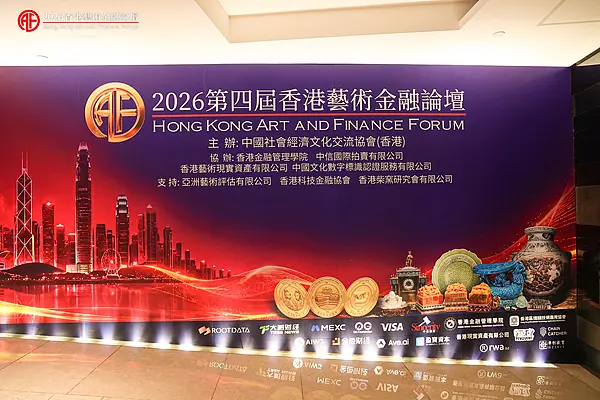
Money Frontier 2026 will be held at the Hong Kong Hoho Hotel from July 27 to 28, gathering leading companies in the industry, prominent platforms, investors, policy researchers, and frontline operators to share real observations and practical experiences from the market, products, and industry.
The summit will not discuss the macro trends of Web3 and AI, but will focus on the specific changes that have already occurred and are reshaping the industry, helping participants to see the new market structure clearly, understand how opportunities are formed, where risks lie, and establish executable judgments.
As the public market and the crypto market accelerate their convergence, why are funding prices becoming even more inconsistent? As traditional high-return opportunities gradually disappear, where can investors still find risk-controlled opportunities? When AI leaders are difficult to participate in or are overvalued, have ordinary investors really missed this round of opportunities?
Agenda Highlights Preview
Highlight 1: Latest Regulatory Policy Dynamics
What to watch next for the U.S. national strategic Bitcoin reserve?
The Bitcoin Policy Institute, which has long been involved in U.S. Bitcoin policy research and advocacy, will share the latest developments regarding the U.S. strategic Bitcoin reserve and related policies. This organization has been conducting Bitcoin research and public policy initiatives aimed at policymakers and continues to publish research related to strategic reserves.
What is noteworthy is not just whether the Bitcoin bill will pass, but how the strategic reserve will advance through institutional pathways, where the assets will come from, how Congress and the executive branch will coordinate, and how these policy changes may affect institutional allocation, market liquidity, and the digital asset policies of other countries. This session will help participants penetrate news headlines, understand the actual pace of policy advancement, key resistances, and their potential market impacts.
Hong Kong Legislative Council members will also share insights on the future development direction of digital assets in Hong Kong.
Highlight 2: Understanding the New Market Structure
As DeFi and CeFi continue to develop, digital asset treasury companies (DAT), RWA, asset tokenization, and new asset issuance platforms are accelerating the connection between the public market and the crypto market.
However, this connection has not unified the market; instead, it has amplified liquidity fragmentation. Due to differences in funding costs, access conditions, collateral rules, redemption mechanisms, trading times, and jurisdictions across different platforms, the same asset may form different interest rates, prices, and liquidity on different platforms, as well as between digital assets and traditional financial markets.
The Bank for International Settlements points out that RWA and tokenization may exacerbate market fragmentation and increase financing costs; research from the Federal Reserve also shows that there are still cross-market pricing frictions and market segmentation between the digital currency market and traditional financial markets.
Therefore, capital allocation is no longer just about choosing platforms and comparing apparent returns, but about identifying frictions and boundaries between different markets, understanding the structures of different types of products, and judging whether price differences come from market access, liquidity, credit, leverage, and subsidies, or from risks that have not yet been clearly labeled, and managing funding costs, redemptions, custody, counterparties, smart contracts, and regulatory risks accordingly.
On July 27, founders and CEOs from several leading protocols, including Ethena and Spark (MakerDAO), will delve into their product structures, sources of income, and platform operation mechanisms. The CEO and chairman of Strive will also share the product structures, income logic, and potential risks of new credit products based on Bitcoin, such as STRC and SATA.
Senior executives from several traditional financial institutions and the digital asset industry will also bring frontline observations and unique judgments from different market and business perspectives.
Highlight 3: When AI Makes Everyone a Target Worth Attacking
As AI moves from concept to reality, security issues are no longer exclusive to large institutions, trading platforms, or high-net-worth individuals.
Identity, accounts, assets, communication records, and social relationships may all become entry points for attacks. In the face of lower-cost, scalable, and highly personalized attack methods, are traditional security habits still effective?
The summit will discuss how AI changes the way attackers select targets, gather information, and implement attacks, as well as how individuals and institutions should re-examine identity verification, asset custody, device permissions, and internal security processes.
The core question is not just "Is AI dangerous?" but: When the cost of attacks rapidly decreases, how should we increase the cost for attackers?
Highlight 4: How to Find Opportunities and Growth Paths in the AI Wave?
Worried that you have already missed the AI wave? Not necessarily. The best investment entry for AI may not be before technological breakthroughs, but when technology is validated by the market and rapid growth begins to expose industry bottlenecks.
For most investors, opportunities may not come from betting on the next AI application in advance. Investing a lot of time and money to judge an unproven technology often means taking on risks for which one does not have an advantage.
A more realistic path is to wait for technology or trends to complete market validation and enter a rapid expansion phase, then look for industry bottlenecks that emerge during the growth process. When demand rises rapidly, key resources such as GPUs, memory, data centers, and electricity often cannot expand synchronously, leading to supply-demand imbalances.
Rather than predicting who will become the next winner, these segments that have been validated by real demand but are constrained by supply capacity may provide ordinary investors with clearer judgment bases and participation paths.
Which shortages are merely temporary cyclical mismatches? Which bottlenecks may persist for years? Which assets, although located in the AI industry chain, cannot truly share in industry growth? How can we identify key segments with pricing power, expansion barriers, and real customer demand?
You will find answers to these questions in the agenda on July 27.
Several well-known investors, including Xingkong, will share their investment experiences and judgment frameworks in the primary market of cutting-edge technology; Xiandao will also continue to bring the "Second Life Practical Manual," sharing how to translate judgments about new trends into executable personal choices and practices.
Day Two: From GPU to Electricity, Dissecting the AI Computing Infrastructure Full Industry Chain
Highlight 1: Domestic Chips Accelerate Entry into Intelligent Computing Centers, Opening New Industrial Windows
As large model inference and industry AI applications accelerate their implementation, competition for domestic computing power is no longer limited to a single technical route. How can domestic general-purpose GPUs further enter intelligent computing centers and real business scenarios? How can they leverage China's industrial chain advantages to overtake overseas GPU giants? Can ASICs optimized for specific AI tasks achieve new breakthroughs in performance, energy efficiency, cost, and large-scale deployment? The summit will invite representatives from Moore Threads and Dr. Yang Zuoxing, founder of Yanjie Electronics, who has long been engaged in domestic AI ASIC research and launched the self-developed "Shen Miao" brand, to share the R&D progress, practical implementation, and industrialization direction of domestic intelligent computing chips from different technical paths, observing the new opportunities that the local computing power ecosystem is opening up.
Highlight 2: Domestic Open Source Large Models Lower Innovation Barriers, Agents Move Towards Real Applications
With the emergence of high-performance open-source large models like ChatGLM 5.2 and Kimi K3, more and more enterprises can directly access near-frontier model capabilities. Models are no longer exclusive resources of a few leading companies, and the competitive focus of the AI industry has begun to shift from "who can train larger models" to "who can build truly usable products and systems based on models."
This also brings new development windows for Agents. When model capabilities become callable foundational capabilities, how can enterprises further connect data, tools, and business processes? Which Agents have moved beyond conceptual demonstrations into real production scenarios? Which applications have sustained demand, payment capabilities, and the potential for scalable replication? How can a closed loop be formed between model capabilities, computing power costs, and business models?
The summit will invite guests from Tencent Cloud, BytePlus Hong Kong, KUAI.CLOUD, and AI entrepreneurship and investment institutions to share actual cases and development directions of Agents through topics such as "The Wave of Agents: A Comprehensive Reshaping from Technological Evolution to a New Era of Industry" and "From Models to Agents: The Landing, Computing Power, and Capitalization Path of AI Native Applications," observing the new generation of AI application ecosystems being spawned by domestic open-source models from different dimensions such as technological evolution, product landing, computing power support, and commercialization paths.
Highlight 3: From Data Center Going Overseas to AI Factory, Engineering Capability Becomes the Core Barrier
AI data centers are not simply about adding GPUs in traditional server rooms. As the power density of single cabinets continues to increase, power distribution, cooling, network interconnection, equipment deployment, and operation and maintenance systems all need to be redesigned. Whether it is possible to organize land, electricity, equipment, and operational capabilities into a stable, efficient, and sustainably scalable system is becoming the true engineering barrier of the computing power industry.
Going overseas with data centers also means facing more complex real-world issues: How to choose suitable parks and power conditions for AI loads? How to control construction cycles and delivery costs? What differences exist in infrastructure, supply chains, and operating environments across different markets? What upgrades do traditional data centers need to undergo to truly evolve into "AI Factories" for AI training and inference?
Focusing on topics such as "Data Center Going Overseas" and "Beyond Traditional Data Centers: The Rise of AI Factories and Intelligent Computing Power," companies such as Canaan, Chipone, Skyward Digital, JDK Capital, and Goodvision AI, along with industry guests such as the head of the special working group of the South Korean President's AI National Strategy Committee, will share key insights from frontline project experiences, discussing which experiences can be replicated and which technologies and construction risks are most easily overlooked. The agenda will also focus on core aspects such as power supply reliability, cabinet power density, cooling systems, network interconnection, and operational capabilities.
Highlight 4: From POW to AI, the Value Boundaries of Power Resources Are Being Redefined
If GPUs determine the performance of computing power and data centers determine the carrying method of computing power, then electricity constitutes the most fundamental resource constraint of the entire computing power system. As the demand for AI computing power continues to grow, AI data centers and POW are competing for the same scarce resources—stable and cost-effective electricity, sites suitable for deploying high-density equipment, and electricity contracts that can lock in long-term costs.
In this context, electricity is no longer just an operational cost for data centers; it may also become a strategic asset that needs to be independently configured, operated, and re-evaluated. Can different types of computing loads flexibly switch according to market demand? Can existing POW infrastructure further support AI computing? How can the computing power value created per megawatt of electricity be enhanced? What new asset forms and business models may emerge around electricity, parks, and load scheduling?
The summit will explore topics such as "From POW to AI" and "What Problems Did POW Solve? What Is the Next Problem?" extending from existing computing power industry experiences to the efficiency of power resource allocation, revenue elasticity, and future opportunities. Whether existing AI computing services or token distribution mechanisms can achieve efficient, transparent, and scalable resource organization like mining pools distributing computing power remains to be further validated by the industry. KuPool will also approach the next stage of challenges the computing power industry needs to face from the problems already solved by POW: as chips and models continue to iterate, what truly determines the boundaries of industry expansion may not only be the power resources themselves but also the capabilities of organizing, scheduling, and trading computing power.
 Risk warning