Morning Report | Hanwha Group becomes the largest shareholder of Securitize; South Korean government initiates legislative discussions on the "Basic Law on Digital Assets," focusing on stablecoin regulation

 July 21 Market Important Events Overview
Compiled by: ChainCatcher
What important events have occurred in the past 24 hours?
Ionic Digital's SEC registration statement approved, set to debut on Nasdaq on July 28, 2026
According to ChainCatcher, as reported by Theenergymag, Bitcoin mining company Ionic Digital expects its stock to begin trading on the Nasdaq Global Select Market on July 28, following the U.S. Securities and Exchange Commission (SEC) announcing that its registration statement has officially taken effect, clearing the last major regulatory hurdle for the company's long-term listing plan. According to the company's statement, Ionic's stock ticker will be "IOND." Ionic has chosen a direct listing instead of a traditional initial public offering (IPO), meaning the company will not issue new shares or receive financing from this transaction. Instead, existing registered shareholders will be able to sell their shares on the open market. Ionic was initially established to take over Bitcoin mining assets from Celsius's legacy, and the company has since begun to transform itself into a broader digital infrastructure company, providing services for artificial intelligence (AI) and high-performance computing (HPC) workloads. Ionic submitted its Form S-1 registration statement earlier this month. Prior to the listing, the company has raised approximately $400 million to support data center construction and drive its business transition from Bitcoin mining to a broader digital infrastructure sector.
Coinbase CEO responds to Base community controversy: personal posts are not investment advice, will not endorse any tokens
According to ChainCatcher, Coinbase CEO Brian Armstrong posted on X in response to recent controversies sparked by his profile picture change and voices from the Base community feeling insufficiently supported. Armstrong made it clear that his personal X account should not be viewed as investment advice or a signal source for individual tokens; he simply shares content he finds interesting or humorous online and may not be aware of whether the content relates to a specific token or project, and his posts and profile picture do not constitute endorsement or commitment. Armstrong pointed out that Base is committed to building financial services infrastructure, covering tokenized stocks, lending protocols, stablecoin payments, and even meme coin trading. He supports economic freedom and user freedom to trade, but treating his X account as a trading signal is a risk users must bear and goes against his own wishes. Regarding support from the Base team or Coinbase, Armstrong stated that many tokens cannot be listed on centralized exchanges due to compliance and regulatory reasons, "If you hope Jesse or I to help pump or promote certain tokens, we will not do that." The support promised by Coinbase includes hosting Base Batches offline events, providing grants to promising developers, investing in quality projects through Coinbase Ventures and the Base ecosystem fund, and regularly integrating promising Base DeFi protocols into Coinbase products. As of now, the post has garnered over 1.05 million views.
South Korean government initiates legislative discussion on the Digital Asset Basic Law, focusing on stablecoin regulation
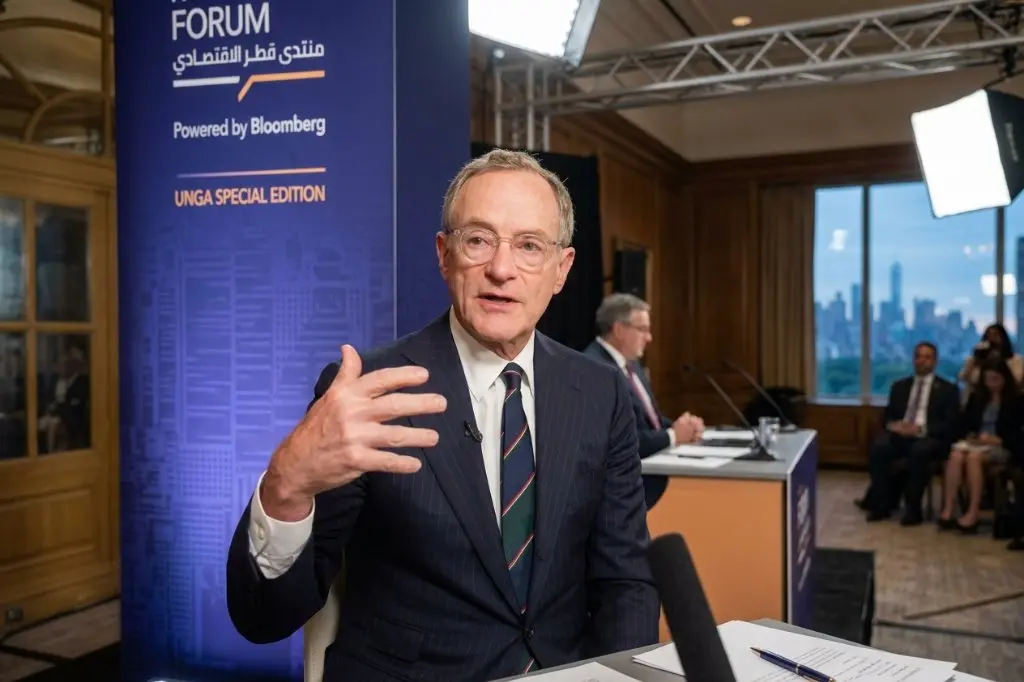
According to ChainCatcher, as reported by Edaily, the South Korean government will hold a forum hosted by Deputy Prime Minister and Minister of Economy and Finance Choi Sang-mok to officially initiate legislative discussions on the Digital Asset Basic Law (Phase II), focusing on stablecoin regulation. This forum is the first stablecoin legislative forum organized and hosted by the government. The South Korean government and the ruling Democratic Party plan to push for the passage of the bill within this year. In the economic growth strategy announced on July 14, 2026, authorities stated their plan to advance the Digital Asset Basic Law legislation in the second half of the year, segmenting the digital asset industry, establishing a regulatory framework for business conduct, and laying a legal foundation for the regulation of stablecoins.
Grayscale submits Worldcoin ETF registration statement to the U.S. SEC
According to ChainCatcher, as reported by The Block, Grayscale has submitted a registration statement for the Grayscale Worldcoin ETF to the U.S. Securities and Exchange Commission (SEC). The fund will hold the native token WLD of the World Network as a passive investment tool, aiming to make the value per share reflect the value of the held WLD minus fees and liabilities. If approved, the ETF will be listed on Nasdaq, with Bank of New York Mellon serving as the transfer agent and BitGo Bank & Trust acting as the custodian.
Russian State Duma conducts second and third readings of cryptocurrency market regulation bill
According to ChainCatcher, as reported by Bits.media, Anatoly Aksakov, chairman of the Financial Market Committee of the Russian State Duma, stated that the cryptocurrency market regulation bill will undergo second and third readings. Aksakov mentioned that the bill will "combat the illegal use of cryptocurrencies" while providing a legal space for international settlements. According to the bill, non-professional investors purchasing cryptocurrencies must undergo special testing, with an annual limit of 300,000 rubles, restricted to trading through licensed institutions, and can only purchase the most liquid crypto assets. The bill was originally set to take effect on July 1 but has been postponed to September 1. The Duma's Financial Market Committee has previously rejected several amendments aimed at easing restrictions, including raising the purchase limit for non-professional investors and allowing the use of non-custodial wallets. If passed, the bill will also require approval from the Federation Council and the president's signature.
BlackRock leads at least $12 billion in debt financing to support Meta's Texas data center project
According to ChainCatcher, as reported by The Wall Street Journal, BlackRock is leading efforts to raise at least $12 billion in debt financing for Meta's new data center project in El Paso, Texas. BlackRock and its infrastructure and private credit divisions hold an 80% stake in the project, while Meta holds the remaining 20%, with the park expected to have approximately 1 gigawatt of capacity. JPMorgan and Morgan Stanley are leading this large-scale debt issuance and are in contact with other potential investors. The project's structure is similar to Meta's Louisiana data center, which is jointly owned by Blue Owl (80% stake) and Meta (20%), and is supported by debt financing. Additionally, Meta has agreed to lease a large data center project developed by Aligned Data Centers, supported by BlackRock, in Shippingport, Pennsylvania. Over the past year, BlackRock has continued to expand its investments in AI data centers, including a $40 billion acquisition of Aligned Data Centers. BlackRock was also one of the main investors in the $27 billion private debt financing for Meta's Louisiana data center, purchasing over $3 billion in bonds in that transaction.
Arcus launches 24/7 U.S. stock tokens and perpetual contract market on Robinhood Chain
According to ChainCatcher, as reported by The Block, Arcus has officially launched 24/7 trading functionality and introduced over 95 stock tokens on the Robinhood Chain, offering zero-fee trading. Meanwhile, Arcus has also launched a beta version of its perpetual contract market through its self-custodial decentralized trading platform. In a statement, Arcus indicated that this launch allows eligible traders to invest in leading companies' stocks covering fields such as AI, semiconductors, space exploration, and quantum computing, including large-cap companies like Nvidia, Apple, Microsoft, Tesla, Meta, Alphabet, and Amazon. Additionally, Arcus has launched a beta perpetual futures trading market, with over 75,000 people currently on the waitlist. The platform supports perpetual contract products covering U.S. stocks, exchange-traded funds (ETFs), commodities, and cryptocurrencies, including trading varieties related to SPY ETF, QQQ ETF, GLD ETF, USO ETF, Bitcoin, Ethereum, Solana, and XRP. Arcus was founded by Eddie Zhang, whose development team comes from the core team behind dYdX.
Midnight Foundation: Wanchain Cardano BNB bridge attacked, multiple exchanges jointly freeze related assets
According to ChainCatcher, the Midnight Foundation posted on the X platform stating that the Wanchain Cardano BNB cross-chain bridge has experienced a security attack. Currently, several mainstream exchanges, including KuCoin, Kraken, Binance, Bybit, OKX, and MEXC, have quickly responded by taking preventive measures to restrict the flow of stolen assets, including freezing related accounts and addresses, blacklisting the attackers' wallets, and suspending NIGHT token deposit and withdrawal services. Exchanges confirmed that this incident is an isolated third-party bridging vulnerability and is unrelated to the Midnight Network mainnet or the NIGHT asset itself.
Data: Ethereum spot ETF saw a total net inflow of $38.0886 million yesterday, with BlackRock's ETHA leading at $34.3111 million
According to ChainCatcher, based on SoSoValue data, as of July 20, Eastern Time, the total net inflow for Ethereum spot ETFs was $38.0886 million. The Ethereum spot ETF with the highest single-day net inflow was BlackRock's ETF ETHA, with a net inflow of $34.3111 million, bringing ETHA's historical total net inflow to $11.348 billion. Following that was Fidelity's ETF FETH, with a single-day net inflow of $2.8315 million, and its historical total net inflow reaching $2.131 billion. As of the time of publication, the total net asset value of Ethereum spot ETFs was $10.295 billion, with an ETF net asset ratio (market cap relative to Ethereum's total market cap) of 4.48%, and historical cumulative net inflow reaching $11.117 billion.
Federal Reserve's probability of maintaining interest rates unchanged in July reaches 84.5%
According to ChainCatcher, as reported by Jin10, CME's "FedWatch" shows that the probability of the Federal Reserve maintaining interest rates unchanged in July is 84.5%, while the probability of a cumulative 25 basis points rate hike is 15.5%. By September, the probability of maintaining interest rates unchanged drops to 36%, with a cumulative 25 basis points rate hike probability of 55.1%, and a cumulative 50 basis points rate hike probability of 8.9%.
Nigerian president signs executive order to establish virtual asset committee and coordinate crypto regulation
According to ChainCatcher, Nigerian President Bola Ahmed Tinubu has signed an executive order to coordinate virtual asset regulation, strengthen cooperation among the country's financial, tax, and capital market institutions, and address the fragmentation of digital asset regulation. The executive order establishes a virtual asset committee composed of heads of Nigeria's main financial regulatory agencies, responsible for guiding relevant policies. The Nigerian tax authority will update digital asset policies and provide more details on their impact on taxpayers. The president's special advisor Bayo Onanuga stated that the executive order does not establish new regulatory agencies nor transfer power between agencies; each agency retains its statutory responsibilities and independence, and registration requirements will be determined based on the nature of activities and the assets involved. A report from the International Monetary Fund (IMF) in June indicated that since 2019, Nigeria has accounted for about 60% of stablecoin inflows in sub-Saharan Africa; from July 2023 to June 2024, the country's cryptocurrency inflow is estimated to be around $59 billion.
Russian State Duma passes cryptocurrency market regulation bill, awaiting Putin's signature
According to ChainCatcher, as reported by Cointelegraph, the Russian State Duma has passed the bill No. 1194918-8 "Digital Currency and Digital Rights" in its second and third readings on Tuesday, setting rules for domestic cryptocurrency asset operations and cross-border trade. The bill establishes a regulatory framework for market participants such as cryptocurrency exchanges, brokers, asset management companies, and custodians, and sets operational requirements for industry companies. The bill allows cryptocurrency assets to be used for foreign trade, while payments for goods and services within Russia remain prohibited. The main provisions are expected to take effect on September 1, 2026, with a transition period until July 1, 2027, and the bill still requires the president Vladimir Putin's signature to become law.
Maharashtra state in India plans to introduce DELTA Act to explore real estate blockchain tokenization legislation
According to ChainCatcher, as stated by Maharashtra Chief Minister Devendra Fadnavis, the state is advancing the drafting of the Maharashtra Land Token Asset Digitalization and Exchange Act (DELTA Act). Fadnavis chaired a related meeting, instructing officials to study global laws and best practices and to establish an expert committee composed of representatives from SEBI, BSE, NSE, and professionals to develop a complete legislative framework. According to the proposal, real estate will be tokenized through blockchain technology, with transactions completed entirely on-chain. This move aims to unlock the potential value of real estate, open up new revenue sources, and help Maharashtra achieve its goal of a $1 trillion GDP by 2030. If the legislation is enacted, Maharashtra will become the first state in India to introduce such regulations.
Data: Bitcoin spot ETF saw a total net inflow of $227 million yesterday, continuing five days of net inflows
According to ChainCatcher, based on SoSoValue data, yesterday (July 20, Eastern Time), the total net inflow for Bitcoin spot ETFs was $227 million. The Bitcoin spot ETF with the highest single-day net inflow was BlackRock's ETF IBIT, with a net inflow of $116 million, bringing IBIT's historical total net inflow to $60.606 billion. Following that was the ETF ARKB from Ark Invest and 21Shares, with a single-day net inflow of $72.742 million, and its historical total net inflow reaching $1.322 billion. The Bitcoin spot ETF with the highest single-day net outflow yesterday was Grayscale's ETF GBTC, with a net outflow of $45.4001 million, bringing GBTC's historical total net outflow to $27.377 billion. As of the time of publication, the total net asset value of Bitcoin spot ETFs was $79.163 billion, with an ETF net asset ratio (market cap relative to Bitcoin's total market cap) of 6.04%, and historical cumulative net inflow reaching $51.579 billion.
South Korean central bank's digital currency pilot criticized for lack of external independent security verification
According to ChainCatcher, as reported by Maeil Business, data from the South Korean Financial Supervisory Service shows that during the first phase pilot project of the CBDC led by the South Korean central bank, financial authorities did not conduct any independent security verification, relying solely on participating banks for pre-security reviews. Before the project launch, only IT vulnerability self-assessments were conducted on participating banks, executed by the Financial Security Institute, SK Shields, and self-inspection teams from Woori Bank and NongHyup Bank, forming a "self-checking" evaluation model by the regulated entities. The central bank acknowledged external doubts regarding the security of deposit tokens in its pilot results report, responding that the pre-review was sufficient, but critics pointed out that this explanation constitutes self-assessment rather than independent third-party verification.
Washington state court issues preliminary injunction against Kalshi, ruling it violated state gambling law and federal commodities trading law does not take precedence over state law
According to ChainCatcher, the King County Superior Court in Washington state approved a preliminary injunction motion against KalshiEX, LLC (Kalshi) on July 20, ruling that Kalshi's activities constitute illegal behavior in violation of Washington state gambling law and determining that the federal Commodity Exchange Act does not take precedence over state gambling laws. This ruling is an important precedent in the jurisdictional dispute between state-level regulators and federal regulators over prediction market platforms, following accusations from the CFTC chairman of illegal enforcement actions by states against federally regulated exchanges. The court made this ruling after reviewing multiple materials, including the oral arguments from July 10. The case number is 26-2-10264-3 SEA.
Strategy holds 843,775 BTC, Bitcoin reserves can cover 31 years of dividends
According to ChainCatcher, Strategy's Bitcoin reserves, as calculated by management, can cover 31 years of dividends, while its dollar reserves can cover 1.8 years of recent dividend obligations. Chaitanya Jain, head of Strategy's Bitcoin products and investors, disclosed this data on X. Documents submitted by Strategy to the U.S. Securities and Exchange Commission (SEC) show that its dollar reserves amount to $3.225 billion. The company stated that these reserves are used to pay preferred stock dividends and interest on outstanding debt. Strategy currently holds 843,775 BTC, with an acquisition cost of approximately $63.69 billion and an average purchase price of $75,476. The company sold 2.73 million shares of MSTR stock, netting approximately $264 million. Documents show that Strategy did not issue preferred stock that week, did not conduct stock buybacks, and did not purchase Bitcoin. Its most recent disclosed Bitcoin purchase occurred on June 22.
Crypto bank Augustus completes $180 million financing, led by Tiger Global
According to ChainCatcher, Augustus is a startup building a federally chartered clearing bank. The company announced it has raised $180 million to expand its dollar payment infrastructure, as stablecoins are reshaping the global financial system. This round of financing values Augustus at $1 billion. The round was led by Tiger Global Management, with participation from Hummingbird Ventures, QED Investors, and founders of Nubank, Ramp, Circle, and Deel. This financing comes as banks, fintech companies, and crypto firms compete to upgrade cross-border payment infrastructure. While the market's focus has largely been on stablecoin issuers, Augustus targets a less noticed but crucial segment of the financial system—the agency banking system. Augustus CEO Ferdinand Dabitz stated in an interview, "We believe that the distribution of financial services has bottlenecked at the clearing bank level." He pointed out that traditional clearing systems are "slow, not available 24/7, take two days to settle, and close on weekends."
Digital asset financial infrastructure provider Cordant completes $8 million seed round financing, led by Motive Partners
According to ChainCatcher, as reported by businesswire, stablecoin and digital asset financial infrastructure provider Cordant announced the completion of an $8 million seed round financing, led by Motive Partners and Oak HC/FT, with participation from Bankless VC, FJ Labs, SignalFire, Quona, Next Stage, Selah Ventures, Flatironx, Nascent Ventures, Silvercircle Ventures, and Generative Ventures. The new funds will support the introduction of new payment networks and AI automation tools. Cordant is collaborating with financial institutions on product co-development, covering banking, payments, embedded finance, cross-border transactions, stablecoins, and digital assets. Among the investors are Latin American digital asset and payment platform Bitso and blockchain infrastructure company Paxos, both of which are also design partners.
Pakistan FIA establishes virtual asset investigation department to combat money laundering and terrorist financing
According to ChainCatcher, as reported by Dawn, the Federal Investigation Agency (FIA) of Pakistan has established a virtual currency investigation department within the newly activated National Command and Control Center (NC3), focusing on combating money laundering and terrorist financing using virtual assets. Officials responsible for the counter-terrorism department stated that this department will work with the newly established Pakistan Virtual Asset Regulatory Authority (PVARA) to specifically investigate criminal activities involving crypto assets and recommend that the National Cyber Crime Investigation Agency (NCCIA) and the Anti-Narcotics Force (ANF) establish similar units to address the use of crypto assets in cybercrime and drug trafficking. The FIA is also integrating functions such as anti-money laundering, border control monitoring, human trafficking, and smuggling investigations within the NC3, and is advancing new regulations and personnel expansion to shorten case processing times and improve law enforcement coordination efficiency.
London Stock Exchange plans to launch independent overnight trading platform in the first half of 2027, initially covering ETPs
According to ChainCatcher, as reported by The Block, the London Stock Exchange is planning to launch an independent overnight trading platform to extend trading hours and meet investor demand for longer market access. The platform is expected to go live in the first half of 2027, while the main market's regular trading hours will remain unchanged from 8:00 AM to 4:30 PM. The new platform is planned to operate from 5:00 PM to 7:50 AM the next morning, with a 30-minute pause for end-of-day processing from 6:30 PM to 7:00 PM. Reports indicate that the platform will initially focus on trading exchange-traded products (ETPs), including funds tracking the UK and US stock markets. LSE CEO Julia Hoggett stated that this move aims primarily to meet the needs of retail investors, especially international investors; in the future, the LSE hopes to extend trading coverage to over 2,600 listed ETPs.
Hanwha Group becomes largest shareholder of Securitize
According to ChainCatcher, Hanwha Group has become the largest shareholder of the U.S. RWA project Securitize, holding a total of 15.6895 million shares, representing a 9.6% stake, surpassing Blockchain Capital's 6% and co-founder Carlos Domingo's 5.4%. Hanwha Group currently holds 5.9%, 3.1%, and approximately 0.6% of the company's shares through its private equity fund, Hanwha Systems subsidiary H Foundation, and Hanwha Investment & Securities, respectively. Hanwha Investment & Securities has invested a total of 58 billion won in projects such as blockchain data platform Xangle, Web3 infrastructure company Kresus, and institutional-grade blockchain network Canton Network operator Digital Asset this year, and has made an additional investment of 597.8 billion won in Dunamu, the parent company of South Korean crypto exchange Upbit, raising its stake to 9.84%.
U.S. SEC sues crypto mining investment scam, Mining Automatic accused of raising $22 million from over 380 investors
According to ChainCatcher, the U.S. Securities and Exchange Commission (SEC) announced that it has filed a lawsuit against Florida resident Zan Shaikh and his company Bright Vision Distribution LLC (operating under the name Mining Automatic), accusing them of defrauding investors through a fraudulent cryptocurrency mining investment scheme, involving approximately $22 million in raised funds. The SEC stated that between June 2023 and May 2025, Shaikh and Mining Automatic promised investors fixed monthly returns through participation in cryptocurrency mining operations, but the related mining operations were unable to generate the promised returns. According to the SEC's lawsuit documents, Shaikh and Mining Automatic are accused of making false statements regarding their own cryptocurrency mining experience, operational capabilities, use of investment funds, and the status of the mining business, and explaining payment delays by claiming an inability to pay investor returns.
Fintech company Cashea completes two rounds of financing totaling $100 million, led by FinSight Ventures
According to ChainCatcher, as reported by Bloomberg, Venezuela's largest fintech company Cashea recently completed two rounds of financing totaling $100 million, including a $60 million Series B round led by FinSight Ventures in June this year and a $40 million Series A round completed in March led by Spice Expeditions, including $20 million in debt provided by Architect Capital. Multiple U.S. donor funds and Latin American investment institutions participated. Cashea was founded in 2022 to provide "buy now, pay later" services to Venezuelan consumers with long-term credit constraints, allowing users to make interest-free installment payments after a down payment via the app or offline QR code. The company claims to have processed over 110 million transactions, serving over 10 million accounts, with partnerships reaching 40,000 merchants, and the new funds will be used to expand credit products and support post-disaster reconstruction.
Humanoid, a humanoid robot startup, completes $152 million Series A financing, led by Prime Movers Lab
According to ChainCatcher, as reported by Forbes, humanoid robot startup Humanoid announced the completion of $152 million in Series A financing, with a post-investment valuation of $1.35 billion, making it the first unicorn in Europe focused on humanoid robotics. This round of financing was led by Prime Movers Lab, with participation from German industrial giants Schaeffler and Bosch, Taiwan's Fubon Financial Holdings, and investment institutions under the LVMH Arnault family, such as Aglaé Ventures. Following this financing, Humanoid's total financing amount has reached $270 million.
Changxin Technology: Online investors abandon subscriptions for 6.5862 million shares
According to ChainCatcher, Changxin Technology announced that the results of its initial public offering and listing on the Sci-Tech Innovation Board have been published. The issuance price was 8.66 yuan per share, with an initial issuance quantity of 6.688 billion shares, accounting for about 10% of the total share capital after issuance. The final strategic placement quantity was 1.667 billion shares, with the final online issuance winning rate of approximately 0.47141739%. Online investors subscribed for 3.845 billion shares and abandoned subscriptions for 6.5862 million shares; offline investors subscribed for 2.173 billion shares and abandoned subscriptions for 31,567 shares. The joint lead underwriters underwrote 6.6178 million shares, with an underwriting amount of 57.3101 million yuan. Before the exercise of the over-allotment option, the issuance costs amounted to 281 million yuan.
Meme Popularity Rankings
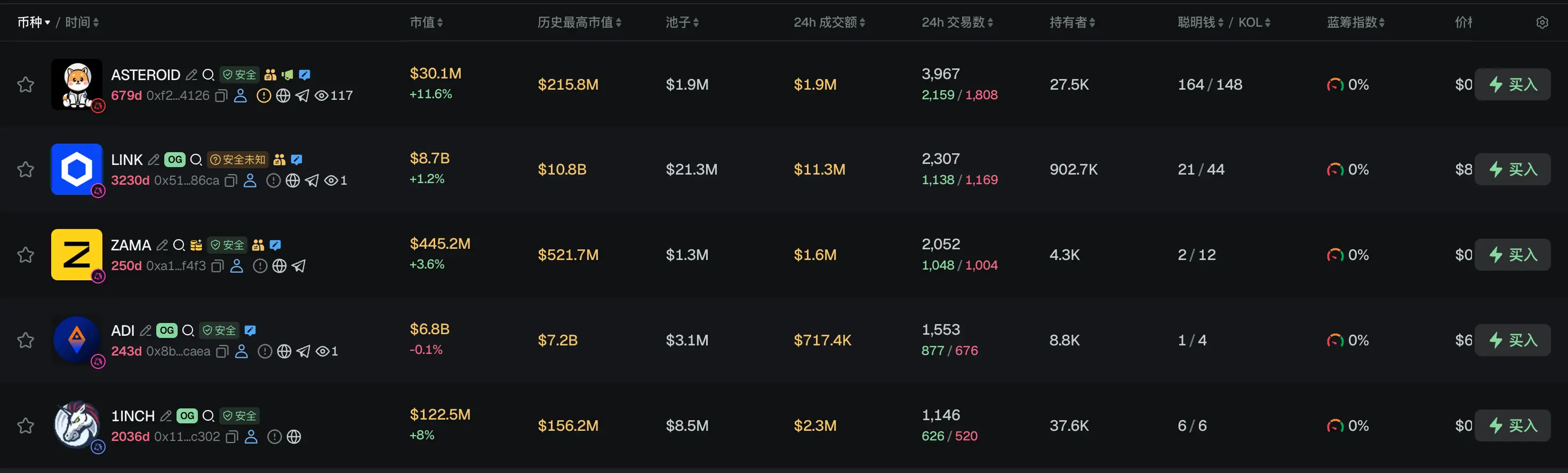
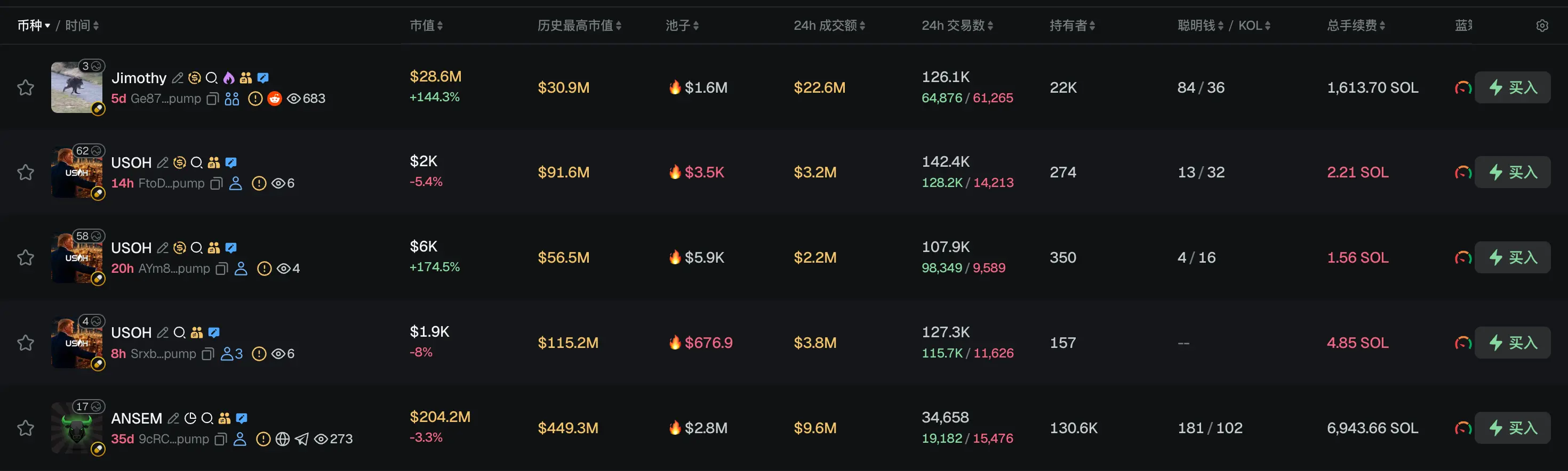
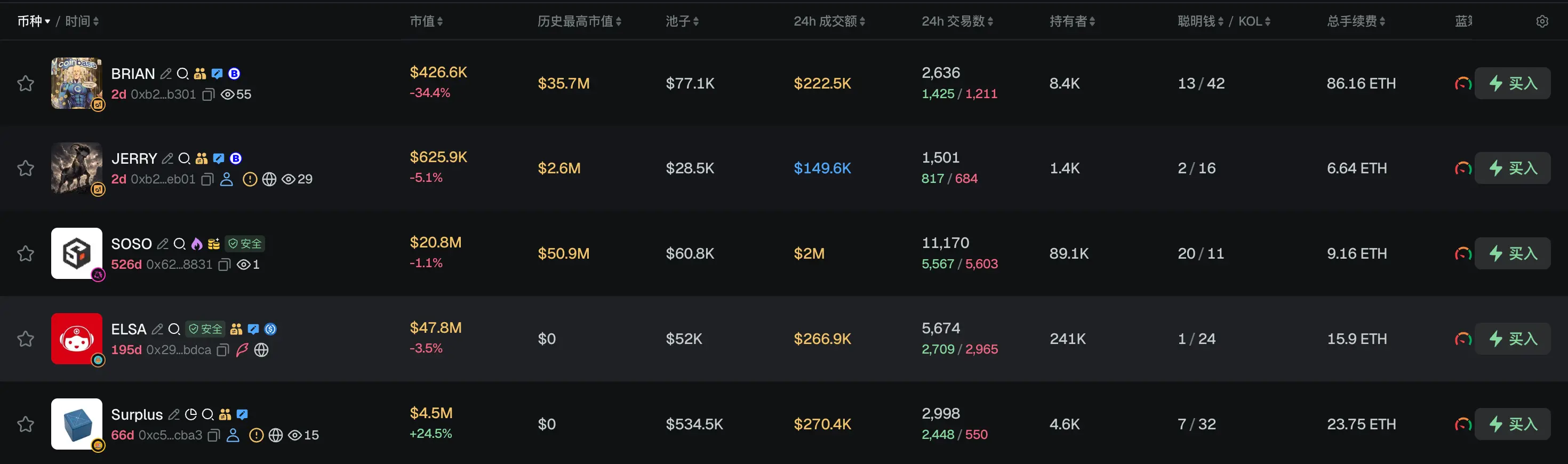
According to data from the meme token tracking and analysis platform GMGN, as of July 22, 09:30,
The top five popular ETH tokens in the past 24 hours are: ASTEROID, LINK, ZAMA, ADI, 1INCH
The top five popular Solana tokens in the past 24 hours are: Jimothy, USOH, USOH, USOH, ANSEM
The top five popular Base tokens in the past 24 hours are: BRIAN, JERRY, SOSO, ELSA, RWAGMI
What excellent articles are worth reading in the past 24 hours?
Who decides the rules of Bitcoin? BIP-110 ignites governance disputes
Miners hold the power, yet internally they are divided. Node operators advocate for equal validation, refusing to weight by economic size. A few developers hold the code merge privileges, able to change the default for the entire network, yet lack accountability mechanisms for node operators who bear permanent costs. Treasury holders wield narrative and capital but have no on-chain votes. The technical consensus process represented by Adam Back treats resistance to change itself as a source of legitimacy. Each faction invokes different bases of power and competes for the interpretation of neutrality and conservatism. BIP-110 may ultimately fail to activate, but it has completed a governance stress test. When the claims to defend monetary boundaries and maintain protocol neutrality collide, each side will assert that they are the true defenders of Bitcoin. The real core of this dispute is who has the authority to decide what constitutes Bitcoin.
Netflix lost over $250 billion in market value over the past year, while fellow streaming giant Disney lost nearly $50 billion. Both are well-managed companies, with growing revenues and subscriber numbers, and rising prices—yet they are being punished for it. This raises an important question: Is streaming just a bad business? Or have Netflix and Disney's creative juices run dry? Let us know your thoughts in the comments. In the next six months, OpenAI will acquire enterprise AI company Sierra and appoint Bret Taylor as CEO. Sam Altman will be promoted to chairman. Altman is an innovator, not an operator, while Bret Taylor may be the best enterprise software operator of his generation.
Chips, large models, computing networks, optical modules—these complex and high-threshold fields are indeed not something ordinary people can participate in by "getting involved." However, the capital market provides a pathway—you don't need to be an engineer or an entrepreneur; you just need to understand trends and participate. What truly matters is not whether you can accurately pick every target, but whether you are standing in the right direction. If the direction is correct, fluctuations are just a process; if the direction is wrong, no amount of effort will suffice. So, returning to the core question—if AI ultimately proves to be wrong, then our generation may have truly lost the most important opportunity; but if it is right, then every adjustment now is an opportunity for future generations to get back on board. The market will not stop for your hesitation, and the times will not slow down for your uncertainty. The only thing you need…
The eternal fragments of money: there is no first principle in third-party payments
Emerging stablecoin public chains, however, have no historical burdens and can focus on improving settlement efficiency. With Circle and Stripe obtaining OCC charters (conditionally approved), they will inevitably move towards settlement after sharing profits from stablecoins. The settlement network has the potential to partially detach from the commercial banking system and retain profits within itself. In conclusion, Stripe missed the IPO window during the pandemic and entered the trench warfare of third-party payments, a battle that is an eternal Verdun model, where small players in various regions and industries can never be crushed by scale. A new way of living must be adopted, facing the banking industry with efficiency, from PayPal to Stripe, from stablecoins to Agents, with four generations of payment industries coexisting—will this time succeed?
Market makers reveal: BTC's bottom may not be far away, watch these signals closely
Alessandro: Finally, what about gold and copper? Krown: I remain extremely bearish on gold and silver. Gold peaked in January on a 10-year cycle and is likely to remain flat or decline in the coming years, with possible rebounds to short. If you hold long positions during this rebound, that is a selling gift from God. Copper is a completely different chart. It just broke out of a 20-year consolidation range that started in 2006, with a target price of around $8. Copper is a direct proxy for AI data center construction, which requires a large amount of copper. As long as copper prices are above $560, it is objectively bullish. I don't trade copper often, but from a purely technical perspective, the breakout is real, and there is room for upward movement.
In the short term, trading will fluctuate due to the "DeepSeek memory." In the medium term, as long as token usage continues to grow, and long contexts and Agents continue to spread, computing power, HBM, storage, networks, and IDC will remain unavoidable cost items. This is also why multiple institutions have reached similar conclusions after K3: stronger open-source models are not the endpoint of AI infrastructure demand but may instead be the entry point for the next round of demand diffusion. However, Bank of America Merrill Lynch has also clearly left a tail risk: "If the speed of efficiency gains exceeds the growth of workloads, we may see some pullback in infrastructure construction." In other words, if models become cheaper but usage does not expand significantly in sync, the logic of computing demand growth will be discounted.
 Risk warning


Popular articles