In-depth interpretation of JST Q2 quarterly report: JST cumulative destruction reached 17.29%, diverse ecological income strongly drives the deflationary flywheel
 JST has accumulated a destruction of up to 94.62 million USD! With the USDJ stability fee being included in the repurchase fund pool for the first time, the TRON ecosystem's revenue is fully feeding back into the deflationary flywheel, solidifying the long-term value foundation of the JST token.
On July 21, JustLend DAO officially released its Q2 2026 review report. In a complex market environment, the protocol not only maintained strong operational fundamentals but also reached a key historical milestone this quarter in "financial infrastructure expansion and token value reshaping."
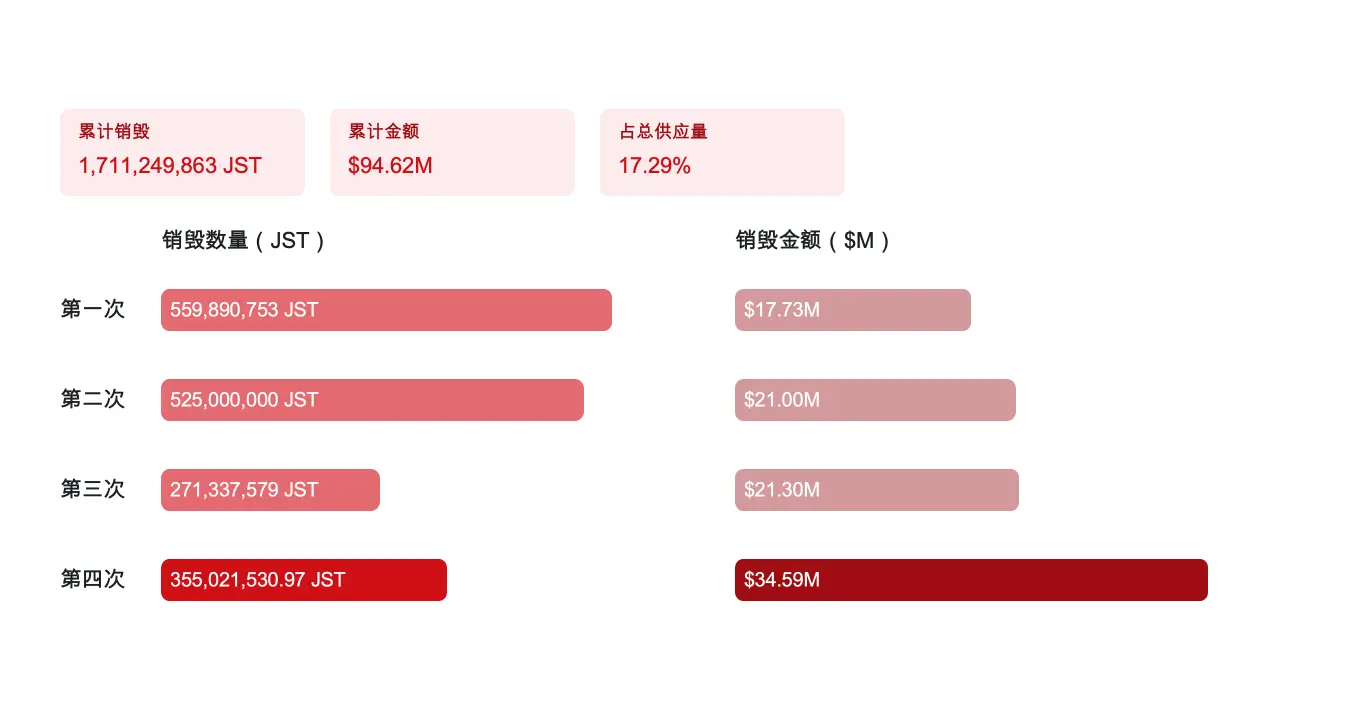
The most striking breakthrough this quarter was the unprecedented acceleration of the JST deflationary flywheel. With the successful completion of the third and fourth large-scale buyback and burn events, the cumulative amount of JST destroyed has strongly reached 17.29% of the initial maximum supply, with the fourth buyback and burn amounting to as much as $34.59 million, breaking historical records.
Supporting this historic scale of deflation is the strong explosion of the protocol's core revenue-generating business and the diversified expansion of ecological funds. This quarter, JustLend DAO's energy leasing revenue continued to rise, contributing nearly 70% of the funds for the fourth burn. More importantly, the historical stability fees of USDJ were for the first time significantly included in the buyback fund pool, marking that JST's value capture landscape has officially crossed the boundaries of a single protocol. This dual funding pump of "core business revenue + ecological historical accumulation" provides a continuous and abundant fuel supply for the deflationary engine.
Through this impressive quarterly report, a vast ecosystem with tightly interlocking gears is unfolding before us. Whether in refining cutting-edge products or decisively implementing deflationary policies, JustLend DAO is using real on-chain data and governance actions to build an unbreakable long-term value barrier for the broad community and holders.
JST Price Hits New Highs, Diverse Ecological Revenue Strengthens JST's Long-Term Upward Channel
In Q2 2026, JustLend DAO's most notable strategic move was undoubtedly the unprecedented strength and structural breakthrough demonstrated in its JST buyback and burn mechanism. During the reporting period, the protocol successfully completed the third JST buyback and burn, destroying 271,337,579 JST, corresponding to a fund scale of $21.3 million.
This strong deflationary pace did not stop; on July 17, just after the quarter ended, the fourth and most symbolically significant buyback and burn was officially executed. A total of 355,021,530.97 JST was destroyed, costing as much as $34.59 million. As a result, after four rounds of intensive and large-scale destruction, the total amount of JST destroyed has reached an astonishing 1,711,249,863, accounting for 17.29% of its initial maximum supply.
A deep analysis of the funding composition of the fourth buyback and burn reveals a structural change with profound implications for JST's long-term value. Previously, the buyback funds for JST mainly relied on JustLend DAO's own protocol operating income, such as profits generated from energy leasing.
In the fourth action, the historical stability fees of USDJ were formally and significantly injected into the buyback and burn fund pool for the first time. Specific data shows that the funds from JustLend DAO's energy leasing revenue corresponded to 248,357,799 JST, accounting for approximately 69.96%; while the funds from USDJ's historical stability fees corresponded to 106,663,731.97 JST, accounting for 30.04%. This leap in funding sources has high strategic significance, marking that JST is no longer just a governance token of JustLend DAO's single lending protocol but has substantially evolved into the ultimate value capture entity of the entire JUST ecosystem. As historical revenues realized within the ecosystem begin to continuously flow into the deflationary engine, the value support base for JST has become unprecedentedly broad and solid.
This systematic improvement in fundamentals has received extremely keen and positive feedback in the secondary market. According to on-chain and circulation data statistics, in Q2 2026, JST's market trading price showed a significant upward trend. Its price range maintained between 0.05790 and 0.09742 USDT, especially during the period from April to May, where it exhibited an independent and robust upward trend. Its quarterly high price achieved a significant leap of approximately 50.7% compared to the first quarter's peak of 0.06466 USDT. From Q2 2026 to early July, JST's market performance was strong. On July 10, JST's price successfully broke through the $0.1 mark, setting a new peak since the buyback and burn plan was initiated. The continuous rise in the coin price intuitively verifies the global secondary market's high recognition of the positive cycle logic of "real protocol revenue-driven buyback and burn, accelerating deflation elevating value."
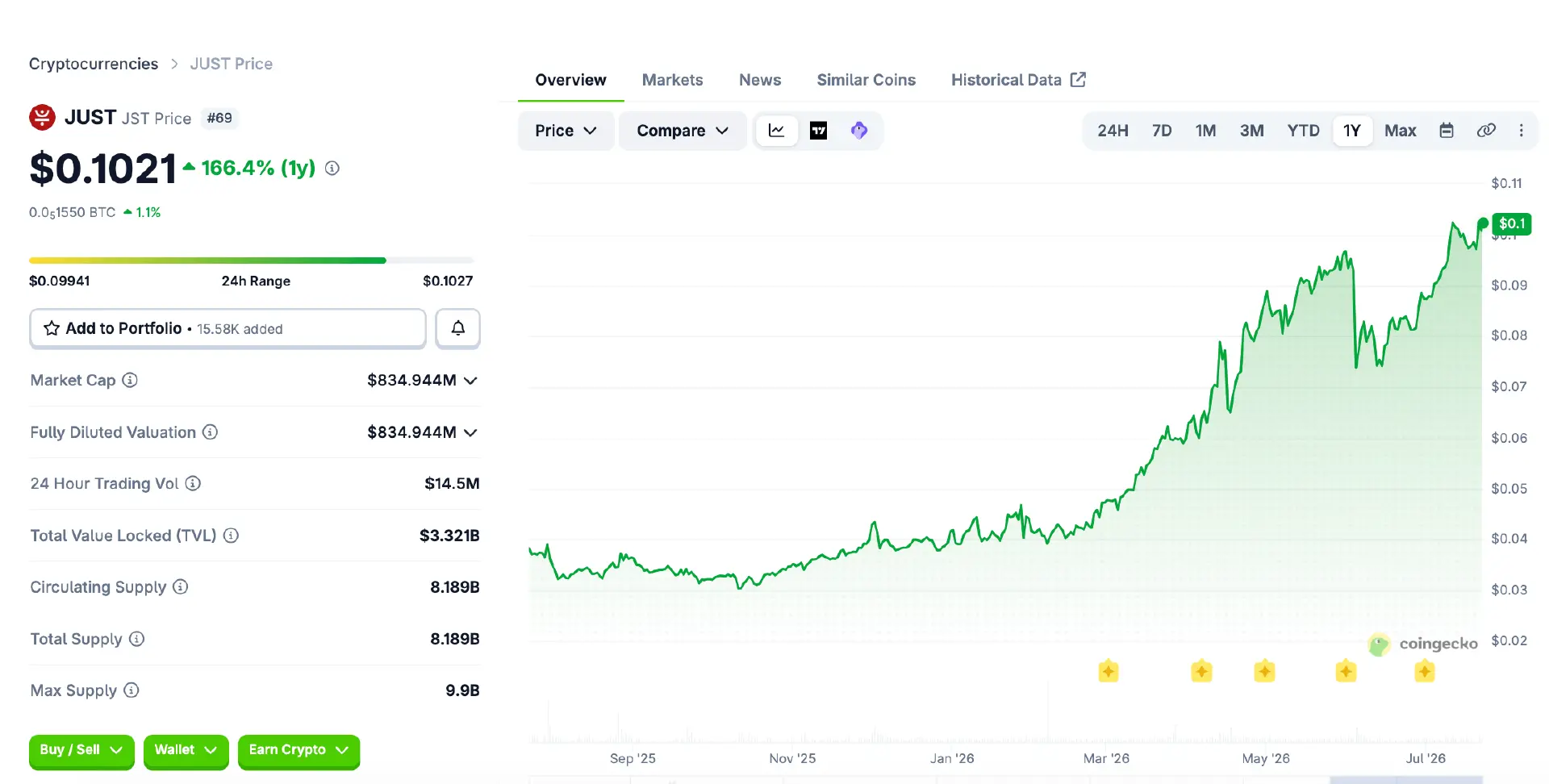
At the same time, liquidity and trading activity also experienced an explosion, with a total quarterly trading volume reaching $3.27 billion, and an average daily trading volume maintaining a high level of nearly $36 million, with a single-day peak exceeding three times the average daily trading volume. This simultaneous rise in volume and price fully demonstrates that the injection of diversified buyback funds and high-intensity deflation expectations have successfully transformed into a substantial consensus for bullish sentiment in the market.
Additionally, it is important not to overlook the rock-solid treasury reserve system behind the protocol. As of the report release date, the treasury address had accumulated core assets valued at approximately $119 million, including over 104 million sTRX, nearly 1.3 billion jUSDT, 500 million JST, and about 13.08 million USDT. Meanwhile, JustLend DAO's cumulative net reserves have also reached $94.21 million, with asset operations being extremely healthy.
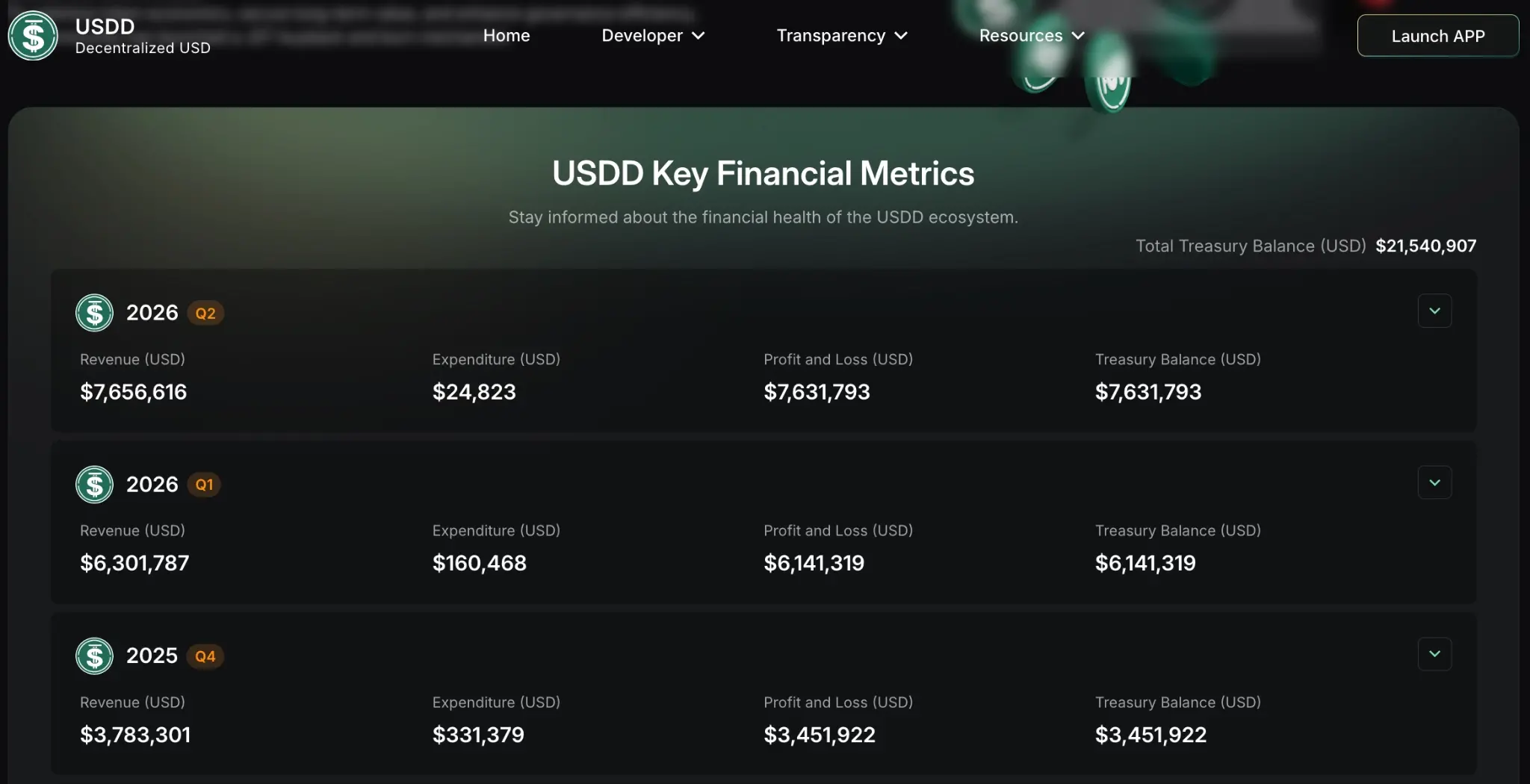
An even more promising hidden "catalyst" lies in the vigorous development of the USDD ecosystem. In Q2, USDD achieved a quarterly income of $76,600, a significant increase of 21.50% month-on-month, and the quarterly surplus also soared 24.27% month-on-month to $76,300, with the cumulative treasury balance climbing to $21.54 million. According to the current governance arrangements, this continuously expanding USDD ecosystem income will also be included in JST's buyback landscape in the future after meeting relevant conditions. This means that, in addition to existing lending income, energy leasing, and USDJ stability fees, USDD is becoming the next large potential "ammunition depot" under JST's deflationary flywheel, laying a solid financial foundation for future longer-term value increases.
Business Landscape Expansion, Protocol Upgrades, and Dual-Core Ecological Drainage Drive
Behind the dazzling financial data and token economics is JustLend DAO's continuous deepening in underlying protocol architecture innovation and ecological business expansion. In Q2 2026, despite fluctuations in the global macro funding environment, JustLend DAO still maintained a dominant market share, with the total locked value (TVL) stabilizing at a massive scale of $6.7 billion.
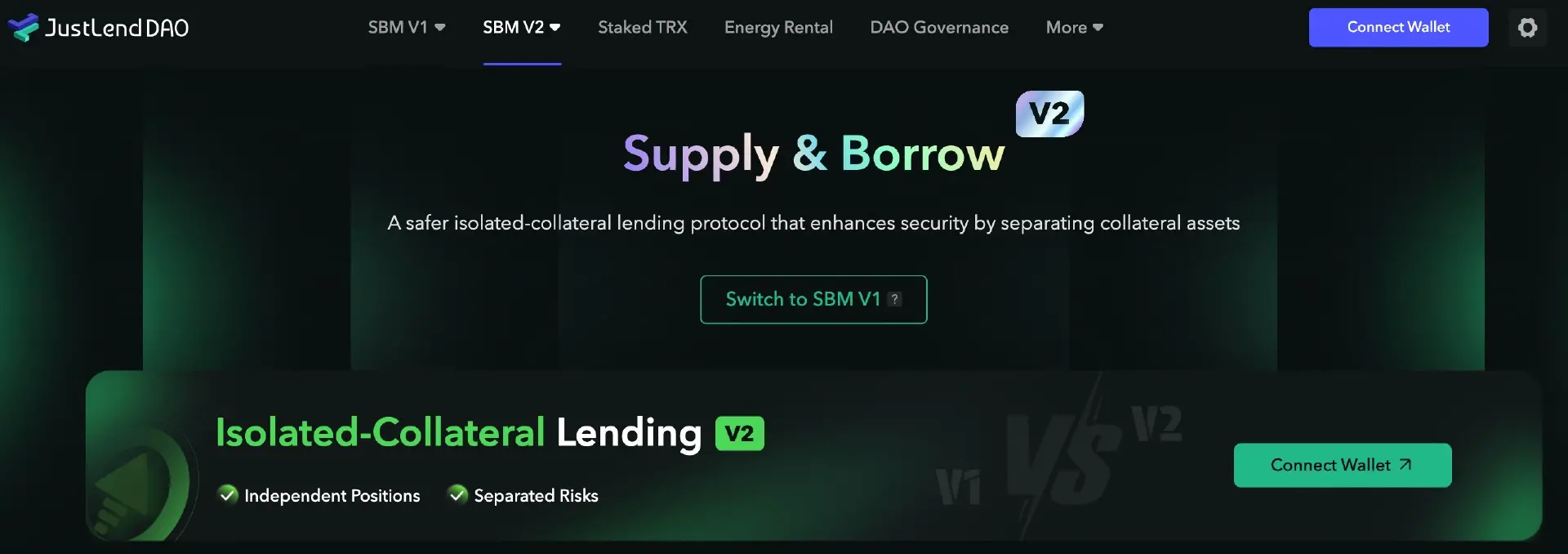
Such a large amount of funds is inseparable from the continuous iteration of the protocol's underlying architecture. This quarter, JustLend DAO officially launched SBM V2, marking a comprehensive evolution of the lending business from a single market structure to a parallel dual-track operation of SBM V1 and SBM V2. At this stage, SBM V1 remains the protocol's absolute "stabilizing force," carrying the borrowing demand for mainstream core assets with its significant liquidity depth, with a deposit scale of $3.532 billion and a borrowing scale of $191 million. The isolated lending market structure introduced by SBM V2 can strictly limit the risks of different long-tail or new assets within their respective independent lending pools, reducing the likelihood of extreme fluctuations of a single asset transmitting to the entire network. This lays a solid foundation for safely and massively absorbing more diverse assets into the TRON DeFi ecosystem in the future.
In addition to solidifying the traditional lending business, the unique derivative businesses developed around the TRON underlying mechanism also showed strong growth momentum this quarter, particularly the energy leasing segment, which demonstrated exceptional revenue-generating capabilities. In Q2, the total energy across the network rose to 47.458 billion, with actual borrowed energy reaching 13.621 billion, and the number of users renting energy increased by 3.45% to surpass 81,000. The energy leasing market not only effectively reduced the on-chain interaction costs for TRON developers and active users but also contributed significantly to JustLend DAO's real revenue.
At the same time, the sTRX staking business also delivered impressive results this quarter.** Its TVL steadily climbed to 9.689 billion TRX, with the number of users participating in staking experiencing a significant leap of 18.48%, approaching 17,000 households.** This rapid expansion of the audience profoundly reflects the market's high consensus on the TRX secure income model. While activating users' idle assets, this business further solidified the foundational liquidity of the entire TRON underlying network.
While continuously deepening the existing market, JustLend DAO is also accelerating its external expansion. This quarter, the emergence of the GasFree business, with its core function of waiving native token transfer fees, directly addresses the biggest pain point of on-chain interactions and has rapidly experienced explosive growth since its launch. By the end of Q2, the total number of users for this business had surged past 359,000, with the cumulative number of transactions exceeding 6.2 million. With an almost Web2-like seamless payment experience, GasFree has become a massive traffic funnel within the JUST ecosystem, continuously bringing a large number of real active users into the TRON DeFi landscape.
Looking ahead, JustLend DAO's performance in Q2 is not merely a single-dimensional prosperity but a comprehensive operation of a highly self-consistent, tightly interlocking ecosystem. The fourth buyback and burn broke the limitations of a single funding source, allowing the market to see the infinite elasticity of JST as a value capture vehicle. With the expected buyback funds of approximately $21.55 million poised for the next quarter, along with the future influx of USDD surpluses and the scaling income from GasFree, the fuel supply for the buyback engine will become even more abundant and diverse. Under the premise of adhering to the established governance framework and principles of transparency, JST is continuously writing its own long-term value paradigm in an unstoppable manner.
 Risk warning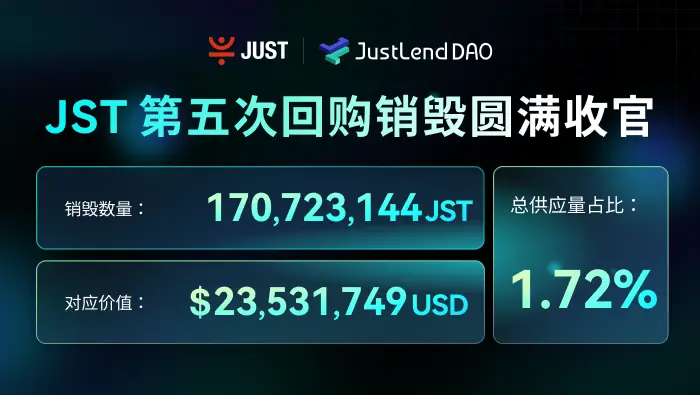


Popular articles