








Analyst: The inflow of stablecoins to exchanges has fallen to its lowest point since 2025, highlighting weak demand and insufficient investor interest
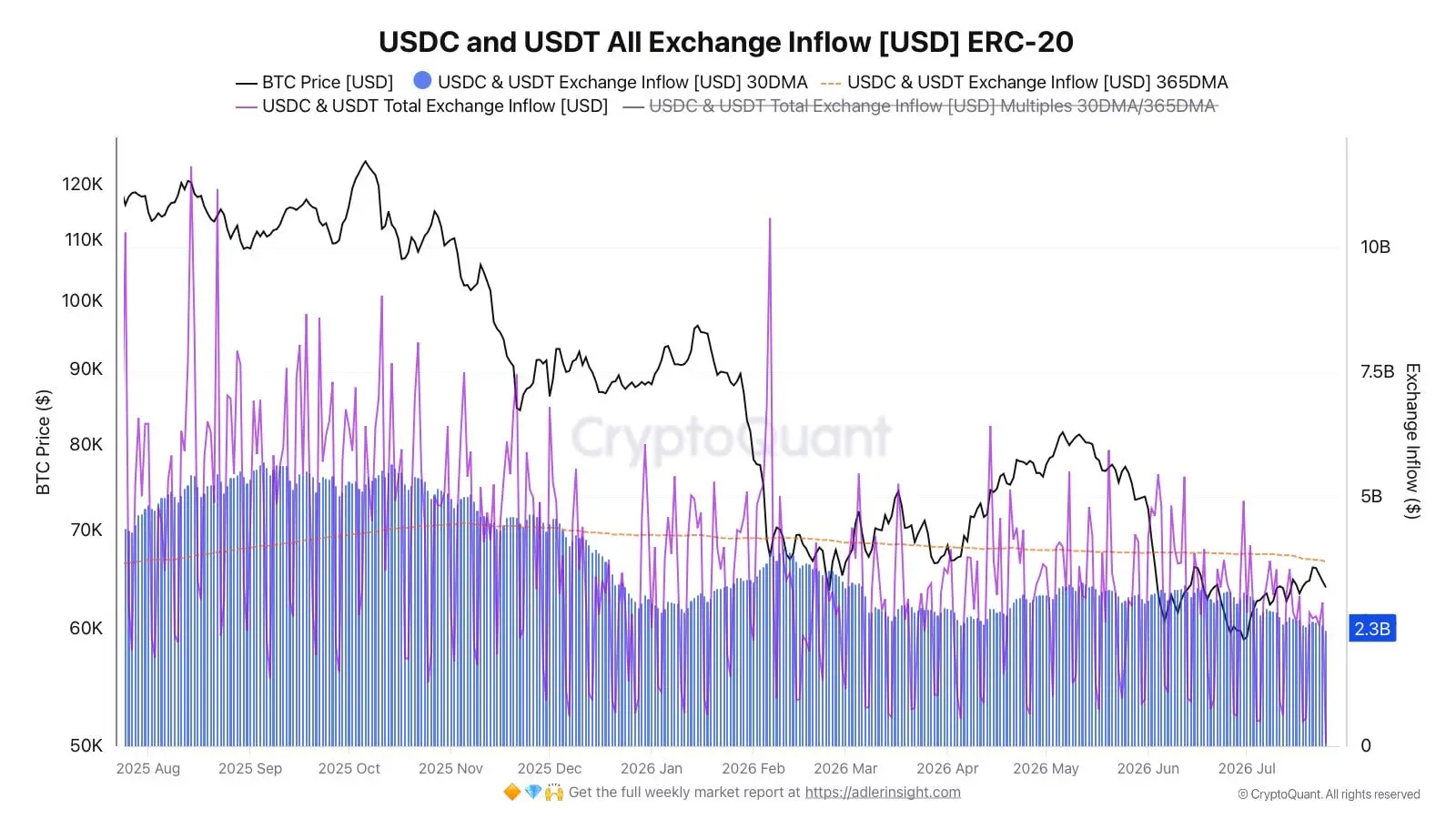
CryptoQuant analyst Darkfost stated that since 2025, the inflow of stablecoins into exchanges has been continuously declining, reaching the lowest level since that period. Currently, the monthly average inflow of stablecoins (USDT, USDC) is about $2.3 billion, with an annual average inflow of about $3.7 billion. When the price of Bitcoin reached its historical peak, the monthly average inflow was $5.6 billion, and the annual average inflow was $4.3 billion. This dynamic clearly indicates the current weak demand and lack of investor interest. However, it is important to note that when the inflow of stablecoins peaks, it is often a lagging signal. When some investors accelerate profit-taking, exchanges increase the supply of stablecoins, while new investors continue to bet that the price of Bitcoin will keep rising. Currently, market demand still needs improvement.

 Risk warning Risk warning


