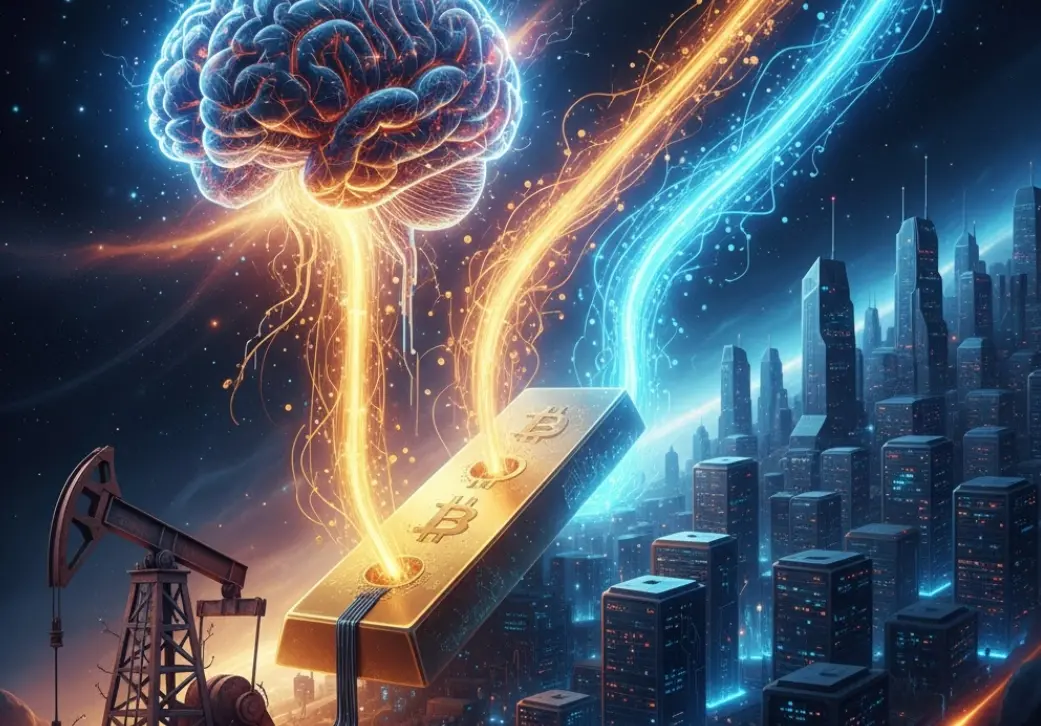
Dashan guest on "Blockchain 100 People": Left hand AI, right hand cryptocurrency, the oil and gold of this era

 Today's guest is Teacher Dashan. He started engaging with Bitcoin in 2011 and began mining on his own during his PhD studies in 2013; in 2017, he resigned from Huawei HiSilicon, entered the industry full-time, and founded Shuidi Capital, having invested in over 200 projects and managed multiple funds to date. In the past two years, he has also served as the chairman of an AI company, applying the computing power experience accumulated from early Bitcoin mining to AI data centers.
Welcome to "100 People in Blockchain." This is a live program initiated by Binance Square, where we hope to find people who have truly made contributions and driven industry development, and hear their stories. Today, we not only want to know what the guest has done but also why he made those choices at that time.
Today's guest is Teacher Dashan. He started getting involved with Bitcoin in 2011 and began mining on his own during his PhD studies in 2013; in 2017, he resigned from Huawei HiSilicon, entered the industry full-time, and founded Waterdrop Capital, having invested in over 200 projects and managed multiple funds to date. In the past two years, he has also served as the chairman of an AI company, applying the computing power experience he accumulated from early Bitcoin mining to AI data centers.
From miner, VC to AI, what he continues to bet on is the underlying productivity of the next generation digital world. Today we want to discuss: which choices were right, where he stumbled; how his heavy investment in BTC Layer 2 is doing now; whether the crypto industry is still worth staying in; whether AI is a better direction; and how he views Bitcoin at this moment if he were to use his own money.
From encountering Bitcoin during studying abroad to mining on my own
Host Beca: You started mining Bitcoin in 2013. For many who just entered the industry today, that was over a decade ago. How did you get into the circle back then? How did you solve the issues of equipment and electricity? What happened to the coins you mined early on?
Dashan: I was doing circuit simulation during my PhD. A simulation often took ten minutes, twenty minutes, or even half an hour, leaving me with a lot of free time. During that time, I would browse various websites and magazines, and that’s when I encountered Bitcoin.
I was studying abroad at the time. For international students, a practical pain point is how to transfer money from home to abroad without completely relying on channels like Western Union. At that time, I felt Bitcoin was a great medium for cross-border payments, so I started to learn about it.
Mining with a regular computer was already not easy, but the computers provided by the school were quite powerful because we needed them for circuit simulation. I downloaded mining software and mined a little Bitcoin; however, it affected my daily use too much, so I stopped. Later, I started mining by buying mining machines and hosting them through friends in China.
In fact, I saw Bitcoin as early as 2012 but treated it as a novelty without doing much research. It wasn't until late 2012 and early 2013 when Bitcoin started to rise that I really began to buy in. So, the batch of Bitcoin I held early on was not all mined; most of it was actually purchased.
Why did you resign from Huawei HiSilicon to enter the industry full-time?
Host Beca: At that time, resigning from Huawei HiSilicon to fully invest in Bitcoin seemed almost like "not being serious" to many people. How did you make that decision?
Dashan: The process was quite tortuous; it wasn't a matter of just glancing at Bitcoin and deciding to go all in.
I first encountered Bitcoin online, and later attended offline events, but I was hesitant to truly enter this circle. At that time, I was in Montreal, Canada, and was somewhat of an alumnus with Zhao Changpeng. One night while wandering downtown, I saw a very small shop, dimly lit with red and green lights, with a sign that read "Bitcoin Embassy."
I wanted to go in and take a look, but the doorman said that to enter, I needed a "Passport"—meaning I had to have a Bitcoin wallet; it didn't matter whether there were coins in it, the wallet itself was the pass. I downloaded a wallet on the spot and transferred a little Bitcoin to be allowed in. The atmosphere inside was very punk and wild: tattoos, nose rings, belly rings, completely different from my temperament. I left after looking around.
During my PhD, I hadn't officially entered the circle; I was just an enthusiast. After graduating and returning to Shanghai, the industry was small, and there were some meetups, but the status of people in the circle didn't seem "decent" to me, so I still viewed it as a niche hobby.
The real decision to join full-time came at the end of 2016. At that time, Bitcoin experienced another round of price increases, and I realized that the Bitcoin I had mined and bought early on had become quite valuable, and I seemed not to need to rely entirely on a job anymore. Even so, I didn't jump in all at once; I gradually explored what I should do.
Until the 2017 boom came, I saw that Sequoia, IDG, and many outstanding talents from Tsinghua and Peking University began to enter. I thought, since these people are all in, it might not be wrong for me to enter this industry as well, and that’s when I truly committed full-time. Before that, I had already been dabbling in the industry for a few years on a part-time basis.
At that time, I didn't even disclose to my family and former social circle that I was involved in blockchain, until later when the national attention on blockchain significantly increased, I officially "announced" it. So this wasn't a legendary spur-of-the-moment decision, but rather a gradual process of understanding and confirmation.
How was Waterdrop Capital established? What did you invest in early on?
Host Beca: Waterdrop Capital was established in 2017. Where did the initial funding come from? What was the first investment?
Dashan: Before Waterdrop was officially established in 2017, several partners had already made many personal investments, such as in Ethereum, Cosmos, Polkadot, and VeChain. When Ethereum first came to Shanghai for a roadshow, two of our partners bought in at a very low price; the Chinese name "Ethereum" was also determined by another partner, Cancer, during the naming and translation of the white paper.
In 2017, new projects were emerging daily, sometimes several or even dozens. We realized that relying solely on personal efforts was no longer competitive in this industry, so we decided to form a team. The initial funding was pooled together by several partners, with everyone contributing the same amount and taking the same share; since I was the youngest at the time, everyone thought a young person should work harder, so they made me the CEO. Thus, a very grassroots Token Fund was established.
In early 2018, Mars Finance held a blockchain conference in Chongqing and selected the Top 40 Token Funds, and we were among them. There were almost too many people on stage to fit. In 2017, there may have been two or three hundred funds similar to ours, but I estimate that fewer than ten survived that wave.
As for the first formal investment after the company was established, I don't remember exactly who we invested in. Before Waterdrop was established, the partners already had several projects, and we would add or transfer the amounts to the fund, making it hard to define who the first check was actually written to.
But I remember that the projects that truly completed exits and brought us 100 times returns were only three: Ethereum, Cosmos, and Polkadot. This does not include Bitcoin, as Bitcoin was a personal investment, not a VC investment. There are many projects with returns over ten times, and many that appear to be 100 times or even 1,000 times on paper, but by the time of unlocking and actual exit completion, 100 times returns are very rare.
Where do the funds in partnership with Taiping Asset Management invest?
Host Beca: The Pacific Waterdrop Fund you partnered with Taiping Asset Management will have four sub-funds by 2025. What do they each invest in? Is Waterdrop's funding still investing in crypto, or has it shifted to AI, US stocks, or Pre-IPO?
Dashan: Our cooperation with Taiping started in 2022. From 2017 to 2021, Waterdrop was mainly in Shanghai; in 2021, the regulatory environment tightened, and engaging in crypto-related business, including investments, faced significant compliance restrictions in mainland China. Therefore, we moved the company to Hong Kong and established the LPF compliance structure at that time.
By the end of 2022, some Hong Kong companies, especially those with state-owned enterprise backgrounds, may have anticipated that Hong Kong would introduce new policies to support the crypto industry. A friend from Taiping reached out to us, hoping to collaborate in entering this industry. Initially, I didn't quite believe it: they were a large institution with a state-owned enterprise background, and we were a small, grassroots team; how could they seriously collaborate with us? For our first meeting, I arranged to meet at a street stall, wearing flip-flops and shorts, while they came in suits with many people, which was quite amusing.
Later, I found out they were indeed serious. After attending 2049, news came out of Hong Kong supporting new policies for the crypto industry, and I immediately flew to Hong Kong to advance the cooperation, signing a letter of intent that same day. By 2023, the relevant funds gradually established.
There are mainly four funds:
One is an early-stage VC fund, which has already completed investments in about 40 projects;
One is a secondary market fund, primarily focused on altcoins, which has been liquidated;
One is a pure Bitcoin fund, which has performed the best. It follows a big cycle operation: buying Bitcoin in a bear market and selling in a bull market, with no more than two trades a year;
The other is an RWA fund, specifically looking at RWA-related assets.
We also tried a quantitative fund, but stopped halfway through. Overall, the digital asset funds in cooperation with Taiping still focus on crypto and do not invest in other tracks.
However, Waterdrop's own proprietary funds have indeed started to pay attention to opportunities outside of crypto in the past two years. By the end of 2024, we observed that many altcoins relying on narratives but lacking real-world applications were struggling to maintain liquidity beyond Bitcoin. So we wrote a report titled "New High Grounds for Liquidity Beyond Crypto," focusing on US stocks.
At that time, we had many projects that had not exited, so we began to suggest: if a company has revenue and profits, there is no need to insist on issuing tokens; it could also consider going public. As a native crypto institution, we still believe tokens have many advantages, but it does not mean all projects must take the token issuance route. In the unregulated market, when founders issue tokens, they essentially bind their long-term reputation to that token; issuing tokens is not necessarily always the better choice.
Starting from the end of 2024, we began to pay attention to crypto-related stocks and seized the subsequent DAT opportunity. At the same time, we encouraged some invested projects to pivot to AI, with at least two making good progress, one of which is pushing to go public on Nasdaq. These are all results of our layout in 2024.
Why heavily invest in BTC Layer 2 in 2024?
Host Beca: The BTC ecosystem was very hot in 2024, and Waterdrop was one of the institutions that invested heavily; some believe you were a major driver of that BTC Layer 2 wave. What opportunity did you see at that time?
Dashan: My view on X at that time was very clear: I was very optimistic about the Bitcoin ecosystem but not so much about inscriptions. Early inscriptions, like many Meme coins today, lack real value support and mainly rely on hype and community. They can be played as a cultural phenomenon, but they shouldn't be treated as serious investments.
Looking back, I still stand by this judgment: the Bitcoin ecosystem is developing better and better, while not many inscriptions remain. Bitcoin is the largest and most stable type of asset in the industry, and the gap between it and other coins is widening. Whether Ethereum or other coins, if you look at their price trends relative to Bitcoin, most do not outperform Bitcoin in the long run. Of course, there will be a few that outperform in each bull market, but it is not easy to repeatedly hit the mark.
For institutions, heavily investing in the Bitcoin ecosystem is also the right choice. In the past few years, many crypto VCs have struggled, and many peers are no longer active or have disappeared. If Waterdrop were to invest in the same themes as everyone else, it could also be very risky; it is precisely because we heavily invested in the Bitcoin ecosystem that we achieved relatively good returns.
In a bear market, altcoins generally perform poorly, and not every project in the BTC ecosystem runs well; however, compared to narratives like the metaverse, NFTs, ZK, and GameFi, the Bitcoin ecosystem still holds up relatively well. Among the projects we invested in, such as River, Lorenzo, Particle, Merlin, and Bsquare, at least a dozen are still developing well, supporting the net value of our latest fund and allowing us to account to our LPs.
However, I do not believe that BTC Layer 2 itself is particularly "great" or irreplaceable. The background driving this direction at that time was that Ethereum had seen a large number of highly homogeneous Layer 2 solutions, possibly numbering in the hundreds or even thousands, but very few survived. Bitcoin Layer 2 has only a dozen to twenty projects, and the survival rate of projects in its ecosystem is relatively higher. They still need to navigate this bear market and, as Bitcoin's market cap grows, find capabilities that are difficult to achieve in other ecosystems, including Ethereum Layer 2, to establish their own moat.
"Truly quality projects should not issue tokens, but go public directly"
Host Beca: You once said, "Truly quality projects should not issue tokens, but go public directly." This statement gained a lot of attention and was interpreted by some as pouring cold water on the crypto industry. Over a year has passed; how many projects have you convinced?
Dashan: This statement itself is not complete. What I mean is: truly quality projects can choose to go public; if a project can only issue tokens, it is likely not quality enough. However, some projects can both go public and issue tokens; it then depends on which market has better liquidity. When the crypto market has better liquidity, they can issue tokens; when the stock market has better liquidity, they can go public; this is a choice for the company.
If a company has no choice, going through a regulated capital market is usually more compliant and safer. But this does not mean there are no quality projects in the crypto industry. BNB, Uniswap, and others are very quality, with profits and business capabilities that are not inferior to many companies in the stock market; they could very well have both options.
We have indeed convinced quite a few projects. In our investment portfolio, there are more than five projects currently queuing to go public. Aside from DAT-related companies, there are at least five projects that have gone public based on their business.
Take Good Vision AI as an example; it was originally a small company that also considered issuing tokens. We saw it had real revenue, so we suggested not to force a token issuance in the bear market for altcoins but to invest another round of funding, expand the AI business line, increase revenue, and then pursue the public listing path. Its revenue grew from two to three million dollars in 2024 to about seven million dollars in 2025, reaching around seventy million dollars this year; under the narratives of AI and computing power infrastructure, going public became a more reasonable choice, while issuing tokens could lead to new regulatory issues.
Of course, the regulation of token issuance is dynamically changing. The US is also discussing a new regulatory framework, and different financing scales may correspond to different requirements. If such rules are implemented, token issuance may welcome new opportunities. Tokens are financial instruments that appeared later than stocks and are not necessarily inherently inferior; they may even be more advanced tools; the key lies in the current market and regulatory environment.
Does pushing projects to go public raise the entrepreneurial threshold?
Host Beca: The technical teams that can truly go public are indeed a minority. Does your advice raise the entrepreneurial threshold? Is going public much harder than issuing tokens?
Dashan: You make a valid point, but entrepreneurship should not be something with a very low threshold. Starting a business in traditional industries often has a high failure rate. If you start a business with your own money, you risk your savings or your parents' money; but once you start to raise funds, especially from unqualified investors or retail investors, it harms more families.
We experienced the token issuance bubble in 2017 and 2018. The early ones who dared to act were those willing to take risks; most projects were decent, and many are still alive today, at least not having run away. But by the end of 2017 and early 2018, many people realized they could raise money just by telling a story, leading to a wave of scams. It seemed to lower the entrepreneurial threshold, but in reality, it resulted in a mixed bag, ultimately driving out the good with the bad.
Therefore, as long as you are using other people's money, even if it is retail money, the threshold should be high. When a founder issues a token, they are binding their lifelong reputation to that token. Ten or twenty years later, people will still dig up the tokens you issued that later went to zero to evaluate you. Issuing tokens is a responsibility that should come with certain thresholds or regulations to make founders more cautious; unless what you are doing is just an anonymous Meme Coin, which everyone knows is for entertainment and games. As long as you are putting your personal reputation, connections, and resources on the line to issue a token, you must take it seriously.
What advice do you have for crypto entrepreneurs looking to go public?
Host Beca: What advice do you have for crypto entrepreneurs who hope to take their projects public?
Dashan: Going public for crypto projects is completely different from issuing tokens and is even harder than traditional internet companies going public. Traditional internet companies mainly consider users, revenue, and data; crypto projects also have to deal with compliance and regulatory issues. But once successful, your competitive advantage in the public market may actually be greater because there are fewer options available. Issuing a token faces competition from thousands of projects; in the Nasdaq crypto sector, there may only be a few dozen stocks. Truly good projects are easier to stand out.
I have two pieces of advice.
First, build a real business, not just tell stories. Especially for Nasdaq listings, there are requirements for revenue, company size, and customer base. You must have real customers and real business.
Second, since you choose to go public, you must truly embrace traditional finance. Founders cannot just interact with the community or only shout on X or hold meetups; relying mainly on retail investors limits what can be done. You need to engage with Wall Street funds, hedge funds, market makers, and regulatory bodies, entering formal and mainstream circles. For example, go to business school, connect with traditional fund managers, founders of listed companies, or entrepreneurs, and learn their rules and resources. You need to truly integrate into the circle you are playing in.
After nine years as a Crypto VC, does your move to an AI company indicate a lack of confidence in crypto?
Host Beca: After nine years as a Crypto VC, you became the chairman of an AI data center company, which is a significant shift. The outside world might feel that your confidence in crypto is not as strong as in AI; how do you respond?
Dashan: Not at all. The theme of my recent speeches has been "Left hand crypto, right hand AI: the gold and oil of the digital age." I believe the two most important new assets and industries in the digital age are crypto and AI. They are two sides of the same coin, representing opportunities for the youth of this era.
Every era has its own dividends. Real estate, oil, and automobiles were the dividends and advantages of the previous era; our era has seen the emergence of crypto and AI. We accumulated our first pot of gold in crypto over the past decade, and after some accumulation, it is natural to enter another major theme of this era—AI.
But one should not blindly enter AI. Some people ask me if I want to trade storage, optical modules, or invest in Agent platforms; I believe these may not be our strengths. Our greatest accumulation in the crypto industry is computing power, mining farms, and mining machines. We have invested in many mining farms and mining machine projects, so transforming Bitcoin mining farms into AI data centers (AIDC) is a logical step. We have electricity and space, making it advantageous to do AIDC compared to traditional teams entering directly.
Moreover, AIDC supports "dual mining": if Bitcoin prices return to high levels, we can mine Bitcoin again; if AI experiences a bubble, it won't go to zero. This is why we entered AI and why I took on the role of chairman.
Good Vision AI initially focused on Token routing, designing computing power usage solutions for enterprises and users. We invested quite a bit and hold a high share, so I serve as chairman, which is essentially responsible for my own investment, not just a typical VC holding a small stake. This role is temporary; once the company grows sufficiently or we exit, it should be handed back to the founders.
Currently, the company has layouts from underlying computing power and computing centers to intermediate computing services, and even joint R&D with AI Agents, including trading Agents, drug development Agents, and game Agents. This can form a combination with our original layout in the crypto industry. This is also the first time I have deeply joined a startup team after years of investment. Looking at it now, the company's financing and progress towards going public are quite fast, with good momentum.
I do not lack confidence in crypto; on the contrary, I am more optimistic. I have been gradually buying Bitcoin since it started at $80,000, continuing to buy as it dropped to $70,000 and $60,000, ultimately buying at relatively low points; my current Bitcoin holdings are larger than in the previous round. My favorite title in my personal profile is still "Bitcoin Evangelist," even ranking above founder partner of Waterdrop Capital and chairman of Good Vision AI.
With miners moving to AI, who will take over crypto infrastructure?
Host Beca: Many AI data center teams now come from mining backgrounds; they understand computing power and operations best and can endure hardship. After everyone moves to serve AI, who will take over crypto infrastructure?
Dashan: There’s no need to worry. The flow of people and capital indicates a healthy industry. If an industry only has the original group of people and no one leaves, that’s concerning: why would new people come to take over? If holders do not move, external capital will not dare to enter.
It is normal for crypto OGs to cash out Bitcoin to buy houses, cars, and improve their lives. Investing should improve life, and consumption will also drive the development of other industries.
Miners moving to AI does not mean they are permanently leaving crypto. In a bear market, if the same piece of land and the same electricity yield higher returns serving AI than mining Bitcoin, people will naturally switch to AI; but when Bitcoin returns to higher prices, they will come back. This does not harm the industry; rather, it promotes it.
Additionally, new entrants are quietly coming in: traditional companies, ETFs, risk control and market strategy-related institutions, and some payment and internet companies are gradually allocating Bitcoin. Bear markets are often when large Western institutions are lurking and entering.
I believe one of the biggest opportunities in crypto right now is RWA, especially tokenizing Pre-IPO private equity. For example, splitting and tokenizing the private quotas of companies like Anthropic and OpenAI that have not yet gone public, allowing them to be traded on-chain. Traditional retail investors or high-net-worth clients may not have enough funds or channels to access early shares even if they are optimistic about a company; if they can participate in a small amount, 24/7, and in a tradable manner, more traditional users will enter the crypto market.
So it is normal for some to leave and some to enter. Leaving does not necessarily mean being bearish on the industry; it may also mean discovering more profitable opportunities; after making money, they may still come back to buy Bitcoin. Crypto and AI should not be pitted against each other or belittled; they are two sides of the digital economy. AI practitioners should understand the importance of blockchain, and crypto practitioners should see that AI is one of the important application scenarios for blockchain.
Is there a bubble in AI now? How to distinguish real demand from emotion?
Host Beca: You also invest in US stocks and AI. The AI bubble has been discussed for over a year; can it still be pursued now? How do you differentiate real demand from market sentiment?
Dashan: First, let me clarify: this is not any investment advice, just my personal opinion.
My conclusion is that there is currently no bubble in AI, but the absence of a bubble does not mean there won't be one in the future. From the situation at the front line of AI computing power, it is currently a seller's market. Any upcoming computing power in the US or Japan may be snapped up immediately, and the computing power deliverable in the next six months to a year is often pre-ordered. Large language models have deeply penetrated daily life, and the usage of tools like DeepSeek and ChatGPT is still growing, with strong financial reports from hardware companies like chips and storage, all indicating that demand is real.
However, real demand does not mean the financial market won't crash in advance. I will be watching two risk points.
The first is whether expectations reverse after large AI companies go public. Even if current financial reports, profits, and earnings are good, institutions may anticipate a bubble a year later and exit six months or even a year in advance, rather than waiting for revenues to actually decline. The stock market trades on expectations, not the present. It is essential to pay attention to whether orders, trends, and market narratives change after large companies go public.
The second is the potential for computing power oversupply after the fall of 2028. According to data at that time, the US is expected to invest over $500 billion in AI infrastructure by 2025, with projections to at least double to $1 trillion by 2026. These AIDCs will take at least two years from construction to going live, with concentrated production likely occurring after the fall of 2028. At that point, computing power supply may increase tenfold or more, and the key will be whether applications like AI Agents can also grow tenfold or more.
If demand grows rapidly in sync, the industry can still rise; if demand does not keep up while supply increases significantly, there may be an oversupply of computing power. This is not uncommon: internet fiber optics, submarine cables, highways, and other infrastructures have all gone through a process of large-scale construction, oversupply, bubble bursts, and then gradual repair and full utilization. AI computing power may also experience a similar cycle.
Will the US midterm elections impact crypto?
Host Beca: If the results of the US midterm elections are unfavorable for crypto, will the industry suffer another blow and return to a bear market? Will you adjust your positions because of an election?
Dashan: I have attended Bitcoin conferences in Hong Kong and talked to some people close to Western governments. The current US government claims to be friendly to crypto, and Trump is often referred to as the "crypto president." Since they have received support from the crypto industry, they need to account to voters before the election, pushing some bills or at least introducing favorable policies.
Therefore, I am not too worried about the market before the midterm elections. As for the Clarity Act, I have heard that there is considerable resistance, and it may not pass; but the market is also anticipating other possible favorable outcomes, such as whether the US national treasury will purchase Bitcoin on a large scale. If there is indeed a hundred billion dollar level of funds entering, it will have a significant impact on Bitcoin prices.
My judgment is that there may still be opportunities in the pre-election phase, but the closer we get to the election, the more cautious we need to be: if the election results are good, Trump may not need to continue emphasizing crypto issues; if the results are poor, the opponent's crypto policies may also exert pressure. I currently have a relatively heavy position, but as we enter the sensitive phase before the election, I will be paying close attention to changes.
In the long term, I remain optimistic. The two parties in the US may not simply be one opposing and one supporting on crypto issues, as there are already many crypto asset holders in the US, and neither side dares to underestimate this group. Looking at it from a four-year cycle perspective, even if the short-term market weakens, caution should be maintained; Bitcoin will still have its next bull market. This is also just my personal judgment and not an operational suggestion.
What should retail investors pay attention to when participating in Pre-IPO?
Host Beca: Many people are participating in Pre-IPO now, but many projects spike on opening day and then retreat, resembling the K-line of crypto projects after token issuance. If retail investors want to participate in Pre-IPO, what advice would you give?
Dashan: First of all, it is quite common for Pre-IPO projects to spike on opening day and then struggle to return to those highs for a long time. The interests, manipulations, and information asymmetries in traditional financial markets are not lighter than in the crypto space; retail investors are inherently at a disadvantage.
The first thing retail investors can do is to use time to exchange for space: if you truly believe in an asset, hold it long-term and do not be forced to exit by short-term manipulations. Taking Bitcoin as an example, if you bought in early and held on regardless of market fluctuations, the long-term outcome could be different. Of course, if you want to buy altcoins, you must be more cautious in selecting truly quality assets.
Secondly, try to obtain allocations close to early investors or institutional costs. Some projects are now attempting to tokenize earlier rounds of private placements and trade them on-chain. If retail investors can participate at prices close to institutional levels, rather than buying at high prices after the opening, the risk-reward structure will be completely different. For example, if the early equity shares of a quality company are tokenized, retail investors can acquire them at a lower cost before the public listing, and even if the price drops after listing, they may still have a good safety cushion and liquidity.
I am optimistic about the direction of tokenizing quality companies' Pre-IPO private equity and placing them on-chain. It lowers the threshold and cost for retail investors to participate in quality assets and increases flexibility. In contrast, assets that institutions are unwilling to purchase and rely solely on stories to attract retail investors are likely not good assets. Quality assets that institutions already hold at reasonable costs are worth further research; if retail investors want to achieve excess returns, the key is to strive for allocations close to institutional costs, rather than buying at emotional peaks.
This has similarities to the early logic of 2017: at that time, on-chain assets were scarce, and participants directly transferred money to protocols; institutions had advantages mainly in capital scale, but retail and institutions were relatively equal in terms of participation qualifications. In the future, if more on-chain protocols can allow retail investors to obtain early shares of quality assets in a fair and transparent manner, retail investors will have greater opportunities to narrow the gap with institutions.
What is the most fundamental difference between those who last in the industry and those who disappear midway?
Host Beca: You have gone from mining coins in 2013 to investing, running mining farms, and now working in AI. What is the most fundamental difference between those who last in the industry and those who fade away?
Dashan: I believe there are two points.
First, it is about long-termism. If you want to last, you need to have a long-term vision and not just focus on what’s right in front of you. If you only focus on short-term gains, you won’t see the pitfalls ahead and can easily fall in. You need to know what to pursue and what to avoid.
Second, it is about having principles. You cannot just earn any money; you need to think clearly about what you are good at and what you enjoy, and then earn money that makes you feel secure and happy. Everyone's energy is limited.
Conclusion
Today, we are not just talking about Teacher Dashan's fourteen years; we are discussing the experiences of a group of people in the industry: from studying for a PhD in 2013, becoming a VC in 2017, heavily investing in BTC Layer 2 in 2024, to now turning towards AI, all choices point to the same question—how to bet on the underlying productivity of the next generation digital world.
There is no standard answer to this question. What we heard today is the answer from someone who has been active in the industry for a long time, continuously making choices, reflecting, and adjusting direction. For you in front of the screen, perhaps what is more important is not to replicate his answer, but to ask yourself: why do you stay in this industry? What are you preparing to bet on next?
Thank you, Teacher Dashan, and thank you to all the viewers who are still with us. "100 People in Blockchain," see you next time.
 Risk warning