








Analysis: China's storage is divided among CXMT, YMTC, and XMC
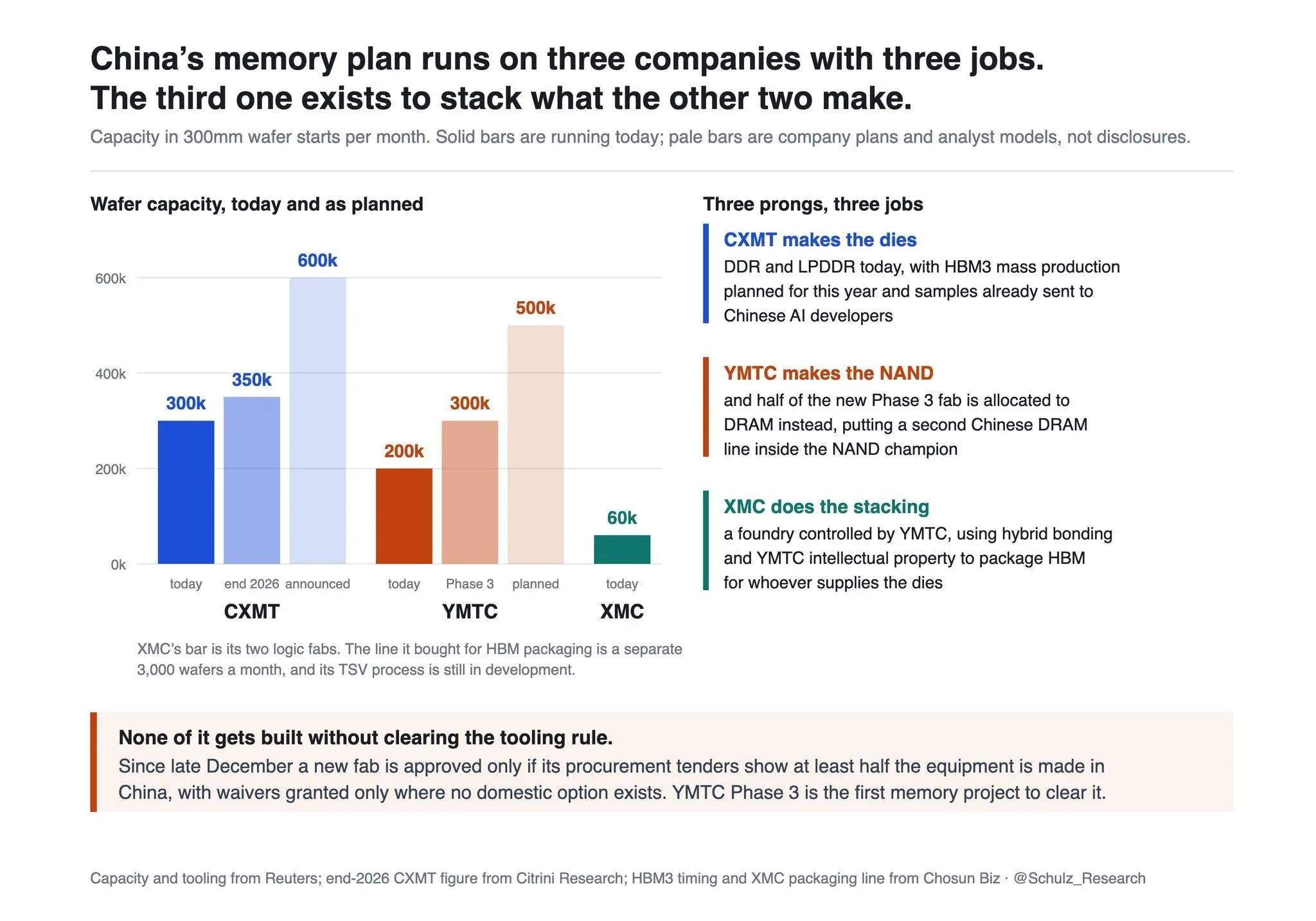
Researcher Schulz_Research stated that China's storage advancement is no longer a story of a single company, but rather a division of labor among three companies: CXMT is responsible for DRAM wafers, YMTC is responsible for NAND and has added DRAM in its latest factory, and the foundry controlled by YMTC, XMC, is responsible for stacking products from both. This division corresponds to the rules set by Beijing since late December last year, which state that new factory approvals must show that at least half of the equipment is domestically sourced, with exemptions only granted when there are no domestic options available. YMTC's Wuhan Phase III is the first advanced storage project to pass this rule and is set to begin production later this year.
CXMT operates three 300mm DRAM factories, each producing about 100,000 wafers per month; models indicate it will reach 350,000 wafers by the end of 2026, and if all announced projects are completed, the total will exceed 600,000 wafers. YMTC's first two factories in Wuhan have a combined capacity of 200,000 wafers, with Phase III expected to reach 50,000 wafers by 2027 and full production of 100,000 wafers, along with plans to build two more factories of similar scale. XMC has two 12-inch factories, each with about 30,000 wafers, and an HBM packaging line producing about 3,000 wafers per month. China supplies about 10% of the global DRAM bits, with YMTC accounting for 14% of NAND bit shipments in the second quarter, and China consumes about 30% of global storage.
CXMT has begun mass production of DDR5 and LPDDR5 and plans to start mass production of HBM3 this year, having already sent samples to domestic AI hardware developers. XMC has spent two years building HBM packaging based on hybrid bonding and YMTC's stacking IP, and is still advancing TSV technology.

 Risk warning Risk warning


