The rise of AI Agents has intensified the mismatch between AI capabilities and social resources
 Core Viewpoint

 People who understand AI lack resources, while those who have resources do not know how to use AI.
Author: Meng Yan's Blockchain Thoughts
Many people, seeing the rapid rise in AI performance, excitedly predict that the world will change quickly. In fact, this is a misunderstanding of the operational mechanisms of modern society, or to put it another way, it overestimates the importance of individual intelligence and personal productivity.
Have you noticed a phenomenon where many high-paying job positions in institutions and large companies have very high educational and IQ requirements during recruitment? Yet once people are hired, they end up doing mundane tasks that can be easily handled with ordinary abilities. However, even today, nepotism and relationships often outweigh capabilities. Organizations can choose someone with average abilities but with a special social identity and resources in a competitive environment. Although you may feel indignant about this, most of the time, such individuals can also perform the job adequately.
Why is this the case? Many attribute this to "degree inflation," but the reasons are more complex, which I call "ineffective productivity overflow."
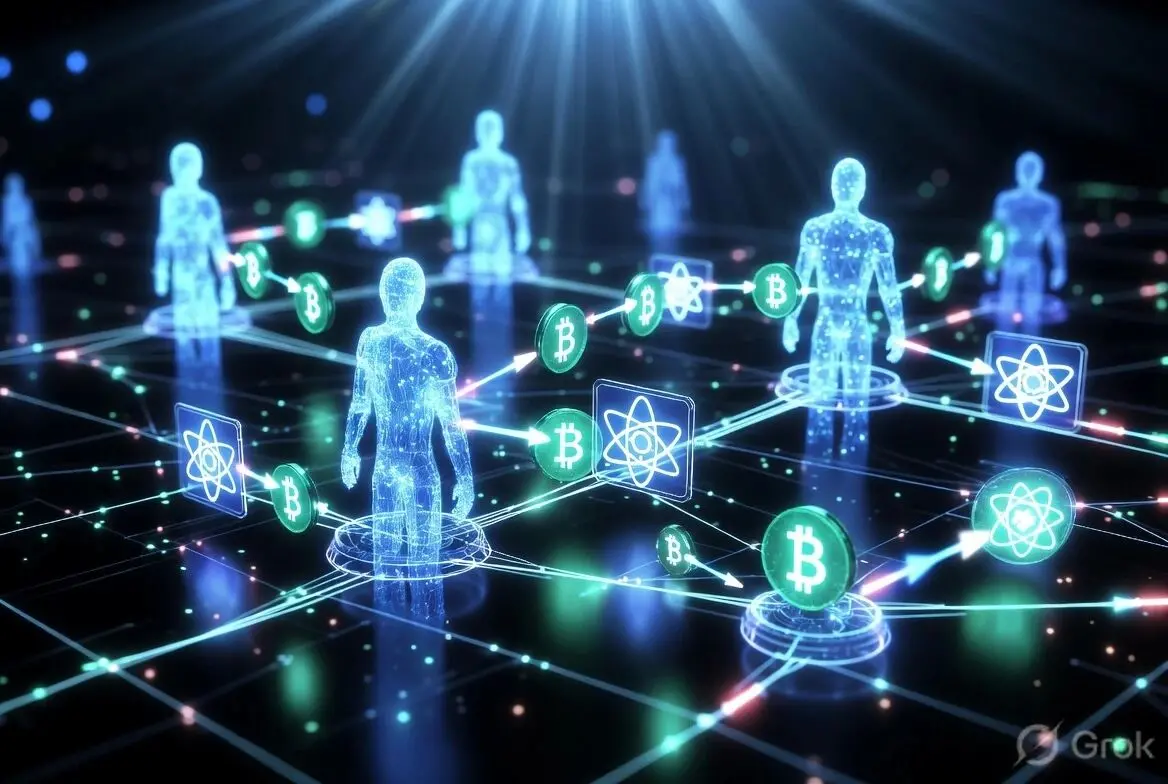
Modern society is a high-density network of collaboration, where a quality position represents an advantageous node in the social resource and power distribution network. The resources and power represented by this node are scarce in society, but the requirements for individual capabilities are not high, nor do they require the person in this position to have high productivity. If you are fortunate enough to obtain such a position and roll up your sleeves to work hard, you quickly realize that your productivity increase is not needed by this system. In other words, no matter how capable you are, this network does not require you. The reason organizations set such high entry requirements is purely because when many people can perform the job, they must select someone based on certain principles, and capability is often a less controversial principle, not that they genuinely need you to have such high abilities.
In this collaborative network of modern society, everyone is responsible for just a small part of the work. Except for a few individuals, most people simply play the role of routing resources within this network; personal productivity only needs to meet a standard, and once that standard is met, further increases do not provide significant benefits to the overall network system.
Therefore, as a node in a collaborative network, no matter how high your IQ or productivity, the excess part will be ineffective overflow. This network does not need it, cannot use it, and cannot digest it.
Thus, many people are excitedly claiming that they have increased their productivity through AI learning and application, but in reality, you are overestimating the role of your intelligence and productivity. Your slight increase in productivity has little value in the entire network and cannot be distributed. The organization and collaborative network you are part of do not need or cannot digest your overflowed productivity. Therefore, what most AI experts are reluctant to admit is that the main significance of these productivity increases is that they can free up more time for themselves to scroll through short videos, which does not lead to an increase in income, resources, or social status.
The current hype around OPC (One Person Company) follows the same reasoning. The development bottleneck of such companies is not internal productivity but rather their external resource connections. Given the position of most OPCs in the social business network today, their products and services cannot be sold, and they may not even have the value of self-satisfaction.
This issue is critical because all economic activities must result in economic incentives to close the loop, and then they can promote the evolution of the economic system through positive feedback loops. However, the positive incentives that most people gain from using AI are merely personal emotional ones, which cannot be sustained.
How can we create immediate positive incentives? The key lies in changes in network connection relationships. This change will lead to a redistribution of resources and power. If your node has more connections in the network, even if you cannot use AI at all, you will immediately feel an increase in income, influence, and power.
Of course, the general increase in node productivity will, in the long run, lead to changes in connection relationships. In the era of AI Agents, the differences in AI usage capabilities among different individuals are rapidly widening. This gap will eventually be perceived by the social network and transformed into changes in network connection relationships, even leading to changes in network topology. However, this will take time and will be slower than most AI influencers believe. If you do not actively accelerate connections and are merely content with the efficiency improvements in your original position, happy to have more time to watch videos, then you will not share in the early dividends of AI.
Moreover, an interesting mismatch is emerging here.
Currently, those who are most actively learning AI are often the secondary nodes in the network. Programmers, designers, researchers, and analysts study Agents, MCP, Skills, and Workflow daily, eager to increase their productivity tenfold. But the problem is, if you originally wrote one report a day and now can write ten, your organization does not need ten; if you originally created one prototype a week and now create one a day, the speed of budgeting, decision-making, sales, legal, and procurement has not increased sevenfold. Thus, a large amount of newly added productivity is blocked at the associated nodes, providing little value to the entire system.
Conversely, those who truly control resources, namely entrepreneurs, executives, investors, and various institutional leaders, originally have the most clients, capital, personnel authority, and social connections. If they could increase their AI capabilities tenfold, the leverage generated could far exceed that of an ordinary employee. However, the gap between these individuals and the forefront of AI application capabilities is rapidly widening.
A significant reason for this is that starting from the second half of 2025, with the rise of AI Agents, AI application innovation has increasingly become programming-driven.
Previously, AI was about chatting, writing, searching, and drawing, and both CEOs and programmers could participate. However, in the Agent phase, a lot of new things first emerge from AI coding: Agents, MCP, Skills, Harness, CLI, API, Git, IDE, various workflows, and orchestration. AI is becoming less like software and more like a management system that you need to build and direct yourself.
This creates a problem.
A fifty-year-old CEO may be very good at managing a company, financing, and mobilizing resources, and fully understands the importance of AI. But if you ask him to open a terminal, install a coding agent, configure MCP, run several Agents in parallel, and connect APIs, GitHub, and various tools, he may very well give up immediately.
This is not an IQ issue, but rather a skills gap.
Thus, a strange situation has emerged: those who understand AI lack resources, while those with resources do not know how to use AI.
The first group is desperately trying to increase productivity but lacks a sufficiently large network to absorb this productivity; the second group has a vast resource network but lacks the ability to integrate the latest machine productivity. I believe this mismatch is a particularly noteworthy issue in the coming years.
China has an additional problem. The two most active AI application ecosystems now are OpenAI and Anthropic. Due to various reasons, mainland China cannot directly and stably use these two systems, so what is isolated is not just the two models, but also the Agents, coding, toolchains, and developer ecosystems that have rapidly grown around them.
This impact may be more troublesome than the gap between the models themselves. Because in the Agent era, much knowledge is cumulative. Others move from chatting to tool invocation today, from tool invocation to Agent orchestration tomorrow, and the day after that, they start letting Agents develop tools themselves. If you enter six months late, the gap may not just be a few benchmark points, but an entire set of working methods.
Therefore, the truly interesting thing in the future is when this mismatch begins to be broken.
On one hand, can those currently in secondary nodes but with strong AI capabilities leverage this ability to gain more clients, capital, attention, and social connections, thereby changing their position in the network? On the other hand, can those who are already at the center of the network truly master Agents and combine their resource scheduling capabilities with machine productivity?
Once these two things begin to happen on a large scale, the impact of AI on society will shift from "everyone is working a bit faster" to changes in organizational structures, corporate boundaries, and resource allocation methods.
In this regard, we can see many prominent AI figures clearly. They often get excited about new technologies and breakthroughs and make sensational predictions. In hindsight, most of these predictions turn out to be false, yet they gain a lot of new attention and resource connections because of it. This is a clever approach; their real gain is not AI skills or productivity, but your attention. In contrast, those who only focus on improving their AI skills without increasing social connections are too earnest.
Therefore, I believe that the changes AI brings to society will likely go through three stages.
The first step is to change the nodes. Your personal productivity increases threefold, fivefold, or tenfold, which is what is happening now.
The second step is to change the connections. Some individuals gain more clients, capital, attention, and organizational capabilities because of AI, thus changing their position in the network.
The third step is to change the network topology. An organization that originally needed one hundred people may only need a dozen; tasks that previously had to be completed through a company may now be accomplished by a few people and a group of Agents, leading to the disappearance of some original intermediate nodes and the emergence of new super nodes.
Only at the third step does AI truly transform social structures.

 Risk warning