








Delphi Digital: Can the crypto options DEX produce the next Hyperliquid?
 Core Viewpoint

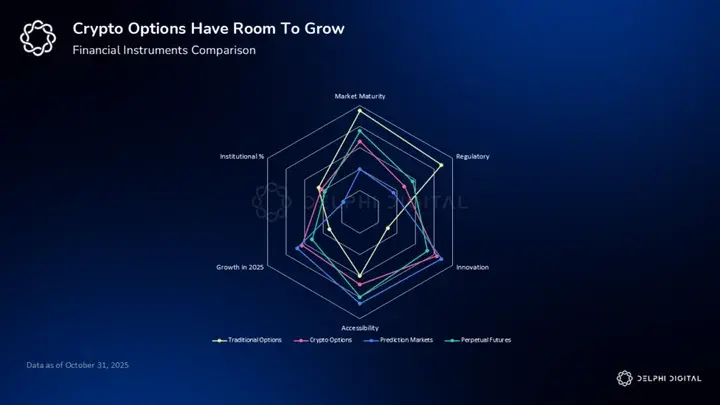
 Regulation, institutional demand, and technology have converged, and the crypto options DEX has finally found its opportunity. Whoever can break through first in terms of pooled margin and institutional access may become the next Hyperliquid.
Author: Delphi Digital
Compiled by: Jiahua, ChainCatcher
In the crypto industry, options have almost become a topic that people avoid. Many protocols and teams have repeatedly attempted to build decentralized exchanges for crypto options, only to ultimately fail, causing investors to lose money and completely lose interest in such tools. Recently, there have even been calls to have perpetual contracts and prediction markets completely replace options. In their view, options are the dinosaurs of financial instruments, destined to become historical fossils.
Although I am not an options trader myself, I understand why options are so powerful, why they are widely used in traditional financial markets, and why, with more institutions entering the on-chain space, they may occupy an important position in the crypto market.
In fact, the global derivatives market has reached an unprecedented crossroads. As more institutional funds enter the digital asset market through channels like BlackRock's Bitcoin ETF, an important question arises: Will options be replaced by perpetual contracts and prediction markets, or is crypto options precisely the most overlooked opportunity given the growth potential brought by institutional participation?
Today, let me, an ordinary investor, attempt to answer this question. I also want to point out the most noteworthy directions in the crypto options space, as the rewards from participating in these protocols are likely to be more substantial than battling other traders on one perpetual contract DEX after another. But before that, we need to first examine why traditional options have been able to establish a long-term foothold in the market and continue to generate returns.
The Vitality of Old-School Tools: Options Trading Volume Hits New Highs
Unprecedented Growth Momentum
The traditional financial options market has repeatedly defied predictions of its decline and demise, with trading volume setting records for six consecutive years. In 2024, the U.S. options market traded 3.8 billion contracts, with an average daily trading volume approaching 15 million contracts. This is enough to illustrate that the practical value of options is often overlooked by retail investors.
At the same time, 0DTE options, or options that expire on the same day, have indeed changed the way trading is conducted. This category of products accounts for half of the trading volume of S&P 500 index options. This trend towards short-term speculation mirrors today's crypto market, which is dominated by 100x leveraged perpetual contracts seeking instant gratification. Across the entire financial market, this change reflects the "short-videoization" of trading: the pace is getting faster, and feedback is becoming more immediate. The crypto market has always been at the forefront of this trend.
Even as more traders who prefer aggressive speculation enter the traditional financial market, the use of options by institutions can no longer be measured solely by trading volume. Professional hedge funds and asset management firms are increasingly utilizing options to construct portfolios and earn volatility risk premiums.
Meanwhile, a group of advanced traders, positioned between ordinary retail investors and professional institutions, has rapidly emerged. They require institutional-level trading capabilities while also hoping for products that are as easy to use as retail-oriented tools.
In this context, the continuous expansion of infrastructure is not surprising: there are currently 18 options exchanges operating in the U.S., with two more in preparation. At first glance, this seems to make the market more fragmented, but in reality, it brings more competition and specialization, improving the liquidity depth and trading experience in specific niche markets.
The Curse of Crypto Options
Most people in the crypto community have a sort of "post-traumatic stress" regarding crypto options, and this is no secret.
From 2021 to 2024, crypto options protocols fell one after another, often suffering quite severe defeats. Opyn declined after being fined $250,000 by the Commodity Futures Trading Commission (CFTC), and its founder completely exited the crypto industry as a result.
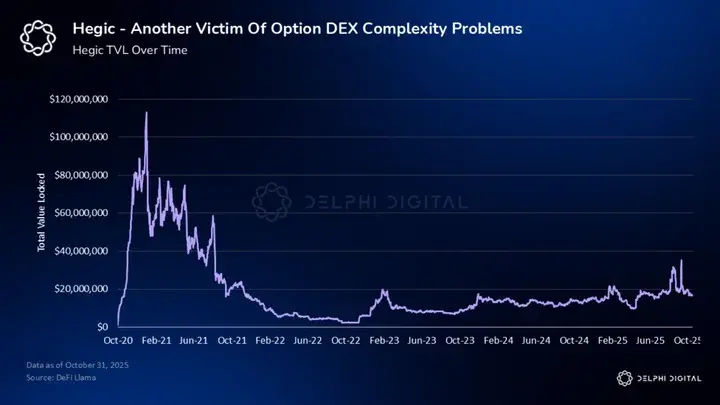
Hegic's total locked value (TVL) once reached $1 billion, but then shrank by 80%. DopeX was exposed for 26 security vulnerabilities and nearly shut down. Meanwhile, centralized exchanges like Deribit still occupy about 90% of the crypto options market, continuously processing billions of dollars in options trades, while DEXs have fallen into one crisis after another.
However, this trend is beginning to change. In September 2025, the U.S. Securities and Exchange Commission (SEC) and CFTC issued a joint statement allowing regulated exchanges to conduct spot trading of crypto assets. Subsequently, legislation such as the GENIUS Act and the CLARITY Act has made progress and gained significant bipartisan support. Additionally, 85% of institutional investors expressed interest in allocating digital assets.
The convergence of regulation and price catalysts at this time evokes memories of 1973. At that time, the Chicago Board Options Exchange (CBOE), with the support of the SEC, introduced standardized options for the first time, combining the Black-Scholes pricing model. Since then, the market has grown from trading about 20,000 contracts per day to over 500,000 S&P 500 index options traded every hour.
More importantly, the crypto market now has improved models suitable for its characteristics, such as the Kou and Bates models; it has reliable clearing infrastructure, namely blockchain and smart contracts; and finally, it has welcomed a more defined regulatory environment.
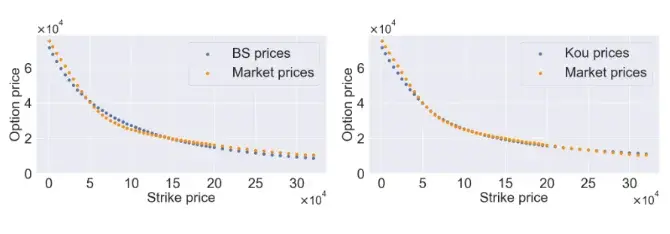
A brilliant study by Julia Kończal from Wrocław University of Science and Technology compared the Black-Scholes model with the Kou model.
Many options DEX protocols have explored and iterated for years amid failures and regulatory resistance, finally building a margin system that can benchmark traditional finance. Now, options platforms that combine institutional-level functionality with DEX transparency have finally emerged, just as Hyperliquid brought changes to the perpetual contract market.
Lessons from the "Graveyard" of Crypto Options Projects
The road to a viable options DEX is littered with fallen projects, reminding newcomers that moving such a complex financial instrument on-chain presents fundamental challenges. From January 2021 to February 2022, the overall TVL of options DEXs decreased by 24%. Some individual protocols fared even worse, shrinking by over 80% from their peaks.
Often, these platforms simply appeared too early, with regulatory rules not keeping pace.
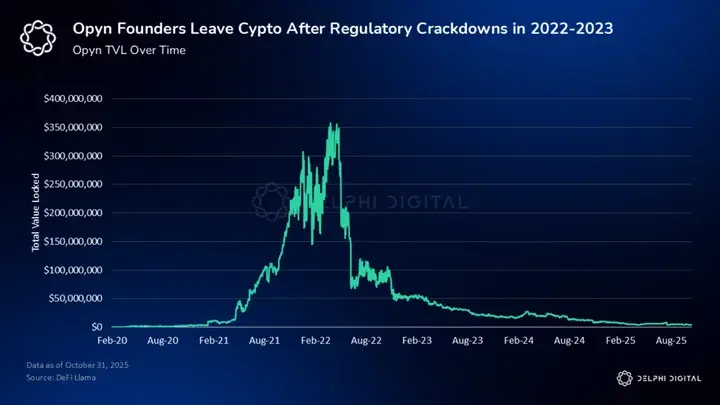
For example, the then-industry leader Opyn faced accusations from the CFTC in 2023 for operating a derivatives exchange without a license and offering an options product called Squeeth. The CFTC stated that Opyn must register as a swap execution facility, but it had not obtained the necessary qualifications.
Opyn attempted to remedy the situation by blocking IP addresses from restricted areas, but the CFTC did not accept this. Opyn also failed to implement appropriate customer identification and anti-money laundering measures as required by the Bank Secrecy Act, namely KYC/AML.
Just two months later, the two founders completely exited the crypto industry. They stated, "After Opyn faced regulatory action, we decided to leave the crypto industry. This was really hard for me and Alexis to accept. We thought we would stay in this industry for a lifetime."
The technical vulnerabilities exposed by DopeX in 2023 illustrate how serious security risks can be introduced by smart contracts. An audit by Code4rena found nine high-risk vulnerabilities and 17 medium-risk vulnerabilities in DopeX's infrastructure.
For instance, ReLP's slippage calculation used the wrong quote direction, writing ETH/RDPX as RDPX/ETH. That's right, it was written backward. This could lead to users receiving amounts that are less than one eight-thousandth of what they expected.
Additionally, there were issues with the precision handling of price oracles: the relevant code assumed a precision of 10^8, but the RdpxEthPriceOracle actually returned a precision of 10^18, potentially causing significant discrepancies in value calculations within core contracts. Fortunately, these issues did not ultimately lead to major attack incidents, but the audit revealed a fact: the architectural complexity required for options DEXs is far greater than that of simple DeFi building blocks.
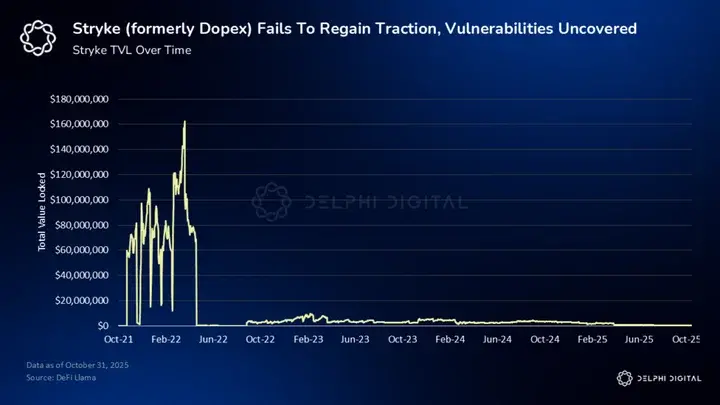
(DopeX later rebranded as Stryke.)
Hegic may be one of the earliest projects in this field, and its decline showcases the typical death spiral faced by options DEXs during increased market volatility and rising pressure. Hegic's design forced liquidity providers (LPs) to bear the implied risk of unlimited losses from selling options, while an additional 14-day lock-up period further prompted LPs to withdraw collectively.
Hegic also required users to manually exercise all in-the-money options, meaning options that could profit upon exercise. If users forgot to exercise, they would miss out on profits, which is a rather poor experience for retail investors.
Ultimately, in 2022, when ETH fell from $4,800 to $2,200, it triggered a series of withdrawals from LPs and exposed the malignant correlation faced by options protocols: the greater the market volatility, the more useful options become, but the protocols themselves also become more fragile.
However, the common issues behind these failures are closely related to the characteristics of options themselves:
The convexity of options, meaning the non-linear nature of returns as the underlying price changes, limits their potential market primarily to individuals and institutions with professional capabilities.
The appeal of options to retail investors is not as direct as that of perpetual contracts. Therefore, a successful options DEX must primarily serve institutional funds.
From these failure cases, five categories of systemic issues can be summarized that any future successful options platform must address:
Regulatory uncertainty is a matter of life and death. Although the regulatory environment faced by U.S. exchanges continues to improve, platforms must ensure full compliance, especially when serving institutional clients.
Inefficient capital can create structural disadvantages. Leverage can attract professional market makers, but to provide leverage, sufficient liquidity must be available.
Fragmentation of Liquidity. When liquidity is dispersed across hundreds of options contracts, the already limited capital may be diluted to the extent that it becomes difficult to maintain trading. Just one options series for ETH may include 4 expiration dates, 10 strike prices, and both call and put types, totaling 80 contracts.
High Technical Complexity. Options pricing involves extremely complex calculations, management of Greek risk indicators, construction of implied volatility surfaces, and tracking of time value decay. Greek risk indicators, also known as Greeks, are used to measure the sensitivity of options to factors such as price, volatility, and time changes. Each additional feature may expand the potential attack surface of DEX.
Malicious Correlation Between Market Risks. When a bear market triggers LP withdrawals, it often coincides with the peak demand for options, leading to a death spiral. Additionally, 35% of crypto trading occurs on weekends, but when the market crashes, retail investors often exit quickly while institutions remain on the sidelines.
Why Do Institutions Dominate the Options Market?
It is no coincidence that institutions hold a significant share of traditional financial options trading volume. For participants with sufficient expertise, options have fundamental structural advantages.
Last year, the trading volume in the traditional options market set another record. Over the past eight years, options trading volume has increased by 317%, while stock trading volume has grown by 221%. Retail trading remains highly concentrated in contracts priced below $0.25, with each transaction typically involving only 1 to 10 contracts.
Meanwhile, institutions execute block trades of over 1,000 contracts through over-the-counter trading desks and algorithmic access via APIs, completely bypassing public exchanges. Such substantial institutional demand arises from different uses compared to ordinary retail investors, including hedging, volatility trading, and yield enhancement.
In institutional hedging strategies, options function more like insurance for portfolios rather than speculative tools.
For example, a pension fund holding $1 billion in stocks may buy a put spread on the S&P 500 index to limit losses during market pullbacks. This way, it only needs to pay a corresponding proportion of the premium without bearing the full downside risk unprotected. Such protective puts serve as insurance during market sell-offs.
The collar strategy combines protective puts with covered calls, providing downside protection while retaining some upside gains. A covered call involves holding the underlying asset while selling corresponding call options. For institutions managing billions across time zones, with fiduciary responsibilities and investment mandates, options are the only feasible way to implement tail risk hedging. As traditional financial institutions buy more digital assets, the extreme volatility in the crypto market has also spurred similar institutional hedging demand, as seen in recent chain liquidations.
Volatility trading represents a more complex use case. Institutions can view volatility as a tradable asset rather than just a market indicator. The existence of volatility risk premium arises because implied volatility, which reflects market expectations of future volatility as indicated by options prices, is typically higher than the actual realized volatility. This allows systematic strategies that sell options to earn this premium over the long term.
Institutions employ various strategies to profit during market panic and also collect premiums by shorting volatility during calm periods. In the crypto market, this premium is even more pronounced. The implied volatility of Bitcoin is 3 to 5 times that of the VIX, which measures expected volatility in U.S. stocks. This creates considerable opportunities to earn volatility premiums.
Institutions utilize the Black-Scholes pricing model, Greek risk indicator analysis, and advanced data analytics tools to identify mispricing and profit from it.
Structured products combine debt securities with options to create risk-return structures that are difficult to achieve with conventional financial instruments.
Principal-protected products allocate about 90% of funds to bonds to secure the principal at maturity, using the remaining 10% to buy call options to share in upside gains. This is particularly attractive to risk-averse pension funds and endowment funds.
Yield-enhancing products, such as reverse convertible products, pay higher coupons by allowing investors to assume the risk of future conversion into stocks. Their yields far exceed those of bonds, but the principal is also at risk.
Yield participation products use options to enhance returns and manage risks through complex multi-leg strategies. The global traditional structured notes market exceeds $20 trillion, while on-chain structured products leverage smart contracts and automated settlement to reduce costs by 1% to 5% annually.
As a result, institutions' use of covered call strategies to enhance yields is growing exponentially. This strategy involves selling call options while holding the underlying asset to generate additional income.
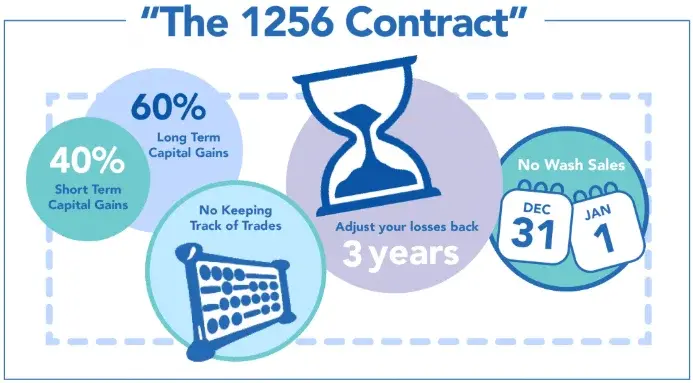
For example, the asset management scale of JPMorgan's equity premium income ETF has surpassed $36 billion, with a yield of 8.4%. Covered call ETFs account for about 16% of all ETFs in the U.S. Last year alone, derivative income products added $34 billion in assets, bringing the total asset management scale to $110 billion. The tax advantages of covered calls are also attractive: under Section 1256 of the U.S. tax code, options premium income can qualify for capital gains tax treatment, which has a lower rate than ordinary income.
The contrasting ways institutions and retail investors use options further explain why institutions dominate.
Firstly, institutions establish long positions through multi-leg spread combinations and delta-neutral strategies, with individual trades easily exceeding 1,000 contracts. Delta-neutral strategies reduce the impact of price fluctuations on the portfolio by offsetting directional exposure.
Institutions execute trades through algorithms and block trading platforms, focusing on volatility risk premiums and quantitative models. Retail investors, on the other hand, almost exclusively make short-term bets using simple call and put options, with each trade involving only 1 to 10 contracts. In the crypto market, 81% of retail positions are closed within less than a day. Nearly 90% of retail options order flow connects with firms like Citadel, Wolverine, and Susquehanna through order flow payment arrangements. Institutional orders completely bypass these firms, trading directly through APIs or algorithmic trading.
Thus, the gap between the two is structural: institutions have quantitative researchers, engineers, and risk management teams, and they implement regulatory compliance; retail investors prefer to dive into call options that expire the same day.
Institutions Are Accelerating Their Entry into the Crypto Options Market
By 2025, the monthly trading volume of crypto derivatives has approached $90 trillion, accounting for three-quarters of the total trading volume in the crypto market. Market infrastructure has also developed to institutional-grade standards. In the second quarter of this year, the notional value of open interest (OI) for Bitcoin options on CME exceeded $4 billion. Globally, the trading volume of exchange-traded crypto derivatives surpassed 20 billion contracts in September 2024, with the notional value of open interest in late May this year setting a record of over $80 billion.
Perhaps more noteworthy is a survey by Ernst & Young and Coinbase in 2025, which showed that 71% of institutional investors have already invested in digital assets, with 41% holding spot assets and 46% planning to invest in investment tools that hold underlying crypto assets in the next two to three years.
Deribit accounts for about 90% of crypto options trading volume, meaning that 9 out of every 10 Bitcoin options trades occur at this Coinbase subsidiary based in Dubai that caters to institutions.
Deribit offers cash-settled European options for BTC and ETH, which can only be exercised on the expiration date, and provides linear options for altcoins through integration with Paradigm. Its institutional features include server hosting services in the LD4 data center, portfolio margin models, block trading, combo orders, multicast market data, and proof of reserves mechanisms. These features attract the most professional participants in the industry.
CME is the primary regulated platform for U.S. institutions participating in crypto options trading. In January 2024, its total trading volume for crypto derivatives exceeded $94 billion, setting a new high since 2021. Among them, Bitcoin futures contributed $73 billion, and Bitcoin options contributed $1.57 billion that month.
CME's products include futures and options for BTC and ETH, as well as micro contracts suitable for smaller trading sizes. Standard contracts provide weekly options expiring from Monday to Friday, while micro products offer options expiring from Tuesday to Thursday. CME is strictly regulated by the CFTC and provides a highly transparent price discovery mechanism by allowing margin offsets between futures and options. Institutional demand is primarily focused on hedging during uncertain periods, basis trading arbitrage, and portfolio allocation. These products allow institutions to participate in related markets without needing to arrange separate custody for crypto assets.
Paradigm operates a leading institutional over-the-counter trading liquidity network. Note that this Paradigm is not the venture capital firm. Since 2016, it has accumulated a trading volume of about $400 billion; as of May 2024, it accounted for 17% of BTC and ETH options trading activity on Deribit. The platform handles about one-third of Deribit's monthly trading volume, serving over 700 institutional clients, ranging from family offices to hedge funds. It aggregates liquidity from multiple trading venues through a request-for-quote (RFQ) mechanism, leveraging unified market functionalities and providing anonymity for traders.
However, given that the crypto market already has these excellent centralized options, why do we still need an options DEX?
What Unique Advantages Does an Options DEX Offer Institutions?
Considering Deribit's dominance and CME's product offerings, questioning whether an options DEX truly has a market is entirely reasonable. However, the DEX architecture possesses some unique advantages that align perfectly with institutions' needs in risk management, operational efficiency, and trading strategies—areas where centralized platforms struggle to compete.
Firstly, for global institutions that need to manage risks across regions and time zones, 24/7 trading is a significant breakthrough. According to research by Copper Research, 35% of crypto trading occurs on weekends, so related financial instruments must continue trading after the U.S. market closes. After all, crypto assets do not have a fixed geographic affiliation like U.S. stocks; they trade globally in unprecedented ways.
When macro shocks occur, the crypto market continues to trade even if traditional financial markets have closed. The recent liquidation crisis is an example: Trump announced a 100% tariff on China over the weekend but retracted part of his statement before the market opened on Monday. In May 2025, Coinbase Derivatives became the first CFTC-regulated exchange to offer 24/7 trading for BTC and ETH futures, emphasizing the importance of around-the-clock trading.
CME has also announced plans to provide 24/7 services for crypto assets and options trading by 2026, stating that customer demand for this has increased.
Achieving automation and programmable settlement through smart contracts has given DeFi projects operational advantages that traditional financial infrastructure struggles to match. Blockchain settlement takes only seconds, while traditional finance typically counts in business days. Atomic transactions ensure that all parts are either completed together or canceled together, thereby eliminating settlement risks in peer-to-peer transactions.
BlackRock's BUIDL fund is a real-world example of tokenizing U.S. Treasury bonds using programmable settlement: investors can access liquidity, borrow, and deploy funds around the clock without needing to sell the underlying assets. Additionally, more complex multi-party business processes can automate tasks that typically require a large office staff, such as automatically paying suppliers, conducting atomic settlement transactions, and automatically settling options and distributing profits based on oracle quotes. Smart contracts provide a more cost-effective, faster, more composable, and more robust way to operate financial instruments.
The higher transparency brought by on-chain verification gives institutions stronger auditing and risk management capabilities. Blockchain is a public ledger that can eliminate information asymmetry among market participants, which is common in the opaque internal matching and custody systems of traditional exchanges.
SEC Commissioner Caroline Crenshaw has stated that although "DeFi removes intermediaries that play important gatekeeping roles," its transparency creates entirely new capabilities. For institutional risk management, on-chain infrastructure can monitor risk exposure and collateral in real time. Easily accessible records facilitate compliance and auditing, while executing rules-based smart contracts helps prevent manipulation and reduces front-running. Of course, the flip side of these advantages is the exposure to maximum extractable value (MEV) attacks, though a significant portion of these can now be mitigated through cryptographic techniques.
Moreover, the composability with mature DeFi protocols can give rise to products that cannot be realized in a Web2 environment. A large amount of DeFi code is open-source, allowing different projects to connect and combine like "financial building blocks." For example, you can now deposit assets in Aave to borrow against them as collateral, provide liquidity to a DEX, and then stake the LP tokens earned to earn more returns. All these operations can be completed within an audited, composable ecosystem.
For institutional products, decentralized options vaults can automatically generate returns through options strategies, while yield aggregators can further optimize returns across different protocols. According to research by Accenture, blockchain-based structured products can reduce operational costs by up to 5% annually while supporting customizable combinations, opening up to users outside institutions, and enabling real-time pricing and settlement.
Self-custody solutions can eliminate counterparty risk while maintaining a high level of security. Major custodial service providers like Fireblocks, Anchorage, and Coinbase Prime now offer institutional-grade infrastructure.
For DEX trading, self-custody means significantly reduced counterparty risk, complete control over assets, and no risk of re-hypothecation, which is the risk of custodians using clients' collateral for financing again. Chainlink co-founder Sergey Nazarov has stated, "DEX can reduce counterparty risk… and also lower some systemic risks in the blockchain industry by reducing the concentration of funds in a few centralized exchange wallets."
If you adopt self-custody, you can avoid the losses caused by the FTX collapse; if you only trade on decentralized exchanges, your KYC information will not leak in Coinbase's privacy breach incident. The crypto industry was initially built on the principle of self-control over assets, and we should not be forced to compromise on this point.
In addition to security benefits, as DEX infrastructure matures, its capital efficiency is becoming increasingly advantageous. DeFi initially required over-collateralization, but platforms like Synquote now allow LPs to sell short-term naked call options with only one-tenth of the nominal value of the underlying asset, meaning they can sell call options without holding the corresponding spot. This has greatly improved on-chain capital efficiency. With leverage, flash loans, and concentrated liquidity models, traders can use capital more efficiently.
Advanced Pricing Models and Sophisticated AMM Designs Determine Platform Success
The primary barrier to success for options platforms is the technical complexity required for pricing. According to research by Kończal, advanced models that incorporate price jumps and stochastic volatility can reduce pricing errors by 40% to 60% compared to simply using the Black-Scholes model.
Black-Scholes provides a basic framework for pricing European options using spot prices, strike prices, time to expiration, risk-free rates, and volatility. However, its assumptions do not hold in the crypto market. It assumes constant volatility, while volatility in the crypto market often appears in clusters; it uses a log-normal distribution assumption, while the return distribution of crypto assets exhibits significant fat-tail characteristics, with extreme market conditions occurring more frequently; it also assumes prices do not jump, while the crypto market often experiences sharp price spikes and drops. The implied volatility of Bitcoin is 3 to 5 times that of the VIX, and oracle delays can create opportunities for front-running, while skewed return distributions render the classic Gaussian distribution assumption used in traditional options pricing ineffective.
A comparative study published in March 2024 examined BTC and ETH futures options with eight different expiration periods and found significant performance differences among various models.
For Bitcoin, the Kou model clearly outperformed across all maturities. It assumes that prices occasionally "jump," allowing it to better capture Bitcoin's extreme volatility than other models.
For ETH, the Bates model performed the best. This model combines two factors: time-varying volatility and occasional price jumps, making it more realistic and accurate. Overall, models that incorporate both volatility changes and price jumps significantly outperform the classic Black-Scholes model. This creates a competitive advantage that distinguishes institutional-grade platforms from those primarily targeting retail.
Another advantage of institutional-grade platforms is reflected in the construction of the implied volatility surface. The implied volatility surface is a three-dimensional graph that shows how the implied volatility of options changes with strike prices and expiration dates. Constructing this graph is a highly complex task that requires a high degree of accuracy.
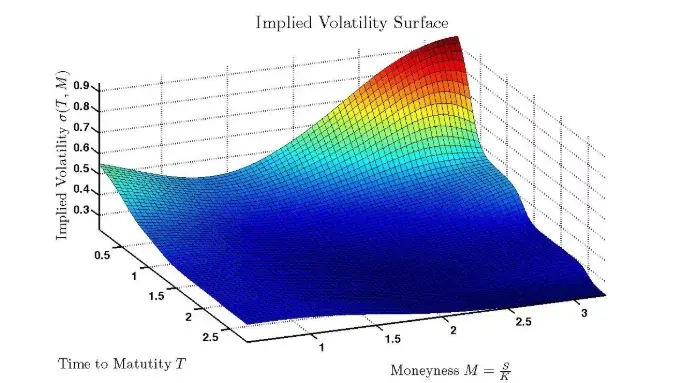
Constructing the implied volatility surface requires:
- Collecting data for different strike prices and expiration periods.
- Excluding data for options with insufficient liquidity, with the original text using a filter marked as deviating by more than two standard deviations.
- Fitting using the SABR model, which includes four parameters:
- α: overall volatility level.
- β: scaling relationship of volatility with price changes.
- ρ: correlation parameter affecting the skew of call and put options.
- υ: parameter affecting the curvature of the surface and the "smile" shape.
- Interpolating missing data and cautiously extrapolating for deeply out-of-the-money options.
The implied volatility surface in the crypto market exhibits distinctly different characteristics:
- The volatility "smile" for short-term options is steeper, meaning the differences in implied volatility for different strike prices are greater.
- The skew for put options is more pronounced, meaning the implied volatility for downside protection is higher.
- During uncertain periods, the volatility term structure may invert, with short-term implied volatility exceeding long-term.
- No-arbitrage constraints must be satisfied to avoid contradictions that could lead to deterministic profits between different option prices.
So far, three main automated market maker (AMM) architectures have emerged in the crypto options space, each with different trade-offs.
First, Panoptic pioneered the perpetual options model on Uniswap by converting LP positions from Uniswap V3 into tradable perpetual options. In this design, LP positions are equivalent to selling perpetual options and continuously collecting premiums. The accumulation of fees depends on realized volatility, the time prices remain within the LP range, and the trading volume of the liquidity pool; long positions are established by borrowing and selling LP shares.
The mathematical characteristics of this model are also different: Gamma, which is the sensitivity of Delta to changes in the underlying price, remains constant; there is no time value decay corresponding to Theta; and the continuously paid premiums tend toward the expected levels of the Black-Scholes model.
Its advantages include not relying on oracles, a complementary clearing fee mechanism, compatibility with ERC-1155, and using the width of the liquidity range as a time-like parameter. The drawbacks are also apparent, including fragmented liquidity, a complex user experience, and the limitation of trading only Uniswap pairs. I don't want to trade cbBTC or WBTC!
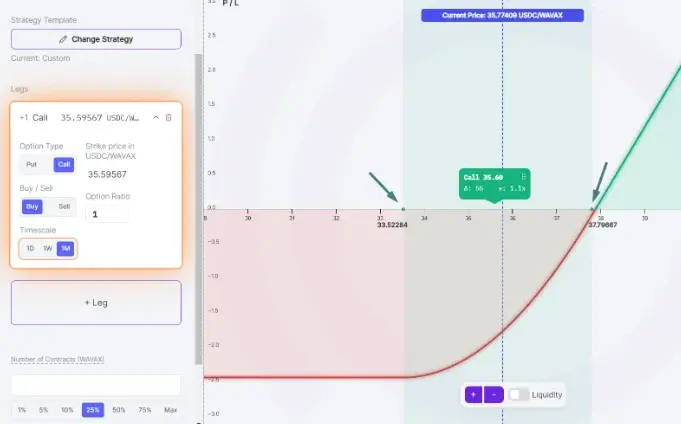
On the other hand, Lyra, now known as Derive, adopts a more traditional options AMM architecture: it offers European options with fixed expiration dates, with a market-making vault receiving USDC deposits and automatically delta-hedging through perpetual contracts from GMX or Synthetix.
Its pricing uses a modified Black-Scholes model, adjusting the skew in real-time based on pool utilization. Users can deposit stablecoins unilaterally to provide liquidity, with a three-day cooling-off period for deposits and withdrawals, and an annual percentage yield (APY) ranging from 8% to 40% based on market conditions.
Risk management mechanisms include circuit breakers, maximum price spread multipliers, a minimum liquidity requirement of 10%, mandatory exercise for out-of-the-money long options, and liquidation of under-collateralized accounts. In 2024, Lyra, now Derive's V2, further introduced a central limit order book (CLOB), on-chain settlement, dedicated application chains, combined margin, and integration of spot and perpetual contracts.
Finally, Premia V3 has pioneered a hybrid model of order book and AMM, combining range orders, which are similar to Uniswap V3 and proportionally allocate fees; a limit order book on Arbitrum that does not require gas fees; an RFQ pricing network; and strategy vaults.
This architecture can aggregate up to four sources of liquidity for each options order. Its European options use standardized strike prices and expiration dates while supporting permissionless creation of liquidity pools, access to multiple oracles, physical delivery, and margin leveraged trading. The competition among multiple sources of liquidity, combined with complex strategy vaults that do not require active management, can collectively enhance capital efficiency.
Key Players: Competitive Landscape of the Crypto Options Market
After introducing the three AMM architectures, we can finally take a look at which projects are vying for the leading position in the decentralized options market. Portfolio margin has become a key innovation that distinguishes institutional-grade platforms from pure retail platforms, while DeFi significantly enhances capital efficiency. Protocols that combine portfolio margin, perpetual contracts, multi-leg strategies, and performance close to centralized exchanges will capture market share from centralized competitors like Deribit.
Derive, formerly known as Lyra
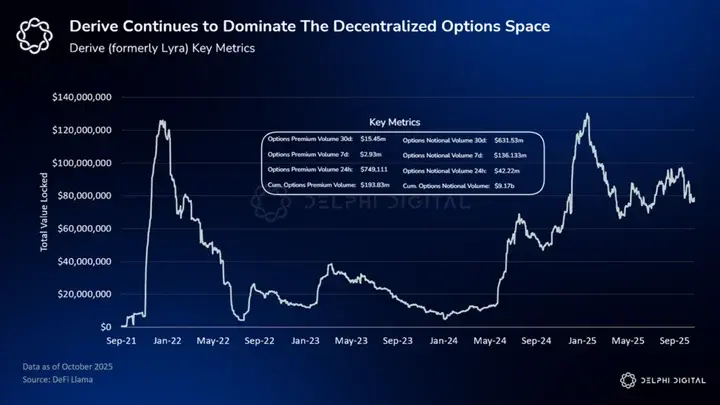
Derive is the leader in the decentralized options market, with an options nominal trading volume exceeding $630 million in the past 30 days and a TVL of over $75 million.
Derive, originally named Lyra, was renamed in August 2024, marking its upgrade from a simple options AMM to a complete derivatives infrastructure. Derive's leading position seems to stem from its pioneering launch of an available options AMM in 2021 and continuous innovation through multiple versions thereafter. The V2 architecture launched in 2023 shifted the trading model from AMM to a central limit order book, achieving performance close to centralized exchanges while maintaining fully on-chain settlement.
Derive operates on a self-built, OP Stack-based layer two network that is EVM compatible, achieving transaction execution speeds of less than one second, with performance nearly on par with centralized exchanges. Its modular architecture consists of three parts: ERC-721 accounts for storing user assets, a risk management module responsible for margin requirements and liquidation, and asset contracts defining derivatives attributes. This three-layer division of labor allows for rapid iteration of products without the need to reconstruct the entire protocol.
In addition to modularity, the portfolio margin system may be Derive's most outstanding feature. Traditional margin models view each position independently, while portfolio margin assesses the overall risk of all positions through scenario analysis, simulating different market scenarios to calculate maximum potential losses. This way, positions that have already hedged against each other require less capital than the total calculated for each position individually, resulting in far greater capital efficiency than ordinary isolated margin. Derive's system continuously monitors the initial margin rate and maintenance margin rate, dynamically adjusting as market conditions change.
Derive's liquidation system adopts a reverse Dutch auction: liquidators can bid to take over discounted portfolios, with the discount gradually widening until someone is willing to take over. This reduces reliance on traditional market maker liquidation systems and allows Derive to implement partial liquidations, only closing enough positions to restore margin health rather than emptying the entire account.
Derive is not just an options DEX; it also offers perpetual contracts, structured products, and lending products that accept derivatives positions as collateral. Derive supports various assets as collateral, notably Ethena's yield-bearing stablecoin, allowing users to continue earning while providing collateral. Its full-margin mechanism allows for a single collateral pool that supports positions across different assets and products; the Delta hedging feature integrated with GMX and Synthetix can offset LP's directional risk. Additionally, the market-making Vault allows passive LPs to earn fees through automated market making, while a three-day cooling-off period strikes a balance between liquidity stability and withdrawal flexibility.
Derive has also made a series of significant advancements. In December 2022, it partnered with Ethena, bringing millions in funding to the foundation and integrating Ethena's stablecoin. Ethena also engages in basis trading on Derive's perpetual contract market, providing stable trading volume and order flow. In return, Derive allocated 5% of its platform token DRV total supply to sENA stakers to better unify long-term incentives.
Derive has also collaborated with EtherFi, Swell, Kelp, and Lombard to integrate liquid staking tokens (LST) into the derivatives ecosystem. In January of this year, Derive partnered with Infinex to launch the DRV token and integrated Swidge's cross-chain exchange feature, enabling over 500 assets to be traded without the need to handle cumbersome cross-chain bridge operations separately. Collaborations with Amberdata for real-time analytics, with Messari's Pro AI trading platform, with FalconX for market-making, and hiring talents such as the former Chief Marketing Officer of Deribit have all enhanced its appeal to institutions.
As mentioned earlier, Derive has issued the DRV token. DRV was launched in January 2025, migrated 1:1 from the old LYRA token.
As of the writing of this article, the circulating market cap of DRV is $43.6 million, with a fully diluted valuation (FDV, the valuation of all tokens at current prices) of $76.6 million. Considering Derive's recent daily trading volume has repeatedly hit new highs and the on-chain options market is expected to continue expanding, DRV may be a secondary market investment target worth paying attention to.
Rysk Finance
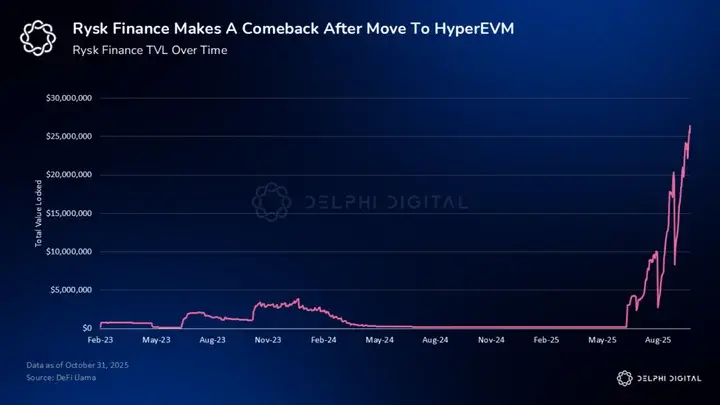
Rysk has chosen a different route, focusing on earning volatility-related returns through covered call options and cash-secured put options. Cash-secured put options refer to selling put options after reserving sufficient cash. As of October 2025, Rysk's TVL has exceeded $23 million, experiencing significant explosive growth after the launch of HyperEVM.
Rysk's trading employs an RFQ (Request for Quote) mechanism. Covered call options and cash-secured put options are priced through competitive bids from counterparties, and the system then presents the optimal quotes to users. Once a transaction is completed, the premium is immediately transferred to the user's wallet on-chain, while the collateral is always held in a smart contract, inaccessible to external parties.
Thus, Rysk has no counterparty risk, as all funds are directly retained within the smart contract, and there is no need to re-use collateral for margin.
With the new DeFi foundational component Rysk V12, Rysk has moved structured products entirely on-chain. Users can participate in options and volatility yield strategies without needing to deeply understand options trading, allowing these products to cover a broader range of market participants.
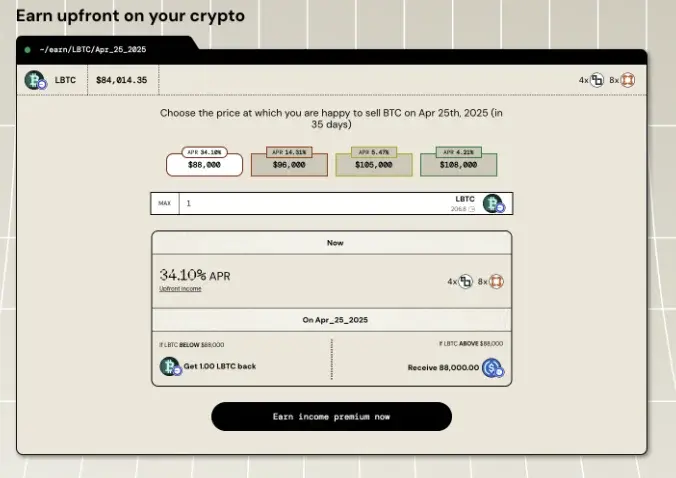
Users simply open Rysk, select covered call options or cash-secured put options, choose an underlying asset from various options including LST, determine the expiration date and target price, and then select the trade size through the RFQ system. Just like that, the premium is instantly credited.
The migration to HyperEVM in August marked a turning point for Rysk, with 98% of its original TVL migrating along with it. Now, Rysk has become the first major options protocol on HyperEVM, gaining a significant competitive advantage in this evolving ecosystem. However, it also faces competition from other simple staking products and cannot allow users to buy and sell options independently like standard options DEXs. Even so, I still recommend trying Rysk, as it offers an interesting and simple way to earn yields.
Synquote
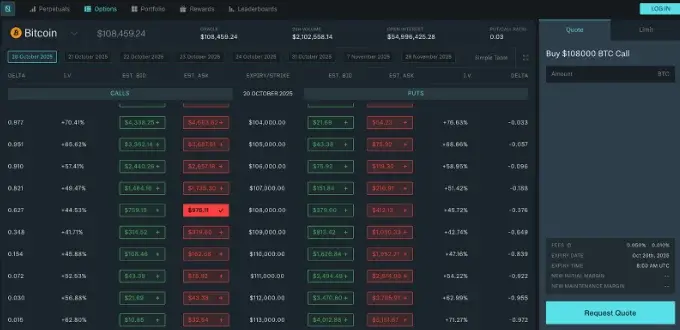
Synquote is a decentralized options and perpetual contract protocol that employs a hybrid RFQ system, allowing traders to connect directly with institutional market makers. It does not use AMM but obtains quotes from multiple market makers through an off-chain RFQ engine. Therefore, even orders exceeding one million dollars can achieve deep liquidity and very low slippage. This model bypasses the liquidity fragmentation issues faced by on-chain order books and AMMs, bringing a near CEX experience to DeFi products. Synquote is known for emphasizing product simplicity, allowing options trading to be completed in two steps, making it easier to attract retail users compared to more complex competing products.
Synquote currently offers European options for over 500 trading underlyings. By supporting a wider range of altcoins, it can better cover illiquid markets and attract more users. The team has also recently launched perpetual contracts, seemingly aiming to become a one-stop platform for decentralized trading.
One of the most attractive features of Synquote is its improvement in LP capital efficiency. Platform market makers can sell options without full collateral, improving upon the early DeFi protocols that required 100% collateral, allowing LPs to allocate funds more freely. The RFQ system manages the increased risk through a margin system and market maker screening mechanism, effectively bringing the credit efficiency of over-the-counter trading to DeFi infrastructure. For traders, this means more favorable premium quotes and narrower bid-ask spreads, as market makers can provide option quotes more effectively without tying up large amounts of capital. Synquote's data is public, and it announced in May 2024 that its cumulative options trading volume has exceeded $2 billion, with over 100,000 transactions.
Additionally, Synquote has not yet issued a token but has launched a points-based trading rewards program for users. Coupled with support from institutions like Coinbase Ventures and Alliance DAO, this suggests that it may issue a token in the future, making it worth watching and participating in some trades.
Deribit
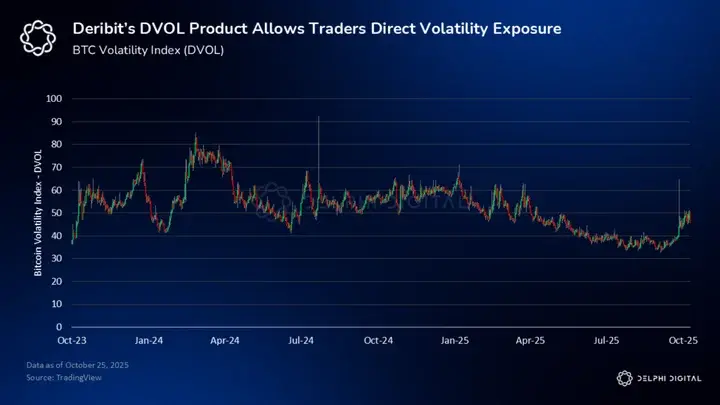
Although Deribit is not an on-chain options DEX, and Synquote is not entirely one either, I still want to delve deeper into it because it is currently the dominant platform in the crypto options market.
Deribit is an exchange that uses a centralized order book, handling almost all BTC and ETH options trading. By mid-2024, its open interest nominal value reached $60 billion, with total trading volume exceeding $1 trillion for the entire year. Deribit pioneered Bitcoin options trading back in 2016 and has since been the preferred platform for institutional traders. In July 2025, Deribit set a monthly record again, with trading volume reaching $185 billion. It uses an off-chain matching central limit order book, achieving transaction execution speeds of less than one millisecond, which current DeFi protocols cannot match.
Deribit offers a complete line of crypto derivatives products, including European options for BTC, ETH, and a few altcoins, perpetual contracts and futures with up to 50x leverage, and even volatility futures. In August 2025, Deribit introduced BTC and ETH options settled in stablecoins, allowing users to use stablecoins as collateral and settle profits in stablecoins. Additionally, Deribit offers futures based on the Bitcoin volatility index, enabling traders to directly hedge or speculate on volatility.
Deribit also supports multi-leg strategies through a combined margin account. This flexibility, common in centralized exchanges (CEX), makes options trading more convenient, allowing users to buy put options, call options, and futures within the same account. The combined margin system is a key advantage in this regard. Deribit does not calculate margin for each position separately but assesses the risk of the entire portfolio to determine margin requirements. This significantly reduces the collateral needed for hedging positions. For example, buying a put option can offset some of the risks faced by holding the underlying asset, thereby lowering margin requirements.
Deribit's products also support multi-currency collateral, allowing users to flexibly choose collateral assets. Among them, the discount rate for USDC as collateral is 0%, meaning it can be counted at full value for margin. In addition to not having a discount, thanks to Coinbase's acquisition, Deribit also offers a 4% annual yield for USDC collateral. Deribit has a robust clearing mechanism and insurance fund to deal with severe flash crashes, avoiding spreading losses to other users. Of course, the main drawback of all this is that users must complete KYC and entrust their funds to the platform, while options DEX can eliminate these requirements.
Unfortunately, Coinbase's acquisition of Deribit means that Deribit is unlikely to ever issue a token. Therefore, if you are looking for secondary market investment opportunities or to participate in reward activities, it is best to look at other platforms.
The reason I included Deribit in this article is that it is precisely the centralized competitor that options DEX need to compete with for market share, just as Hyperliquid has been capturing share from platforms like Binance, Bybit, and OKX. Deribit remains the liquidity center that decentralized options platforms must benchmark against, and with Coinbase's support, it is expected to further solidify its position in the institutional market.
Kyan, formerly Premia V4
Kyan is the new name for Premia V4, representing a new evolution of the DeFi options exchange, attempting to bridge the gap between on-chain transparency and CEX performance.
Kyan is a non-custodial platform that offers options and perpetual contracts under a unified margin system. The earlier versions of Premia used AMM liquidity pools, while Kyan has switched to a central limit order book, attracting professional traders and institutional funds through a powerful matching engine and low-latency execution. It aims to make users feel as fast as centralized exchanges when trading on Kyan, supporting FOK (Fill or Kill), which means immediate full execution or cancellation; IOC (Immediate or Cancel), which means immediate execution with unfilled portions canceled; as well as market orders, limit orders, and other order types.
Kyan also provides a real-time order book and is equipped with an RFQ module for large trades exceeding order book depth. These RFQ orders connect directly to professional market makers and are kept completely confidential, reducing adverse market impact. Previously, DEX struggled to meet institutional demands due to high latency, insufficient liquidity, and the limitations of the AMM model; Kyan is designed to address these issues.
Kyan has a complete set of derivatives tools, with the core feature being the Combo Trades multi-leg strategy builder, allowing traders to freely customize complete strategies and execute them in a single atomic transaction.
With this feature, traders can buy call option spread combinations or establish straddles, which means simultaneously buying call and put options with the same strike price and expiration date, with just one click. Kyan will bundle the various trade legs to ensure they execute together, eliminating the risk of some trade legs executing while others do not, while also saving on fees. The platform also offers perpetual contracts beyond options, allowing strategies to further combine Delta hedging or leverage. Now, users can implement complex options strategies in a single transaction, which has been a long-missing capability in DeFi options DEX.
Another new feature of Kyan is a fully on-chain combined margin mechanism, essentially similar to Deribit. All positions in the user's account, whether perpetual contracts or options, are assessed together for risk, and margin requirements are calculated based on the net risk exposure of the portfolio.
In practical trading, this means users can use higher leverage for hedged or lower-risk positions, such as covered call options, and are less likely to be liquidated due to price changes in a single position. Kyan's liquidation engine also draws from mature practices in CEX: it does not immediately liquidate all positions but can restore margin health through partial liquidation, preserving as much of the user's portfolio as possible. The cross-product margin mechanism also allows users to offset the risk of selling options with opposite perpetual contract positions in the same asset, which is a unique capability of Kyan in the DeFi space.
To achieve this, Kyan has set up two real-time indicators: Initial Margin Rate (IMr), which limits users from increasing risk when it exceeds 100%; and Maintenance Margin Rate (MMr), which triggers liquidation when it reaches 100%. When MMr exceeds 100%, the system will first delta hedge the portfolio or liquidate perpetual contract positions to reduce directional risk. If the risk remains too high, the portfolio will be broken down into simpler components, and positions will be closed in order based on their impact on margin. If these measures are ineffective, Kyan will proceed with a full liquidation, with the insurance fund absorbing the remaining losses.
Kyan uses a grid containing 43 market scenarios to assess portfolio risk and calculate profit and loss in the worst-case scenario. This dynamic risk management approach brings DeFi closer to the institutional risk models used by CME and Deribit and is more refined than the one-time full liquidation common in centralized exchanges.
To support more complex strategies, Kyan uses sub-accounts controlled by the same external wallet. Each sub-account operates like an independent wallet, with its own margin requirements and risk parameters. Within each sub-account, portfolios are further divided by asset, meaning that additional margin requirements for BTC will not affect ETH positions. The practical effect is that traders can run multiple strategies simultaneously without their risks intermingling.
I am very much looking forward to Kyan opening public beta testing. Its design is well thought out, and the team includes respected figures in the crypto community such as vxCozy and Marty. It is worth mentioning that Kyan's predecessor, Premia, has already issued a token, with a current FDV of 14 million dollars. I do not yet know how significant a role Premia will play in the Kyan ecosystem, but as information about token utility or conversion mechanisms becomes clearer, it may become a worthwhile investment target. In summary, I am excited to test Kyan and will participate in usage and reward activities after the beta release.
Why has the options DEX finally found its opportunity?
Seeing the title of this report, your first reaction might be to frown, even recalling the money you've lost on various options DEX: some always fail to find a market, some have been attacked, and others have quietly disappeared.
This reaction is understandable, but to assert that the future must also fail because of past failures is too hasty. Almost all successful large protocols today have had similar attempts in the past, only to fail initially due to poor execution, timing issues, or lack of users. Many perpetual contract DEX have failed, but that does not mean Hyperliquid is destined to fail, right? The same logic applies to crypto options DEX. By the end of 2025, the macro environment, technology, regulation, and market behavior will finally come together. The time for options DEX has arrived.
Every past options DEX has almost walked the edge of regulatory and survival risk. From Opyn facing CFTC charges, to DopeX being audited and found to have vulnerabilities, to Hegic's design flaws, these protocols were born and died in an era where everyone was trying to figure out "what can be done and what cannot be done."
But recently, the situation has changed. Legislation such as the GENIUS Act and the CLARITY Act has provided an unprecedented clear legal framework for the crypto industry. The joint statement from the SEC and CFTC mentioned at the beginning of the article, released in 2025, has also essentially established a legal space for the infrastructure needed for on-chain financial tool innovation. Developers no longer have to develop while being wary of Gary Gensler's potential actions.
A clear legal environment has allowed the experiment that began with CBOE in 1973 to develop into the world's largest derivatives market. Now, similar turning points are beginning to appear on-chain.
In addition to a clearer legal environment, DeFi infrastructure has finally caught up with centralized platforms. Today, layer two Rollups can achieve settlement with less than one second of latency and result certainty, on-chain unified margin can allocate collateral according to institutional standards, and more mature oracles can prevent attacks and cascading liquidations. Binance, what do you think? DeFi infrastructure has now reached traditional financial levels.
2025 is a year of heightened institutional interest in crypto assets, tokenization, and various derivatives. Robinhood's impressive performance, BlackRock's shift toward tokenization, and the market's acceptance of securitization all indicate that blockchain is being used more for large-scale financial infrastructure.
In fact, 71% of institutional investors already hold digital assets, CME's monthly trading volume in derivatives has reached 94 billion dollars, and Deribit processed over 1 trillion dollars in options trading volume in 2024. This demand cannot and will not remain forever on centralized platforms.
Regulatory requirements such as transparency, proof of reserves, and auditable clearing are precisely the capabilities that on-chain trading platforms inherently possess. Recent black swan events like large-scale cascading liquidations also illustrate that excessive open positions and leverage in perpetual contracts can lead to catastrophic consequences. Institutions, protocols, enterprises, and market makers all need better hedging tools. DeFi is gradually transitioning from a high-risk speculative space to becoming the backend engine of global finance.
Not only is institutional demand growing, but the volatility rhythm of global financial markets is also increasingly aligning with the crypto market. Bitcoin ETFs have normalized institutional holdings of crypto assets and brought volatility hedging demand on-chain. Global, around-the-clock markets are becoming more common, with people trading essentially the same basket of assets worldwide. Finally, the tokenization of real-world assets (RWA) means that U.S. Treasuries, stocks, and commodities will all require options infrastructure capable of risk management on-chain.
Since stock holdings are already on-chain, why hedge on decentralized platforms?
Not only is the timing right, but the market for options DEX is also almost an undeveloped space. Deribit occupies about 90% of the trading volume in the centralized options market, while no DEX has truly achieved the performance required by institutions. The winner of on-chain options competition will become the volatility trading and risk management infrastructure for the entire DeFi. Whoever first solves the three issues of on-chain margin, cross-asset risk management, and institutional access will capture this market.
We are standing at a historical juncture similar to when the CBOE launched options in 1973, except this time, it is global, permissionless, and transparent.
In the past, crypto options may have come too early, but now, the timing is just right. While everyone is still chasing rewards on one perpetual contract DEX after another, riding the thrilling roller coaster of market fluctuations, the real growth opportunity may lie in participating early in the next generation of options DEX.
 Risk warning



Popular articles





