Daily Observation of Cryptocurrency Policy: The three major institutions in Europe are establishing the ETSG, aiming for a unified tokenized financial underlying standard by 2028

 Released on November 10, 2026. In the face of an increasingly fragmented Distributed Ledger Technology (DLT) market, European regulators are seeking to unify underlying technologies and market standards from a top-level design perspective. The European Central Bank (ECB), the European Commission, and the European Securities and Markets Authority (ESMA) jointly announced an open call for members of the European Tokenization Standard Group (ETSG) for the wholesale financial industry. This group will officially launch in January 2027, aiming to establish universal standards for the settlement of tokenized securities across different DLT platforms, deeply empowering the euro system's tokenization blueprint plan Appia, and thoroughly enabling interoperability in European on-chain finance.
Breaking the Fragmentation of the Market: Official Endorsement and Industry Leadership
In the process of traditional finance (TradFi) entering Web3, "liquidity fragmentation" and "cross-chain settlement barriers" have always been the biggest pain points hindering the effectiveness of tokenization. The three major core regulatory agencies in Europe (ECB, European Commission, ESMA) have taken the lead in establishing the European Tokenization Standards Group (ETSG) to end this "each fighting their own battle" situation. In terms of organizational structure, the group adopts a very pragmatic "industry-led, official oversight" model: the group will be chaired by industry professionals from the front lines of finance and technology, while the three major regulatory agencies will participate only as "observers." From today until November 27, market players including EU industry associations, private banks, global financial institutions, fintech unicorns, and DLT technology providers can submit applications to join.
Clear Timeline: Launch in 2027, First Batch of Universal Standards in 2028
Unlike many official sandboxes that remain at the conceptual discussion stage, the ETSG has been given a very clear delivery timeline and technical hard indicators. According to the authorization document released by the European Central Bank, the standards group will officially begin substantive work in January 2027. Its core mission is to develop technical and market dual standards that enable tokenized securities to achieve seamless holding, cross-chain interoperability, and settlement finality across distinctly different distributed ledger technology (DLT) platforms. The group's preliminary strategic goal is to successfully release the first batch of operationally valuable tokenized universal standards to the entire market in early 2028.
Deeply Integrating the "Appia Project": Restructuring the Settlement Blueprint of the Euro System
The standards set by the ETSG are not mere empty documents; they will directly connect to the underlying infrastructure of the European Central Bank. The authorization document clearly states that the relevant standards issued by this group will directly serve and be integrated into the tokenized financial market blueprint plan being promoted by the euro system—Appia. This means that any financial entity wishing to access the European Central Bank's digital currency (CBDC) or issue regulated tokenized securities (such as tokenized government bonds, RWA) within the EU must adhere to the data formats and cross-chain communication protocols established by the ETSG.
Seizing the High Ground in Defining Global Digital Asset Standards
Considering the regulatory trends in Europe in mid-November, the establishment of the ETSG is not only a remedy for the fragmentation of financial technology within Europe but also a forward-looking layout of geopolitical financial strategy. In addition to setting technical parameters, the group will also establish a framework for "monitoring standard compliance" and recommend to EU authorities "how to provide incentives to encourage enterprises to adopt relevant standards." With the implementation of the MiCA legislation and the launch of the ETSG, Europe is attempting to upgrade from a mere "rule maker" to a "standard setter" in the global Web3 and RWA (real-world assets) arena.
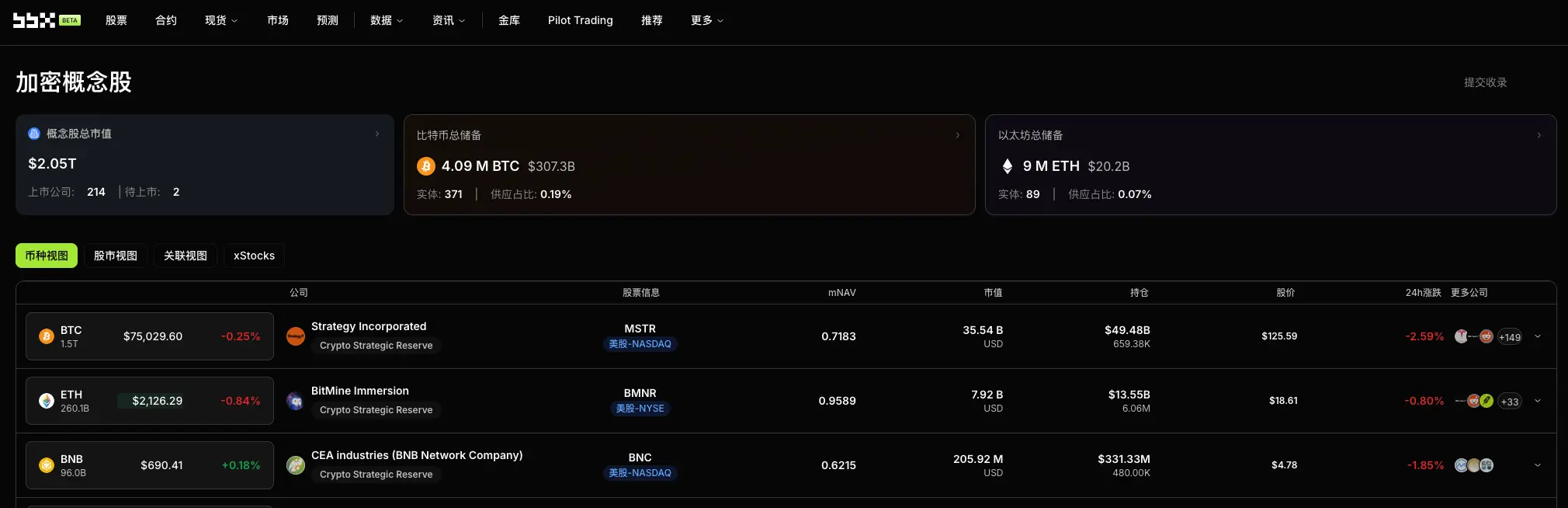
Data Source: https://bbx.com/ Cryptocurrency Concept Stock Information Database, compiled based on yesterday's announcements from global listed companies and SEC/TSE disclosure documents.
 Risk warning Risk warning





Popular articles