AI Bull Market Trap? The Big Short Strikes Again
 Core Viewpoint


 During this time, maintain a stable mindset and withstand the pressure, and just wait slowly for the dawn.
Author: Lone Ranger
Recently, the numerous bullish and bearish signals in the AI sector have intensified market concerns.
Goldman Sachs recently released its 2027 Global Market Outlook report, indicating that the accelerated wave of AI capital expenditure is likely to peak in early 2027, with the market shifting from a one-sided upward trend to a two-way fluctuation, recommending increased diversified allocation and hedging;
The Federal Reserve also explicitly mentioned artificial intelligence in its latest Financial Stability Report, warning of its potential threat to asset valuations and financial stability.
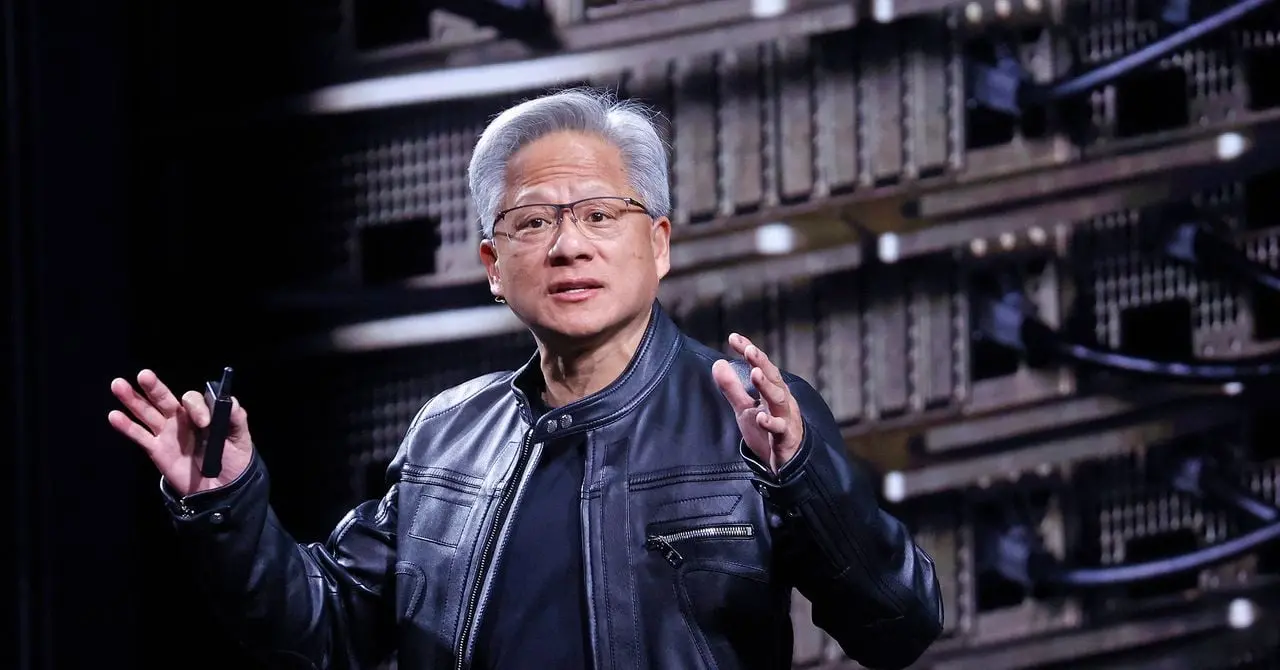
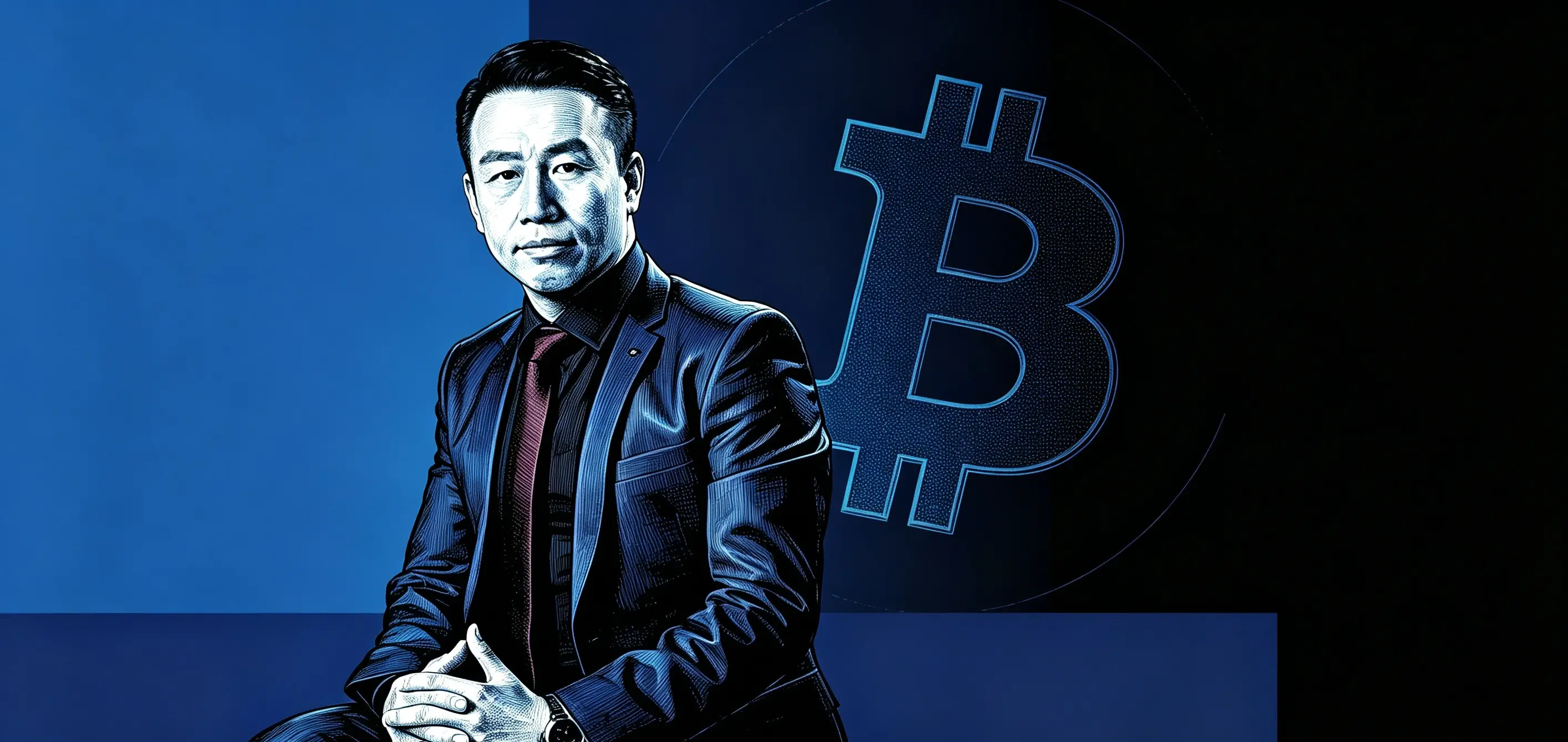
Notably, famous short-seller Michael Burry has chosen to express his position directly by doubling his put options on the Nasdaq 100 while re-establishing short positions in semiconductor ETFs, stating that this is a "bull market trap," especially in reference to the peak of the 2000 internet bubble. Jensen Huang's departure has further intensified his concerns about the entire AI industry chain.
01
Specifically, several reports point to several hard constraints currently facing the AI narrative: capital expenditure, high interest rates, Democratic regulatory constraints, and concerns about trust in the industry chain.
These factors are also the source of recent market worries.
The Goldman Sachs report states that AI investment as a percentage of GDP will peak in early 2027, but it does not mean that capital expenditure will turn downward; rather, the pace of investment growth is slowing.
Stock market pricing inherently places more emphasis on marginal changes. The previous bull market in the upstream computing power sector relied on the continuously rising growth rate of capital expenditure. Once this momentum stops, the core support for high valuations will loosen.
According to Goldman Sachs' calculations, there is a clear correlation between cloud vendors' capital expenditure and the pull on S&P 500 EPS. In 2024, it will contribute 2 percentage points, 5 points in 2025, peak at 12 points in 2026, drop to 9 points in 2027, and by 2028, it will directly become a drag on profits by 5 points.
By 2026, it will essentially be the last window for capital expenditure to drive profits.
The decline in profit growth also reflects this change, with S&P-related profit expectations dropping from 36% to 11%, while Europe, Japan, and Asian markets are also weakening.
Objectively speaking, an 11% growth rate is not bad historically. The discomfort lies in the decline from 36% to 11%.
Previously, there was a Davis double whammy where profits and valuations rose together; going forward, it is likely that only slow profit support and continuous valuation pressure will remain, making it difficult to replicate the previous two years of easy gains.
The second unavoidable reality constraint is the high interest rate market environment.
The suppression of the AI sector by the high interest rate environment is twofold.
AI is a typical long-duration asset, with most returns occurring in the long term. An increase in long-term interest rates directly raises the discount rate, naturally compressing valuations.
Companies like Microsoft and Google, with substantial cash reserves and strong cash flows, face limited impact. The most affected are the mid-tier GPU cloud service providers, such as CoreWeave and Nebius, which are major customers of NVIDIA. They rely heavily on external financing for rapid expansion through large-scale leasing and procurement of GPUs.
As interest rates rise, their borrowing costs increase directly, forcing a contraction in expansion, while their initial valuations were based on extremely high growth rates, making it easy to widen the expectation gap.
The cyclical trading risks mentioned by the Federal Reserve are also worth noting.
Tech companies and startups invest in each other, procure from each other, and endorse each other's revenues. When funds are abundant, this can beautify the balance sheets and inflate valuations. However, when financing tightens, it becomes a series of interconnected risk exposures; if one company faces cash flow issues, the risk will propagate along the cooperation chain. This is not just a matter of high or low valuations, but a hidden danger at the credit level.
Recently, the biggest negative trigger has been the Jensen Huang incident, which has shaken the pricing anchor of the entire chain.
It is still difficult to conclude how much long-term impact this event will have on NVIDIA's products and orders.
In recent years, many companies' order expectations and valuation logic in chips, foundries, storage, and downstream cloud vendors have been built on NVIDIA's strong position. Once this anchor shifts, everyone will reassess their assets.
The major short-seller Burry has clearly seized this window, but his approach has changed.
Previously, he preferred to bet directly on stocks like NVIDIA and Palantir; now, his focus has shifted to indices and semiconductor ETFs. He has doubled his put options on the Nasdaq 100 while buying back short positions in the VanEck semiconductor ETF, where TSMC and NVIDIA are the heaviest holdings.
He compares the Nasdaq's early October peak to the 2000 bubble peak, declaring it a "bull market trap," focusing on whether NVIDIA's influence will gradually weaken.
Of course, his strategy may not be correct, as the differences in these comparisons are significant.
During the 2000 bubble, many companies had no cash flow and were heavily indebted; now, the balance sheets of leading tech giants in the U.S. are quite healthy, and the valuation premium of the five major tech stocks relative to other stocks has converged to a very low position, far from the madness of previous years.
Moreover, this options bet has a high threshold; the index must drop over 20% before expiration to be profitable, and any miscalculation in time, magnitude, or direction could lead to losses.
Another layer of pressure that is easy to overlook comes from regulatory shifts.
After the Democrats took office, the U.S. attitude towards AI infrastructure is likely to gradually shift towards regulation, with more constraints on the energy consumption, land, and power supply of computing clusters and large data centers.
While this does not mean that AI will be stifled, it will disrupt the unrestrained accumulation of computing power, elongate the expansion cycle, and raise construction costs.
Looking back at the capital expenditure curve, this variable will further lower the expansion slope. Originally expected to see explosive growth in computing power, now with more approvals, energy consumption, and compliance constraints, the peak will come earlier, and the pace of realization will be slower.
With these four layers of pressure combined, the valuation bubble inflated by optimistic narratives being squeezed is a natural outcome.
02
However, we must be clear that the bursting of the AI valuation bubble does not mean that the AI industry is on a downward path; the underlying demand supporting AI's long-term logic has not disappeared.
There is also a very interesting signal that Goldman Sachs has mentioned many times.
The forward PE of U.S. cloud giants is only 19.7 times, below the lower bound of its 20-year historical range, and even lower than the widely recognized defensive sector of consumer staples.
Many high-elasticity growth stocks have seen their valuations drop below those of defensive stocks, indicating that a significant portion of pessimistic expectations has already been priced in; not everyone is blindly optimistic.
Tighter regulation in the long run is not entirely a bad thing. The chaotic arms race in computing power will stop, forcing everyone to calculate whether the invested computing power can translate into stable income and profits.
A business model that runs smoothly and does not rely on endless cash burning to expand will make the AI story more solid. In the short term, it will be painful, but in the long term, it will sift out the falsehoods.
After the bubble is deflated, the market's opportunity structure will also shift to a new logic.
In the past two years, the simplest strategy was to go all-in on upstream suppliers—chips, optical modules, storage—whoever was closest to computing power performed the best. This logic was built on the continuous acceleration of capital expenditure, which will be difficult to replicate going forward.
The market's assessment criteria will shift from "who is expanding production" to "who can earn real money."
The first category worth tracking is cloud giants whose valuations have adjusted appropriately. A slowdown in capital expenditure growth means less investment for them, improving free cash flow. With solid balance sheets and diversified revenue structures, they will gradually transform from high-volatility growth to defensive varieties with growth attributes, and their cost-effectiveness will gradually stand out in a volatile market.
The second category is companies with real AI applications. In the past, the market's focus was entirely on computing power, overshadowing the value on the application side.
Moving forward, there will be repeated questioning of whether AI can help customers save money and increase revenue, and whether there are stable payments and renewals. Only companies that can capture real productivity dividends and clearly calculate ROI are likely to take over as the new main line.
This is also what Goldman Sachs refers to as the "relay team"; how smoothly the transition occurs will determine whether this round of adjustment is a soft landing or a continued decline.
The third category includes cyclical sectors that have already priced in a large amount of pessimistic expectations, such as South Korean memory. Stock prices have already implied a 70% downward adjustment in 2027 profits, but order schedules extend to 2029, with price-to-book ratios pressed to historical lows. The odds look high, but the risks are not small, and volatility is extremely severe.
Goldman Sachs is not blindly bullish on Asia either; the core concern is that concentration is too high, with a few stocks like TSMC, Samsung, and SK Hynix accounting for too much weight. If the logic reverses, the pullback will be very damaging.
Conversely, there are also many stocks that need to be actively avoided. Small and medium-sized cloud vendors that are heavily tied to NVIDIA orders, lack stable cash flow, and rely on financing for survival, as well as pure cash-burning startups without viable products, are the most vulnerable groups in this round of stress testing.
03
Overall, the current AI narrative indeed faces significant pressure. In this market context, if one still clings to the previous years' mindset and heavily invests in upstream computing power, continuing to pay for "increasingly rapid growth," it is very easy to incur losses.
A more prudent approach is to reduce concentrated bets on a single sector and moderately diversify positions.
The market has now shifted from a one-sided bull market to two-way fluctuations, making the value of hedging and diversified asset allocation higher than in previous years.
This round of testing for the AI narrative will not assess whether AI can change the world, but whether these investments can translate into stable returns. The process of deflating the bubble is bound to be difficult, and volatility will persist for a long time, but after the market clears, only assets that can withstand scrutiny and have solid cash flows will welcome the next phase of a longer-lasting trend.
During this time, it is essential to maintain a steady mindset, endure the pressure, and patiently wait for the dawn.
 Risk warning
 Risk warning


Popular articles