Why is the "next stablecoin moment" tokenized stocks?
 Core Viewpoint


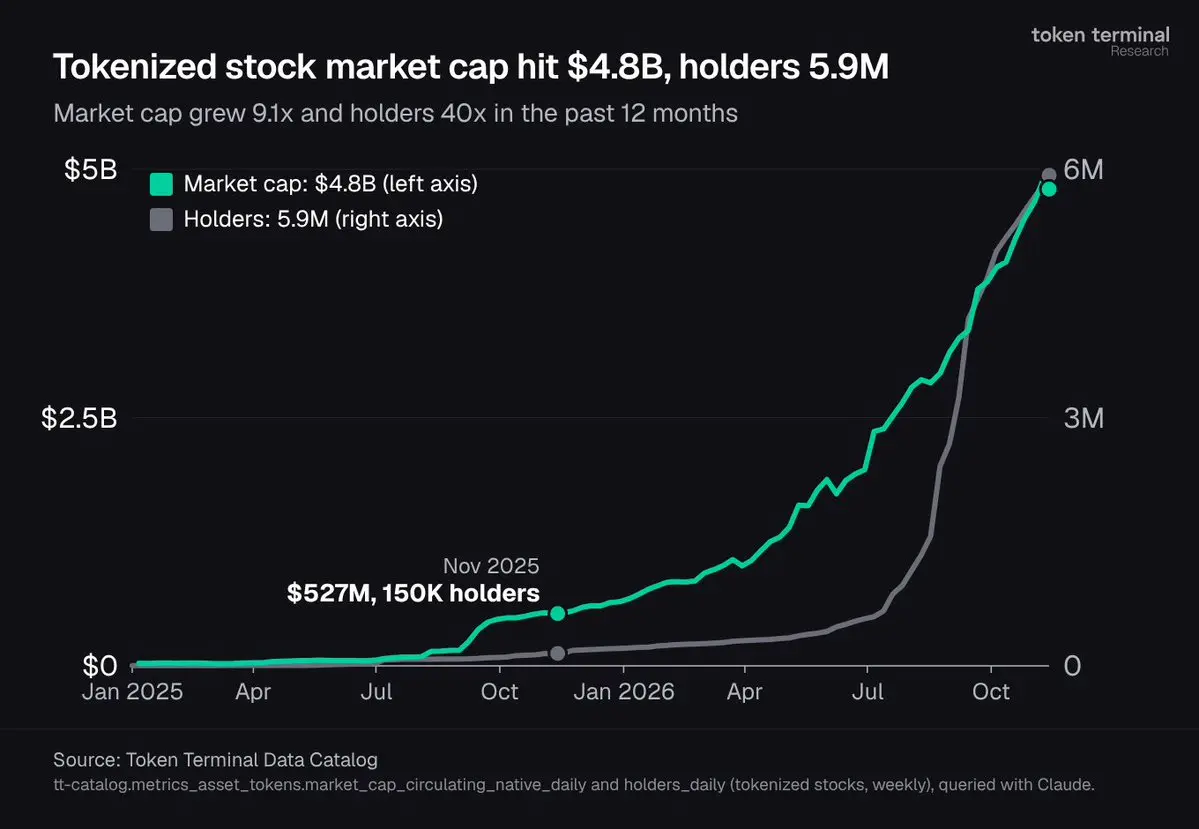
 Token Terminal pointed out that the market capitalization of tokenized stocks has reached 4.8 billion USD, comparable to the scale of stablecoins in March 2020, and it took only 8 months to grow from 1 billion USD to this level. Most of these are backed 1:1 by real U.S. stocks, with foreign investors being the main buyers. If such tokens are restricted, demand may shift towards perpetual contracts that do not require holding the underlying stocks.
Author: Token Terminal, a stablecoin, tokenized assets, and on-chain financial data platform
Compiled by: Gu Yu, ChainCatcher
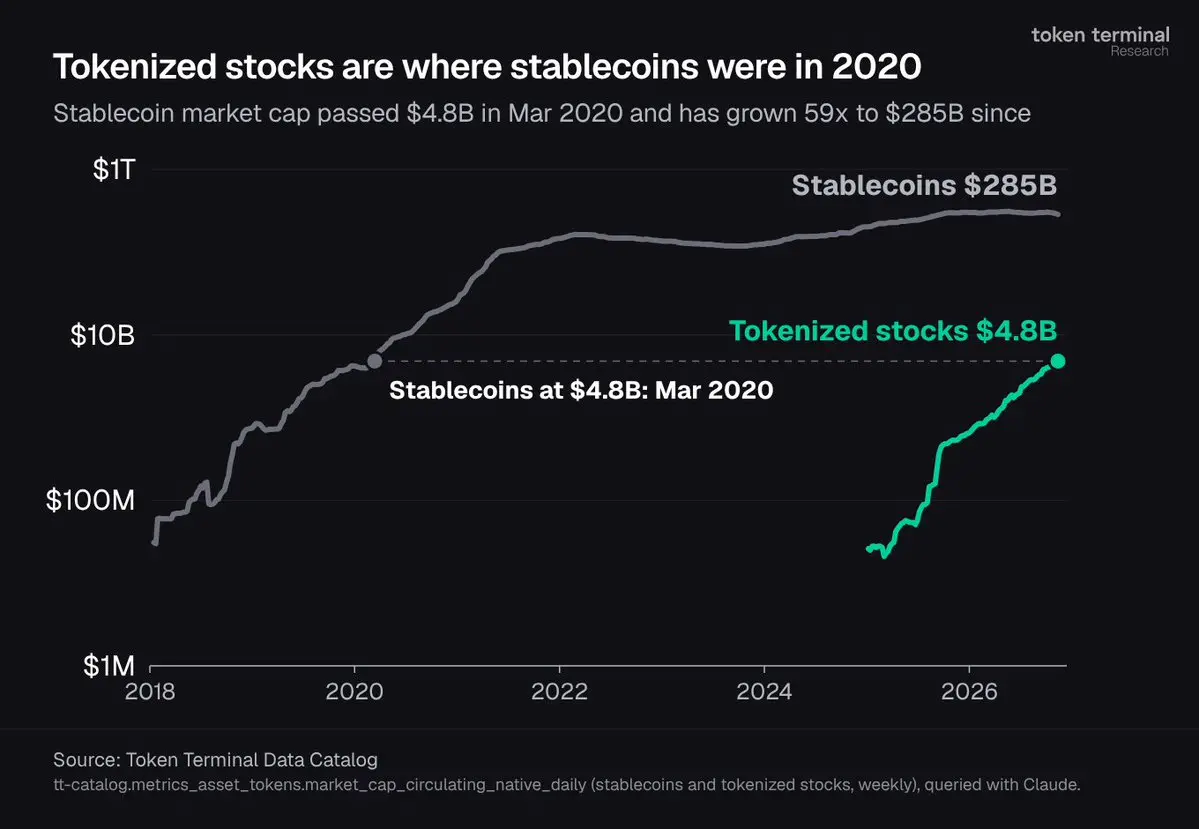
In March 2020, the market capitalization of stablecoins surpassed $4.8 billion. Since then, the market capitalization of stablecoins has grown 59 times, reaching $285 billion; with the federal stablecoin legislation GENIUS Act passed in July 2025, the U.S. now regulates and supports stablecoins as a way to expand the influence of the dollar. On November 13, 2026, the market capitalization of tokenized stocks reached the same $4.8 billion.
Tokenized stocks are blockchain tokens that track shares of publicly listed companies. Most tokenized stocks are backed 1:1 by shares held by custodians, who are regulated entities responsible for safeguarding the shares. These tokens trade around the clock and can be used in on-chain applications.
The market is growing rapidly. In the past 12 months, the market capitalization of tokenized stocks has increased 9.1 times, and the number of holders has grown 40 times, reaching 5.9 million.
https://tokenterminal.com/explorer/tokenized-assets/stocks
Tokenized stocks are following the path of stablecoins, which reached a market capitalization of $285 billion, and the reasons for U.S. support for tokenized stocks are the same as for stablecoins.
1. An Emerging Stablecoin-Level Category
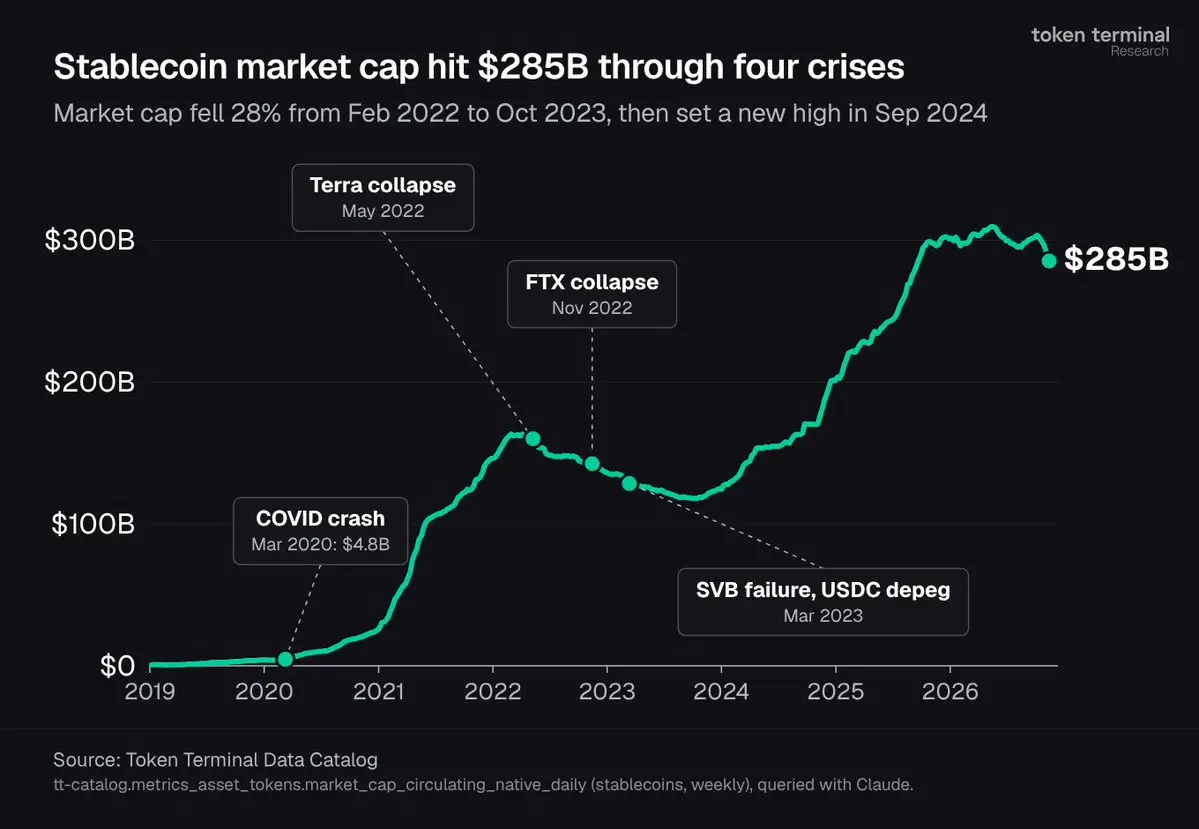
Tokens designed to maintain a value of $1 are the clearest precedent for stablecoins. Every crisis since 2020, from the COVID crash to the collapses of Terra and FTX and the failure of SVB, has tested whether holders trust stablecoins, and the market capitalization of stablecoins has recovered after each crisis.
These crises also indicate which designs can withstand scrutiny. Terra UST, which relied on algorithms rather than reserves, collapsed, while the two major stablecoins, USDT and USDC, which are primarily backed by cash and U.S. Treasury bonds, currently account for 86% of the stablecoin market capitalization. Most tokenized stocks adopt the same reserve-backed design.
https://tokenterminal.com/explorer/tokenized-assets/stablecoins
The market capitalization of tokenized stocks is now comparable to that of stablecoins in March 2020, and tokenized stocks reached this level faster. From the point when their respective market capitalizations surpassed $1 billion, tokenized stocks took 8 months to reach $4.8 billion, while stablecoins took 11 months. Tokenized stocks also appear in a more mature market, with wallets, exchanges, and DeFi venues already in place, and the rules are clearer than the environment in which stablecoins operated in 2020, including the SEC's exemption for tokenized stock trading starting in September 2026.
https://tokenterminal.com/docs/mcp/introduction
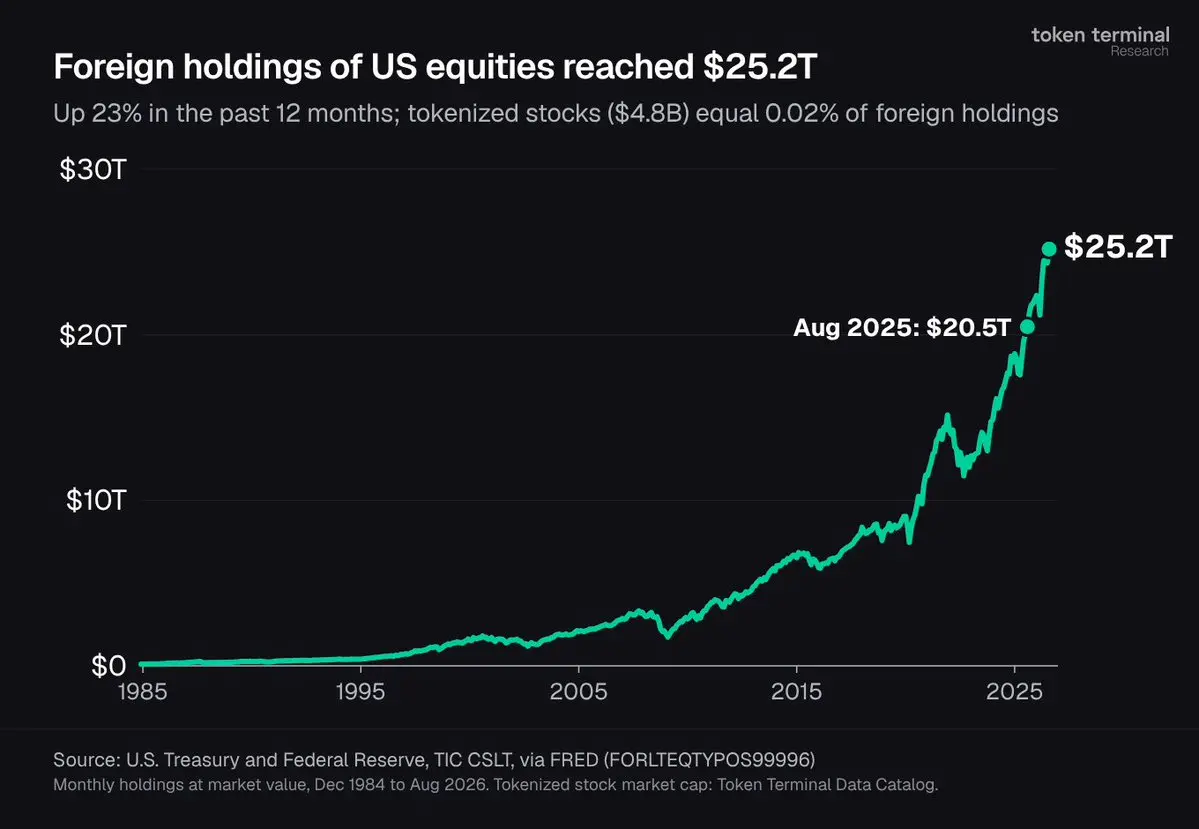
The demand served by tokenized stocks is substantial. Foreign investors hold $25.2 trillion in U.S. stocks, a 23% increase over the past 12 months, while the market capitalization of tokenized stocks only represents 0.02% of foreign holdings. If 1% of U.S. stocks held by foreigners were transferred on-chain, the scale would reach $252 billion, about 50 times the current tokenized stock market.
https://tokenterminal.com/docs/mcp/introduction
2. The U.S. Interests in Tokenized Stocks Are the Same as for Stablecoins
Treasury Secretary Scott Bessent has stated that stablecoins could become one of the largest buyers of U.S. Treasury bonds and help expand the influence of the dollar overseas. Tokenized stocks can serve the same purpose for U.S. equities, and four characteristics of the tokenized stock market demonstrate this parallel: the assets are American, the buyers are foreign, the tokens are backed by real shares, and most shares are held by U.S. custodians.
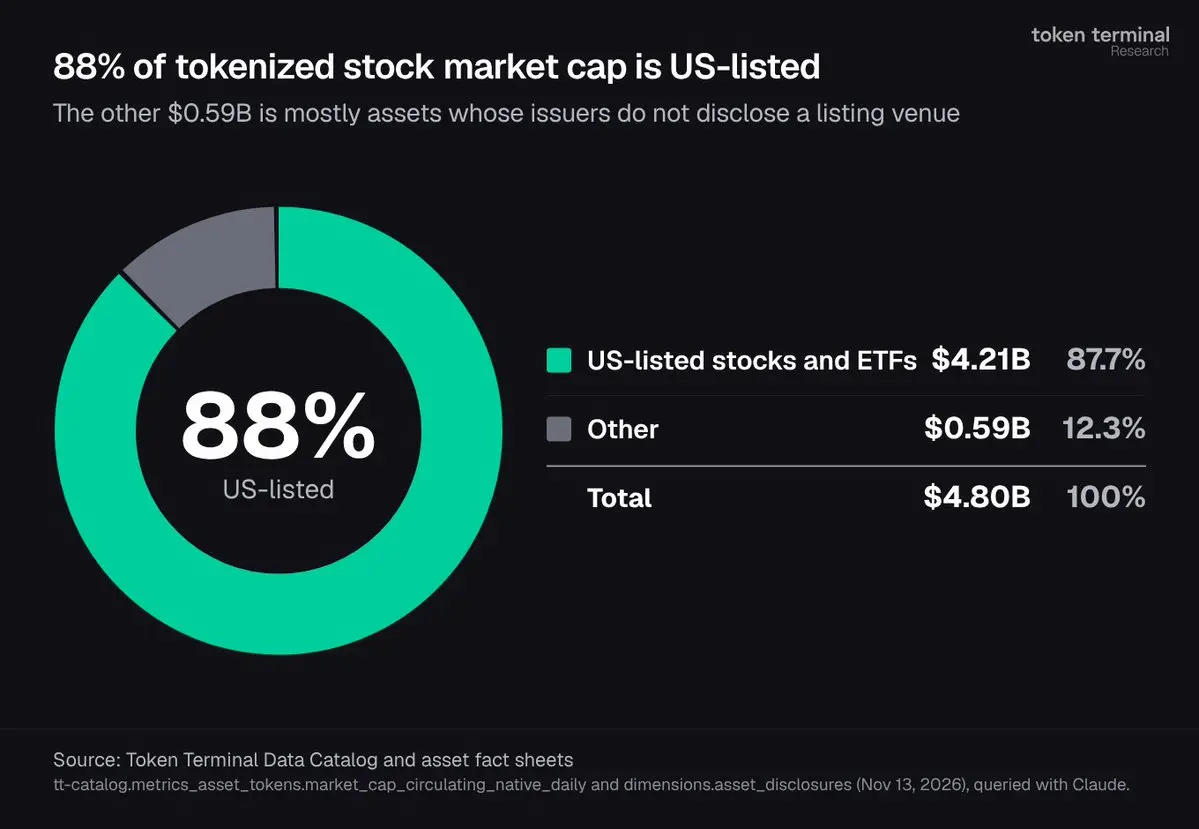
Most tokenized stocks track U.S. listed assets. U.S. listed stocks and exchange-traded funds (ETFs) account for 88% of the market capitalization of tokenized stocks.
https://tokenterminal.com/explorer/fact-sheets?view=map
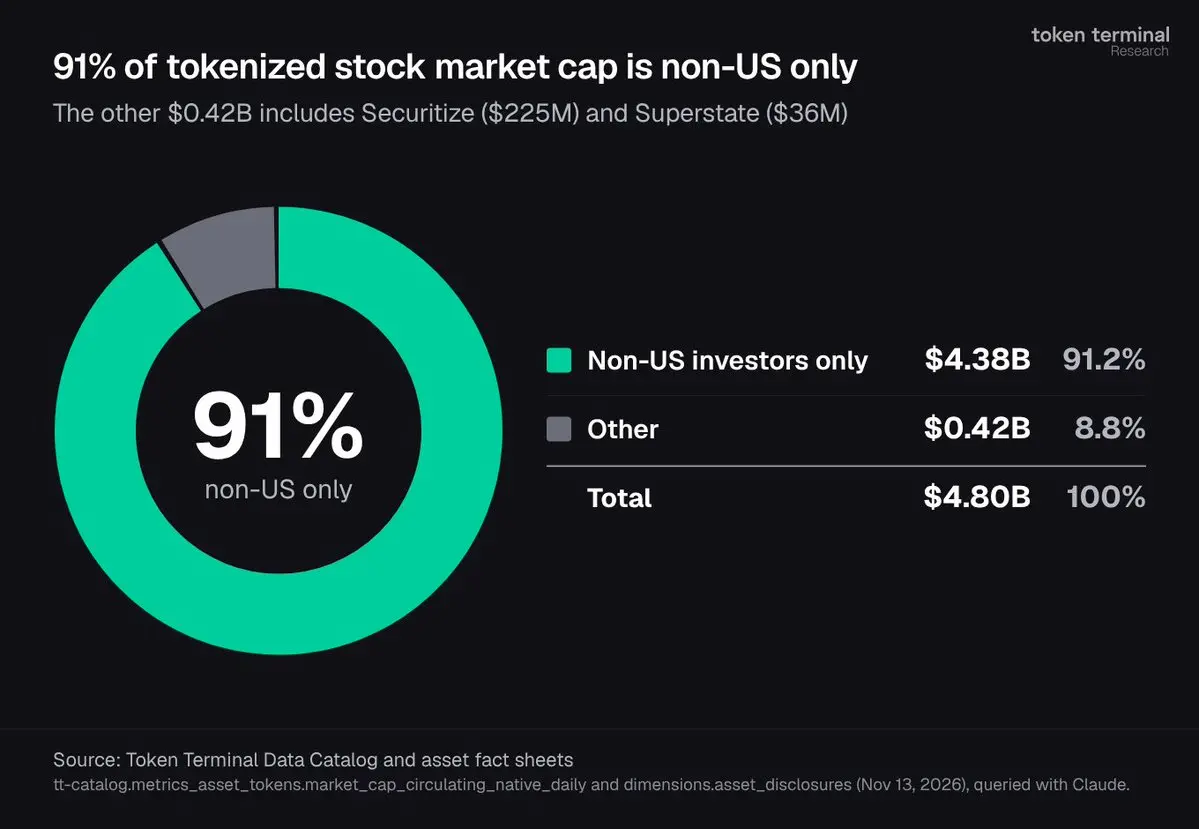
Most buyers of tokenized stocks are located outside the U.S. Tokens sold exclusively to non-U.S. investors account for 91% of the market capitalization of tokenized stocks, indicating that the demand behind tokenized stocks is foreign capital purchasing U.S. assets.
https://tokenterminal.com/explorer/fact-sheets?view=map
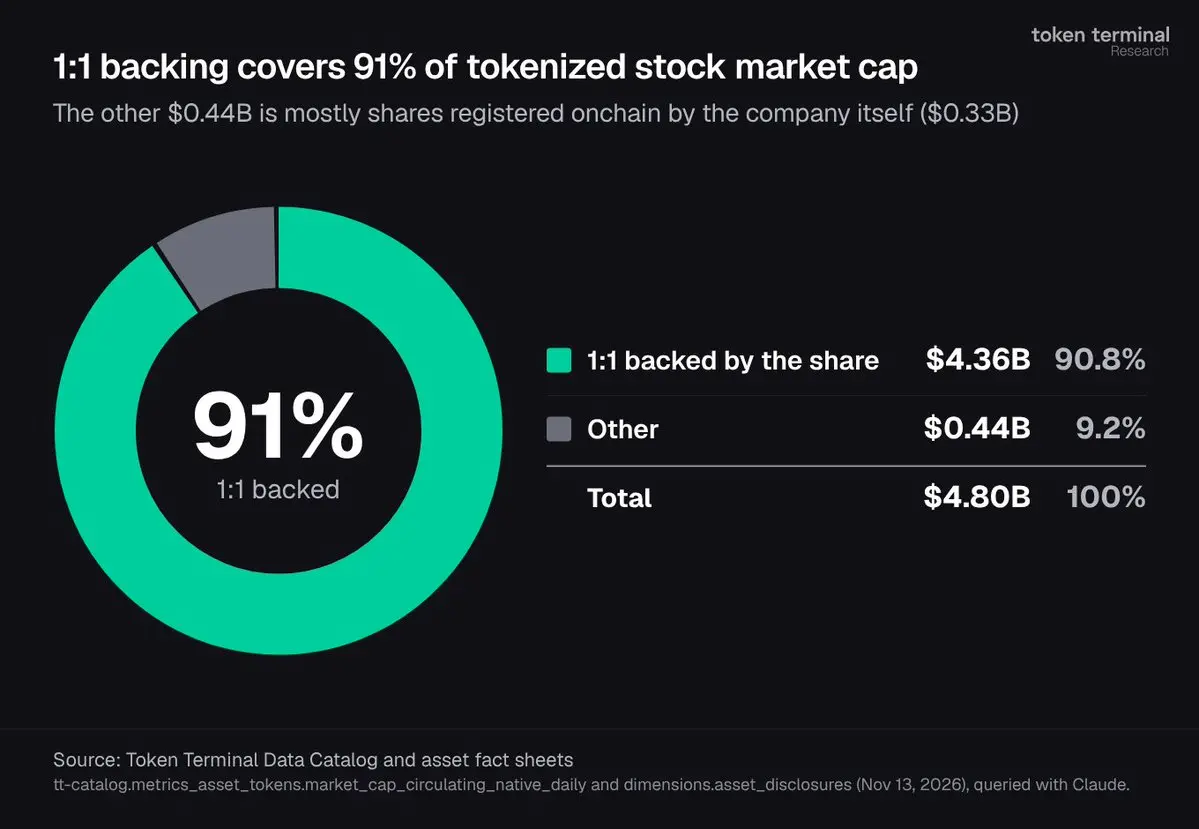
Almost all tokenized stocks are backed by real shares. Tokens backed 1:1 by underlying shares account for 91% of the market capitalization of tokenized stocks, which is similar to the structure of stablecoins backed by U.S. dollars, meaning that one token sold overseas corresponds to one share purchased in the U.S. market.
https://tokenterminal.com/explorer/fact-sheets?view=map
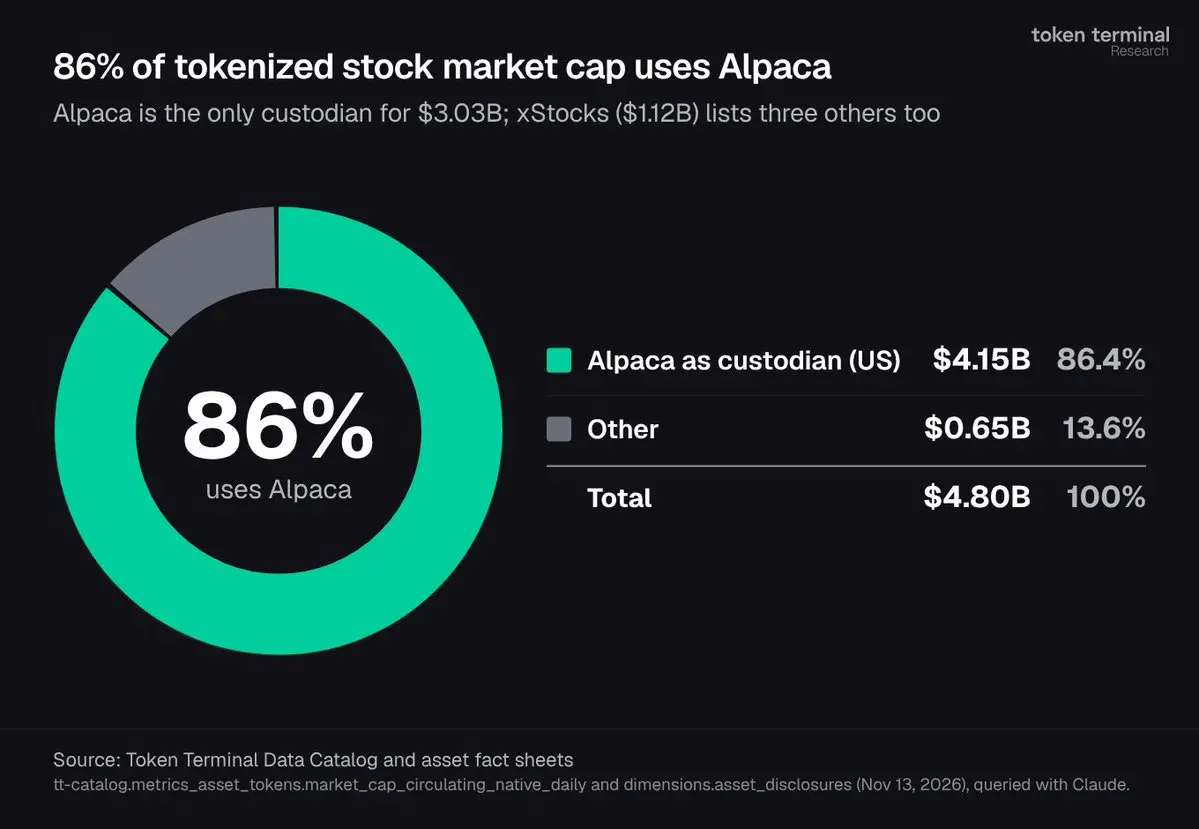
Most underlying shares are held by U.S. companies. Tokens listing U.S. broker Alpaca Securities as custodians account for 86% of the market capitalization of tokenized stocks, including $3.76 billion from the three major issuers Ondo, Binance, and xStocks. Of the $3.03 billion in market capitalization, Alpaca is the only listed custodian, while xStocks also lists three European custodians. Overall, most tokens sold overseas bring foreign capital into U.S. shares held by U.S. companies and regulated by U.S. authorities.
https://tokenterminal.com/explorer/fact-sheets?view=map
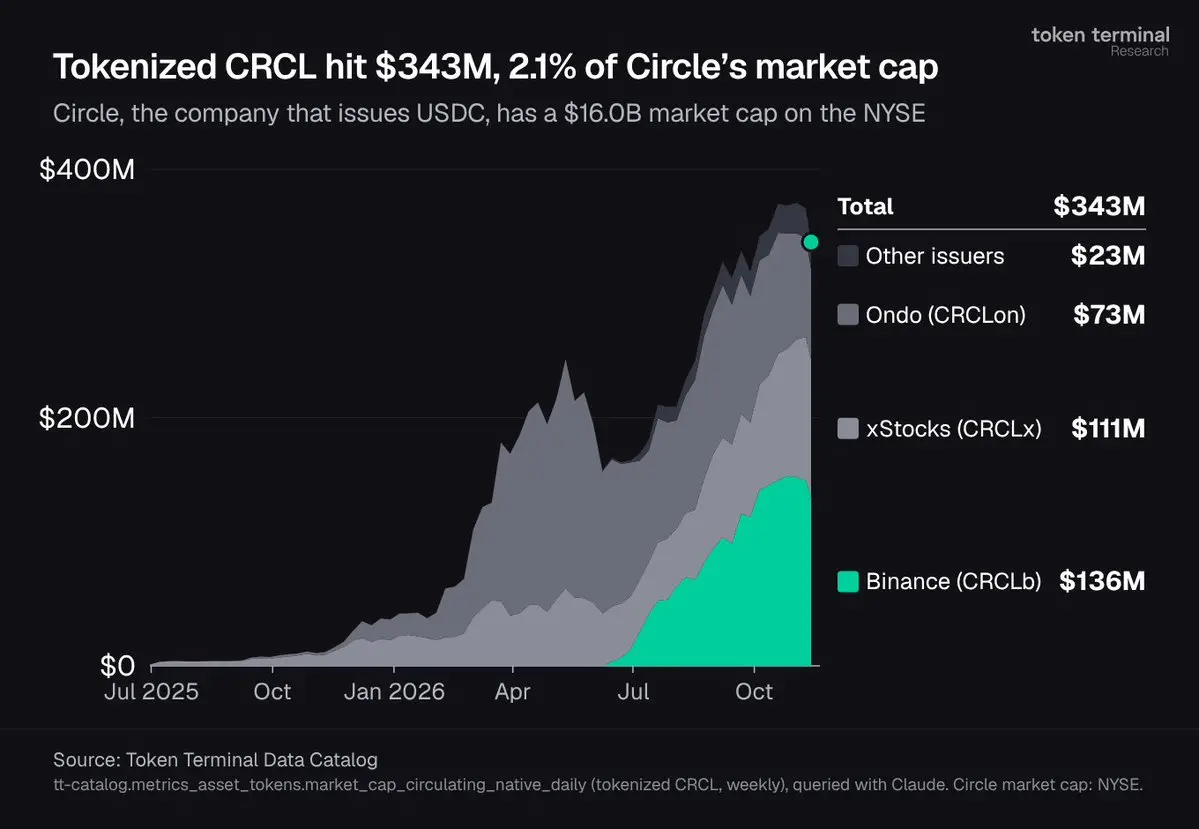
Token demand has already been reflected in individual U.S. companies. The tokenized shares of Circle, the issuer of USDC, reached $343 million, accounting for 2.1% of Circle's $16 billion market capitalization.
https://tokenterminal.com/explorer/tokenized-assets/stocks?stocksReferenceAssets=crcl
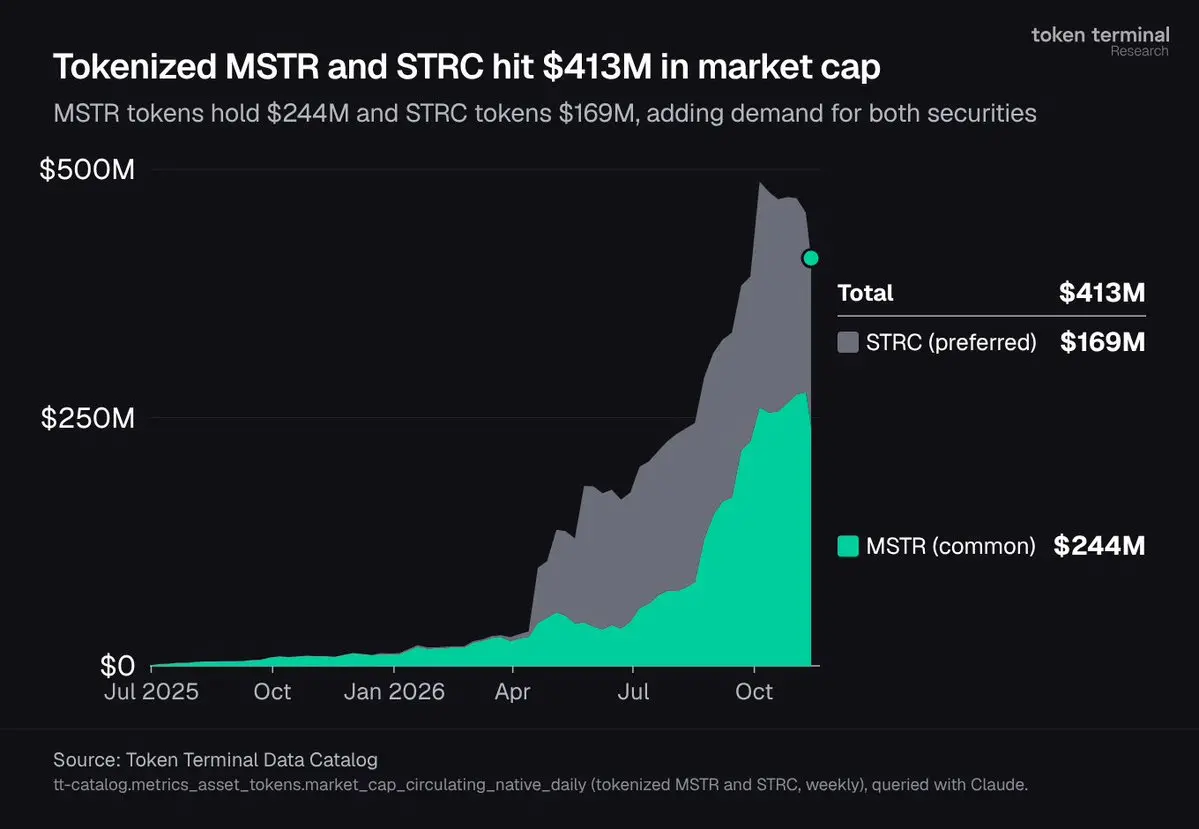
For companies financing through stock sales, the token market is also a source of demand. Strategy funds its Bitcoin purchases through the sale of common stock (MSTR) and preferred stock (STRC), with the combined market capitalization of tokenized MSTR and STRC currently at $413 million, adding buyers to the same securities that Strategy is selling to raise funds.
https://tokenterminal.com/explorer/tokenized-assets/stocks?stocksReferenceAssets=mstr,strc
3. On-Chain Use Makes Tokenized Stocks Harder to Replace
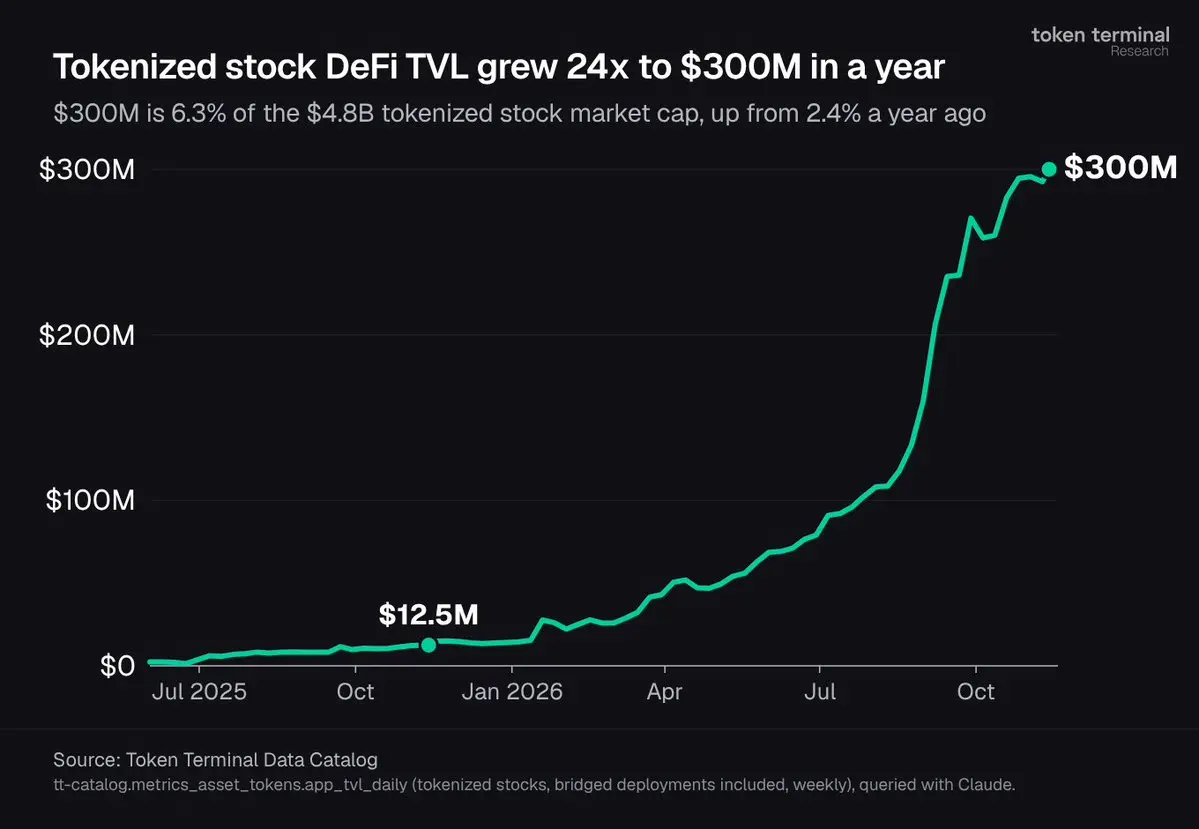
Every new use case for stablecoins, whether in exchanges, lending markets, or payments, has made stablecoins more useful to others and harder to replace. Tokenized stocks are beginning to follow the same usage pattern. The total value locked (TVL) in DeFi, which includes tokenized stock value deposited in lending markets and trading pools, has grown 24 times in the past year, reaching $300 million. Current deposits represent 6.3% of the market capitalization of tokenized stocks, up from 2.4% a year ago, and each deposit adds liquidity for the next trader and earns returns for holders.
https://tokenterminal.com/explorer/tokenized-assets/stocks?stocksMetric=asset_tvl
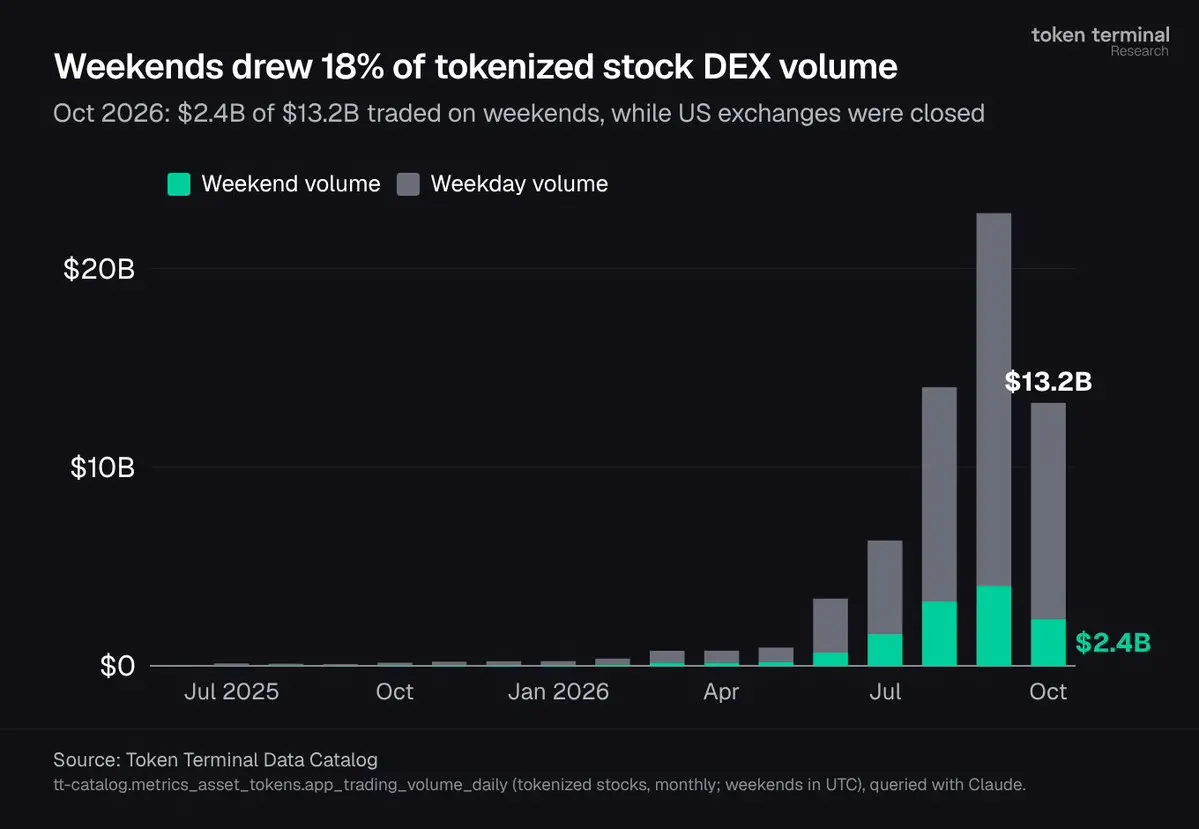
Weekend trading provides holders with another reason to stay on-chain, as U.S. exchanges are closed on Saturday and Sunday. In October 2026, weekends accounted for 18% of the trading volume of tokenized stocks on decentralized exchanges (DEX), amounting to $2.4 billion, which is 83 times the level from a year ago. Holders can act on news before the market opens on Monday.
https://tokenterminal.com/explorer/tokenized-assets/stocks?stocksMetric=assettradingvolume
4. Restrictions on asset-backed tokens will push demand towards perpetual contract venues
A key risk of tokenized stocks comes from regulation. If U.S. regulators restrict tokenized stocks that are 1:1 backed by shares, demand for U.S. stocks in non-U.S. markets is likely to shift towards perpetual contracts (perps, perpetual futures), which track prices, have no expiration date, and do not correspond to underlying shares.
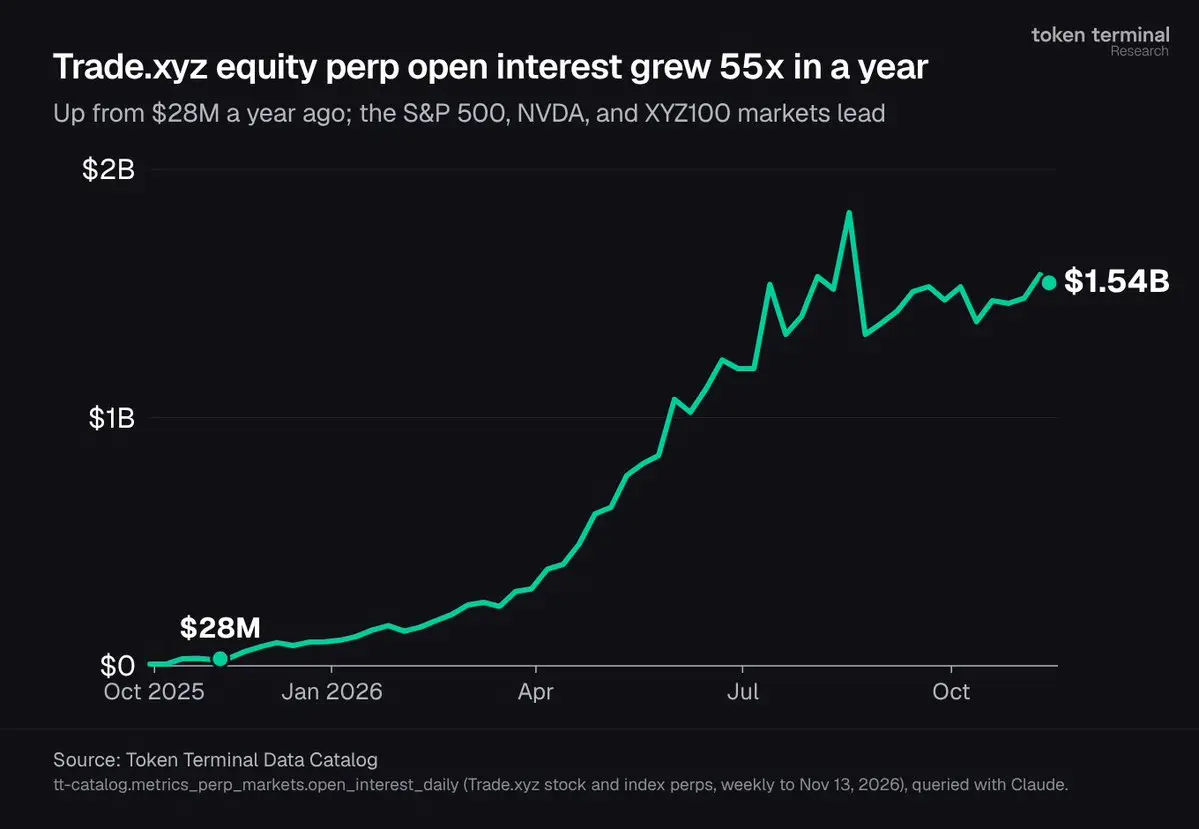
The market for stock perpetual contracts has been growing. Trade.xyz is a perpetual contract exchange built on Hyperliquid, a blockchain designed for trading, which has launched U.S. stock and index contracts. The open interest in Trade.xyz's stock perpetual contracts, which represents the value of open positions, has increased 55 times over the past year, reaching $1.54 billion. Each position in perpetual contracts does not require corresponding shares, so the demand shifting to perpetual contracts ultimately results in less demand reaching U.S. stocks and U.S. custodians, and perpetual contracts do not pay dividends that are taxable in the U.S. Supporting asset-backed tokens allows more overseas demand to remain in U.S. stocks.
https://tokenterminal.com/explorer/projects/tradexyz/xyzspcx?metric1=open-interest
Core Conclusion
Today's tokenized stocks resemble stablecoins from 2020. Tokenized stocks adopt the same reserve-backed design, with market capitalization growing from $1 billion to $4.8 billion at a faster pace, relying on $25.2 trillion in overseas holdings of U.S. stocks. This gives U.S.-backed tokenized stocks the same rationale as stablecoins, as restrictions on asset-backed tokens will push the same overseas demand towards perpetual contracts, where less demand reaches U.S. stocks.
ChainCatcher reminds readers to view blockchain rationally, enhance risk awareness, and be cautious of various virtual token issuances and speculations. All content on this site is solely market information or related party opinions, and does not constitute any form of investment advice. If you find sensitive information in the content, please click , and we will handle it promptly.



Popular articles