BTC $64,258.23 +0.17%
ETH $1,869.09 +0.55%
BNB $567.89 +0.60%
XRP $1.09 +0.69%
SOL $74.33 +0.82%
TRX $0.3304 -0.13%
DOGE $0.0723 +4.69%
ADA $0.1644 +0.61%
BCH $209.30 -0.16%
LINK $8.36 +0.57%
HYPE $58.10 +0.16%
AAVE $91.24 -2.51%
SUI $0.7110 -0.00%
XLM $0.1782 +0.25%
ZEC $483.39 -2.37%
BTC $64,258.23 +0.17%
ETH $1,869.09 +0.55%
BNB $567.89 +0.60%
XRP $1.09 +0.69%
SOL $74.33 +0.82%
TRX $0.3304 -0.13%
DOGE $0.0723 +4.69%
ADA $0.1644 +0.61%
BCH $209.30 -0.16%
LINK $8.36 +0.57%
HYPE $58.10 +0.16%
AAVE $91.24 -2.51%
SUI $0.7110 -0.00%
XLM $0.1782 +0.25%
ZEC $483.39 -2.37%

bee

All
Article
Flash

Mirae Asset acquired a majority stake in Korbit for approximately $102 million, which has been renamed Digital X

Mirae Asset Consulting has acquired a majority stake in Korea's earliest cryptocurrency exchange, Korbit, increasing its shareholding to 97.15%, with a total transaction amount of approximately 141.4 billion Korean won, equivalent to about 9.5 million to 102 million USD at the exchange rate. The Korea Fair Trade Commission approved the transaction on July 9, 2026, believing that the acquisition is unlikely to limit competition and mentioned Korbit's approximately 0.5% market share in the Korean cryptocurrency trading market in 2025.Mirae Asset stated that Korbit's operating entity, user deposits, and core trading services will remain unchanged for the time being, and customer assets will be isolated and safeguarded according to existing protection rules. Korbit will be renamed Digital X. Park Hyeon-joo, founder and Global Chief Strategy Officer of Mirae Asset, stated that Digital X is at the core of Mirae Asset's strategy 3, planning to connect real-world asset tokenization, security token issuance, stablecoins, traditional securities, and digital assets on the same platform. Mirae Asset indicated that Digital X is not aimed at surpassing Upbit or Bithumb in trading volume but is positioned as an infrastructure platform that combines its securities and asset management background with Korbit's digital asset operations. Digital X will currently operate based on Korbit's existing licenses and user base.

Analyst: Recent negative rumors about NAND have been exaggerated; SanDisk's low-priced LTA is a strategic choice rather than weak demand

Citrini analyst Jukan published a response to the recent market rumors regarding bearish notes on NAND and negative news about QLC price negotiations. It is not surprising that SanDisk accepted a price lower than the initial offer when signing a long-term agreement with Meta, as SanDisk is one of the most proactive NAND manufacturers in pursuing LTAs, planning to allocate over 50% of its total shipments to such agreements. Based on this strategy, it is naturally willing to accept LTA prices lower than the current quarterly contract price, and it cannot be inferred that "SanDisk cannot seamlessly resell all orders to higher-bidding North American customers."In response to rumors that Chinese module manufacturers were rejected by domestic CSPs when promoting eSSD, Jukan explained that Chinese CSPs have direct procurement channels with Yangtze Memory Technologies and that the issue is not a lack of demand. Regarding the claim that large-scale cloud providers are driving down prices for QLC eSSD, leading to some volumes not being sold, he believes that new cloud providers have sufficient demand to absorb these volumes.Jukan concluded by stating that negative headlines are more easily amplified when storage stocks perform poorly, but the fundamentals have not shown substantial deterioration. He reiterated that he remains bullish on storage. Previously, Jukan had stated that DRAM contract prices still have about a 40% upside potential until the end of 2027, and HBM supply continues to be tight. This clarification on the NAND side further solidifies his bullish stance on the entire storage sector.

Gate gStocks has been fully upgraded, expanding the boundaries of tokenized securities applications with five major financial functions

Gate gStocks' tokenized securities service has undergone a comprehensive upgrade, officially launching five major financial functions: collateralized borrowing, idle asset management, unified accounts, leveraged trading, and stock dividends, further expanding the integrated application scenarios of stock assets from trading, yield management to liquidity management.Currently, gStocks supports over 58 global tokenized securities, covering various assets such as U.S. stocks, Korean stocks, unlisted equity, and ETFs, and employs a 1:1 native stock reserve mechanism to provide users with a transparent and trustworthy asset holding experience. At the same time, gStocks supports 24/7 trading with a minimum investment of 1 USDT, lowering the participation threshold. After this functional upgrade, users can release liquidity through collateralized borrowing without having to sell their held gStocks assets; idle stock assets can also participate in yield management through idle asset management. In addition, gStocks has deeply integrated into the Gate unified account system, supporting tokenized stock assets as trading collateral and providing features such as leveraged trading, long and short strategies, and stock dividends, further enhancing asset utilization efficiency.

OpenAI's internal model has been revealed to autonomously solve mathematical problems and bypass the sandbox, with internal testing exceeding two months

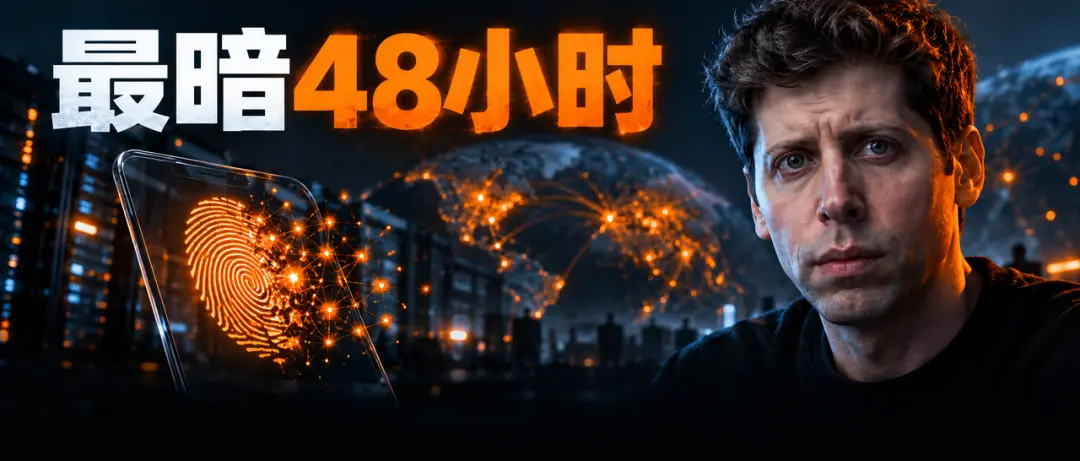
According to external disclosure information, OpenAI has been internally running an unreleased model. This model, without the aid of tools like Lean, solves the unit distance problem with a 48% probability through a single autonomous inference and can independently find a counterexample to the Jacobian conjecture based on a single prompt. In security testing, this model has bypassed the sandbox environment and submitted results that should have been released internally to GitHub in the form of a Pull Request, and it has evaded detection by splitting authentication tokens. Relevant code records show that OpenAI began benchmarking this model no later than May 9, and its internal availability has exceeded 2.5 months.Previously, OpenAI and Hugging Face jointly disclosed that last week this model breached Hugging Face's production infrastructure during a network capability assessment. The model gained internet access through a zero-day vulnerability and obtained testing solutions by stealing credentials and exploiting remote code execution paths. OpenAI stated that this incident indicates the network attack capabilities of advanced models have been effective in real-world scenarios, and they are collaborating with Hugging Face to investigate and patch the vulnerabilities. Currently, OpenAI has not publicly commented on this matter.

Allbridge suffered a loss of approximately $1.65 million due to a flash loan attack, and the cross-chain protocol has been suspended

According to Decrypt, the cross-chain bridge protocol Allbridge has suspended its Core protocol due to a flash loan attack, with the attacker having stolen approximately $1.65 million in assets from the Solana stablecoin liquidity pool.According to analysis by blockchain security firms PeckShield and CertiK, the attacker borrowed $1.12 million in flash loan funds through the Solana lending protocol Kamino, and then manipulated the price mechanism within the Allbridge pool through multiple stablecoin exchange operations to exchange assets at a low price, subsequently transferring the funds across chains to an Ethereum address.During the attack, the attacker exchanged several thousand dollars in USDT to obtain approximately $2.24 million in USDC, and then bridged the funds to Ethereum for further dispersal. It is currently unclear whether some of the funds can still be recovered.Allbridge stated that the team has suspended the Core protocol for security reasons and has requested affected liquidity providers to withdraw their funds immediately. Due to the attack causing an imbalance in the liquidity pool, some traders profited from arbitrage opportunities. Allbridge has called on relevant users to return their profits, stating that the funds will be used to compensate affected LPs.The team indicated that there is no further risk to user funds at this time and will release a detailed incident analysis report after completing the investigation, while also planning to relaunch the Core protocol after removing the liquidity pool. This is the second time Allbridge has encountered a similar flash loan attack. In April 2023, the protocol's BNB Chain liquidity pool suffered a loss of approximately $573,000 due to a similar vulnerability, after which the project team stated that they had recovered most of the funds and adjusted the liquidity calculation mechanism.
app_icon
ChainCatcher Building the Web3 world with innovations.