






How did Trung Nguyen, the founder of Axie Infinity, create a blockchain game with over 2.6 million daily active users?

 "When you convince an American and a Norwegian to give up everything and go to Vietnam, something special is bound to happen," Trung Nguyen said.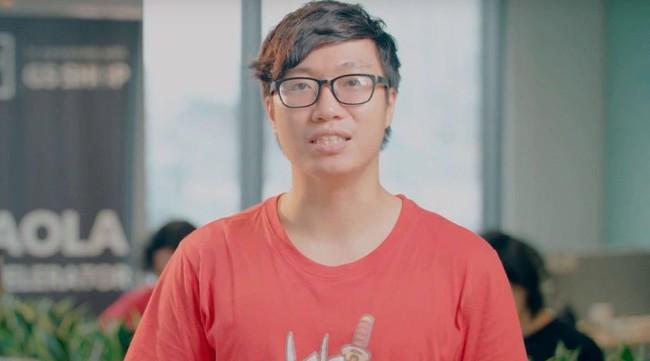
Author: Leah Callon-Butler, Director at Emfarsis, CoinDesk columnist
Original Title: 《Most Influential: Trung Nguyen》
Translation: Dong Yiming, Chain Catcher
Trung Nguyen is very interested in CryptoKitties because it combines two things he loves—gaming and something he used to hate—blockchain. At the end of 2017, the initial coin offering (ICO) boom was in full swing. In his view, the main purpose of most ICOs was simply to raise funds, and all the projects were boring, just financial technology stuff with numbers on a screen.
Although he hated blockchain, Nguyen couldn't help but be curious about the idea of applying blockchain technology to something fun. So he went through the process of buying ETH, setting up a MetaMask wallet, and purchasing his first Kitty. The game itself is very simple—it's a bit like playing Nickelodeon's Neopets, but with the novelty of cryptocurrency trading added. Compared to other games that Nguyen liked (including real-time strategy games like Red Alert and Age of Empires, as well as multiplayer online battle arena games like Dota), CryptoKitties left Nguyen feeling a bit overwhelmed.
CryptoKitties are represented on Ethereum by their genetic codes—a unique long number. No two kitties are exactly alike. Each feline is defined by a set of "cattributes," which have unique physical traits and personalities. When kitties are "bred" together, their genes combine so that their offspring inherit some mixed "cattributes" based on their lineage.
This deeply attracted Nguyen and ultimately inspired him to create Axie Infinity, a groundbreaking game that popularized play-to-earn video games and made the entire blockchain gaming space a focal point this year.
Nguyen used the limited information he had about existing kitties and their parents' genes to start mapping the data back to the source code to understand how the breeding algorithm worked and to learn the exact probabilities of breeding specific offspring with ideal traits.
Nguyen said, "As an engineer, it’s a very natural thing because we can look at things on a deeper level; we try to understand everything that happens behind the scenes, not just what we see on the surface."
He has been this way for a long time. He represented Vietnam at the 2014 International Collegiate Programming Contest (ICPC) held in Yekaterinburg, Russia—one of the oldest, largest, and most prestigious programming competitions in the world. Those who make it to the finals are the Olympians of their field.
Participating in such competitions was a joy for Nguyen. A bit like an "adrenaline junkie," he was intoxicated by the thrill of competing against other smart people to push his own limits. The task of reverse-engineering the CryptoKitties genome was just another technical challenge. When he saw how this technology could be used to create many interesting and meaningful things, his view of blockchain technology changed.
Nguyen believed that blockchain adoption would come through simple, elegant, decentralized applications rather than boring financial software, which led him to the idea of making his own game, similar to CryptoKitties but more exciting. He reached out to Tu Doan (better known by his pen name Masamune) and pitched the idea.
Years ago, Nguyen and Masamune were co-founders of Lozi, a VC-backed food blogging social network. The similarities in their backstories are incredible. As children, both were deeply influenced by Japanese culture—they loved Pokémon and manga like One Piece.
They also enjoyed creating their own games for their school friends to play. Nguyen would draw characters on trading cards, while Masamune liked to create board games, using his original avatars glued onto Vietnamese coins as game pieces. Masamune also enjoyed creating creatures out of food, like sticking accessories into potatoes with toothpicks.
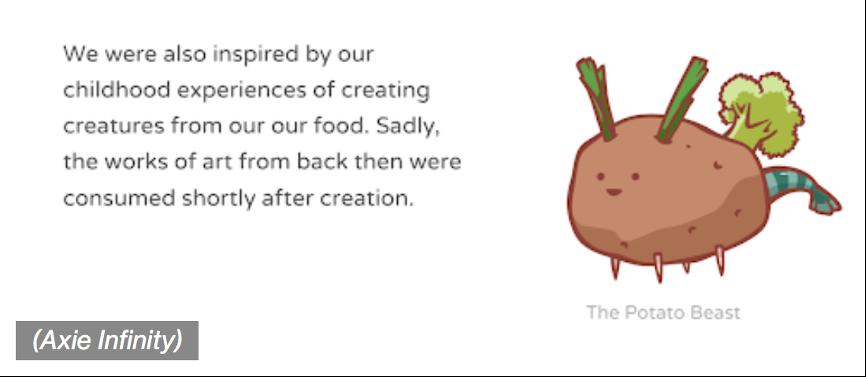
During their days at Lozi, the two often discussed their shared passion for video games. As a hardcore gamer, Nguyen studied the games he played and dissected their mechanics and rules, while Masamune delved into the storylines and graphics of the games. It was during this time that Masamune told Nguyen that his dream was to one day create his own video game.
For Nguyen's new idea for a blockchain game, Masamune was not very familiar with the underlying technology, but he was excited about the prospect of making a game with Nguyen. Masamune sketched out the first idea in his mind: a blend of his pet axolotl (commonly known as the Mexican walking fish) and the food art he often created as a child, which resulted in the first Axie ever—Puff.
In the initial months, although it was just the two of them, Masamune came up with all the original ideas and presented them to Nguyen. Nguyen used his math skills to balance the game economy. Eventually, when they began to gain some traction—around 1,000 early supporters and $500,000 in committed funding.
Nguyen suggested that Masamune should leave Lozi to work full-time on Axie. Masamune felt nervous about quitting his job due to his poor financial situation and lack of savings. But Masamune was confident in Nguyen's abilities and believed that if it meant the opportunity to pursue his lifelong dream, the risk was worth it.
Talent Management
In early 2018, Jeffrey "Jiho" Zirlin was browsing the Discord messaging app, looking for NFT-related content to add to his resume. Prior to this, he had been working in New York as a recruiter, arranging quantitative traders for large hedge funds like Bridgewater and D.E. Shaw.
It is well-known that "quantitative investment specialists" are stock market analysis experts on Wall Street, distinctly different from traditional investors, who are more likely to wear jeans than suits and rely on programmatic investment strategies rather than the judgment or opinions of brokers. Zirlin's expertise was in identifying those who had the ability to think with both sides of their brain—those who were both creative and artistic, as well as systematically analytical.
As a player joining the Axie Discord, Zirlin immediately recognized Nguyen as a type of analytical expert. Later, Zirlin saw that he and Nguyen had already established a connection in the past when Zirlin was the growth lead for a project called KittyHats (now defunct), which sold accessories based on the ERC20 token standard for players to decorate their CryptoKitties.
CryptoKitties was one of the earliest success stories of the crypto era. The collectible game led to a sixfold increase in daily transactions on Ethereum, which was enough at the time to nearly crash the network and everyone was jumping on the bandwagon.
"Just as today people ask 'what will the next Axie be,' back then we were thinking 'what will the next CryptoKitties be,'" Zirlin recalled. It was an exciting experimental period. KittyHats and other derivatives like KittyRace—a game that allowed CryptoKitties owners to race their pets for prizes—helped the NFT industry thrive. Some of those who participated in these early projects have since achieved success, such as OpenSea in New York and Dapper Labs in Vancouver.
Zirlin could have found a job in the U.S., but he chose to move to Vietnam. This upended the typical immigrant story. Despite the higher cost of living, cultural differences, language barriers, and complex visa requirements, it is usually Vietnamese people who leave their homeland to seek life-changing opportunities abroad.
Today, Vietnamese expatriates are the fourth largest immigrant group in Asia, with more people leaving the country each year for life in more developed nations. In 2019 alone, over 150,000 Vietnamese migrant workers emigrated. For young, well-educated professionals, this is a particularly popular path, and the brain drain has made it increasingly difficult for Vietnamese companies to fill their senior positions.
"When you convince an American and a Norwegian to give up everything to go to Vietnam, something special is bound to happen," Zirlin nostalgically told me as he chatted with me via Zoom from his parents' home in New York. He hadn't seen Trung since February 2020 when he spent the Lunar New Year outside of Vietnam, and the subsequent COVID-19 pandemic meant he couldn't return to the country. But during the first two years of Sky Mavis, the company behind Axie, Zirlin shared an apartment in Ho Chi Minh City with co-founders Masamune and Aleksander Larsen.
As for Larsen, he left his girlfriend in Norway and quit a good job building "big and exciting space games" to move to Vietnam and work on "a pet game." He remembers how awkward it was when Nguyen picked him up at the airport—having previously collaborated entirely online, meeting in real life felt a bit strange.
They chatted in the car as Nguyen drove Larsen to his hotel. Exhausted from the long flight and looking forward to a nap, Larsen went to take a shower. When he came out of the bathroom, Nguyen was sitting on the hotel bed, fully focused on his laptop, writing code. Larsen said it felt like stepping onto the set of a movie about a startup. In that scene, they flashed back to the beginning of a world-changing success story, introducing the genius programmer focused on his mission. At that moment, Larsen knew he had made the right decision.
Today, they have a team of 87 people globally, with at least 60 in Vietnam, working on multiple projects, including the game itself, an Ethereum-based sidechain called Ronin, a mobile wallet, and a decentralized exchange called Katana. But in the early days, Nguyen did most of the coding work, and his "hands-on" attitude shaped the fundamental development principles of Sky Mavis. Anything that did not meet his standards, he would say: we can build it better.
For example, until early 2020, Sky Mavis was building Axie on the Loom network, a popular platform for blockchain games that required higher processing speeds and lower fees. But when Loom shifted its focus to enterprise use cases, shutting down its public dapp (decentralized application) services and changing its architecture, Sky Mavis chose to abandon it and build its own sidechain.
Their peers might wonder why Sky Mavis would waste time building its own blockchain instead of using something that already existed and was easy to use. Nguyen did not believe that existing sidechains and layer 2 platforms were suitable for Axie. As for optimistic rollups or zk-rollups, he insisted that their rollout would be delayed; in any case, they would take a long time to mature and achieve adoption. Ultimately, his views on rollups proved correct; if Sky Mavis had waited for them, there would be no Ronin today.
According to research data from Delphi Digital, the launch of Ronin was a key moment for the entire NFT gaming market and a crucial catalyst for Axie Infinity's explosive growth from May to June, with daily active users rising from 38,000 at the end of April to 252,000. Currently, the game has nearly 3 million daily active users, and Ronin's transaction volume is about four times that of the Ethereum blockchain's daily transaction volume.
The unveiling of Ronin showcased Sky Mavis's vision to the public.
Better than the Best
"The Last Dance" is a documentary series on Netflix that tells the story of Michael Jordan and the Chicago Bulls winning the NBA championship for the sixth time over eight seasons. Jordan is often considered the greatest basketball player of all time, known for his relentless work ethic and competitive edge. He was highly dedicated, ambitious, and showed a strong desire to learn, constantly striving to become a better player throughout his career, famously committing to his coach: "No one will work harder than me."
When Larsen watched this documentary, he felt a sense of familiarity. Like Jordan, Nguyen also wanted his team to elevate themselves, perform better, meet his standards, and put in the same effort as he did.
Team members attest that Nguyen is a stickler for quality, with a keen attention to detail. They say he is the hardest-working person on the team, with the highest expectations and executing standards that are almost impossible. In the first full year, all employees signed contracts to work six days a week, from Monday to Saturday. His strictness intimidated some employees, but he did it to make the entire team better. He was as hard on himself as he was on others.
Beyond his tough exterior, Nguyen fits the stereotype of an introverted, reclusive genius. He rarely gives interviews and seldom interacts with investors, allowing Zirlin and Larsen to handle external partnerships, such as the New York consulting firm Delphi Digital, which is responsible for Axie's dual-token system.
Nguyen hates distractions and believes in the benefits of division of labor for the team, which is why Sky Mavis has five co-founders. For external affairs, the energetic Zirlin is responsible for community management, the low-key Larsen handles fundraising and investor relations, while Nguyen, Ho, and Masamune manage internal operations in Vietnam.
However, until mid-2018, Nguyen still had to do a lot of work himself. He completed the vast majority of coding, product and user experience design, quality assurance, and deployment. He provided feedback on artwork and was also building the community. During the time he was still going to Discord every day, he would answer every question.
Those days were tough. Money was running out, and the co-founders went without salaries for a period in 2018, with the company barely making any money. The presale of Axie creatures and land sales raised much-needed funds for the fledgling startup, allowing Sky Mavis to sell NFTs of the game to its community members to fund its growth. A $1.5 million seed round led by Animoca Brands announced in early 2019 also helped. But before that, Sky Mavis had received a terrible offer to buy 50% of the company for $1 million.
"We never stopped building," Zirlin said. "Some people on the team have been working every day since 2018 without a break."
His colleagues say that while he is tough, Nguyen emphasizes fairness and approaches problems with an analytical mindset. When faced with challenges, he asks his colleagues to build a mental model to communicate and defend their reasoning for proposed actions. This way, others can better understand the issue, ask questions about it, and contribute their thoughts. Nguyen leads by example in this regard.
Meeting Me in the Metaverse
Andy Ho, the fifth and final co-founder of Sky Mavis, joined the company in August 2018 as Chief Technology Officer. Although he was the last to join the founding team, he had known Trung the longest. Long before the term "metaverse" became popular, the two teamed up for online competitions, battling academic opponents from around the world.
These online competitions were excellent practice for honing skills for elite school-level contests (like the national Olympiad). For gifted and talented teens like Nguyen and Ho, they also provided an escape, as they found it difficult to find others in their hometown who understood their way of thinking and connected with them.
After graduating from high school, Ho attended university in Singapore and was selected to participate in the ICPC competition held in Morocco in 2015, securing internships at Google and PayPal in the U.S. However, the quality of life abroad was never as good as in Vietnam, and Ho couldn't help but feel a desire to return home. When he saw that Nguyen had previously worked at Anduin Transactions in San Francisco, he finally made the leap. Anduin offered a lucrative salary and was clearly recruiting talented individuals, so Ho applied as well.
But after more than two years of work, Ho confided in Nguyen, admitting that he was tired of financial software and eager to do something cooler. A few months before joining Axie full-time, Ho resigned from Anduin, and Trung seized the opportunity to bring Ho onto his team.
"This is just the beginning," Nguyen said. "We have the chance to work together and compete with other teams around the world," he told Ho, viewing Sky Mavis's mission and vision as just another programming competition. Ho was persuaded, and he immediately submitted his resignation at Anduin. That was a pivotal moment for Nguyen, finally allowing him to feel he could relax control and let others take the lead in development operations.
Throughout 2021, the team soared, raising $7.5 million in Series A funding led by Libertus Capital and $152 million in Series B funding led by a16z and Accel Partners. From the start, they adopted a truly global strategy—less than 3% of Axie's 2.6 million daily active users come from within Vietnam, as the company attracted players from all corners of the globe with top-tier games in unprecedented ways using blockchain.
Their success also boosted Vietnam's industry, creating local job opportunities and sparking a wave of entrepreneurial innovation. Many new independent game studios are now operating. Cyball, Sipher, and Thetan Arena are three examples of blockchain games that have recently emerged in Vietnam. Rumor has it that some venture capitalists have even set up funds specifically for this new breed of blockchain games born in Vietnam.
These are the fruits of Vietnam's long-standing commitment to investing in technology and education. Talents like Nguyen are nurtured by systems designed to cultivate excellence.
 Risk warning
 Risk warning