Gray Scale Solana Research Report Full Text: Practical Applications, Advantages, and Challenges

 Solana adopts a unique technical solution that prioritizes "higher scalability" through an optimized "concession" scheme, allowing transactions on Solana to be faster and cheaper than on many other networks.
Source: Grayscale Official Website
Compiled by: Richard Lee, Chain Catcher
Introduction
Solana is a next-generation internet platform built on a public transaction blockchain-based cryptocurrency network. The open-source software network of Solana coordinates computers distributed globally into a fully unified cloud platform owned and operated by users. Solana supports high-speed, low-cost transactions on a single-layer blockchain, thereby reducing the need for additional scaling solutions typically required by other networks.
SOL is the native token of the Solana network, representing a portion of ownership in the ecosystem. SOL tokens are used for: (1) supporting decentralized applications (DAPPs), (2) payments, (3) paying network operating costs, (4) providing network security through staking SOL, and (5) facilitating network governance.
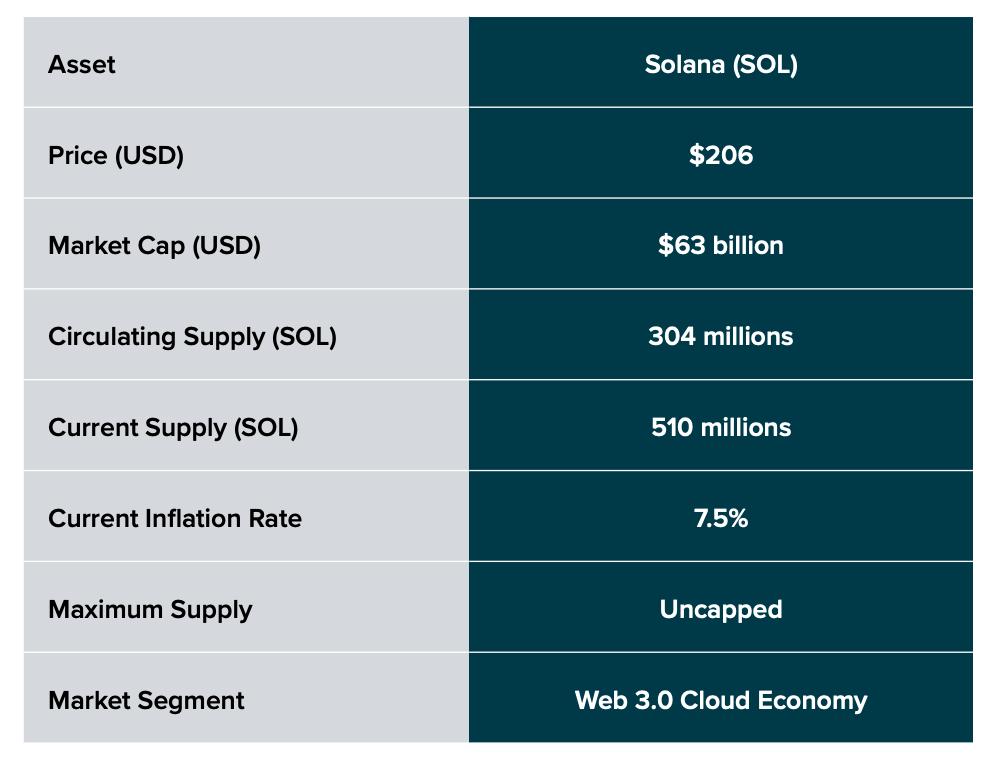
Figure 1: SOLANA Summary Statistics as of November 29, 2021
Solana's Solutions
The Solana network aims to provide developers with a high-performance Web 3.0 cloud platform, offering scalability at the first-layer blockchain level. Its solutions are designed to optimize speed, network costs, and decentralization from political and geographical perspectives, thus eliminating the complexity of Ethereum's second-layer solutions. Specifically, these features can be quantified as:
• Speed: A block is produced every 400 milliseconds
• Cost: Each transaction costs 0.000005 SOL (approximately $0.001).
• Degree of Decentralization: A total of 2242 nodes globally.
Solana achieves this level of performance through a special structured approach with eight core innovations and optimization of technically different trade-off solutions. These trade-offs include a relatively lower degree of decentralization (compared to networks like Ethereum) ------ which somewhat allows for network interruptions, such as the "DDOS" attack on September 14, 2021, that forced Solana's entire functionality offline for about 24 hours. Nevertheless, Solana continues to attract users who favor this network design. Solana is expanding the market size of Web 3.0 blockchain cloud computing through several aspects:
- New Users: In the past, a group of price-sensitive users did not have a good on-chain service experience, and Solana now enables these users to access existing crypto applications like decentralized finance (DeFi), NFTs, and other Web 3.0 DAPPs.
- Increased Usage: Solana allows users to use Web 3.0 applications more frequently by lowering transaction costs and increasing transaction speeds.
- New Applications: Solana encourages the birth of new applications or makes existing DAPPs mainstream applications.
Technological trends often appear in the form of "cycles," and Solana's impact on the Web 3.0 cloud computing market is similar to the innovations in computing platforms that accelerated overall internet usage during the Web 2.0 era: - Mainframe to Personal Computer: During the mainframe era, computers were typically large and expensive, limiting access for academic researchers at certain universities. The emergence of personal computers (PCs) changed this situation, lowering costs and opening access to a new wave of consumers. Solana's relatively lower transaction fees now have a similar effect.
- On-Premises to Cloud: During the on-premises era, institutions had to purchase and manage servers and other computing infrastructure to use software functionalities. The shift to cloud computing alleviated this burden by reducing the process load of on-premises hosting while increasing application flexibility. Solana today plays a similar role, providing developers with a powerful enough platform to run Web 3.0 DAPPs while eliminating the complexity of second-layer scaling solutions.
- Desktop to Mobile: In the desktop era, major applications were typically designed for fixed computing platforms, which limited the applications that could be supported. The development of mobile technology brought about a shift, providing developers with a real-time computing platform, thus stimulating the development of new applications (like Uber). Analogous to Solana, it enhances the scalability of Web 3.0 cloud computing and provides developers with a new infrastructure medium for designing DAPPs.
The Web 3.0 cloud computing market presents a huge and rapidly growing opportunity for networks like Solana and Ethereum. Several Web 2.0 cloud providers, including AWS, Google Cloud, Microsoft Azure, Alibaba Cloud, and Tencent Cloud, have succeeded by meeting various customer needs. The Web 3.0 cloud market is also following a similar path, with Ethereum and Solana emerging as leading competitors in this field.
Practical Applications
The Solana cloud economy has grown rapidly over the past year, with the total value of the ecosystem exceeding $110 billion. This ecosystem consists of the Solana network (SOL) and digital assets issued on the network, which are governed by the SOL community. This includes assets like digital businesses (smart contract DAPPs), digital dollars (dollar-backed stablecoins), and digital goods and art on the Solana network (such as NFTs). Here is an overview of the value distribution across these categories: - Solana Network (SOL) accounts for $73 billion, representing the majority of the Solana ecosystem's market value (65%).
- Digital businesses (DAPPs) on the Solana network account for about one-third of the total ecosystem value, reaching $35 billion.
- The circulating digital dollars (stablecoins) in the Solana economy amount to $4 billion, approximately 3% of the total economy.
- The value of digital goods and art (NFTs) based on Solana is $1 billion, about 1% of the total economy.
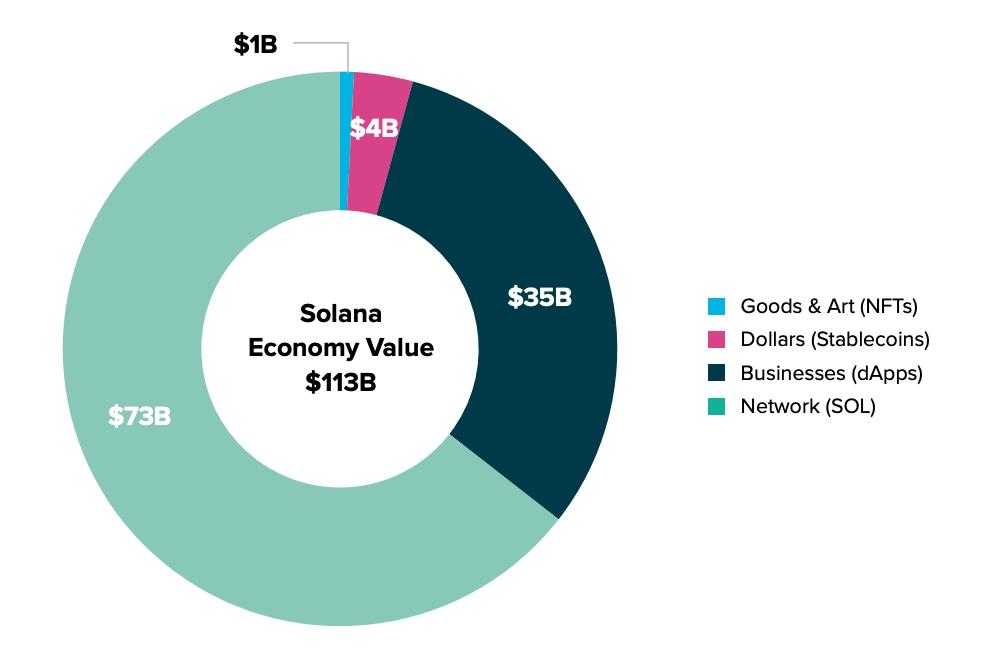
Figure 2: Market Value of Solana's Crypto Economy
Solana has successfully built a large and rapidly growing user community. The monthly active users (MAUs) of the most popular Solana wallet, Phantom, grew from 20,000 in August 2021 to 1.2 million in October this year. Compared to Phantom, the user growth rate of Solana is roughly equivalent to Ethereum's level in October 2020.
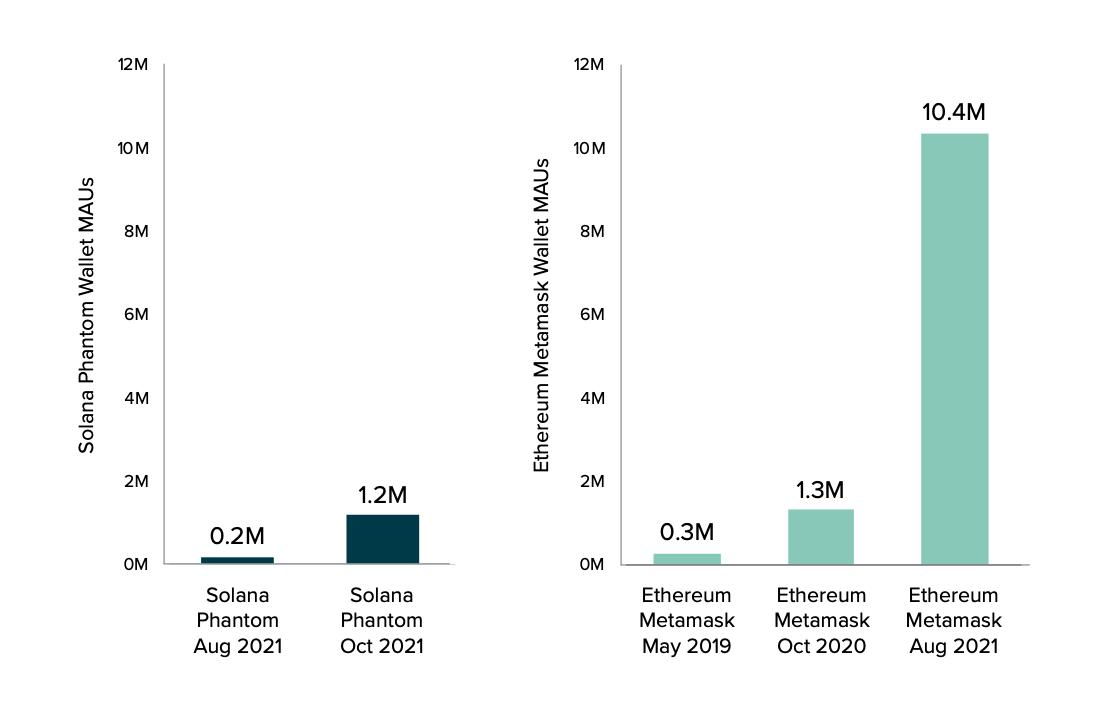
Figure 3: Comparison of Monthly Active Users between Solana Phantom Wallet and Ethereum Metamask Wallet
Since the launch of the Solana network, developer interest in it has surged dramatically over the past year. The level of attention from open-source developers is a key indicator of the health of a Web 3.0 cloud network, as these builders create the application ecosystem that ultimately attracts users to the respective blockchain network. To this end, Solana hackathon events continue to attract more and more developers to sign up and submit projects, driving further growth of the dApp ecosystem.
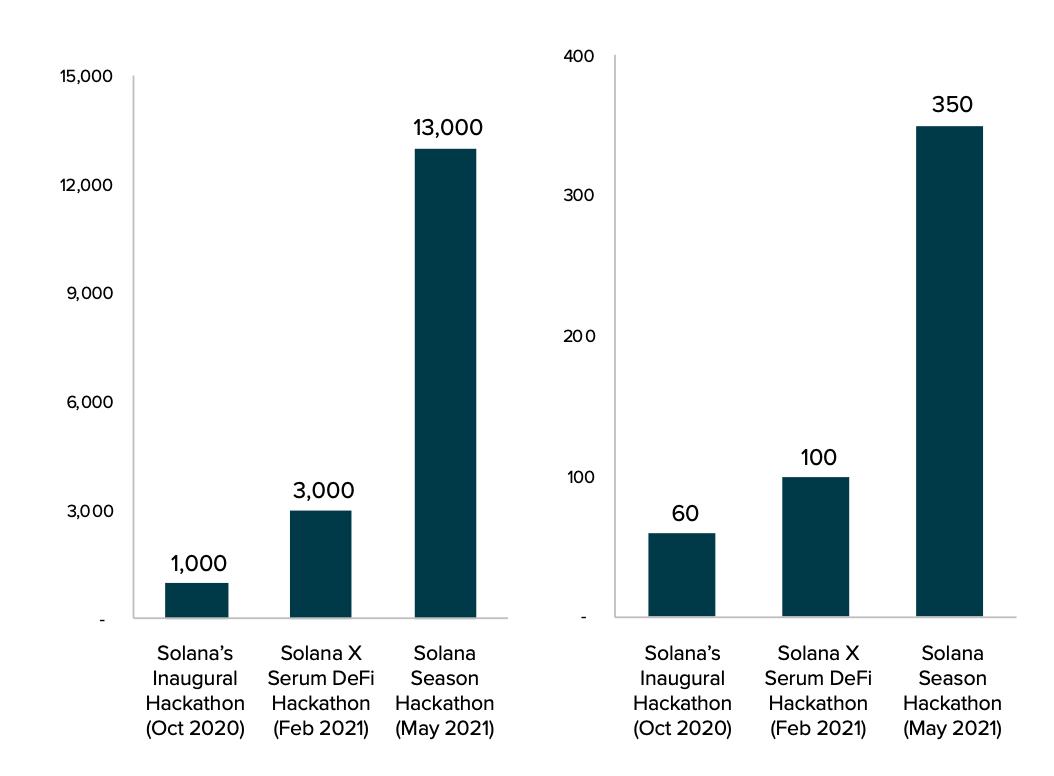
Figure 4: Hackathon Registrations (left) and Project Submissions (right)
Solana primarily serves as a smart contract platform for developing DAPPs or a general cryptocurrency cloud platform. Since the launch of the Solana network, the Solana community has quickly established a large ecosystem with over 500 decentralized applications. DAPP projects in the fields of DeFi, Web 3.0, and NFTs include: - DeFi: Applications include open order book exchanges, automated market makers, lending platforms, asset management software, and payment applications.
- Web 3.0: Solana domain services, data privacy web browsers, and off-chain data oracles.
- NFTs: Use cases include NFT minting platforms, trading markets, gaming, music streaming, social media, and decentralized autonomous organizations (DAOs).
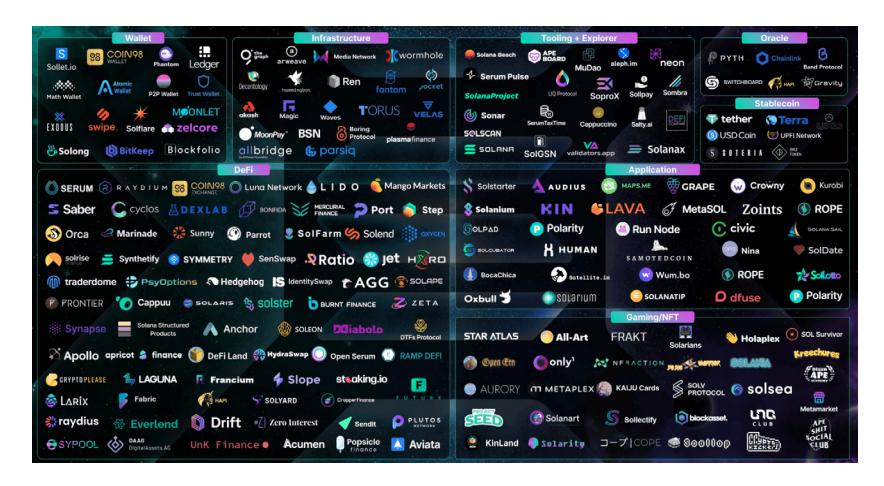
Figure 5: Solana Decentralized Application (DAPP) Ecosystem
The total value locked (TVL) in Solana DeFi protocols has increased over the past year, accounting for nearly 6% of the total TVL across all crypto projects. This success is primarily driven by growing user interest in Solana, an increasing number of applications, strong performance of SOL token prices, and a rising number of dollar stablecoins issued on the Solana network (approximately $4 billion in stablecoin market value).
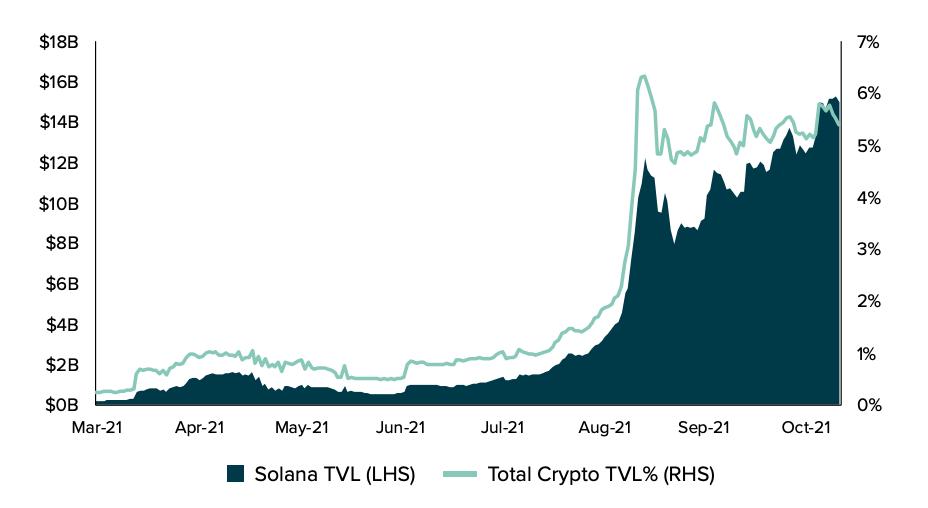
Figure 6: Solana Total Value Locked (TVL) and Its Share of Total Crypto TVL
Finance is not the only growing sector in Solana's digital economy ------ consumer applications are also emerging rapidly. In recent months, there has been growth in NFT applications representing ownership of digital properties (such as artworks, consumer goods, or other assets). The market value of NFTs on Solana has exceeded $1 billion. Monthly sales of Solana NFTs have risen to approximately $250 million, and the number of unique buyers has increased about fourfold over the past three months, reaching around 60,000 addresses.
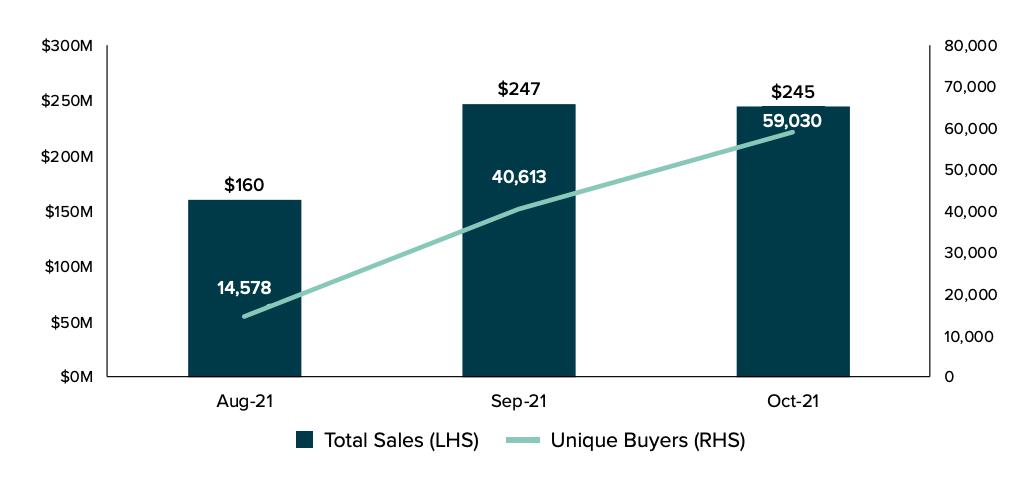
Figure 7: Solana NFT Secondary Market Sales and Unique Buyer Count
With the continuous growth of users, applications, and usage, Solana's network revenue has increased over the past year. The transaction fees paid by Solana users (including transfers, running smart contract programs, issuing new assets, and voting on proposals related to network consensus) reached $4.5 billion in November this year, growing more than 100 times since the beginning of the year.
According to the Solana protocol, after waiving half of the transaction fees, the supply of SOL tokens will also be reduced accordingly, while the remaining 50% of transaction fees are paid to the network's computing infrastructure providers (the so-called "validators") ------ who are incentivized to stake SOL tokens. Due to the reduction in fee income and the incentives for paying fees to stakers to continue holding tokens, these economic characteristics support the foundational value model of SOL tokens and make SOL tokens productive assets.
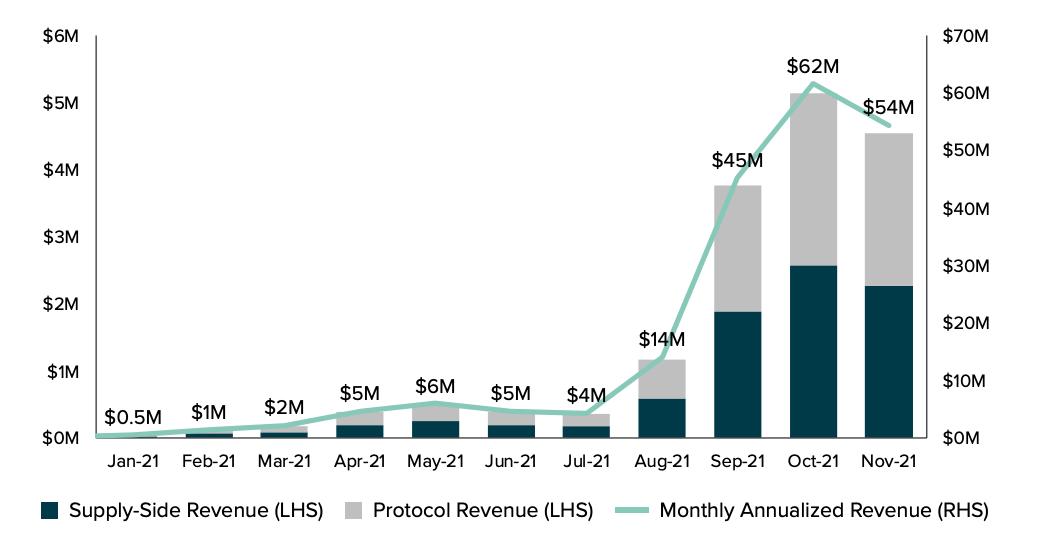
Figure 8: Solana Monthly Revenue and Monthly Annualized Revenue Curve
Due to Solana's "revenue-based supply reduction mechanism," the future total supply of SOL is uncertain. While the total supply of SOL will fluctuate due to network revenue, the rate of issuance of new tokens is written into the Solana protocol.
The Solana testnet was launched in March 2020, with an initial supply of 500 million SOL. In February 2021, the inflation rate of SOL supply changed from 0.1% to 8% (the new initial inflation rate). Subsequently, according to the set plan, the initial inflation rate of 8% will continuously decrease at an annualized deflation rate of 15% until it reaches a long-term inflation rate of 1.5%. As of November 2021, the total circulating supply of SOL was approximately 5.09 billion, with an estimated total inflation rate of about 7.3%.
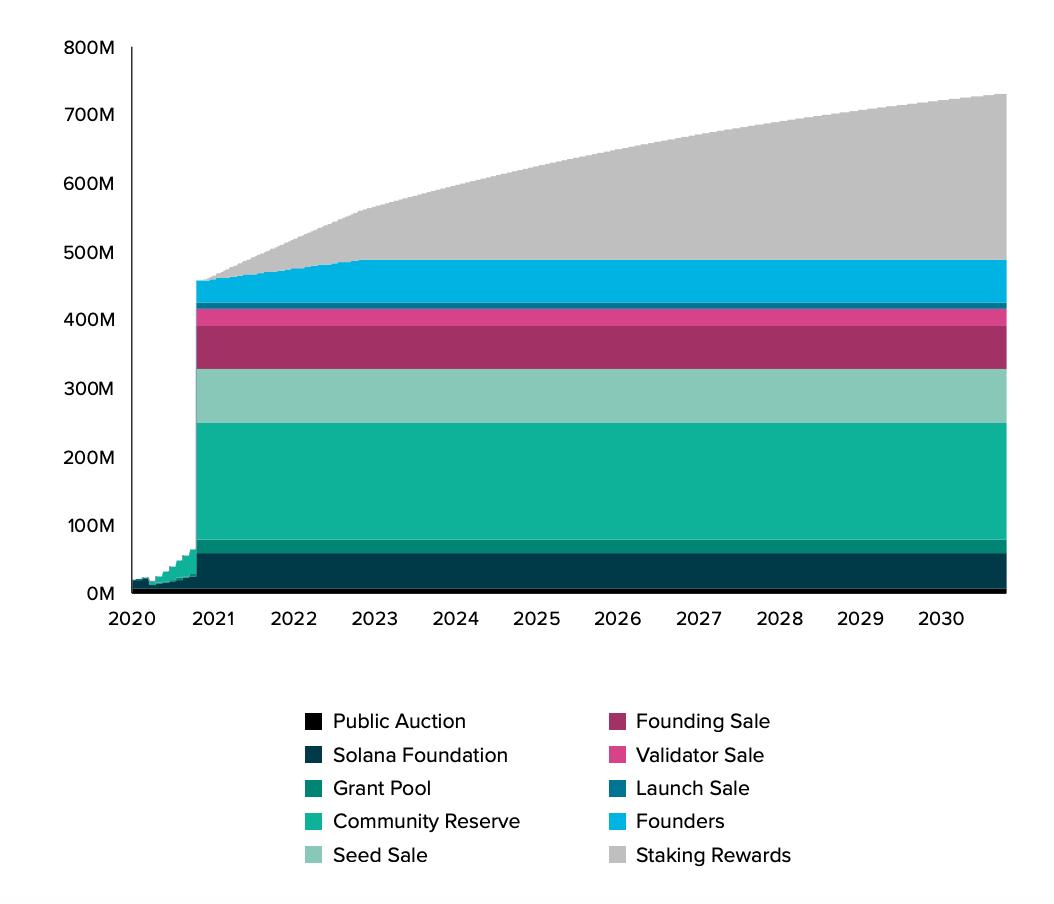
Figure 9: SOL Token Supply Timeline
History
At the end of 2017, Solana's founder Anatoly Yakovenko had the initial concept of the project and its technical points. The internal testnet and official white paper of Solana were released in early 2018. Solana Labs (the development company of Solana) completed a series of financing from 2018 to early 2020. The mainnet beta of the Solana protocol was released in March 2020.
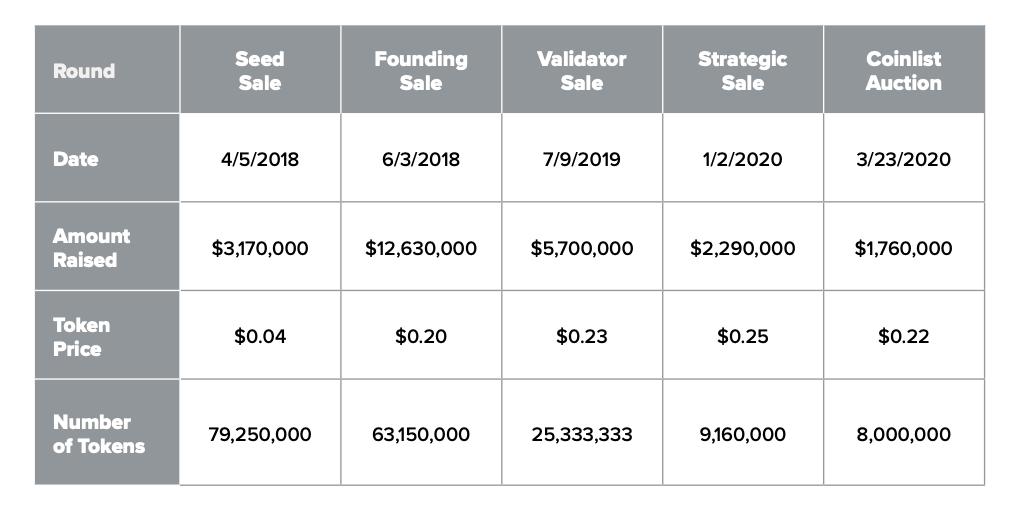
Figure 10: Solana's Financing History
Advantages
Solana has several competitive advantages: - Team: Solana has a strong core technical team composed of former employees from Qualcomm, Google, Dropbox, and Apple.
- Technology: Solana employs a novel technical solution that offers high scalability and low transaction costs, distinguishing it from other networks.
- Community: Solana has a robust and active community of users, developers, industry partners, and investors.
- Ecosystem: Solana has established a large and rapidly growing DAPP ecosystem, with new use cases emerging.
Potential Risks
At the same time, Solana faces some potential risks (from competitors within the crypto industry and some external factors), including: - Competitive Networks: Other blockchain networks with smart contract capabilities, such as Ethereum, Binance Smart Chain, DFINITY, Avalanche, etc.
- Economic Sustainability and Valuation: Compared to other blockchains like Ethereum, Solana's network fee revenue remains relatively low. Unless several aspects, such as the number of new applications, network usage, or transaction costs, continuously improve to drive fee growth, the valuation of the Solana network will not be supported based on current cash flow value.
- Degree of Centralization: If one or a group of entities were to control a significant portion of the SOL supply, the Solana network could become overly centralized. Solana may require more "dedicated" equipment to participate in network operations, which could hinder attracting a large number of users and affect the overall decentralization of the network.
- Regulatory Uncertainty: Solana may face scrutiny from various regulatory agencies, which typically view digital assets as "securities" for regulation, with Bitcoin and Ethereum being the only exceptions so far.
- Network Security: Solana employs several new technical solutions. The new technologies used in Solana's consensus mechanism have not been widely adopted and may not perform as expected. There may be flaws in the underlying cryptographic components of the network, affecting Solana's functionality or making the network more susceptible to attacks. Additionally, if Solana's economic incentive mechanisms do not perform as expected, it could render the network insecure or inefficient.
Conclusion
Cryptocurrency networks like Solana are platforms for the next generation of networks and cloud waves. Web 3.0 decentralized applications offer new benefits, and consumer demand for them is growing stronger. However, many leading blockchain cloud computing platforms currently suffer from slow speeds, high costs, or require additional and complex scaling solutions. This situation limits the widespread adoption of many applications in the crypto economy.
Solana adopts a unique technical solution, prioritizing "higher scalability" through an optimized "trade-off" approach, allowing transactions on Solana to be faster and cheaper than many other networks.
Solana has gained a large and rapidly growing active user community, developer community, and DAPP ecosystem, all of which support its rapid growth. The Web 2.0 cloud computing market represents an opportunity with an annual revenue of $350 billion and a market value of $4.6 trillion, and Solana has positioned itself as a leading challenger in Web 3.0, beginning to capture market share.
 Risk warning
 Risk warning


Popular articles